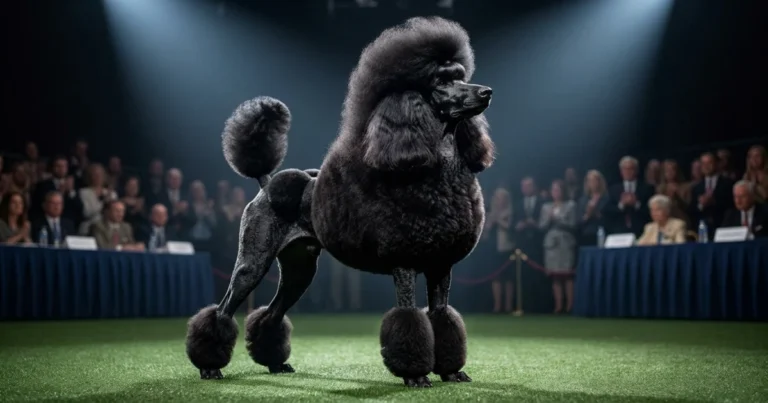
How Often Should You Bathe a Poodle? Complete Owner Guide
Most Poodles do not need a bath every week — but they also cannot be treated like short-coated dogs. Their dense, curly coat traps moisture, dirt, loose hair, product residue, and outdoor debris, so the best bath schedule depends on coat length, lifestyle, brushing routine, skin health, and how quickly odor returns.
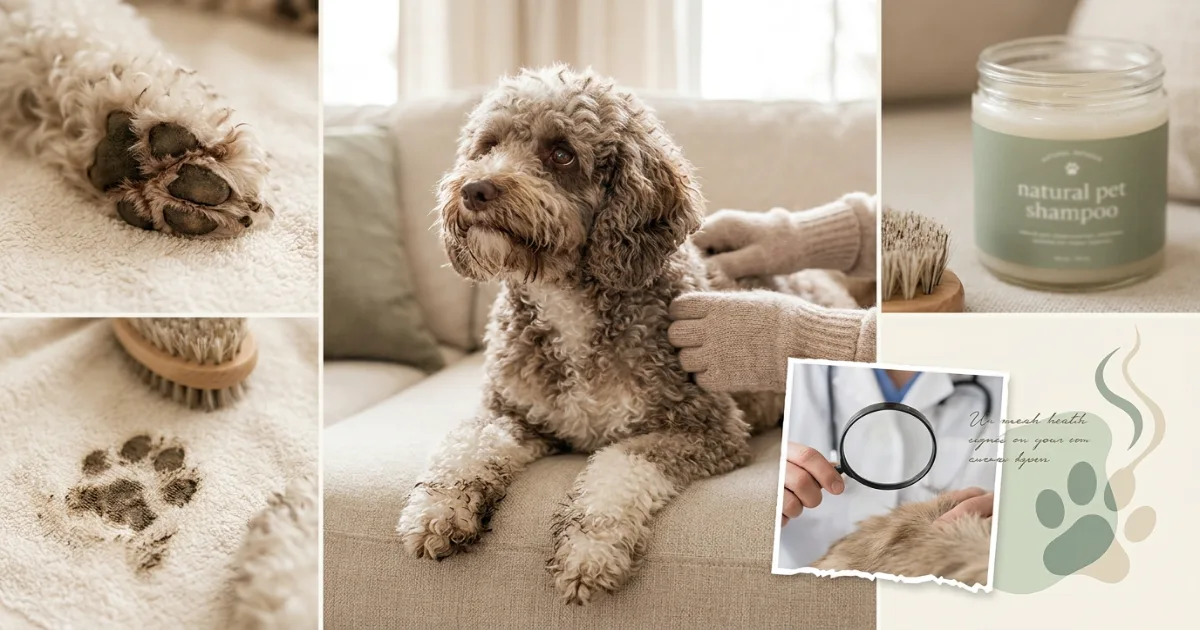
Quick Answer: How Often Should You Bathe a Poodle?
Most pet Poodles should be bathed about every 4 to 6 weeks, while some clean indoor Poodles can go closer to 6 to 8 weeks and very active, muddy, allergy-prone, or long-coated Poodles may need baths closer to every 2 to 4 weeks. The real rule is simple: bathe when the coat is dirty, oily, smelly, or difficult to brush — but do not use frequent shampooing as a replacement for regular brushing.
Poodle Bath Frequency Table
The safest starting point for a healthy pet Poodle is a bath every 4 to 6 weeks. From there, adjust based on coat length, outdoor activity, skin sensitivity, and grooming style. A Poodle in a short kennel cut who lives indoors may need fewer baths than a long-coated Poodle who swims, hikes, rolls in grass, or plays at the dog park.
| Poodle Situation | Suggested Bath Frequency | Why It Works | Owner Action |
|---|---|---|---|
| Clean indoor Toy or Miniature Poodle | Every 4–6 weeks | Small indoor dogs often collect less mud but may still hold odor around the face, paws, and sanitary areas. | Brush 3–5 times weekly and spot-clean paws or face between baths. |
| Standard Poodle with normal pet coat | Every 4–6 weeks | This matches many professional grooming cycles and keeps the coat manageable without over-cleansing. | Pair bath timing with trim, nail, ear, and brushing routine. |
| Long coat, show coat, or fluffy teddy style | Every 2–4 weeks | Longer curls trap more debris and can mat faster when oils and dirt build up. | Brush and comb thoroughly before every bath. |
| Active outdoor Poodle | Every 2–4 weeks, or after dirty activity | Mud, grass, pollen, lake water, and dust can sit close to the skin under curls. | Rinse or spot-clean after outdoor adventures; full shampoo only when needed. |
| Poodle with allergies or medicated shampoo plan | Follow your vet’s schedule | Some skin plans require medicated contact time and a specific bathing interval. | Do not change medicated shampoo frequency without your vet. |
| Senior Poodle with dry skin | Every 6–8 weeks, if clean and comfortable | Older dogs may dry out faster and may not get dirty as often. | Use gentle shampoo, conditioner, and monitor itching or flakes. |
Why Poodles Need a Different Bath Schedule Than Other Dogs
Poodles have a curly, continuously growing coat that behaves very differently from the coat of a Labrador, Beagle, or short-haired terrier. Loose hair does not fall away as easily. Instead, it can stay inside the curls and mix with dirt, skin oils, moisture, pollen, and product residue. That is why a Poodle can look clean from a distance but still feel sticky, dusty, or hard to comb near the skin.
The coat is also one reason Poodles are often considered low-shedding, but low-shedding does not mean low-maintenance. If the coat is not brushed before bathing, water can tighten existing tangles. After the bath, a damp undercoat can dry unevenly and create new mats. This is why bath frequency and brushing frequency must work together.
Bathing Cleans
Bathing removes dirt, odor, pollen, urine splash, saliva residue, and product buildup from the coat and skin.
Brushing Prevents Mats
Brushing separates curls, removes loose hair, and helps you find tangles before water makes them tighter.
Drying Protects the Coat
Drying fully helps stop damp curls from clumping into mats, especially behind ears, under legs, and around the collar area.
For most owners, the goal is not to bathe as often as possible. The goal is to keep the coat clean enough to brush easily while protecting the skin barrier. A Poodle that is brushed well between baths can usually go longer without odor or matting. A Poodle that is not brushed may need a bath but still be impossible to groom comfortably because the coat is already tangled.
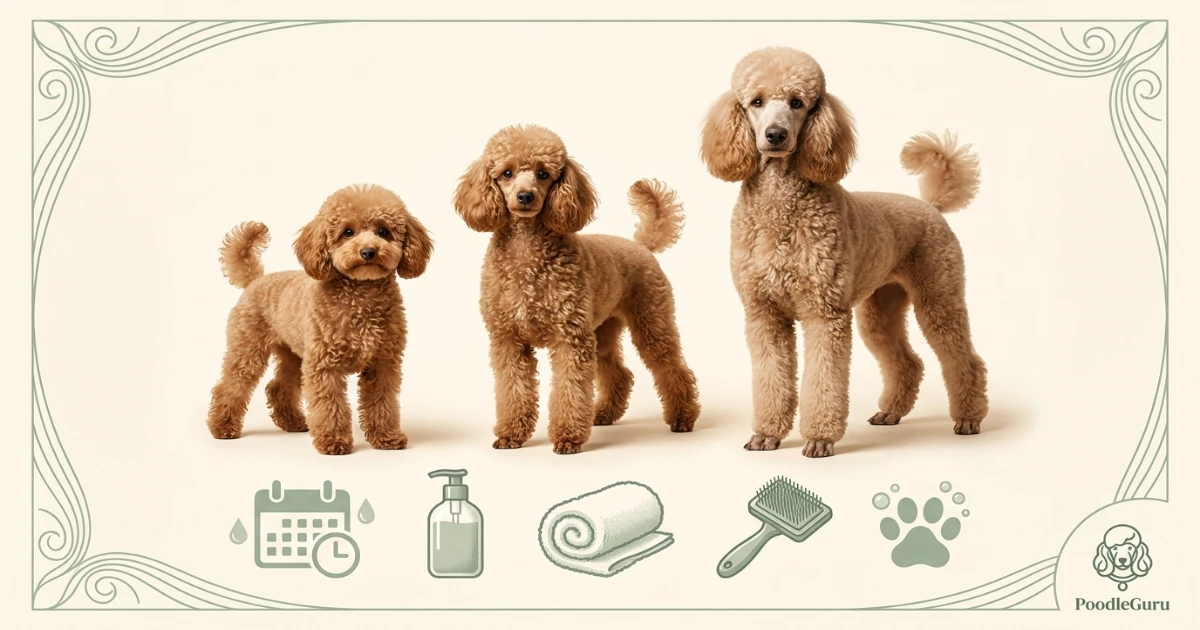
How Often to Bathe Toy, Miniature, and Standard Poodles
Size does not completely decide bath frequency, but it changes the problems owners notice. Toy Poodles often get dirty around the face, paws, and potty areas. Miniature Poodles are active enough to collect outdoor debris but small enough for easy home bathing. Standard Poodles have more coat to dry, more surface area to brush, and more risk of hidden damp spots if drying is rushed.
Toy Poodle Bath Schedule
A healthy Toy Poodle usually does well with a bath every 4 to 6 weeks. Because Toy Poodles are close to the ground, their paws, legs, and belly can pick up dust, urine splash, and floor grime quickly. Many owners do better with gentle spot cleaning between full baths instead of shampooing the whole dog too often.
- Wipe paws after outdoor walks.
- Clean tear-stained or food-stained facial hair as needed.
- Brush the coat several times per week, even if the dog looks clean.
- Use a sink or small tub with secure footing to reduce bath stress.
Miniature Poodle Bath Schedule
Miniature Poodles often land in the middle: active enough to need regular cleaning, but still manageable for home baths. Every 4 to 6 weeks works for many, with earlier baths after mud, beach days, swimming, or heavy outdoor play. Miniature Poodles in longer fluffy clips may need more frequent grooming maintenance than those in short practical trims.
Standard Poodle Bath Schedule
Standard Poodles are usually bathed every 4 to 8 weeks depending on coat length and grooming goals. AKC grooming guidance for Standard Poodles notes that trimming may be timed with bathing around a four-to-eight-week window, with timing depending partly on how long the owner wants the coat to grow. For a pet Standard Poodle, the key is not just the bath — it is the dry. A half-dry Standard Poodle can mat near the skin even when the top of the coat feels dry.
Bath Frequency by Coat Length and Haircut
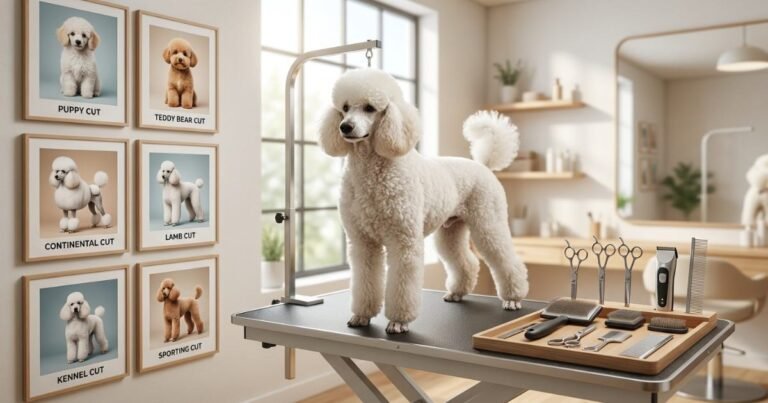
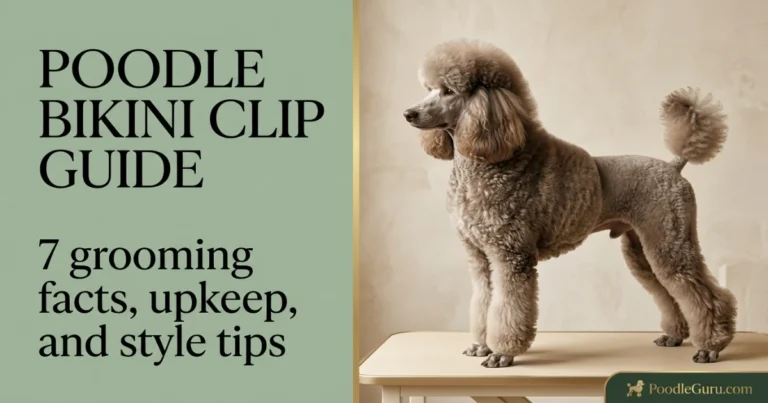
The same Poodle may need a different schedule after a haircut. A short kennel cut is easier to brush, dries faster, and collects fewer tangles. A teddy bear cut, lamb cut, continental clip, or longer fluffy style needs more coat maintenance because the curls have more length to twist around each other.
| Coat Style | Bath Frequency | Brush Frequency | Best For |
|---|---|---|---|
| Short kennel cut | Every 5–8 weeks | 2–3 times weekly | Busy owners, active dogs, hot weather, low-maintenance homes |
| Teddy bear cut | Every 4–6 weeks | 3–5 times weekly | Owners who want a fluffy look but can brush consistently |
| Lamb cut | Every 4–6 weeks | 3–5 times weekly | Balanced style with neat body and fuller legs |
| Long coat or show-style coat | Every 2–4 weeks | Daily or near-daily | Experienced owners, show grooming, high-maintenance styling |
| Corded coat | Specialized routine | Different from brushed coat | Owners experienced with cord maintenance |
If you are still choosing a practical haircut, read the Poodle haircut styles guide, the Poodle teddy bear cut guide, and the lamb cut vs puppy cut comparison. Your haircut choice will directly affect how often bathing feels necessary.
Bath Frequency by Lifestyle: Indoor, Outdoor, Swimming, and Allergies
A Poodle’s lifestyle can change bath timing more than size does. A clean indoor Toy Poodle and an outdoor-loving Standard Poodle should not be on the same schedule. The coat tells you what is happening: if it feels sticky, smells sour, clumps when brushed, or leaves residue on your hands, the dog may need a bath earlier.
| Lifestyle | Bath Adjustment | What to Do Between Baths |
|---|---|---|
| Apartment or mostly indoor Poodle | Stay near 4–6 weeks | Wipe paws, brush regularly, clean face and sanitary areas. |
| Dog park or daycare Poodle | May need 2–4 week baths | Check for odor, saliva residue, dirt, fleas, ticks, and ear irritation. |
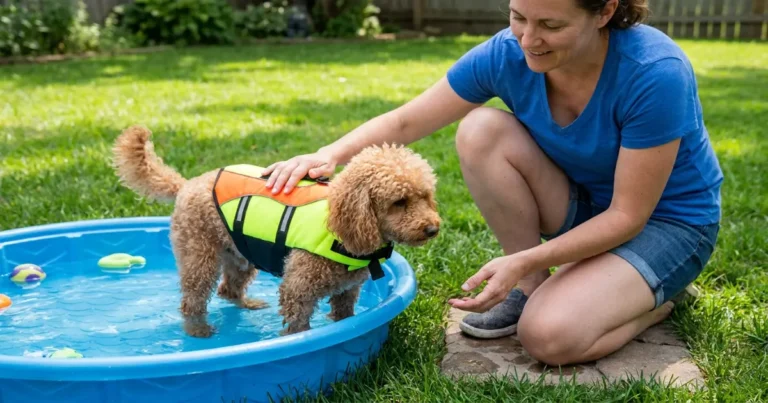
| Swimming Poodle | Rinse after swimming; shampoo when needed | Dry ears and coat fully; watch for damp smell and ear problems. |
| Allergy-prone Poodle | Follow vet plan | Use prescribed or vet-approved products; track itching and redness. |
| White or light-colored Poodle | May need more spot cleaning | Clean beard, paws, and tear-stain areas without over-bathing the full coat. |
For active Poodles, a rinse and dry may be enough after a clean-water swim or dusty walk. Full shampoo is most useful when there is actual dirt, odor, grease, urine, fecal residue, allergens, or product buildup. If your Poodle swims often, also read teaching a Poodle to swim and Poodle sports.
Signs You Are Bathing Your Poodle Too Often
Over-bathing does not always look dramatic at first. It may start as mild flakes, extra scratching, a dull coat, or a dog that seems uncomfortable after bath day. Some Poodles tolerate frequent baths well when owners use excellent products and conditioner, but many develop dryness if shampoo is used too often or rinsed poorly.
- Dry flakes along the back or neck
- Itching after every bath
- Red or irritated skin
- Coat that feels rough instead of soft
- More tangles after bathing
- Strong fragrance covering odor instead of solving it
- Your Poodle avoids the tub because the routine is stressful
The fix is usually not to stop bathing forever. Instead, improve the routine: use dog-specific shampoo, rinse longer, add conditioner when appropriate, dry fully, and stretch the schedule closer to 4–6 weeks if the coat is otherwise clean.
Signs Your Poodle Needs a Bath Now
A Poodle can need a bath before the calendar says so. The coat should feel clean, separated, and easy to brush. If your comb catches because the hair feels sticky or dusty, or if the dog smells even after brushing, it may be time.
- The coat smells oily, sour, musty, or dirty.
- Your hands feel residue after petting the coat.
- The coat clumps together instead of separating easily.
- The paws, beard, ears, or sanitary areas smell unpleasant.
- Your Poodle rolled in grass, mud, feces, or unknown outdoor debris.
- The dog has visible dirt near the skin, not just on the top curls.
- Your groomer says the coat is harder to work through because of buildup.
If odor comes from one specific area — especially ears, mouth, skin folds, or the rear end — treat it as a clue. A full bath may make the dog smell better for a day, but the cause may still need attention. For mouth odor, read Poodle dental care and Poodle teeth brushing. For recurring skin issues, see Poodle skin problems.
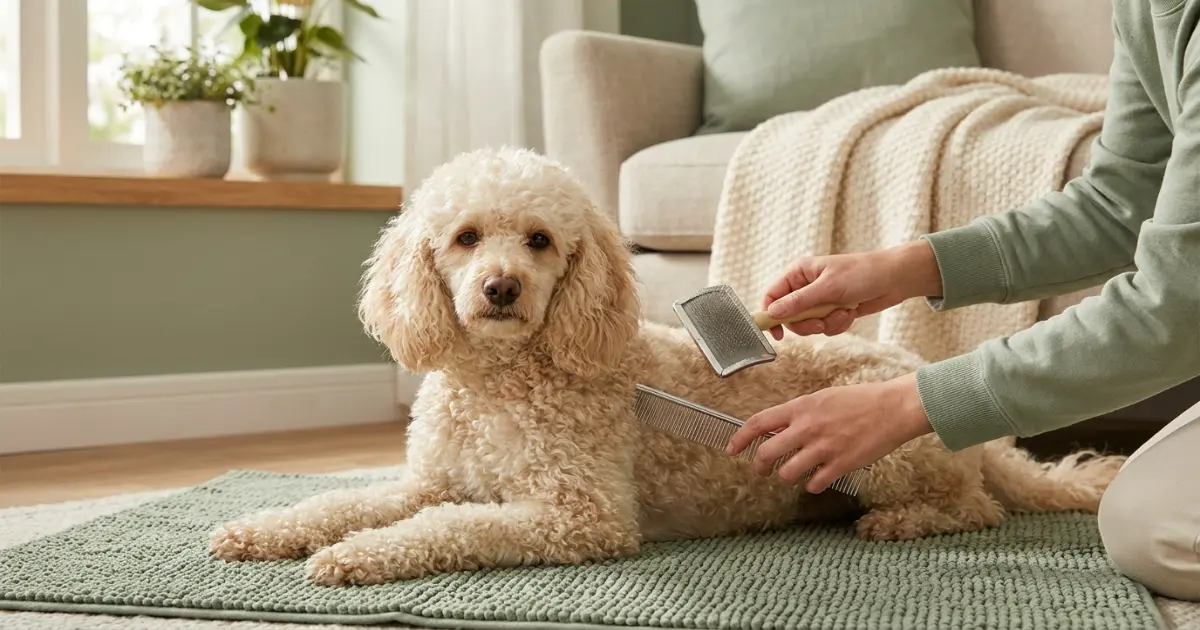
How to Bathe a Poodle Safely: Step-by-Step Routine
A good Poodle bath starts before the water turns on. Because curls can hide mats, the pre-bath brush is not optional. If you skip it, small tangles can tighten into painful mats during the bath and dry-down.
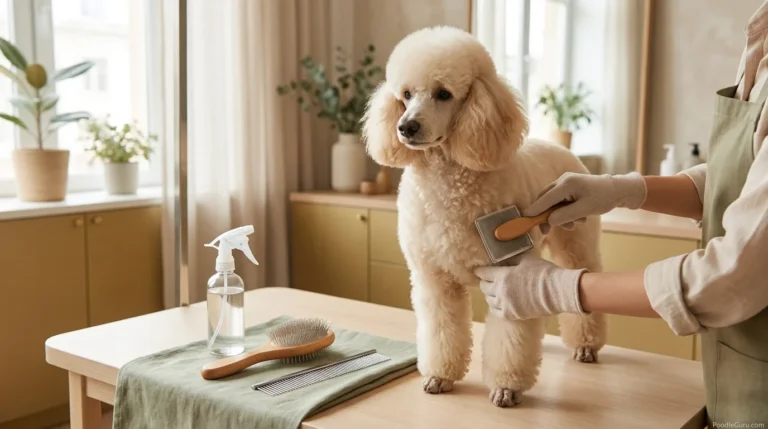
Brush and Comb Before the Bath
Use a slicker brush to open the coat, then follow with a metal comb to check the skin-level hair. Pay special attention behind the ears, under the collar, armpits, chest, belly, tail base, and inner legs. If the comb cannot pass through, the bath should wait until the mat is safely handled.
Use Lukewarm Water
Water should feel comfortable, not hot. Wet the coat thoroughly down to the skin. Poodle hair can repel water at first, so take your time. Keep water out of the ear canals and avoid spraying directly into the eyes or nose.
Use Dog-Formulated Shampoo
Dogs should use shampoo made for dogs, not human shampoo. Dog skin differs from human skin, and human products can be too harsh for routine use. Choose a gentle, moisturizing, dog-safe shampoo. For sensitive skin, fragrance-light or hypoallergenic formulas are usually better than heavily perfumed products.
Massage Gently — Do Not Scrub Like Carpet
Work shampoo through the coat with your fingers, moving in the direction of the hair. Aggressive circular scrubbing can create tangles. Clean the paws, legs, belly, beard, and sanitary areas carefully because these are common odor zones.
Rinse Longer Than You Think
Residue left in a curly coat can cause itching, dullness, flakes, and sticky hair. Rinse until the coat feels clean and water runs clear. Thick areas like chest, ears, neck, legs, and tail base often need extra rinsing.
Condition When Needed
A light dog conditioner or coat spray can help reduce dryness and make brushing easier, especially for long-coated, dry-skinned, or frequently groomed Poodles. Do not use heavy products that leave the coat greasy or attract dirt.
Dry Fully While Separating the Coat
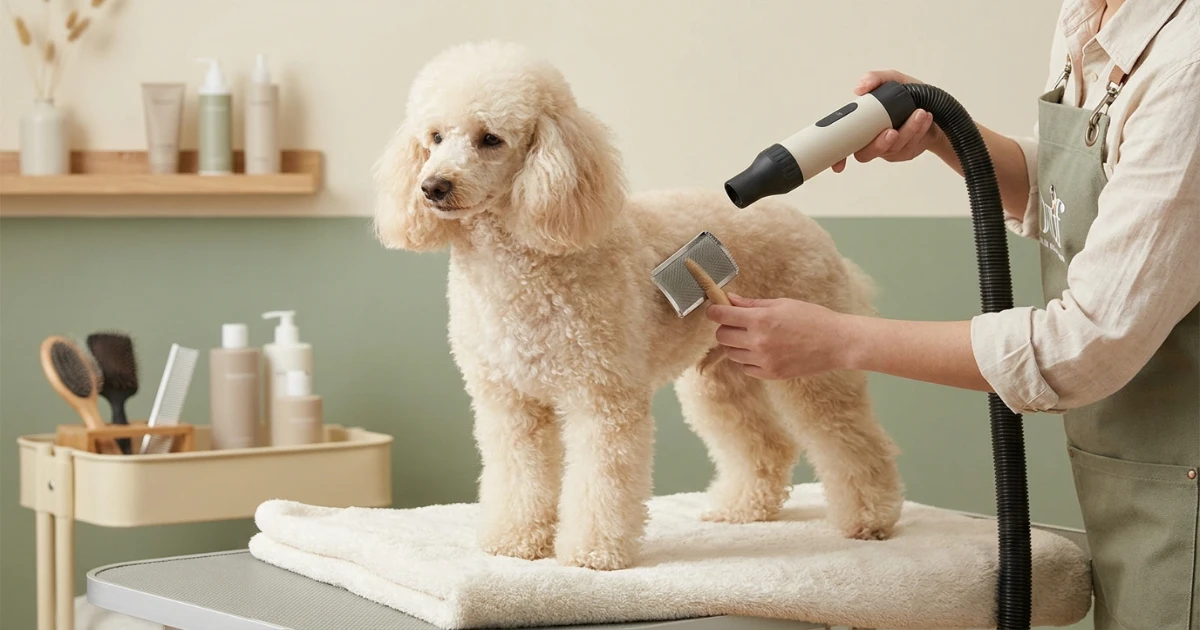
Towel-blot first, then dry the coat fully. For many Poodles, a low-heat dryer while brushing is better than air drying. Air drying can allow curls to clump and mat, especially in longer coats.
Drying a Poodle Correctly Matters as Much as Bathing
Poodle owners often focus on shampoo and forget the dry-down. But drying is where many coat problems begin. If the coat dries in tight clumps, mats can form quickly. If the coat stays damp near the skin, the dog may develop a musty smell even though you just bathed them.
| Drying Method | Best For | Risk | PoodleGuru Advice |
|---|---|---|---|
| Towel only | Very short coats, small quick spot baths | May leave dense curls damp near skin | Use only for short coats or finish with air flow. |
| Air drying | Short coats in warm, dry weather | Curl clumping, damp smell, new mats | Avoid for long or thick coats. |
| Low-heat dryer + brushing | Most Poodles | Heat stress if too hot or too close | Use low heat, keep airflow moving, brush gently. |
| Professional dryer | Standards, long coats, show coats | Noise sensitivity if not introduced gradually | Desensitize slowly and use positive reinforcement. |
If your Poodle’s coat mats soon after every bath, the problem may not be bath frequency. It may be incomplete pre-brushing, product residue, air drying, or brushing only the top layer. For tool help, see best slicker brush for Poodles, best grooming clippers for Poodles, and Poodle grooming tools.
Seasonal Bathing: Summer vs Winter
Poodles may need different routines throughout the year. In summer, they may sweat through paw pads, collect pollen, swim, hike, and get dusty. In winter, they may deal with dry indoor air, muddy walks, rain, snow, wet paws, and coat friction from sweaters or winter coats.
Summer Bathing
Summer does not automatically mean weekly baths. Instead, think about exposure. A Poodle who swims, plays in grass, or goes to parks may need more frequent rinsing and occasional earlier baths. A Poodle who stays indoors in air conditioning may not need much change.
Winter Bathing
In winter, avoid leaving the coat damp. A cold, damp Poodle is uncomfortable, and thick curls can hold moisture longer than expected. If your Poodle wears a sweater or coat, check friction zones under the neck, armpits, and chest. Sweaters can hide mats.
When Poodle Smell Means a Health Problem
A healthy Poodle should not have a strong sour, yeasty, rotten, or fishy smell right after grooming. If odor returns quickly, look for the source instead of automatically bathing again. The location of the smell usually gives the best clue.
| Smell Location | Possible Cause | What to Check | Next Step |
|---|---|---|---|
| Ears | Moisture, wax, yeast, infection | Redness, head shaking, scratching, discharge | Read eye discharge for related face care and ask vet for ear symptoms. |
| Mouth | Dental disease, trapped food, gum irritation | Bad breath, tartar, red gums, chewing pain | See Poodle dental care. |
| Skin | Allergies, dermatitis, yeast, hot spots | Redness, flakes, greasy feel, licking | See Poodle skin problems. |
| Rear end | Anal glands, stool residue, sanitary coat issues | Scooting, licking, fishy odor | Ask groomer or vet if odor persists. |
| Whole coat | Damp undercoat, product residue, dirty bedding | Musty smell after bath, sticky coat | Improve rinsing, drying, and wash bedding. |
Common Poodle Bathing Mistakes
Most bath problems come from small steps that owners skip because the Poodle looks clean on the surface. Curly coats hide issues. A quick bath may feel efficient, but if the coat is not brushed, rinsed, and dried correctly, the dog may come out less comfortable than before.
Mistake 1: Bathing Over Mats
Water tightens tangles. If you cannot comb through the coat before the bath, stop and handle mats first.
Mistake 2: Using Human Shampoo
Human shampoo can be too harsh for dog skin. Use dog-formulated shampoo for routine baths.
Mistake 3: Rushing the Rinse
Residue in curls can cause itching, dullness, flakes, and sticky coat texture.
Mistake 4: Air Drying Long Coats
Air drying may allow curls to clump into mats, especially on Standards and fluffy cuts.
Mistake 5: Covering Odor With Perfume
Fragrance does not fix ear, skin, dental, or anal gland odor. Find the source.
Mistake 6: Skipping Bath Training
A calm bath dog is trained gradually. Treats, gentle handling, and short sessions matter.
What Shampoo Should You Use for a Poodle?
This article is about frequency, not a product ranking, but shampoo choice affects how often your Poodle can be bathed comfortably. For routine baths, choose a dog-formulated shampoo that is gentle, moisturizing, and easy to rinse. Avoid harsh fragrance, heavy residue, and products made for human hair.
| Shampoo Type | Best For | Be Careful If |
|---|---|---|
| Hypoallergenic dog shampoo | Sensitive skin, routine baths, puppies, seniors | Your dog has a diagnosed skin condition needing medicated shampoo. |
| Oatmeal or aloe dog shampoo | Dry or mildly itchy skin | Your Poodle is allergic to any ingredient in the formula. |
| Whitening or brightening dog shampoo | White, cream, silver, or light coats | Used too often or not rinsed fully. |
| Medicated shampoo | Vet-diagnosed skin problems | You are guessing without a diagnosis. |
| Human shampoo or baby shampoo | Emergency only if no dog option is available | Routine use. Dog shampoo is the safer regular choice. |
A full product comparison can live on a separate commercial page such as “Best Shampoo for Poodles.” For this guide, the most important rule is simple: choose a dog-safe formula, rinse thoroughly, and match the product to your Poodle’s skin and coat condition.
Simple Poodle Bathing Schedule You Can Follow
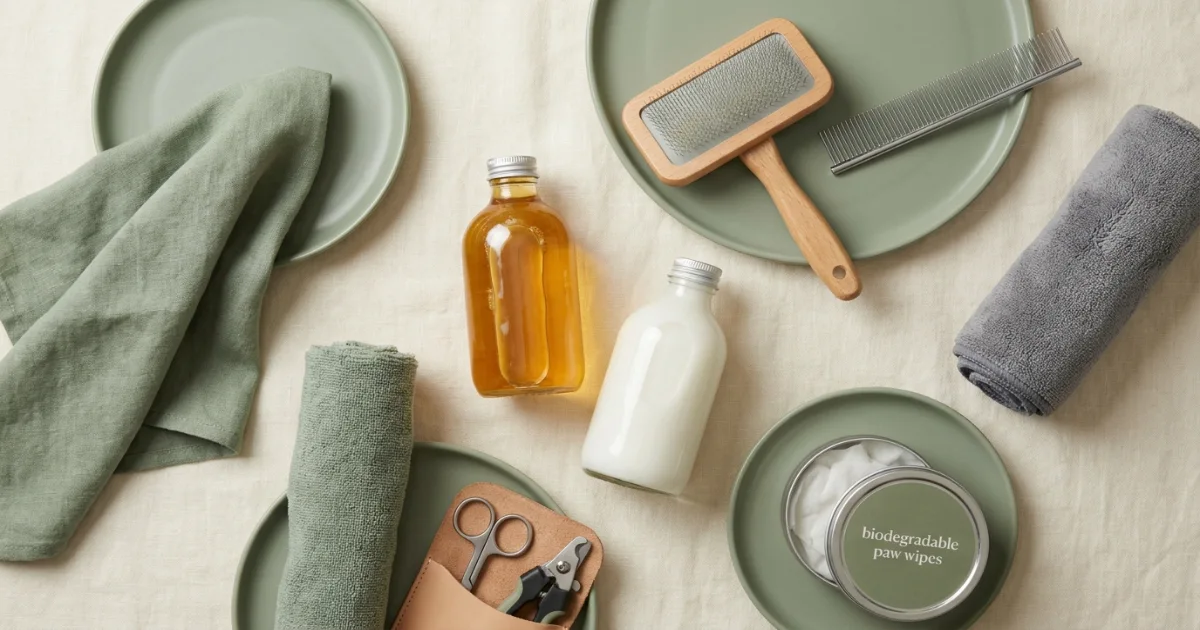
If you want an easy routine, start with a 4-week check cycle instead of forcing a fixed bath date. Every 4 weeks, inspect the coat, smell, skin, ears, paws, and brushing difficulty. If everything is clean, you can wait. If the coat is dirty, sticky, or smelly, bathe.
| Task | Frequency | Why It Matters |
|---|---|---|
| Brush and comb | 3–5 times weekly, daily for long coats | Prevents mats and reduces need for emergency grooming. |
| Check ears | Weekly | Poodles can trap moisture and hair around ears. |
| Wipe paws and face | As needed | Reduces odor without full bathing. |
| Full bath | Usually every 4–6 weeks | Keeps coat clean while avoiding unnecessary over-washing. |
| Nail trim | Every 2–4 weeks for many dogs | Comfort, posture, and safe movement. |
| Professional grooming | Often every 4–8 weeks | Haircut, coat reset, sanitary trim, feet, face, ears. |
For a full grooming plan, connect this article with Poodle nail trimming, Poodle teeth brushing, and Poodle grooming tools.
FAQs About Bathing a Poodle
How often should you bathe a Poodle?
Most healthy pet Poodles do well with a bath about every 4 to 6 weeks. Some clean indoor Poodles can wait closer to 6 to 8 weeks, while active, long-coated, allergy-prone, or muddy Poodles may need bathing closer to every 2 to 4 weeks.
Can I bathe my Poodle every week?
Weekly bathing is not necessary for most pet Poodles and may dry the skin if products are harsh or rinsing is incomplete. Some show dogs or allergy-treatment plans may involve more frequent bathing, but routine weekly baths should use gentle dog shampoo, conditioner, and careful skin monitoring.
Should I brush my Poodle before a bath?
Yes. Brush and comb your Poodle before bathing. Wet mats tighten, and shampooing over tangles can make grooming painful afterward. Use a slicker brush first, then a metal comb to check hidden areas like behind ears, armpits, chest, and tail base.
Why does my Poodle smell after a bath?
A Poodle may smell after a bath because the coat was not fully dried, shampoo residue remained, bedding is dirty, or odor is coming from ears, mouth, skin, or anal glands. If smell returns quickly, look for the source instead of simply bathing more often.
Can I use human shampoo on my Poodle?
Human shampoo is not recommended for routine Poodle bathing because dog skin has different needs than human skin. Use dog-formulated shampoo. If your Poodle has sensitive skin, choose a gentle, fragrance-light, hypoallergenic option or ask your veterinarian for a product recommendation.
How often should a Poodle puppy be bathed?
A Poodle puppy usually only needs a full bath every 4 to 6 weeks unless dirty. The bigger goal is bath training: short, positive sessions, gentle water, non-slip footing, and calm handling. Spot-clean paws, face, and potty areas between full baths.
Do Toy Poodles need more baths than Standard Poodles?
Not always. Toy Poodles may get dirty around paws, face, and potty areas faster because they are close to the ground, but Standard Poodles have more coat to dry and maintain. Lifestyle, coat length, and brushing routine matter more than size alone.
Is it better to bathe a Poodle at home or at the groomer?
Home baths are fine for calm dogs with manageable coats, but professional grooming is helpful for long coats, matted coats, Standards, puppies learning handling, and owners without drying equipment. A groomer can also trim face, feet, sanitary areas, and nails during the same visit.
Final PoodleGuru Advice
Bathe most Poodles every 4 to 6 weeks, then adjust based on the coat in front of you. A clean, brushed, easy-to-comb Poodle does not need shampoo just because the calendar changed. A sticky, smelly, outdoor-loving, long-coated, or allergy-prone Poodle may need a bath sooner. The real secret is the full routine: brush before the bath, use dog-safe shampoo, rinse completely, dry fully, and watch for odor that points to ears, teeth, skin, or anal glands.
Next step: build your full grooming routine with Poodle grooming tools and Poodle haircut styles.
Sources and Grooming Safety Notes
This PoodleGuru article was created for owner education and reviewed for practical grooming clarity. It is not veterinary diagnosis. For medical skin issues, recurring odor, itching, wounds, discharge, or sudden coat change, contact your veterinarian.
- American Kennel Club: How to Groom a Standard Poodle — bathing and trimming timing guidance.
- VCA Hospitals: Grooming and Coat Care for Your Dog — dog-formulated shampoo and canine skin considerations.
- Virginia Tech Veterinary Teaching Hospital: Safe bathing practices — pet shampoo selection and medicated shampoo use.
- VCA Hospitals: How to Bathe Dogs with Medicated Shampoo — medicated shampoo should follow veterinary instructions.