Trusted Poodle Care Resource

Poodle Care Made
Simple, Smart,
and Stress‑Free

PoodleGuru helps Toy, Miniature, and Standard Poodle owners with practical grooming, training, health, and nutrition guidance — written for real dogs, not generic pets.

Toy, Miniature & Standard Grooming & Coat Care Puppy-to-Senior Guides Training & Behavior Help

Quick Answer

Poodle care requires consistent grooming (brushing 3–4×/week, professional clip every 6–8 weeks), positive-reinforcement training, breed-appropriate nutrition, and regular health monitoring. Toy, Miniature, and Standard Poodles share the same core needs but differ in size, exercise requirements, and grooming workload. This site provides practical, step-by-step guidance across all three sizes.

About PoodleGuru

Your poodle deserves advice built
specifically for poodles

Poodles are among the most intelligent, coat-intensive, and owner-responsive dog breeds in the world. Generic dog advice rarely covers what poodle owners actually face — from mat-prone curly coats and sensitive skin to brilliant-but-bored training challenges. PoodleGuru is designed to close that gap with clear, practical, breed-specific guidance.

Happy poodle sitting beside grooming tools and poodle care guide
🐩
Toy · Miniature · Standard All three sizes covered
✂️
Grooming that protects the coat From line-brushing technique and mat zone identification to bath routines and safe home drying — every grooming guide is built around the unique behaviour of curly poodle coats.
🦴
Training for intelligent dogs Poodles learn fast but need consistent cues and mental stimulation to stay focused. Guides cover house training, leash manners, calm settling, and real-world behavior fixes.
🩺
Health awareness made practical Owner-friendly checklists for skin, ear, dental, and joint health help you notice changes early and make better decisions — with clear guidance on when to call your vet.
🥣
Nutrition that supports the coat Feeding guidance by size type, picky-eater solutions, healthy weight management, and simple coat-supporting nutrition strategies for daily feeding.
What You’ll Find Here

Expert guides for every part of poodle ownership

Whether your poodle is a fluffy Toy curled on the couch or an athletic Standard ready for a run, every category below covers the specifics that matter for your dog.

Poodle Grooming

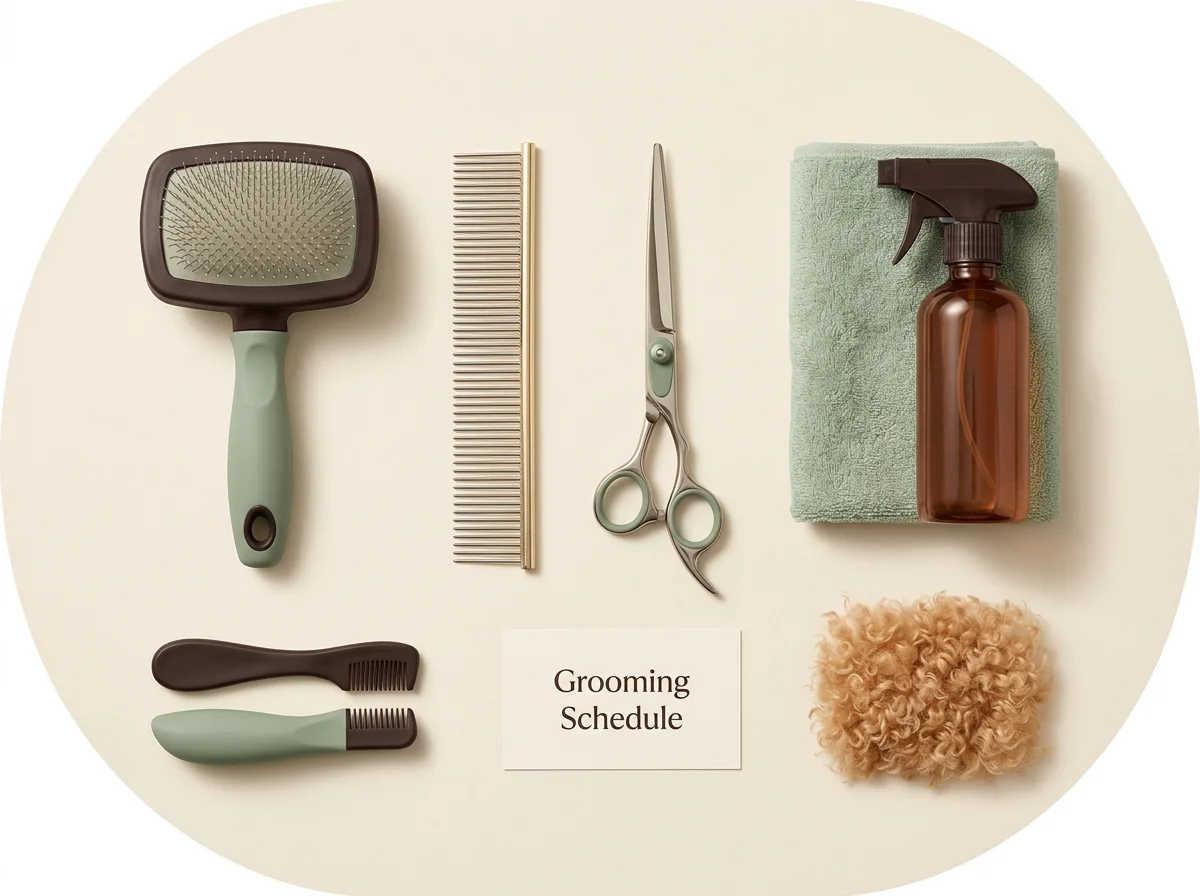
Brushing schedules, line-brushing technique, mat zone guides, bath routines, safe home drying, and coat clip basics for owners and groomers alike.

Read Grooming Guides →

Poodle Training

Step-by-step house training, leash manners, calm behavior cues, focus exercises, and daily enrichment routines designed for intelligent poodle minds.

Read Training Guides →

Poodle Health

Practical checklists for skin, ear, dental, and joint health. Know what to look for, when to act, and when to contact your veterinarian.

Read Health Guides →

Poodle Food & Nutrition

Feeding guides by size, portion management, picky-eater solutions, coat-supporting nutrients, and weight maintenance for all life stages.

Read Nutrition Guides →

Toy Poodle Guides

Size-specific care for the smallest poodle variety — including grooming frequency, portion sizes, exercise needs, and apartment-friendly routines.

Explore Toy Poodle Guides →

Miniature Poodle Guides

Practical ownership guidance for the mid-sized variety — covering grooming workload, training characteristics, and family lifestyle compatibility.

Explore Mini Poodle Guides →

Standard Poodle Guides

In-depth care for the largest poodle variety, covering their higher exercise needs, coat volume, and the rewards of owning this athletic breed.

Explore Standard Poodle Guides →

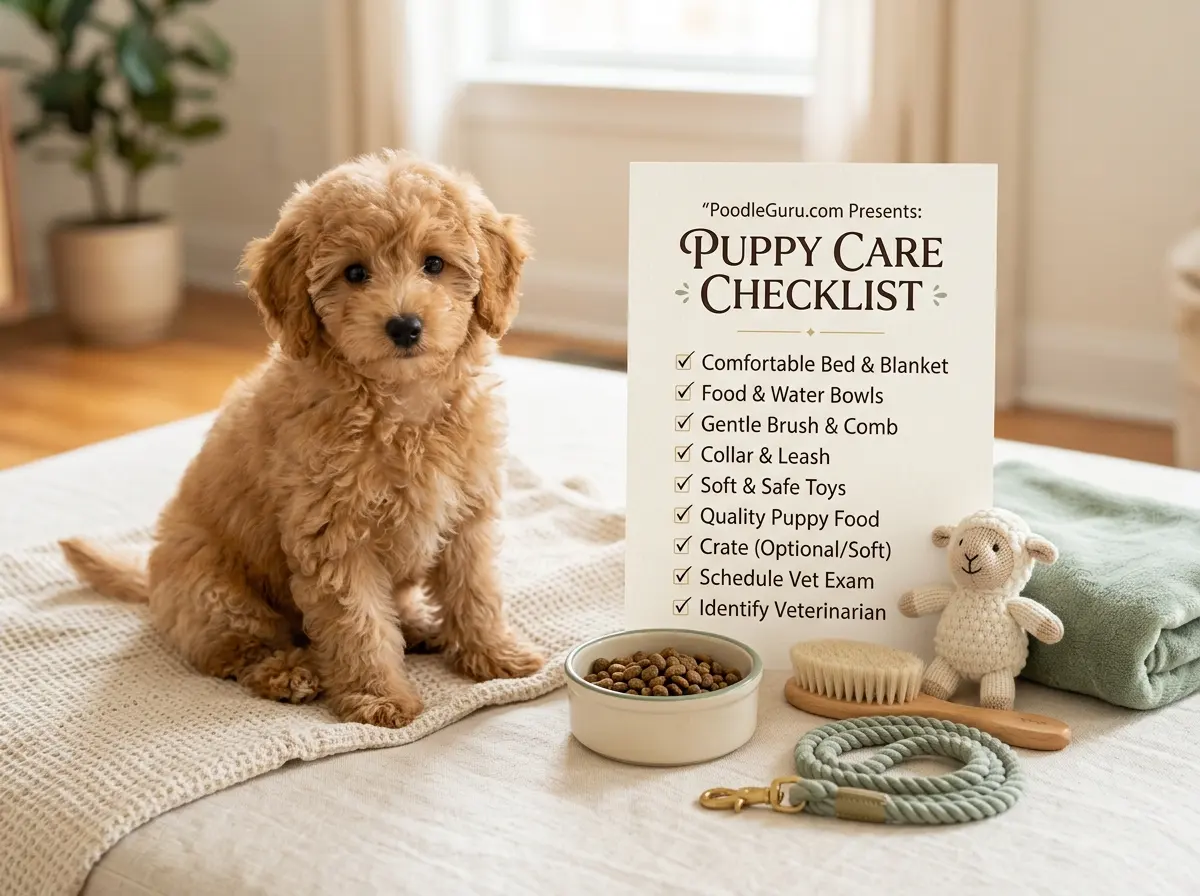
Poodle Puppy Care

First-week checklists, early grooming introductions, starter feeding guides, and essential training basics for new poodle puppy owners.

Read Puppy Care Guides →
Why Trust PoodleGuru

How we approach every poodle care guide

Every guide on PoodleGuru is written to solve a specific, real problem — not to fill a content brief. Here is the standard we hold every piece of advice to.

  • Breed-specific, not generic Poodle coats, temperaments, and needs are distinct from other breeds. Advice here addresses poodle-specific realities rather than recycled dog ownership tips.
  • Practical grooming and care routines Instructions are broken into clear steps with realistic frequency, common mistakes to avoid, and guidance on building sustainable habits over time.
  • Beginner-friendly explanations Technical grooming and training concepts are explained in plain language with context, so first-time poodle owners feel confident rather than overwhelmed.
  • Clear puppy and buying guidance Choosing a poodle type, preparing your home, and understanding what ownership actually requires — covered honestly without overpromising how easy any of it is.
  • Responsible ownership focus Guides emphasize coat safety, gentle handling, appropriate vet involvement, and real-world routines that respect the dog’s wellbeing.
  • No fear-based or exaggerated advice Content is written to inform and empower, not to alarm. Where veterinary care is appropriate, that guidance is given clearly rather than replaced with online advice.

Built for how owners actually use it

Most poodle owners come to PoodleGuru with a specific problem to solve — mats they can not seem to fix, a training issue they are stuck on, a feeding question, or uncertainty about a health sign. Each guide is structured to answer that problem fast, then give the deeper context to prevent it from recurring.

Step-by-step systems Poodle-specific logic Gentle, safety-first Regularly updated Vet-forward on health
Start With Poodle Care Guides →
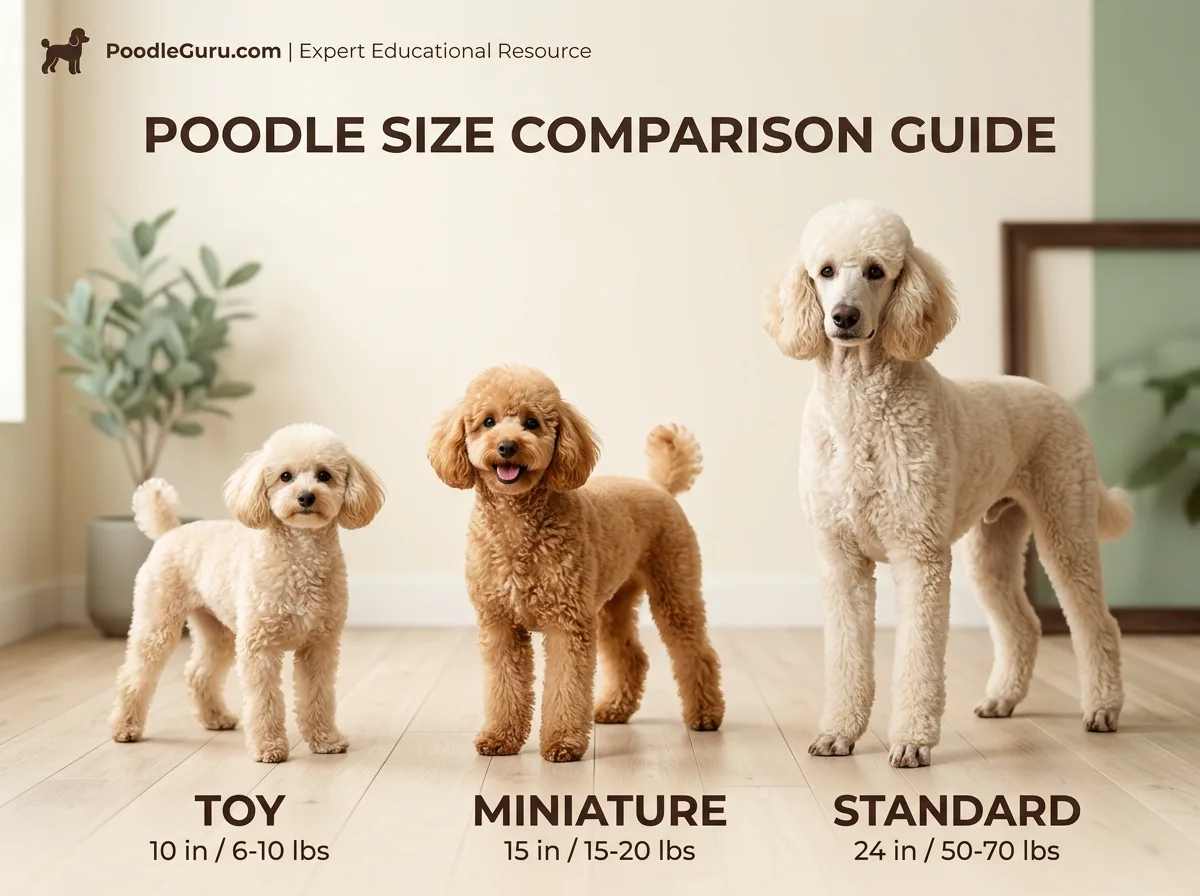
Size Comparison

Toy vs Miniature vs Standard Poodle — at a glance

All three poodle varieties share the same intelligence, coat type, and trainability — but differ meaningfully in size, energy, and care workload. Here is a practical overview to help you choose or better understand your poodle.

Toy Poodle

Up to 10 inches tall

Best for Apartment living, smaller households, or owners who prefer a compact companion.
Personality Alert, affectionate, highly attached to their owners. Can be sensitive to loud environments.
Grooming Regular brushing and trimming needed. Mat-prone behind the ears and in the groin area.
Exercise Moderate — daily walks and indoor play generally sufficient for most individuals.
Beginner fit Good — highly trainable, though coat care commitment should not be underestimated.

Standard Poodle

Over 15 inches tall

Best for Active families, homes with space, or owners who want an athletic and highly capable dog.
Personality Calm, dignified, and deeply loyal. Generally steady with children and other animals.
Grooming More surface area means more brushing time and higher professional grooming costs.
Exercise Higher needs — benefits from daily active exercise beyond a standard walk.
Beginner fit Manageable with commitment — their intelligence and eagerness to please make training rewarding.
Ready to Start?

Build a better routine
for your poodle

Every guide on PoodleGuru is built to solve a real problem — whether your biggest challenge is mat prevention, leash manners, feeding confusion, product choice, or building a grooming routine that finally sticks.

Common Questions

Poodle care questions, answered clearly

Practical answers for the questions poodle owners ask most — written for everyday home use. For any health concern, always consult a qualified veterinarian.

Are poodles easy to care for?
Poodles are rewarding to own but do require consistent, breed-specific care. Their curly coats need brushing 3 to 4 times per week to prevent matting, plus professional grooming every 6 to 8 weeks. Training is typically straightforward because poodles are highly intelligent and motivated — but that same intelligence means they need mental stimulation and routine to stay content. Owners who invest in learning the coat-care basics early find the rest of poodle ownership comes together naturally.
How often should a poodle be groomed?
Home brushing should happen at least 3 to 4 times per week, ideally every other day for longer coats. Pay particular attention to high-risk mat zones: behind the ears, armpits, the groin, the collar area, and the tail base. Professional grooming — a full bath, blow-dry, clip, and trim — is generally recommended every 6 to 8 weeks, depending on coat length and your poodle’s lifestyle.
Are poodles good for first-time dog owners?
Yes — poodles can be an excellent choice for first-time owners who are ready to commit to their grooming and mental stimulation needs. They are among the most trainable dog breeds, respond well to positive reinforcement, and are generally eager to please. The main consideration for first-time owners is the coat: brushing and professional grooming are non-negotiable, and learning the basics before bringing a poodle home will make the first months much smoother.
What is the difference between Toy, Miniature, and Standard Poodles?
All three are the same breed — they share the same coat type, intelligence, and core temperament — but differ significantly in size, energy level, and exercise needs. Toy Poodles are the smallest (under 10 inches), suit smaller homes, and have moderate exercise requirements. Miniature Poodles are mid-sized (10–15 inches) and highly adaptable. Standard Poodles are the largest (over 15 inches), the most athletic, and generally need more daily active exercise. Grooming commitment scales with size.
Do poodles need a lot of training?
Poodles learn quickly, but regular training is still important — not because they are difficult, but because their intelligence means inconsistency leads to boredom and unwanted habits. Short daily sessions (10–15 minutes) using consistent positive-reinforcement techniques work far better than occasional longer sessions. Most poodles master basic house manners, leash skills, and recall relatively quickly once a routine is established.
What should new poodle owners learn first?
The single most impactful thing new poodle owners can learn first is how to brush correctly and where mats form. Getting the grooming routine established early prevents a common spiral where coats become unmanageable and grooming becomes stressful for the dog. After that, establishing a simple daily routine for feeding, short training sessions, and exercise makes the rest of ownership much easier. The Poodle Puppy Care and Grooming sections on this site are the recommended starting points.
🩺 A note on health guidance: The information on PoodleGuru is intended for general educational purposes and is not a substitute for professional veterinary advice. If your poodle is showing signs of illness, pain, sudden behavior changes, or any health concern, please contact a qualified veterinarian for personalised guidance.