Poodle Dental Care: Teeth Brushing + Chews Guide
Poodle dental care requires daily toothbrushing with a dog‑specific enzymatic toothpaste and a soft brush, combined with safe dental chews that carry the VOHC seal. Because poodles have narrow jaws and crowded teeth, they are prone to plaque, retained baby teeth, and early periodontal disease. A consistent home routine plus annual veterinary cleanings are non‑negotiable for lifelong oral health.
That famous poodle smile hides a secret: those perfectly aligned front teeth are often masking trouble deeper in the mouth. Toy and Miniature Poodles especially inherit tight jaw arches where 42 adult teeth fight for space. Food, bacteria, and plaque build‑up in these cramped quarters can turn into gum disease years before you notice anything wrong. Poodle dental care isn’t an optional grooming extra — it’s a core pillar of ownership that directly impacts your dog’s heart, kidneys, and overall longevity.
Too many owners treat doggy breath as normal or assume that kibble alone cleans the teeth. The truth is far more demanding, and far more rewarding, once you get the routine right. In this guide I’ll walk you through brushing technique, chews that actually work, what to avoid, and the costs you should plan for in 2026.
🦷 Crowded Mouths
Toy and Miniature Poodles often have teeth that overlap or rotate because the jaw is too short. This creates plaque traps that daily brushing must disrupt.
🩺 Systemic Risk
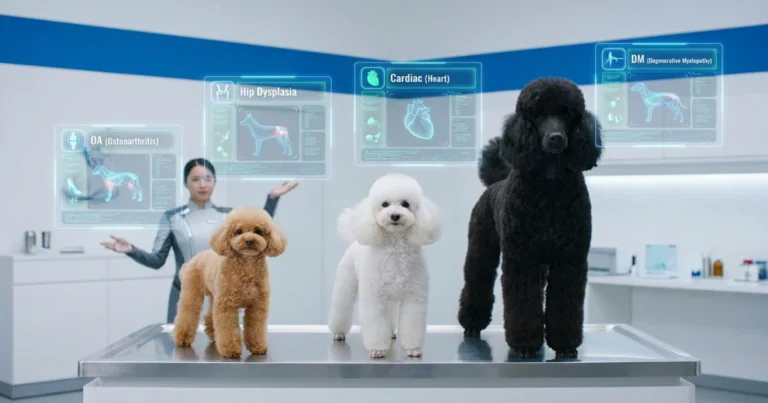
Periodontal bacteria enter the bloodstream. Dental disease has been linked to heart valve infections, kidney damage, and worsened diabetes in poodles.
🧪 Not All Chews Work
Many “dental” chews are empty marketing. Look for the Veterinary Oral Health Council (VOHC) seal on products proven to reduce plaque and tartar.
🪥 Brushing Gold Standard
Nothing replaces the mechanical action of a brush. Chews and water additives are supportive tools, but brushing is the backbone of effective home care.
Why Poodle Dental Health Demands Special Attention
Unlike larger dogs with spacious jaws, poodles — particularly Toy and Miniature varieties — have a shortened muzzle that compacts a full set of teeth into a tight arcade. Deciduous (baby) teeth sometimes stubbornly refuse to fall out, forcing permanent teeth to erupt crookedly beside them. These retained teeth create pockets where hair, food debris, and bacteria accumulate. A poodle’s fine coat doesn’t help either — they can get hair wrapped around teeth at the gumline after grooming.
Add to this the fact that small dogs have proportionally larger teeth relative to jaw size, and you get a mouth that demands daily attention. Plaque mineralizes into tartar within 36–48 hours. Once tartar hardens, only a professional scaling under anesthesia can remove it. The timeline is unforgiving, which is why starting a routine early — the day your puppy comes home — sets the trajectory for years of robust health.
Doggy Breath or Red Flag? Distinguishing Normal From Troubling
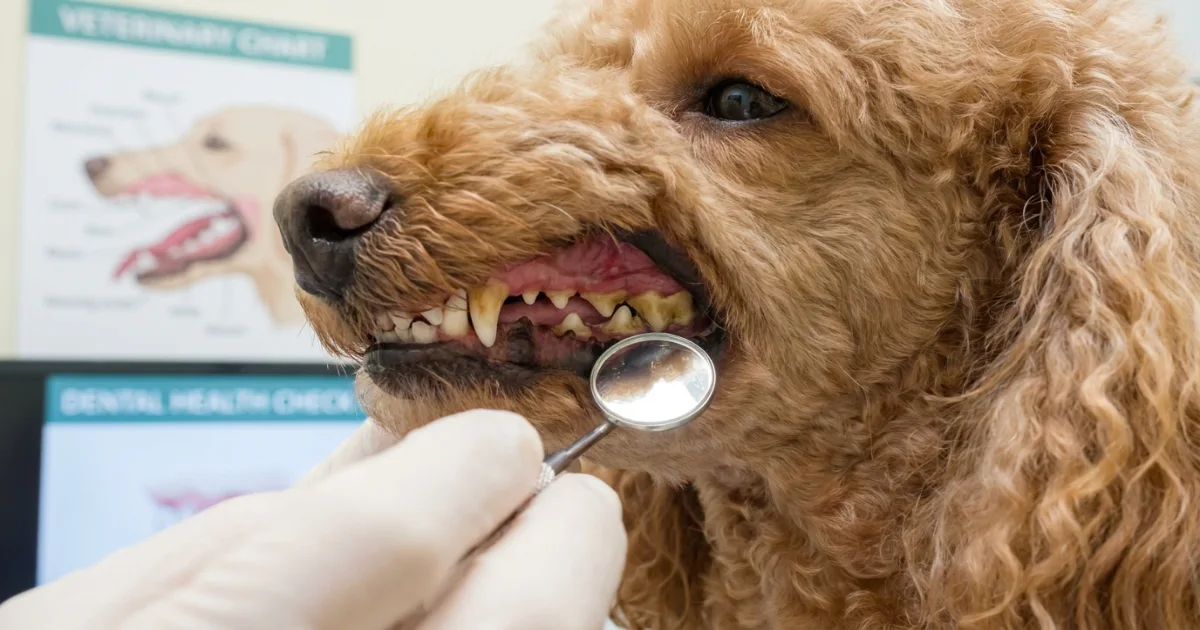
All dogs have a certain mouth odor after eating, but when your poodle’s breath smells consistently sour, metallic, or like rotting fish, it’s not a cosmetic issue. That scent often comes from volatile sulfur compounds produced by bacteria digesting food particles trapped below the gumline. It indicates gingivitis or early periodontitis. Pay attention to other signs: red or bleeding gums, brownish‑gray tartar crust along the molars, pawing at the mouth, dropping food, or a reluctance to chew on one side. These are all signals that home care has fallen behind and a vet dental visit is overdue.
Step‑by‑Step: How to Brush Your Poodle’s Teeth Properly
Many owners abandon brushing because their poodle fights it. The problem usually isn’t the dog — it’s the gradual introduction being skipped. Here’s a method that respects poodle intelligence and builds trust.
Gather the Right Tools
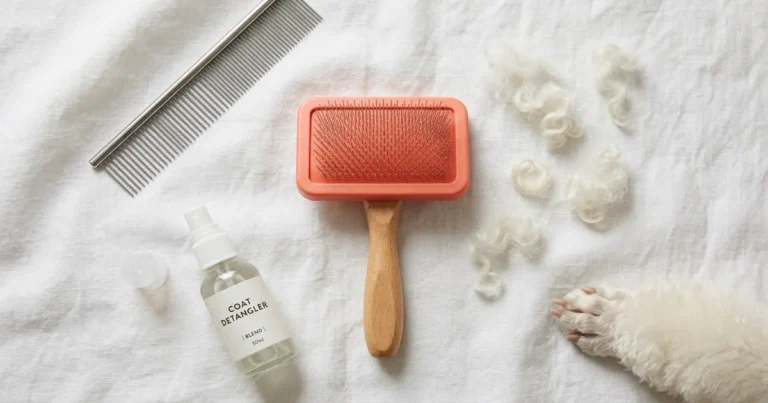
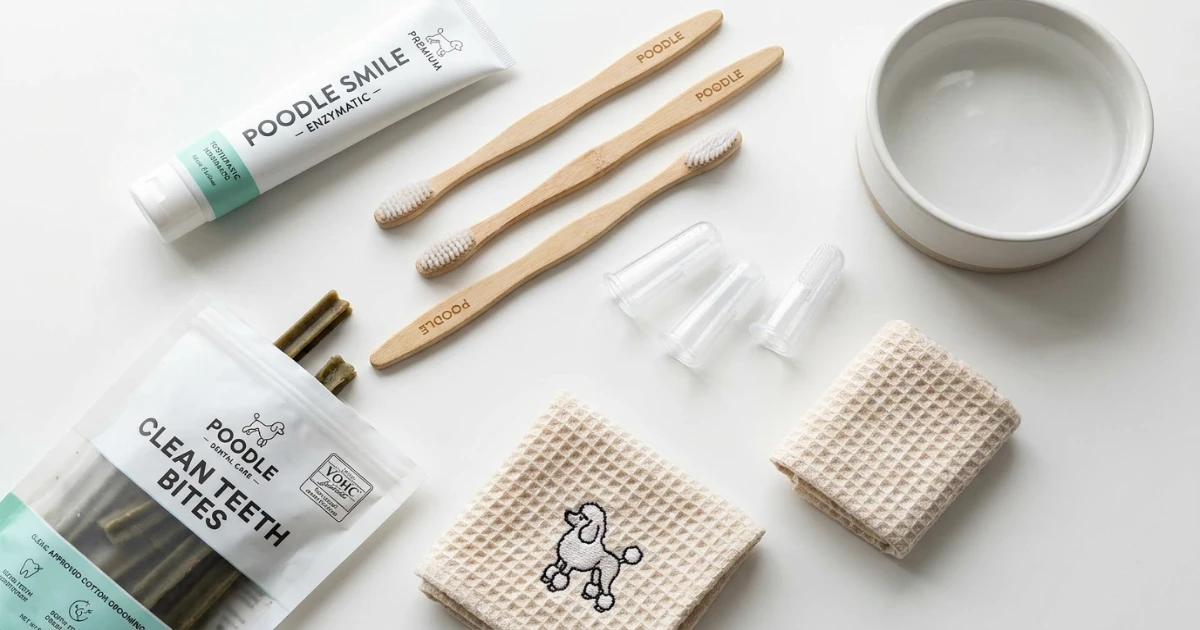
Use a dog‑specific enzymatic toothpaste (poultry or beef flavor preferred) — never human toothpaste with fluoride or xylitol. A soft‑bristled dog toothbrush or a silicone finger brush works best for tiny mouths. For toy poodles, a children’s extra‑soft brush can reach the back molars comfortably. Have high‑value treats on hand as a reward.
The Acclimation Schedule
Week 1: Put a tiny dab of toothpaste on your finger and let your poodle lick it off. Do this daily, pairing with praise. No brush yet.
Week 2: Gently lift the lips and run your finger along the outer gumline for 5–10 seconds. Reward heavily. Introduce the dry brush by letting your poodle sniff and lick it.
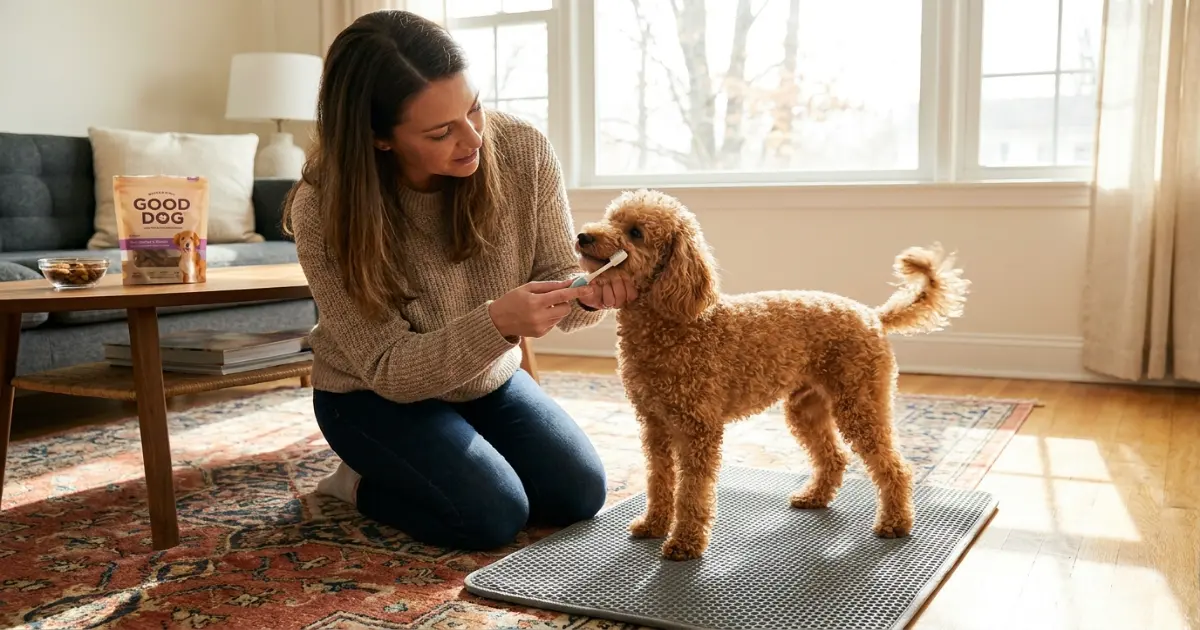
Week 3: Add toothpaste to the brush. Angle the bristles at a 45‑degree angle to the gumline and brush the outer surfaces of the back molars using small circles. Aim for 30 seconds per side. Don’t force the mouth open — poodles tolerate outer‑surface brushing far better. Their tongue movement naturally spreads the enzymatic paste.
Week 4: Gradually increase to 60 seconds of brushing, covering all teeth. End every session with a reward. Consistency matters more than perfection; even 3–4 times a week with correct technique dramatically reduces plaque.
A common owner mistake is attempting to brush a poodle’s teeth while the dog is restrained on its back. This position can trigger anxiety and defensive reactions. Instead, sit your poodle on a non‑slip mat in front of you, or have them stand on a grooming table with gentle restraint. The goal is cooperative care, not forced handling.
Dental Chews, Treats, and Chews That Actually Help
VOHC‑approved dental chews can reduce plaque and tartar when used alongside brushing. They are not a substitute, but they are a powerful adjunct. The rigid, slightly abrasive texture scrapes the tooth surface mechanically, and the chew action stimulates saliva with antibacterial enzymes.
| Chew Product | VOHC Seal? | Best For | Notes for Poodles |
|---|---|---|---|
| Greenies (Teenie/Petite) | Yes | Toy, Miniature | Soft enough for tiny jaws but dissolves quickly; supervis |
| Purina DentaLife | Yes | Miniature, Standard | Porous texture reaches gumline; check size carefully for toy poodles |
| Oravet Dental Hygiene Chews | Yes | All sizes | Contains delmopinol that creates a barrier; can be pricey |
| Whimzees (XS/S) | Yes | Toy, Miniature | Potato‑based; knobby shapes help mechanical cleaning |
| Rawhide alternatives (Beef cheek rolls) | Not always | Standard | High choking risk for small poodles; supervise closely |
🐩 PoodleGuru Chew Tip
Introduce any new chew for short supervised sessions. A toy poodle can choke on a piece that breaks off unexpectedly. Always provide fresh water, and if your poodle tries to swallow the last inch, take it away. Dental chews are not toys — they’re consumable tools.
What Buyers Usually Get Wrong About Poodle Dental Care
The most pervasive myth is that dry kibble cleans teeth. While some dental‑specific kibbles have a larger, fibrous kibble design that helps scrub, ordinary kibble shatters on contact with tooth and does very little. In fact, many poodles swallow kibble nearly whole, especially small breeds. Relying on diet alone without brushing almost guarantees periodontal disease by age 3.
Another misunderstanding: believing annual non‑anesthetic dental cleanings are equivalent to a full veterinary dental prophylaxis. Non‑anesthetic scraping only removes visible supragingival tartar. It does not address the subgingival bacteria that cause bone loss and tooth loosening. It also cannot take dental X‑rays, which are critical for poodles — 60% of the tooth structure lies below the gumline. Anesthesia, when performed with modern monitoring protocols, is extremely safe even for older poodles, and it’s the only way to truly clean and assess the mouth.
Finally, many owners decline dental care because their poodle “eats fine.” Dogs mask oral pain masterfully. A poodle may shift food to the other side of the mouth or swallow hastily, without ever showing a limp or cry. By the time they refuse food, the disease is often advanced.
2026 Cost Breakdown: Poodle Dental Care Expenses
💰 Realistic Annual Dental Care Budget for a Poodle
| Service/Product | Frequency | Approx. Cost (2026 USD) | Notes |
|---|---|---|---|
| Enzymatic toothpaste + brush | Every 3–4 months | $25 – $35/year | One tube lasts ~3 months for a single dog |
| VOHC dental chews (daily) | Daily | $120 – $220/year | Choose size‑appropriate; bulk buying saves |
| Annual veterinary dental cleaning | Annually (or as needed) | $350 – $900 | Includes pre‑op bloodwork, anesthesia, scaling, polishing, X‑rays |
| Dental water additive (optional) | Daily | $50 – $80/year | Supportive only; never replaces brushing |
| Retained baby tooth extraction (puppy) | One‑time, often during spay/neuter | $60 – $200 | Pricing varies; removing them prevents crowding |
Total annual investment: roughly $500 – $1,400 depending on your poodle’s needs. Compare that to treating advanced periodontal disease with multiple extractions: $1,500 – $4,000. Prevention is dramatically more affordable.
Comparison: Brushing vs. Chews vs. Professional Cleaning
Each piece of the puzzle plays a distinct role, and nothing works well in isolation.
| Method | What It Does | Limitations |
|---|---|---|
| Daily Brushing | Disrupts plaque biofilm mechanically; enzymatic paste breaks down plaque matrix. Reaches gumline crevices. | Requires owner compliance; difficult to brush inner surfaces in uncooperative dogs. |
| VOHC Dental Chews | Physical abrasion reduces tartar; stimulates saliva. Reaches occlusal surfaces. | Does not reach subgingival area; limited effect on front teeth. Caloric; must be counted in daily intake. |
| Professional Veterinary Dental Cleaning | Removes supragingival and subgingival tartar under anesthesia; takes X‑rays; polishes enamel; extracts diseased teeth. | Cost; requires anesthesia. Annual frequency may still not prevent home care gaps. |
Puppy Dental Milestones: What to Watch for Up to 8 Months
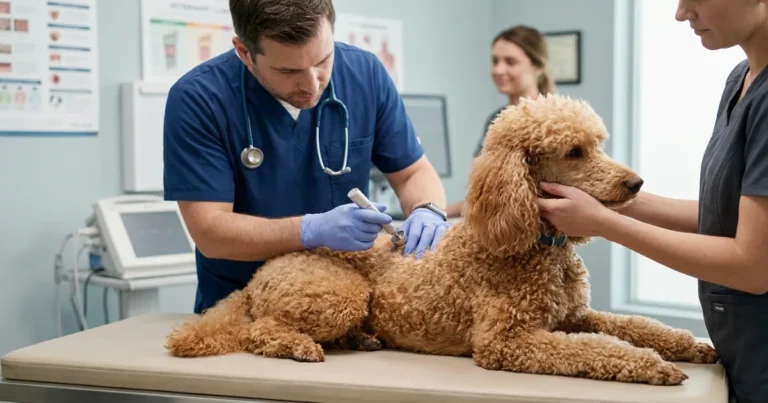
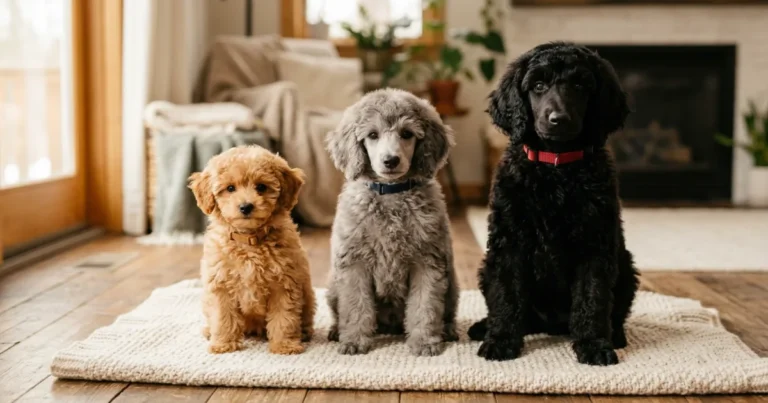
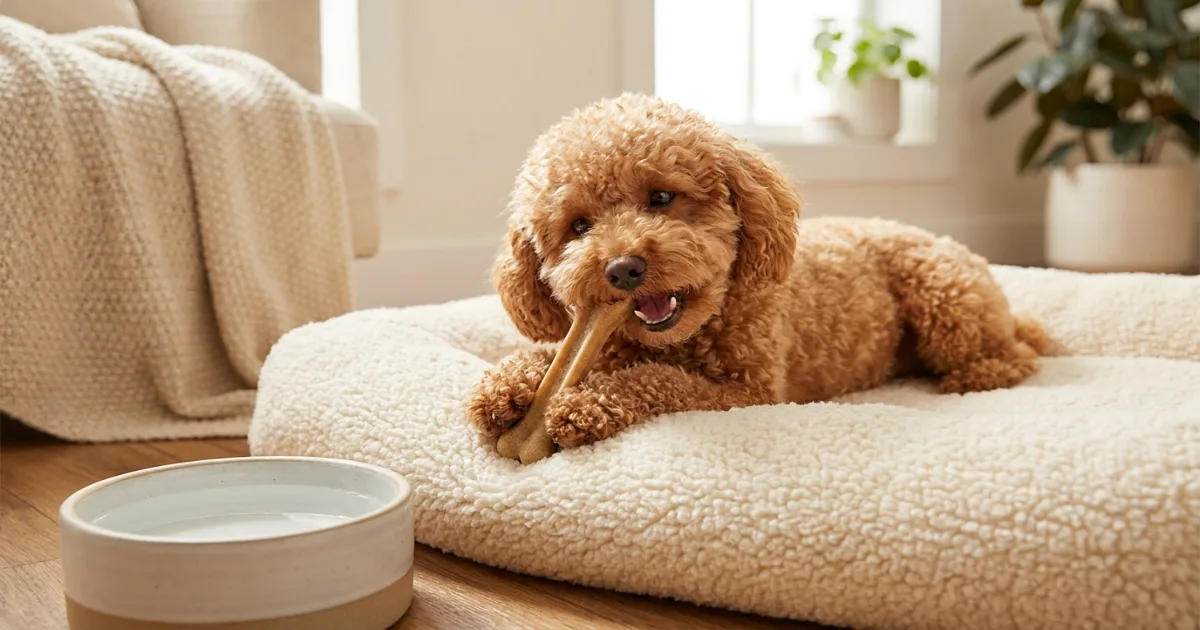
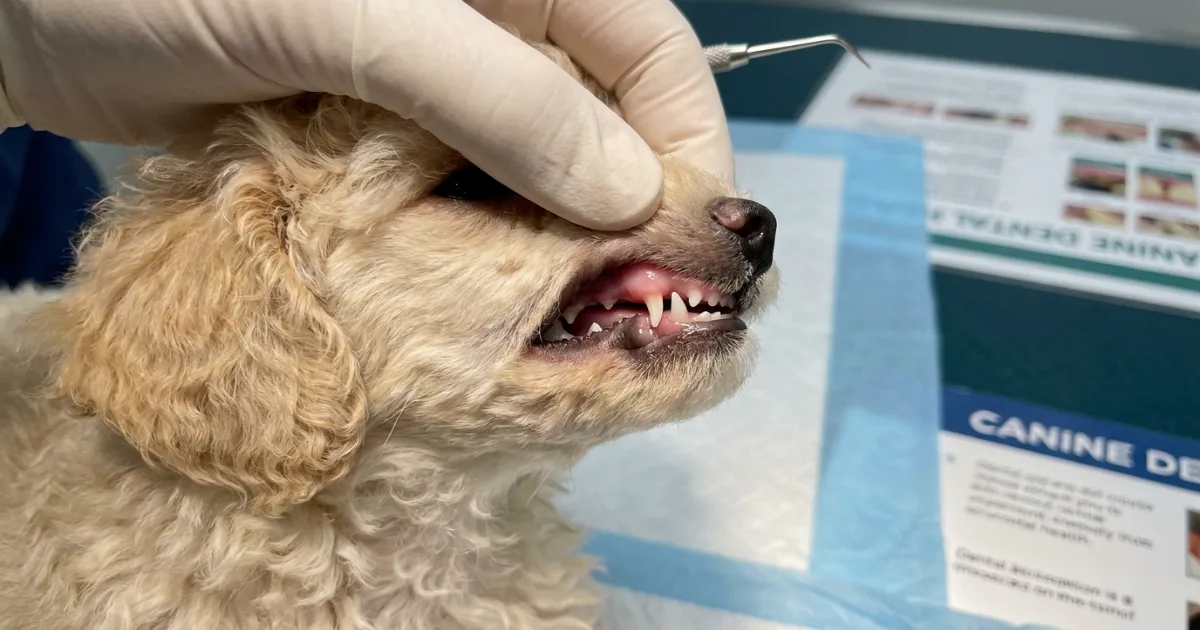
Poodle puppies start losing deciduous incisors around 12–16 weeks, followed by canines and premolars. By 6–7 months, all permanent teeth should be in place. During this transition, check daily for retained baby teeth, especially the upper canines. If a baby tooth remains firmly in place while the adult tooth is erupting beside it (a classic “double canine” look), it must be extracted promptly to prevent severe malocclusion and tartar traps. Most ethical breeders and veterinarians address this during the spay/neuter procedure if it hasn’t resolved naturally by 6 months.
Frequently Asked Questions About Poodle Dental Care
How often should I brush my poodle’s teeth?
Daily is ideal to stay ahead of the 36‑hour plaque mineralization window. If daily isn’t possible, aim for at least 4 times a week with an enzymatic toothpaste to meaningfully reduce tartar buildup.
Are dental chews safe for toy poodles?
Yes, if you select chews sized for extra‑small dogs and always supervise. The VOHC seal helps identify safe options. Avoid hard antlers or bones that can fracture teeth — toy poodle enamel is proportionally thin.
Why does my poodle have such bad breath even after brushing?
Persistent foul breath often signals subgingival tartar, an abscessed tooth, or a digestive issue. If home care doesn’t improve the smell within a few weeks, schedule a veterinary oral exam with X‑rays.
Can I use human toothpaste on my poodle?
Never. Human toothpaste contains fluoride and sometimes xylitol, both toxic to dogs. Use only dog‑specific enzymatic toothpaste in flavors poodles enjoy, like poultry or beef.
At what age should I start brushing my poodle puppy’s teeth?
Start handling their mouth daily from 8 weeks, using your finger and a tiny dab of dog toothpaste. Introduce a soft brush by 12 weeks. Early positive exposure prevents lifelong resistance.
Do water additives really help with poodle dental care?
Slightly. VOHC‑approved water additives can reduce plaque bacteria, but they cannot substitute for the mechanical action of brushing. Think of them as a mild booster, not a solution.
How do I find a vet who does good dental work on poodles?
Look for a clinic that includes pre‑anesthetic bloodwork, full‑mouth dental X‑rays, and a dedicated dental suite. Ask about their protocol for small dogs — a poodle’s jaw must be handled with tailored care.
Your Poodle’s Smile Is Worth Every Minute
Poodle dental care is not a vanity metric. It’s an ongoing, non‑negotiable act of preventive health that influences everything from heart function to temperament. A poodle living with chronic mouth pain can become withdrawn or irritable — and owners often mistake those shifts for personality changes. Incorporating brushing into your daily ritual, choosing chews with purpose, and committing to annual veterinary cleanings builds a fortress against the silent, painful progression of dental disease. Your reward is a dog who flashes a healthy, pink‑gummed grin for years to come, free from the hidden agony of rotting roots.