Why Do Dogs Roll on Their Backs? 7 Reasons Explained
Plus: why dogs wiggle when on their backs, why they sleep in this position, and what paw chewing really means — all decoded with vet-verified insights.
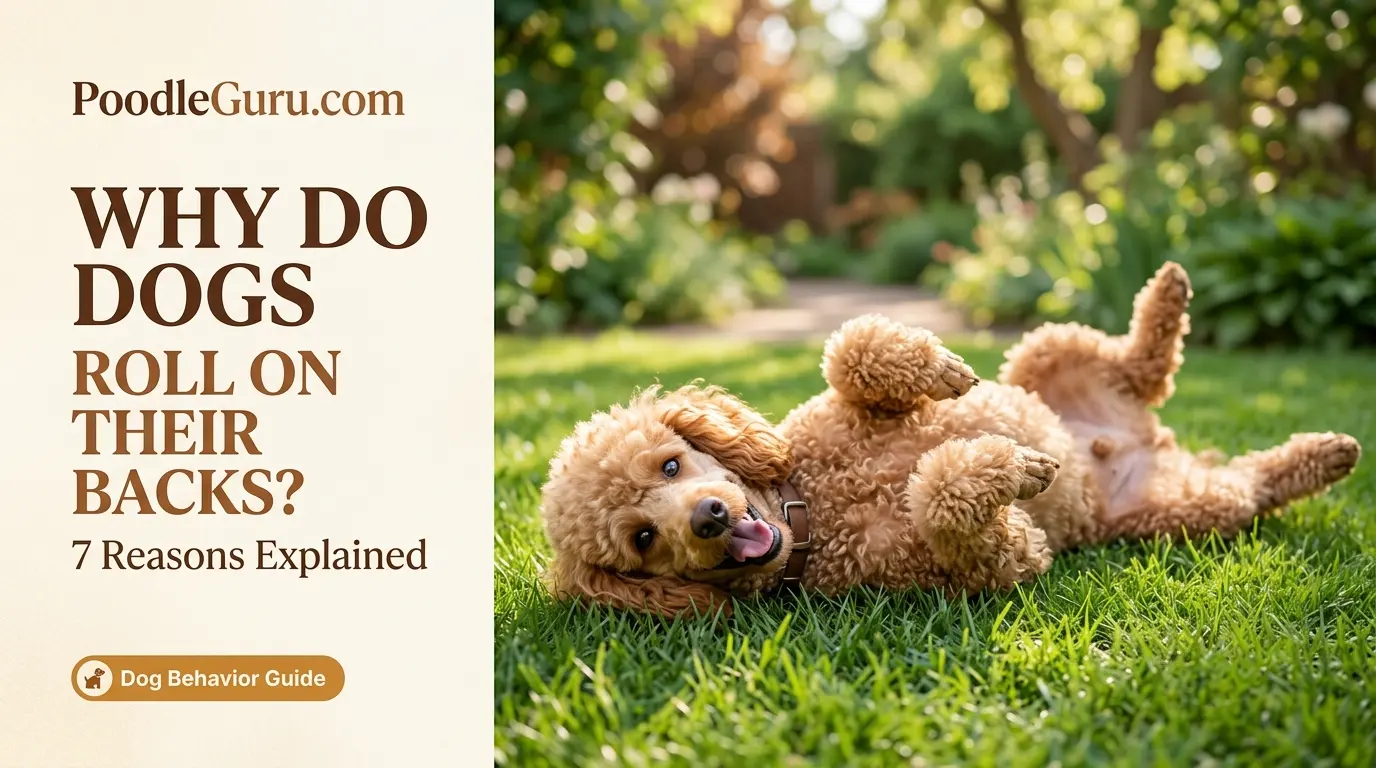
Dogs roll on their backs for 7 main reasons: showing submission or trust, requesting belly rubs, cooling their body, scratching an itch, scent-rolling instinct, playful excitement, or deep relaxation during sleep. When a dog wiggles while on its back, it is almost always a sign of happiness, not distress. This behavior is completely normal in poodles and all dog breeds.
If you have ever watched a poodle — or any dog — suddenly drop to the ground, flip onto their back, and start squirming with their legs in the air, your first reaction was probably either “that’s adorable” or “is something wrong?” The answer is almost always the former. This guide explains exactly why dogs roll and lay on their backs, decodes the wiggling behavior that confuses so many owners, and covers the closely related issue of paw chewing — a behavior that shares the same underlying anxieties and health triggers.
The 7 Reasons Dogs Roll on Their Backs
Dog body language is a layered communication system. Rolling onto the back is one of the most expressive postures a dog can adopt — but the meaning changes depending on context, accompanying signals, and environment. Here are the seven reasons, ranked from most to least common.
Submission and Trust
Exposing the belly is the most vulnerable position a dog can take. When a dog rolls onto its back in your presence — or in front of another dog — it is signaling that it poses no threat and completely trusts the individual it is with. For poodles, who are highly attuned to human emotional cues, this is one of the clearest bonding signals they can give.
Requesting a Belly Rub
If your dog makes direct eye contact while rolling onto their back, they are almost certainly soliciting attention. Dogs quickly learn that this posture triggers a human response — belly scratches, verbal praise, and affection. It becomes a trained behavior reinforced by positive outcomes.
Thermoregulation (Cooling Down)
Dogs dissipate heat primarily through panting and through the pads of their paws and belly. Rolling onto the back exposes the belly — which has less fur — to cooler air or surfaces. You will see this most often on hot days, after exercise, or when a dog finds a cool tile or shaded patch of grass.
Scratching an Itch
The back and neck are areas dogs cannot easily reach with their paws or mouth. Rolling on grass, carpet, or a rough surface provides mechanical relief for itchy skin. If your dog rolls on their back and then shakes or resumes normal activity, this is the most likely cause — especially after a bath or outdoor walk.
Playful Excitement (The Happy Wiggle)
When a dog flips onto their back and accompanies it with frantic wiggling, loose body movements, and vocalizations, they are expressing joy. This is especially common during greetings, after play sessions, or when reunited with their owner after time apart. This is the classic “happy wriggle” — a full-body expression of positive arousal.
Scent Rolling (Instinct Behavior)
Wolves and domestic dogs share the instinct to roll in strong-smelling substances to mask their own scent or carry information back to the pack. When your dog rolls on dead insects, grass, or even your clothes, they are following a hard-wired evolutionary behavior. This is most common outdoors and is not a cause for concern.
Deep Relaxation and Sleep
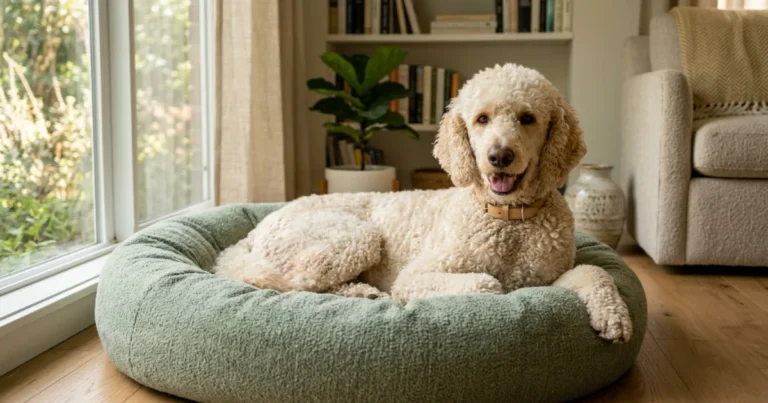
A dog that sleeps on their back with all four paws in the air is in the deepest, most relaxed state of rest possible. This “dead bug” sleeping posture can only happen when a dog feels completely safe in their environment. You will often see poodles — particularly those with strong human bonds — sleeping this way on their owner’s furniture.
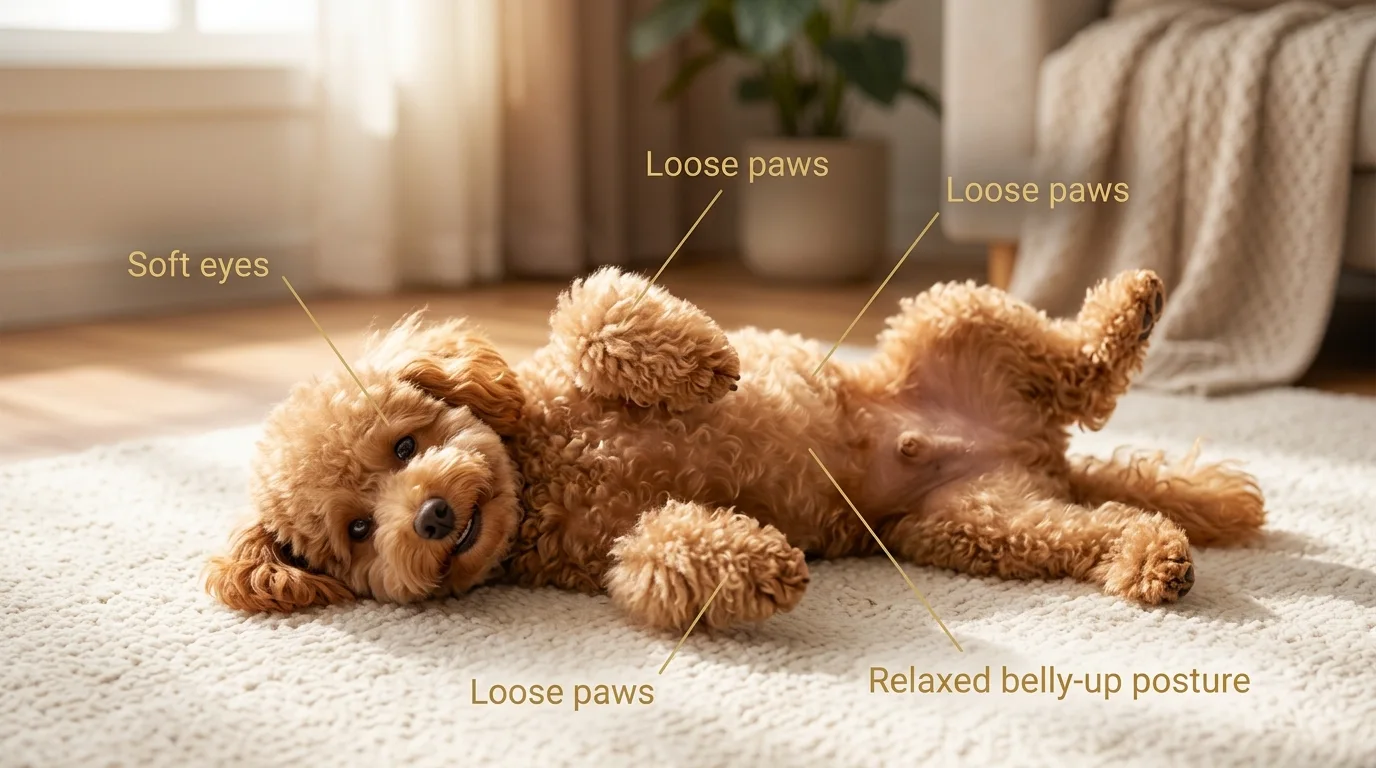
Back-rolling combined with relaxed body posture, soft eyes, and loose limbs is always a positive signal. The only time to be concerned is if rolling is accompanied by persistent scratching at the same spot, hair loss, or signs of skin irritation — which may indicate allergies or parasites.
Why Does My Dog Roll on Their Back and Wiggle?
This is the single most-asked variant of this question, and the answer is straightforward: the wiggle means joy. When a dog rolls onto their back and begins squirming, twisting, and kicking their legs, they are in a state of high positive arousal. It is the canine equivalent of jumping up and down with excitement.
The behavior typically occurs in these contexts:
- Greeting you after time apart — the wiggle is a greeting ritual expressing how happy they are to see you
- Before or after play — a play bow often transitions into a back-roll wiggle
- During belly rubs — the wiggling intensifies as physical affection increases
- When overstimulated with positive excitement — some dogs simply cannot contain their happiness in a calmer way
For poodle owners specifically: toy and miniature poodles are known to be particularly expressive wigglers due to their high emotional intelligence and intense bond with their humans. If your poodle wiggles on their back when they see you, that is the highest compliment they can give.
Why Do Dogs Sleep on Their Backs?
Dogs that sleep on their backs — belly fully exposed, paws in the air — are demonstrating the ultimate in comfort and security. This posture, sometimes called the “roach” or “dead bug” position, requires a dog to feel completely safe, because the belly and throat are the most vulnerable areas of the body.
There are three reasons a dog might sleep in this position:
- Complete trust and safety — they feel no threat from their environment or the people in it
- Cooling — belly-up exposes the least fur-covered surface area to cool air
- Comfort and habit — some dogs simply find it the most comfortable position, especially on soft surfaces
Standard poodles sleep on their backs more frequently than toy or miniature poodles, likely due to their larger body size making heat regulation a greater priority. If your poodle suddenly stops sleeping on their back, it may indicate physical discomfort — worth monitoring.
Why Does My Dog Lay on My Back — or Sleep Against Me?
Several of the GSC queries in this cluster relate to a dog choosing to physically position themselves on or against their owner’s back while sleeping. This is a pure bonding behavior rooted in pack instinct.
Dogs are social sleepers by nature. In a wild pack setting, sleeping pressed against others provides warmth, security, and early-warning protection. When your dog sleeps against your back:
- They are treating you as a trusted pack member and seeking physical closeness for security
- Your body heat and heartbeat have a calming effect — similar to how puppies sleep in piles
- The behavior is especially common in anxious dogs who feel most settled with physical contact
Related to this: when a dog lies with their back to you, it means the same thing — but in reverse. Turning their back to someone while remaining close is a trust signal in dog language. They are comfortable enough to be in a vulnerable position near you without needing to watch you. It is not indifference — it is intimacy.
Is It Normal for a Puppy to Lay on Their Back?
Yes — completely. Puppies use the back-down posture more frequently than adult dogs because they are still learning social cues and tend to use submission signals liberally during play and interactions with humans or other dogs. A puppy that readily flips onto their back when approached is typically well-socialized and comfortable in their environment.
Watch for: if a very young puppy (under 8 weeks) is on their back and unable to right themselves easily, or appears limp rather than wiggly, that warrants veterinary attention. But in normal circumstances, a puppy rolling onto their back is a sign of healthy social development.
When Should You Be Concerned About Back-Rolling?
Persistent rolling combined with skin redness, hair loss, foul odor, visible irritation, or scratching the same area repeatedly. These can indicate allergic dermatitis, mange, or a localized parasitic issue requiring professional diagnosis.
The behaviors covered above are almost universally positive. Back-rolling becomes a concern only when it is compulsive rather than contextual — meaning the dog rolls repeatedly in the same spot, shows visible discomfort, or combines the rolling with signs of skin irritation. In those cases, a dermatology-focused veterinary exam is warranted.
Dog Back-Rolling: Quick Reference Table
Use this table to quickly decode what you are seeing. Bookmark it — it covers every major variant of this behavior.
| What You See | Most Likely Meaning | Action Needed? |
|---|---|---|
| Rolls on back, stays still, soft eyes | Submission, trust, requesting affection | No |
| Rolls on back + full-body wiggle | Excitement, happiness, play invitation | No |
| Rolls on back outdoors on grass/soil | Scent-rolling instinct or itch relief | No |
| Sleeps flat on back, paws up | Deep relaxation, complete security | No |
| Lays back against owner while sleeping | Pack bonding, security seeking | No |
| Lies with back turned toward owner | Deep trust signal | No |
| Rolls after bath or exercise | Removing water/scent, itch from product | No |
| Rolls repeatedly + scratching same spot | Localized irritation, possible allergy | Monitor |
| Rolling + visible skin redness/hair loss | Dermatitis, mange, or parasites | Vet Visit |
🐩 Top-Rated Poodle Enrichment Toys
Poodles need mental stimulation to stay calm. These vet-approved interactive toys reduce anxiety-related behaviors, including compulsive rolling and paw chewing.
Shop on Amazon → See Our Full ReviewWhy Do Dogs Chew Their Paws? (Causes, Remedies & When to Act)
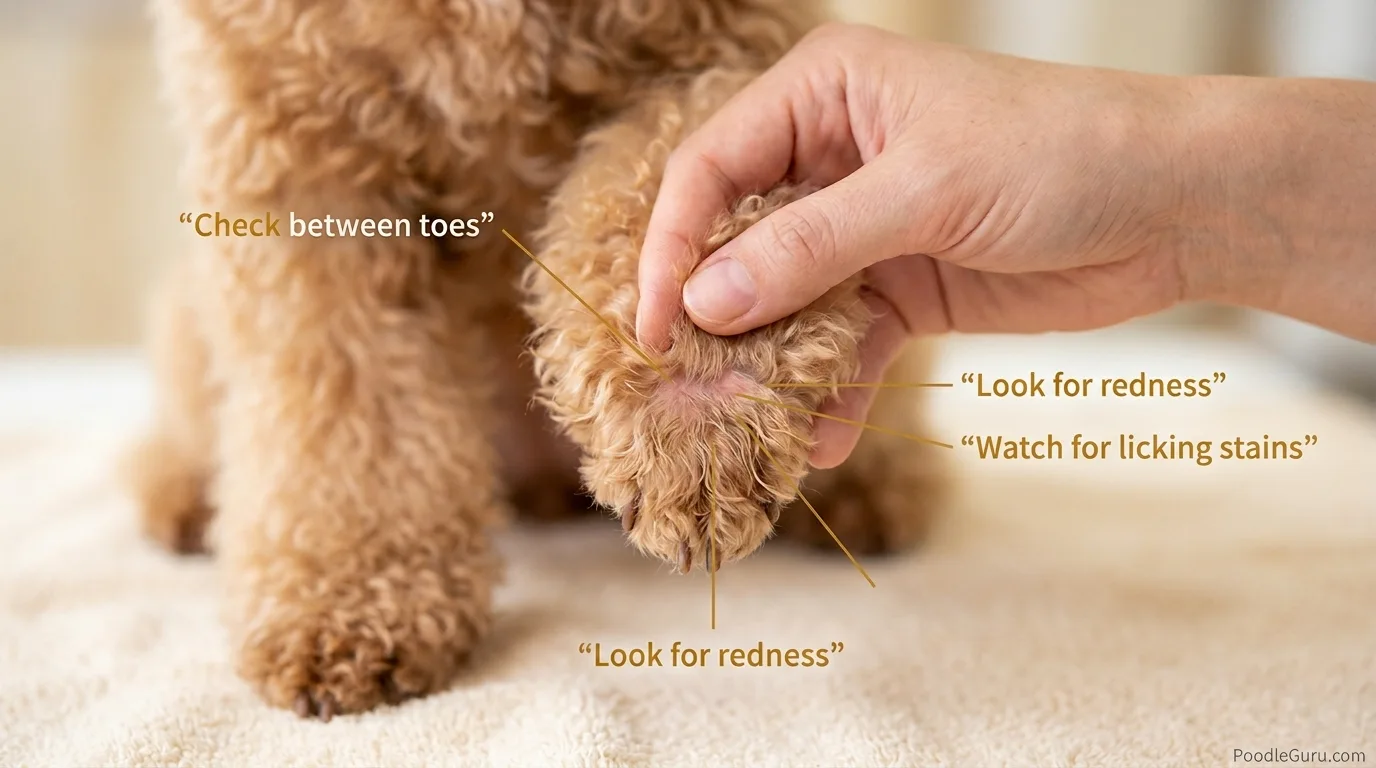
Paw chewing, licking, and biting are among the most common behavioral complaints from dog owners — and they appear in this data set alongside the back-rolling queries for good reason: both behaviors often share the same underlying trigger. A dog that is anxious, allergic, or uncomfortable frequently expresses it through both self-soothing behaviors.
Top 5 Causes of Paw Chewing in Dogs
Paw Chewing Until Bleeding — When to Act Immediately
If your dog is chewing their paws to the point of bleeding, this is beyond self-soothing and requires prompt veterinary attention. Open wounds on paws become infected quickly, and the underlying cause (severe allergy, deep yeast infection, or intense anxiety) needs professional diagnosis. Do not attempt to bandage the paw without veterinary guidance, as improper wrapping can restrict circulation.
| Symptom Pattern | Likely Cause | First Action |
|---|---|---|
| Chewing all four paws equally | Environmental allergy | Wipe paws after walks; vet for antihistamine |
| Chewing one paw only | Injury or foreign object | Inspect paw; vet if no obvious cause |
| Brown/rust staining between toes + odor | Yeast infection | Antifungal paw soak; vet for treatment plan |
| Chewing seasonally (spring/summer) | Pollen allergy | Foot wipes after outdoor walks; allergy test |
| Chewing only in evenings or when alone | Anxiety or boredom | Enrichment protocol; Kong toys; behavioral consult |
| Chewing + whole-body itching + ear infections | Food allergy | Elimination diet trial; hypoallergenic food |
| Chewing until bleeding | Severe allergy or anxiety | Vet visit required |
Home Remedies for Mild Paw Chewing
For mild, non-emergency paw chewing, these evidence-based approaches provide relief:
- Post-walk paw wipes — removes environmental allergens before they cause irritation; use fragrance-free pet wipes
- Diluted apple cider vinegar soak — antifungal properties help with mild yeast; dilute 50/50 with water, soak for 5 minutes, pat dry thoroughly
- Paw balm application — protects cracked or dry pads that become entry points for bacteria and triggers for chewing
- Dietary omega-3 supplementation — fish oil (EPA/DHA) reduces systemic inflammation underlying allergic responses; consult vet for correct dosage by weight
- Elizabethan collar (cone) — for acute episodes only, to break the chew-irritation-chew cycle and allow healing
🐾 Best Paw Care Products for Poodles
Vet-recommended paw balms, antifungal wipes, and omega-3 supplements that actually work for poodles with sensitive skin.
Shop Paw Care on Amazon → Best Food for Poodle Allergies