Poodle Grooming Schedule by Age: Puppy to Senior
A poodle grooming schedule should change as your dog grows. Puppies need short, positive handling sessions, adult poodles need steady coat maintenance, and senior poodles need gentler appointments that protect their joints and skin. From the first soft puppy fluff to the mature senior coat, knowing when to brush, bathe, trim nails, clean ears, and book a professional clip helps prevent mats, skin irritation, stress, and expensive shave-downs.
Quick Answer: Poodle Grooming Schedule by Age
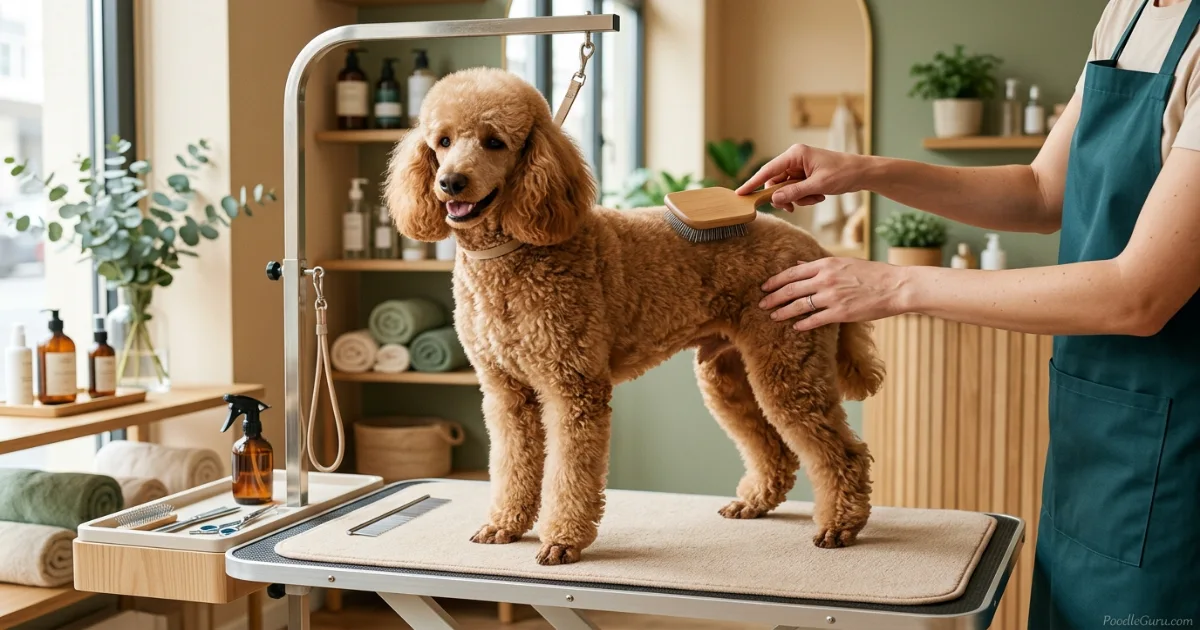
A practical poodle grooming schedule is: daily gentle handling and brushing for puppies, brushing 3–4 times per week for adults, a full professional clip every 4–6 weeks, and shorter senior-friendly grooming sessions every 5–6 weeks with extra skin checks. During the 4–18 month coat-change stage, brush at least every other day because puppy fluff and adult curls tangle together quickly.
Quick Facts: Poodle Grooming Schedule at Every Age
Puppy (8 wks–6 mo)
Daily gentle brushing to build tolerance. First bath after 12 weeks. First full groom around 16 weeks. Focus on positive association.
Adult (1.5–7 yr)
Brush 3–4 times per week. Professional clip every 4–6 weeks. Bath every 3–4 weeks or as needed. Nails every 2–3 weeks.
Senior (7+ yr)
Gentle brushing every other day. Grooming appointments every 5–6 weeks with shorter sessions. Monitor for skin lumps and joint comfort.
Poodle Grooming Schedule by Size: Toy, Miniature, and Standard
| Poodle Size | Recommended Professional Groom Interval | Brushing Routine | Bathing Frequency |
|---|---|---|---|
| Toy Poodle (approx. 4–6 lbs) | Every 4–5 weeks | Daily, coat mats quickly | Every 3–4 weeks |
| Miniature Poodle (approx. 10–15 lbs) | Every 4–6 weeks | 3–4 times per week | Every 3–4 weeks |
| Standard Poodle (approx. 40–70+ lbs) | Every 5–6 weeks | 3 times per week, more during coat change or longer clips | Every 4–5 weeks |
What Is a Poodle Grooming Schedule?
A poodle grooming schedule is the structured routine of brushing, bathing, nail care, ear checks, and professional clipping that keeps a poodle’s coat healthy and mat-free at every life stage. For poodle owners, this means adjusting the routine as the coat transitions from puppy fluff to adult curl and eventually to softer, slower-growing senior hair. The most important thing to understand is that poodle coat never stops growing—it continues to grow and trap loose hair in the curls, so neglecting the schedule can lead to tight mats that pull on the skin and cause sores.
Because the poodle’s curly coat sheds very little and often catches loose hair inside the curls, you must remove that trapped hair with brushing and combing. That’s why brushing isn’t just for looks—it’s essential for skin health. The AKC breed standard emphasizes that the poodle coat is naturally harsh and dense, qualities that make it sculptable but also high-maintenance.
Puppy Stage: 8 Weeks to 6 Months
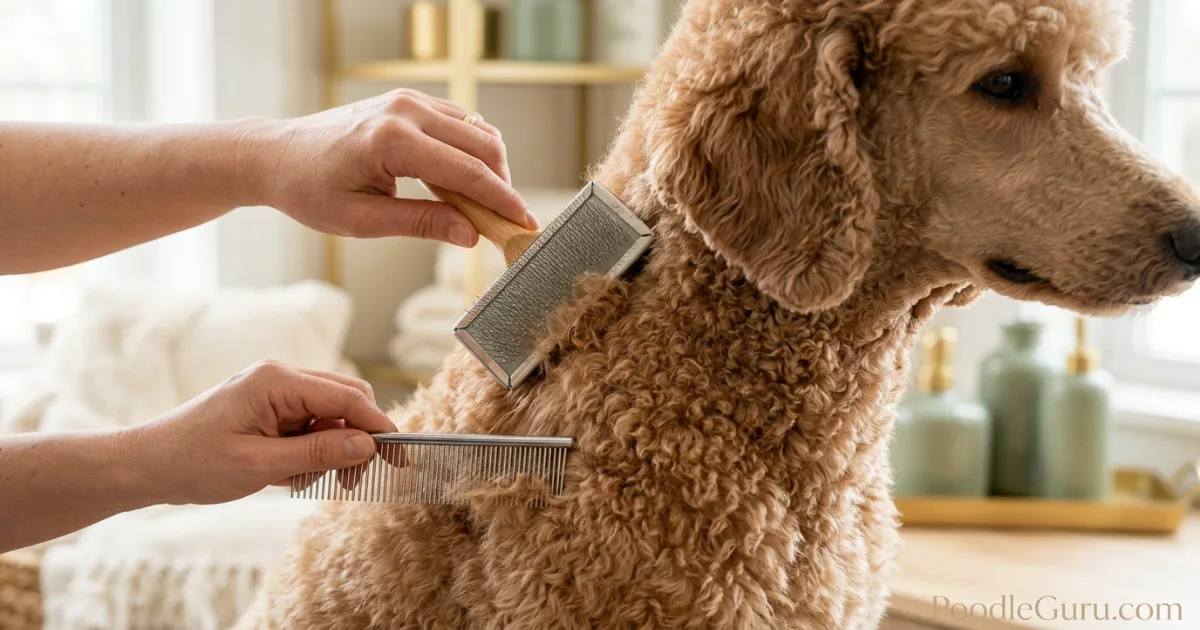
This is the most important window for establishing a lifetime of calm grooming. Your puppy’s coat is soft and wispy at first, transitioning to a denser texture around 4–6 months. Brushing should happen daily—not to remove mats but to teach the puppy that grooming is normal and pleasant. Use a soft slicker and reward frequently. Even 2–3 minutes of gentle brushing a day builds trust.
Bathing a very young puppy isn’t necessary unless they get into something messy. Wait until after 12 weeks, and use lukewarm water with a puppy-safe shampoo. The first full professional grooming appointment should be scheduled once your puppy has completed its vaccination series, usually around 14–16 weeks. This “puppy intro” visit often includes a light trim, nail clipping, and ear cleaning. It shouldn’t be a full sculpted cut—keep it positive. Professional groomers commonly recommend monthly follow-ups from then on to maintain coat transition without overwhelm.
Puppy Groomer’s Tip
Handle your puppy’s paws, ears, and muzzle daily for a few seconds. This desensitization makes professional grooming less scary later and is just as important as the brushing itself.
Adolescent Stage: 6–18 Months
The coat change is in full swing. You’ll notice the puppy fluff giving way to the adult curly coat—this transition often brings matting because the two textures tangle together. Poodle grooming frequency now jumps to a firm commitment: brush thoroughly at least every other day, and schedule professional clips every 4–5 weeks. Your dog may look a bit awkward during this stage; that’s normal.
Bathing can increase to every 3 weeks if needed, but always brush before the bath—water tightens mats. This is also when most poodles hit their adult size, so the volume of coat to maintain grows significantly for Standards. Continue positive reinforcement and keep sessions upbeat; adolescence can come with a stubborn streak.
Adult Stage: 1.5–7 Years
Your poodle is now in its prime coat condition. The adult curl is fully developed, dense, and holds style beautifully. To keep it mat-free, brush 3–4 times a week with a slicker followed by a metal comb. Professional grooming every 4–6 weeks will maintain your chosen clip—whether it’s a sporty lamb trim or a full continental. If you stretch beyond 6 weeks, expect more extensive dematting and a likely shorter cut.
Bathing frequency depends on lifestyle. A house poodle with walks on pavement may need a bath every 3–4 weeks. Nails should be trimmed every 2–3 weeks, ears cleaned weekly. This is the easiest stage to maintain as long as you don’t let the schedule slide. Our complete poodle grooming guide has the step-by-step home routines that support this rhythm.
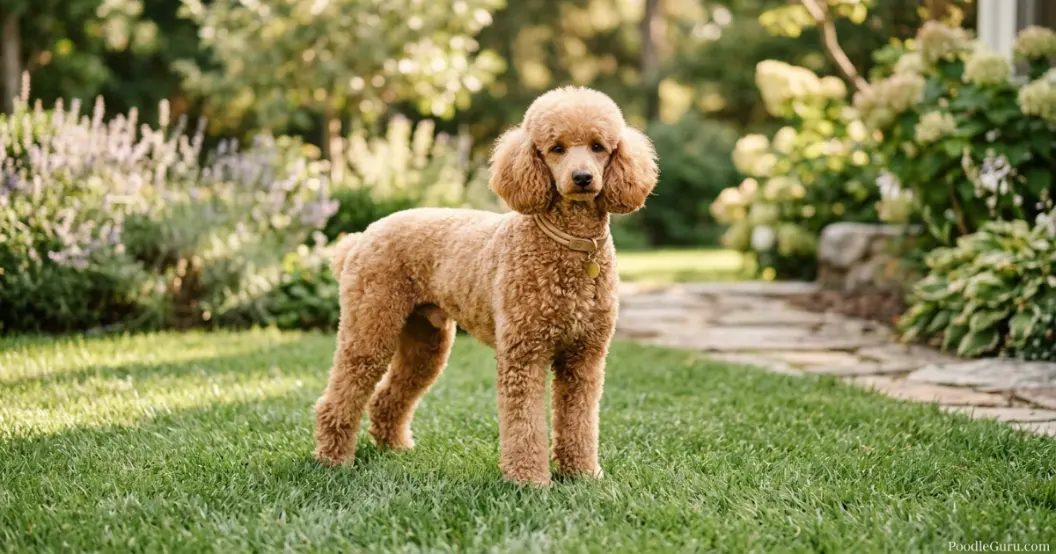
Senior Stage: 7 Years and Beyond
Older poodles still need regular grooming, but the approach shifts from speed to comfort. The coat may grow more slowly and become thinner or softer, particularly in spayed or neutered seniors. Joints may be stiff, so choose a groomer who uses low-height tables and offers frequent breaks. Veterinary guidance generally recommends adapting grooming sessions for senior dogs to reduce stress and avoid hip strain.
Brushing every other day is still needed, but with a gentler touch. Check for new lumps, warts, or sensitive spots during each session. Bathing can be spaced to every 4–5 weeks, and professional grooming every 5–6 weeks works well with a shorter, low-maintenance clip. If your senior has cataracts or hearing loss, keep the environment calm and predictable—sudden movements can startle them.
Senior Grooming Comfort Checklist
- Use a non-slip mat on the grooming table.
- Opt for warm (not hot) water and a gentle, moisturizing shampoo.
- Schedule morning appointments when your dog is most relaxed.
- Ask the groomer to avoid excessive scissoring around sensitive eyes.
- Provide a supportive bed immediately after the session.
The PoodleGuru Age-Based Grooming Framework
At PoodleGuru, we evaluate grooming frequency not as a fixed number but as a living schedule that flexes with your dog’s age and condition. Follow these four steps to build and adjust your plan.
Identify Life Stage & Coat Phase
Determine if your poodle is in puppy transition, adult prime, or senior coat. Run your fingers through the coat—if you feel resistance or see loose fluff, you’re behind on brushing. The coat’s texture tells you exactly where you stand.
Set a Core Weekly Routine
Based on the stage, write down daily or weekly brushing targets and a bath calendar. Adult poodles need 3–4 times weekly; seniors every other day. Add nail trims every 2–3 weeks. This becomes your non-negotiable baseline.
Lock in Professional Appointments
Book a standing grooming visit every 4–6 weeks for adults, 5–6 for seniors. Don’t wait until you see mats—prevention is cheaper and kinder. Use the same groomer when possible; they’ll notice coat changes early.
Adjust with Health Changes
After illness, surgery, or hormonal shifts, your poodle’s coat may thin or change. Re-evaluate the schedule and scale back intensity if needed. A vet check can rule out thyroid or skin issues causing coat problems.
When to Rely on a Professional Groomer
Recognizing the Limits of Home Care
Even dedicated owners need professional help. If you feel dense matting close to the skin, stop brushing—continued brushing will hurt and may tear the skin. Let a groomer safely remove mats with clippers. Also, if your poodle has a sudden coat change (excessive shedding, bald patches, greasy feel), consult your vet before the groomer. Skin conditions often need medical attention before cosmetic care.
Common Grooming Schedule Mistakes
Skipping Brushing Between Grooms
Many owners think a monthly groomer visit is enough. Without home brushing, mats form deep in the coat, leading to painful shave-downs and skin irritation.
Using Human Products
Human shampoo disrupts a poodle’s skin pH and strips natural oils. Always use dog-formulated, pH-balanced products. Your groomer can recommend the right type for your poodle’s coat density.
Stretching Intervals Too Far
Waiting 8–10 weeks between clips to save money often results in a completely matted dog that must be shaved under sedation, increasing health risks and cost dramatically.

Frequently Asked Questions About Poodle Grooming Frequency
How often should a poodle puppy be groomed?
Puppies need daily gentle brushing from 8 weeks to build tolerance. The first professional grooming visit should happen around 14–16 weeks after vaccinations are complete. After that, schedule visits every 4 weeks to maintain the developing coat.
Can I bathe my poodle too often?
Yes. Bathing more than once a week can strip natural oils and dry out the skin. Most adult poodles do well with a bath every 3–4 weeks using a moisturizing, dog-specific shampoo. Always brush out mats before the bath.
Do Standard Poodles need more grooming than Toys?
Standards have more coat area, so full sessions take longer, but the frequency is similar. Toy Poodles often mat faster around friction points and may need daily brushing, while Standards can often go every other day if the coat is kept shorter.
How long can a poodle go between professional grooms?
Ideally no longer than 6 weeks for adults. Beyond that, matting risk increases sharply. Senior poodles with shorter clips might stretch to 7 weeks if brushed regularly, but 5–6 weeks remains the safest max.
What happens if I skip grooming for two months?
Dense curls can mat tightly against the skin, causing pain, skin irritation, infections, and restricted movement. Severe matting may require a very short clip, and in extreme cases veterinary care, which is stressful and expensive.
At what age does a poodle’s coat change?
The transition from soft puppy fluff to adult curls usually starts around 4–6 months and can take up to 18 months to fully mature. This is the most matting-prone period and requires increased brushing vigilance.
Do senior poodles need special grooming products?
Senior coats often become thinner and drier. A gentle, hypoallergenic shampoo with added moisturizers helps. Avoid harsh degreasing formulas. Always consult your vet if you notice flaking or unusual skin changes.
Is it okay to groom a poodle at home fully?
You can, but it requires skill, quality clippers, and patience. Many owners do maintenance brushing and sanitary trims between professional visits. For full body clips, professional groomers have the training to avoid nicking skin on delicate areas.
Key Takeaways: Poodle Grooming Schedule by Age
A lifetime of healthy coat starts with a schedule that grows with your poodle. Here are the essentials to remember.
- Poodle puppies need daily gentle brushing from 8 weeks and their first professional groom by 16 weeks to build positive associations.
- Adult poodles require brushing 3–4 times weekly and a full professional clip every 4–6 weeks to prevent matting and skin issues.
- During the adolescent coat change (4–18 months), matting risk spikes—increase brushing to every other day and keep appointments every 4 weeks.
- Senior poodles benefit from gentler, shorter grooming sessions every 5–6 weeks, with extra attention to joint comfort and skin health.
- The poodle’s single-layer curly coat never stops growing; skipping the schedule leads to painful mats that may require veterinary shave-downs.
- Adjust your routine based on your poodle’s size, health, and coat condition—a consistent plan is always cheaper and kinder than crisis grooming.
Your next step? Pull out your calendar, book standing grooming appointments for the next six months, and use this poodle grooming schedule as your monthly maintenance checklist—then read our complete poodle grooming guide to perfect your home routine.