Teaching a Poodle to Swim: A Gentle Step-by-Step Guide (2026)
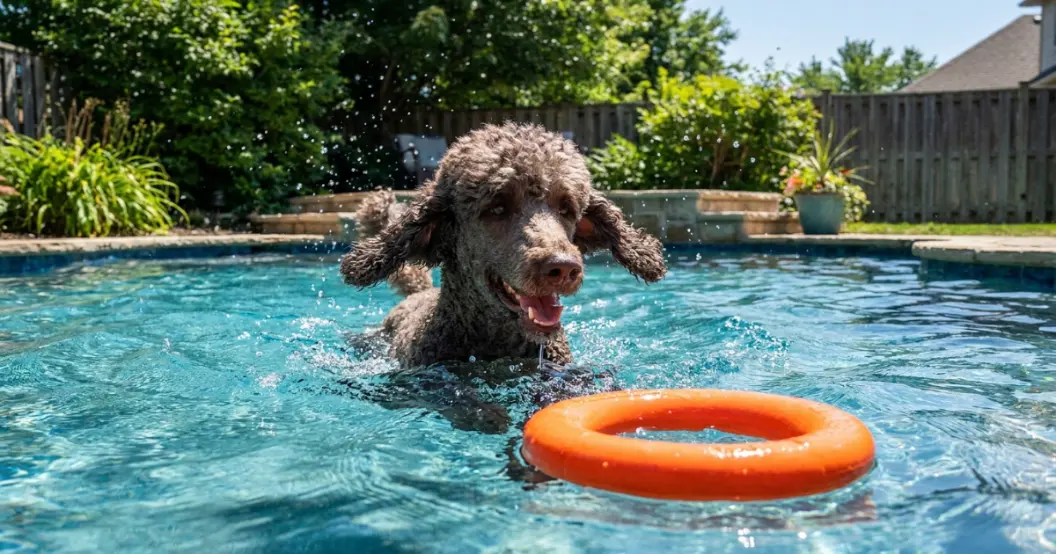
Teaching a poodle to swim works best when you respect the dog’s natural timeline, never force entry, and use a properly fitted life vest as a safety bridge. Poodles descend from water retrievers, so most take to swimming eagerly — but they need patient, shallow-water introductions, consistent positive reinforcement, and careful ear and coat care afterward. Rushing the process creates fear; letting your poodle build confidence at its own pace creates a lifelong water lover.
You’ve probably seen the joyful chaos of a poodle bounding into a lake, curly coat bouncing, eyes alight with the thrill of a good splash. That picture isn’t a myth — but it’s also not guaranteed. While poodles carry water-retrieving DNA, turning that heritage into a safe, happy swimming companion requires more than a toss into the deep end. Done wrong, you risk instilling panic. Done right, you unlock a new world of joint-friendly exercise and bonding.
This guide walks you through the real-world steps of teaching a poodle to swim, from the first cautious paw dip to confident open-water retrieves. We’ll cover gear, water-type comparisons, age considerations, drying routines, and mistakes even seasoned dog owners make. Whether you have a tentative toy poodle or a leggy standard, the principles remain the same: patience, safety, and reading your dog’s every signal.
Why Teaching a Poodle to Swim Matters Beyond Fun
Swimming is more than a summer pastime for poodles. It’s a low-impact, full-body workout that protects joints, builds core strength, and provides mental stimulation that few land activities can match. Given that poodles — especially standards — can be prone to hip dysplasia and patellar luxation, swimming becomes a lifelong fitness tool. But the key is teaching them safely early on, or carefully reshaping a negative experience if they’ve had one.
Common Myths About Poodles and Water (That Set Owners Up for Failure)
Too many well-meaning owners believe that because poodles have webbed feet and a history as water dogs, they’ll automatically know how to swim. The truth is, instinct doesn’t replace learning. A poodle plunged into water without introduction may panic, inhale water, and develop a phobia that lasts for years.
Another persistent myth: “My poodle hates water, so they’ll never swim.” Often, what looks like hatred is actually fear from a rushed or scary first encounter. With gradual desensitization and proper gear, many “water-hating” poodles transform into enthusiastic paddlers. Don’t let a single bad afternoon at a lake write your dog’s water story.
The Step-by-Step Process for Teaching a Poodle to Swim
This is not a one-day project. Depending on your dog’s temperament, spreading these steps over several days or even weeks yields the most durable confidence. Watch your poodle’s body language at every stage — relaxed ears, soft eyes, and a loose tail are your green lights.
Step 1: Desensitize to Water on Land
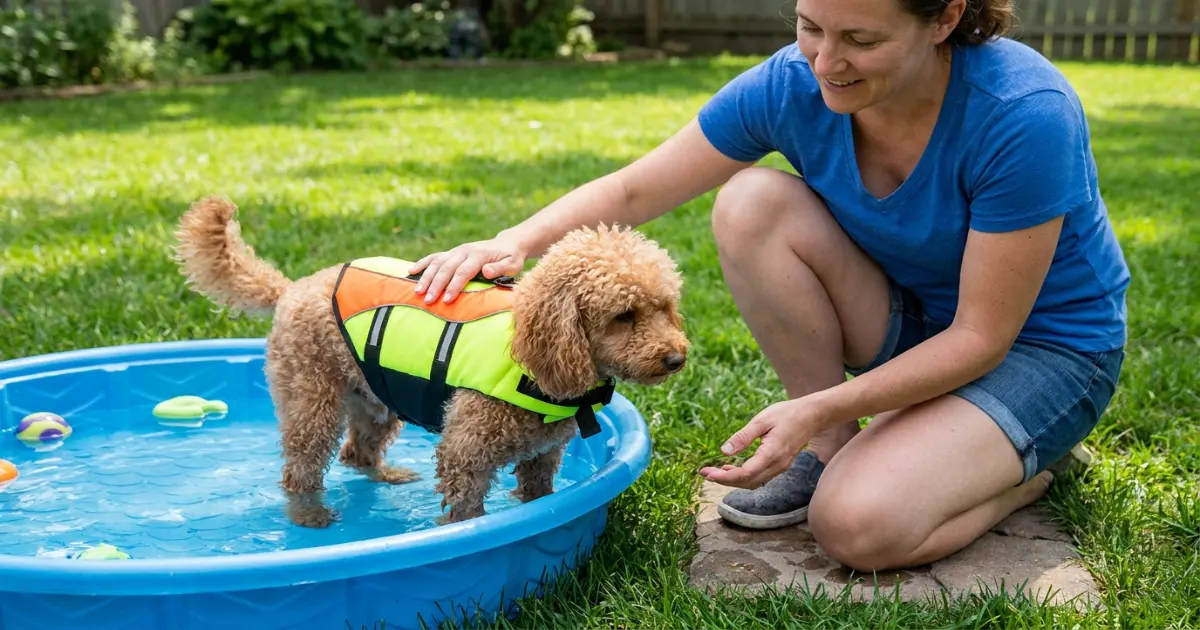
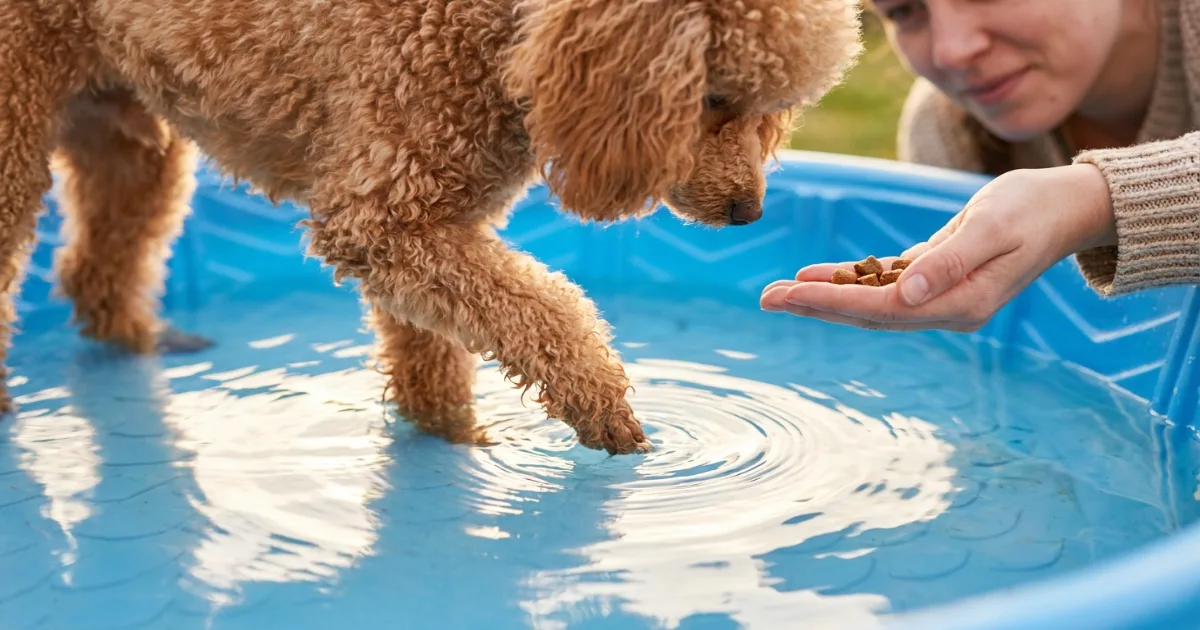
Before any swimming, start in your yard or bathroom. Let your poodle explore a shallow kiddie pool or even a wet towel. Use treats and praise when they step onto a damp surface. Fill a small pool with an inch of water and toss floating toys. The goal is to build curiosity, not compliance. If your poodle seems unsure, sit down and dangle your fingers in the water; they’ll often follow your lead.
Step 2: Introduce the Life Vest Correctly
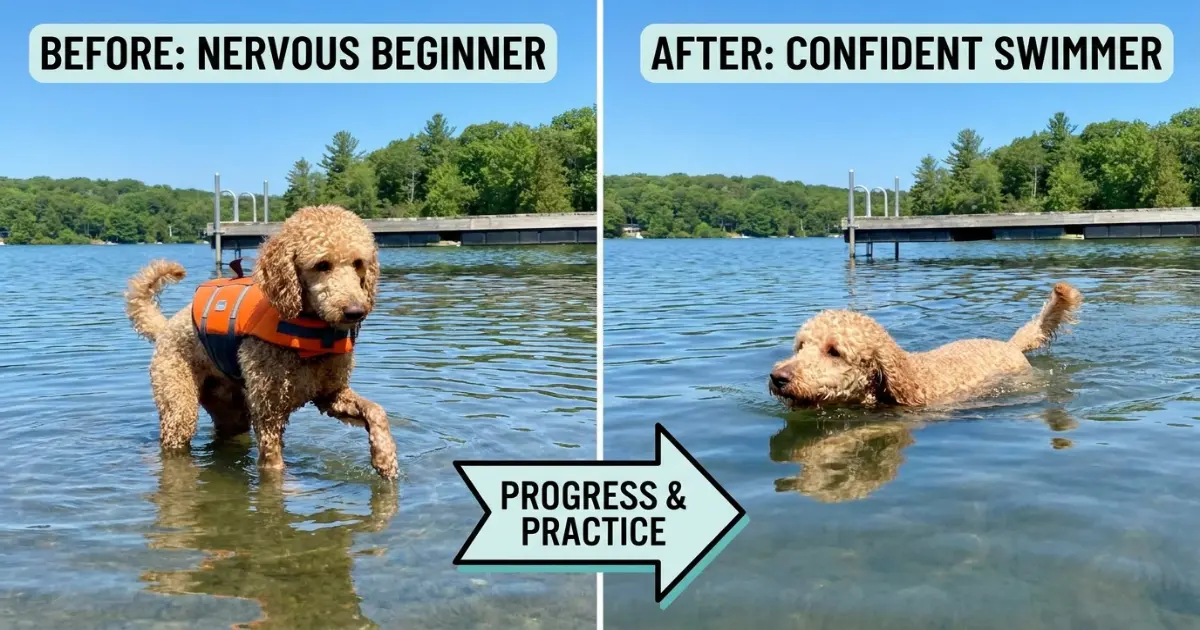
A properly fitted dog life vest is a safety essential, but many dogs find the sensation alarming the first time. Let your poodle sniff the vest, then drape it loosely over their back without buckling. Reward. Gradually fasten one strap, then another, over several short sessions. Once the vest is on, engage in a fun land activity — a walk or a game of fetch — so the vest becomes associated with good times, not just swimming.
Step 3: First Water Entry (Shallow and Gradual)
Choose a calm, shallow entry point with a gentle slope. A beach-style lake edge or a pool with wide steps works far better than a steep drop-off. Walk in yourself first, holding the leash (attached to a harness, not a collar), and invite your poodle with an upbeat tone. Never pull. Let them snuffle the water’s edge, paddle with front paws while still touching bottom, and retreat anytime they want. Toss treats near the waterline, gradually moving them a few inches deeper.
Some poodles will follow you within minutes; others need several outings just to wet their bellies. Both are normal. The moment your poodle lifts their hind legs and begins paddling with all fours, even for a second, celebrate quietly. That’s their first stroke.
Step 4: Support and Guided Paddling
Once your poodle paddles reliably in shallow water, move to slightly deeper water where they must swim. Place one hand under the vest handle (or under their belly) to provide subtle support — not lifting, just letting them feel you’re there. Walk alongside, encouraging forward movement toward a floating toy or the shore. Keep sessions short, especially at first, to prevent fatigue and chilling.
🔑 Pro Tip: The Exit Lesson
Many dogs swim out eagerly but panic when they can’t find the exit. Teach your poodle where the safe exit point is first. Wade with them to the steps or gentle slope several times until they can locate it independently. A safe exit prevents the frantic clawing that leads to bad associations.
Step 5: Building Independence and Distance
Gradually fade your physical support. Start by touching the vest handle less, then by walking further away while your poodle swims to you or a toy. Use a long line at first if you’re in open water. As confidence grows, you can introduce gentle retrieves off a dock or a ball tossed a few feet. Never throw a toy so far that your dog becomes exhausted on the return. Swimming is deceptively tiring.
Swim Readiness by Age and Poodle Size
Not every poodle is ready for swimming at the same time. Toy, miniature, and standard poodles mature at different rates, and their body fat and coat density affect buoyancy and cold tolerance.
| Age / Stage | Toy Poodle | Miniature Poodle | Standard Poodle | Key Safety Notes |
|---|---|---|---|---|
| 8–12 weeks (puppy) | Wading only, 1-2 min | Wading only, 2-3 min | Shallow wading, minimal time | Supervise closely; not yet fully temperature regulating |
| 3–6 months | Short supported floats | Supported paddling, 5 min max | Supported paddling, short sessions | Life vest mandatory; avoid cold water |
| 6–12 months | Gradual independence | Confident swimming with vest | Build distance; still need vest in deep water | Monitor growth plates — no repetitive jumping |
| Adult (1–7 years) | Supervised free swimming | Strong swimmer | Natural in water; can swim without vest in safe areas | Always supervise; know your dog’s limits |
| Senior (8+ years) | Gentle wading, short floats | Reduced duration, joint-friendly | Excellent low-impact exercise | Watch for arthritis pain; use ramp exits |
Comparing Swimming Environments: Pool, Lake, River, Ocean
Each water body presents different challenges and benefits. Choosing the right environment for early learning can make or break your poodle’s confidence.
| Water Type | Pros for Poodles | Risks & Considerations | Best For |
|---|---|---|---|
| Chlorinated pool | Controlled depth, clear water, steps for exit | Chemicals can irritate skin and eyes; must rinse after | Beginner lessons, hot days |
| Freshwater lake | Natural feel, gentle entries often available | Blue-green algae risk in warm months; unknown depth | Intermediate swimming, retrieves |
| Slow river | Engaging current, mental stimulation | Current strength can surprise a dog; debris hidden | Confident adult swimmers only |
| Ocean / beach | Soft sand, large space | Salt water ingestion dangerous; waves can frighten | Calm days, advanced swimmers |
Essential Gear for Teaching a Poodle to Swim (2026 Price Guide)
You don’t need a mountain of equipment, but the right gear dramatically increases safety and enjoyment. Here’s a realistic look at what to buy and what you might skip.
Prices reflect 2026 averages. Invest first in a well-fitted life vest — poor buoyancy or a bad fit increases risk. Cheaper vests often lack a sturdy rescue handle, which is crucial for poodles.
What Poodle Owners Commonly Get Wrong Before Even Entering the Water
- Assuming small poodles don’t need a vest. Toy and miniature poodles tire quickly and have less body fat. A vest is a lifeline, not an insult to their swimming ability.
- Neglecting ear care after swimming. Poodles’ floppy ears trap moisture, creating a breeding ground for yeast and bacteria. A post-swim ear rinse and dry are as vital as the swim itself.
- Forgetting the coat’s weight when wet. A fully saturated poodle coat can weigh a surprising amount, especially in standards. This can be exhausting; know when to call it a day.
- Mistaking frantic paddling for joy. Vertical swimming, where the dog’s front paws splash and the back end sinks, signals fatigue or fear. A happy poodle swims with a horizontal, efficient stroke.
- Using the “sink or swim” approach. Some still believe tossing a dog in creates instant learning. It more often creates immediate trauma. Trust the gradual path.
Practical Owner Insight: Fitting Swimming into Your Routine
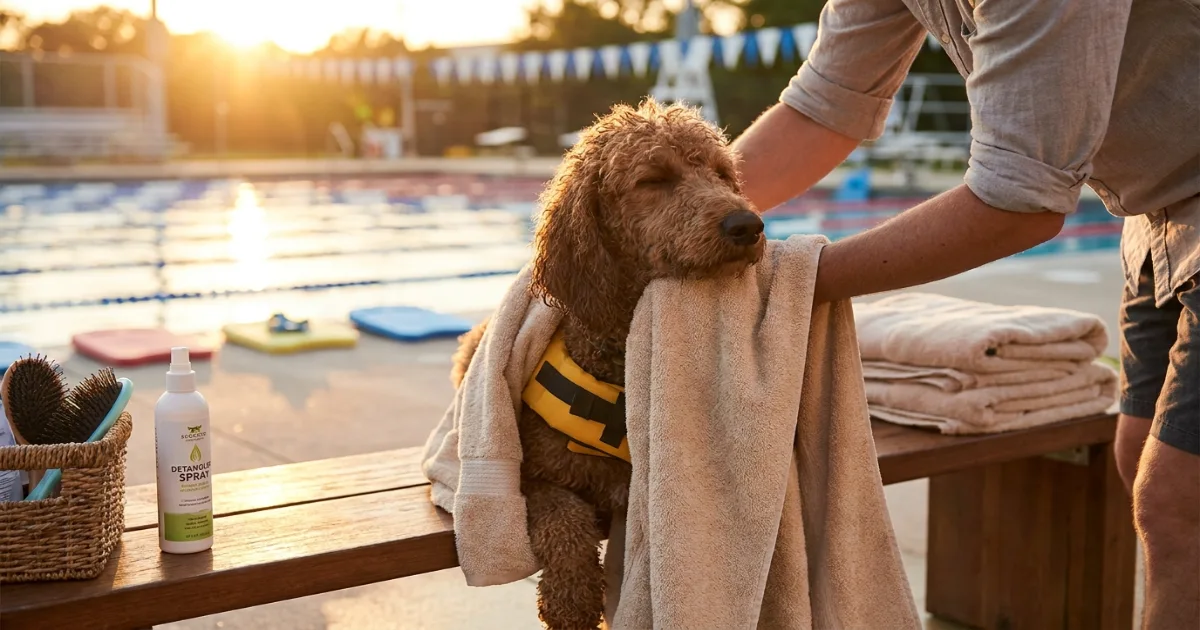
Swimming isn’t just a weekend lake trip activity. If you have access to a dog-friendly pool or a calm water spot, aim for 1–2 short sessions per week during warm months. Over time, you can build a poodle’s endurance to 10–15 minutes of active swimming, but never push past signs of chilling (shivering, tail tucking). After each swim, rinse your poodle with fresh water, especially after chlorine or salt. Then dry thoroughly, focusing on ears and between toes.
For indoor pool swimmers, a non-slip ramp or wide steps are far safer than ladders. Teach your poodle to use the ramp from day one. You’ll be grateful when their joints age and they need a gentle exit.
If Your Poodle Seems Afraid: A Reset Plan
A poodle who cowers at the sight of water can still become a confident swimmer with the right reset. Go back to Step 1, but slower. Spend days just near water without any expectation of entry. Bring a book, sit on the shore, and ignore the water entirely while your dog relaxes. Pair water proximity with stuffed Kongs or high-value chews. Fear often dissolves when the environment becomes irrelevant background noise.
For severe fear, work with a positive-reinforcement trainer who understands water shyness. Flooding — forcing a dog to stay near what terrifies them — almost always backfires with sensitive poodles. Reconstruction, not immersion, is the cure.
Frequently Asked Questions About Teaching a Poodle to Swim
At what age can a poodle puppy start learning to swim?
Puppies can be introduced to very shallow water as early as 8 weeks, but actual swimming should wait until they’re about 12–16 weeks and have developed some strength. Keep sessions under two minutes and always use a life vest. Cold water is dangerous for young puppies.
Are poodles natural swimmers?
Yes, poodles were bred as water retrievers and have webbed feet, a water-resistant coat, and a natural paddling instinct. However, that instinct must be gently nurtured; they are not born knowing how to swim safely. Proper introduction makes all the difference.
Can toy poodles swim as well as standard poodles?
Toy poodles can swim, but they tire faster, chill more quickly, and may be more easily overwhelmed by waves or currents. Supervision and a well-fitted life vest are even more critical for the smallest poodle varieties. Never leave a toy poodle unattended near water.
How long does it take to teach a poodle to swim confidently?
Many poodles will be paddling comfortably within 3–5 gentle sessions spread over a week or two. Confidence in deeper water and retrieving toys can take a few more weeks. Go at your dog’s pace; forcing fast progress can create setbacks.
Do I need to rinse my poodle after swimming in a pool?
Absolutely. Chlorine and pool chemicals can dry out a poodle’s skin and coat. Rinse with fresh water immediately after each swim and dry the ears thoroughly to prevent infections. A conditioning spray designed for dogs can help restore moisture.
What if my poodle hates water despite all efforts?
Not every poodle will love swimming, and that’s okay. Don’t force it. Focus on other forms of exercise and water play may simply remain wading. If you’ve tried slow desensitization and a life vest without success, respect your dog’s temperament — there are many ways to keep a poodle happy and fit.
Is swimming safe for senior poodles with arthritis?
Yes, swimming is one of the best exercises for senior poodles because it’s low-impact and supports joints. Use a life vest for buoyancy, keep water warm, and provide an easy exit like a ramp. Limit sessions to 5–10 minutes to avoid fatigue.
Should I shave my poodle before teaching them to swim?
No shaving is needed, but a manageable trim helps. A long, dense coat can become waterlogged and heavy, making swimming exhausting. Many owners opt for a shorter sporting clip during swimming season for safety and easier drying.
Summary: Teaching a poodle to swim is about respect, safety, and tiny victories. Start with zero-pressure water desensitization, equip your dog with a quality life vest, and never skip ear care after each swim. Whether your poodle becomes an avid dock diver or simply enjoys a cool wade on hot days, the journey strengthens your bond and adds years of healthy, joyful movement to their life.