Raw Diet for Poodles: BARF Pros, Cons & How to Start Safely
Few topics in poodle nutrition create more debate than raw feeding. Some owners report shinier coats, cleaner teeth, and better appetite. Veterinary groups, however, warn about foodborne bacteria, nutritional imbalance, and bone-related injuries. This guide gives poodle owners a balanced, safety-first look at what the BARF model requires before you decide whether raw food belongs in your dog’s bowl.
Quick Answer: Is a Raw Diet for Poodles a Good Idea?
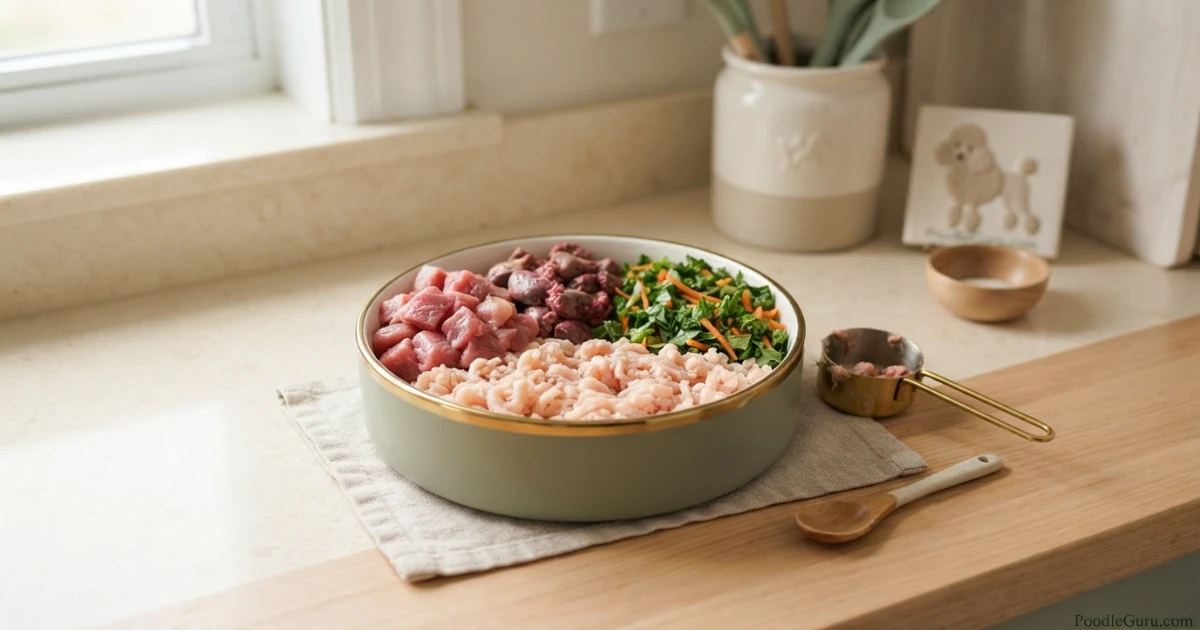
A raw diet for poodles, often called BARF, usually includes uncooked muscle meat, edible bone or ground bone, organ meat, and small amounts of dog-safe plant matter. It may work for some healthy adult poodles when the diet is complete, balanced, and handled with strict hygiene. However, raw feeding carries real risks: Salmonella, Listeria, E. coli, nutritional gaps, excess calcium or phosphorus, dental fractures, choking, and obstruction. The safest approach is to use a complete commercial raw product or a recipe formulated by a board-certified veterinary nutritionist. A poorly balanced raw diet can be worse than a high-quality commercial diet.
What Is the BARF Raw Diet?
A raw diet for poodles is a feeding model that replaces cooked commercial food with uncooked animal-based ingredients. BARF is commonly used to mean “Biologically Appropriate Raw Food” or “Bones and Raw Food.” Typical versions include muscle meat, raw meaty bone or ground bone, organ meat, and small portions of vegetables, fruit, eggs, or other ingredients.
For poodle owners, this may mean assembling meals from raw poultry, beef, lamb, rabbit, organ meats, fish, leafy greens, and supplements — or buying commercially prepared frozen, freeze-dried, or dehydrated raw formulas. The key point is simple: putting raw chicken breast in a bowl is not a complete diet. Long-term raw feeding requires nutritional precision, safe storage, clean handling, and life-stage-appropriate formulation.
“Natural” Does Not Automatically Mean “Best”
Raw feeding is often promoted as closer to what dogs would eat in the wild. Poodles, however, are domestic dogs, not wolves. Their ideal diet should be judged by nutrient balance, digestibility, safety, body condition, stool quality, and veterinary health markers — not by whether a meal looks ancestral. The AKC notes that raw diets can be homemade, store-bought, freeze-dried, or dehydrated, but the claimed benefits still need to be weighed against safety and balance concerns.
Why Raw Feeding Appeals to Poodle Owners
Poodle owners often consider raw feeding because the breed can be picky, sensitive, and coat-focused. Some owners report firmer stools, improved appetite, a glossier coat, or fewer processed ingredients after switching. These reports are meaningful to owners, but they are not proof that raw is the best choice for every poodle.
There is also a strong online culture around raw feeding. In poodle groups, raw diets are sometimes presented as a premium or “extra care” choice. That pressure can make owners feel guilty for feeding kibble, gently cooked food, or a veterinary diet. The better question is not “raw or not raw?” The better question is: can this exact diet meet your poodle’s nutrient needs safely, consistently, and affordably?

Raw Diet for Poodles: Pros & Cons at a Glance
| Possible Pros | Important Cons |
|---|---|
| High palatability — some picky poodles eat raw meals more eagerly than dry food. | Pathogen risk — raw animal ingredients can contain Salmonella, Listeria, E. coli, Campylobacter, and other organisms. |
| Moisture-rich meals — raw food is usually higher in water than kibble, which may help some dogs who drink less. | Human household risk — bacteria can spread through bowls, counters, saliva, feces, and poor handling habits. |
| Owner control — DIY raw allows control over protein sources and ingredients. | Nutritional imbalance — DIY diets commonly miss calcium, phosphorus, iodine, vitamin D, trace minerals, or essential fatty acids. |
| Potential stool changes — some dogs produce smaller, firmer stools on raw diets. | Bone hazards — bones can break teeth, choke dogs, or cause gastrointestinal obstruction or perforation. |
| Useful for some elimination trials — under veterinary guidance, novel proteins may help identify food triggers. | Cost and time — quality raw feeding requires planning, freezer space, safe prep, and a higher monthly food budget. |
Possible Benefits for Poodles
When a raw diet appears to work well, owners often notice appetite first. Many poodles enjoy the smell and texture of fresh animal-based foods. Some also show stool changes because raw diets can be more digestible for certain dogs and lower in bulky carbohydrates than some commercial foods.
Coat improvements are also commonly reported. However, shinier coat and better skin can come from many diet upgrades: a complete fish-based kibble, a veterinary dermatology diet, balanced gently cooked food, or correcting an omega-3 deficiency. Raw feeding should not be presented as a guaranteed cure for itching, ear problems, allergies, or coat dullness.
Dental health claims need careful wording. Chewing may mechanically scrape some plaque, but bones can also fracture teeth and injure the mouth or digestive tract. For many poodles, safer dental options include veterinary cleanings, tooth brushing, VOHC-accepted dental chews, and softer enrichment options.
The Real Risks: Bacteria, Balance & Bones
Bacterial contamination is the best-known raw feeding risk. The FDA reports that raw pet food samples were more likely to be contaminated with disease-causing bacteria than other types of pet food tested, and it warns that raw pet food can be dangerous to both pets and people. The risk is higher in homes with babies, toddlers, elderly people, pregnant people, or immunocompromised family members.
The American Veterinary Medical Association discourages feeding raw or undercooked animal-source proteins that have not first been treated to eliminate pathogens, because of risks to animal and public health. VCA Animal Hospitals also notes that raw-food samples have tested positive for harmful bacteria, including Salmonella and Listeria.
The second major risk is nutritional imbalance. Calcium and phosphorus must be controlled carefully, especially in puppies and large Standard Poodles. Too little calcium can harm bone development; too much can also create problems. Overfeeding liver may cause excess vitamin A. A recipe copied from a social media group may look “complete” but still fail long-term nutrient targets.
Bone safety is the third concern. Cooked bones should never be fed because they splinter. Raw bones are sometimes used by raw feeders, but they are not risk-free. Tooth fractures, choking, constipation, obstruction, and gastrointestinal injury can happen. Toy Poodles are especially vulnerable because their mouths and digestive tracts are tiny.
Best Safety Rule
If you are not using a commercial raw food labeled complete and balanced for your dog’s life stage, work with a board-certified veterinary nutritionist. A one-time recipe formulation costs money, but it is far cheaper than months of hidden nutritional imbalance or an emergency visit from a bone or bacterial complication.
The PoodleGuru Raw Readiness Checklist
At PoodleGuru, we do not tell every owner to feed raw or avoid raw. We help owners decide whether they can do it safely. Before switching your poodle, work through these seven questions honestly.
Have you discussed raw feeding with your veterinarian?
Your vet knows your poodle’s health history, medication list, body condition, dental status, and risk factors. This matters before any major diet change, especially with pancreatitis, kidney disease, immune compromise, chronic diarrhea, or allergies.
Can you afford the full commitment?
Raw feeding can cost significantly more than kibble, especially for Standard Poodles. Include commercial raw food, supplements if needed, freezer space, vet checkups, and possible nutritionist formulation in your budget.
Do you have safe storage?
Raw food must stay properly frozen or refrigerated. A Standard Poodle’s monthly food volume can take substantial freezer space. A cramped freezer makes safe rotation and thawing harder.
Can your household follow strict hygiene?
You need separate prep tools, clean bowls, prompt refrigeration, disinfected counters, careful handwashing, and a plan for cleaning after your dog eats. Every person in the home has to follow the same routine.
Will you use complete commercial raw or DIY?
Complete commercial raw reduces formulation risk when it meets recognized nutrient profiles for your dog’s life stage. DIY raw gives more control but requires expert formulation and ongoing monitoring.
Can you source ingredients consistently?
Raw feeding depends on reliable access to safe muscle meat, organ meat, calcium sources, and other nutrients. Inconsistent ingredient swaps can create nutrient gaps or digestive upset.
Will you monitor over time?
Track weight, body condition, stool quality, coat, appetite, energy, dental health, and bloodwork when your vet recommends it. Raw feeding is not a set-and-forget system.
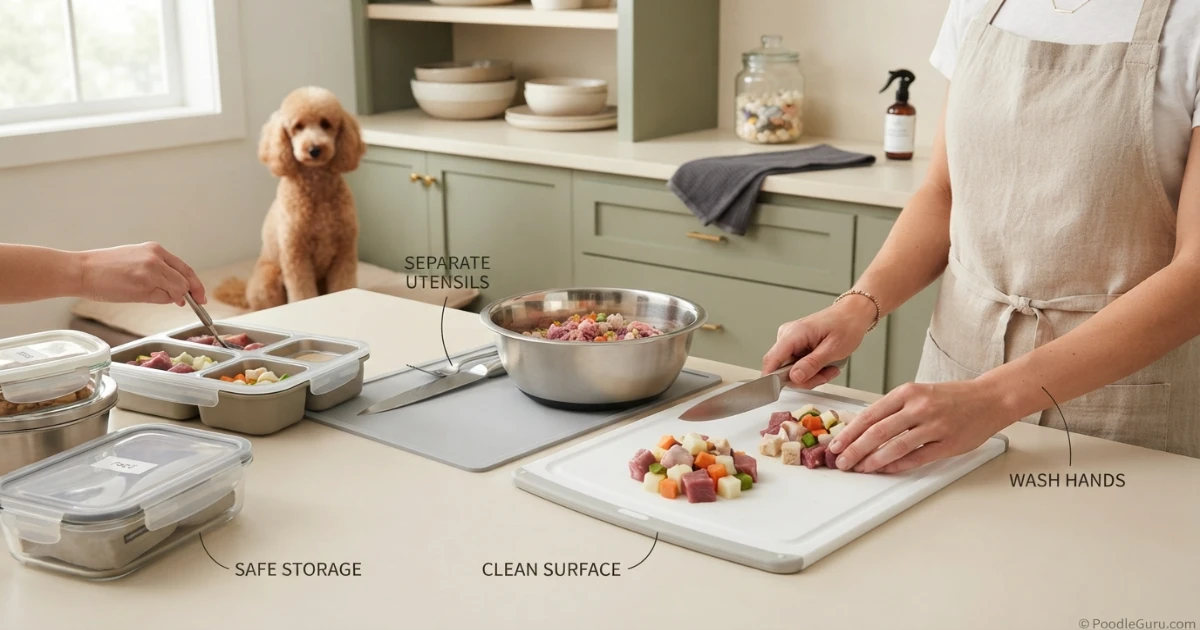
How to Start a Raw Diet for Your Poodle More Safely
If you and your veterinary team decide raw feeding is appropriate, start with structure. Avoid jumping from kibble to a complex DIY rotation overnight. Poodles with sensitive stomachs usually do better with gradual changes and one protein at a time.
Step-by-Step Transition Plan
- Before Day 1: Choose a complete commercial raw formula or a nutritionist-formulated DIY recipe. Confirm the product or recipe matches your poodle’s life stage.
- Days 1–3: Replace about 25% of the current food with the new diet. Use one protein source only. Watch stool quality, vomiting, appetite, itching, and energy.
- Days 4–6: Move to about 50% new food if stools remain normal. Keep hygiene strict and clean bowls after every meal.
- Days 7–10: Increase gradually toward 75–100% if your poodle is doing well. Slow down if loose stool, gas, or refusal appears.
- After 2–3 weeks: Introduce any new protein one at a time. This makes it easier to identify ingredients that do not agree with your poodle.
How Much Raw Food Should a Poodle Eat?
Many adult raw-feeding plans start around 2–3% of ideal adult body weight per day, split into meals. This is only a starting point, not a universal rule. A 50-pound Standard Poodle may start around 1–1.5 pounds daily, while a 15-pound Miniature may start near 4–7 ounces and a 6-pound Toy near 2–3 ounces. Adjust based on body condition, activity, age, neuter status, stool quality, and veterinary advice.
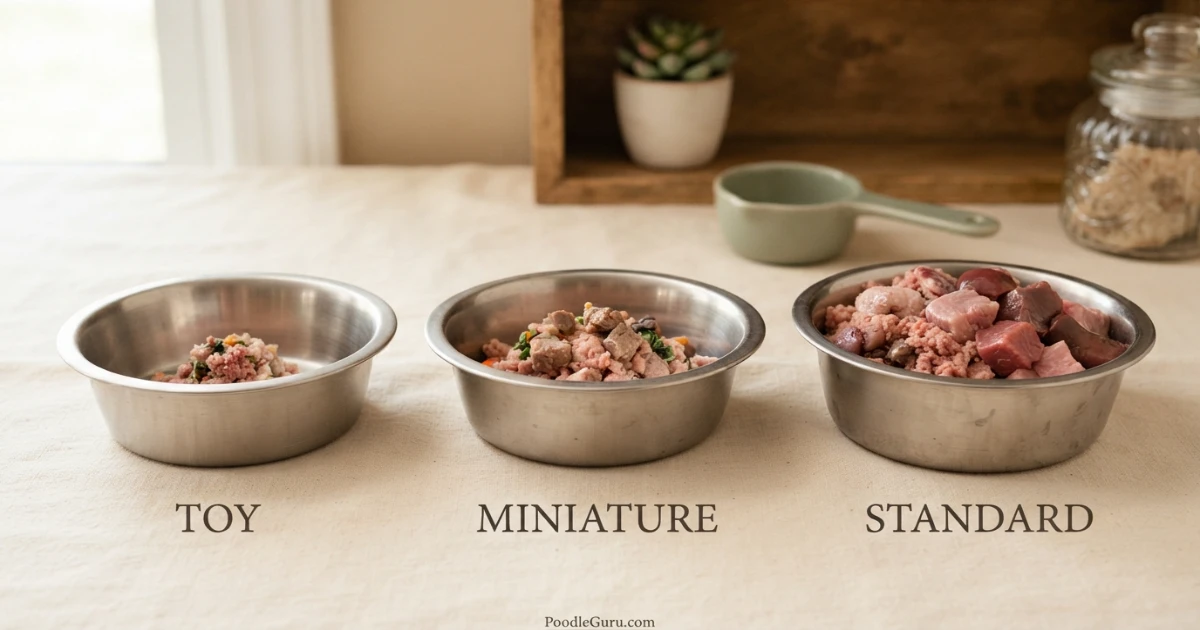
Raw Feeding for Puppies, Seniors & Toy Poodles
Not every poodle is a good candidate for raw feeding. Life stage, size, and health status change the risk profile.
Poodle Puppies
Puppies have narrow nutrient requirements, especially for calcium, phosphorus, calories, and trace minerals. DIY raw puppy diets are risky unless formulated by a board-certified veterinary nutritionist. If raw is used for a puppy, a complete commercial raw product formulated for growth is generally safer than a homemade mix.
Senior Poodles
Senior poodles may have dental disease, kidney changes, pancreatitis history, or lower immune resilience. Raw diets may be inappropriate for some seniors, especially those with chronic illness. Ask your vet about bloodwork before and after any major diet change.
Toy Poodles
Toy Poodles need special caution. Whole bones and large chunks can be dangerous because their mouths and digestive tracts are small. If raw feeding is used, finely ground commercial-style formulas are usually safer than whole bone pieces. Portions should be weighed carefully to avoid overfeeding.
Frequently Asked Questions
Is a raw diet safe for poodles?
A raw diet may be feasible for some healthy poodles when complete, balanced, and handled with strict food-safety protocols. It is not risk-free. Bacterial contamination, nutrient imbalance, bone injuries, and household exposure are real concerns. Discuss any raw feeding plan with your veterinarian first.
What raw meat is best for poodles?
There is no single “best” raw meat for every poodle. If your vet approves raw feeding, start with one high-quality protein in a complete formula, then introduce other proteins gradually. Avoid random meat-only meals because they are not nutritionally complete.
Can poodles eat raw chicken bones?
Raw chicken bones are used in some raw-feeding plans, but they are not automatically safe. Choking, obstruction, constipation, and dental injury can happen. Toy Poodles should generally avoid whole bones and use complete ground formulas if raw feeding is chosen. Cooked bones should never be fed.
How much raw food should I feed my poodle?
Many adult raw plans start around 2–3% of ideal body weight daily, split into meals. This is only a starting estimate. Adjust based on your poodle’s age, activity, body condition, stool quality, and your veterinarian’s guidance.
Do vets recommend raw diets for dogs?
Veterinary opinion varies, but major veterinary and public-health organizations warn about raw-diet risks. The AVMA discourages raw or undercooked animal-source proteins that have not been treated to eliminate pathogens. Some individual vets may support carefully managed raw feeding for selected dogs, but it should be done with professional guidance.
Can I mix kibble and raw food?
Some dogs tolerate mixed feeding, while others get digestive upset. The bigger issue is food safety and making sure the full diet remains complete and balanced. If you want to combine feeding styles, introduce changes gradually and ask your vet how to keep the total diet nutritionally balanced.
What are signs a raw diet is not working for my poodle?
Watch for persistent diarrhea, vomiting, weight loss, dull coat, low energy, constipation, painful chewing, bad breath, or refusal to eat. These signs may point to intolerance, imbalance, bone problems, or an underlying health issue. Stop the diet change and contact your vet if symptoms persist or worsen.
Is raw feeding more expensive than kibble?
Usually, yes. Quality raw feeding can cost more than premium kibble, especially for Standard Poodles. Costs include food, freezer space, supplements if required, veterinary monitoring, and possibly a veterinary nutritionist consultation.
Key Takeaways
A raw diet for poodles can be appealing, but it should be treated as a serious nutrition and food-safety decision — not a trend.
- A raw diet for poodles usually includes muscle meat, organ meat, calcium source, and small amounts of plant matter, but exact balance matters more than the raw label.
- Major risks include bacterial contamination, household exposure, nutritional imbalance, dental fractures, choking, and gastrointestinal obstruction.
- Commercial complete raw formulas reduce formulation risk, but they still require strict handling and storage.
- DIY raw diets should be formulated with a board-certified veterinary nutritionist, especially for puppies, seniors, Toy Poodles, or dogs with health problems.
- Raw bones are not risk-free, and cooked bones should never be fed. Toy Poodles need special caution with whole bones and large chunks.
- Consult your veterinarian before switching and monitor stool, weight, coat, energy, dental health, and bloodwork as recommended.
A carefully formulated raw diet may suit the right poodle in the right household. A poorly balanced or poorly handled raw diet can create problems that take months to appear. Go slow, get expert help, and let your dog’s health data guide the decision.