This article contains affiliate links. PoodleGuru may earn a small commission if you purchase through our links, at no extra cost to you.
Best Dog Food for Poodles: Vet-Informed Nutrition Guide
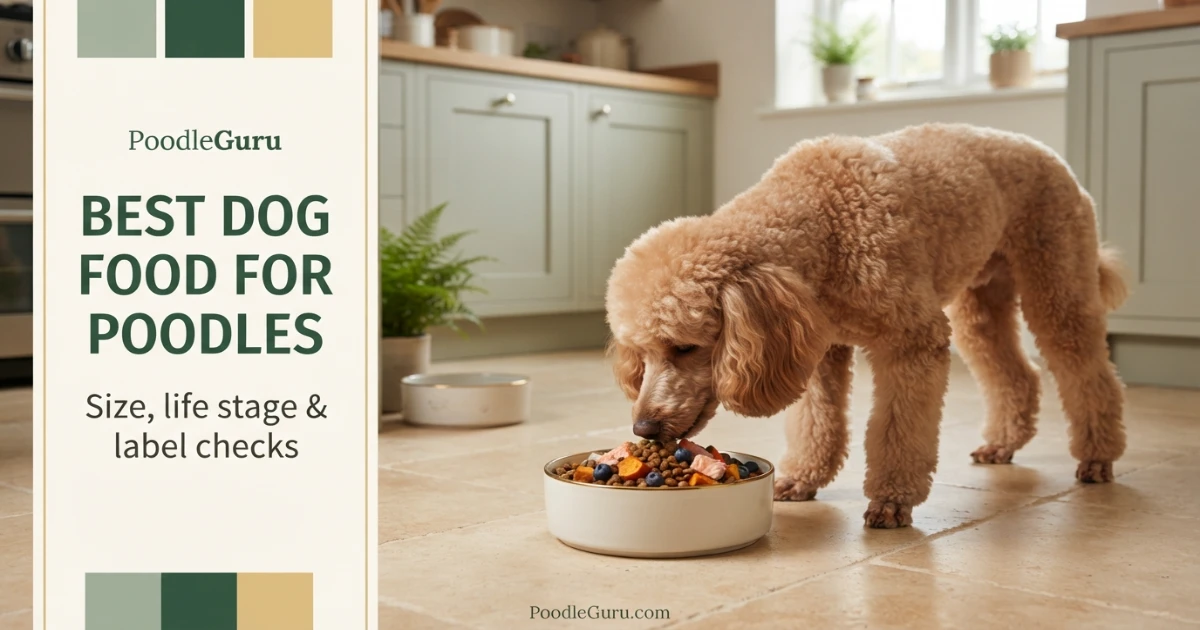
Choosing the right food for your poodle isn’t just about picking a premium label. It’s about matching nutrition to their unique needs — from a Toy Poodle’s tiny jaw to a Standard Poodle’s deep chest and active mind. This guide uses vet-informed criteria to help you compare diets safely, understand labels, and choose a food that fits your poodle’s size, life stage, and health needs — without the marketing fluff.
Quick Answer
The best dog food for poodles is a complete and balanced diet matched to your dog’s size, life stage, activity level, and medical needs. For poodle owners, this means looking beyond front-of-bag claims and checking the nutrition adequacy statement, protein source, calorie density, feeding guidance, and brand quality controls. A food that follows WSAVA nutrition-selection principles, carries an appropriate AAFCO nutritional adequacy statement, and comes from a company with transparent formulation and safety practices is usually a stronger choice than one sold on trend alone.
Why Poodles Need Tailored Nutrition
Poodles are active, intelligent dogs. Their nutritional needs aren’t simply “what’s good for dogs.” Their lean body structure, predisposition to sensitive digestion, and size variation from Toy to Standard mean that a one-size-fits-all kibble rarely fits all.
Toy and Miniature Poodles often have faster metabolisms. They burn through energy quickly, but their small mouths and delicate teeth demand smaller, easier-to-chew pieces. Standard Poodles, meanwhile, need joint support early — they’re prone to hip dysplasia and, because of their deep chests, they face a higher risk of bloat. A food that controls eating speed and supports lean muscle mass matters.
Then there’s the famously sensitive poodle stomach. Many owners report loose stools, gassiness, or picky eating patterns. While not every poodle has food sensitivities, the breed’s frequent digestive quirks mean that ingredient simplicity and high digestibility are genuine priorities — not just marketing points.
Quick Facts: Poodle Nutrition
Protein Priority
High-quality animal protein should be the first ingredient. Poodles need amino acids for muscle maintenance and that famously plush coat.
Life Stage Matters
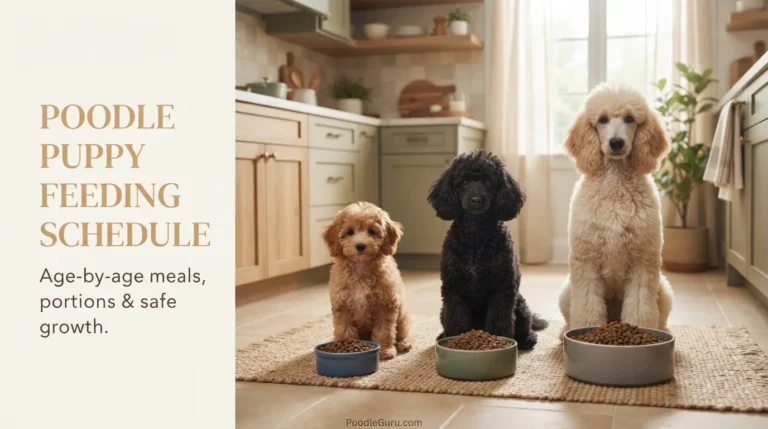
Puppy, adult, and senior formulations differ in calorie density, calcium-phosphorus ratios, and joint-supporting nutrients. Don’t feed an adult maintenance diet to a growing puppy.
Size-Specific Kibble
Toy Poodles do best with small, easy-to-crunch kibble. Standard Poodles need larger pieces that slow down gulping and help reduce bloat risk.
Sensitive Stomachs
Limited-ingredient diets with novel proteins (lamb, duck, fish) often help poodles with digestive upset. Probiotics and prebiotic fibres support gut health.
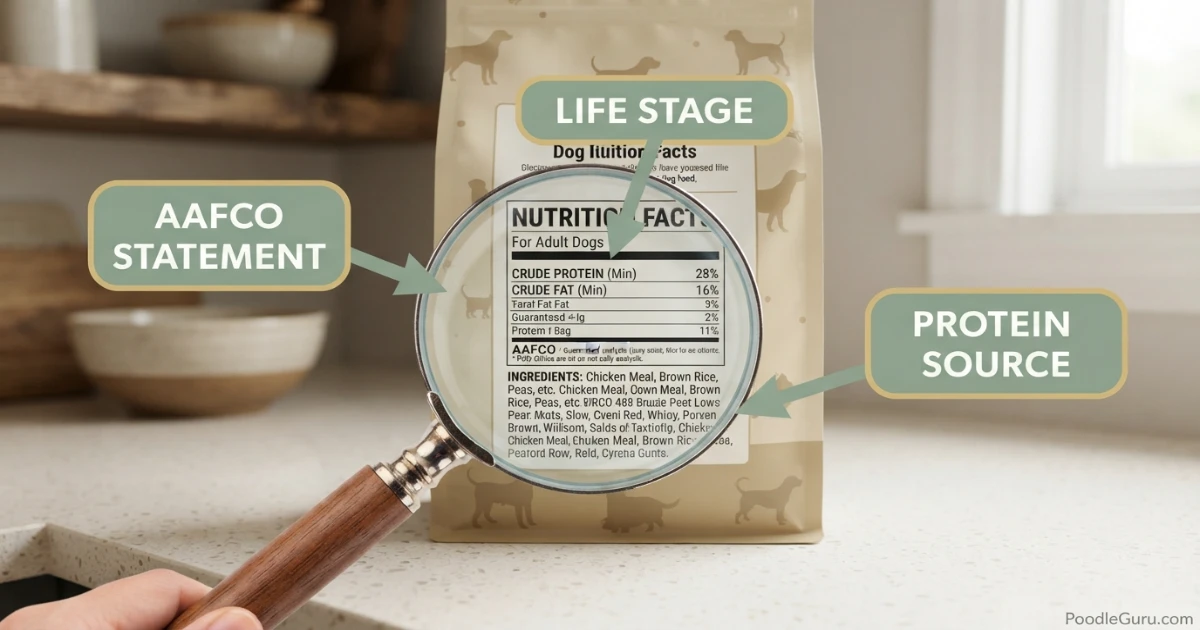
AAFCO Statement
The food label should carry an AAFCO nutritional adequacy statement confirming it’s “complete and balanced” for your dog’s life stage. This is a regulatory minimum, not a quality guarantee.
DCM Awareness
The FDA has investigated reports of canine dilated cardiomyopathy involving certain diets, many labeled grain-free and high in peas, lentils, legumes, or potatoes. Avoid boutique or grain-free diets unless your veterinarian has a clear reason.
The PoodleGuru Poodle Plate Framework
At PoodleGuru, we evaluate every food against five pillars. This framework removes guesswork and gives you a clear, repeatable method for comparing any brand.
Protein Source & Quality
Look for a clearly named animal protein such as chicken, salmon, lamb, turkey, or duck. Meals and by-products can be nutritious when they come from a reputable company with strong quality controls, but vague sourcing and poor transparency are red flags. The full formula matters more than one ingredient alone.
Fat Profile & Omega Balance
Poodle coats thrive on omega-3 and omega-6 fatty acids. Chicken fat, fish oil, and flaxseed are excellent sources. Avoid generic “animal fat” — you want to know what you’re feeding. The fat level should be moderate, not extreme, unless the dog is highly active.
Carbohydrate Quality
Dogs can digest carbohydrates, and quality carbohydrate sources provide energy, fiber, and texture. Brown rice, oatmeal, barley, corn, wheat, and other grains can all be appropriate when tolerated and properly formulated. Grain-free doesn’t automatically mean healthier; many formulas simply replace grains with peas, lentils, or potatoes.
Life Stage & Size Appropriateness
Verify the AAFCO statement. For large-breed puppies (Standard Poodles), the food must be formulated for growth in large breeds to control calcium and support safe skeletal development. Adult Toy Poodles need a maintenance diet with small kibble designed for tiny mouths.
Brand Transparency & Quality Control
Look for brands that employ full-time veterinary nutritionists, own their manufacturing facilities, and publish nutritional analysis on their website. Brands meeting WSAVA guidelines — such as those that conduct feeding trials and monitor product quality — demonstrate a serious commitment beyond marketing.
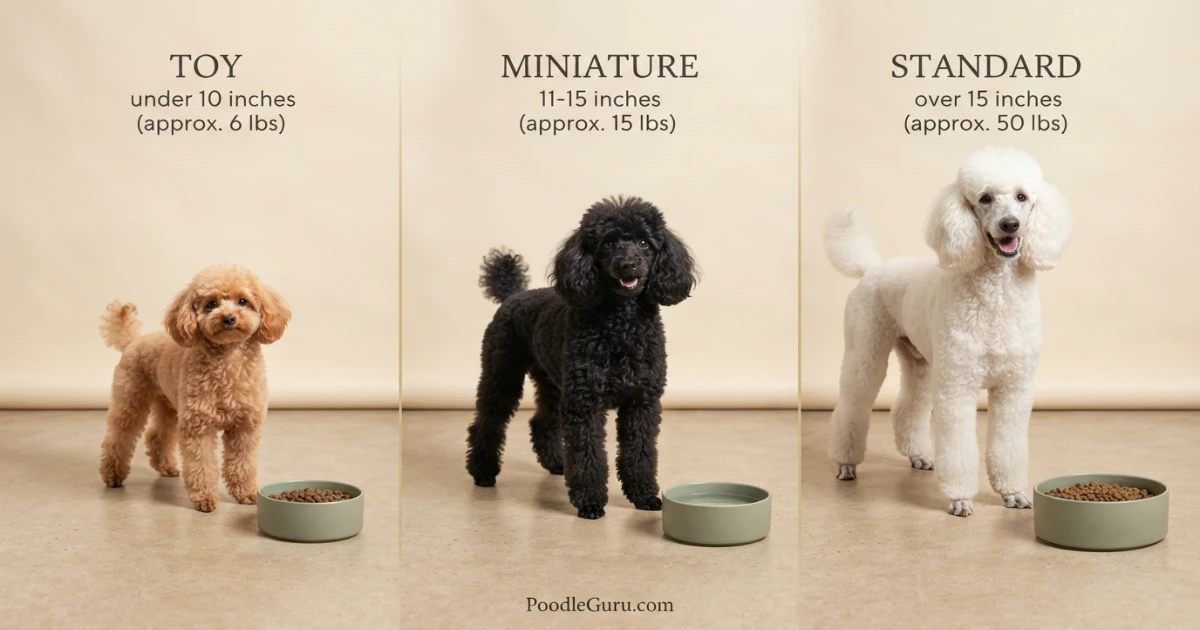
Key Nutritional Considerations by Poodle Size
A Toy Poodle and a Standard Poodle are different animals nutritionally. Here’s what to keep in mind for each.
| Poodle Size | Top Nutritional Focus | Kibble Size | Special Risk |
|---|---|---|---|
| Toy Poodle | High metabolic rate — calorie-dense, small meals | Extra-small, easy to crunch | Dental issues, hypoglycaemia in puppies |
| Miniature Poodle | Balanced energy for moderate activity | Small to medium pieces | Weight gain if overfed, sensitive stomach |
| Standard Poodle | Joint support (glucosamine, chondroitin), lean muscle maintenance | Large pieces to slow eating | Bloat (GDV), hip dysplasia, DCM risk with boutique/grain-free |
For Standard Poodle puppies, the diet must be specifically labelled for large-breed growth. This controls the calcium-to-phosphorus ratio, preventing rapid bone growth that can stress developing joints. It’s one of the most important and most overlooked feeding decisions a Standard Poodle owner can make.
Types of Dog Food: A Poodle Owner’s Comparison
Your poodle’s food comes in many formats, and each has its own trade-offs. This table breaks down the real-world differences.
| Food Type | Pros | Cons | Best For | Typical Monthly Cost (2026) |
|---|---|---|---|---|
| Dry Kibble | Convenient, shelf-stable, often most affordable, dental benefits from crunch | Varies hugely in quality; some formulas use fillers | Most poodles, especially if large breed — large pieces slow eating | $30–$90+ |
| Canned Wet Food | High moisture, palatable, good for picky eaters and seniors | Expensive per calorie, contributes to dental plaque if fed exclusively | Toy Poodles who need encouragement to eat, dogs with dental pain | $70–$180+ |
| Fresh / Human-Grade | Minimally processed, whole-food ingredients, highly palatable | Costly, requires refrigeration, short shelf life | Owners who prioritise whole foods and can manage the cost | $120–$300+ |
| Raw Frozen / Freeze-Dried | Minimally processed, supports coat and energy in some dogs | Pathogen risk, nutritional imbalance if not formulated correctly, expensive | Only under veterinary guidance, not for immunocompromised households | $150–$350+ |
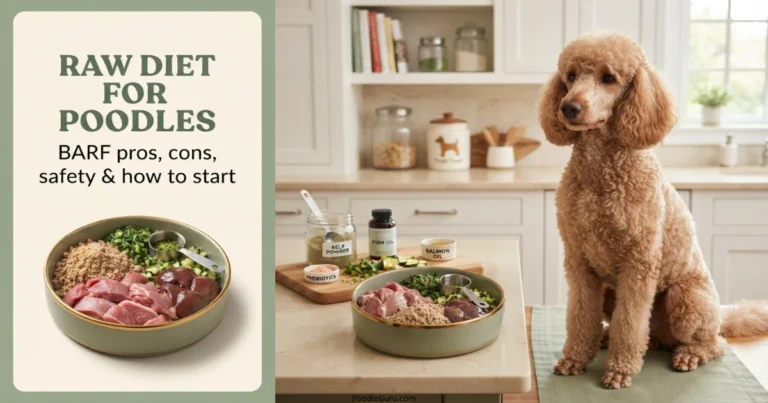
At PoodleGuru, we view high-quality kibble from a transparent company and carrying the correct life-stage statement as the safest, most practical baseline for most owners. Fresh or wet food can make an excellent topper for picky Toy Poodles when calories are controlled. Raw diets remain controversial — the AVMA discourages feeding raw or undercooked animal-source proteins because of risks to pets and people.
How to Choose the Best Dog Food for Your Poodle
Use this step-by-step method the next time you’re standing in the pet food aisle, overwhelmed by choices.
Start with Your Poodle’s Specific Profile
Note your dog’s size, age, activity level, and any known health issues or sensitivities. A sedentary senior Toy Poodle needs different macros than an adolescent Standard Poodle who runs for an hour daily. Write these down.
Apply the PoodleGuru Poodle Plate Framework
Check the five pillars: named animal protein first, quality fat sources, appropriate carbs, correct life stage and size suitability, and brand transparency. Eliminate any food that fails the protein or transparency check immediately.
Verify the AAFCO Statement
Make sure the label reads “complete and balanced” for your dog’s life stage (growth, adult maintenance, or all life stages). For Standard Poodle puppies, “growth for large breed dogs” is required.
Consult Your Veterinarian
Take your shortlist to your vet. Discuss any breed-specific concerns — especially bloat prevention, joint health, or food sensitivities. A vet can also help interpret your poodle’s body condition score to refine portion sizes.
Common Feeding Mistakes (and How to Fix Them)
| Mistake | Why It’s a Problem | Better Approach |
|---|---|---|
| Switching foods too quickly | Abrupt changes cause diarrhoea and digestive upset, especially in sensitive poodles. | Transition over 7–10 days, mixing old and new food in gradually increasing ratios. |
| Overfeeding “light” or senior food | Some reduced-calorie diets lack enough protein for an active poodle’s muscle maintenance. | Choose a high-protein senior formula if your older poodle is still active. Portion control matters more than “light” labels. |
| Grain-free without medical reason | Certain grain-free formulas have been part of FDA DCM investigations, especially diets high in peas, lentils, legumes, or potatoes. | Choose grain-inclusive food unless your veterinarian recommends otherwise for a specific medical reason. |
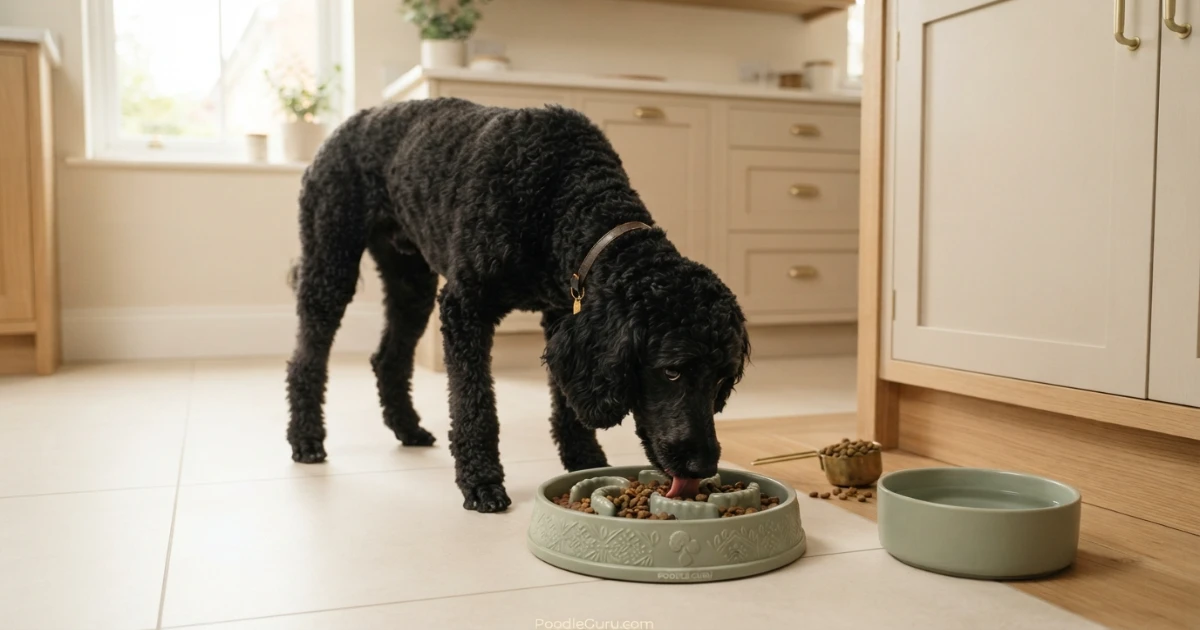
| Ignoring feeding speed for Standards | Fast gulping and one large meal can increase discomfort and may contribute to bloat risk in deep-chested dogs. | Use measured twice-daily meals, a slow-feeder bowl when needed, and avoid vigorous exercise around meals. Ask your vet about your poodle’s individual GDV risk. |
| Free-feeding a picky Toy Poodle | Leaving food out all day encourages grazing and makes it hard to monitor intake or notice appetite loss. | Scheduled meals (2–3 times daily) with measured portions. Remove uneaten food after 20 minutes. |
2026 Price Guide: What to Expect
Dog food costs vary wildly, and a higher price doesn’t always mean better quality. Use these ranges as a realistic budget baseline for a single poodle.
Monthly Feeding Costs by Food Type (Approximate, 2026)
| Food Type | Toy Poodle (5–10 lbs) | Miniature Poodle (15–30 lbs) | Standard Poodle (45–70 lbs) |
|---|---|---|---|
| Economy Kibble | $10–$20 | $20–$35 | $40–$60 |
| Premium Kibble | $25–$45 | $40–$70 | $70–$110 |
| Canned Wet Food | $40–$80 | $70–$130 | $130–$220 |
| Fresh / Human-Grade | $60–$100 | $100–$180 | $180–$300 |
What’s worth paying for: complete transparency about sourcing, a named animal protein as the first ingredient, and a brand that invests in nutritional research. What inflates price without adding value: trendy “ancestral diet” marketing, exotic proteins with no proven benefit, and boutique brands that outsource manufacturing without rigorous quality checks.
Pro Tips for Switching Foods Safely
Poodles often react to dietary changes with loose stools. A slow transition is non-negotiable.
The 7-Day Transition Plan
- Days 1–2: 75% old food, 25% new food
- Days 3–4: 50% old, 50% new
- Days 5–6: 25% old, 75% new
- Day 7+: 100% new food
If soft stools appear at any stage, hold at the current ratio for an extra 2–3 days before increasing the new food. Adding a probiotic supplement during the transition can support gut health. And always ensure fresh water is available — dry food expands in the stomach, and adequate hydration prevents discomfort.
Frequently Asked Questions
What is the best dog food for a poodle with a sensitive stomach?
Some poodles with sensitive stomachs do well on a limited-ingredient diet with one main protein and an easily digestible carbohydrate such as rice or oatmeal. Look for clear labeling, appropriate life-stage nutrition, and optional prebiotics or probiotics. Avoid changing foods repeatedly without your vet’s help, because ongoing stomach issues may need diagnosis rather than more trial and error.
Should I feed my poodle grain-free food?
For most poodles, grain-free food is unnecessary. Whole grains can provide useful nutrients and fiber when properly formulated. The FDA has investigated reports of canine dilated cardiomyopathy involving certain diets, many labeled grain-free and high in peas, lentils, legumes, or potatoes. Unless your veterinarian recommends a grain-free diet for a specific reason, a well-formulated grain-inclusive food is usually the more practical choice.
How many times a day should a poodle eat?
Toy and Miniature poodles often do best with 2–3 small meals daily to maintain steady blood sugar. Standard poodles should eat twice daily to reduce the risk of bloat. Avoid one large meal, and never exercise vigorously immediately after eating. Consistent mealtimes also support house-training and appetite monitoring.
Can poodles eat raw food safely?
Raw diets carry a risk of bacterial contamination for both the dog and the household, and nutritional imbalances are common without professional formulation. Major veterinary groups caution against raw or undercooked animal-source proteins. If you are still considering raw feeding, discuss it with your veterinarian or a board-certified veterinary nutritionist first, especially if children, seniors, pregnant people, or immunocompromised people live in the home.
What supplements do poodles need?
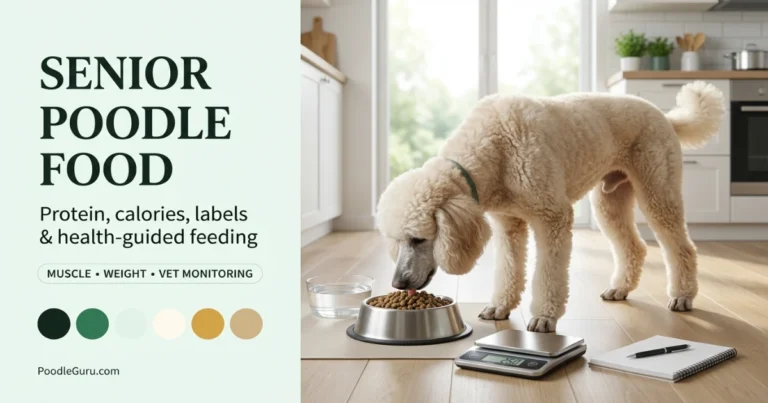
A complete and balanced commercial diet shouldn’t require additional supplements for a healthy poodle. However, Standard Poodles may benefit from joint supplements containing glucosamine and chondroitin, and many poodles thrive with an omega-3 fatty acid supplement for coat health. Always ask your vet before adding anything.
How do I know if my poodle is overweight?
You should be able to feel your poodle’s ribs with a thin layer of fat, and they should have a visible waist when viewed from above and a tucked abdomen from the side. If ribs are hard to feel or the waist has disappeared, it’s time to adjust portions and increase exercise. Your vet can give an exact body condition score.
Is wet food or dry food better for poodles?
Neither is inherently better. Dry kibble supports dental health and is convenient, while wet food adds moisture and palatability — helpful for picky Toy Poodles or seniors with dental issues. Many owners combine both. The quality of ingredients matters far more than the format.
Key Takeaways
The best dog food for poodles isn’t a single brand — it’s any complete and balanced diet that fits their size, life stage, activity level, and individual health needs while passing strong standards for formulation, safety, and manufacturing transparency.
- Use the PoodleGuru Poodle Plate Framework to evaluate any food: named animal protein first, quality fats, digestible carbs, correct life stage/size, and brand transparency.
- Poodle size changes everything. Standard Poodles need large kibble to slow eating and large-breed puppy formulas to protect joints. Toy Poodles need small, calorie-dense pieces.
- A food chosen with WSAVA nutrition-selection questions and carrying the right AAFCO nutritional adequacy statement is a stronger bet than one sold on buzzwords alone.
- Common mistakes like abrupt food switching, unnecessary grain-free feeding, and free-feeding can trigger digestive upset and weight issues in sensitive poodles.
- When in doubt, involve your veterinarian. They can assess body condition, screen for health issues influenced by diet, and help you choose a food that fits your poodle’s full picture.
Best next step: Read the ingredient panel on your current bag. Apply the PoodleGuru Poodle Plate Framework. If it falls short on more than one pillar, shortlist better-matched options, book a vet chat to double-check your choice, then use a slow 7–10 day transition.