This article contains affiliate links. PoodleGuru may earn a small commission if you purchase through our links, at no extra cost to you.
Best Dog Probiotics for Poodles: 2026 Vet-Informed Guide
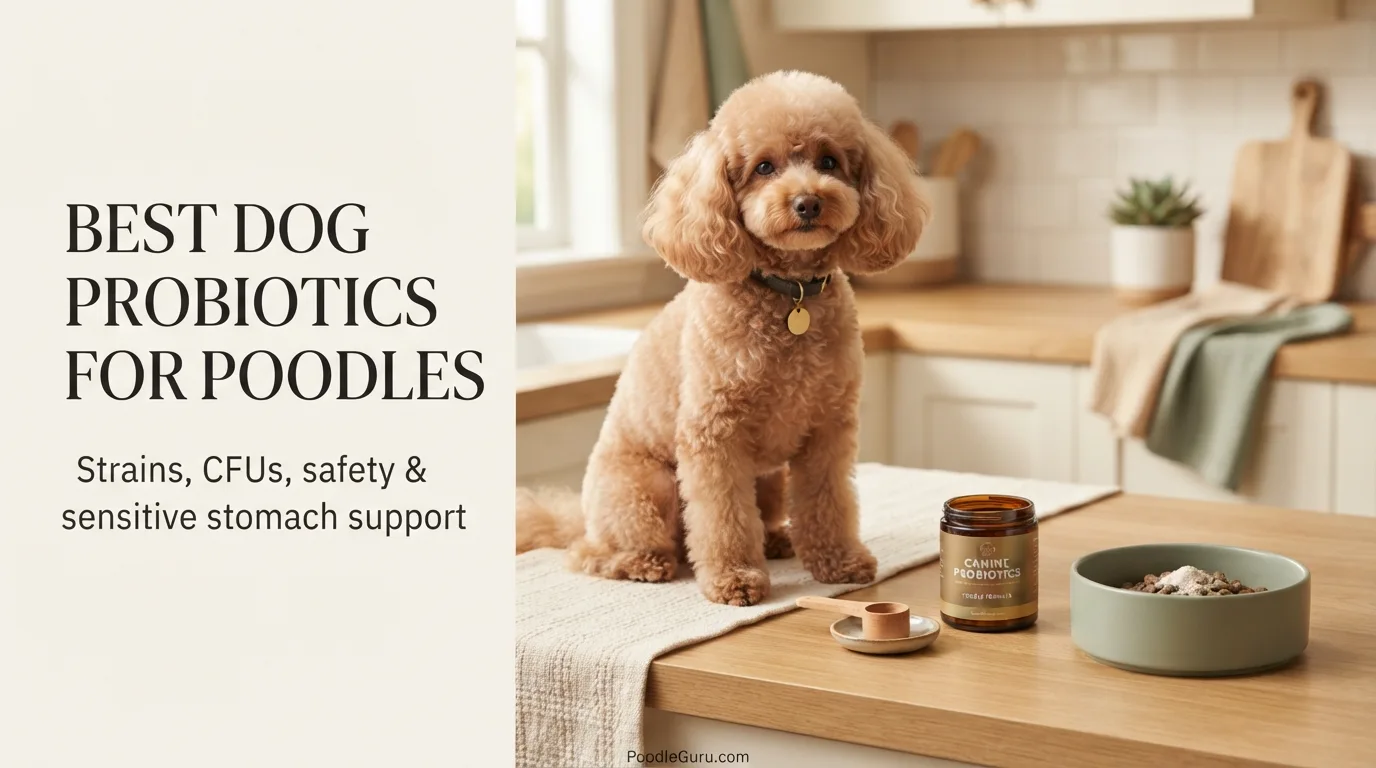
The best dog probiotics for poodles are not chosen by brand name alone. For a breed that can be sensitive to food changes, the right probiotic should match your poodle’s size, stool pattern, medical history, and label quality. Here’s what to look for in 2026 using careful, vet-informed criteria.
Quick Answer
The best dog probiotics for poodles are canine supplements containing live beneficial microorganisms that may support digestive balance, stool quality, and recovery after diet changes or antibiotic use. They are not cures for disease, and results vary by dog. For poodle owners, the strongest buying signals are named strains, CFUs guaranteed through expiration, clear storage directions, clean ingredients, and quality testing — not just a familiar brand name on the label.
Evidence & Safety Note
Veterinary references describe probiotics as supportive tools for the gastrointestinal tract, especially when gut bacteria are disrupted by stress, diet change, disease, or medications. They should be used as supplements, not replacements for diagnosis or treatment. If your poodle has persistent diarrhea, vomiting, black stool, weight loss, severe bloating, or is already on medication, speak with your veterinarian before adding any probiotic.
What Are Dog Probiotics?
A dog probiotic is a supplement that delivers live, beneficial microorganisms — primarily bacteria — to the intestinal tract, where they may help maintain a healthier gut environment. For poodle owners, this means a probiotic may support firmer stools, reduced gas, and recovery after gut disruption from stress, food changes, or medications such as antibiotics. The most important thing to understand is that a probiotic’s effectiveness depends entirely on which specific bacterial strains it contains and whether those strains are alive when they reach your dog’s bowl.
Unlike prescription medications, most pet probiotics are sold as supplements rather than drugs. That means quality varies enormously, and labels can be misleading. At PoodleGuru, we evaluate probiotic options based on veterinary research, strain evidence, manufacturing transparency, and poodle-specific digestive needs — not marketing claims.
Quick Fact
A dog’s gut contains trillions of bacteria — a healthy balance supports digestion, immunity, and even mood regulation.
Quick Fact
CFU stands for Colony-Forming Units. The number on the label represents how many live bacteria are guaranteed per serving until the expiration date.
Quick Fact
Multi-strain formulas can be useful, but strain identity and evidence matter more than simply having a long strain list.
Why Poodles Benefit from Probiotics
Poodles — especially Toy and Miniature sizes — are known for sensitive stomachs. Owners often notice intermittent soft stools, finicky eating, or digestive upset during food transitions. While probiotics won’t cure underlying disease, they can help stabilize the gut environment so minor disruptions don’t spiral into days of diarrhea. Standard Poodles may benefit when on long-term medications or when recovering from stress-related colitis.
Additionally, AKC breed information describes poodles as active, intelligent dogs. In many dogs, stress can affect appetite, stool quality, and gut comfort, so digestive support often works best alongside routine, exercise, and a consistent diet. Veterinary guidance commonly discusses probiotics as supportive options during and after antibiotic courses, after dietary indiscretion, or for dogs with recurrent soft stool — but your veterinarian should guide use if symptoms are persistent or severe.
The PoodleGuru 5-Point Probiotic Selection Method
This framework is how we evaluate every probiotic considered for poodle owners. Apply these five checks before purchasing.
Strain Diversity & Evidence
Look for named strains used in canine digestive-health products, such as Lactobacillus acidophilus, Bifidobacterium animalis, Enterococcus faecium, and Lactobacillus rhamnosus. Avoid products that only list “probiotic blend” without specifics. Strong labels identify microbes by genus, species, and ideally strain designation.
Guaranteed CFU Count
The label should state CFUs guaranteed at expiration — not only at the time of manufacture. A commonly cited canine range is around 1–10 billion CFU daily, but size, product strain, and medical history matter. Toy Poodles often need conservative dosing, while higher short-term use should be guided by a veterinarian.
Poodle-Friendly Delivery Format
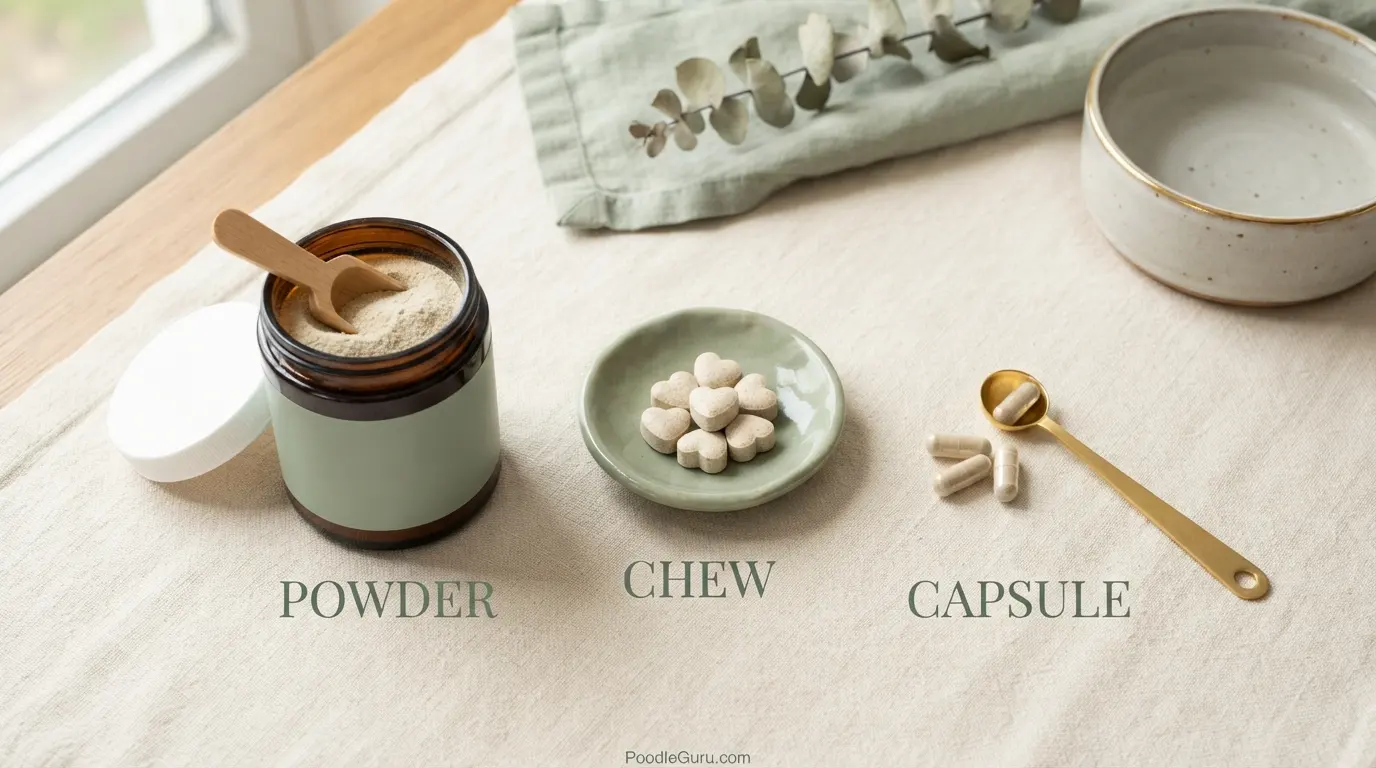
Powders are easiest to dose accurately for small poodles. Chewable tablets can work but often contain palatability enhancers. Capsules may be difficult for toy-sized dogs. At PoodleGuru, we prioritise powders or formulations that allow flexible, size-based dosing.
Third-Party Quality Testing
Choose products tested for purity, potency, and contamination by independent labs. Look for the NASC Quality Seal, NSF-style testing language, or a manufacturer that can explain batch testing, purity checks, and potency guarantees. This step alone eliminates many weak products.
No Unnecessary Additives
Avoid probiotics with artificial colors, added sugars, xylitol, or long lists of fillers. Poodles with sensitive digestion often react to maltodextrin or certain flavourings. A clean, minimal ingredient list is worth paying for.
Probiotic Types: Powder, Chew, Capsule — Which Is Best for Poodles?
Each format has trade-offs. The table below captures attributes that matter for poodles of all sizes.
| Format | Ease of Dosing | Palatability | Toy Poodle Suitability | Standard Poodle Suitability | Typical Price per Month (2026) |
|---|---|---|---|---|---|
| Powder | Excellent — adjustable down to 1/8 tsp | Varies; usually unflavoured or lightly flavoured | Ideal | Excellent | $18–$45 |
| Chewable Tablet | Good — scored tablets allow splitting | High — often flavoured like chicken or liver | Good (if tablet can be halved) | Good | $22–$40 |
| Capsule | Difficult for very small dogs | Neutral (capsule swallowed whole) | Poor unless powder is emptied from capsule | Acceptable | $25–$50 |
| Liquid/Gel | Moderate — dropper dosing | Usually high | Good | Moderate (costly for large doses) | $30–$55 |
For most poodle households, a high-quality powder probiotic is the most versatile choice. You can adjust the dose for a 5-lb Toy or a 60-lb Standard without buying multiple products. Chewables are convenient but check that a single chew doesn’t exceed your toy poodle’s daily CFU needs.
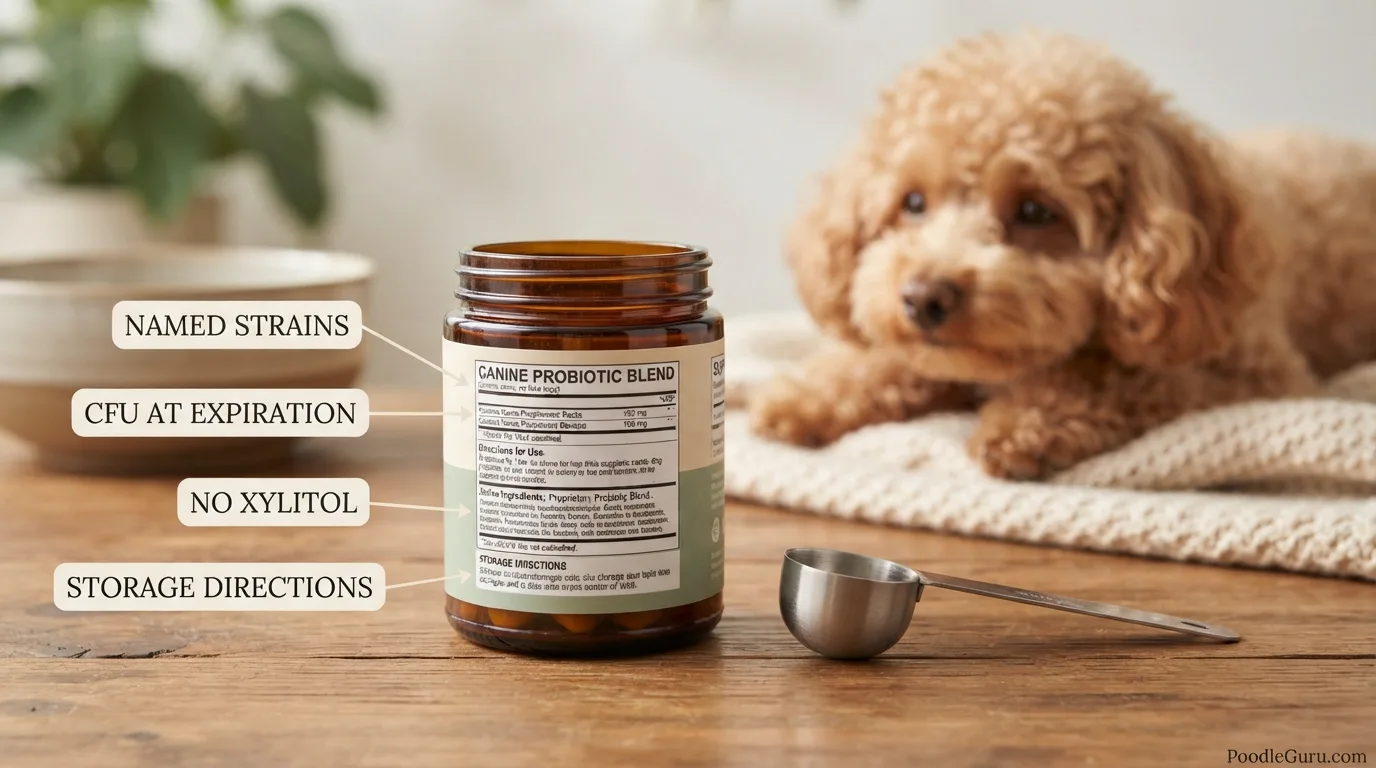
What to Look For on a Probiotic Label
Don’t rely on the front of the package. Flip it over and scan for these specifics:
- Full strain names: e.g., Lactobacillus plantarum, not just “Lactobacillus.”
- CFU guarantee at expiration: If it only lists “at time of manufacture,” assume potency drops significantly before you finish the container.
- Prebiotics included: Ingredients like inulin or fructooligosaccharides (FOS) feed the probiotics and improve colonization. This is a plus but not a substitute for strain quality.
- Storage requirements: Some probiotics require refrigeration after opening. If you travel with your poodle or forget to refrigerate, choose a shelf-stable product.
- Country of manufacture: Clear manufacturing details are helpful, but location alone is not enough — always check quality testing, expiration dating, and storage directions.
Common Mistakes When Choosing Probiotics
1. Chasing the Highest CFU Count
More is not always better. Extremely high CFU counts (50+ billion) may cause gas, bloating, or stool changes in small poodles. Stick to 1–10 billion for daily use.
2. Choosing Human Probiotics for Dogs
Human strains don’t necessarily colonise the canine gut. The gut environment and bacterial species differ. Use a canine-specific probiotic unless your veterinarian recommends a specific human product.
3. Switching Products Too Quickly
Probiotics often need 1–2 weeks to show stool-quality changes. Changing brands every few days because you don’t see instant results prevents any product from working.
4. Storing Incorrectly
Heat and moisture kill live cultures. Don’t keep the jar near a sunny window or a stove. Refrigerate if the label advises it, and always close the lid tightly.
5. Using Probiotics to Mask a Deeper Problem
Chronic vomiting, bloody stool, or weight loss are not “probiotic deficiencies.” They require a vet visit. Probiotics may support gut health — they do not diagnose, cure, or replace treatment for disease.
6. Ignoring the Prebiotic Connection
Probiotics work best when prebiotic fibers are also present in the diet. A small amount of plain pumpkin may help some dogs, but use it modestly and avoid adding multiple new ingredients at once.
When to Call a Vet
If your poodle experiences vomiting, refusal to eat, black or tarry stools, or diarrhea that lasts more than 48 hours, stop the probiotic and contact your veterinarian. These signs suggest a condition that needs medical attention, not a supplement.
2026 Price Guide: What You Should Expect to Pay
Probiotic pricing has stabilized in 2026, but you’ll still see a wide range. Here’s what drives cost and what’s actually worth paying for.
What Affects Probiotic Price
- Strain count and research investment: Products with well-identified, studied strains cost more to develop but usually give buyers more transparency.
- CFU guarantee: A label that guarantees potency to expiration — not just manufacture — requires more expensive stabilisation technology.
- Third-party testing: Independent lab verification adds cost but confirms purity and potency. This is worth paying for.
- Delivery format: Powder is generally the most cost-effective per dose. Chews cost more per serving, and liquid/gel is priciest.
- Brand reputation: Well-known veterinary brands like Purina Pro Plan FortiFlora or Nutramax Proviable often carry a premium, but they also have extensive safety data and are commonly recommended in clinical settings.
Realistic monthly budget: $20–$45 for a high-quality probiotic that meets the PoodleGuru 5-Point Method. Spending more than $50/month is rarely necessary unless your veterinarian recommends a specific therapeutic formula.
How to Introduce Probiotics to Your Poodle
Start slow. Even beneficial changes to gut bacteria can cause temporary gas or looser stool if introduced abruptly.
Day 1–3: Half Dose
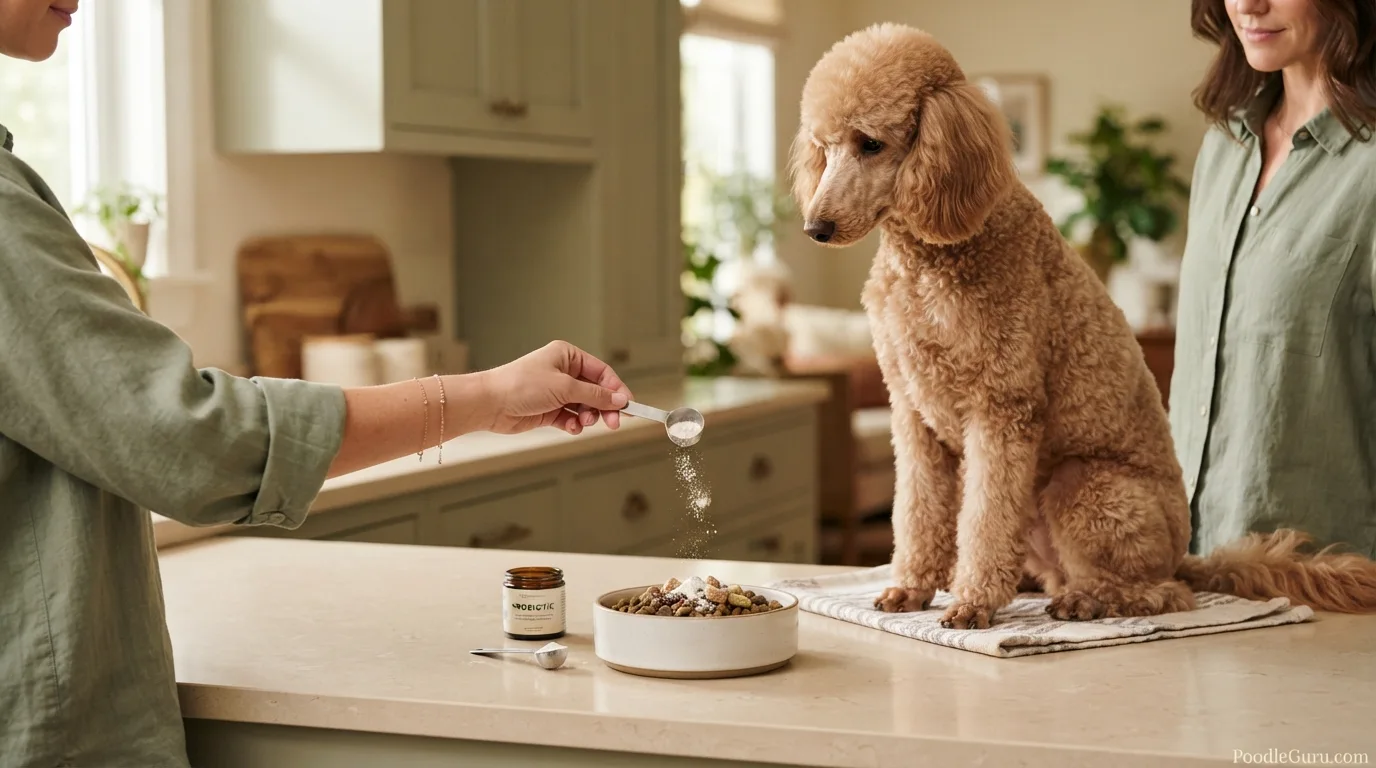
Give half the recommended daily amount mixed into a small portion of food. Observe stool consistency and appetite. Toy poodles may need a quarter dose initially.
Day 4–7: Full Dose
Increase to the full daily dose if no digestive upset occurred. Split the dose between morning and evening meals for better colonization.
Week 2–4: Assess Results
Expect firmer stools and less gas within 7–14 days. If you see no change, the strain profile may not be right for your dog. Consult your vet about switching to a product with different strains.
Pro Tip: Pair With a Prebiotic Food
Add a teaspoon of plain canned pumpkin (not pie filling) or a small amount of cooked, mashed sweet potato to your poodle’s bowl during the introduction period. The fibre helps the probiotic bacteria establish themselves.
Buyer Red Flags
No Strain Names
If the label only says “probiotic blend” without naming each strain, you don’t know what you’re buying.
“Miracle Cure” Claims
Probiotics are not treatments for allergies, cancer, or chronic disease. Walk away from products that promise dramatic medical results.
No Expiration Date Listed
Probiotics lose potency over time. If there’s no date on the package, there’s no guarantee the bacteria are still alive.
Sold Through Random Third-Party Sellers
Buy directly from the manufacturer or a reputable retailer. Counterfeit supplements exist, and improper storage during shipping kills live cultures.
Contains Xylitol or Artificial Sweeteners
Xylitol is highly toxic to dogs. Always check the ingredient list for hidden sweeteners.
No Manufacturer Contact Information
If you can’t reach the company with questions, that’s a problem. Reputable manufacturers welcome inquiries about their quality processes.
Frequently Asked Questions About Best Dog Probiotics for Poodles
What is the best probiotic for a poodle with sensitive stomach?
Powder-based multi-strain probiotics with Lactobacillus and Bifidobacterium species are often recommended. Well-known canine probiotic products are commonly discussed with veterinarians, but the right choice depends on your poodle’s symptoms, size, and medical history. Always start with a low dose and choose a product with guaranteed CFU at expiration.
How many CFUs does my poodle need daily?
For daily maintenance, 1–10 billion CFU is appropriate for most poodles. Toy poodles often do well at the 1–5 billion range. Higher counts (up to 20 billion) may be used short-term during digestive upset, but should be guided by your veterinarian.
Can I give my poodle human probiotics?
It’s not recommended. Human probiotics contain bacterial strains adapted to the human gut environment. Canine-specific probiotics are formulated with strains shown to colonise the dog’s intestinal tract. Using human products may deliver few benefits and could cause digestive upset.
How long does it take for probiotics to work in poodles?
Most poodles show improved stool consistency within 7–14 days of consistent use. If there’s no change after 3 weeks, the strain profile may not match your dog’s needs. Consult your vet about trying a different product.
Should I give my poodle probiotics every day?
Daily probiotics may be appropriate for some poodles when label directions and veterinary guidance are followed. However, some poodles do well with intermittent or seasonal use — for example, during allergy season or after stressful events. Monitor your dog’s response and discuss long-term use with your vet.
Can probiotics help with my poodle’s loose stool after antibiotics?
Yes, that’s one of the best-supported uses. Antibiotics kill both harmful and beneficial gut bacteria. A probiotic started during the antibiotic course (given at a different time of day) and continued for 2–4 weeks after can help restore normal stool. VCA Animal Hospitals guidance discusses probiotics as support for gastrointestinal disruption, including antibiotic use.
Do poodle puppies need probiotics?
Healthy puppies usually don’t need routine probiotics, but they can be useful during weaning, food transitions, or after a course of antibiotics. Always use a puppy-safe product and check with your breeder or veterinarian before supplementing a young puppy’s diet.
Are there side effects to giving my poodle probiotics?
Mild gas, softer stool, or slight bloating can occur during the first few days as the gut adjusts. If these symptoms last more than 3–4 days or worsen, stop the probiotic and contact your vet. Severe reactions are rare but possible with very high CFU counts.
Key Takeaways
- The best dog probiotics for poodles are multi-strain, powder-based formulas with 1–10 billion CFU guaranteed at expiration, from manufacturers who provide third-party testing.
- Probiotics support digestive health, firmer stools, and immune function in poodles, especially during antibiotic recovery, food changes, or stress-related gut upset.
- The PoodleGuru 5-Point Probiotic Selection Method evaluates strain diversity, CFU guarantee, delivery format, quality testing, and additive cleanliness before recommending any product.
- Powder probiotics offer the easiest dose adjustment across Toy, Miniature, and Standard sizes, with a typical 2026 monthly cost of $20–$45.
- Avoid products without named strains, those making “miracle cure” claims, and anything lacking an expiration date. Always check for xylitol and artificial sweeteners.
- Introduce probiotics slowly over 7 days, pair them with a prebiotic fibre like pumpkin, and consult your veterinarian before starting if your poodle has a chronic health condition.
Best next step: Review the product you’re currently using (or considering) against the PoodleGuru 5-Point Selection Method above. If it falls short on more than one criterion, it’s worth switching. For a deeper dive into how nutrition supports your poodle’s gut, read our Homemade Dog Food for Poodles guide next.