This article contains affiliate links. PoodleGuru may earn a small commission if you purchase through our links, at no extra cost to you.
Homemade Dog Food for Poodles: Safe Recipes & Rules
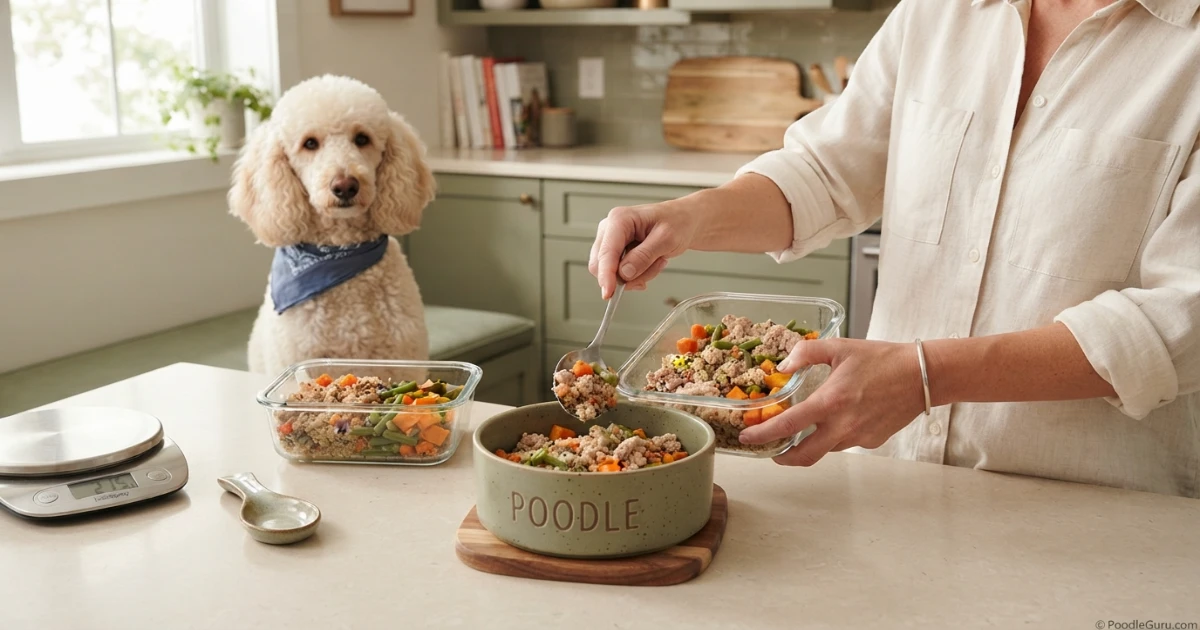
Cooking for your poodle can feel like the ultimate act of care. But good intentions do not automatically create balanced nutrition. Here is how to make homemade dog food for poodles safely — with poodle-specific recipe foundations, portion guidance, supplement warnings, and the non-negotiable rules you need before changing your dog’s diet long-term.
Quick Answer
Homemade dog food for poodles is a diet prepared at home using fresh, whole ingredients instead of commercial kibble or canned food. For poodle owners, this means you control every ingredient that goes into your dog’s bowl — which can be a significant advantage for managing allergies, picky eating, or specific health concerns. The most important thing to understand is that simply combining meat, rice, and vegetables does not make a complete meal. Without careful formulation, homemade diets often lack essential nutrients like calcium, taurine, and certain vitamins, which can lead to serious health problems over time.
Why Consider Homemade Food for Your Poodle
Poodle owners often turn to homemade diets for a few key reasons. Food allergies or sensitivities — particularly to common commercial proteins like chicken or grains — can make finding a suitable kibble frustrating and expensive. Other owners want more transparency after pet food recalls. Some simply enjoy the act of preparing a fresh meal for their companion. For picky eaters, which many toy and miniature poodles can be, the aroma and texture of fresh food often wins where kibble fails.
There’s real appeal in knowing exactly what your poodle eats. You can select high-quality muscle meat, choose specific carbohydrate sources, and add healthy fats like fish oil. For poodles with confirmed dietary sensitivities, this level of control can be transformative. But the gap between a thoughtfully home-cooked meal and a nutritionally complete one is wider than most owners realize.
The Real Risks of Unbalanced Homemade Diets
Veterinary nutritionists consistently find that many home-prepared dog food recipes — including recipes shared online — can become deficient in essential nutrients when they are not properly formulated. Common shortfalls include calcium, phosphorus balance, zinc, magnesium, iron, vitamin D, vitamin E, and sometimes taurine. VCA notes that home-prepared diets commonly run into mineral imbalances, and diet-associated dilated cardiomyopathy (DCM) is one reason poodle owners should not guess with long-term recipes.
Calcium imbalance is the most dangerous mistake. Dogs need a precise calcium-to-phosphorus ratio. Meat is high in phosphorus but contains almost no calcium. If you feed meat-heavy meals without a calcium source like ground eggshell powder or a vet-recommended supplement, you risk bone deformities in growing puppies and skeletal problems in adults. This isn’t theoretical — veterinary hospitals see these cases.
When to Call a Vet
Contact your veterinarian if your poodle on a homemade diet shows signs of lethargy, unexplained weight loss, muscle weakness, poor coat quality, or changes in appetite. If you haven’t had your recipe reviewed by a board-certified veterinary nutritionist, request that evaluation before continuing long-term. Homemade diets should be reassessed annually as your poodle ages.
The PoodleGuru 4-Step Homemade Nutrition Check
At PoodleGuru, we evaluate homemade feeding plans by whether they protect against the most common nutrient gaps. Use this four-step framework before serving any homemade meal as a long-term diet — not just an occasional topper.
Complete Protein Source
Does the recipe include a named animal protein like cooked chicken thigh, turkey, lean beef, or salmon? Muscle meat alone isn’t enough — organ meats like liver provide critical vitamins. Aim for about 25–35% of the recipe by weight from a variety of animal proteins.
Calcium-to-Phosphorus Balance
Meat is high in phosphorus, low in calcium. You must add a precise calcium source. Options include ground eggshell (about ½ teaspoon per pound of meat), calcium carbonate, or a commercial supplement like Balance IT. Never skip this step — the ratio needs to be roughly 1.2:1 calcium to phosphorus.
Essential Fatty Acids & Vitamins
Add a high-quality fish oil for EPA and DHA. Include a source of vitamin E, zinc, and iodine. Poodles need these for coat quality, immune function, and thyroid health. A multivitamin formulated specifically for homemade diets is often the safest route unless you’re working from a nutritionist-designed recipe.
Professional Review
Have a board-certified veterinary nutritionist review your recipe. VCA’s homemade diet guidance recommends professional formulation because nutrient deficiencies and excesses are easy to create at home, even with high-quality ingredients. This is not gatekeeping — it is prevention.
Poodle-Sized Portions: Toy, Miniature, and Standard
A Standard Poodle and a Toy Poodle have vastly different caloric needs. Feeding the wrong portion size, even of a perfectly balanced recipe, causes weight gain or malnutrition. Use this table as a starting point, then adjust based on your dog’s body condition and activity level.
| Poodle Size | Typical Weight | Daily Calories (Approx.) | Approx. Food Volume (Recipe-Dependent) |
|---|---|---|---|
| Toy | 4–6 lbs | 150–220 kcal | about ¾–1 cup total if recipe is ~200 kcal/cup |
| Miniature | 12–18 lbs | 350–500 kcal | about 1½–2½ cups total if recipe is ~200 kcal/cup |
| Moyen / Klein | 20–30 lbs | 550–750 kcal | about 2½–3½ cups total if recipe is ~220 kcal/cup |
| Standard | 45–70 lbs | 1,000–1,500 kcal | about 4–6 cups total if recipe is ~250 kcal/cup |
These are estimates based on moderately active, spayed or neutered adult poodles. Highly active standards or pregnant dogs need more. Senior poodles often need fewer calories with higher protein density. Weigh your poodle monthly when starting a homemade diet and adjust portions to maintain an ideal body condition — you should be able to feel the ribs easily but not see them.
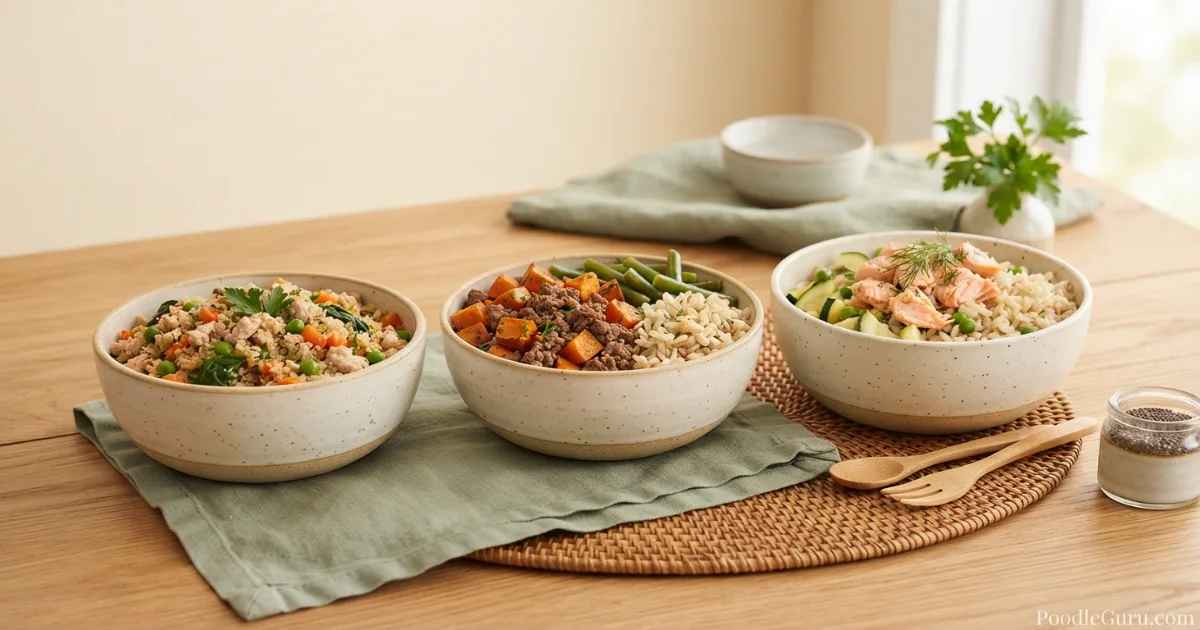
3 Homemade Recipe Foundations to Discuss With Your Vet
The following recipes are educational recipe foundations for discussion with your veterinarian or a board-certified veterinary nutritionist. They are not complete prescriptions by themselves because exact supplement amounts depend on ingredient weights, product brands, your poodle’s age, body condition, medical history, and lab results. Always get professional approval before feeding homemade food as the main long-term diet.
1. Turkey & Quinoa Base (Sensitive Stomach Formula)
Per day for a 15-lb Miniature Poodle (~400 kcal):
3 oz cooked lean ground turkey (thigh or breast mix)
½ cup cooked quinoa
¼ cup steamed, pureed zucchini and carrot mix
½ tsp fish oil (salmon or sardine)
calcium source amount calculated by your vet or veterinary nutritionist
iodine source only if included in the approved recipe
complete homemade-diet supplement as directed by your vet
Combine all ingredients, mix well, and serve slightly warm. Divide into two meals.
2. Beef & Sweet Potato Base (Active Poodle Formula)
Per day for a 50-lb Standard Poodle (~1,200 kcal):
10 oz cooked lean ground beef (90% lean, drained)
2 cups cooked, mashed sweet potato
½ cup steamed green beans, finely chopped
1½ tsp fish oil
calcium source amount calculated by your vet or veterinary nutritionist
iodine source only if included in the approved recipe
complete homemade-diet supplement as directed
Mix thoroughly. For large-breed poodles, consider adding a joint supplement containing glucosamine separately, as homemade diets don’t supply it naturally.
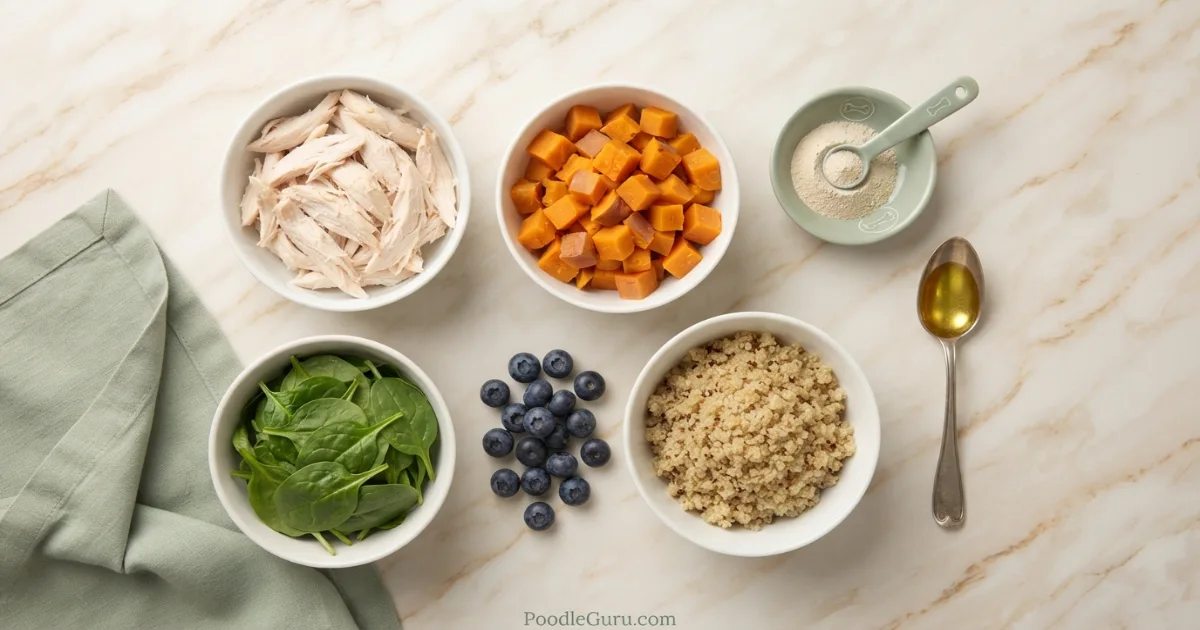
3. Salmon & Rice Base (Coat Health Formula)
Per day for a 6-lb Toy Poodle (~190 kcal):
1.5 oz cooked, deboned wild-caught salmon (or canned in water, no salt)
¼ cup cooked brown rice
2 tbsp steamed, pureed spinach and blueberry mix
¼ tsp fish oil
calcium source amount calculated by your vet or veterinary nutritionist
iodine source only if included in the approved recipe
complete homemade-diet supplement as directed
Salmon adds natural omega-3s. Ensure all bones are removed completely. Never use raw salmon — it can carry a parasite dangerous to dogs.
Important: These Are Foundations, Not Complete Diet Plans
Every recipe must be adjusted for your individual poodle’s age, health status, and activity level. Growing puppies, pregnant dogs, and those with kidney or liver conditions have dramatically different nutritional requirements. A recipe that works beautifully for one poodle may harm another. Veterinary nutrition oversight is the safest standard for long-term homemade feeding.
7 Dangerous Homemade Food Mistakes
Even experienced owners make these errors. Review them carefully — your poodle’s long-term health depends on it.
1. Skipping Calcium
Feeding meat without a calcium source creates a severe imbalance. Over months, this leaches calcium from bones. A limp or spontaneous fracture can be the first sign.
2. Feeding Raw Without Expertise
Raw diets carry bacterial risks for both the dog and household. Poodles with sensitive stomachs aren’t magically protected. The AVMA discourages feeding raw or undercooked animal-source proteins to dogs and cats because of health risks for pets and people.
3. Too Much Liver
Organ meat is nutrient-dense but overfeeding liver causes vitamin A toxicity. Liver should make up no more than 5% of the total diet by weight.
4. Forgetting Taurine
Taurine deficiency is linked to heart disease in poodles. Lamb, rice, and high-fiber diets may reduce taurine levels. A supplement or taurine-rich ingredients like heart meat can help — but get blood levels checked.
5. Onion, Garlic, and Chives
These are toxic to dogs in all forms — powdered, cooked, raw. They damage red blood cells. Even small amounts in leftover stew or broth can be harmful.
6. Guessing Portions
A 10% overfeed on a Toy Poodle adds up fast. Use a kitchen scale, not a measuring cup, for accuracy. Weight gain creeps up and is hard to reverse in small dogs.
7. Ignoring Changes in Health
If your poodle’s coat dulls, energy drops, or stool quality changes after switching to homemade food, don’t wait. See your vet. These are often the earliest signs of a nutritional gap.
How to Transition Your Poodle to Homemade Food
Switch slowly. Poodles often have sensitive digestive systems, and a sudden diet change can trigger vomiting or diarrhea. Plan on a 7–10 day transition.
Days 1–3
Feed 75% current food, 25% new homemade recipe. Split into normal mealtimes. Watch for loose stool.
Days 4–6
Move to 50% old food, 50% new homemade food. If stool is firm and your poodle seems comfortable, continue.
Days 7–9
Feed 25% old food, 75% new homemade food. By day 10, you should be at 100% homemade if no digestive upset has occurred.
Week 3–4: Follow-Up
Schedule a vet check after 3–4 weeks on the full homemade diet. Bloodwork and a physical exam confirm your poodle is thriving on the new plan.
Pro Tip: Batch and Freeze
Prepare a week’s worth of food at once and freeze in daily portions. This reduces prep time and ensures consistency. Thaw overnight in the refrigerator, then warm gently to room temperature before serving — never microwave in plastic containers.
Frequently Asked Questions About Homemade Dog Food for Poodles
Is homemade dog food better for poodles than kibble?
It can be — but only when properly balanced. High-quality commercial kibble is formulated to meet AAFCO standards. Homemade food gives you ingredient control but requires precise supplementation. Neither is inherently better; the quality of execution matters most.
Can I just feed my poodle chicken and rice every day?
No. Chicken and rice alone is severely deficient in calcium, vitamins, and fatty acids. It’s appropriate for a few days during digestive upset under veterinary guidance, but as a long-term diet it will cause malnutrition and bone problems.
What supplements do I need for homemade poodle food?
At minimum: a calcium source (eggshell powder or calcium citrate), fish oil for omega-3s, and a multivitamin designed for homemade canine diets. Additional supplements like kelp for iodine, zinc, and vitamin E may be needed based on your recipe and your vet’s assessment.
How much homemade food should I feed my poodle?
It depends on weight, age, and activity. A Toy Poodle needs about 150–220 calories daily; a Standard Poodle may need 1,000–1,500. Use a kitchen scale for precise portions and adjust monthly based on body condition. Your vet can calculate exact caloric needs.
Can poodles eat raw homemade food?
Raw feeding is controversial. Veterinary organizations like the AVMA caution against it due to bacterial risks. If you choose raw, strict food safety protocols are essential, and the same nutritional balancing rules apply. Consult a veterinary nutritionist before starting.
What foods are toxic to poodles in homemade recipes?
ASPCA Poison Control lists several common people foods pets should avoid, including onions, garlic, chives, grapes, raisins, chocolate, xylitol, macadamia nuts, and raw bread dough. Even small amounts of onion powder in broth can cause anemia. Always research every ingredient before adding it to your poodle’s bowl.
How do I know if my homemade diet is working?
Signs of a well-balanced diet include a shiny coat, clear eyes, firm stools, steady energy, and stable weight. Have your vet run bloodwork after 4–6 weeks on the new diet to check for any silent deficiencies before they become clinical problems.
Do I need a veterinary nutritionist for homemade poodle food?
For long-term feeding, yes. General practice veterinarians can offer guidance, but a board-certified veterinary nutritionist formulates precise recipes. This is the gold standard for ensuring your homemade diet is truly complete for your individual poodle.
Key Takeaways
- Homemade dog food for poodles must include a precise calcium source, essential fatty acids, and a multivitamin to prevent serious nutritional deficiencies.
- Feeding meat and vegetables without supplementation leads to calcium imbalance, taurine deficiency, and vitamin gaps — all linked to long-term health damage in poodles.
- Toy, Miniature, and Standard poodles have vastly different caloric needs, ranging from 150 to 1,500 calories per day; portion accuracy is critical to prevent obesity or malnutrition.
- The PoodleGuru 4-Step Nutrition Check (complete protein, calcium balance, essential nutrients, professional review) is the minimum safety standard before feeding any homemade diet long-term.
- A board-certified veterinary nutritionist should review your recipe; annual bloodwork and physical exams catch imbalances before they become irreversible.
- Transition slowly over 7–10 days, watch stool quality and energy levels, and never feed raw without strict protocols and professional guidance.
Best next step: Schedule a pre-diet consultation with your veterinarian. Bring the recipe you intend to use and ask for a referral to a board-certified veterinary nutritionist if one is available in your area. While you wait, read our Poodle Feeding Chart by Age & Size to understand baseline nutritional needs before you start cooking.