Poodle Won’t Eat Dry Food? How to Get Your Poodle Eating Again
When your poodle turns away from mealtime, it is easy to feel worried or frustrated. But picky eating is not a poodle personality defect — it is usually a solvable routine, health, or reinforcement puzzle once you rule out medical causes.
Quick Answer
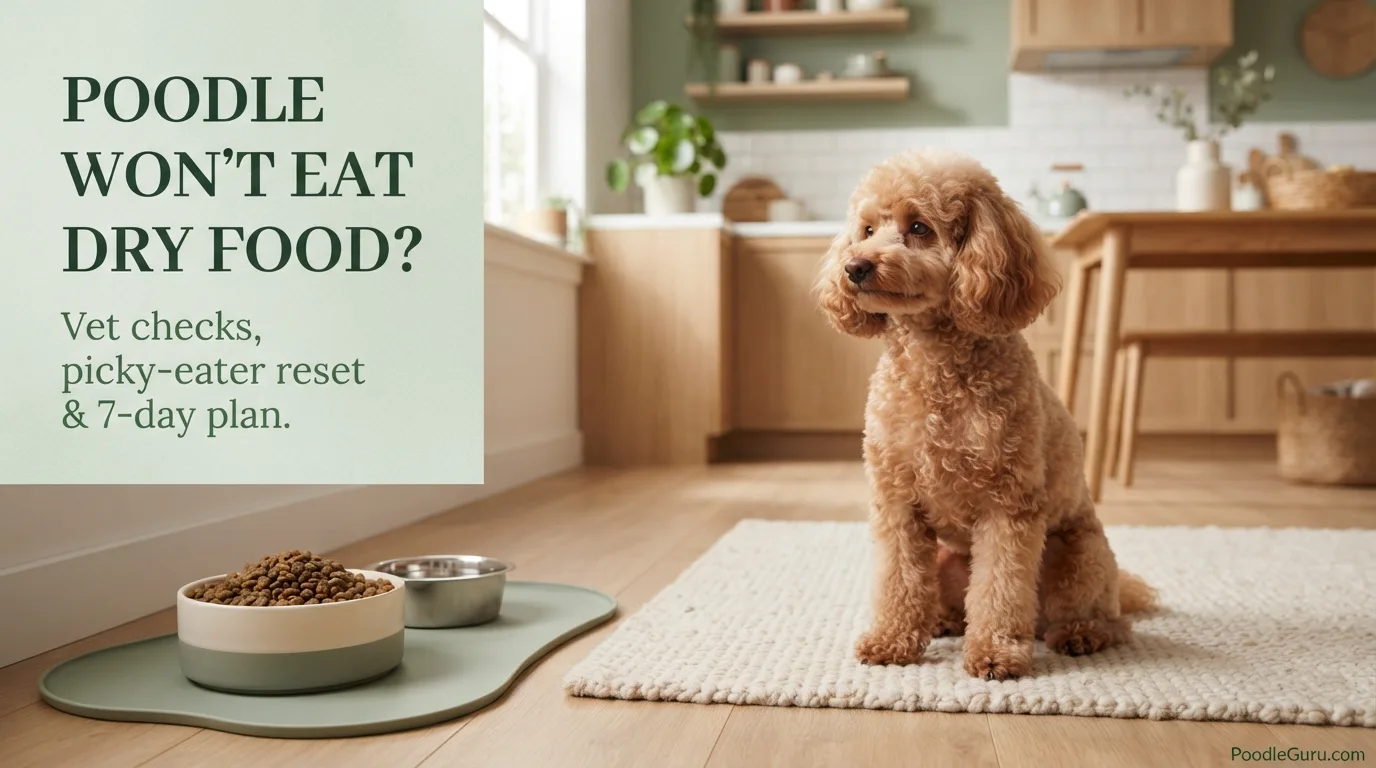
If your poodle won’t eat dry food, first rule out medical issues with your veterinarian, especially if the refusal is sudden. In otherwise healthy adult poodles, kibble refusal is often linked to too many treats, free-feeding, inconsistent meal times, sudden food changes, stress, or learned reinforcement — the dog has learned that waiting brings something better. The safest fix is a calm meal routine: scheduled feeding windows, no table scraps, tiny training treats only when appropriate, and puzzle feeders to make dry food more engaging. Puppies, Toy Poodles, seniors, and dogs with vomiting, diarrhea, lethargy, weight loss, excessive thirst, or dental pain need veterinary advice sooner, not a wait-it-out approach.
Quick Facts: Poodle Picky Eating
Top Triggers
Free-feeding, too many treats, a recent diet change, stress, or even dental discomfort can spark refusal.
Medical Red Flags
Refusal accompanied by vomiting, lethargy, diarrhea, or weight loss means a vet visit is urgent — not just pickiness.
Poodle Strategy
Poodles are smart. They learn fast that ignoring kibble results in chicken toppers. This isn’t stubbornness — it’s learned behavior.
The 24–48 Hour Rule
A healthy adult may skip an occasional meal, but complete food refusal beyond 24–48 hours needs a vet call — sooner for puppies, Toy Poodles, seniors, or any dog with symptoms.
Aroma Trick
Adding a small splash of warm water to dry food releases its scent, often enticing a hesitant eater without adding calories.
Routine Wins
Feed at the same times daily, pick up the bowl after 15 minutes, and offer nothing until the next meal. Consistency resets expectations.
Why Poodles Are Prone to Picky Eating
A poodle that won’t eat dry food is not broken — but poodles are smart, sensitive dogs that quickly learn which mealtime behaviors get a reaction. Poodles were bred to work closely with humans, and they read our responses like a book. If you have ever offered cheese, chicken, or wet food the moment your poodle turned away from dry kibble, you may have accidentally taught a powerful lesson: refusal can lead to an upgrade.
Beyond intelligence, poodles tend to be sensitive souls. Changes in routine, a new household member, or even a recently scrubbed food bowl can put them off eating for a day. Their emotional awareness runs deep — a poodle who senses your stress at mealtime may become even more reluctant. This doesn’t mean you should tiptoe around your dog. It means you should set predictable, calm patterns that make eating feel safe and expected.
Some poodles also have genuinely delicate digestion. Toy and Miniature Poodles, in particular, can be prone to mild stomach sensitivity. A food that’s too rich or suddenly swapped can cause temporary inappetence. That’s not pickiness — it’s a physiological response. Knowing the difference matters. For more on breed-specific traits that influence feeding, see our poodle temperament guide.
Is It Behavioral or Medical? How to Tell the Difference
Before you start retraining your poodle’s eating habits, rule out an underlying health issue. The chart below helps you distinguish between true picky eating and something that needs a veterinarian’s attention.
| Symptom | Behavioral Picky Eating | Possible Medical Issue |
|---|---|---|
| Interest in food | Refuses kibble but eagerly takes treats, human food, or wet food | Shows no interest in any food, including favorite snacks |
| Energy level | Normal energy; playful and alert | Lethargic, withdrawn, or unusually quiet |
| Stools | Normal, formed stools | Diarrhea, constipation, or mucus in stools |
| Vomiting | None, or occasional bile vomiting from an empty stomach | Frequent vomiting, especially after eating or drinking |
| Weight | Weight stable; dog may skip a meal but maintains condition | Noticeable weight loss over a week or more |
| Additional signs | No other symptoms; dog may beg but not eat | Bad breath, drooling, pawing at mouth (dental), or excessive thirst (metabolic) |
If your poodle’s pattern fits the left column, the steps below will help. If any medical signs appear, consult your veterinarian before attempting a feeding reset. For a deeper look at appetite loss, the VCA’s guide to anorexia in dogs outlines when inappetence becomes a medical emergency.
The PoodleGuru Picky Eater Reset Method
At PoodleGuru, we evaluate and address picky eating through a four-step behavioral approach that resets your poodle’s expectations without harsh tactics. This method focuses on consistency, removing triggers, and rebuilding positive associations with mealtime.
Veterinary Clearance
Schedule a quick health check to rule out dental disease, digestive disorders, or other pain that might be killing appetite. Share your feeding routine with the vet. Outcome: confidence that your poodle’s refusal is behavioral, not medical.
Structured Feeding Protocol
Offer food twice daily (three times for Toy poodles) at fixed times. Set the bowl down for exactly 15 minutes, then remove it — whether your dog ate or not. No snacks, no toppers, no pleading. Outcome: the poodle learns that mealtime is finite and food won’t be available all day.
Remove All Food Variables
Stop all treats, table scraps, and food toppers for two weeks. Even a single cookie during this reset period can undermine the lesson. Water is always available. Outcome: the only calories come from the food bowl at set times, eliminating manipulation.
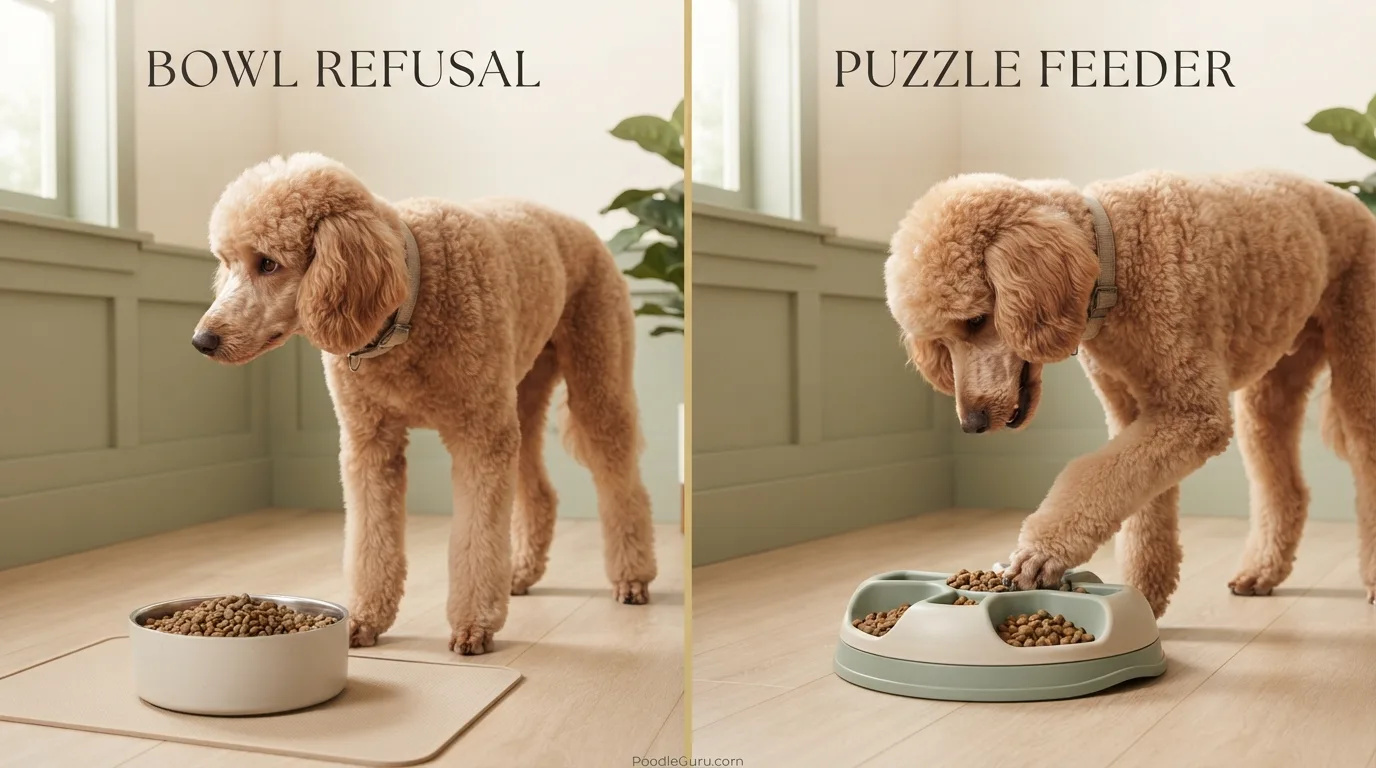
Enrich the Eating Experience
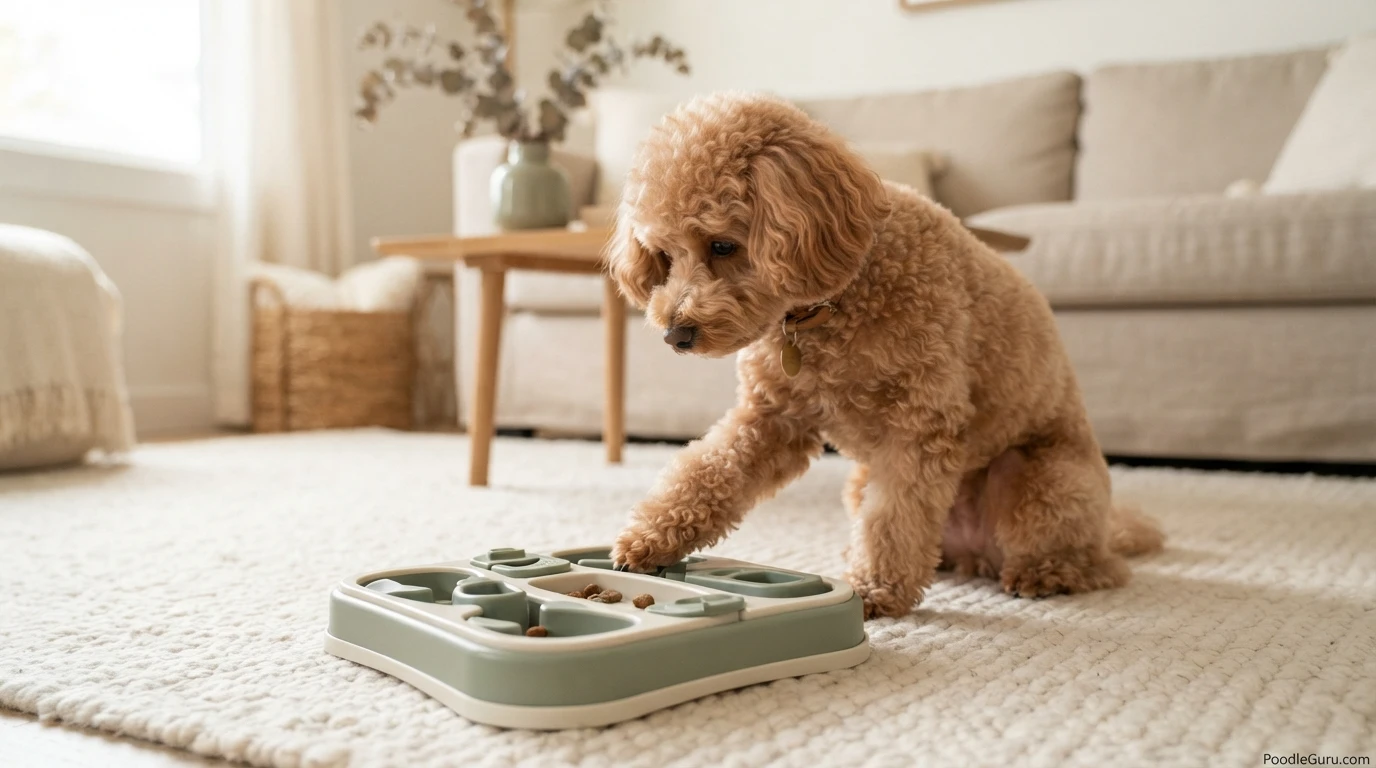
Instead of adding toppers, use a puzzle feeder, snuffle mat, or scatter the kibble on a clean floor. The mental engagement often overrides the pickiness — and the poodle’s natural curiosity takes over. Outcome: dry food becomes a game rather than a boring chore.
Run through these steps only after medical causes are unlikely. Many healthy adult poodles improve within a few days, but refusal that persists, worsens, or comes with any illness sign belongs in your veterinarian’s hands. If your vet clears your dog and the habit remains, move to the transition plan below.
Common Mistakes That Make Picky Eating Worse
Owners often unintentionally train their poodles to be picky. Here’s what to stop doing immediately, and what to try instead.
| Mistake | Why It Backfires | Better Approach |
|---|---|---|
| Switching foods constantly | Teaches the dog that refusing one food makes a new one appear; reinforces pickiness and can upset digestion | Stick with a high-quality, sensitive-stomach-friendly food once you’ve chosen it, and don’t change for at least 4 weeks |
| Adding toppers the moment they refuse | The poodle learns that refusing plain food earns chicken, cheese, or wet food — exactly what you don’t want | Offer only plain dry food for the first 15-minute window; if not eaten, remove it and wait until the next meal |
| Leaving food out all day | Grazing removes the urgency to eat at mealtime and masks true appetite levels | Use scheduled meals only; pick up the bowl after 15 minutes |
| Over-treating between meals | Even small treats add calories and reduce hunger for the next meal | Limit treats to training sessions only, and keep them tiny — aim for less than 10% of daily calories |
| Hand-feeding to coax eating | Creates a dependency and signals that eating is a negotiation, not a natural behavior | Use puzzle feeders or scatter feeding instead; your hands stay out of the equation |
Step-by-Step: Transition a Picky Poodle to Eating Dry Food
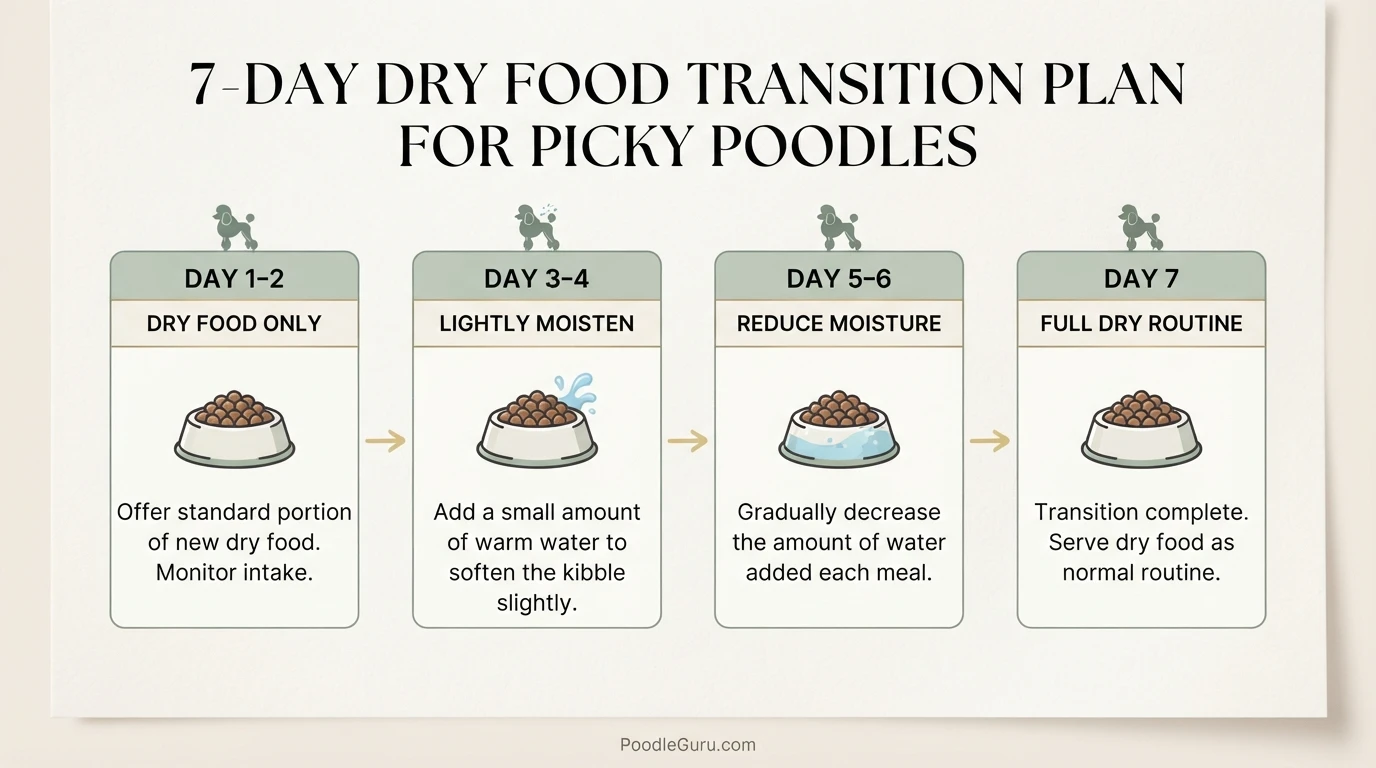
If the Reset Method alone doesn’t work, your poodle may need a gradual desensitization to dry kibble. This plan rebuilds acceptance over 7 days.
Day 1–2: Confirm Hunger Cues
Offer only dry food at scheduled times. If the poodle refuses, pick up the bowl and don’t offer anything else. Outcome: the poodle understands that the old pattern no longer works. Some healthy adult dogs start showing interest by day 2, but do not continue a reset if your poodle seems unwell or refuses all food.
Day 3–4: Introduce Texture Variety
If still refusing, lightly moisten the dry food with warm water or unsalted broth and let it sit for 5 minutes to soften. Do not add toppers. Outcome: the softened texture and stronger aroma often entices eating without creating dependency.
Day 5–6: Reduce Moisture
Gradually use less liquid, so the kibble becomes firmer each day. Mix a few dry pieces into the softened batch. Outcome: the poodle acclimates to the crunch and texture of dry food while still finding it palatable.
Day 7 and Beyond: Full Dry Transition
Serve completely dry kibble at all meals. Continue puzzle feeders or scatter feeding for engagement. Outcome: a poodle who is more comfortable eating dry food on a predictable schedule — and a more predictable feeding routine.
Owner Action Plan: Quick Checklist
- Vet check done? □
- Strict meal times set? □
- All treats and scraps eliminated? □
- Puzzle feeder or snuffle mat in use? □
- Moisture reduced gradually over 7 days? □
When to Switch Foods vs. When to Wait It Out
Sometimes a poodle genuinely dislikes a particular brand or protein source. But swapping foods at the first sign of refusal can set a dangerous precedent. So how do you decide?
If your poodle has consistently eaten the same food for months and suddenly stops with no medical issues, wait it out. Stick to the Reset Method for 5–7 days. Sudden refusal in a previously good eater is usually behavioral or stress-related, not a flavor problem.
If, however, your poodle has been hesitant from day one with a new food, shows signs of digestive upset (loose stools, gas), or never seems excited about any dry food, it’s reasonable to try a different formula. In that case, choose a limited-ingredient diet with a single animal protein and transition slowly over 10 days. For nutrition fundamentals that guide food selection, explore our poodle nutrition guide.
When to Call the Vet
Seek Veterinary Attention If You See:
- Complete refusal of all food (including treats) for more than 48 hours
- Vomiting, especially if repeated or containing blood
- Diarrhea lasting more than 24 hours or containing blood
- Visible weight loss or ribs becoming more prominent
- Lethargy, hiding, or uncharacteristic aggression when touched
- Excessive drooling, pawing at the mouth, or bad breath — signs of dental disease
These are not picky eating signs. They indicate a health problem that diet changes alone won’t fix. Early intervention prevents more serious complications. For a comprehensive overview of poodle health, visit our complete poodle health guide.
Frequently Asked Questions
Why won’t my poodle eat dry food but will eat treats?
This is classic learned pickiness. The poodle has discovered that holding out for high-value snacks works. Treats are more aromatic and rewarding, so the dog waits for the better offer. A strict feeding schedule with no treats for a few days typically resets this behavior.
How long can a picky poodle go without eating?
Some healthy adult poodles may skip an occasional meal, but complete refusal beyond 24–48 hours should be discussed with a veterinarian. Call sooner for puppies, Toy Poodles, seniors, dogs with chronic conditions, or any dog showing vomiting, diarrhea, lethargy, weight loss, pain, or excessive thirst.
Should I mix wet food with dry food for a picky poodle?
Mixing can help in the short term if used as a transition tool — gradually reducing the wet portion over a week. However, if added permanently, the poodle will likely refuse plain dry food again. Use the step-by-step moistening and drying plan instead.
Is my poodle being stubborn or is something wrong?
Stubbornness alone won’t override genuine hunger for more than a day or two. If your poodle refuses all food — including high-value treats — for more than 24 hours, or shows lethargy, vomiting, or diarrhea, assume something is wrong and contact your veterinarian.
Can teething cause a poodle puppy to refuse dry food?
Yes. Puppies around 4–6 months may find dry kibble painful on sore gums. Softening the food with warm water for a few weeks can help, but return to dry food once adult teeth come in to prevent long-term texture preferences.
What if my poodle eats less as they age — is that normal?
Senior poodles often have slower metabolisms and may naturally eat smaller portions. However, sudden or dramatic decreases in appetite warrant a vet check for dental disease, kidney issues, or other age-related conditions. Adjust calorie intake based on your vet’s guidance.
How do I transition my poodle to a new dry food if they’re already picky?
Start by mixing a very small amount (10%) of the new food with the old, and increase slowly over 10 days. Keep the routine strict — no toppers, no treats during transition. If refusal persists, the new food’s flavor or texture may not suit your dog; try a different protein source.
Final Summary: Key Takeaways
When a poodle won’t eat dry food, the fix rarely involves force or expensive toppers. It is about ruling out medical issues first, then rebuilding expectations with structure and patience. Here’s what to remember:
- First, rule out medical causes — a healthy poodle who refuses only dry food is almost always demonstrating learned picky behavior.
- The PoodleGuru Picky Eater Reset Method uses veterinary clearance, strict meal timing, removing all treats, and adding food puzzles to rebuild a normal eating routine.
- Common mistakes like switching foods constantly, adding toppers, or leaving food out all day reinforce pickiness and should be avoided.
- A gradual 7-day transition from moistened to dry kibble can help stubborn cases without creating long-term dependency on wet food.
- If your poodle refuses all food for more than 48 hours, or shows vomiting, weight loss, or lethargy, seek veterinary care immediately.
- Consistency always wins — a poodle who learns that food appears and disappears on a schedule will eat what’s offered within a few days.
Ready to build a bulletproof feeding plan? Start with our Poodle Nutrition Fundamentals guide for portion sizes, macronutrient balance, and food selection criteria.