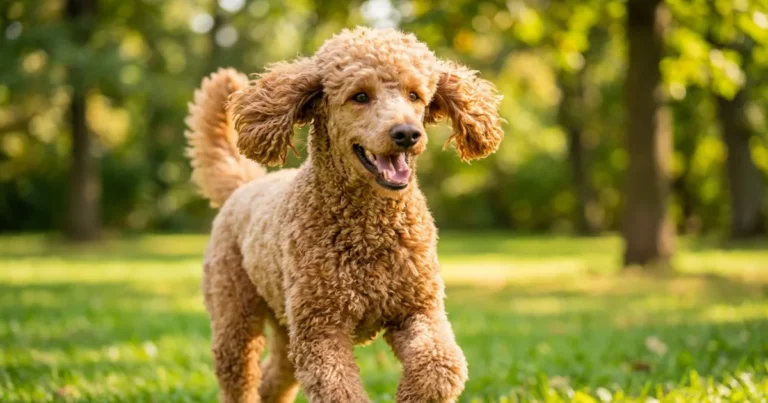
Vet note: This poodle puppy feeding schedule is an educational guide for healthy puppies. Food labels, calorie density, growth rate, and your veterinarian’s advice should always guide final portions.
Poodle Puppy Feeding Schedule by Age: A Complete Guide
A poodle puppy feeding schedule should match your puppy’s age, size, appetite, and growth rate. From newborn to adulthood, here’s exactly how often, how much, and what to feed — without the guesswork.
Quick Answer: Poodle Puppy Feeding Schedule
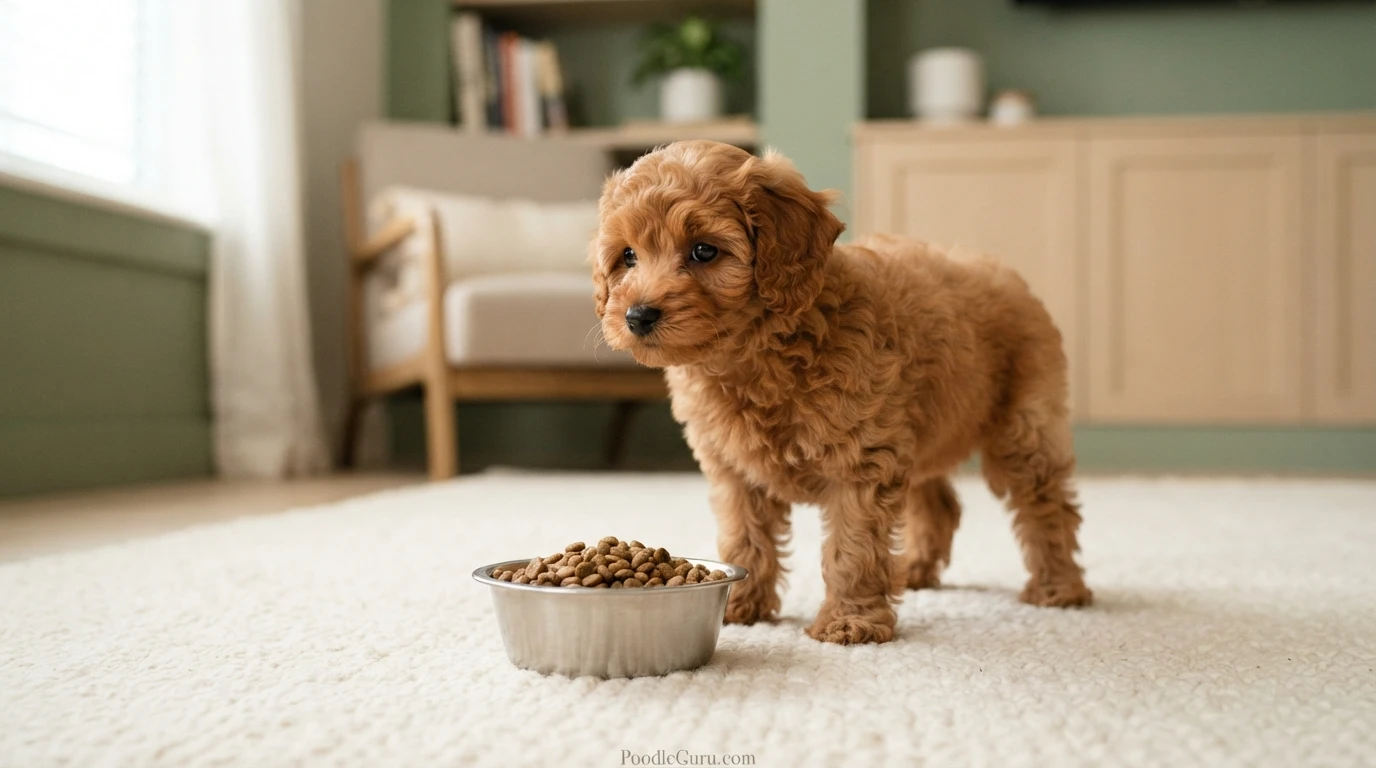
Poodle puppies under 6 months need 3 to 4 small meals a day. Toy and Miniature puppies benefit from more frequent meals (up to 4) to prevent low blood sugar. From 6 to 12 months, drop to 2 to 3 meals. After 12 months, most poodles do well on 2 meals a day. The exact portion depends on your puppy’s predicted adult weight, current body condition, and the calorie density of your food. Always follow the feeding guide on your puppy food label as a starting point, and adjust based on your vet’s advice and the puppy’s growth rate.
Quick Facts
Meals per Day (0–6 months)
3–4 meals for Toy and Miniature Poodles; 3 meals for Standard Poodles.
Meals per Day (6–12 months)
2–3 meals. Watch portion sizes to prevent rapid growth, especially in Standard Poodles.
Hypoglycemia Risk
Toy Poodle puppies under 3 months are at risk of low blood sugar. Frequent meals are critical.
Free-Choice Feeding
Not recommended. Scheduled meals help monitor appetite and potty training.
Water Availability
Fresh water should always be available, except briefly before crate time.
Vet Visits
Discuss growth curves and portion adjustments during puppy vaccination appointments.
Why a Poodle Puppy Feeding Schedule Matters
A poodle puppy feeding schedule does more than fill a bowl. It stabilises blood sugar in tiny Toy puppies, supports steady bone development in fast-growing Standards, and teaches your dog that food is predictable — which reduces anxiety and picky behavior later. Puppies thrive on routine. When meals arrive at the same times every day, their digestive system and metabolism operate more efficiently.
Poodle puppies are not one-size-fits-all. A 2-pound Toy Poodle has a stomach the size of a walnut and can’t go long without eating. A Standard Poodle puppy gaining 2–3 pounds a week needs carefully controlled portions to protect developing joints. Your schedule must respect both age and size. For more on size-specific health, see our Poodle size chart.
Overfeeding a poodle puppy is just as risky as underfeeding. Extra calories during growth can speed weight gain, stress developing bones and joints, and make healthy adult weight harder to maintain. A structured schedule, with measured portions, eliminates the guesswork.
Poodle Puppy Feeding Schedule: By Age Breakdown
The right schedule changes almost monthly during the first year. Use this age-by-age guide to stay on track. Portion sizes are approximate; always start with the manufacturer’s recommendation and watch your puppy’s ribs — you should feel them easily with a thin fat cover.
Newborn to 4 Weeks: Nursing Only
During the first month, poodle puppies rely entirely on their mother’s milk or a vet-recommended milk replacer. They nurse every 2–3 hours, including overnight. There is no separate water or food at this stage. If hand-rearing, follow the replacer’s mixing instructions precisely and feed small amounts frequently.
4 to 8 Weeks: Introducing Gruel & Weaning
At around 4 weeks, start offering a warm gruel made from high-quality puppy food soaked in water or puppy milk replacer. Offer it 3–4 times a day in a shallow dish. Gradually thicken the mixture as the puppies learn to lap and chew. By 7–8 weeks, they should be eating moistened puppy kibble 4 times a day and nursing less. Keep meals small; their stomachs are tiny.
8 to 12 Weeks: The First Weeks Home
When your poodle puppy arrives, continue the breeder’s schedule for at least a week to reduce stress. Most puppies at this age need 4 meals a day. For Toy and Miniature Poodles, maintain 4 meals until at least 12 weeks to guard against hypoglycemia. Standard Poodles can often move to 3 meals by 10 weeks if they’re eating well. Use a high-quality puppy food formulated for growth. The AKC puppy feeding guidance recommends regular mealtimes and growth-formulated puppy food.
3 to 6 Months: Rapid Growth Phase
Your poodle is growing fast, but meal frequency can start to decrease. Toy and Miniature Poodles usually stay on 3–4 meals a day until 6 months. Standard Poodles do well on 3 meals. Watch for an increase in appetite; if your puppy seems constantly hungry, split the daily portion into an extra meal rather than increasing the total amount. Use a poodle nutrition guide to calculate calories.
6 to 12 Months: Approaching Adulthood
By 6 months, most poodles can transition to 2–3 meals a day. Toy Poodles often reach their adult size around 6–7 months; reduce to 2 meals but keep an eye on energy. Standard Poodles continue growing until 12–18 months and benefit from 2–3 measured meals. Overfeeding during this phase can cause too-rapid growth, a risk factor for joint disease.
12 Months and Beyond: Adult Schedule
At 12 months, almost all Toy and Miniature Poodles can eat twice daily. Standard Poodles may stay on puppy food or a high-quality adult maintenance formula until 18–24 months depending on their growth. Twice-a-day feeding is ideal for maintaining a stable metabolism and preventing bloat, a concern in deep-chested Standards. Always divide the daily portion into two meals, not one large one.
| Age Range | Toy Poodle (4–6 lbs adult) | Miniature Poodle (10–15 lbs adult) | Standard Poodle (45–70 lbs adult) |
|---|---|---|---|
| 4–8 weeks | 4+ small gruel meals/day; transition to soaked kibble | 4+ small gruel meals/day | 4+ meals of gruel or soaked kibble |
| 8–12 weeks | 4 meals/day; ¹⁄₄–¹⁄₃ cup total daily | 4 meals/day; ¹⁄₂–1 cup total daily | 3–4 meals/day; 1.5–2.5 cups total daily |
| 3–6 months | 3–4 meals/day; total ¹⁄₃–³⁄₄ cup | 3 meals/day; total ³⁄₄–1.5 cups | 3 meals/day; total 2–4 cups |
| 6–12 months | 2–3 meals/day; total ³⁄₄–1 cup | 2 meals/day; total 1–1.5 cups | 2–3 meals/day; total 3–4.5 cups |
| 12+ months | 2 meals/day; adult maintenance portions | 2 meals/day; adult maintenance | 2 meals/day; adult maintenance (some on puppy food until 18–24 months) |
These volumes assume a standard dry puppy food with ~400 kcal/cup. Always check your specific food’s calorie density and adjust. Your veterinarian can help you tailor portions to your puppy’s growth curve.
Toy vs. Miniature vs. Standard Poodle: Feeding Differences
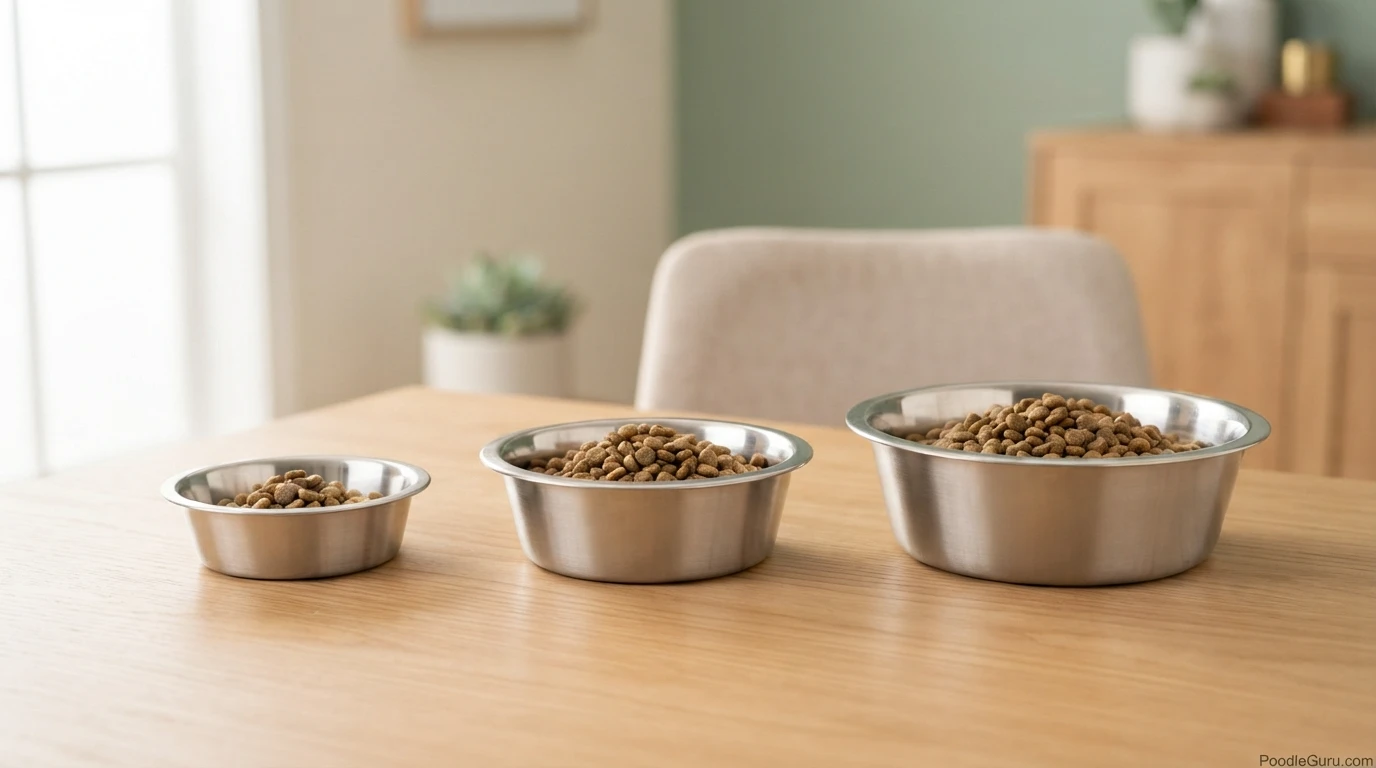
Poodle size determines not just the amount of food but the rhythm and risks of feeding. Here’s a quick-reference comparison:
| Factor | Toy Poodle | Miniature Poodle | Standard Poodle |
|---|---|---|---|
| Hypoglycemia Risk | High under 3 months; needs 4 meals/day | Moderate; 3–4 meals recommended initially | Low; but don’t skip meals |
| Growth Maturity Window | Often earlier than larger poodles; ask your vet before changing growth diet | Usually between Toy and Standard timing; confirm with your vet | Often later; some Standards need puppy or large-size growth food longer |
| Bloat Risk | Very low | Low | Moderate; avoid one large meal, exercise after eating |
| Picky Eating Tendency | Common; often prefer small, frequent meals | Common; use routine to manage | Less common; usually hearty eaters |
| Transition to Adult Food | 9–12 months | 10–12 months | 12–24 months depending on growth |
Tailor your schedule to your poodle’s size category. A Toy Poodle who misses a meal is a different concern than a Standard who skips one. Small poodles need more frequent, smaller meals; large poodles need controlled portions to avoid orthopedic strain.
Common Feeding Mistakes Puppy Owners Make
Even with the best intentions, a few missteps can derail your puppy’s eating habits and growth. Here’s what to avoid:
| Mistake | Consequence | Solution |
|---|---|---|
| Free-feeding (food always available) | Overweight, picky eating, potty training delay | Scheduled meals only; bowl down for 15–20 minutes, then removed |
| Switching foods too often | Diarrhea, refusal to eat, digestive upset | Stick with one high-quality puppy food for at least 2–3 months before considering a change |
| Adding toppers and treats excessively | Puppy learns to hold out for tastier food; nutritional imbalance | Keep treats under 10% of daily calories; avoid table scraps entirely during puppyhood |
| Not adjusting portions as puppy grows | Underfeeding or overfeeding | Weigh puppy weekly; adjust portions based on body condition score, not just age |
| Feeding adult food too early | Missing essential nutrients for growth; possible skeletal issues | Feed puppy-specific food until growth plates close; consult vet for timing |
The PoodleGuru Puppy Feeding Framework
At PoodleGuru, we structure a successful puppy feeding plan around four pillars. Use them to build a schedule you can trust.
Size-Specific Scheduling
Identify your puppy’s predicted adult size. Toy and Miniature puppies need more meals; Standard puppies need larger, but not excessive, portions. This prevents hypoglycemia in small poodles and joint stress in large poodles. Tool: PoodleGuru size chart.
Measured Portions & Body Checks
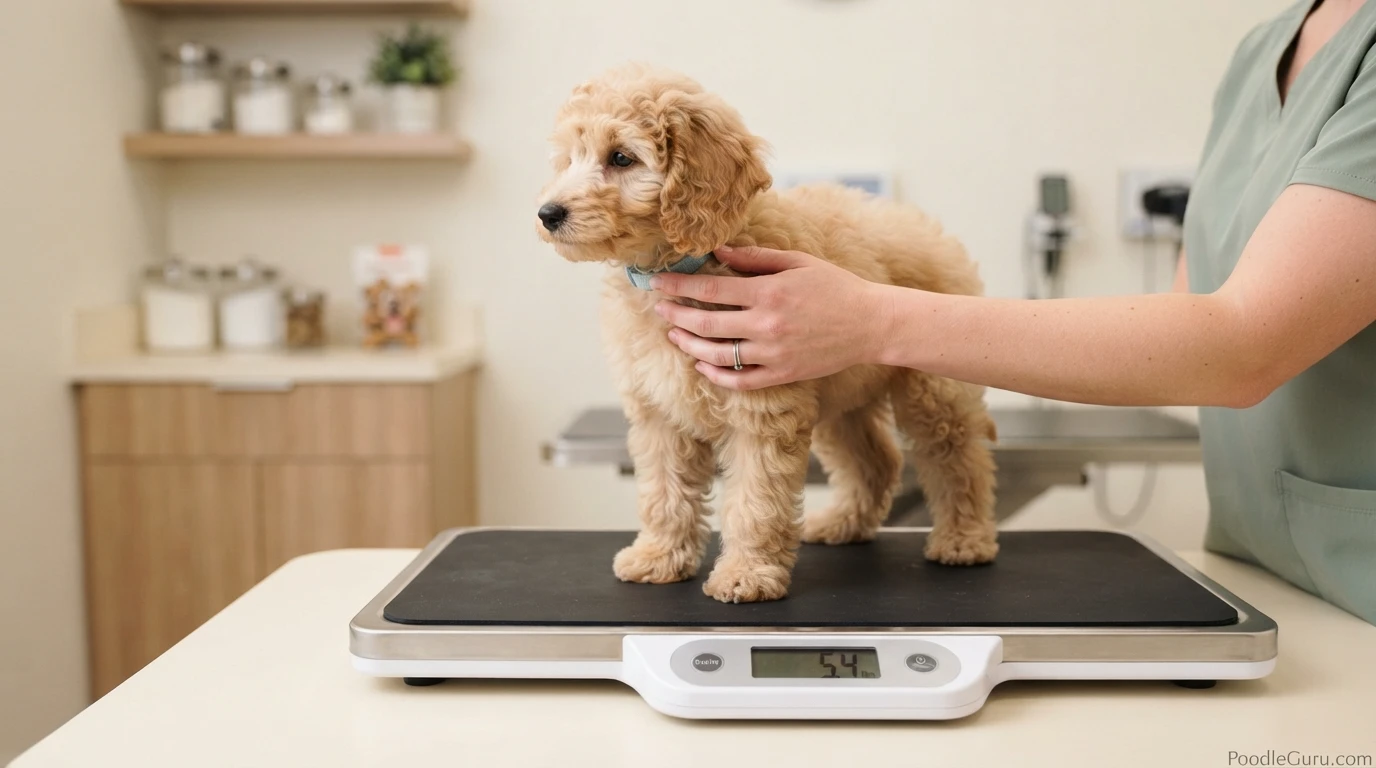
Use a standard 8-oz measuring cup or kitchen scale. Every two weeks, run your hands over the puppy’s ribs: you should feel them with a slight fat pad. If ribs are buried, cut back. If ribs are prominent, increase slightly. Outcome: steady, healthy growth.
Consistency Over Creativity
Feed the same puppy food at the same times in the same bowl. Poodles thrive on predictability. Avoid the urge to change proteins or add toppings when the puppy seems bored — stick to the schedule and let hunger be the motivator.
Veterinary Growth Tracking
At each puppy vaccination visit, ask the vet to plot your puppy’s weight on a breed-specific growth chart if available. Adjust feeding based on professional guidance, not guesswork. Outcome: a poodle that grows at the right pace for its frame.
Transitioning to Adult Food: A Step-by-Step Plan
When your poodle puppy is ready to move to adult food — typically between 10 and 24 months depending on size — do it gradually over 7–10 days.
Check Readiness with Your Vet
Confirm that growth plates have closed and your puppy has reached adult height. Toy Poodles may be ready as early as 9 months; Standards often need puppy food until 18–24 months. Decision point: veterinary clearance.
Choose an Adult Formula
Select a high-quality adult maintenance food. For many poodles, the adult version of the same puppy brand works well. If switching brands, ensure it meets AAFCO adult maintenance standards.
Mix Over 7–10 Days
Day 1–3: 25% new adult food, 75% puppy food. Day 4–6: 50/50. Day 7–9: 75% new. Day 10: 100% adult food. Watch stools daily; if loose, slow the transition.
Adjust Meal Frequency
If you were feeding 3 meals a day, reduce to 2 meals by removing the midday meal gradually once the adult food transition is complete. Outcome: a poodle settled into a lifelong adult feeding rhythm.
When to Adjust Portions and Consult Your Vet
Regular reassessment is part of a poodle puppy feeding schedule. Increase portions if your puppy is visibly underweight, ribs are sharp, or growth seems stalled. Decrease if the puppy is gaining too fast, you can’t feel ribs, or the vet notes a body condition score above 6/9.
When to Call the Vet
Contact your veterinarian if your puppy: refuses food for more than 24 hours, vomits repeatedly, has chronic diarrhea, shows signs of bloat (restlessness, unproductive retching, distended abdomen), or loses weight despite eating. These are not normal feeding schedule hiccups — they require medical attention.
Veterinary Nutrition Sources Checked
This guide was tightened against current puppy-feeding and nutrition basics from AKC puppy feeding guidance, Merck Veterinary Manual feeding practices, and WSAVA nutrition and body condition scoring tools. Because calorie density changes by brand, use food-label feeding guides as a starting point and let your veterinarian adjust portions for your puppy’s body condition and growth rate.
Frequently Asked Questions
How many times a day should a poodle puppy eat?
Toy and Miniature puppies under 6 months need 3–4 meals daily. Standard puppies need 3 meals. After 6 months, reduce to 2–3 meals. By 12 months, most poodles thrive on two meals a day. The smaller the puppy, the more frequent the meals to prevent hypoglycemia.
What is the best puppy food for a poodle?
Look for a high-quality puppy food with an AAFCO nutritional adequacy statement for growth, a clear protein source, appropriate calories, and no unnecessary fillers. Some poodles do well on puppy formulas that include DHA for brain development. A sensitive-stomach formula may be helpful if loose stools occur.
Can I feed my poodle puppy once a day?
No. A single daily meal can overwhelm a small stomach, fail to provide steady energy, and increase the risk of bilious vomiting. In Standard Poodles, one large meal also raises bloat risk. Twice-daily feeding is the minimum for adults and the goal for puppies over 6 months.
Why is my poodle puppy still hungry after eating?
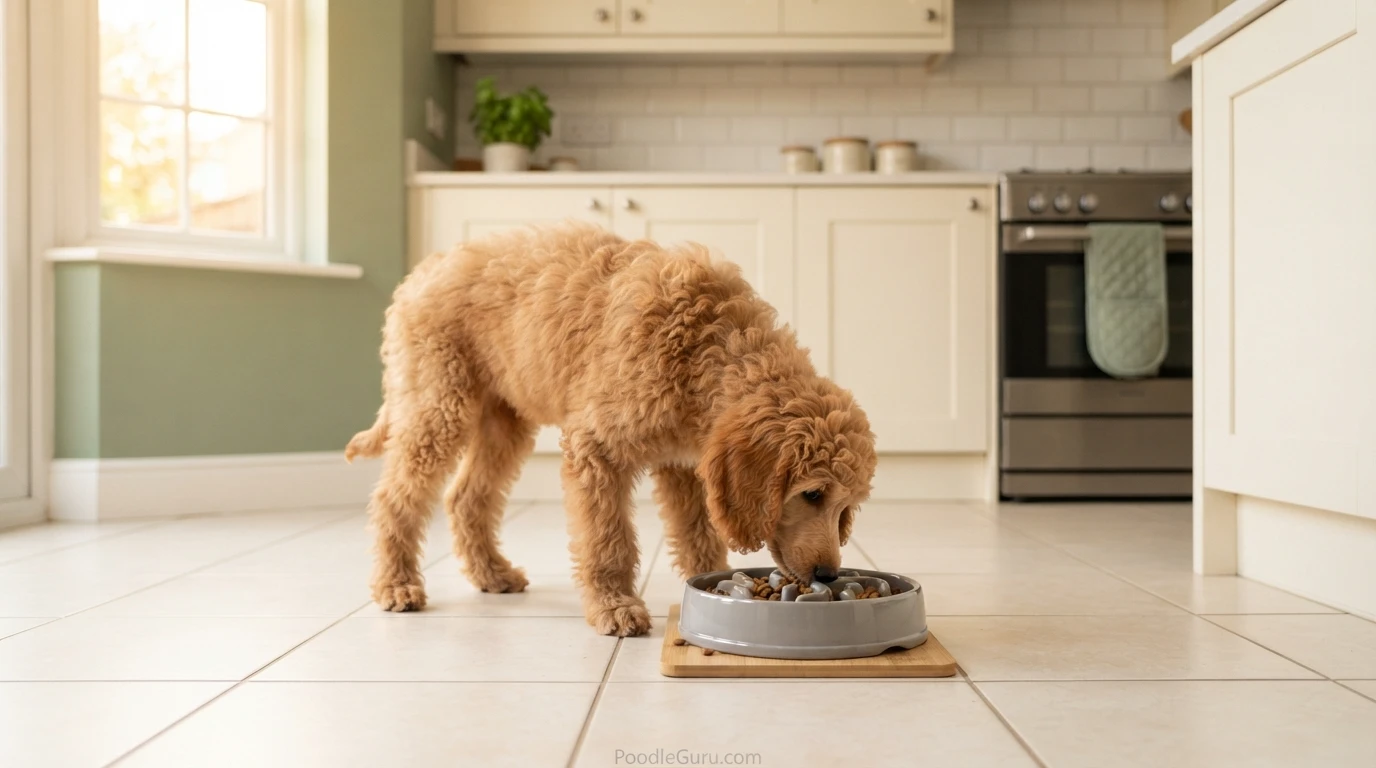
Poodles are often highly food-motivated, and begging doesn’t always mean hunger. First, check if the portion meets calorie needs based on weight and age. If portions are correct, consider using a slow feeder or puzzle toy to extend mealtime and provide mental stimulation. Consult your vet if the puppy seems insatiable.
Should I leave water out all day for my poodle puppy?
Yes, fresh water should be available at all times. For housebreaking, you may pick up water 2 hours before bedtime, but never restrict water during the day. Poodle puppies can dehydrate quickly, especially in warm weather or during play.
When should I switch my poodle puppy to two meals a day?
Generally around 6 months for Toy and Miniature Poodles, and 6–12 months for Standards. Wait until your puppy comfortably eats full portions at each meal and is not showing signs of hunger between meals. Transition gradually by eliminating the midday meal over several days.
How do I know if I’m overfeeding my poodle puppy?
If you can’t feel the ribs without pressing hard, the puppy may be gaining too much fat. Other signs include loss of a visible waist, low energy, and difficulty moving. Your vet can calculate a body condition score and tell you whether to reduce portions safely.
Final Summary: Key Takeaways
A poodle puppy feeding schedule is a cornerstone of health, growth, and good behavior. Here’s what to remember:
- Toy and Miniature Poodle puppies need 3–4 meals a day until 6 months; Standard Poodles thrive on 3 meals, then transition to 2 meals by 12 months.
- Portion sizes vary dramatically by size: a Toy Poodle may eat ¹⁄₄ cup total per day at 8 weeks, while a Standard may eat 2+ cups.
- Use scheduled mealtimes — not free-choice feeding — to monitor intake, prevent obesity, and support potty training.
- Transition to adult food only when growth plates close: 9–12 months for Toys, 12–18 months (or later) for Standards.
- The PoodleGuru Puppy Feeding Framework uses size-specific scheduling, body checks, consistency, and vet guidance to keep your puppy on track.
- Adjust portions based on body condition, not just age; consult your vet if appetite changes, vomiting, or weight concerns arise.
Next step: Dive into our Poodle Nutrition Fundamentals for in-depth guidance on selecting the perfect puppy food and calculating daily calories.