This article contains affiliate links. PoodleGuru may earn a small commission if you purchase through our links, at no extra cost to you.
Best Fish Oil for Dog Coat: Omega-3s for Poodle Coats
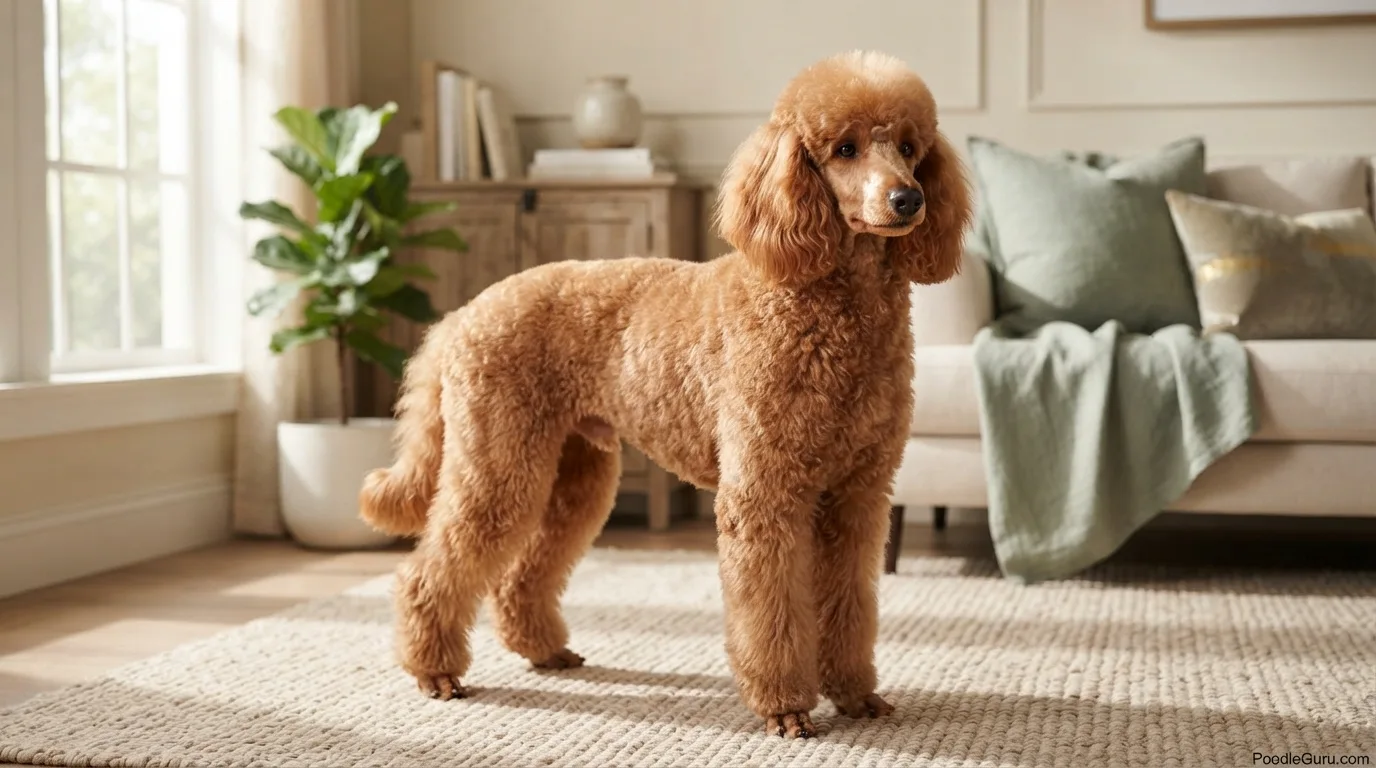
A poodle’s coat is its signature. When it’s glossy, soft, and full, people notice. When it’s dull, flaky, or brittle, something’s missing — and quite often, that something is omega-3 fatty acids. Fish oil for dog coat support is one of the most direct ways to deliver them. But not all fish oil is equal, and the supplement aisle doesn’t make it easy to tell the difference. This guide sorts the effective from the expensive.
Quick Answer
The best fish oil for dog coat support delivers concentrated EPA and DHA — the two omega-3s that directly reduce skin inflammation and support the lipid barrier that makes hair shine. For poodles, liquid oil from wild-caught salmon, sardines, or anchovies generally outperforms capsules in absorption and value. Look for a combined EPA+DHA concentration above 600 mg per serving, third-party purity testing, and an antioxidant preservative like vitamin E to prevent rancidity. A quality product costs $15–$35 monthly for a Standard Poodle and noticeably less for Toys and Miniatures.
Why Poodle Coats Need Omega-3s
A poodle’s coat isn’t just decoration. It’s a continuously growing protein structure fed by the skin beneath it. When the skin barrier weakens — from inflammation, dryness, or nutrient deficiency — the coat is the first place it shows. Omega-3 fatty acids, specifically EPA (eicosapentaenoic acid) and DHA (docosahexaenoic acid), are important fats involved in skin-barrier support and inflammatory-response balance. Veterinary skin-nutrition guidance notes that EPA and DHA can affect the skin barrier and help modulate inflammatory chemicals linked with itching and irritation. VCA’s skin and haircoat nutrition guide explains this connection in more detail.
Poodles don’t produce omega-3s on their own. They must come from diet. Most commercial kibbles contain omega-6 fatty acids in abundance — sometimes too much — but omega-3s degrade quickly in processed food. Even “omega-fortified” kibbles may not deliver enough active EPA and DHA by the time the bag is opened. That’s where direct supplementation makes a visible difference.
The most important thing to understand is that fish oil doesn’t work overnight. Coat improvements take 6–12 weeks of consistent dosing. Owners often give up at week three, decide it didn’t work, and waste the bottle. Don’t be that owner.
Fish Oil for Poodles: Quick Facts
Key Actives
EPA reduces skin inflammation. DHA supports cell membrane health. Both are essential for coat quality.
Visible Timeline
Expect softer coat at 3–4 weeks. Visible shine and reduced flaking at 6–12 weeks of consistent daily use.
Best Form
Liquid oil absorbs better than capsules. Triglyceride-form oil absorbs better than ethyl ester form.
Monthly Cost
$15–$35 for a Standard Poodle. $5–$15 for Toy and Miniature Poodles. Quality costs more per ounce.
Storage
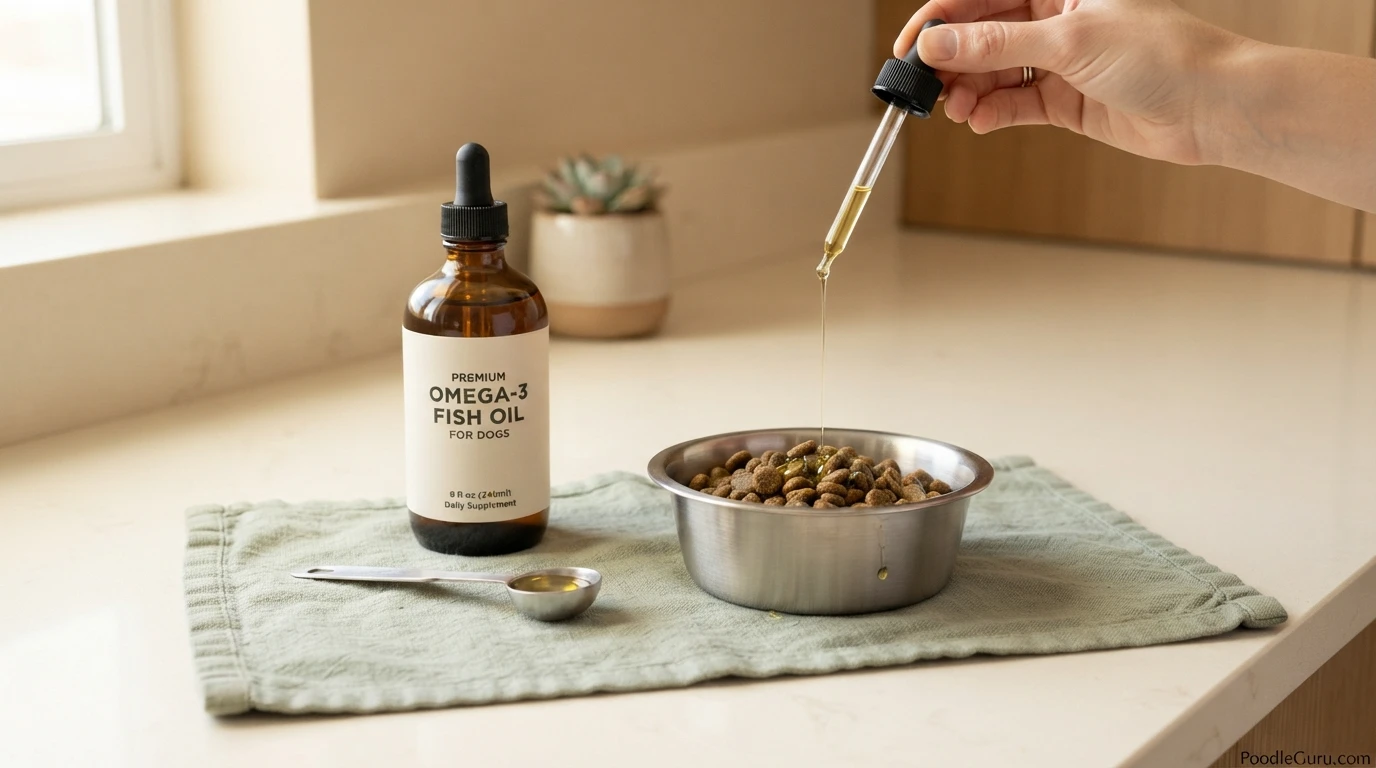
Refrigerate after opening. Rancid fish oil causes more harm than good. Discard if it smells “off.”
Vet Check
Consult your vet before starting if your poodle takes blood thinners, has a bleeding disorder, pancreatitis history, upcoming surgery, or chronic disease.
What Makes a Fish Oil Actually Work
Not all fish oil is created equal, and the differences aren’t subtle once you know what to look for. A poodle owner browsing online or in a pet store faces a wall of products that all claim to be “premium” and “pure.” The label tells the real story — if you know which numbers matter.
EPA + DHA Concentration Is Everything
The total milligrams of oil in a serving doesn’t matter nearly as much as the combined EPA and DHA content. A 1,000 mg softgel might contain only 300 mg of actual omega-3s. The rest is filler oil with no coat benefit. For poodles, target a product where EPA+DHA makes up at least 60% of the total oil content. The label lists these numbers. Do the math before you buy.
Triglyceride vs. Ethyl Ester Form
Natural fish oil exists in triglyceride form — the same molecular structure as the fats in your poodle’s body. Many cheaper products convert it to ethyl ester form during processing, which is less bioavailable. Veterinary guidance generally notes that triglyceride-form oils are absorbed more efficiently. Labels that specify “triglyceride form” or “natural fish oil” are telling you something useful. Those that don’t mention the form probably don’t want to.
Omega-3 Sources Compared: Fish Oil, Algae & Whole Fish
Fish oil isn’t the only way to get omega-3s into a poodle, and for some dogs it’s not the best way. Here’s how the options compare side by side.
| Omega-3 Source | EPA + DHA Bioavailability | Best For | Watch Out For | Monthly Cost (Standard Poodle) |
|---|---|---|---|---|
| Wild Salmon Oil (liquid) | High — natural triglyceride form | Overall coat health, skin inflammation, picky eaters | Quality varies. Verify wild-caught, not farmed. Check purity testing. | $20–$35 |
| Sardine/Anchovy Oil (liquid) | Highest — short-chain fish accumulate fewer toxins | Maximum EPA+DHA concentration, small-breed sensitivity | Stronger smell. Some poodles reject the taste at first. | $18–$30 |
| Algae Oil (vegan) | High in DHA, lower in EPA | Poodles with fish allergies, vegetarian households | EPA content is significantly lower. May need combined EPA source for full anti-inflammatory effect. | $25–$40 |
| Whole Sardines (fresh/canned in water) | High — whole food matrix aids absorption | Topping raw or home-cooked meals | Portion control is harder. Canned sardines must be in water, not oil or salt. Feed 1–2 per day for a Standard. | $10–$20 |
| Kibble “Omega Blend” | Variable — omega-3s degrade in processed food | Baseline maintenance only | Don’t count on it for therapeutic effect. The oil may be oxidized before the bag is opened. | Included in food cost |
The PoodleGuru Label Evaluation Method
At PoodleGuru, we don’t recommend specific brands as much as we teach owners to read the evidence on the bottle. The supplement market changes. Products get reformulated. A brand that was excellent last year may have quietly reduced its EPA concentration this year. The only way to protect your poodle — and your money — is to evaluate each product fresh. Here’s our label-checking framework.
Five-Point Supplement Label Checklist
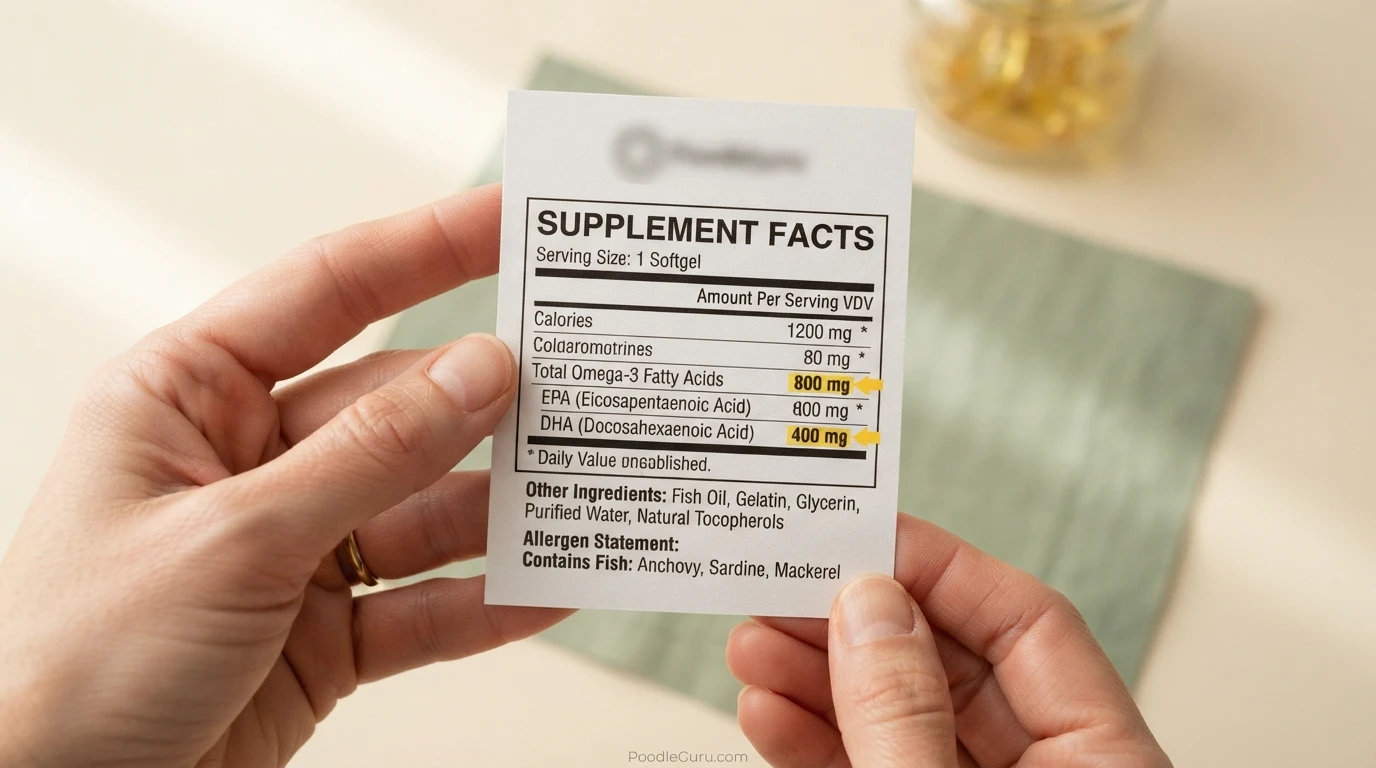
Locate EPA and DHA in milligrams per serving — not “total oil”
Flip the bottle. Find the supplement facts panel. Ignore the big number on the front. Find where it lists EPA and DHA separately in milligrams. Add them together. That’s your active dose. A quality product for a Standard Poodle delivers at least 600 mg combined EPA+DHA per serving.
Check for third-party purity verification
Look for a certification seal or a statement about third-party testing for heavy metals (mercury, lead), PCBs, and dioxins. Phrases like “independently tested,” “NSF certified,” or “IFOS certified” indicate meaningful oversight. “We test for purity” with no certifier named is marketing fluff.
Identify the fish species and source
“Fish oil” is vague — it could be anything. “Wild Alaskan salmon oil” or “sardine and anchovy oil from sustainable fisheries” tells you what you’re actually buying. Small, short-lived fish like sardines and anchovies accumulate fewer environmental toxins than large predatory fish like tuna.
Verify the form: triglyceride beats ethyl ester
If the label says “triglyceride form,” that’s a good sign. If it says nothing about form, assume ethyl ester — which isn’t bad, just less absorbable per milligram. A few premium brands specify “natural triglyceride form.” You’ll pay more for it. For a poodle with a serious skin condition, the absorption difference matters.
Confirm an antioxidant preservative is present
Fish oil oxidizes — that’s a polite way of saying it goes rancid. A quality product includes vitamin E (mixed tocopherols) or rosemary extract to prevent oxidation. No antioxidant listed? The oil may be rancid before you even open it. Rancid fish oil creates inflammation instead of reducing it. The opposite of what you want.
Best Fish Oil Supplements for Poodles (2026 Criteria)
Rather than a ranked list that goes stale in months, here are the product categories and recommended selection criteria that apply no matter what year you’re shopping. We’ve included specific examples that meet these standards as of 2026, but the evaluation framework above is what keeps your poodle safe when products change.
What to Look for by Category
Best Liquid Wild Salmon Oil: Look for single-source wild Alaskan salmon, triglyceride form, minimum 600 mg combined EPA+DHA per teaspoon, third-party tested for heavy metals and PCBs. Products in this category typically cost $25–$35 monthly for a Standard Poodle. Wild Alaskan salmon oil from brands that publish their test results per batch earn the most trust.
Best Small-Fish Blend (Sardine/Anchovy): These typically offer the highest EPA+DHA concentration per milliliter and the lowest contaminant risk. Expect 800+ mg combined EPA+DHA per serving. The smell is stronger — some poodles love it, some need a gradual introduction mixed into food. Monthly cost: $18–$30.
Best Capsule for Travel/Convenience: If liquid oil is impractical for your routine, choose a softgel with at least 500 mg combined EPA+DHA per capsule in triglyceride form. Standard Poodles typically need 2–3 capsules daily. Enteric coating reduces fishy burps but increases cost. Monthly cost: $25–$40.
Dosing by Poodle Size: A Practical Guide
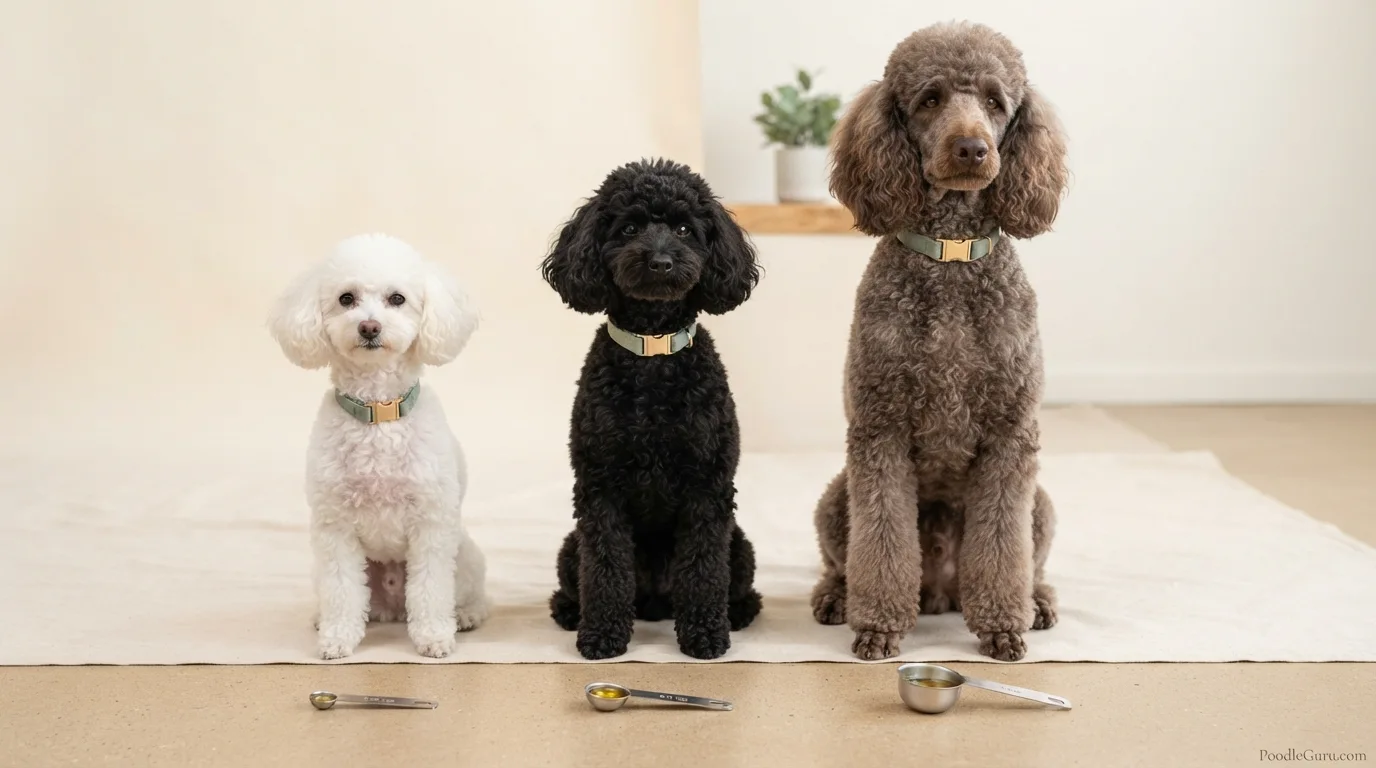
Fish oil dosing for poodles is based on body weight and the combined EPA+DHA content of your specific product — not the total oil volume. These are general discussion ranges for healthy adult dogs, not a prescription. Veterinary guidance may recommend different therapeutic doses for diagnosed skin, joint, or inflammatory conditions, but those doses should come from your vet, not a blog post. Start low, introduce gradually with food, and stop if vomiting, diarrhea, or appetite changes appear.
| Poodle Size | Typical Weight | Daily EPA+DHA Range | Approximate Liquid Oil (if 300 mg EPA+DHA per tsp) | Approximate Monthly Cost |
|---|---|---|---|---|
| Toy Poodle | 4–6 lbs | 100–200 mg | ⅓–⅔ teaspoon | $5–$12 |
| Miniature Poodle | 10–15 lbs | 250–400 mg | ¾–1⅓ teaspoons | $10–$20 |
| Moyen/Medium Poodle | 20–35 lbs | 500–700 mg | 1½–2⅓ teaspoons | $15–$25 |
| Standard Poodle | 45–70 lbs | 800–1,200 mg | 2½–4 teaspoons | $20–$35 |
Always calculate using your specific product’s EPA+DHA concentration — not the total oil per teaspoon. A concentrated oil may deliver 800 mg per teaspoon. A diluted one may deliver only 200 mg. The volume of oil means nothing without knowing the concentration.
Mistakes That Waste Your Money
Even a great fish oil won’t help a poodle’s coat if it’s handled wrong. Here are the errors that turn a $30 bottle into a missed opportunity — or worse, a source of low-grade inflammation.
| Mistake | Why It Fails | Fix |
|---|---|---|
| Buying by price, not by EPA+DHA | A cheap bottle with 150 mg of active omega-3s per serving costs more per effective dose than a premium concentrate. | Calculate cost per 100 mg of EPA+DHA. Compare across products. The number on the price tag is misleading. |
| Storing at room temperature after opening | Fish oil oxidizes rapidly once exposed to air and warmth. Rancid oil promotes the same inflammation you’re trying to reduce. | Refrigerate after opening, every time. If it smells fishy instead of mild, it’s oxidized. Discard it. |
| Doubling the dose for faster results | Excess omega-3s can cause diarrhea, vomiting, and in very high doses, blood clotting interference. More is not better. | Stick to the weight-based range. The coat improvement timeline is 6–12 weeks. Patience is part of the protocol. |
| Using flaxseed oil instead of marine oil | Flaxseed contains ALA, a plant omega-3 that dogs convert to EPA and DHA inefficiently, so it is not the same as giving marine EPA/DHA directly. | If you want EPA and DHA, use a marine source. Flaxseed oil is not a substitute for fish oil in dogs. |
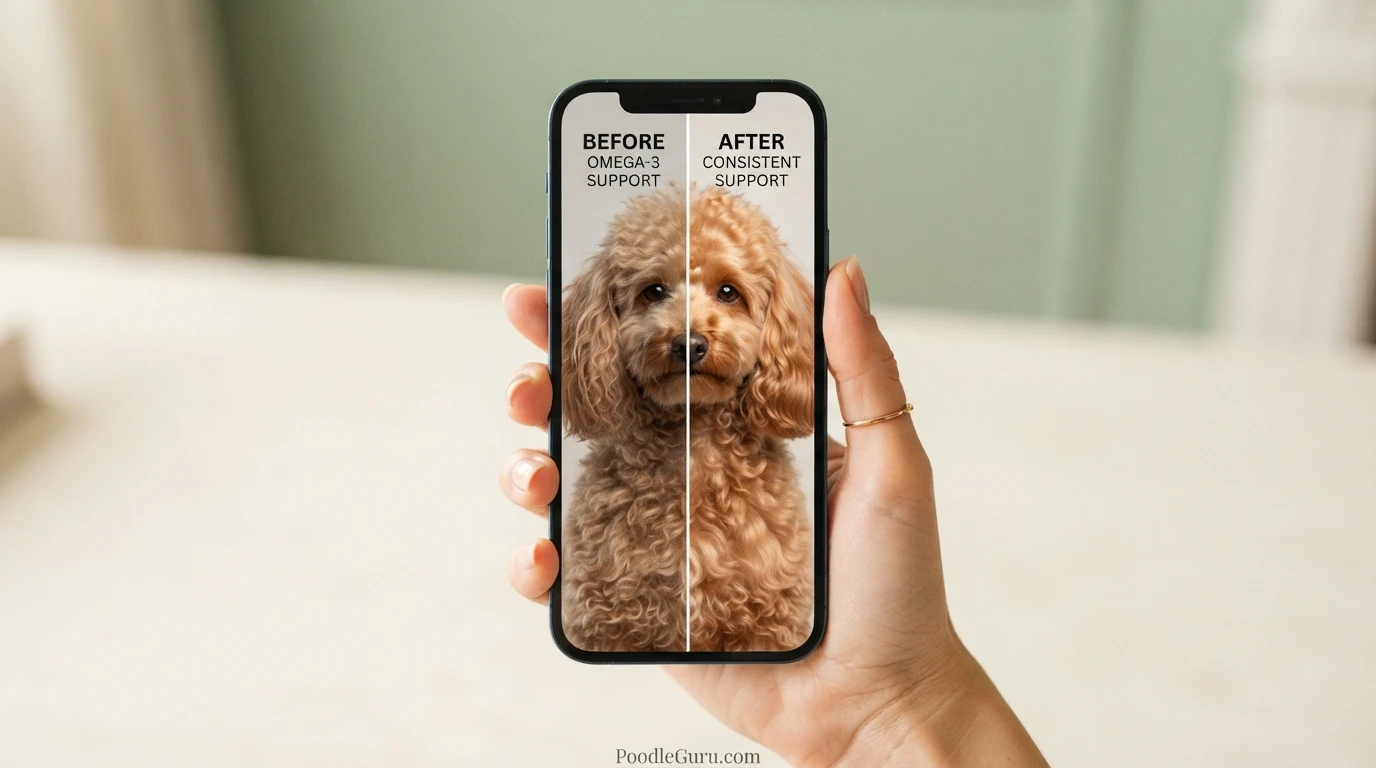
| Not tracking results | Without a before-and-after reference, you can’t tell if the supplement is working. Owners often forget what “before” looked like. | Take a close-up coat photo on day one. Compare at weeks 4, 8, and 12. Objective evidence beats memory. |
Frequently Asked Questions
How long does it take for fish oil to improve a dog’s coat?
Most poodle owners notice a softer coat within 3–4 weeks of daily supplementation at the correct dose. Visible shine and reduced dandruff or flaking typically appear by weeks 6–8. Full coat transformation takes 12 weeks or longer. Consistency matters more than the specific week count.
Can I give my poodle human fish oil capsules?
Human fish oil capsules can be used for poodles if they’re pure fish oil with no added ingredients like lemon flavoring, xylitol, or herbal additives. Check the label carefully. Liquid dog-specific fish oil is usually more cost-effective at poodle-sized doses and easier to measure accurately.
Does fish oil help with poodle skin allergies?
Fish oil’s EPA content has anti-inflammatory properties that may reduce allergy-driven skin irritation. It’s a supportive therapy — not a cure for allergies themselves. Poodles with diagnosed environmental or food allergies need a comprehensive management plan. Omega-3s can be a valuable piece of that plan.
What’s better — salmon oil or sardine oil for poodles?
Sardine and anchovy oils generally offer higher EPA+DHA concentration per milliliter and lower contaminant risk because these fish are smaller and shorter-lived than salmon. Salmon oil is more widely available and often more palatable. Both work well when sourced from reputable, third-party-tested producers.
Can too much fish oil harm my poodle?
Yes. Excessive omega-3 intake can cause diarrhea, vomiting, weight gain from added fat calories, and in high sustained doses may affect normal blood clotting. Stick to weight-based dosing ranges. If your poodle experiences digestive upset after starting fish oil, reduce the dose and increase gradually over two weeks.
Is coconut oil a substitute for fish oil for a poodle’s coat?
No. Coconut oil contains medium-chain triglycerides and saturated fats that can add topical shine, but it doesn’t deliver EPA or DHA — the omega-3s that reduce skin inflammation. Coconut oil can be a complementary topical treatment but doesn’t replace marine-sourced omega-3 supplementation for coat health.
Should I refrigerate fish oil for my dog?
Yes — always refrigerate liquid fish oil after opening. Omega-3s oxidize when exposed to heat, light, and air. Oxidation turns a beneficial anti-inflammatory supplement into a pro-inflammatory one. If the oil smells strongly fishy or “off,” it’s rancid and should be discarded.
Key Takeaways
The right fish oil, dosed correctly and stored properly, can transform a poodle’s coat from dull and flaky to glossy and resilient. Here’s what to remember:
- The only numbers that matter on a fish oil label are EPA and DHA in milligrams per serving. Combined EPA+DHA of at least 600 mg per dose for a Standard Poodle is a good benchmark, adjusted proportionally for smaller sizes.
- Liquid triglyceride-form oil from wild-caught salmon, sardines, or anchovies offers the best absorption and value. Triglyceride form absorbs more efficiently than ethyl ester form.
- Third-party purity testing for heavy metals, PCBs, and dioxins is non-negotiable. A product that can’t document its purity isn’t worth buying — regardless of the price.
- Visible coat improvements take 6–12 weeks. Softness appears first (3–4 weeks), shine follows. Weekly photos help you track progress objectively. Patience prevents premature abandonment of a working protocol.
- Refrigerate liquid fish oil after opening, every time. Rancid oil creates the inflammation you’re trying to reduce. If it smells strongly fishy, discard it.
- Consult your veterinarian before starting fish oil if your poodle takes any medication — particularly blood thinners — or has a diagnosed health condition. Omega-3s are generally safe when used appropriately, but they are not universally risk-free.
A glossy coat starts from the inside. With a quality product, the right dose, and the patience to let it work, fish oil is one of the most reliable tools a poodle owner has for building the coat everyone notices.