Poodle Marking Indoors Solution: How to Stop It
Need a poodle marking indoors solution that is humane and practical? Indoor marking can look like a house-training failure, but it often has different triggers. A vet-first, reward-based plan can reduce the behavior by preventing rehearsal, removing scent cues, and addressing the reason your poodle is marking.
Quick Answer
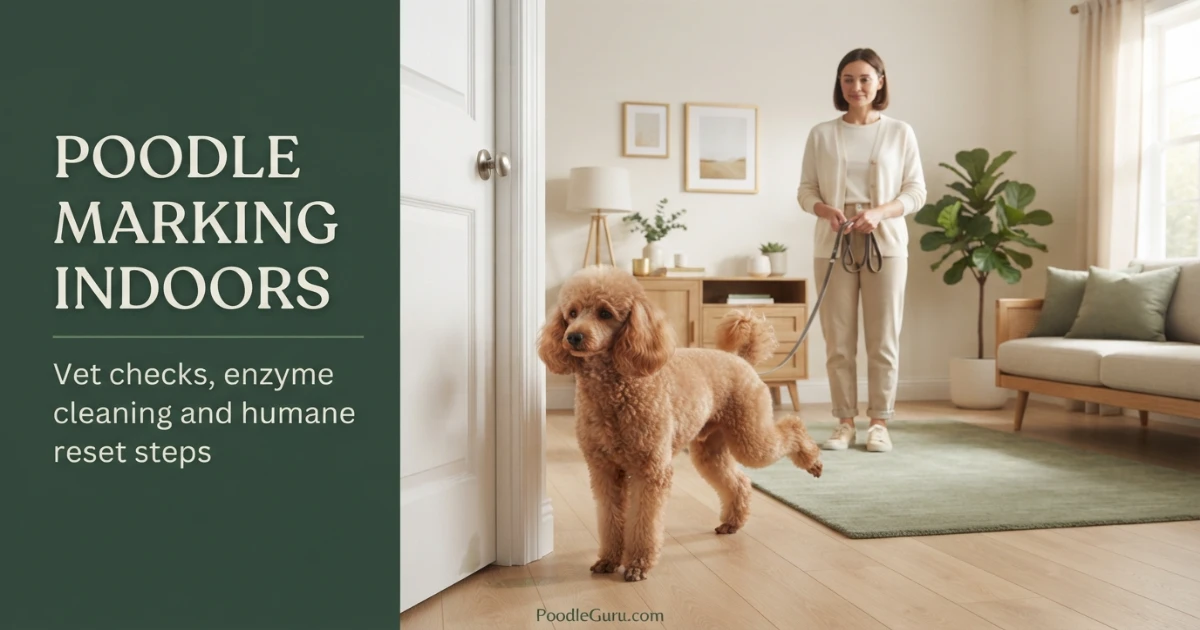
Poodle marking indoors solution: begin with a veterinary check, especially when the behavior is new or sudden. If medical causes are excluded, use a reward-based reset plan: clean every target with an enzymatic pet-urine product, supervise closely, restrict access to repeat locations, manage known triggers, and use a belly band only as short-term protection when appropriate.
Urine marking is not spite. It may be influenced by hormones, unfamiliar scents, social or environmental change, anxiety, frustration, or a learned pattern. The safest plan addresses the trigger and prevents repetition rather than punishing the dog.
Call a Veterinarian Promptly If You See These Signs
- Repeated straining or attempts to urinate with little or no urine produced
- Blood in the urine, crying during urination, or obvious pain
- Frequent dribbling, accidents during sleep, or sudden loss of bladder control
- Markedly increased thirst, lethargy, vomiting, fever, or reduced appetite
Inability to pass urine can be an emergency. Contact a veterinarian or emergency clinic rather than waiting for a training plan to work.
In This Guide
Poodle Marking Indoors Solution: What Is Urine Marking?
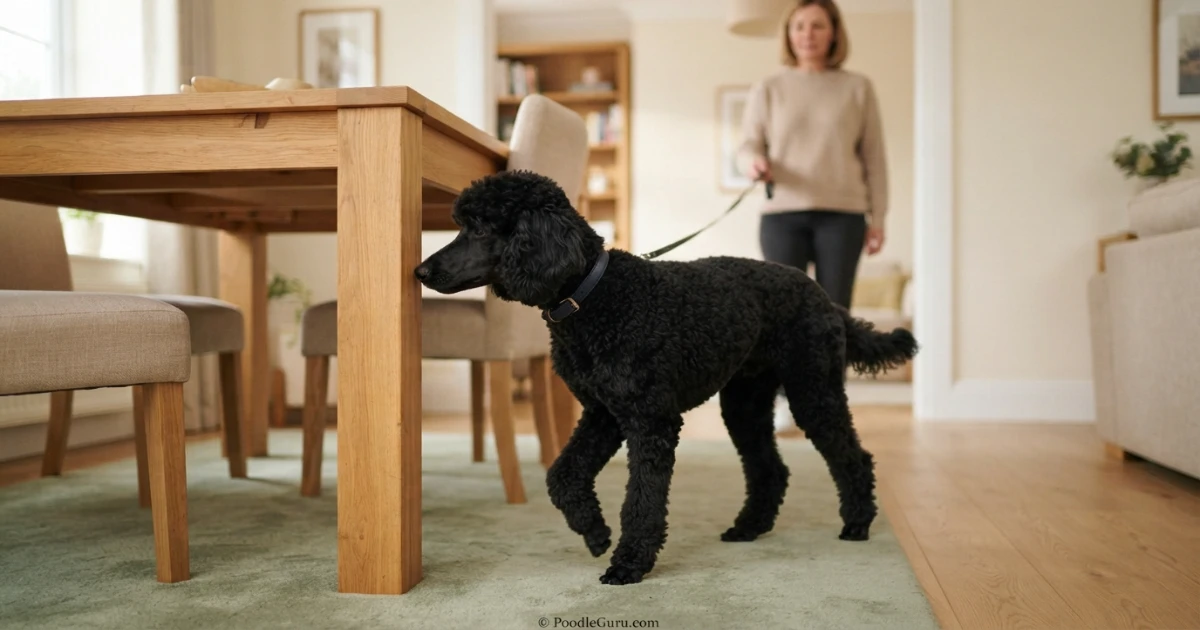
Urine marking is a communication behavior where a dog deposits small amounts of urine on vertical surfaces, like door frames, furniture legs, or bags left on the floor. For poodle owners, this means understanding that it is rarely about simply needing to relieve themselves.
The most important thing to understand is that marking differs from normal urination in posture, volume, and intent. Poodles often lift a leg to target a specific object, and the behavior can be triggered by new smells, visitors, or stress.
Many owners misinterpret marking as a potty-training problem. A poodle that fully empties their bladder outside, then immediately marks a door frame inside, is usually responding to scent, stress, or learned marking cues rather than having a simple accident.
VCA Animal Hospitals describes urine marking as a normal canine behavior that becomes a household problem when it happens indoors. Recognizing this distinction is crucial because punishment often increases anxiety and makes the behavior worse. Instead, a calm, investigative approach works best.
When It Can Start
Marking often appears around puberty, but puppies, adults, neutered males, spayed females, and intact dogs can all mark. A sudden start in a previously reliable adult deserves veterinary attention.
Gender Impact
Unneutered males mark most frequently, but spayed females and neutered males can also mark, especially when stressed or in new environments.
Surface Preference
Vertical targets such as furniture legs, doorframes, bags, and plants are common. Location and volume are useful clues, but they do not diagnose marking by themselves.
Marking vs. Accidental Urination: A Critical Difference
Treating a marking poodle like a dog who isn’t house-trained can backfire. You’ll need to distinguish between the two because the fixes are completely different. Use this side-by-side guide when you find a wet spot.
| Characteristic | Urine Marking | Accidental Urination |
|---|---|---|
| Amount | Small, often just a few drops to an ounce | Full bladder emptying—a visible puddle |
| Posture | Leg lift (males) or semi-squat targeting vertical surface; occasionally a slight squat on new objects | Full squat (females) or leg lift with full release on any surface |
| Location | Vertical: door frames, bags, furniture legs, new items, visitor’s belongings | Horizontal: middle of floor, carpet, near the door |
| Trigger | New scent, visitor, delivery, stress, seeing another dog | Too long without a break, excitement, fear, medical issue |
| Response to Punishment | Often worsens—increases anxiety-driven marking | May cause submissive urination or hiding |
Why Do Poodles Mark Indoors?
A poodle marking indoors solution must start with the why. Poodles are sensitive and intelligent; marking is often a response to feeling unsettled or hormonally driven. Let’s break down the most common triggers owners see.
Hormonal Marking
Intact male poodles often have the strongest drive to mark because urine carries social and reproductive scent information. Neutering can reduce hormonally driven marking for some dogs, especially before the habit becomes deeply rehearsed.
However, if marking is driven by anxiety, environmental triggers, or learned routine, neutering alone usually will not erase it. You still need the behavior protocol below.
Territorial Response
A poodle may mark after another animal visits, when unfamiliar objects enter the home, or near windows and doors where outside dogs are visible or scented. In these cases, the behavior may be linked to social communication, arousal, frustration, or uncertainty rather than “possessiveness.”
Limit unsupervised access to repeat targets, manage high-arousal window activity, and introduce visitors or new objects calmly while rewarding settled behavior.
Anxiety or Stress Marking
Changes in routine, a new baby, construction noise, conflict between pets, or distress when left alone can be associated with indoor marking. This is not revenge. If the behavior occurs mainly during absences or alongside pacing, vocalizing, destruction, or escape attempts, discuss separation-related distress with your veterinarian and follow a gradual, individualized plan. The ASPCA separation-anxiety guide explains why gradual desensitization is preferable to punishment.
Expert Insight: Is It Medical?
Before assuming it is behavioral, rule out a urinary tract infection, bladder stones, kidney disease, or diabetes. Any poodle that suddenly starts marking indoors after being reliable deserves a vet exam and urinalysis.
Signs like straining, frequent licking of genitals, blood in urine, or drinking more water signal a vet visit is urgent. Once medical causes are ruled out, move to the behavioral protocol.
Step 1: Rule Out Medical Causes
Book a veterinary appointment first when the change is sudden, frequent, painful, or unusual for your dog. Tell the clinic when it started, where it happens, how much urine is passed, and whether you have noticed straining, blood, licking, odor changes, increased thirst, or accidents during sleep. Ask the clinic whether it wants a home-collected urine sample and how it should be collected and stored.
VCA notes that urinary disorders can cause frequent attempts, straining, discomfort, blood, genital licking, dripping, and strong odor. A veterinarian may recommend urinalysis, urine culture, blood testing, or imaging depending on the signs; no single test rules out every cause.
The PoodleGuru Poodle Marking Indoors Solution Method
At PoodleGuru, we approach indoor marking not as disobedience but as a pattern to interrupt and replace. This six-step protocol combines management, positive reinforcement, and environmental tweaks.
The goal is to teach your poodle that outdoors is the only place to communicate with urine. Work through the steps in order, and do not skip the enzyme cleaner step; it is non-negotiable.
Medical Clearance
Start with veterinary assessment rather than assuming disobedience. If an infection, pain, stones, incontinence, diabetes, kidney disease, or another condition is present, that condition needs treatment alongside any behavior plan.
Enzyme Clean Every Marked Spot
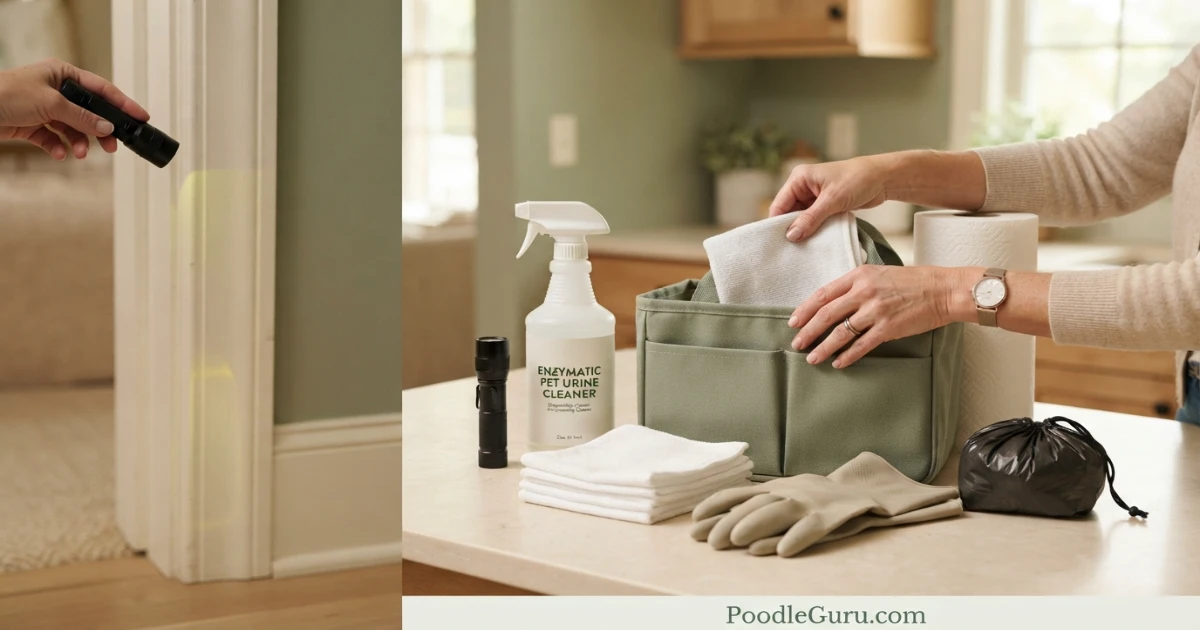
Use an enzymatic cleaner specifically labeled for pet urine. Standard household cleaners won’t break down the proteins that your poodle’s nose detects. Saturate the area thoroughly, let it air dry, and avoid steam cleaners (heat can set the stain and odor). Clean not just the spot but an area around it.
Manage the Environment to Prevent Rehearsal
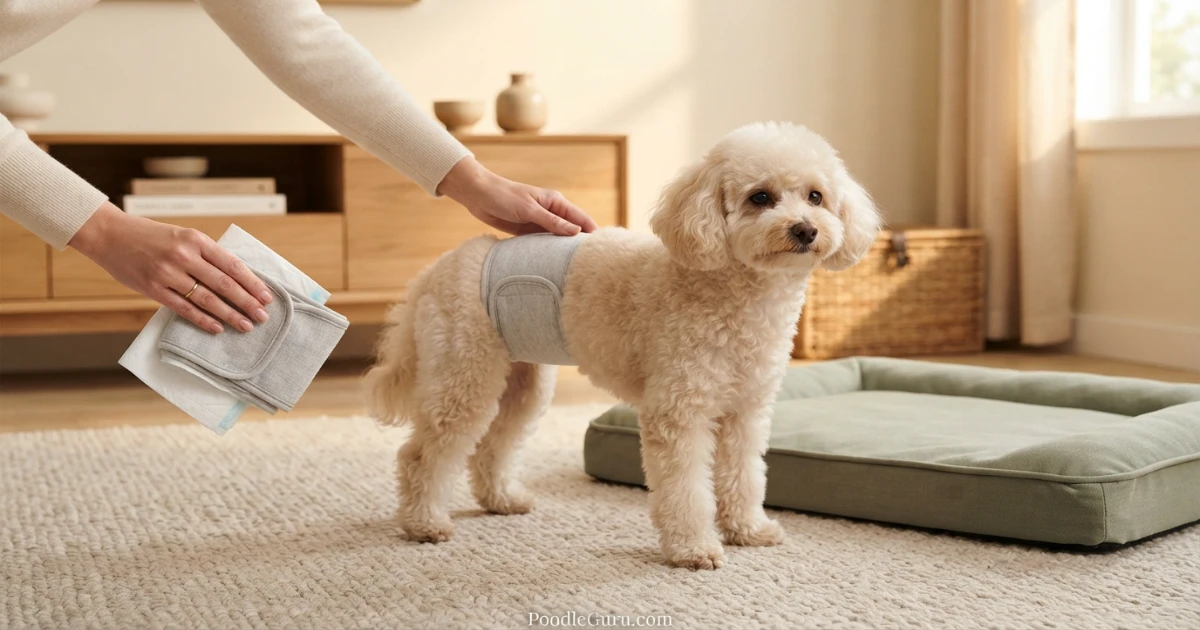
During retraining, prevent as much rehearsal as possible. Close doors, use baby gates, keep the dog with you on a comfortable leash when actively supervised, and use a properly fitted male belly band only for short management periods. Remove it immediately when wet and check the skin. Expand freedom gradually after a sustained mark-free period; the timeline varies by dog.
Supervise and Interrupt Positively
When your poodle becomes intensely interested in a known target, calmly call them away and reward an incompatible behavior such as coming to you, settling on a mat, or engaging with a toy. If the dog is due for a toilet break or may genuinely need to empty the bladder, take them outside and reward normal elimination. Do not automatically turn every interrupted mark into another marking opportunity outdoors.
Reduce Visual Triggers
Block access to windows where your poodle can see delivery people, squirrels, or passing dogs. Use privacy film or keep blinds closed during high-traffic times. If marking is directed at a new piece of furniture, temporarily gate it off until the novelty fades.
Enrich and De-stress
Add appropriate sniff walks, food puzzles, short reward-based training sessions, predictable rest, and a consistent daily routine. These changes may reduce frustration and arousal, but they are not a substitute for treating an anxiety disorder. If separation-related distress is suspected, involve your veterinarian or a qualified separation-anxiety professional.
Common Mistakes That Make Marking Worse
Well-meaning owners can unintentionally cement the marking habit. Here’s what to avoid, and what to do instead.
| Mistake | Why It Backfires | Poodle-Smart Alternative |
|---|---|---|
| Yelling or rubbing their nose in it | Increases fear and anxiety; the poodle may learn to mark in hiding instead | Quietly clean the area with enzyme cleaner; no confrontation |
| Punishing after the fact | Poodles don’t connect past action with current correction; they only see an unpredictable owner | Only interrupt in the act with a neutral “oops” and redirect outside |
| Using only an ordinary surface cleaner | The area may look clean while odor molecules remain detectable to the dog | Use a pet-urine enzymatic product exactly as its label directs |
| Free roam too soon | Giving access to the whole house before the habit is broken allows silent marking | Use gates or active leash supervision, then expand access gradually after sustained progress |
| Ignoring the emotional cause | If anxiety is driving the behavior, training alone won’t stop it; the anxiety must be addressed | Increase exercise, mental enrichment, and consult a behaviorist if anxiety signs persist |
The Cleanup Protocol That Actually Works
You can do everything else right, but if the scent remains, your poodle’s powerful nose will keep drawing them back to re-mark. Here’s a reliable cleaning sequence:
- Blot (don’t rub) fresh urine with paper towels to remove as much as possible.
- Apply an enzymatic pet-urine cleaner using the exact amount and contact time stated on its label.
- Cover or reapply the product only when the manufacturer’s directions specifically recommend it.
- Let air dry completely; do not use a hair dryer or steam cleaner.
- Test on a hidden area of fabric or carpet first to avoid discoloration.
For painted doorframes or delicate fabric, test the cleaner on a hidden area first and follow the surface instructions. A black light can reveal some suspicious spots in a dark room, but it is not definitive: other substances may fluoresce, and some urine residue may not show. Treat it as a search aid rather than proof.
When to Work With a Professional
Seek professional help when marking is frequent, escalating, linked to fear or separation distress, causing conflict between pets, or continuing despite consistent veterinary and management steps. A board-certified veterinary behaviorist, certified applied animal behaviorist, or qualified reward-based behavior consultant can identify triggers and build an individualized plan.
The American Veterinary Society of Animal Behavior recommends reward-based methods for behavior modification. Medication may be appropriate when anxiety or hyperarousal is diagnosed, but prescribing decisions belong to a veterinarian or veterinary behaviorist.
Frequently Asked Questions
Will neutering stop my poodle from marking indoors?
Neutering may reduce hormonally influenced marking in some male dogs, but it is not a guaranteed cure and does not address anxiety, frustration, or an established habit. Discuss the medical and behavioral pros and cons with your veterinarian.
Why does my poodle only mark when visitors come over?
Visitors introduce unfamiliar scents, movement, and social excitement. Keep greetings calm, supervise with a comfortable leash or gate, reward settling away from known targets, and give your poodle a planned toilet break when appropriate.
Can female poodles mark indoors?
Yes. While less common, spayed and intact female poodles can mark, especially when feeling territorially insecure or after a change in household routine. The same protocol applies—vet check, enzyme cleaning, and supervised retraining.
How long does it take to stop indoor marking in a poodle?
Some dogs improve within days or weeks once medical problems, scent cues, and triggers are addressed; established or anxiety-related marking can take longer. Track frequency and context rather than promising a fixed deadline, and seek professional help when progress stalls.
My poodle marks my bed or couch. What does that mean?
Soft surfaces that smell strongly of you or your family can be targeted due to anxiety, attachment, or territoriality. Restrict access to those areas while retraining, and work on building your poodle’s confidence with independent activities and enrichment.
Is belly band safe for my poodle long-term?
A male belly band can be useful for short, supervised management periods. It is not a cure. Check it frequently, remove and replace it immediately when wet, allow regular toilet breaks, and inspect the skin for redness or moisture. Stop using it and contact your veterinarian if irritation develops.
Could changing my poodle’s diet help with marking?
Diet does not directly stop behavioral marking. However, urinary crystals, bladder irritation, or other medical issues can be diet-related in some dogs, so any change in urination should be discussed with your veterinarian before you assume it is purely behavioral.
Key Takeaways: Poodle Marking Indoors Solution
Stopping indoor marking in poodles requires a two-track approach: address medical possibilities and follow a structured, punishment-free behavioral reset. The methods above work because they respect your poodle’s intelligence and sensitivity.
- Urine marking deposits small amounts on vertical surfaces and is distinct from house-training accidents—identify it correctly before acting.
- Always begin with a veterinary exam and urinalysis to rule out UTIs, stones, or other medical causes.
- Use enzymatic cleaners to erase all scent traces; without this step, your poodle will likely re-mark the same spots.
- The PoodleGuru Marking Reset Method combines supervised freedom, positive interruption, generous outdoor rewards, and trigger management.
- Avoid yelling, scolding, or punishment—these increase anxiety and can drive the marking out of sight without solving it.
- If marking persists, escalates, or appears linked to anxiety despite consistent management, consult a qualified reward-based behavior professional.
Next step: arrange a veterinary check if the change is new or unexplained, obtain a pet-urine enzymatic cleaner, and begin a written trigger log. Then use our Poodle potty-training guide to reinforce a predictable elimination routine without confusing marking with a full-bladder accident.