Poodle Luxating Patella: The Complete Toy & Mini Guide to Kneecap Health
It happens in an instant—your toy or miniature poodle lets out a tiny yelp, lifts a back leg, and then continues trotting as though nothing occurred. A few steps later, the leg is back on the ground, and you wonder if you imagined the whole thing. That brief, odd skip is often the first whisper of a poodle luxating patella, a condition so common in small poodles that experienced owners and breeders speak of it as casually as they discuss tear staining. Yet beneath its seeming ordinariness lies a spectrum that ranges from a minor quirk to a debilitating orthopedic crisis. Understanding the difference—and knowing when to act—is what this guide delivers.
A luxating patella is a kneecap that slips out of its normal groove, causing the leg to momentarily lock up or skip. In toy and miniature poodles, this is often a congenital condition graded from I (mild, occasional) to IV (permanently dislocated). Many Grade I and II dogs live happily without surgery, while Grade III and IV typically require surgical correction to prevent chronic pain and arthritis. Screening breeding dogs and recognizing early signs in puppies are the most powerful things any owner or buyer can do.
What Exactly Is a Luxating Patella—and Why Are Toy and Mini Poodles So Prone to It?
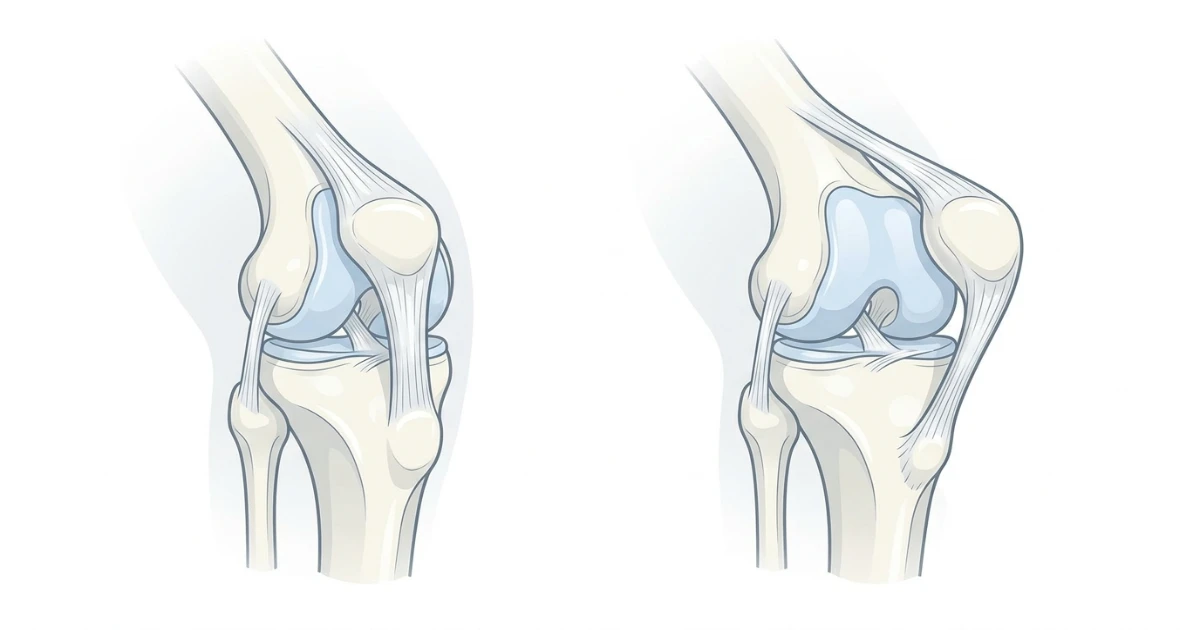
The patella is the small, almond-shaped bone that sits inside the tendon of the quadriceps muscle, gliding smoothly in a groove at the bottom of the femur. When a patella luxates, it pops out of that groove, usually toward the inside of the leg. In toy and miniature poodles, the trouble often begins with anatomy that was subtly imperfect from the start: a groove that’s too shallow, a tibial crest that’s slightly offset, or a ligament that’s a bit too loose. These are structural issues that have a strong genetic component. While a Standard Poodle can experience a luxating patella, the condition overwhelmingly concentrates in the smaller sizes, where the interplay of bone angulation and soft tissue tension leaves the kneecap more prone to wandering.
To truly understand poodle luxating patella mechanics, imagine a curtain ring gliding along a rod. If the rod is bent or the ring is weak, the curtain snags. In your poodle’s knee, that snag is the momentary hop you see. The good news is that many dogs with a shallow groove never progress beyond a mild slip; the bad news is that in some, the repeated dislocation wears away cartilage, deepening the problem over years.
The Four Grades of Patellar Luxation: From Barely There to Always Out
Veterinary orthopedists use a grading system that shapes every treatment decision. Understanding where your poodle falls is critical, because the difference between Grade II and Grade III isn’t just a number—it changes the entire management plan.
| Grade | What Happens | Symptoms You’ll Notice | Typical Treatment Path |
|---|---|---|---|
| Grade I | Kneecap can be luxated manually by a vet but pops back on its own; very rarely slips during normal movement. | Almost none; occasional single skip that corrects instantly. | Monitoring, weight management, joint supplements (glucosamine/chondroitin, omega-3s). |
| Grade II | Spontaneously luxates during walking or running; dog often flicks the leg to pop it back. | Frequent skipping or bunny-hopping; may hold leg up briefly. No constant pain yet. | Conservative care first; surgery considered if frequency increases or lameness persists. |
| Grade III | Patella is out most of the time but can be manually repositioned (then immediately luxates again). | Persistent lameness, crouched stance, reluctance to jump, muscle thinning in the affected leg. | Surgery strongly recommended to restore function and prevent arthritis. |
| Grade IV | Patella is permanently dislocated and cannot be reduced manually; severe structural deformity. | Constant abnormal gait; bow-legged appearance; often walks with knee bent. Significant discomfort. | Surgery is the only humane option; often more complex with bone realignment. |
Grade I and II are often discovered incidentally during a routine puppy exam or a pre-breeding check. That doesn’t mean they never progress. Weight gain, high-impact activity, and even everyday wear can push a Grade II toward a Grade III over several years. This is why owners are taught to monitor, not ignore.
Recognizing the Subtle Signs: How a Poodle Tells You Something’s Off
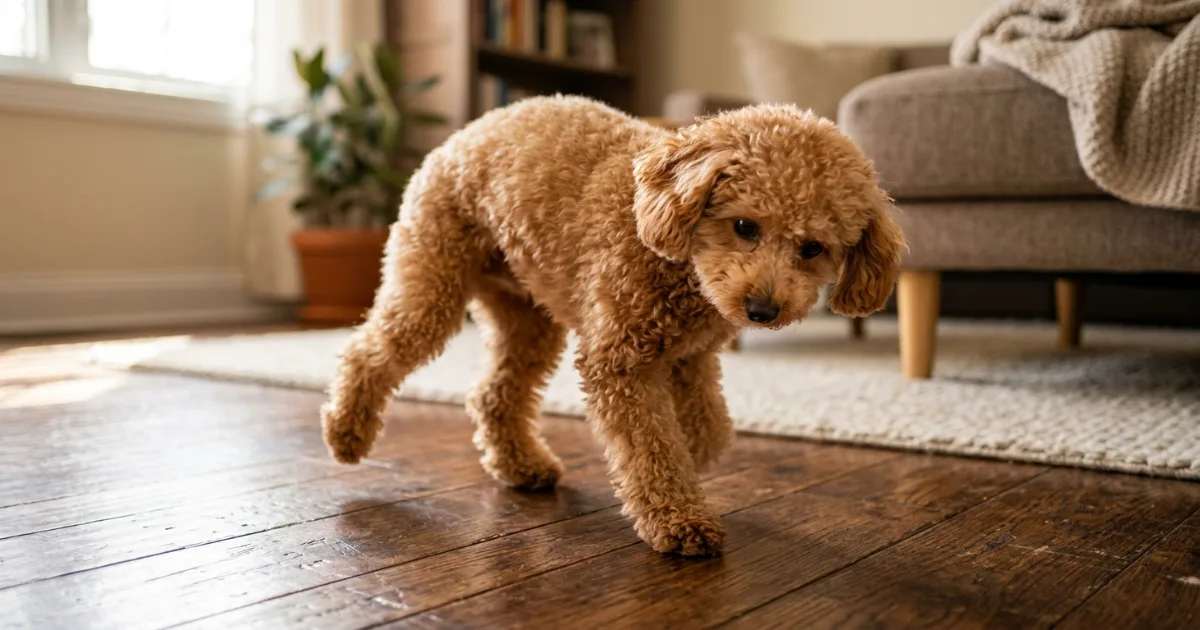
Poodles are masterful at masking discomfort. The most common early sign—the one that sends owners to Google—is the “skip-and-continue” gait. While walking or trotting, the poodle will abruptly lift one back leg, perhaps hop a few steps, and then put it down as if nothing happened. There’s no yelp, no dramatic collapse. It’s so quick that many owners mistake it for a foot caught in long grass or a moment of indecision. Some poodles develop a “bunny-hopping” pattern at higher speeds, bringing both hind legs forward together. Others start sitting asymmetrically, one leg splayed out to the side because full flexion of the knee feels uncomfortable. If you notice your poodle licking one knee obsessively, or if the thigh muscle on one side appears flatter than the other, it’s time for an orthopedic exam.
How the Diagnosis Is Made: From Palpation to Imaging
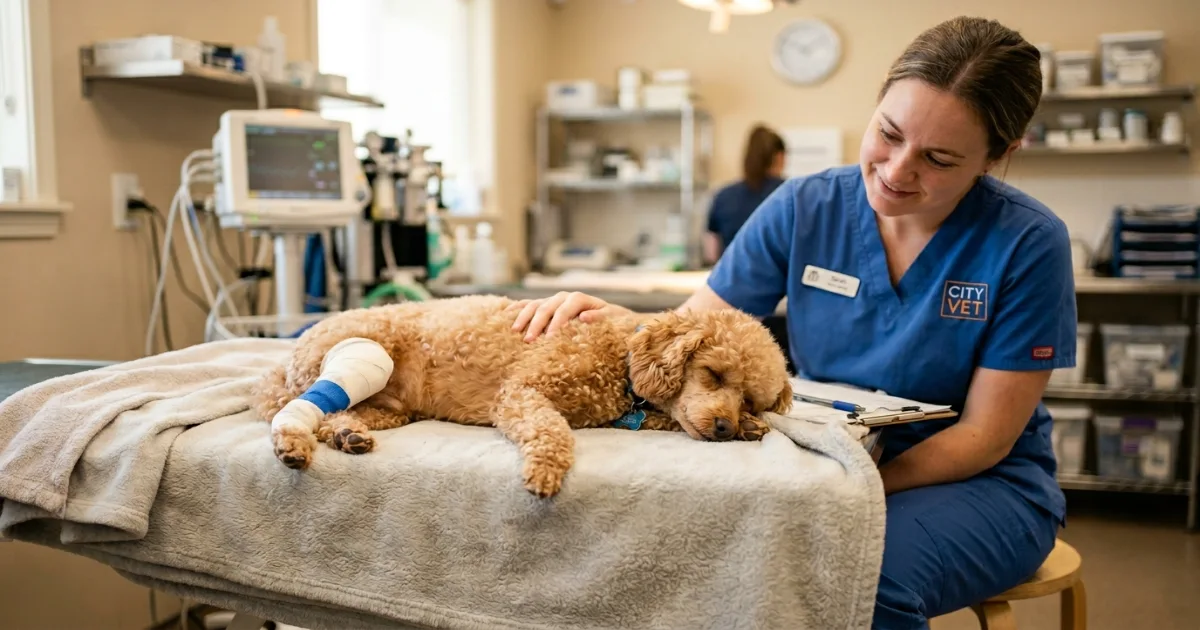
Diagnosis begins with your veterinarian’s hands. While you hold your calm poodle securely, the vet palpates the knee, attempting to push the patella medially. A positive “patellar luxation test” confirms the kneecap can be forced out of its groove, and the vet grades it based on how easily this happens and whether it stays out. Radiographs (X-rays) may follow—not to see the patella directly, which shows on films, but to assess the depth of the trochlear groove, check for arthritis, and evaluate hip conformation. In some cases, especially before surgery, a CT scan offers the most detailed view of bone alignment. The physical exam remains the cornerstone of diagnosis, which is why you should always insist on an orthopedic evaluation during your poodle’s annual check-up.
Conservative Management vs. Surgery: A Realistic Comparison
One of the hardest decisions for an owner is whether to pursue surgery for a luxating patella, especially when the dog seems happy and the skipping looks minor. The table below compares the two paths honestly—because neither is automatically right or wrong for every poodle.
| Factor | Conservative Management | Surgical Correction |
|---|---|---|
| Best suited for | Grade I–II with minimal symptoms; no arthritis present. | Grade III–IV; persistent lameness; arthritis already forming. |
| Core components | Weight control, controlled low-impact exercise, physical therapy, joint supplements, anti-inflammatories as needed. | Deepening the trochlear groove, realigning the tibial crest, tightening the joint capsule, or a combination. |
| Cost (2026 estimate) | $30–$80 per month for high-quality supplements; occasional rehab sessions. | $2,500–$5,500 per knee; higher if both knees need surgery. |
| Recovery period | Ongoing; no recovery time. | 8–12 weeks of restricted activity; crate rest and gradual leash walks. |
| Long-term outlook | Many dogs remain comfortable for years; risk of progression with age or weight gain. | Over 90% return to full function when performed by a board-certified surgeon; reduces arthritis progression significantly. |
Pro Tips for Choosing the Right Path for Your Poodle
- Consult a board-certified veterinary surgeon for a second opinion, even if your regular vet recommends watching and waiting. A specialist sees hundreds of these cases.
- Film a video of your poodle’s skipping to show the surgeon—these episodes rarely happen conveniently in the exam room.
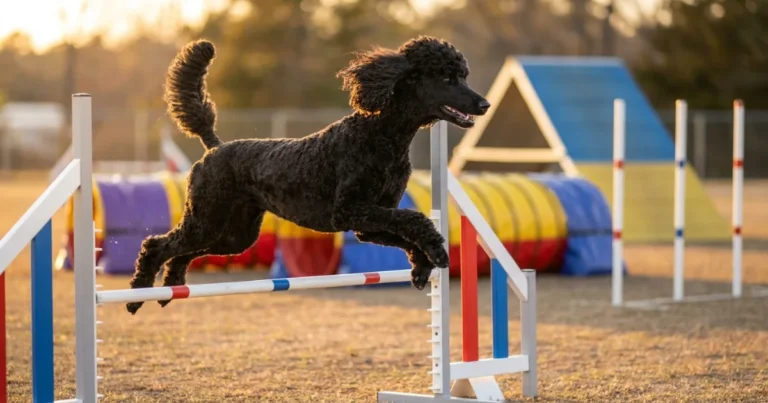
- Be honest about your poodle’s lifestyle. A high-jumping, sofa-leaping agility dog with Grade II may need surgery sooner than a quiet lapdog.
What Surgery Looks Like: Cost, Recovery, and the Road Back
If surgery is recommended, you’ll confront a range of costs and a specific recovery protocol. In 2026, a single knee surgery for a toy or miniature poodle typically falls between $2,500 and $5,500, depending on the technique used, the surgeon’s credentials, and your geographic location. Bilateral surgery (both knees at once) is sometimes performed, but many surgeons prefer staging the procedures to allow one leg to recover with reliable support. The surgery itself may involve deepening the femoral groove (trochleoplasty), moving the point where the patellar tendon attaches (tibial tuberosity transposition), and tightening the surrounding soft tissues. Post-operatively, your poodle will be on strict crate rest with only short, leashed potty walks for six to eight weeks, followed by a gradual return to normal activity guided by a rehabilitation plan. Physical therapy—including passive range-of-motion exercises, underwater treadmill work, and laser therapy—dramatically improves outcomes and reduces scar tissue. The commitment is real, but so is the reward: most poodles walk out of recovery with a stable, pain-free knee they’ve never had before.
What Buyers and New Owners Get Wrong About Luxating Patella in Poodles
The breeders’ marketplace is rife with half-truths about poodle luxating patella. One of the most common is the phrase “vet-checked and cleared.” A routine puppy wellness exam often misses a Grade I luxating patella because the puppy is wiggly and the vet isn’t performing a dedicated orthopedic manipulation. True clearance requires an OFA (Orthopedic Foundation for Animals) patellar luxation evaluation performed by a specialist after 12 months of age, and that certificate should be available for you to verify online. Another pervasive myth is that skipping is “normal” for small dogs. It is not normal—it is common, but it still represents a structural fault that can worsen. Buyers also frequently misunderstand that a puppy who doesn’t skip now can still develop luxation later, especially if the patellar groove is shallow. This is why breeding dogs must be screened, not just puppies.
If a breeder cannot produce OFA patella numbers for both parents—or minimizes the importance of screening by saying “my vet didn’t find anything”—walk away. Toy and Miniature poodles are a breed where ethical breeding demands transparency on this specific orthopedic issue.
Practical Owner Insight: Living Day-to-Day with a Luxating Patella
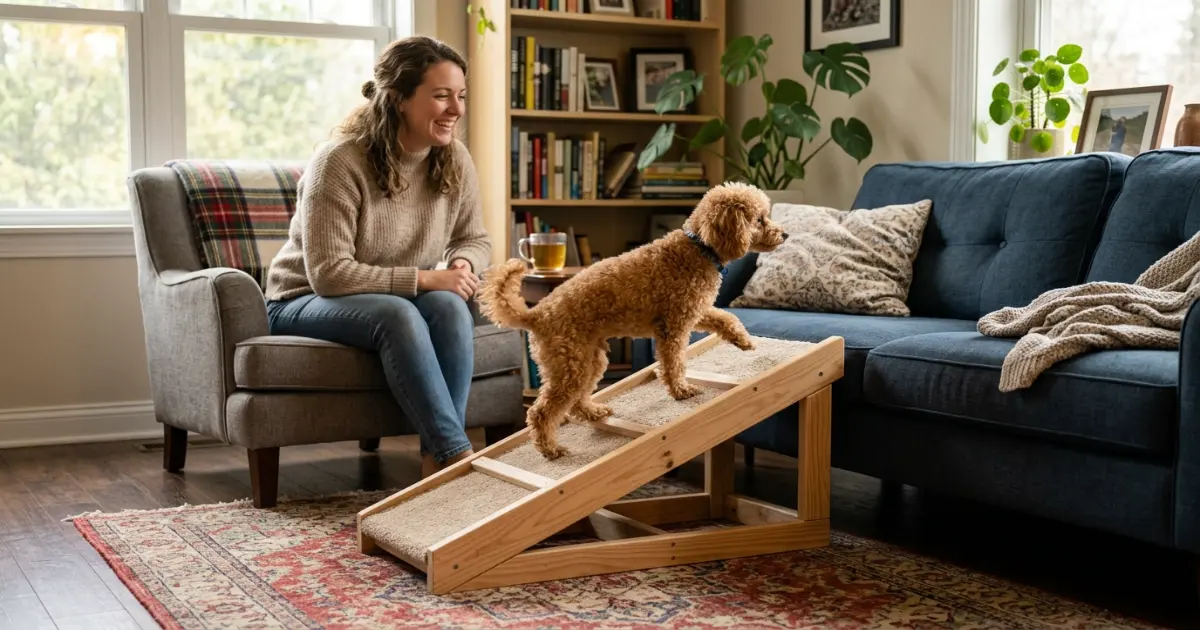
If your poodle has been diagnosed with a low-grade luxating patella, your daily life changes subtly but meaningfully. You’ll become vigilant about weight—every extra ounce stresses the knee joint. You’ll switch from high-impact fetch on concrete to gentle games on grass or carpet. Stairs become something to minimize, not race up and down. A ramp to the sofa replaces the joyful flying leap that could wrench the kneecap. Joint supplements with glucosamine, chondroitin, and green-lipped mussel become part of the morning routine alongside breakfast. Many owners also swear by canine rehabilitation therapists who teach them specific exercises to strengthen the quadriceps and hamstrings, effectively creating a muscular brace around the unstable knee. It’s not a burden; it’s a translation of love into simple, protective action.
Frequently Asked Questions About Poodle Luxating Patella
Can a luxating patella heal on its own in a toy poodle?
No. The structural groove or ligament laxity that causes luxation does not spontaneously correct. However, many dogs with Grade I or stable Grade II never require intervention beyond weight control and joint support.
Is it safe to breed a toy or mini poodle with a luxating patella?
Ethical breeders do not breed dogs with any grade of patellar luxation. Reputable breeding programs screen with OFA patella exams, and breeding stock should have normal results. Passing on this trait intensifies the problem in future generations.
How long can a poodle with a luxating patella go without surgery?
Many Grade I and Grade II dogs live their entire lives without surgery, comfortably managed with lifestyle adjustments. If symptoms worsen or arthritis develops, surgery becomes the appropriate next step. There is no one-size-fits-all deadline.
What happens if I ignore my poodle’s skipping leg?
Ignoring a Grade III or IV luxation leads to chronic pain, progressive arthritis, muscle atrophy, and a drastically reduced quality of life. Even a low-grade luxation can accelerate joint degeneration if the dog is overweight or overly active.
Are there any effective non-surgical treatments for a luxating patella?
Yes, conservative management works well for low grades. It includes maintaining a lean body weight, physical therapy, joint supplements, hydrotherapy, and careful activity restriction. Anti-inflammatory medications may be used during flare-ups under veterinary guidance.
How can I tell if my poodle’s patella is getting worse?
Increased frequency of skipping, visible lameness lasting more than a few seconds, reluctance to jump or climb stairs, a crouched rear stance, or loss of thigh muscle mass all indicate worsening. Regular vet exams are essential.
Do both knees usually need surgery if one is affected?
A significant percentage of toy and miniature poodles have bilateral luxation, but not always to the same severity. Some dogs only need one knee repaired; others require staged surgeries. The surgeon will evaluate each knee individually.
What should I look for in a breeder to reduce the risk of luxating patella?
Ask to see OFA patella certification on both sire and dam, with results listed as normal. A responsible breeder will openly discuss this issue, explain their screening protocol, and provide a health guarantee covering hereditary patellar luxation for at least 2 years.
The Knee That Carries Your Poodle Through Life
A poodle luxating patella diagnosis is not a catastrophe—it’s a call to awareness. Whether your role is that of a buyer screening breeders, a new puppy parent monitoring for that first telltale skip, or an owner navigating the path from supplements to surgery, the thread that matters most is this: you have agency. With careful observation, an honest partnership with a veterinarian you trust, and a willingness to protect your poodle’s joints from excess strain, you can give your toy or miniature companion years of comfortable, joyful movement. And when she runs toward you with a perfectly even, springy gait, you’ll know you made the right calls.