Poodle Ear Infections: Symptoms, Causes & Treatment
Poodles are one of the most ear-infection-prone breeds in the world. Their floppy, fur-lined ears and dense hair inside the ear canal create the ideal environment for yeast and bacteria to thrive. Catching the signs early — and understanding why infections keep coming back — is the difference between a quick vet visit and a chronic, painful problem.
Quick Answer: Do Poodles Get Ear Infections Often?
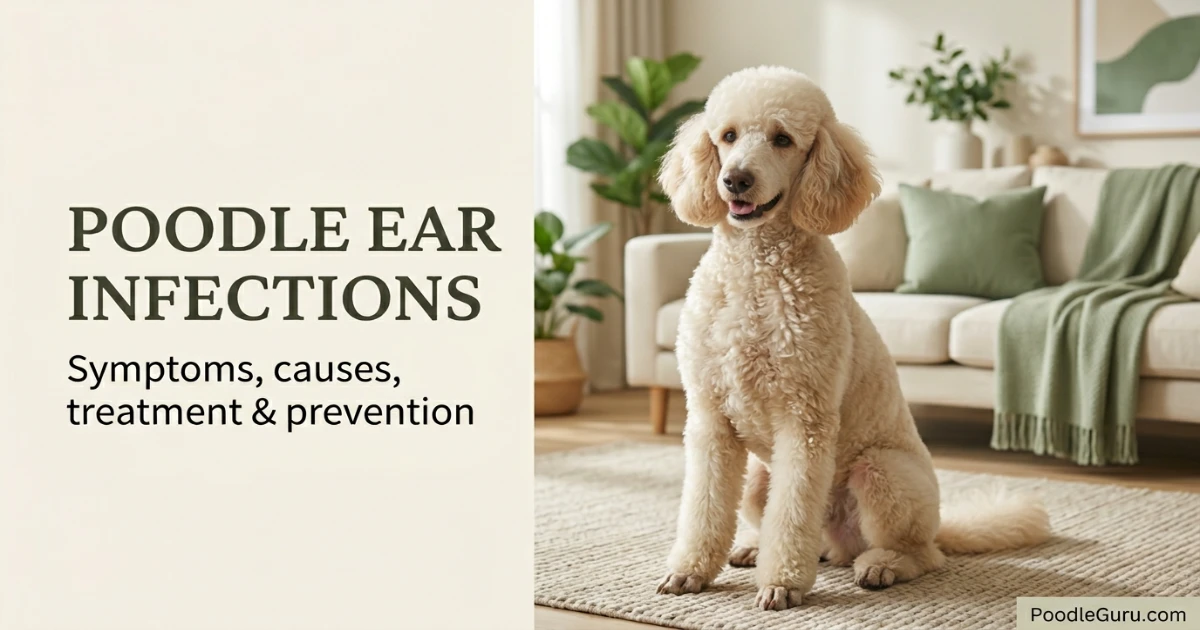
Yes. Poodle ear infections are among the most common health issues the breed faces, regardless of size. Their long, floppy ears restrict airflow, and the dense hair inside the ear canal traps moisture and debris. The result is a warm, dark, humid environment where yeast (Malassezia) and bacteria can multiply rapidly. Most poodle owners will deal with at least one ear infection during their dog’s lifetime. The good news: with the right prevention routine and prompt veterinary treatment, the majority of infections resolve fully and don’t return.
Why Poodles Are Structurally Prone to Ear Infections
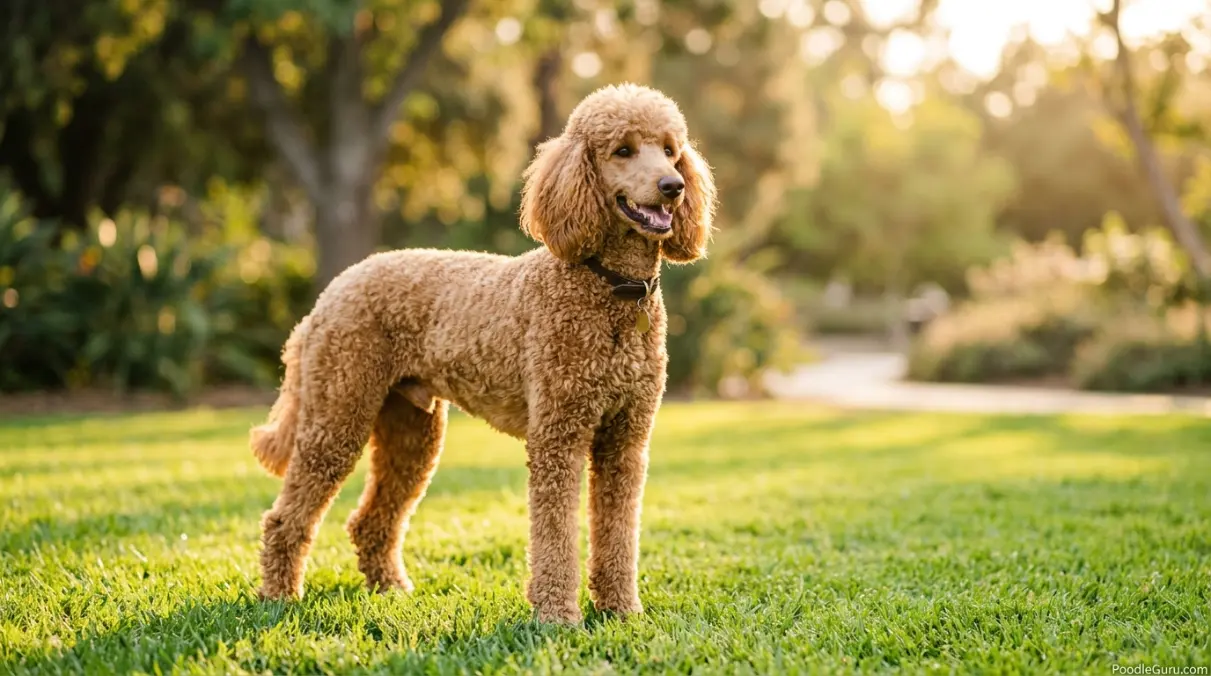
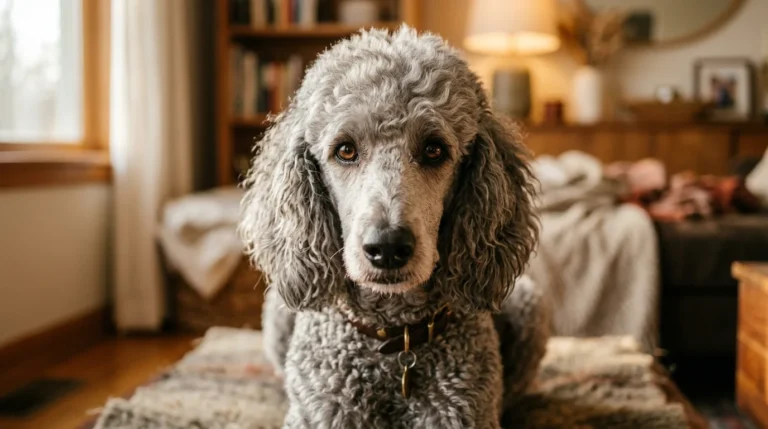
Poodle ear infections aren’t just bad luck. They’re partly a consequence of the breed’s anatomy. Poodles have pendulous (drop) ears that hang close against the head, covering the ear canal opening. Unlike breeds with erect ears — where airflow naturally dries the canal — poodle ears trap heat and humidity inside. That microclimate is exactly what yeast and bacteria prefer.
On top of that, poodles grow hair inside the ear canal itself. This is the trait most owners don’t expect. That hair mats with wax and debris over time, further blocking ventilation and giving microorganisms something to cling to. Professional groomers routinely pluck this ear canal hair during grooming — it’s not optional care; for poodles, it’s structural maintenance.
The three poodle sizes — Toy, Miniature, and Standard — are all susceptible. Some owners assume the larger Standard is more robust, but ear canal structure is consistent across sizes. Toy Poodles may actually show infection symptoms faster because of their smaller canal diameter and the proportionally larger surface area of hair growth relative to canal width.
🦻 Floppy Ear Flap
Covers the canal opening and traps warm, moist air — the key structural vulnerability in the breed.
🌿 Hair in the Canal
Poodles grow dense hair inside the ear canal that must be plucked or trimmed regularly to maintain airflow.
💧 Moisture Retention
After swimming, bathing, or humid weather, water sits in the closed canal rather than evaporating freely.
Symptoms of a Poodle Ear Infection
Knowing what a poodle ear infection looks like — and feels like to your dog — makes the difference between catching it in the early, treatable stage and waiting until it becomes a painful, entrenched problem. Symptoms vary slightly depending on whether the infection is yeast-based, bacterial, or both, but the core warning signs are consistent.
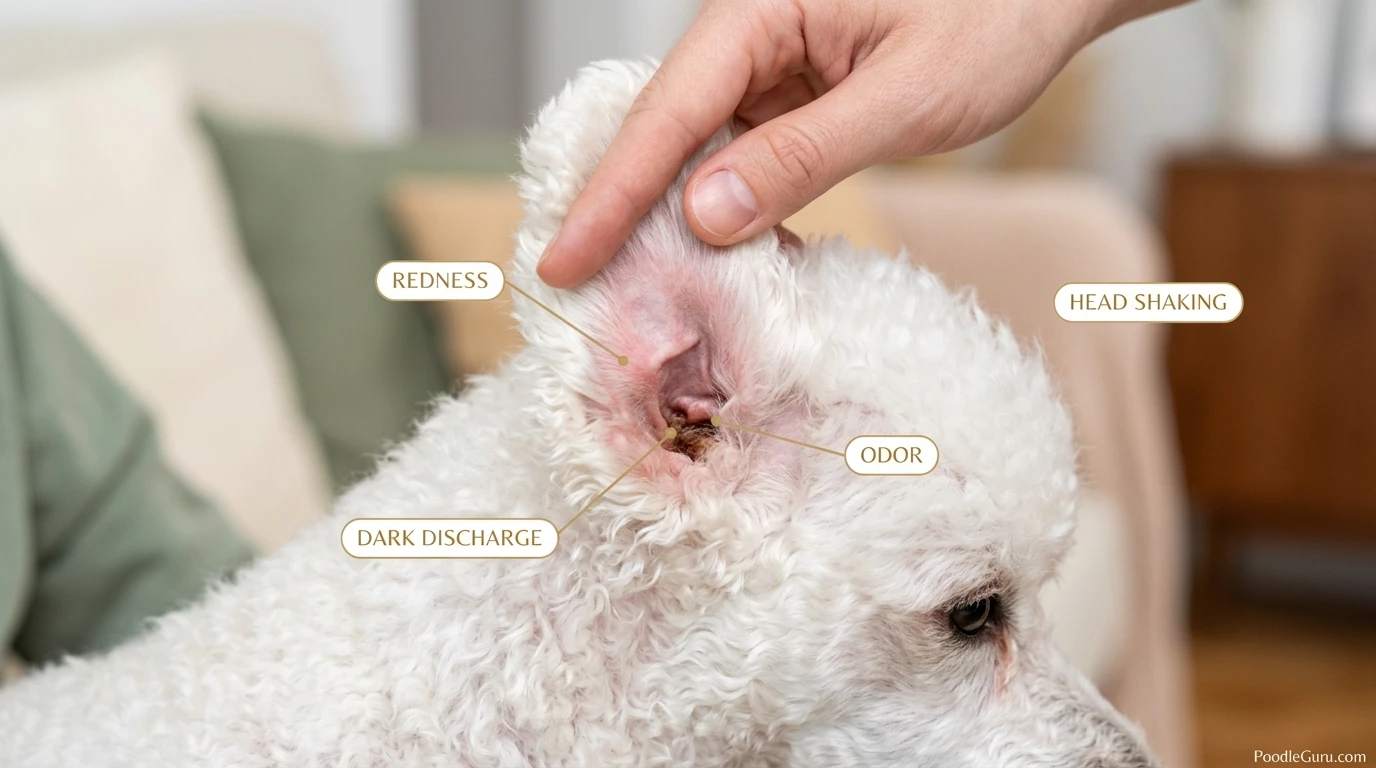
| Symptom | What It Looks Like | Urgency Level |
|---|---|---|
| Head shaking | Frequent, repeated shaking — especially after waking or eating | 🟡 Monitor for 24–48 hrs |
| Scratching at the ear | Pawing at one or both ears, sometimes drawing blood from scratching | 🟠 Vet within 48 hrs |
| Odor from the ear | Yeasty (bread-like), sour, or musty smell — distinct from normal ear wax | 🟠 Vet within 48 hrs |
| Dark or yellow discharge | Brown/black (yeast) or yellow/green (bacterial) discharge visible at the canal | 🔴 Vet promptly |
| Redness or swelling | Visible inflammation at the ear flap or canal entrance | 🔴 Vet promptly |
| Tilting the head | Persistent head tilt to one side — may signal middle or inner ear involvement | 🔴 Vet same day |
| Sensitivity to touch | Dog pulls away or vocalizes when ear is touched or cleaned | 🔴 Vet promptly |
| Balance issues / disorientation | Stumbling, circling, or apparent dizziness — deep inner ear involvement | 🔴 Emergency vet |
What Actually Causes Poodle Ear Infections
Most poodle ear infections have a triggering event combined with an underlying vulnerability. Understanding both layers matters if you want to prevent recurrence rather than just treating the current episode.
Primary Triggers
Moisture exposure is the single most common trigger. Water entering the ear canal during baths or swimming sessions doesn’t drain easily in poodles. It sits against warm skin and hair, creating ideal conditions for microbial growth within 24–48 hours. Standard Poodles — who are historically bred as water retrievers — are especially affected by this, since many owners take them swimming regularly.
Infrequent grooming is the second major trigger. When ear canal hair isn’t plucked or trimmed, it mats with wax and acts as a physical barrier to airflow. Even poodles that never swim can develop chronic infections from this alone.
Allergies are a frequently overlooked cause of recurring infections. Food allergies (particularly to chicken, beef, or wheat) and environmental allergies (grass, dust mites, mold) can cause chronic inflammation in the ear canal. If your poodle keeps getting ear infections despite good hygiene, allergies should be discussed with your vet.
Underlying Vulnerabilities
Beyond the immediate trigger, some poodles have immune system vulnerabilities, hormonal imbalances (such as hypothyroidism), or skin conditions that make them inherently more susceptible. In these cases, managing the root condition is essential — cleaning and medicating will only provide temporary relief until the underlying issue is addressed.
Types of Ear Infections in Poodles
Not all poodle ear infections are the same, and the treatment depends entirely on what type you’re dealing with. Vets classify ear infections by their location in the ear and by what’s causing them.
| Type | Location | Primary Cause | Common Signs | Typical Treatment Duration |
|---|---|---|---|---|
| Otitis Externa | Outer ear canal | Yeast (Malassezia), bacteria, or both | Discharge, odor, scratching | 7–14 days with ear drops |
| Otitis Media | Middle ear | Untreated externa spreading inward | Head tilt, facial nerve signs | 4–6 weeks, often oral antibiotics |
| Otitis Interna | Inner ear | Severe spread, rare in early-caught cases | Balance loss, circling, deafness risk | 6–8 weeks or longer, specialist care |
| Yeast Infection (Fungal) | Outer canal primarily | Malassezia pachydermatis overgrowth | Dark brown discharge, musty smell | 2–4 weeks with antifungal drops |
| Bacterial Infection | Outer or middle ear | Pseudomonas, Staphylococcus, others | Yellow/green discharge, acute pain | 2–6 weeks, culture-guided treatment |
The vast majority of poodle ear infections are otitis externa — outer ear infections. These are the most treatable and carry the best outcome when caught early. The critical mistake is leaving them untreated, which allows the infection to move deeper into the middle ear and beyond. VCA Animal Hospitals outlines how otitis externa progresses when left untreated, which is why prompt vet attention matters more than waiting to see if it resolves on its own.
How Vets Diagnose Poodle Ear Infections
A responsible vet doesn’t just look in the ear and prescribe drops. A thorough diagnostic workup is important — especially for recurring infections — because the treatment for a yeast infection is completely different from the treatment for a resistant bacterial infection. Guessing wrong wastes time and can make the problem worse.
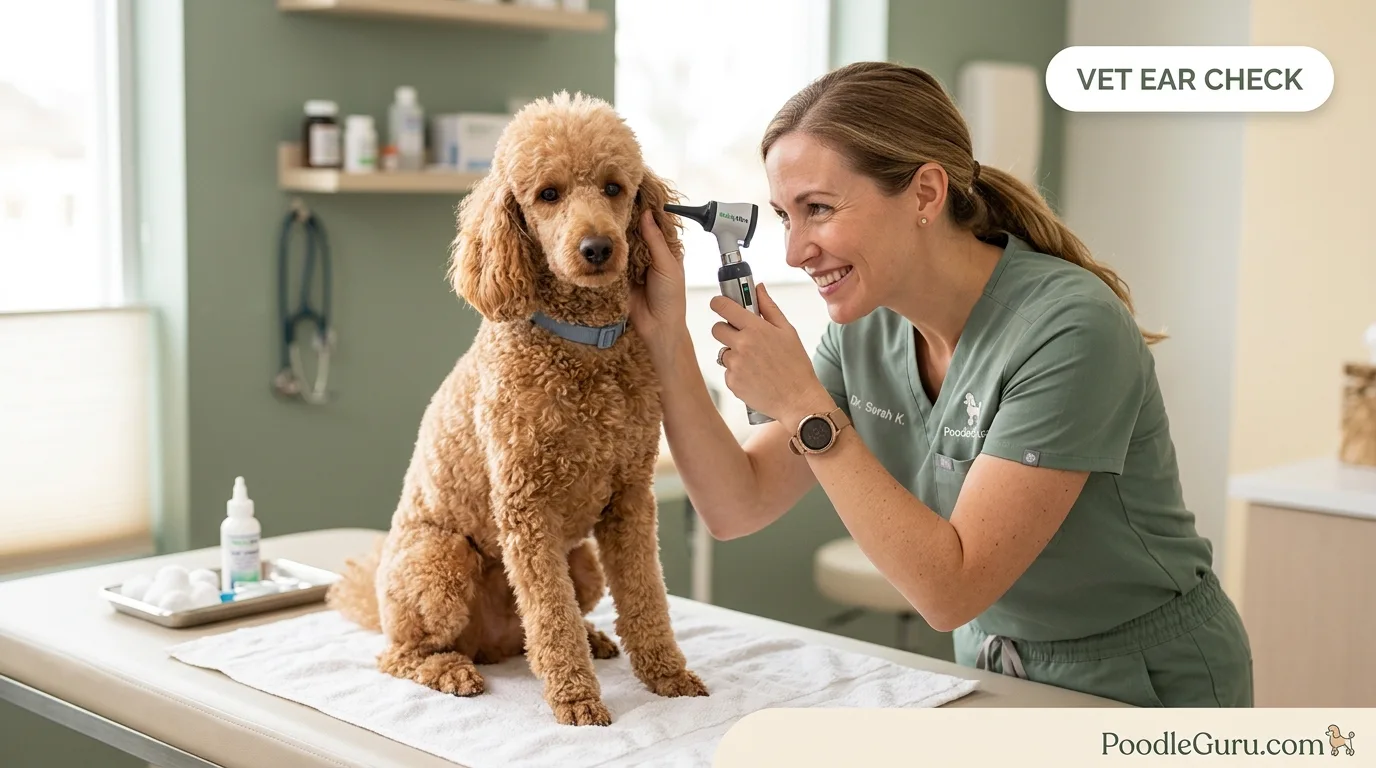
During the exam, your vet will use an otoscope to visualize the canal and eardrum. They’ll typically take a swab of any discharge and examine it under a microscope (cytology). This takes only a few minutes and immediately tells them whether yeast cells, bacteria, or a mixture are present. For chronic or recurrent infections, they may also recommend a bacterial culture and sensitivity test — this identifies the exact species and which antibiotics will work against it.
🩺 When to Call Your Vet — Don’t Wait If You See These
- Any visible discharge (dark, yellow, or green)
- A persistent odor that doesn’t improve after gentle cleaning
- Your poodle is in visible pain when the ear is touched
- Head tilting that doesn’t resolve within a few hours
- Balance problems, stumbling, or circling movements
- A second infection within 3 months of the first (suggests underlying cause)
- A previous ear infection that seemed to clear but returned
Treatment Options for Poodle Ear Infections
Treatment always starts with a vet examination — attempting to treat an ear infection at home without knowing its cause can inadvertently worsen it or mask symptoms while the infection deepens. That said, understanding what treatment looks like helps you follow through correctly, which is where many owners slip up.
The Vet Cleaning Visit
For moderate to severe infections, vets often perform an in-clinic ear flush under sedation. This clears impacted debris, discharge, and matted hair that a home cleaning can’t reach. It’s uncomfortable enough that sedation is frequently needed — another reason not to wait until the infection is advanced before seeking help.
Topical Ear Medications
Most uncomplicated poodle ear infections are treated with prescription topical ear drops containing a combination of antifungal, antibiotic, and anti-inflammatory agents. These are applied directly into the canal on a daily or twice-daily schedule for typically 7–14 days. Following the full course matters even if the ear looks better after a few days — stopping early is a leading cause of recurrence.
Oral Medications
Bacterial infections that don’t respond to topical treatment, or infections that have progressed to the middle ear, typically require oral antibiotics. These are prescribed based on culture results where possible. Oral antifungals may be used for severe or chronic yeast infections that haven’t responded to topical therapy.
Treating the Underlying Cause
For poodles with allergy-driven ear infections, treatment doesn’t stop at the ear itself. Addressing the allergen — through dietary changes, environmental management, or allergy medications prescribed by your vet — is what actually breaks the cycle of chronic infection. This is the layer most owners miss, and it’s why some poodles seem to get an ear infection every few months despite correct hygiene.
How to Prevent Poodle Ear Infections
Prevention is genuinely achievable in poodles — it just requires consistency. Most recurring infections happen not because the owner doesn’t care, but because prevention feels unnecessary when the ears look fine. The problem is that by the time an infection is visible, it’s already been developing for days.
Dry Ears After Every Water Exposure
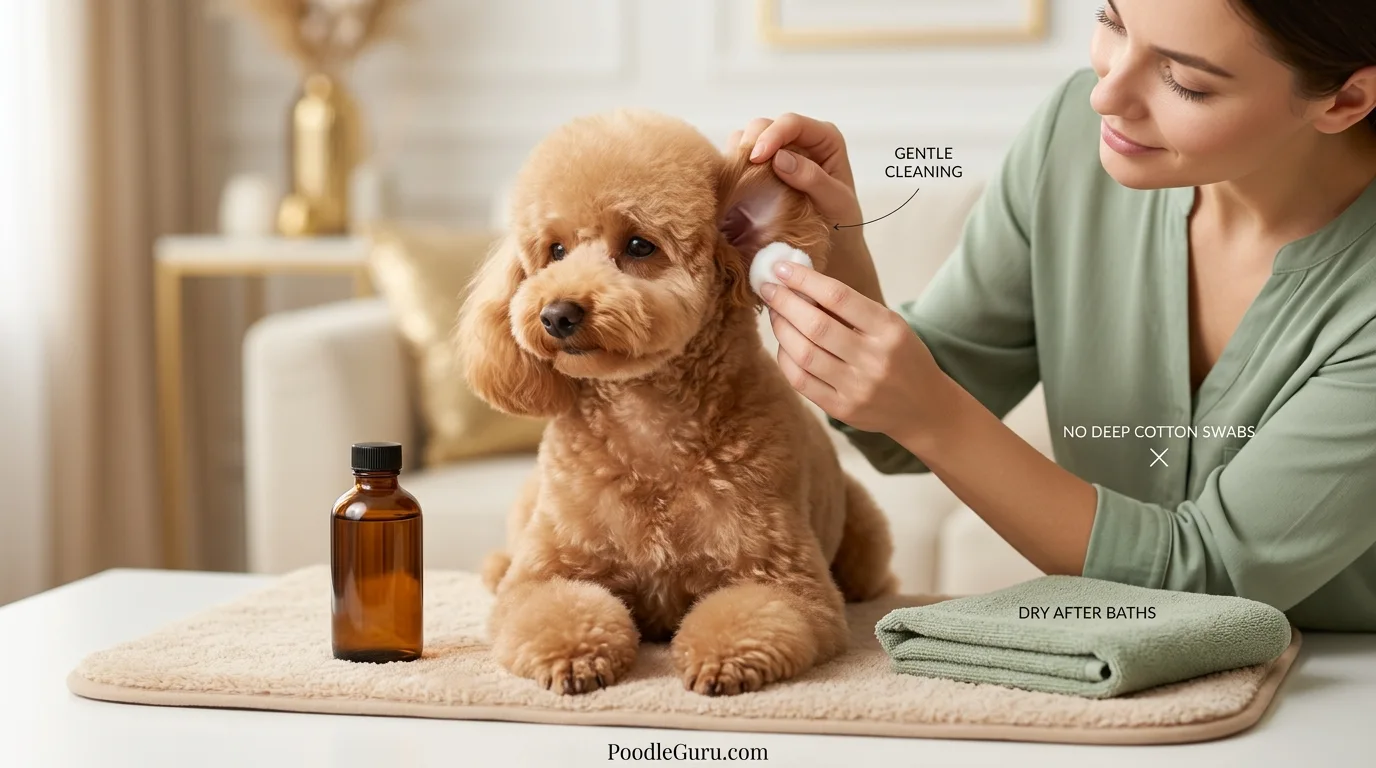
After bathing, swimming, or even a rainy walk, gently lift the ear flap and use a clean, dry cotton ball to absorb moisture from the entrance of the canal. Never push the cotton ball deep into the canal. A dog-specific ear-drying spray (ask your vet) can help wick remaining moisture.
Clean the Ears on a Regular Schedule
For most poodles, a gentle cleaning with a vet-approved ear cleaning solution every 2–4 weeks maintains a healthy canal environment. Apply the solution, gently massage the base of the ear for 20–30 seconds, then let your dog shake. Wipe away what emerges. Don’t clean more frequently than your vet recommends — over-cleaning can irritate healthy ear tissue.
Maintain Regular Grooming Including Ear Hair
Discuss ear hair management with your professional groomer. Many poodle groomers pluck or trim the hair inside the ear canal as part of standard grooming — this is a poodle-specific practice that makes a real difference to airflow. Don’t skip grooming appointments if your poodle has a history of ear issues.
Inspect the Ears Weekly
Spend 60 seconds each week gently lifting the ear flap and checking for redness, unusual discharge, or odor. You’re not diagnosing — you’re catching early warning signs before they escalate. Most experienced poodle owners develop a reliable sense of what “normal” looks and smells like for their dog.
Address Allergies Proactively
If your poodle has recurrent ear infections despite good hygiene, raise allergy testing with your vet. Managing an underlying food or environmental allergy can dramatically reduce the frequency of infections — sometimes eliminating them altogether. See our complete poodle health guide for more on managing allergies in the breed.
The PoodleGuru Ear Health Assessment
🔍 The PoodleGuru 5-Point Ear Health Check Method
At PoodleGuru, we evaluate ear health in poodles using a systematic five-point weekly check that takes less than two minutes and gives owners a consistent baseline to detect changes early. Run through each point during your regular handling session or just before grooming.
- Odor check: Gently lift the ear flap and take one slow breath near the canal entrance. Normal poodle ears have a faint, neutral waxy smell. Yeasty, sour, or musty odors indicate yeast overgrowth. Sharp or putrid odors suggest bacterial infection.
- Visual inspection: Look at the canal entrance and inner flap surface. Healthy tissue is pale pink and dry. Redness, swelling, or dark debris signals a problem.
- Discharge check: A tiny amount of light-tan wax is normal. Brown or black discharge (yeast), or yellow/green discharge (bacteria), is not.
- Touch response: Gently press the base of the ear (not into the canal). Your poodle should be indifferent. Flinching, pulling away, or vocalizing indicates pain and warrants a vet call.
- Behavior scan: Note any head shaking, tilting, or ear-directed scratching during the preceding 24 hours. A single shake is normal; repetitive shaking is a symptom.
Run this check weekly. Log any changes. If two or more points flag a concern simultaneously, contact your vet rather than waiting.
Common Owner Mistakes That Make Poodle Ear Infections Worse
Most owners who deal with chronic ear infections in their poodles aren’t neglectful — they’re making a few specific, common mistakes that undo good intentions. Here’s what to watch for.
| Mistake | Why It’s a Problem | What to Do Instead |
|---|---|---|
| Stopping medication early | The infection appears resolved but isn’t. Residual organisms rebound quickly and may develop antibiotic resistance. | Complete the full prescribed course even when the ear looks and smells normal. |
| Over-cleaning healthy ears | Daily cleaning strips natural protective wax and can irritate the canal lining, making it more vulnerable to infection. | Follow your vet’s cleaning schedule — typically every 2–4 weeks for maintenance. |
| Using cotton swabs deep in the canal | Pushes debris further in and risks perforating the eardrum if the dog moves suddenly. | Use cotton balls only at the canal entrance. Let the cleaning solution and head shake do the deeper work. |
| Treating without a diagnosis | Leftover ear drops from a previous infection may not match the current pathogen. Using the wrong treatment delays resolution and may worsen the infection. | A new infection warrants a new vet visit. Don’t reuse old prescription medications without guidance. |
| Ignoring recurring infections | Three or more infections per year almost always indicate an underlying cause — allergies, hypothyroidism, or an anatomical issue — that won’t resolve with topical treatment alone. | Ask your vet for a full workup including allergy screening if infections keep returning. |
| Skipping the groomer’s ear hair removal | Dense ear hair mats with wax and blocks airflow, even in dogs with excellent overall hygiene. | Confirm that ear canal hair management is included in your poodle’s grooming appointments. |
For a broader look at the health conditions poodle owners should monitor across all life stages, our poodle health guide covers the full picture — from ear and eye health to joint issues and dental care.
Frequently Asked Questions About Poodle Ear Infections
How often do poodles get ear infections?
Poodles are among the dog breeds most frequently affected by ear infections. Many poodle owners experience at least one infection per year, particularly if their dog swims regularly or has underlying allergies. With a consistent prevention routine — including regular ear cleaning and grooming — many poodles go years between infections or avoid chronic issues entirely.
Can I treat my poodle’s ear infection at home?
Gentle preventive cleaning with a vet-approved ear solution is fine at home. However, treating an active infection at home without a diagnosis is not recommended. You won’t know whether it’s a yeast or bacterial infection — or both — and using the wrong approach can delay recovery or worsen the infection. A vet visit for a cytology swab takes minutes and directs the correct treatment.
Why does my poodle keep getting ear infections?
Recurrent poodle ear infections almost always point to an underlying cause beyond simple hygiene. The most common culprits are food allergies, environmental allergies (such as dust mites or grass pollen), or hormonal imbalances like hypothyroidism. If your poodle has had three or more infections in a year, ask your vet about allergy testing and a full health panel to find the root cause.
What does a poodle ear infection smell like?
Yeast infections — the most common type in poodles — produce a distinctive musty, bread-like, or sour odor. Bacterial infections tend to smell sharper, more pungent, or putrid. A healthy poodle ear has only a faint, neutral waxy smell. If you notice any change in your poodle’s ear odor during your weekly check, it warrants a closer look and likely a vet call.
Should poodle ear hair be plucked or trimmed?
Professional groomers and veterinarians differ in opinion on this. Some advocate plucking the ear canal hair to maximize airflow; others prefer trimming to avoid micro-irritation of the canal lining. The consensus is that some form of ear hair management — plucking, trimming, or a combination — is appropriate for poodles. Discuss the best method for your specific dog with both your groomer and vet.
How long does it take for a poodle ear infection to clear up?
An uncomplicated outer ear infection (otitis externa) typically clears within 7–14 days with correct topical treatment. Bacterial infections requiring culture-guided antibiotics may take 3–6 weeks. Middle ear infections (otitis media) often need 4–8 weeks of treatment, sometimes including oral medications. Always complete the full prescribed course and return for a follow-up check to confirm the infection has fully resolved.
Can a poodle ear infection cause hearing loss?
In most cases, otitis externa — the most common type — doesn’t cause lasting hearing loss when treated promptly. However, severe or chronic infections that reach the middle or inner ear can cause temporary or, in rare cases, permanent hearing damage. This is why catching and treating infections early is so important. If your poodle seems less responsive to sound, mention it to your vet.
Key Takeaways: Poodle Ear Infections
Poodle ear infections are common, manageable, and largely preventable with the right approach. Here’s what every poodle owner should know and act on.
- Poodles are structurally prone to ear infections due to floppy ears that restrict airflow and hair growth inside the ear canal that traps moisture and debris.
- The most common type is otitis externa (outer ear canal infection), which is highly treatable when caught early but can spread to the middle and inner ear if ignored.
- Yeast infections produce a musty or bread-like odor and dark brown discharge; bacterial infections tend to cause sharper odors and yellow or green discharge.
- Recurrent ear infections (three or more per year) almost always indicate an underlying cause — most commonly food or environmental allergies — that must be addressed for lasting resolution.
- The PoodleGuru 5-Point Ear Health Check — odor, visual, discharge, touch response, and behavior scan — takes under two minutes weekly and catches early warning signs before they escalate.
- Never stop ear medication early, even if the ear looks better. Completing the full course is the single most important factor in preventing recurrence and antibiotic resistance.
Next step: Learn how to build a complete ear-care and grooming routine in our complete poodle grooming guide.