Do Poodles Drool? 8 Vital Signs Owners Must Know
Poodles have a reputation for being one of the least drooly breeds — and that reputation is largely earned. But “do poodles drool” is not a simple yes-or-no question. A completely dry muzzle is normal for most poodles, yet sudden drooling can signal anything from harmless food excitement to a health issue that needs fast attention.
Quick Answer
No, poodles are not a drooly breed. Most poodles go through daily life with a completely dry mouth. Occasional drool can appear when a poodle is anticipating a high-value treat, after drinking water, or during a car ride if they get nauseous. But a poodle dripping saliva regularly or leaving wet spots everywhere is not typical, and that level of drooling usually points to a dental problem, stomach upset, toxin exposure, or something stuck in the mouth.
Quick Facts: Poodles and Drool
📍 Everyday Reality
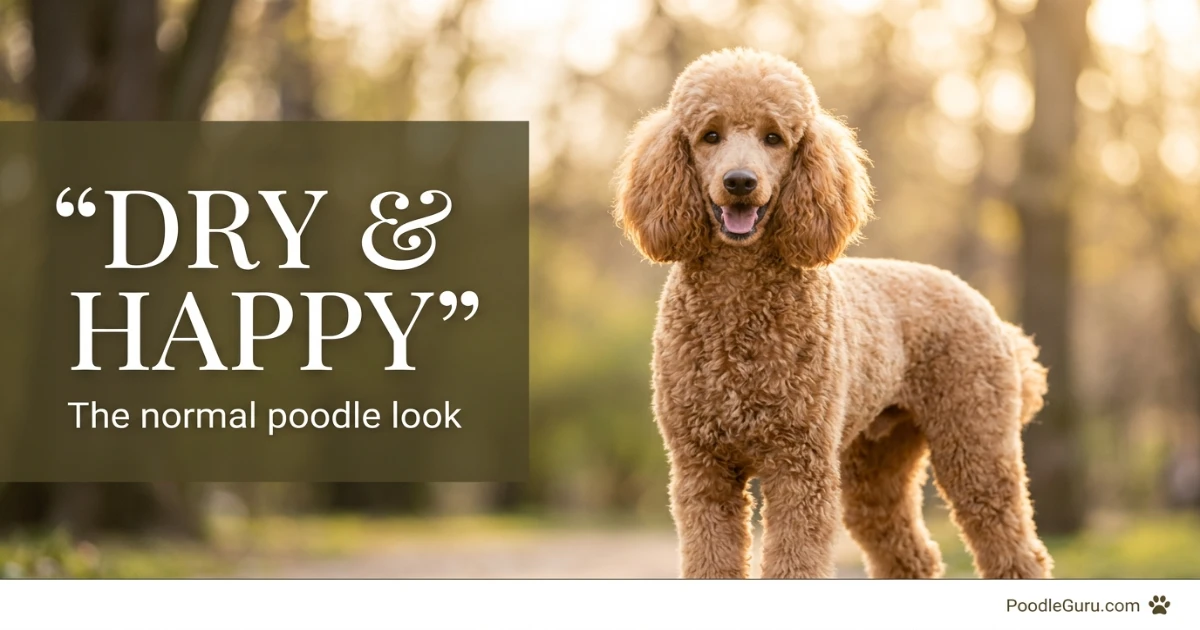
Poodles are considered a minimal-drool breed. Most owners report a dry mouth almost all of the time. Drool is the exception, not the rule.
🔎 Why So Dry?
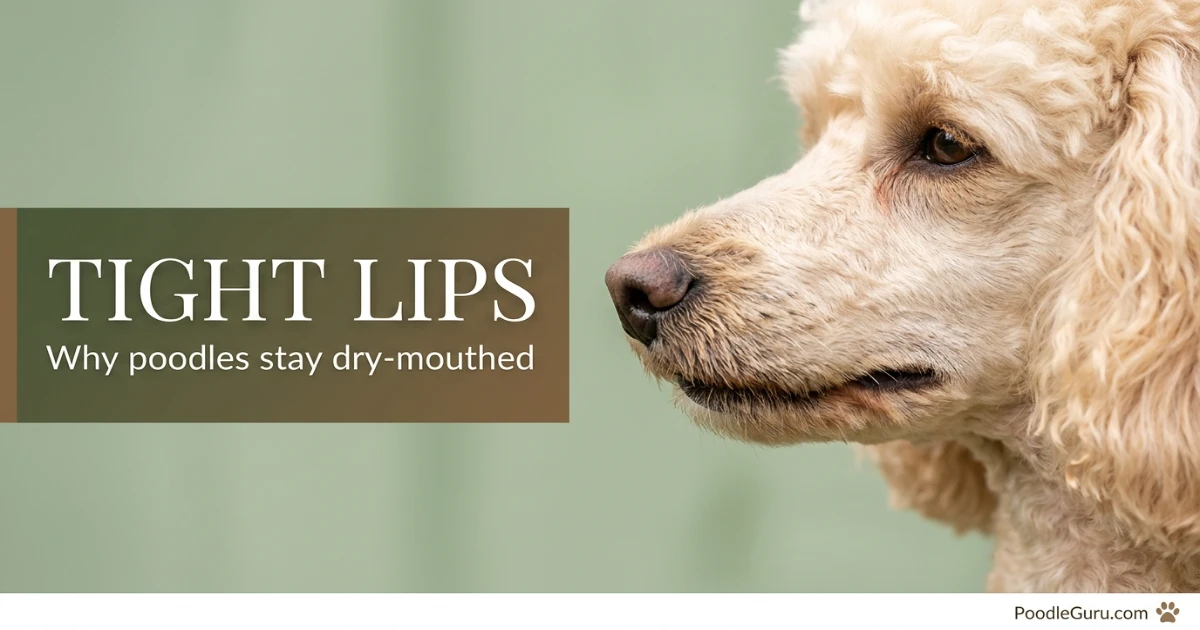
Tight lips and a clean jawline do not trap saliva. Unlike jowly breeds, poodles lack the loose facial anatomy that causes constant dripping.
🚨 When It Is Not Normal
Sudden, persistent, or heavy drooling can indicate dental disease, nausea, oral injury, foreign material, heat stress, or toxin exposure.
Why Poodles Do Not Drool Much
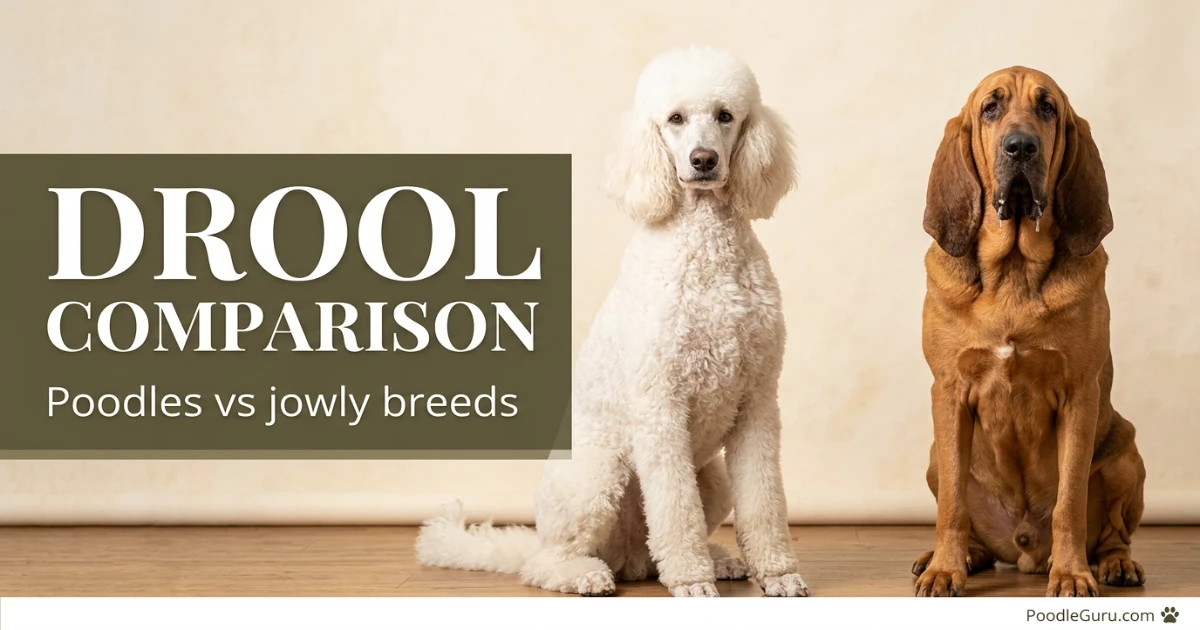
Drool is mostly about anatomy. Breeds that drool heavily — Bloodhounds, Mastiffs, Bulldogs, and similar jowly dogs — share a common feature: loose lips and deep flews that fail to contain saliva. Poodles have the opposite. Their lips sit close against the jaw, creating a clean seal. There is simply less space for saliva to pool and drip from.
Saliva production itself is not the big difference. All dogs produce saliva for digestion, swallowing, and oral health. The difference is containment. A poodle’s mouth usually keeps what it makes inside. This anatomical efficiency is a quiet blessing you will appreciate every time you do not have to wipe slobber off furniture, clothes, or walls.
The AKC breed standard describes the poodle’s muzzle as fine, strong, straight, and without lippiness — a structure that helps explain the breed’s dry-mouthed reality. A poodle with loose, drooping flews or an excessively wet muzzle would sit outside the clean-mouthed look most owners expect from the breed.
When Drool Is Normal in Poodles
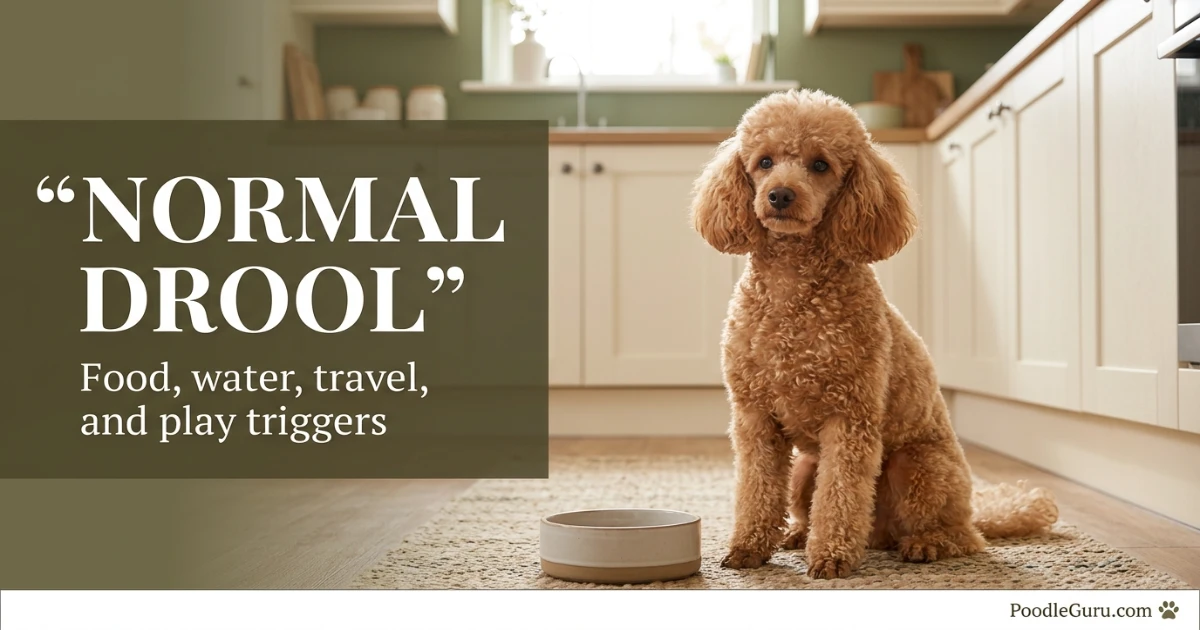
A dry mouth does not mean a poodle never produces a drop of saliva. Certain situations naturally trigger extra salivation, and they are usually no cause for concern. The key is that the drooling is situational, mild, and stops when the trigger disappears.
Food Anticipation
That thin string of drool when you prepare dinner can be totally normal. Dogs salivate when they expect food, and poodles are no exception. If your poodle starts drooling when the treat bag crinkles, it is the canine version of your mouth watering at a bakery window.
After Drinking Water
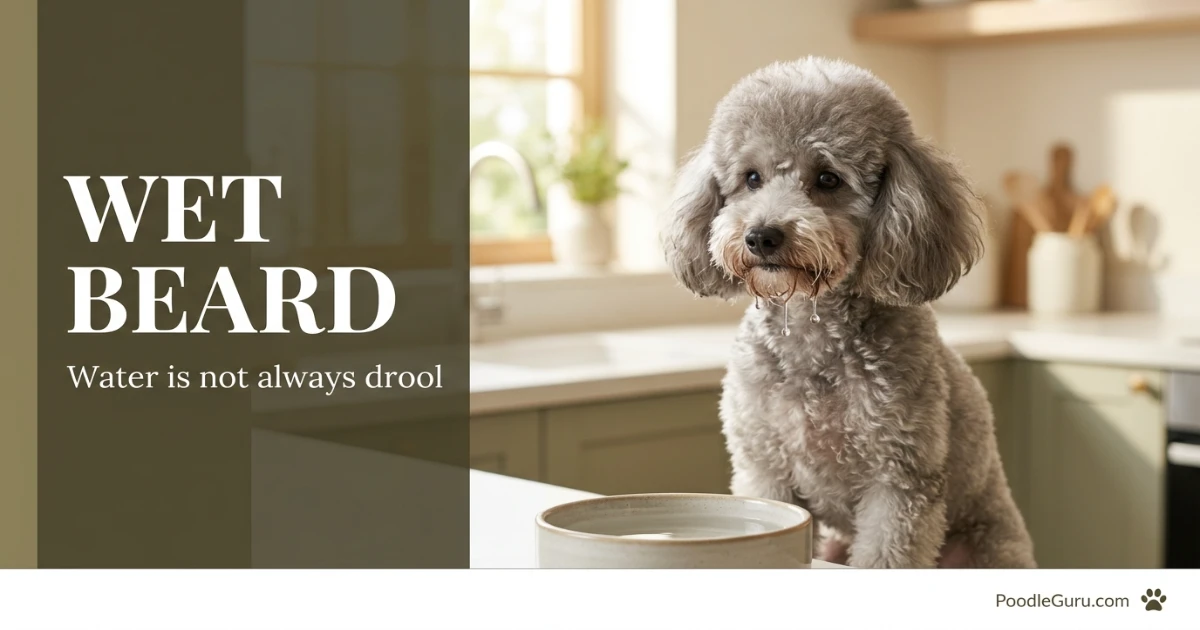
A poodle’s beard can trap water, making the muzzle and chin look damp after a drink. This is not true drool, but owners often mistake a wet beard for saliva. Water is clear, thin, and dries quickly. Saliva is usually slicker, thicker, and may leave a different feel or odor.
Motion Sickness
Some poodles drool in the car. This is a classic sign of nausea, even if the dog does not vomit. If your poodle is a drooly traveler, motion sickness may be the cause. Ask your veterinarian about safe anti-nausea options if car rides are frequent or stressful.
Intense Chewing or Play
A vigorous chew session or long play period can stir up saliva. Your poodle might come away with a slightly damp chin. As long as the moisture resolves when the activity stops and your dog acts normal, it is usually not a problem.
📝 Expert Insight: Normal Drool vs. Problem Drool
Normal drool is situational, clear, and stops quickly. Problem drool is persistent, excessive, thick, foamy, blood-tinged, or paired with other signs such as pawing at the mouth, bad breath, appetite loss, vomiting, lethargy, swelling, or behavior changes.
When Drool Becomes a Health Concern
Sudden drooling that appears out of nowhere — or mild drooling that hangs around for days — should not be dismissed. Because poodles are naturally dry-mouthed, any noticeable increase in saliva is a useful warning signal. The body is saying something changed.
| Possible Cause | What You Might Notice | Urgency |
|---|---|---|
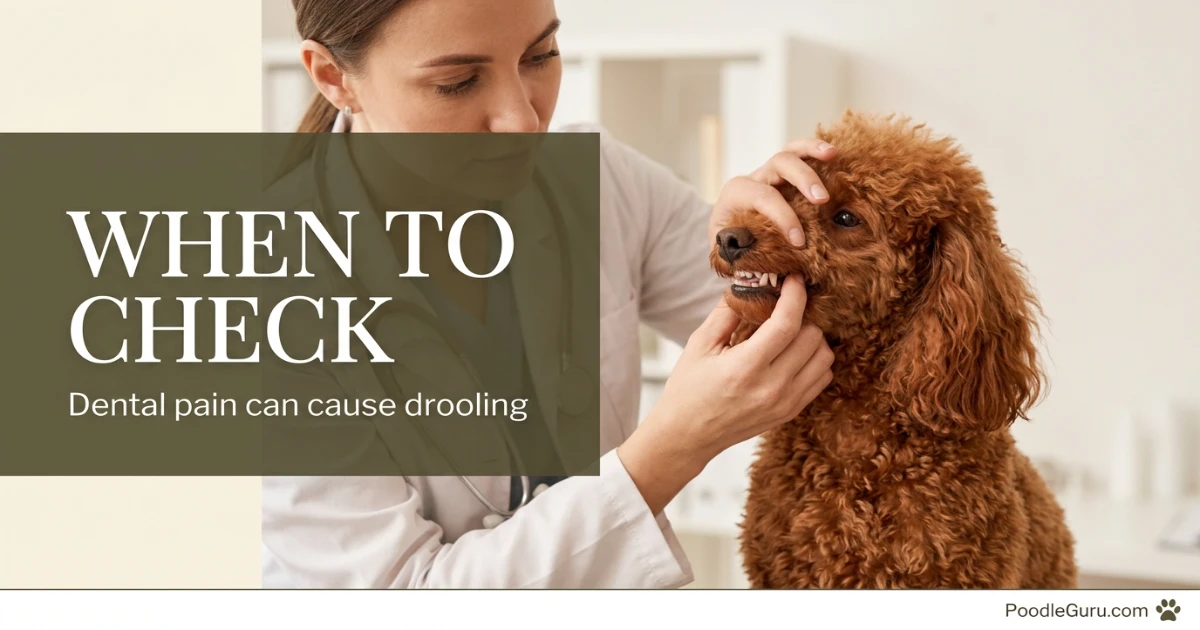
| Dental disease | Bad breath, red gums, tartar buildup, reluctance to chew, pawing at the mouth, drool sometimes tinged with blood | Schedule a veterinary dental exam soon |
| Oral foreign body | Sudden drooling, gagging, pawing at the mouth, trouble swallowing, refusing food, one-sided mouth discomfort | Same-day vet visit |
| Nausea or stomach upset | Drooling with lip smacking, gulping, grass eating, vomiting, diarrhea, or restlessness | Monitor closely; call your vet if persistent or repeated |
| Toxin exposure | Sudden heavy drooling with tremors, disorientation, vomiting, collapse, distress, or unusual behavior | Emergency vet immediately |
| Mouth injury or ulcer | Drooling on one side, visible cut, swelling, raw spot, bleeding, or pain while eating | Vet evaluation needed |
| Heat stress | Heavy panting, thick saliva, weakness, red gums, confusion, or collapse in warm conditions | Emergency care if severe or not improving quickly |
| Salivary gland issue | Swelling under the jaw or neck, drooling, difficulty swallowing, or a soft lump near the mouth | Vet visit as soon as possible |
🚨 When to Call the Vet About Drooling
If your poodle’s drooling is accompanied by vomiting, diarrhea, loss of appetite, lethargy, pawing at the mouth, bleeding, swelling, trouble breathing, tremors, collapse, or behavior changes, do not wait. Sudden heavy drooling with no clear trigger is always worth a professional opinion. VCA’s guide on drooling explains common medical causes and why mouth or stomach problems can trigger excess saliva.
Poodle Drool vs. Other Breeds: A Comparison
People often search for “do poodles drool” because they are comparing breeds. Here is how poodles stack up against heavier droolers and where they sit on the canine saliva spectrum.
| Breed | Typical Drool Level | Primary Reason | Owner Experience |
|---|---|---|---|
| Poodle (all sizes) | Minimal | Tight lips, clean jawline | Rarely see drool; occasional situational moisture |
| Bloodhound | Heavy | Deep jowls and loose flews | Slobber on walls, furniture, and clothing can be routine |
| Labrador Retriever | Low to moderate | Food motivation and moderate lip looseness | Often drools around food, but usually not constantly |
| Bulldog | Moderate to heavy | Short muzzle, undershot jaw, loose mouth structure | Expect more moisture after eating, drinking, or panting |
| Mastiff | Very heavy | Large head and very loose lips | Drool management is a daily lifestyle factor |
| Poodle Mix | Variable | Depends on inherited lip and muzzle structure | Many are low-drool, but some drool more than purebred poodles |
If avoiding drool is a dealbreaker for you, a purebred poodle is about as safe a bet as exists in the dog world. But even within poodles, individual variation exists — and a poodle who drools frequently may be telling you about a problem, not just showing personality.
The PoodleGuru Drool Check Method
At PoodleGuru, we approach drool assessment through a simple three-step process. This is how we quickly separate “no problem” from “needs attention” when moisture appears around your poodle’s mouth.
Identify the Trigger
Observation: Did the drool appear around food, after drinking water, in the car, during play, or during stress? If you can link it to a clear temporary trigger and it stops within minutes, it is usually normal.
Outcome: A situational cause — no further action needed unless it becomes frequent or severe.
Check the Beard and Mouth
Tool: A clean hand or soft cloth. Lift the lip and look for red gums, tartar, foreign objects, swelling, bleeding, ulcers, or a bad smell. Touch the beard: water feels thin and dries quickly; saliva feels slick and may smell.
Outcome: Either reassurance that the mouth looks healthy, or a clear reason to call your vet.
Monitor for Persistent or Accompanying Signs
Observation: Does the drooling persist for more than a few hours? Is it getting worse? Are there other signs such as lethargy, vomiting, diarrhea, pawing, refusal to eat, tremors, collapse, or trouble breathing?
Outcome: Watch briefly if isolated and mild; call your vet or seek emergency care if multiple warning signs overlap.
This method works for all sizes. A Toy Poodle drooling after a car ride is assessed the same way as a Standard Poodle drooling near the food bowl. The consistent principle is: context first, mouth check second, escalation if needed.
Managing Wet Beards and Mouth Moisture
Even though it is not drool, a chronically damp beard is a poodle reality for many owners. Long facial hair absorbs water during drinking and can collect food during meals. If not managed, it can lead to skin irritation, sour smell, staining, and bacterial or yeast overgrowth around the lips.
Practical Beard Care Tips
- Wipe after meals and drinks. A quick swipe with a microfiber cloth or unscented pet-safe wipe keeps the area dry and clean.
- Keep the beard trimmed. Shorter facial hair traps less moisture. Many owners ask for a clean face or close muzzle clip to minimize the wet-beard struggle.
- Dry thoroughly after baths and swims. A wet beard that stays damp for hours invites odor and irritation. Towel-dry well and use a dryer on low heat if your dog tolerates it.
- Check for skin irritation. If you notice redness, odor, discharge, or soreness around the mouth, ask your vet whether a medicated wipe or treatment is appropriate.
Common Myths About Poodle Drool
Several misconceptions float around, and they can lead owners to ignore real issues or worry about nothing.
| Myth | Reality |
|---|---|
| “Poodles never drool at all.” | They drool far less than most breeds, but situational drooling can still happen around food, nausea, heat, stress, or travel. |
| “If my poodle drools, it means he is sick.” | Not necessarily. Drooling during food prep or a stressful car ride may be benign. Illness-related drooling usually comes with other signs. |
| “A wet beard is always drool.” | Often it is just water or food residue. True saliva feels thicker and stickier than plain water. |
| “Toy Poodles drool more than Standards.” | There is no reliable reason to expect that. All sizes share the same low-drool poodle mouth type, though individuals vary. |
| “Puppy drooling is only teething.” | Teething can increase salivation slightly, but heavy puppy drooling can also mean nausea, mouth pain, or a stuck object. |
Frequently Asked Questions
Do poodles drool at all?
Yes, but very minimally. Poodles are not a drooly breed. Most poodles are dry-mouthed day to day. Occasional drool can appear around food, after drinking, during car rides, or during stress. Heavy or constant drooling is not typical and warrants investigation.
Why is my poodle drooling suddenly?
Sudden drooling can be caused by nausea, an oral foreign body, dental pain, heat stress, or toxin exposure. Check the mouth for obvious issues. If drooling is heavy, persistent, or comes with symptoms like vomiting, lethargy, tremors, or trouble breathing, see a vet immediately.
Is a wet beard the same as drool?
No. A wet beard is usually just water trapped in the facial hair after drinking. True drool is saliva — thicker and sometimes foamy or sticky. A wet beard dries quickly and does not leave the same slimy residue.
Do poodle mixes like Labradoodles drool more than purebred poodles?
It depends on which parent’s facial structure they inherit. A mix with looser lips may drool more than a purebred poodle. However, many doodles remain low-drool. There is no guarantee, so check the individual dog’s mouth type.
Can dental problems cause a poodle to drool?
Yes. Dental disease, broken teeth, gum infections, oral ulcers, and mouth pain can all cause drooling. Bad breath, pawing at the mouth, bleeding, and reluctance to chew often appear with dental-related drool.
Do poodle puppies drool when teething?
Mild increased salivation can happen during teething, but heavy drooling in a puppy is not normal. Check for stuck objects, nausea, or signs of illness. If drooling is constant or paired with discomfort, see a vet.
How do I keep my poodle’s mouth area dry?
Wipe the beard after meals and drinks, keep facial hair trimmed short, and dry the area thoroughly after baths or swimming. Regular dental care also reduces excess salivation linked to oral irritation.
Is drooling in poodles ever an emergency?
Yes. Sudden, profuse drooling — especially with disorientation, tremors, vomiting, collapse, trouble breathing, heat stress, or suspected toxin exposure — can be an emergency. Seek veterinary care immediately.
Key Takeaways: Poodles and Drool
Poodles are built to stay dry-mouthed. Understanding the difference between normal situational moisture and a true health concern keeps your poodle safer and your home cleaner.
- Poodles are a minimal-drool breed. Tight lips and clean jawlines keep saliva contained. Day to day, most owners encounter little to no drool.
- Situational drool can be normal. Food anticipation, after drinking, car sickness, stress, heat, or intense play can trigger mild, temporary saliva.
- Heavy, sudden, or persistent drool is a warning sign. Dental disease, oral foreign bodies, nausea, heat stress, and toxin exposure are common concerns.
- A wet beard is not always drool. Water from drinking is thin and dries fast. Saliva is thicker and stickier. Proper beard care prevents skin problems.
- The PoodleGuru Drool Check Method — trigger, mouth check, monitor — gives owners a reliable way to assess moisture and know when to call the vet.
- Compared with jowly breeds, poodles are one of the cleanest mouth breeds. If a dry home matters to you, this breed delivers.