Poodle Progressive Retinal Atrophy (PRA) Explained: A Guide for Owners Who Want to See Clearly
Quick Answer: Poodle progressive retinal atrophy is an inherited eye disease that causes the light-sensitive retina to deteriorate slowly. It is painless but eventually leads to complete blindness — often starting with night blindness. There is no cure, but a simple DNA test tells you if a Poodle is affected, a carrier, or genetically clear, which empowers breeders and owners to prevent heartbreak before it ever begins.
Nothing feels quite like looking into the bright, intelligent eyes of a Poodle. They study us, track our moods, and seem to understand more than they should. So when we talk about a condition that quietly steals that light — Poodle progressive retinal atrophy — the conversation feels personal. It is not an emergency that strikes overnight. It is a slow sunset, and for a breed famous for its alertness and connection to its people, that matters deeply.
Too many articles on this topic reduce the disease to a dry genetic footnote. But if you own a Poodle, or if you are searching for a puppy right now, you need the full story. You need to understand what PRA actually looks like in real life, why it persists in thoughtful breeding programs, and how to make decisions that protect your future dog without getting lost in fear.
What Is Poodle Progressive Retinal Atrophy, Really?
Progressive retinal atrophy is not one single disease. It is an umbrella term for a group of inherited disorders that cause the photoreceptor cells in the retina to break down. In Poodles, the most well-documented form is progressive rod-cone degeneration (prcd-PRA). The rods — responsible for vision in dim light — go first. Then the cones, which handle daylight sharpness and color perception, follow. The retina literally thins over time until it can no longer send clear signals to the brain.
What makes this conversation uniquely important for Poodle people is that the breed carries a specific, identifiable mutation. We are not guessing. We have a precise genetic marker, and that changes everything about how we approach Poodle progressive retinal atrophy.
Why Poodle Owners Search for This Topic — The Emotional Reality
People do not land on this page out of idle curiosity. They land here because a breeder mentioned a PRA test, or a vet muttered “retinal concern” during a senior checkup, or they noticed their middle-aged Poodle hesitating at the back door after dusk. The search is driven by a quiet anxiety: Will my dog go blind? Did I miss something? Could I have prevented this?
We need to say this clearly from the start: finding PRA language in your dog’s health records does not mean you failed. It means you are dealing with a genetic legacy that predates any single owner. The value of understanding Poodle progressive retinal atrophy is not in assigning blame. It is in replacing uncertainty with a plan.
The Genetics Layer: Why PRA Still Exists in Well-Bred Poodles
Poodle progressive retinal atrophy (the prcd form) follows a simple autosomal recessive inheritance pattern. A dog needs two copies of the mutated gene — one from each parent — to develop the disease. Dogs with one copy are carriers; they will never go blind from PRA themselves, but they can pass the gene to puppies.
Ethical breeders use DNA testing to avoid producing affected puppies. However, removing every single carrier from the gene pool would shrink genetic diversity dangerously, potentially introducing other health problems. Reputable breeders carefully choose carrier-to-clear pairings, which produce no affected puppies, while preserving valuable genetic lines. This is why you see “carrier” dogs in responsible programs — it is a sign of thoughtful management, not neglect.
What Makes PRA Different From Other Poodle Eye Problems
Poodles face several eye conditions — cataracts, glaucoma, optic nerve hypoplasia — and they get tangled up in online searches. But PRA behaves completely differently from a cataract or an infection. A dog with PRA does not have cloudy eyes in the early stages. The eyes look normal. The change is happening deep on the retina, invisible to the naked eye. That is what makes it insidious. Owners often miss the first year of symptoms because Poodles are masterful at compensating — they memorize floor plans, follow scent trails, and rely on hearing.
Another distinction: PRA is almost always bilateral and symmetrical. Both eyes decline in tandem. If only one eye shows vision loss, your vet should investigate another cause before landing on PRA.
PRA vs. Age-Related Vision Decline
Older Poodles do experience natural vision dimming, but it rarely leads to total darkness. A twelve-year-old with normal aging may struggle in low light but still recognize your face from across the room. A PRA-affected dog loses that recognition progressively and completely. The difference is not subtle over time.
| Feature | Poodle PRA (prcd) | Cataracts | Normal Aging Vision |
|---|---|---|---|
| Visible eye change early on | No | Yes, cloudiness | No |
| Pain | No | Possible if lens luxates | No |
| Progression to blindness | Yes, complete | Not always; surgery possible | Rarely complete |
| Genetic test available | Yes | Only for some forms | N/A |
| Night blindness first | Yes, hallmark sign | Not typical | Some difficulty |
Real-World Signs: What PRA Actually Looks Like at Home
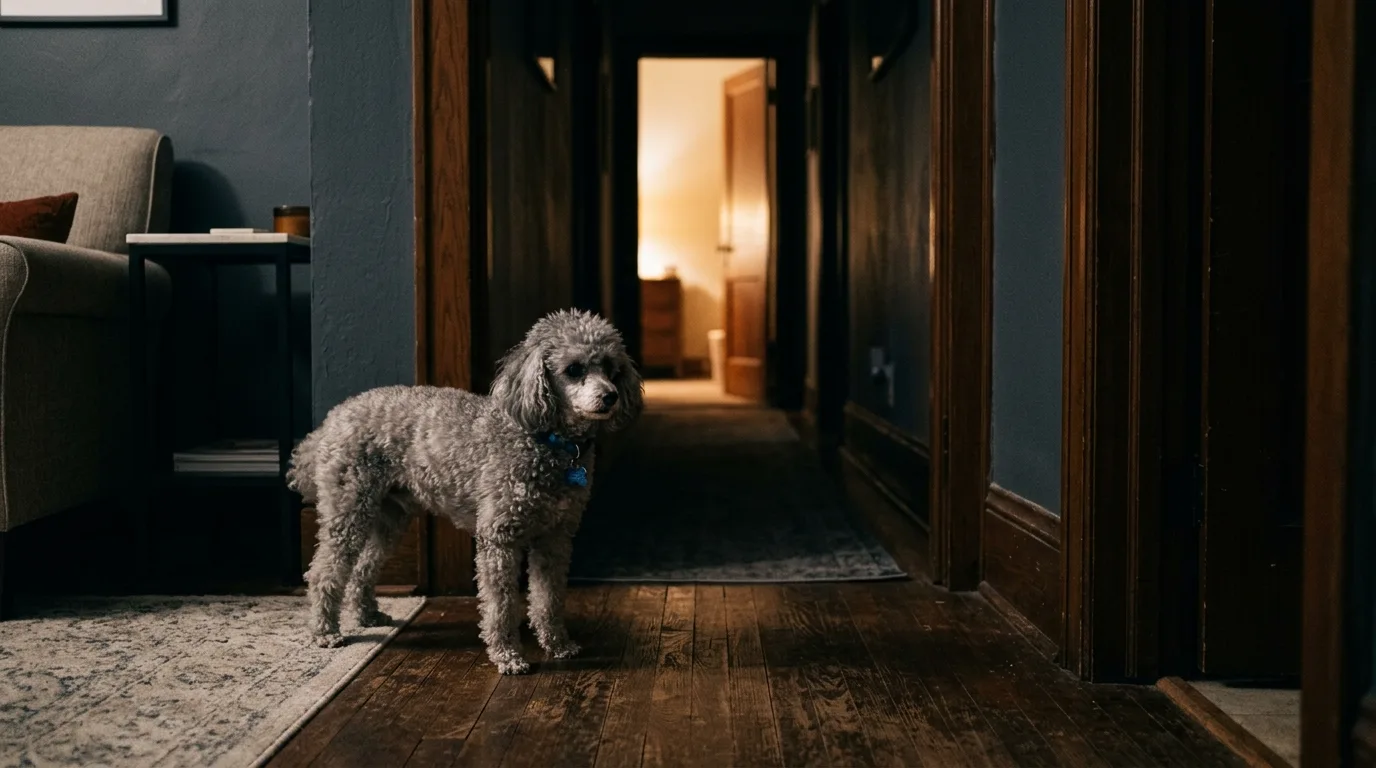
The textbooks list “nyctalopia” and “decreased menace response.” You need the translation for real life. A Poodle with early Poodle progressive retinal atrophy does not bump into walls on the first day. Instead, you notice small hesitations. The dog stands at the top of a dimly lit staircase longer than usual. On a moonless evening walk, he stays pressed against your leg. A treat tossed onto a shadowed floor goes unfound until he sniffs it out.
As months pass, the dog’s pupils may appear more dilated than expected in bright rooms, because the retina is trying desperately to capture more light. Some Poodles develop a subtle, strange shine to the eyes — a “tapetal hyperreflectivity” that a vet sees with an ophthalmoscope. By the time daylight navigation falters, the disease is already advanced.
Diagnosis and Testing: Cut Through the Confusion
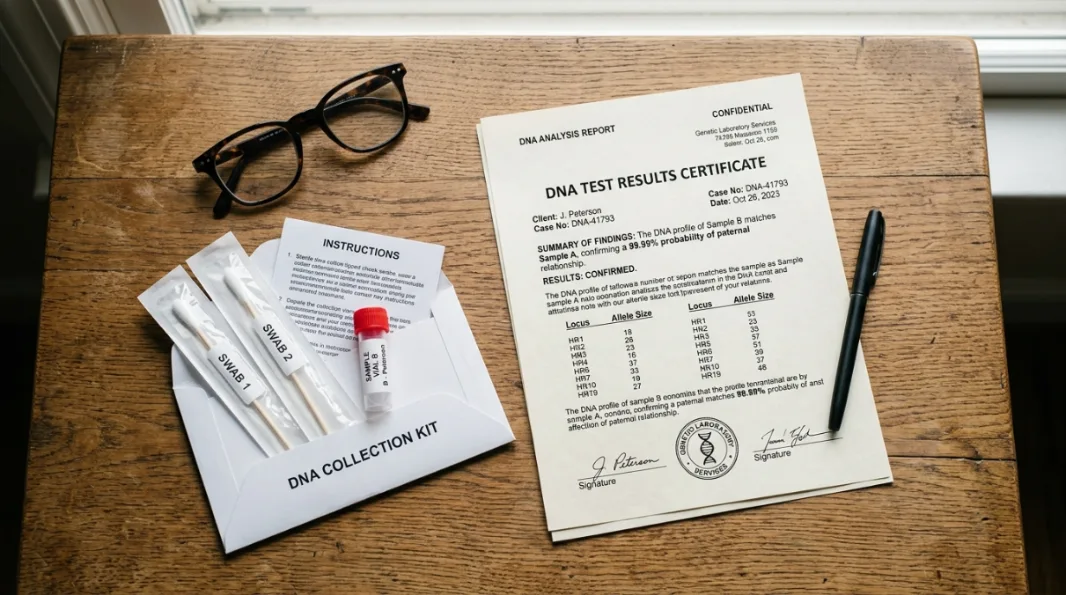
Two paths confirm PRA in Poodles, and they serve different purposes. The DNA test for prcd-PRA is a cheek swab or blood sample that identifies the genetic mutation. It tells you your dog’s status — clear, carrier, or affected — at any age, even before symptoms appear. This is a breeding tool and a predictive tool. The ophthalmic exam from a veterinary ophthalmologist looks at the retina directly. It catches disease that is already present, but it cannot tell you if a seemingly healthy young dog will develop PRA later.
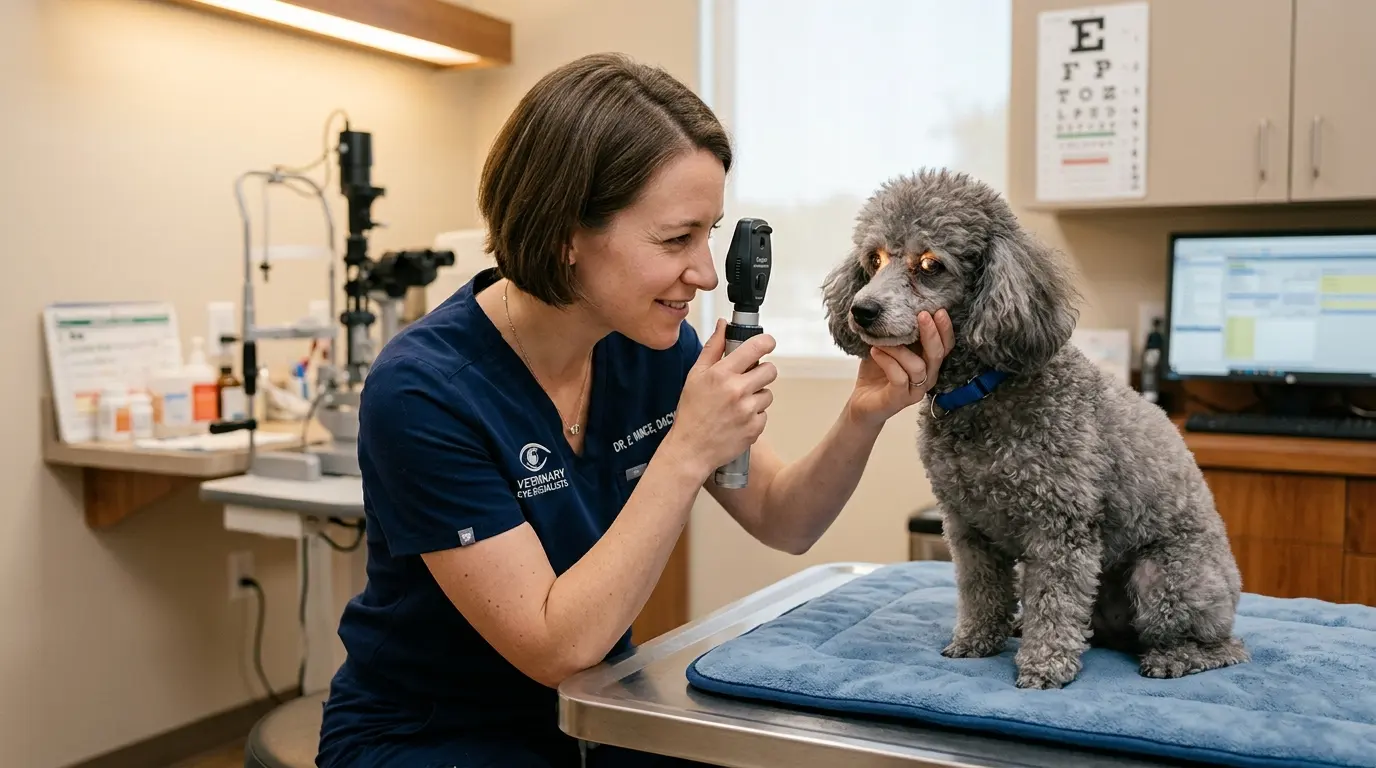
If you are buying a Poodle puppy, the DNA test matters. If you have a mature dog showing symptoms, the eye exam matters. Do not rely on a general vet’s casual observation alone; board-certified ophthalmologists have specialized equipment to see retinal thinning that a standard exam misses.
Proactive Owner Checklist
- Request prcd-PRA DNA test results for both parents when buying a puppy. Affected puppies are only produced if both parents contribute the gene.
- For adult Poodles showing night hesitance, schedule a CERF or OFA eye exam with a veterinary ophthalmologist within 2–4 weeks.
- Do not panic if a DNA test shows your dog is a carrier. Carriers do not develop the disease.
- Remember: a clear prcd-PRA test does not clear a dog for all retinal diseases. It clears the most common one.
What Buyers Usually Get Wrong About PRA
This is the section that might save you from a painful mistake. The most common buyer misunderstanding is equating “health-tested parents” with “impossible to develop PRA.” A breeder who tests and still knowingly produces a carrier puppy has not done anything wrong — provided they disclosed it. But some breeders wave a single DNA certificate and imply the entire line is free of all eye diseases. That is not how genetics works.
Another error: buyers think that if they avoid buying a puppy from two carriers, they are safe. But if one parent was never tested, or if the test was for the wrong PRA variant, the risk is unknown. Always verify which specific test was performed. There are multiple PRA mutations across breeds; the Poodle-relevant one is typically prcd-PRA (also found in other breeds, but the risk allele is shared). Ask for the test by name.
A final misstep: assuming that a “clear” DNA test at 8 weeks means the puppy will have perfect vision for life. As we said earlier, prcd-PRA is the big threat, but not the only one. A healthy lifestyle, regular eye checks, and honest observation remain part of responsible ownership.
Living With a Poodle Affected by PRA: Practical, Tender Guidance
If your Poodle has already been diagnosed with Poodle progressive retinal atrophy, your role shifts. You are no longer in prevention mode; you are in adaptation mode. And here is what most veterinary handouts skip: Poodles adapt to blindness far better than we do emotionally. They do not mourn their vision the way we imagine they do. They live in scent, sound, routine, and touch.
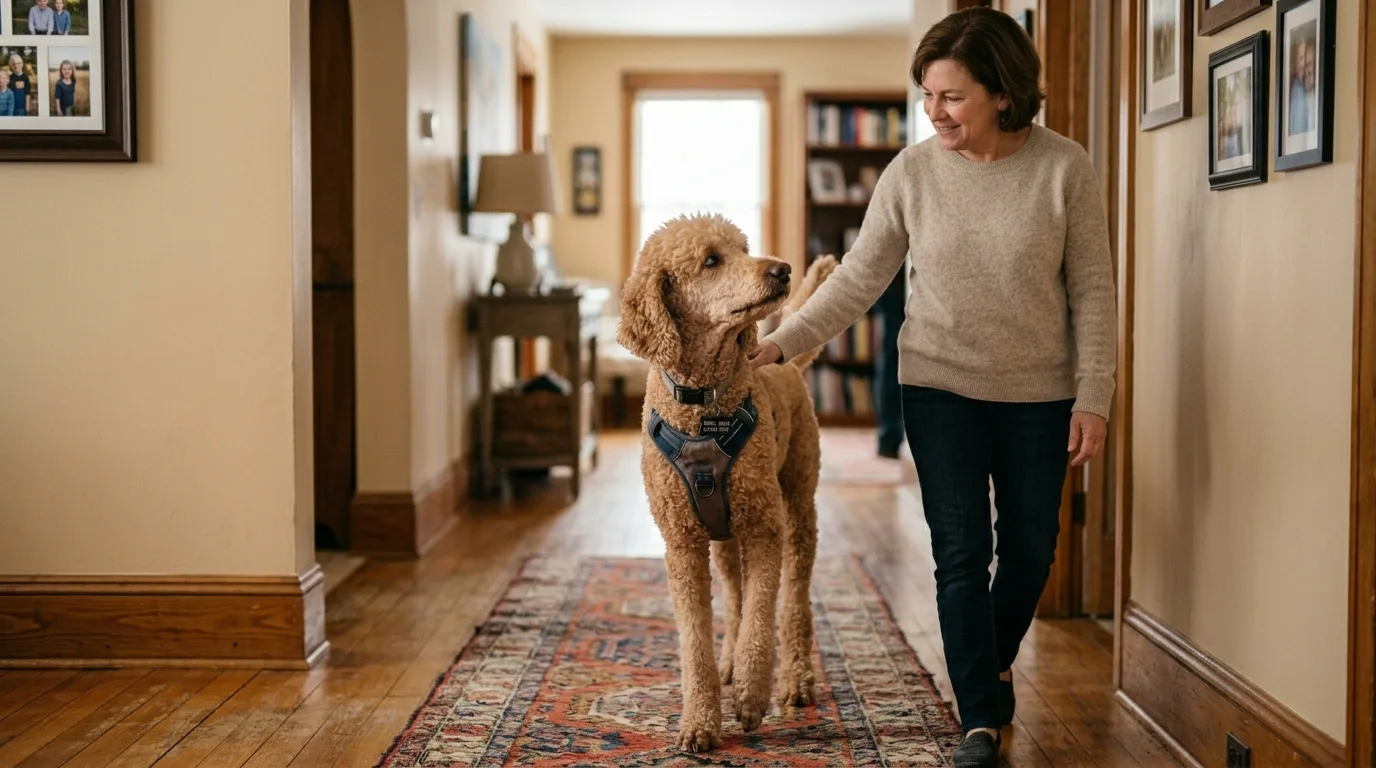
Your job is to build a world that does not shift. Keep furniture layout consistent. Use textured rugs to mark transitions between rooms. Never leave a blind Poodle off-leash in an unfenced area, even if he previously had perfect recall — a dog who cannot see a drop-off or an approaching car is vulnerable in ways that recall cannot fix. Teach a “step” cue for curbs and stairs. Tap food bowls gently so he can locate them by sound.
One truth that surprises owners: blind Poodles often develop an even tighter bond with their humans. They listen more acutely. They rest near you more faithfully. The relationship deepens, even as their world narrows visually. That is not a hollow comfort; it is a lived reality reported by countless owners.
PRA and the Breeding Conversation: What Ethical Preservation Looks Like
Poodle progressive retinal atrophy should not be a dirty secret in breeding circles. When a breed community openly discusses genetic risk, puppy buyers win. Today, the Poodle community has the tools to essentially eliminate the disease without crashing the breed’s genetic diversity. The problem is not lack of tests; it is lack of transparency from breeders who fear that mentioning PRA will scare buyers away.
When you see a breeder willingly discuss PRA status, provide test results, and explain carrier pairings, you are looking at an ethical breeder. When a breeder refuses to discuss it or says “my lines don’t have that,” be cautious. All lines have something. The honest ones talk about it.
How to Evaluate a Breeder’s PRA Testing Claims
Ask for the laboratory report, not just a checkbox on a website. Look for “prcd-PRA” specifically on a report from a recognized lab like OFA, Embark, Paw Print Genetics, or Optigen. Check whether the dog’s registered name matches the report. If you are unsure, ask a veterinarian or a trusted Poodle mentor to help interpret results. It is not intrusive; it is due diligence.
Frequently Misunderstood Nuance: Genetic Testing Does Not Equal Health Guarantee
We need to pause here because this nuance gets lost. A DNA test tells you the genetic likelihood of one specific disease. It does not predict how long the dog will live, whether the dog will develop allergies, epilepsy, hip dysplasia, or cardiac issues. Poodle progressive retinal atrophy is one piece of a much larger health mosaic. A breeder who tests for PRA but ignores other hereditary conditions is not providing complete transparency. Use the PRA test as a starting point for deeper health conversations, not as a lone green flag.
FAQs About Poodle Progressive Retinal Atrophy
- Can a Poodle with PRA still live a happy life?
- Absolutely. Blindness from PRA is gradual, allowing the dog to adapt. With a stable home environment, consistent cues, and an attentive owner, Poodles with complete vision loss continue to enjoy walks, play, and close companionship. Their quality of life depends far more on the owner’s commitment than on the loss of sight itself.
- At what age does PRA typically start showing in Poodles?
- The prcd form usually manifests noticeable symptoms — especially night blindness — between 3 and 6 years of age, though the onset can range from 2 to 9 years. DNA-affected dogs are born with the mutation, but the retina degenerates slowly, so early puppyhood appears entirely normal.
- Is there a cure or treatment for Poodle PRA?
- As of 2026, no cure or approved treatment reverses PRA. Research into gene therapies and antioxidant protocols continues, but nothing has moved into reliable clinical practice yet. Management focuses on environmental support and safety, not medical reversal.
- How much does PRA testing cost for a Poodle?
- A prcd-PRA DNA test typically costs between $50 and $150, depending on whether it is bundled with a broader breed panel. An ophthalmologist exam ranges from $150 to $300. Many breeders include DNA testing in puppy pricing, so ask before assuming it is an added expense.
- Does PRA affect Toy, Miniature, and Standard Poodles equally?
- The prcd-PRA mutation has been identified across all size varieties. Any Poodle can be affected, though historical prevalence has varied by breeding lines. Size does not protect against it. Testing is equally relevant for Toy, Miniature, and Standard Poodles.
- If my Poodle is a carrier, can I breed her?
- Yes, an experienced and ethical breeder can safely breed a carrier to a genetically clear dog. That pairing will not produce affected puppies, though some pups may be carriers themselves. The goal is not to eliminate carriers recklessly but to avoid producing affected dogs while preserving genetic breadth.
- What should I do if I suspect my Poodle has night blindness?
- Book a comprehensive eye examination with a board-certified veterinary ophthalmologist within a month. Do not rely on a routine wellness check. Early diagnosis does not change the outcome, but it gives you time to rearrange your home and training before complete vision loss sets in.
- Can nutrition slow PRA progression?
- No diet has been proven to halt prcd-PRA. Some owners and veterinarians use omega-3 fatty acids, lutein, or antioxidant supplements for general retinal support, but evidence is anecdotal for this specific genetic disease. Good nutrition supports overall health; it does not override the genetic clock.
Summary: Owning the Truth So You Can Own a Poodle With Confidence
Poodle progressive retinal atrophy is not the end of a Poodle’s story — but ignoring it can be. The condition is irrefutably serious, yet entirely manageable on both the breeding and ownership side when we stop treating it like a taboo and start treating it like what it is: a predictable, testable genetic reality.
If you are choosing a Poodle puppy, demand prcd-PRA transparency. If you are living with an affected dog, know that your Poodle’s world shrinks visually but expands in trust. And if you are a breeder reading this, understand that buyers are not scared of honest information; they are scared of silence. The future of this magnificent breed depends on keeping the light on — figuratively and literally.