Poodle Vomiting Causes: Diarrhea, When to Worry & What to Do
When your poodle throws up or has diarrhea, the first question is always the same: Is this an emergency or just a passing upset? Knowing the most common poodle vomiting causes — and the red flags that demand immediate vet care — gives you a clear action plan when your dog can’t tell you what’s wrong.
Quick Answer
The most common poodle vomiting causes range from eating something inappropriate and food sensitivities to stress, pancreatitis, or intestinal obstruction. Vomiting with diarrhea often points to dietary indiscretion or a mild infection, but when symptoms persist beyond 24 hours, contain blood, or come with lethargy or bloating, it’s time for an urgent vet visit. Toy and Miniature Poodles are especially vulnerable to dehydration and low blood sugar during prolonged vomiting, so size matters when deciding how quickly to act.
Vomiting vs. Diarrhea: What’s Actually Happening
Vomiting is the forceful expulsion of stomach contents through the mouth, controlled by the brain’s vomiting center. Diarrhea is the rapid passage of loose or watery stool through the intestines. For poodle owners, the two often appear together because a single trigger — a food irritant, virus, or stress — can inflame the entire digestive tract at once. The most important thing to understand is that vomiting removes fluids and electrolytes upward, while diarrhea drains them downward, making dehydration a double threat, especially in smaller poodles.
Veterinary guidance distinguishes vomiting from regurgitation (passive, undigested food) and classifies diarrhea by small-intestinal (large volume, less frequent) versus large-intestinal (small, frequent, mucus-streaked) origin. These distinctions help you describe what you’re seeing accurately when you call your vet.
Quick Facts at a Glance
Most Common Cause
Dietary indiscretion — eating garbage, rich treats, or sudden food changes — tops the list for poodle vomiting causes.
Size Matters
Toy and Miniature Poodles dehydrate faster than Standards. Small dogs can decline faster than large dogs, so repeated vomiting in a Toy or Miniature Poodle deserves a lower threshold for calling your veterinarian.
Red Flag Symptoms
Blood in vomit or stool, unproductive retching, a swollen belly, or collapse demand emergency care — don’t wait.
Recovery Time
Mild cases resolve in 24–48 hours with rest and a bland diet. Chronic vomiting requires diagnostic workup for underlying disease.
Prevention Wins
Consistent diet, no table scraps, and gradual food transitions cut the incidence of diet-related vomiting dramatically.
When It’s Urgent
Vomiting plus diarrhea with blood, fever, or a painful abdomen could signal pancreatitis, obstruction, or parvovirus — see a vet immediately.
Common Poodle Vomiting Causes (Usually Not Emergencies)
Many poodle vomiting causes are surprisingly routine and self-limiting. Recognizing these can save you an unnecessary panic and an expensive emergency vet bill — as long as your dog remains bright and hydrated.
Dietary Indiscretion
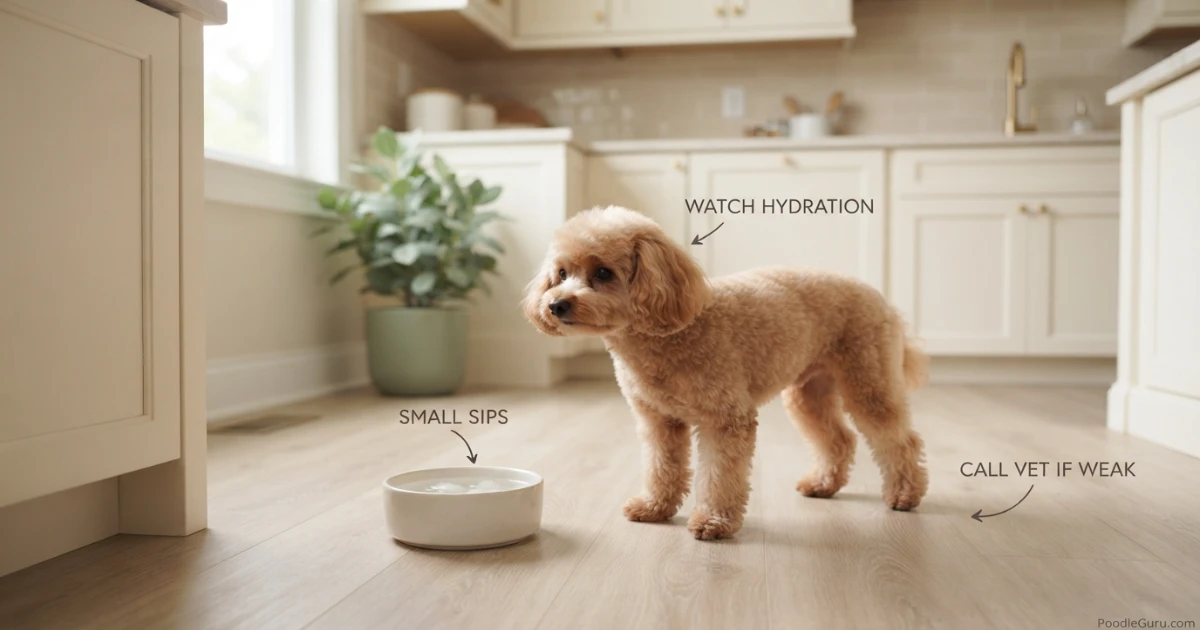
Poodles are clever scavengers. A stolen piece of greasy chicken, a raided trash can, or too many training treats can trigger acute vomiting and diarrhea. The stomach lining gets irritated, and the body tries to expel the offender quickly. If an otherwise healthy adult poodle vomits once or twice and then acts normal, it may be a short-lived stomach upset. Ask your veterinarian whether a brief food pause is appropriate; puppies, Toy Poodles, diabetic dogs, senior dogs, and weak or dehydrated dogs should not be fasted without veterinary direction. Offer small amounts of water only after vomiting pauses and watch closely for worsening.
Sudden Food Changes
Switching kibble overnight is a classic poodle vomiting cause. A poodle’s digestive system thrives on consistency. When you introduce a new food without a 7–10 day gradual transition, the gut microbiome rebels, often producing soft stool and occasional vomiting. Always transition slowly, mixing increasing amounts of new food with old.
Motion Sickness and Stress
Some poodles vomit during car rides or after a stressful event like a vet visit, grooming appointment, or boarding stay. Stress triggers cortisol release, which slows digestion and can cause nausea. If vomiting only happens in specific situations, it’s likely stress-related and manageable with desensitization, vet-approved calming aids, or timing meals around stressful events.
Food Allergies or Sensitivities
True food allergies in poodles often cause skin issues, but food intolerances can produce intermittent vomiting and loose stools. Common culprits include chicken, beef, dairy, and certain grains. If your poodle vomits regularly with no other explanation, a limited-ingredient diet trial under veterinary supervision can reveal hidden triggers.
Serious Poodle Vomiting Causes That Need Veterinary Attention
Some poodle vomiting causes are genuine medical emergencies. The faster you recognize them, the better the outcome — especially for small poodles where hours matter.
Pancreatitis
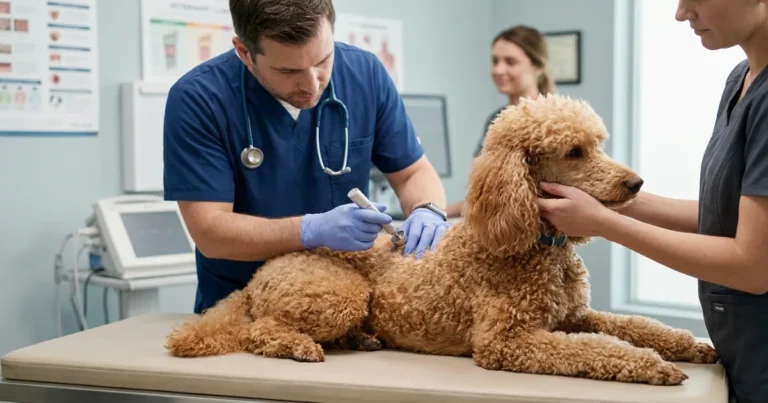
Miniature and Toy Poodles are often discussed in veterinary settings as dogs in which pancreatitis should stay on the radar, but any poodle can be affected. A fatty meal — even a small rich table scrap — can trigger painful inflammation of the pancreas in a susceptible dog. Symptoms include repeated vomiting, hunched posture, a painful belly, loss of appetite, and diarrhea. This needs prompt veterinary assessment and may require fluids, pain control, and anti-nausea support.
Intestinal Obstruction
Poodles, especially curious youngsters, sometimes swallow socks, toy pieces, or hair ties that lodge in the intestines. Obstruction causes persistent vomiting, often without stool production, and can lead to tissue death within hours. If your poodle vomits repeatedly, strains without producing stool, or has a distended, painful abdomen, it’s a surgical emergency.
Acute Hemorrhagic Diarrhea Syndrome (AHDS/HGE)
This condition, historically called hemorrhagic gastroenteritis (HGE), can strike suddenly with vomiting and profuse, bloody diarrhea. The cause is not always clear. Small dogs can dehydrate quickly, and affected dogs may need urgent veterinary care, fluid therapy, and monitoring.
Kidney or Liver Disease
Chronic vomiting can be a sign of underlying organ dysfunction. When the kidneys or liver aren’t filtering toxins effectively, nausea and appetite loss follow. This is more common in senior poodles and requires blood work to diagnose. If your older poodle has started vomiting more frequently and seems “off,” don’t chalk it up to old age — get lab work.
VCA Animal Hospitals explains the full range of canine vomiting causes, from benign to life-threatening, and why a thorough history helps your vet pinpoint the problem quickly.
Benign vs. Urgent Symptoms: Know the Difference
Not all vomiting is created equal. Use this comparison to quickly gauge the severity of your poodle’s symptoms — and whether you can monitor at home or need to leave for the clinic right now.
| Symptom | Likely Benign (Monitor at Home) | Potentially Urgent (Vet Visit) | Emergency (Immediate Vet) |
|---|---|---|---|
| Frequency | 1–2 episodes, then stops | 3–5 episodes in 12 hours | Persistent, every 30–60 minutes |
| Vomit Appearance | Undigested food, yellow bile | Frothy, greenish, or with mucus | Bright red blood or dark coffee-ground material |
| Diarrhea | Soft but formed, no blood | Liquid, 3–4 times, small amount of mucus | Profuse, watery, with fresh blood or black tarry stool |
| Energy Level | Bright, alert, still interested in surroundings | Quiet, resting more than usual, but responsive | Lethargic, unresponsive, cannot stand |
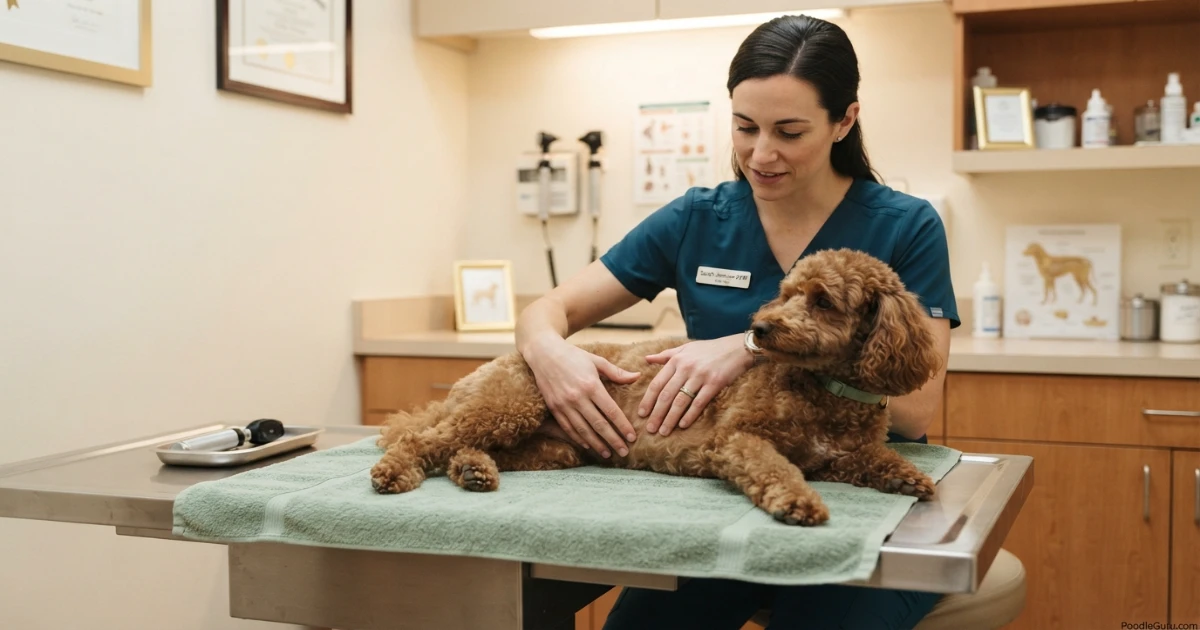
| Abdomen | Soft, no pain when touched | Tense, mild discomfort | Swollen, hard, dog cries out when touched |
| Hydration | Gums moist, skin snaps back quickly | Gums slightly tacky, skin slower to return | Gums dry, skin stays tented, eyes sunken |
This table is a rapid assessment guide, not a substitute for professional diagnosis. When in doubt, call your veterinarian or an emergency clinic for triage advice.
When to Call the Vet Immediately: Red-Flag Checklist
Go to the Emergency Vet If Your Poodle Shows Any of These:
- Repeated vomiting, vomiting more than a few times in a short period, or unproductive retching (a possible sign of bloat).
- Vomit contains blood — bright red or dark, coffee-ground-like material.
- Diarrhea is frequent, watery, and contains visible blood or is black/tarry.
- Your poodle is lethargic, cannot stand, or seems disoriented.
- Abdomen is swollen and painful — your dog may whine, pant, or adopt a “praying” position.
- Your poodle has ingested a known toxin (chocolate, xylitol, grapes, medication) or a foreign object.
For Toy and Miniature Poodles, also watch for signs of hypoglycemia (weakness, tremors, seizures) during prolonged vomiting, as their small body reserves deplete quickly.
The PoodleGuru Vomiting & Diarrhea Severity Triage
At PoodleGuru, we evaluate digestive upsets using this simple, five-step severity triage. Work through it calmly when your poodle first shows symptoms — it’s designed to help you make clear decisions under stress.
Check Your Poodle’s Mental State and Posture
Is your dog bright and responsive, or quiet and withdrawn? A dog that still wags its tail and comes to you likely isn’t in crisis. A hunched back, tucked belly, or “praying” position (chest down, rear up) signals significant abdominal pain.
Outcome: Normal demeanor = monitor. Pain postures = vet visit.
Examine the Vomit or Diarrhea Closely
Note color, consistency, contents, and any blood. Yellow bile often means an empty stomach; chunky food suggests rapid eating; dark granules could be digested blood. Take a photo if it helps — your vet will appreciate the detail.
Outcome: A one-time bile episode with normal energy = likely fine. Blood or foreign material = vet now.
Perform a Quick Hydration Check
Gently lift the skin at the back of your poodle’s neck. If it snaps back immediately, hydration is adequate. If it stays tented or returns slowly, dehydration is setting in. Also check gums: they should be pink and moist, not pale, gray, or sticky-dry.
Outcome: Dehydrated skin or dry, pale gums = fluids needed urgently.
Count Frequency and Duration
More than 3 vomits in 2 hours, or diarrhea more than every hour, is concerning. Vomiting lasting over 12 hours without improvement or accompanied by diarrhea for 24 hours warrants a vet call.
Outcome: High frequency or long duration = vet consultation needed.
Decide: Home Monitoring or Immediate Vet?
If all signs point to a mild, resolving episode, you can manage with a brief food fast, small water amounts, and close observation. If any red flags from the checklist are present, or your gut says something is seriously wrong, transport your poodle to the vet without delay.
Outcome: You have a clear, evidence-based decision, not a panic reaction.
Mistakes That Can Make Vomiting Worse
| Mistake | Why It’s Harmful | Better Approach |
|---|---|---|
| Offering a full meal right after vomiting stops | The stomach lining needs time to settle; food too soon re-triggers vomiting. | Withhold food for 6–12 hours, then offer a tiny bland meal (boiled chicken & rice) and see if it stays down. |
| Giving human anti-nausea or anti-diarrhea meds | Many contain ingredients toxic to dogs or mask symptoms of a serious condition like obstruction. | Never give human medication unless explicitly instructed by your veterinarian; some human medications and ingredients are dangerous for dogs. |
| Forcing water when your dog is actively vomiting | This can trigger further vomiting and worsen dehydration. | Offer ice chips or small sips every 30 minutes only after vomiting has paused. |
| Assuming one bland meal fixed the problem | The gut needs days of gentle transition back to normal food, or recurrence is common. | Feed the bland diet for 2–3 days, then gradually reintroduce regular food over 4–5 days. |
| Dismissing vomiting as “just stress” without investigating | Frequent stress vomiting can lead to esophagitis and avoidable suffering. | If stress vomiting happens more than occasionally, work with your vet on management strategies. |
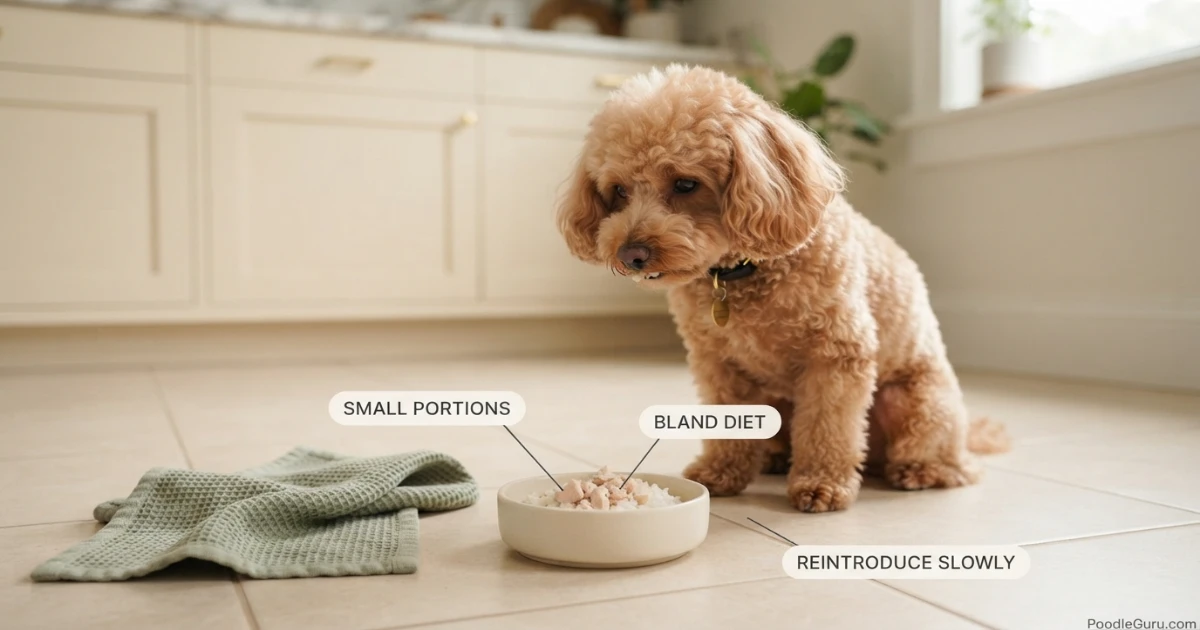
Owner Action Plan: From First Vomit to Recovery
What to Do in the First 24 Hours:
- Pause food only if appropriate — for a bright, otherwise healthy adult dog, your vet may advise a brief food pause. Do not fast puppies, Toy Poodles, diabetic dogs, senior dogs, or weak/dehydrated dogs without veterinary direction. Offer small amounts of water or ice chips only after vomiting pauses.
- Observe and record — note time of each vomit/diarrhea, appearance, and behavior changes.
- Check hydration every 2–3 hours using skin tent and gum moisture.
- Keep your poodle quiet — no walks, play, or excitement that strains the abdomen.
- Call your vet if any red flags appear or symptoms last beyond the monitoring window.
Frequently Asked Questions About Poodle Vomiting Causes
What are the most common causes of vomiting in poodles?
The most frequent poodle vomiting causes are dietary indiscretion (eating something they shouldn’t), sudden food changes, stress, and food sensitivities. These often produce mild, self-limiting vomiting that resolves with a short fast and bland diet. Persistent or severe vomiting points to pancreatitis, obstruction, or organ disease.
When should I take my poodle to the vet for vomiting and diarrhea?
Go to the vet if vomiting lasts more than 12–24 hours, diarrhea is bloody, your poodle is lethargic, or the abdomen is painful or swollen. Any vomiting in a Toy or Miniature Poodle that seems weak or dehydrated warrants urgent care because small dogs decline faster.
Can poodles vomit from stress or anxiety alone?
Yes. Stressful events like grooming, boarding, car rides, or loud noises can trigger vomiting in sensitive poodles. This is usually a one-time reaction. If stress vomiting happens frequently, work with your vet or a behaviorist on management strategies to protect the esophagus from repeated acid exposure.
What should I feed my poodle after vomiting?
After vomiting has paused and your veterinarian says home care is appropriate, offer a tiny bland meal such as boiled, skinless chicken breast and plain white rice. Avoid seasoning, onions, garlic, oils, or rich toppings. If it stays down, continue small meals briefly, then gradually mix in regular food over several days.
How can I tell if my poodle is dehydrated after vomiting?
Gently lift the skin between the shoulder blades. If it snaps back immediately, hydration is likely fine. If it stays tented or returns slowly, dehydration is present. Dry, sticky, or pale gums also indicate dehydration and require veterinary attention for fluid replacement.
Are Toy Poodles more at risk from vomiting than Standard Poodles?
Yes. Toy Poodles have much smaller body reserves and can become dangerously dehydrated or hypoglycemic after just a few hours of vomiting. What might be a manageable wait-and-see situation in a Standard Poodle can become an emergency much faster in a Toy Poodle.
Can changing my poodle’s food too quickly cause vomiting?
Absolutely. An abrupt food switch is a very common poodle vomiting cause. The gut microbiome needs 7–10 days to adjust. Mix old and new food, gradually increasing the new proportion each day. Skipping this transition often leads to soft stool and vomiting.
Is it normal for poodles to vomit yellow bile in the morning?
Occasional yellow bile vomiting on an empty stomach can happen, especially if your poodle goes too long between meals. Splitting dinner into a later, smaller meal or giving a bedtime snack often solves it. If it happens frequently, consult your vet to rule out bilious vomiting syndrome or other issues.
Key Takeaways: Navigating Poodle Vomiting and Diarrhea
Digestive upsets are frightening in the moment, but a systematic approach — knowing the most common poodle vomiting causes, recognizing red flags, and having a triage plan — keeps your poodle safe and gives you confidence to act appropriately.
- The most common poodle vomiting causes are dietary indiscretion, sudden food changes, stress, and food sensitivities — these often resolve within 24 hours with a brief fast and bland diet.
- Serious causes like pancreatitis, intestinal obstruction, HGE, or organ disease require immediate veterinary attention; symptoms such as blood in vomit, a painful abdomen, or collapse should never be ignored.
- Toy and Miniature Poodles dehydrate and develop hypoglycemia much faster than Standard Poodles, so the threshold for seeking urgent care is lower for smaller sizes.
- The PoodleGuru Severity Triage — checking mental state, vomit appearance, hydration, frequency, and then deciding on monitoring or vet visit — helps you make a rational decision under stress.
- Common owner mistakes like giving human medications, forcing water, or rushing back to a normal diet can worsen vomiting or delay recovery; follow veterinary guidance for safe at-home care.
- When in doubt, call your vet. A vet or emergency clinic can help you decide whether home monitoring is reasonable or urgent care is safer.
For a deeper understanding of poodle size-specific health needs, see our Poodle Size Chart. If your poodle is currently vomiting or has diarrhea, contact your veterinarian now for personalized advice.