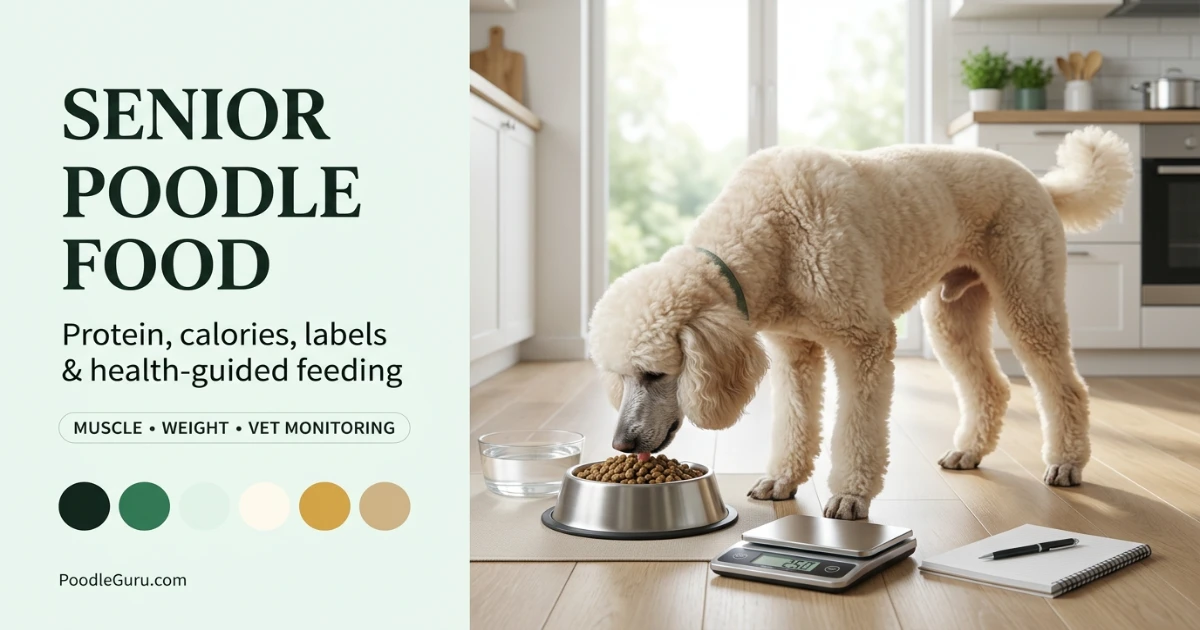
Senior Poodle Food: How to Choose the Best Diet for an Aging Poodle
Aging changes calorie needs, muscle condition, appetite, digestion, mobility and disease risk—but it does not create one universal “senior diet.” This guide helps Toy, Miniature and Standard Poodle owners compare foods safely, monitor body and muscle condition, and know when a veterinary therapeutic diet is more appropriate than an over-the-counter senior formula.
Quick Answer
The best senior Poodle food is a complete-and-balanced diet that matches the dog’s current body condition, muscle condition, activity, appetite and health—not simply a bag labeled “senior.” Healthy older Poodles generally need adequate high-quality protein to protect lean muscle, calories adjusted to prevent unwanted weight gain or loss, and a format they can comfortably chew and digest. There is no AAFCO nutrient profile specifically for senior dogs, so compare the nutrition adequacy statement, calorie content, manufacturer expertise and quality control. Do not restrict protein, phosphorus or sodium solely because a Poodle is older; diagnosed kidney, heart, gastrointestinal or other disease may require a veterinarian-prescribed therapeutic diet.
Monitor muscle over the spine, shoulders, skull and hips instead of judging health from body weight alone.
Many older dogs need fewer calories, but frail or underweight seniors may need more—not automatic restriction.
Kidney, heart, pancreatic, endocrine and gastrointestinal disease require individualized veterinary nutrition.
In This Guide
- When Is a Poodle Considered Senior?
- How Aging Changes Nutrition Needs
- The PoodleGuru Senior Food Checklist
- Senior Nutrient Claims: What Matters
- Protein and Muscle Preservation
- Calories, Weight and Body Condition
- Dry, Wet or Mixed Feeding
- Omega-3s and Joint Supplements
- When a Therapeutic Diet Is Needed
- Homemade, Fresh and Raw Diets
- How to Change Food Safely
- Veterinary Monitoring for Seniors
- Diet-Related Warning Signs
- Common Senior Feeding Mistakes
- Frequently Asked Questions
When Is a Poodle Considered Senior?
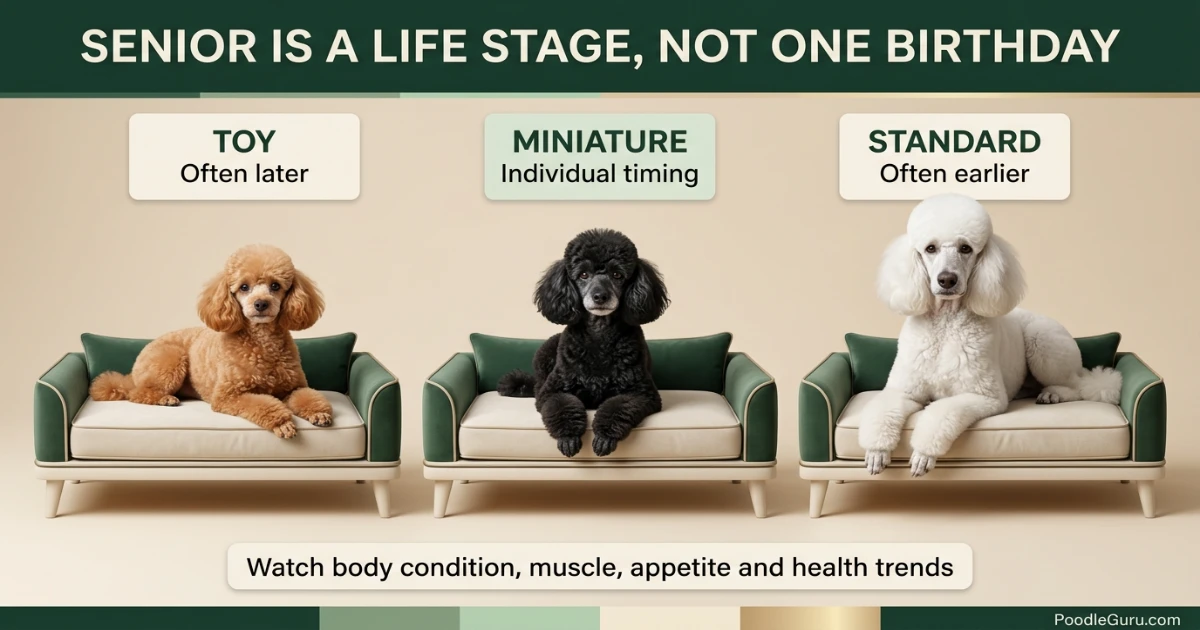
There is no single birthday when every Poodle becomes senior. AAHA describes the senior stage as the final portion of an expected lifespan, and the timing varies with body size, genetics, health history and individual aging. Standard Poodles often show age-related changes earlier than Toys because larger dogs generally have shorter average lifespans, but a calendar estimate should prompt closer monitoring—not automatically trigger a food change.
| Poodle Variety | Useful Review Point | What to Monitor | What Not to Assume |
|---|---|---|---|
| Toy Poodle | Often around age 10 and beyond | Dental comfort, body weight, muscle over the spine, appetite and cognitive changes | That a small older dog automatically needs fewer meals or less protein |
| Miniature Poodle | Often around age 9 and beyond | Weight trend, mobility, teeth, thirst, urination and coat quality | That gray hair alone means the current diet is inappropriate |
| Standard Poodle | Often around age 7–8 and beyond | Muscle condition, joint comfort, body condition, digestive tolerance and lab trends | That every Standard needs a low-protein or kidney-style diet |
Use these ages as conversation starters with your veterinarian. A very active ten-year-old Miniature maintaining ideal body and muscle condition may do well on the same complete adult diet. A seven-year-old Standard with weight loss, increased thirst or muscle wasting needs a medical workup before a routine food switch.
How Aging Changes a Poodle’s Nutrition Needs
Many older dogs become less active and need fewer calories to maintain an ideal body condition. At the same time, age-related loss of lean body mass can make adequate protein and total food intake more important. That tension explains why simply reducing portions can be the wrong response: a senior may lose muscle while still carrying excess body fat.
AAHA recommends monitoring both body condition score and muscle condition score. Body condition estimates fat cover; muscle condition looks for tissue loss over areas such as the spine, shoulder blades, skull and pelvis. A fluffy Poodle coat can hide both weight gain and muscle loss, so hands-on assessment matters after grooming and during veterinary examinations.
Aging may also change chewing comfort, smell, appetite, hydration, stool quality and tolerance for large meals. Disease becomes more common with age, and conditions such as chronic kidney disease, diabetes, pancreatitis, dental disease, heart disease, cancer and cognitive dysfunction can alter the appropriate nutrient profile. This is why senior nutrition works best as a monitoring system rather than a one-time bag change.
The PoodleGuru Senior Food Selection Checklist
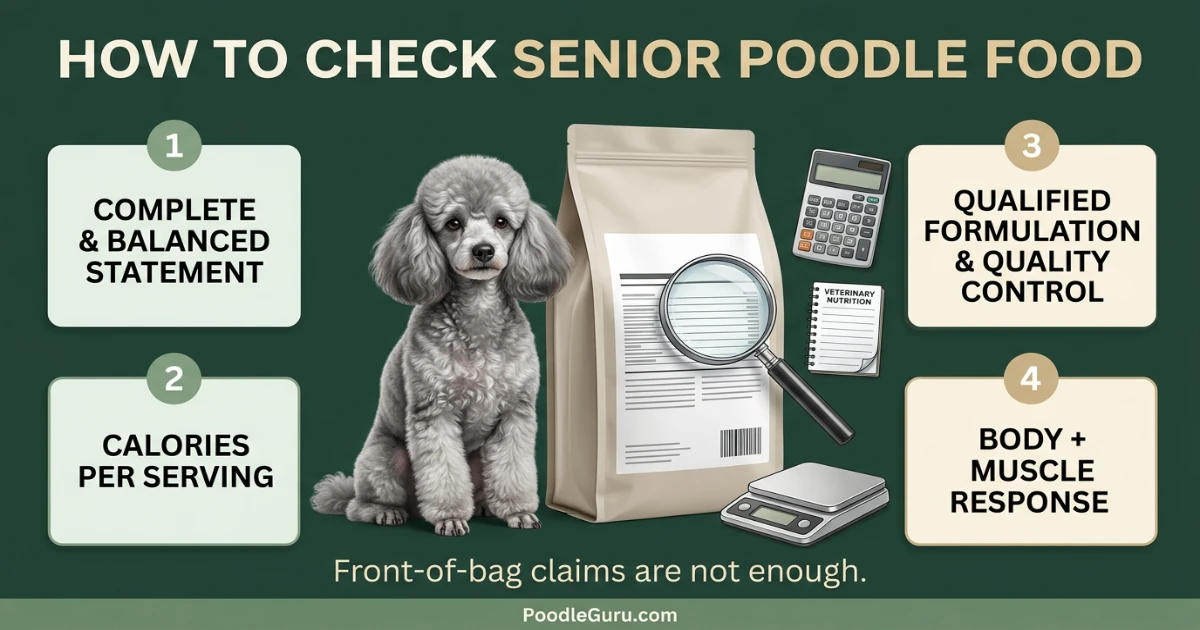
Ignore premium-looking packaging and begin with the information that tells you whether the diet is nutritionally appropriate and responsibly produced.
Read the Nutrition Adequacy Statement
Choose a diet labeled complete and balanced for adult maintenance or another life stage your veterinarian recommends. Foods marked for intermittent or supplemental feeding are not intended to be the sole long-term diet unless used under professional direction.
Check Calories Per Cup, Can or Gram
“Senior” does not always mean low calorie. Compare metabolizable energy and calculate the actual daily calories from every meal, topper, chew and treat.
Assess the Manufacturer
Look for qualified nutrition expertise, experienced formulation, quality-control testing, finished-product analysis, traceability and a contact team able to answer detailed nutrient questions.
Match the Food to Body and Muscle Condition
A food is not successful because the bowl is empty. It should help maintain ideal fat cover, stable lean muscle, good stool quality, comfortable eating and an appropriate weight trend.
Use Medical Nutrient Targets Only When Indicated
Do not self-prescribe low phosphorus, low sodium, low fat or protein restriction. Those modifications can be valuable for specific diagnoses but inappropriate for a healthy older Poodle.
Reassess After the Transition
Track appetite, stool, vomiting, water intake, weight, body condition and energy. A diet that looks impressive on paper may still be a poor fit for the individual dog.
Senior Poodle Nutrient Claims: What Actually Matters
The original version of this guide used fixed nutrient percentages that sounded precise but were not safe universal targets. Healthy seniors and seniors with disease do not share one ideal protein, phosphorus, sodium, fiber or supplement level.
| Common Claim | More Accurate Guidance | When Veterinary Input Matters |
|---|---|---|
| “Every senior needs at least 25% protein dry matter.” | No single percentage fits every food or dog. Adequate, digestible protein is important for lean muscle, and protein should not be restricted solely because of age. | Muscle loss, kidney disease, liver disease, cancer, poor appetite or major weight change. |
| “Healthy seniors need low phosphorus.” | Routine phosphorus restriction is not automatically recommended for healthy older dogs. Therapeutic phosphorus control is important in diagnosed kidney disease. | Abnormal kidney markers, urine changes, increased thirst or a confirmed renal diagnosis. |
| “All seniors need low sodium for heart protection.” | Do not impose strict sodium restriction without a diagnosis and nutrition plan. Needs vary with disease stage, medications, appetite and total diet. | Heart disease, hypertension, fluid retention or other veterinarian-managed conditions. |
| “Glucosamine in the bag guarantees joint support.” | Amounts in foods vary, and the presence of an ingredient does not prove a clinically meaningful dose. Evidence and product quality differ among supplements. | Mobility change, arthritis, pain medication, bleeding risk or multiple supplements. |
| “Grain-free is better for an older Poodle.” | Grain-free is not a senior requirement. FDA continues to study non-hereditary DCM and has received reports involving both grain-free and grain-containing diets. | Suspected food reaction, cardiac disease or a highly unusual diet history. |
Protein and Muscle Preservation
Older dogs commonly lose lean body mass. AAHA notes that senior dogs tend to lose lean tissue and gain fat, which means body weight alone can look stable while muscle declines. Protein restriction based only on age can worsen that problem.
Rather than chasing one front-label percentage, evaluate the complete diet, calorie intake, digestibility, amino-acid supply, muscle-condition trend and medical status. A food can have a high percentage because it is low in moisture or calories, while the dog still consumes too little total protein because appetite is poor. Conversely, a properly formulated moderate-protein therapeutic diet may be appropriate for a diagnosed condition.
Ask your veterinarian to demonstrate muscle condition scoring. Check the temples, shoulder blades, spine and pelvic bones monthly with your hands. Photograph the dog from above and the side after grooming, and record weight on the same scale. Unexplained muscle loss deserves a medical investigation—not simply more food.
Calories, Weight and Body Condition
Many seniors require fewer calories as activity and maintenance energy needs decline. However, advanced age, disease, malabsorption, dental pain or reduced appetite can produce weight loss instead. “Feed less because the dog is old” is therefore as unreliable as “feed more protein because the dog is old.”
Use the label’s calorie statement, weigh portions where practical and include treats. Treats and extras should generally remain a small part of total intake so they do not dilute a complete diet. The exact calorie target should be adjusted from real-world response: stable ideal body condition, preserved muscle and a healthy weekly or monthly weight trend.
Poodle coats make visual assessment difficult. Feel the ribs, waist and abdominal tuck rather than judging fluff. The PoodleGuru body-condition calculator can help organize observations, but a veterinarian should confirm unexplained gain, loss or muscle wasting.
Dry, Wet or Mixed Food for a Senior Poodle?
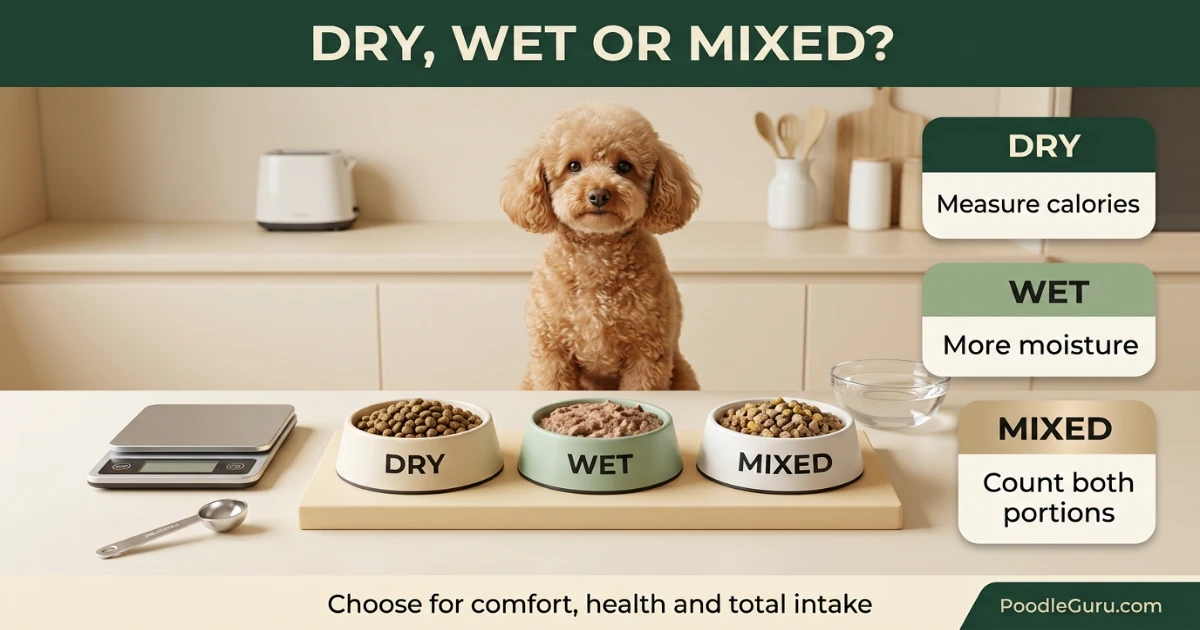
All three formats can work when the diet is complete and balanced and the Poodle eats enough of it. Choose from the dog’s dental comfort, hydration, appetite, calorie needs, stool quality, medical condition, storage safety and household budget.
| Factor | Dry Food | Wet Food | Mixed Feeding |
|---|---|---|---|
| Moisture | Lower moisture; fresh water remains essential. | Higher moisture can support total water intake. | Can increase moisture while retaining a familiar dry base. |
| Calorie density | Often calorie-dense by volume, so accurate portioning matters. | Often lower calories by volume, but products vary. | Calculate both components to avoid accidental overfeeding. |
| Chewing comfort | May be uncomfortable with dental pain or missing teeth. | Usually easier to eat when chewing is difficult. | Water or wet food can soften texture, but dental pain still needs treatment. |
| Dental effect | Ordinary kibble should not be treated as a tooth-cleaning method. | Does not replace brushing or veterinary dental care. | Dental health depends on home care and veterinary assessment, not food format alone. |
| Palatability | Convenient but may be less appealing when smell or appetite declines. | Stronger aroma may encourage eating. | Useful for increasing interest without replacing the complete base diet. |
Sudden reluctance to eat dry food may indicate dental pain rather than preference. Use the live Poodle dental-care guide for home-care context, and schedule an oral examination when chewing, dropping food, bad breath or mouth sensitivity changes.
Omega-3s, Glucosamine and Other Senior Supplements
Supplements are not automatically harmless because they are sold without a prescription. AAHA advises documenting every nutraceutical used by a senior pet because natural products can vary in purity and potency, interact with medication or create toxicity.
Long-chain omega-3 fatty acids have evidence for anti-inflammatory effects in osteoarthritis, but the appropriate product, EPA/DHA amount and safety depend on the dog and total diet. Fish-oil products add calories and may affect gastrointestinal tolerance or bleeding risk. Ask for a dose based on combined EPA and DHA rather than “one capsule.”
Glucosamine and chondroitin evidence is more variable, and the amount included in a food may not equal a therapeutic supplement dose. Do not assume every senior needs them or that they replace pain assessment, weight control, exercise modification or prescribed treatment.
Never add calcium, vitamin D, phosphorus, potassium, herbal products or multiple joint supplements without professional review. Bring photographs of every label to the appointment so your veterinarian can check ingredients, amounts and possible interactions.
When a Veterinary Therapeutic Diet Is Needed
Over-the-counter senior foods are designed for broad maintenance, not treatment of every age-related disease. A veterinary therapeutic diet can make a meaningful difference when selected for a confirmed diagnosis and monitored appropriately.
| Health Situation | Why Generic Senior Food May Be Wrong | Veterinary Nutrition Goal |
|---|---|---|
| Chronic kidney disease | Healthy-senior claims do not guarantee therapeutic phosphorus control or the correct protein profile. | Use a renal diet according to disease stage, appetite, laboratory values and veterinarian guidance. |
| Heart disease | Extreme sodium restriction can reduce palatability and may not suit every stage. | Match sodium, calories, protein and supplements to diagnosis, medication and body condition. |
| Pancreatitis or high blood lipids | A senior formula may still be high in fat. | Choose a veterinarian-directed fat level and control treats, chews and table food. |
| Diabetes | Feeding schedule and nutrient profile must coordinate with treatment. | Keep meals consistent and align diet with insulin and glucose monitoring. |
| Food-responsive disease or allergy workup | Rotating retail foods can invalidate a diagnostic elimination trial. | Use the exact hydrolyzed or novel-protein plan prescribed for the required duration. |
| Dental pain | Switching to soft food may reduce discomfort but does not treat periodontal disease or a fractured tooth. | Provide comfortable nutrition while arranging oral diagnosis and treatment. |
AAHA’s senior guidelines note that healthy pets and early renal cases should not automatically receive protein restriction. Nutrient restriction becomes a disease-management decision, not a birthday-based rule.
Homemade, Fresh and Raw Diets for Senior Poodles
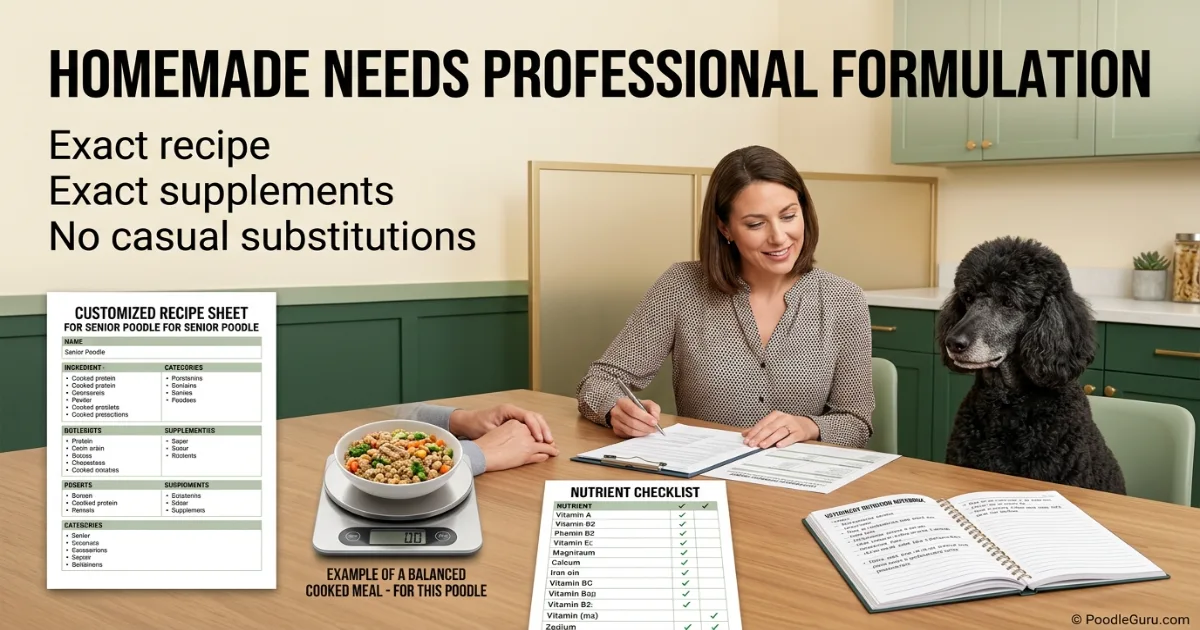
Home-prepared food can be appropriate when the recipe is formulated for the individual dog and followed precisely. A bowl of chicken, rice and vegetables is not complete simply because the ingredients look wholesome. Long-term deficiencies or excesses may involve calcium, trace minerals, vitamins, essential fatty acids and amino acids.
Work with a board-certified veterinary nutritionist when preparing food at home, especially for kidney disease, heart disease, pancreatitis, cancer, multiple diagnoses or medication interactions. Recipe substitutions matter: changing the meat cut, oil, supplement or cooking method can alter nutrient balance.
Commercial fresh food should be evaluated with the same questions as kibble or canned food: Who formulates it? Is it complete and balanced for the intended life stage? What quality-control testing is performed? What are the calories and nutrient values? Can the company provide typical nutrient analysis?
Raw diets add pathogen and nutritional-balance concerns and can be particularly difficult to justify in frail, immunocompromised or medically complex seniors. Discuss risk with the veterinary team rather than assuming “fresh” or “raw” automatically means more digestible or healthier.
How to Change Senior Poodle Food Safely
A gradual transition often reduces digestive upset, but the exact pace depends on the dog, current diet and medical reason for changing. Seven to ten days is a common starting framework for a stable dog; sensitive seniors may need longer, while urgent therapeutic changes should follow the veterinarian’s instructions.
| Transition Stage | Old Food | New Food | What to Watch |
|---|---|---|---|
| Days 1–3 | About 75% | About 25% | Appetite, stool, vomiting, gas and medication timing |
| Days 4–6 | About 50% | About 50% | Hydration, comfort, stool quality and willingness to eat |
| Days 7–9 | About 25% | About 75% | Weight trend, digestive tolerance and overall energy |
| Day 10+ | 0% | 100% | Longer-term body condition, muscle condition, coat and lab response where relevant |
Slow down if mild loose stool appears and contact the veterinarian for repeated vomiting, marked diarrhea, refusal to eat, weakness, abdominal pain or worsening of an existing condition. Do not keep cycling through foods when symptoms suggest disease.
Veterinary Monitoring for a Senior Poodle
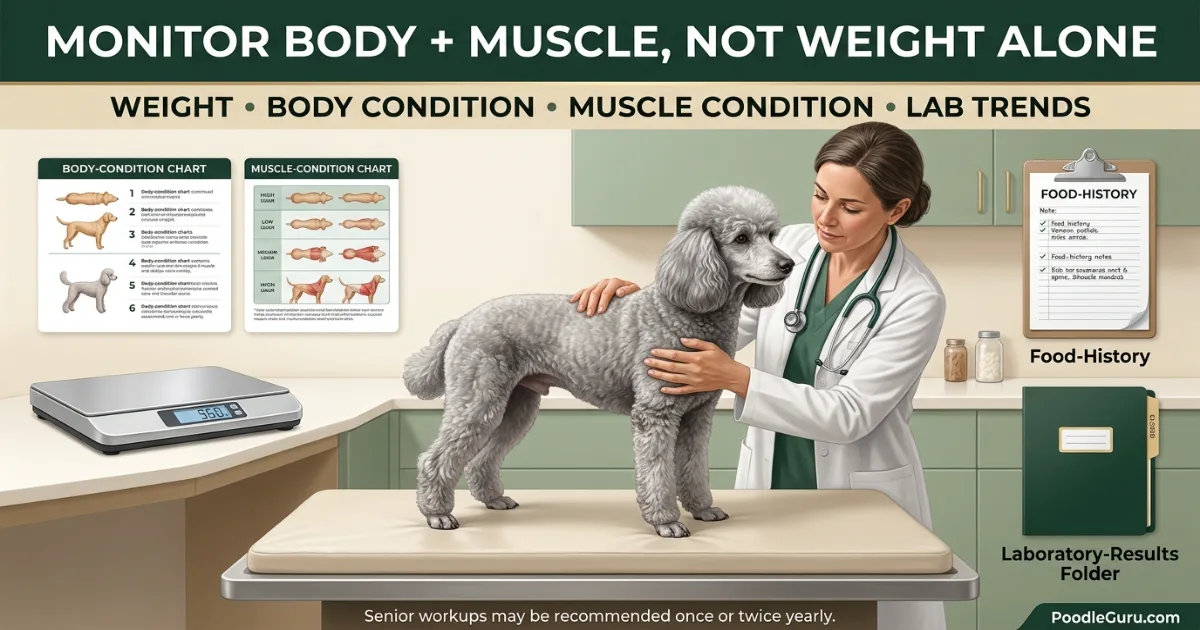
AAHA recommends a medical workup for senior pets once or twice yearly, potentially including a complete blood count, chemistry panel and urinalysis, with additional testing based on history and examination. The correct schedule depends on age, previous results, medication and diagnosed disease.
- Body weight: Record on the same scale whenever possible.
- Body condition score: Track rib cover, waist and abdominal tuck.
- Muscle condition score: Feel the skull, shoulders, spine and pelvis.
- Diet history: Include food, toppers, treats, chews, supplements and table food.
- Water and urination: Report sustained increases or accidents.
- Appetite and chewing: Note slower eating, dropped food, side chewing or food avoidance.
- Mobility: Record stiffness, reluctance on stairs, slipping or reduced walk tolerance.
- Laboratory trends: Interpret numbers over time instead of reacting to one isolated result.
Bring the food label or product page to appointments. When disease is present, ask whether the current diet meets a specific therapeutic goal and when response should be rechecked.
Warning Signs That Need a Veterinary Review
Do not assume every change is normal aging or a food preference. Contact the veterinary team promptly when a senior Poodle develops:
- Sudden appetite loss, especially with weakness, vomiting, pain or known disease
- Progressive weight loss or visible muscle wasting despite eating
- Rapid weight gain or a pot-bellied appearance without an obvious calorie change
- Increased thirst, increased urination or new house-soiling
- Repeated vomiting, diarrhea, constipation or black/bloody stool
- Difficulty chewing, food dropping, mouth bleeding or persistent bad breath
- Abdominal swelling, unproductive retching or severe restlessness—an emergency in a deep-chested Standard
- New weakness, collapse, tremors, confusion or major behavior change
Diet can support treatment, but food alone cannot diagnose or safely manage these signs.
Common Senior Poodle Feeding Mistakes
Switching by Birthday Alone
A “senior” label does not prove the food is better. Switch because the new diet solves a defined need and monitor the result.
Restricting Protein Without a Diagnosis
Age-related muscle loss makes unnecessary restriction risky. Healthy seniors should not receive a renal-style diet by default.
Ignoring Calories in Extras
Chews, cheese, peanut butter, toppers and supplements can undermine weight control and dilute the complete diet.
Using Supplements as Treatment
Joint powders and oils do not replace pain assessment, dental treatment, diagnostics or prescription therapy.
Assuming Kibble Cleans Teeth
Ordinary dry food is not a substitute for toothbrushing, appropriate dental products and veterinary oral care.
Changing Several Things at Once
Multiple new foods, toppers and supplements make it difficult to identify what improved or worsened appetite, stool or itching.
Frequently Asked Questions
What is the best senior Poodle food?
There is no single best product for every senior Poodle. Choose a complete-and-balanced diet whose calories, protein, texture and feeding amount maintain ideal body and muscle condition. Medical conditions may require a veterinarian-prescribed therapeutic diet rather than retail senior food.
Do senior Poodles need less protein?
Not simply because they are older. Healthy senior dogs need adequate protein to protect lean muscle. Protein restriction may be considered for particular diagnosed diseases and stages, but it should be directed by the veterinary team.
At what age should a Poodle start senior food?
There is no automatic switch age. Standards may show senior changes earlier than Miniatures and Toys, but the decision should follow body condition, muscle condition, activity, appetite, health findings and the nutritional profile of the current food.
Should a healthy senior Poodle eat low-phosphorus food?
Do not restrict phosphorus solely because of age. Therapeutic phosphorus control is important in diagnosed chronic kidney disease, while healthy seniors need a complete diet that meets their overall nutritional requirements.
Is wet food better for senior Poodles?
Wet food can increase moisture and may be easier to eat, but it is not universally better. Dry, wet and mixed feeding can all work when complete and balanced, tolerated, correctly portioned and appropriate for the dog’s medical needs.
Do senior Poodles need glucosamine?
Not every senior automatically needs it. Evidence, dose and product quality vary, and foods may contain amounts too small for a therapeutic goal. Discuss mobility, pain and all supplements with the veterinarian.
Are grain-free diets better for older Poodles?
No. Grain-free is not a senior requirement. FDA has received non-hereditary DCM reports involving both grain-free and grain-containing diets and continues to study multiple possible factors. Choose a responsibly formulated complete diet rather than using grain status as the main quality test.
How often should a senior Poodle be fed?
Many seniors do well with two measured meals daily, while some medical conditions or appetite problems benefit from smaller, more frequent meals. Meal frequency should fit total calories, medication timing, digestive tolerance and veterinary guidance.
How quickly should I switch to a new senior food?
Seven to ten days is a common starting transition for a stable dog, but sensitive seniors may need longer. A veterinarian may recommend a different schedule when changing to a therapeutic diet or when illness makes delay unsafe.
Can I cook senior Poodle food at home?
Yes, but use a recipe formulated for your individual dog by a board-certified veterinary nutritionist and follow it exactly. Informal meat, rice and vegetable combinations are commonly deficient when fed as a complete long-term diet.
Editorial Sources
These veterinary and regulatory sources were used to correct the nutrition claims in this guide.
Key Takeaways: Choosing Senior Poodle Food
- There is no standardized AAFCO nutrient profile for “senior” dog food, so evaluate the complete label and manufacturer—not the age claim alone.
- Healthy older Poodles need adequate protein and should not receive automatic protein restriction solely because of age.
- Monitor muscle condition as carefully as body weight because a senior can lose muscle while maintaining or gaining fat.
- Do not self-prescribe low-phosphorus, low-sodium, low-fat or other therapeutic restrictions without a diagnosis.
- Dry, wet and mixed feeding can all be appropriate when the diet is complete, correctly portioned and comfortable to eat.
- Supplements can interact with medication and vary in potency; review every product with the veterinary team.
- Senior medical workups may be recommended once or twice yearly and can directly change the safest nutrition plan.
- Homemade diets require professional formulation and exact adherence to the recipe.
Next step: photograph your Poodle from above and the side, record current weight, list every food and supplement, and take the information to the next senior wellness visit. That evidence produces a safer diet decision than choosing a bag by age claim alone.