Poodle Puppy Classes: When to Start, Cost & What to Expect
Poodle puppy classes help young Toy, Miniature, and Standard Poodles build confidence, social skills, grooming comfort, and early manners during the most important learning window of puppyhood. The right class is calm, clean, reward-based, and structured—not a chaotic puppy free-for-all.
Quick Answer: Are Poodle Puppy Classes Worth It?
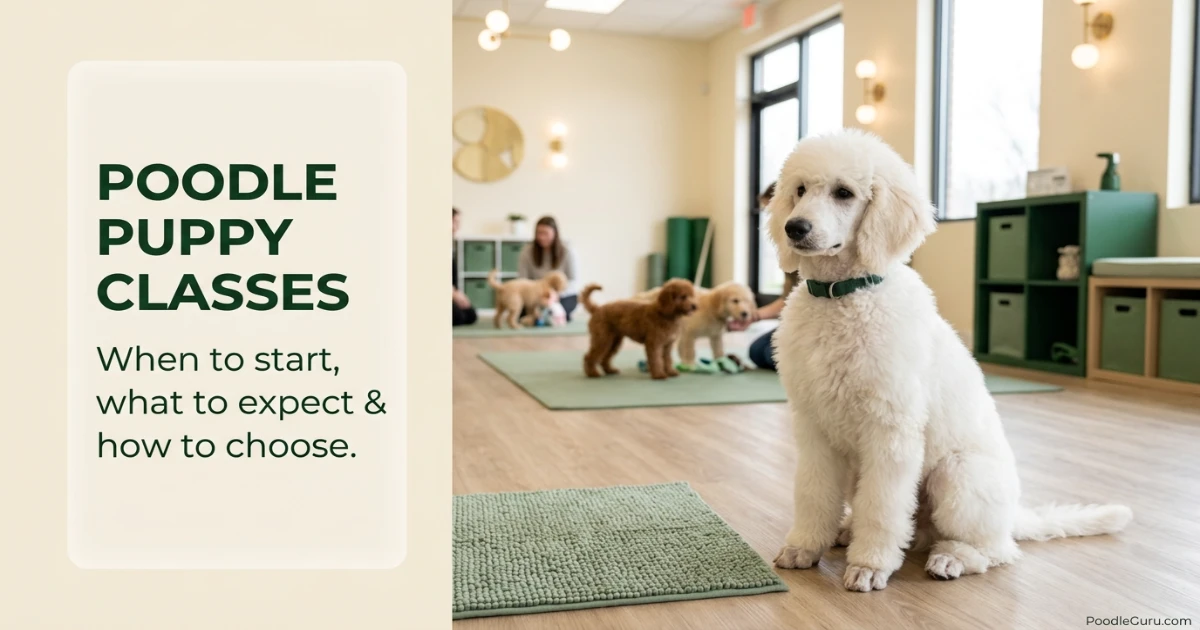
Poodle puppy classes are worth it when they are clean, vaccine-verified, reward-based, and designed for puppies around 8 to 16 weeks old. Many puppies can begin socialization classes as early as 7–8 weeks when they have had at least one appropriate vaccine set and the facility follows strict hygiene and screening rules. For poodles, the best class teaches polite greetings, gentle handling, name response, recall games, calm settling, and confidence around distractions. Avoid any class that relies on dominance language, leash corrections, forced greetings, or uncontrolled puppy wrestling.
What Are Poodle Puppy Classes?
Poodle puppy classes are structured group training sessions for young puppies and their owners. A good class is not just “sit and stay.” It combines short training games, safe exposure to new people and puppies, gentle handling practice, supervised play breaks, and owner coaching so you learn how to communicate clearly at home.
For poodles, this is especially valuable. Poodles are quick learners, but they are also sensitive, observant, and capable of forming strong opinions early. A puppy who feels safe during class often becomes easier to groom, easier to handle at the vet, calmer around other dogs, and more responsive when distracted.
The American Kennel Club describes puppy training classes as a starting point for lifelong learning, and AKC puppy programs use positive reinforcement to teach basic skills like sitting, coming when called, and learning around distractions. Reward-based training is a better match for poodles than fear, force, or “show them who is boss” methods.
Best Age Window
Many puppies begin around 8–12 weeks, once your vet clears them and the class requires age-appropriate vaccines, deworming, and hygiene rules.
Ideal Class Size
Look for 4–8 puppies with one skilled trainer and, ideally, an assistant. Smaller groups make it easier to protect shy poodles from overwhelm.
Session Length
Most puppy classes run 45–60 minutes. Poodle puppies do best with short exercises, rest breaks, and clear transitions.
Training Style
Choose marker-based, food-reward, positive reinforcement training. Avoid choke chains, prong collars, shock collars, alpha rolls, and forced greetings.
Core Goal
The goal is confidence, not perfection. Your poodle should leave class curious and comfortable, not exhausted, frightened, or shut down.
Owner Homework
Class teaches the method. Real progress comes from daily 2–3 minute practice sessions at home with treats, praise, and patience.
When to Start Poodle Puppy Classes
The best time to start is usually after your veterinarian confirms that your puppy is healthy enough for a clean, puppy-only group class. The American Veterinary Society of Animal Behavior puppy socialization statement has long emphasized that puppies should not miss early socialization because of excessive fear of disease exposure; in general, puppy socialization classes may start as early as 7–8 weeks when appropriate vaccination and deworming precautions are followed.
That does not mean you should take an 8-week-old poodle to dog parks, pet-store floors, or random dog meetups. Puppy classes should be controlled environments: clean indoor surfaces, proof of vaccines, age-appropriate playgroups, and a trainer who interrupts rough play early.
For most poodle puppies, the practical enrollment window is 8 to 16 weeks. Waiting until all puppy shots are complete can cause owners to miss the most important social learning period. Your vet’s clearance matters, but so does choosing a facility that takes infection control seriously.
What to Expect in the First Few Weeks
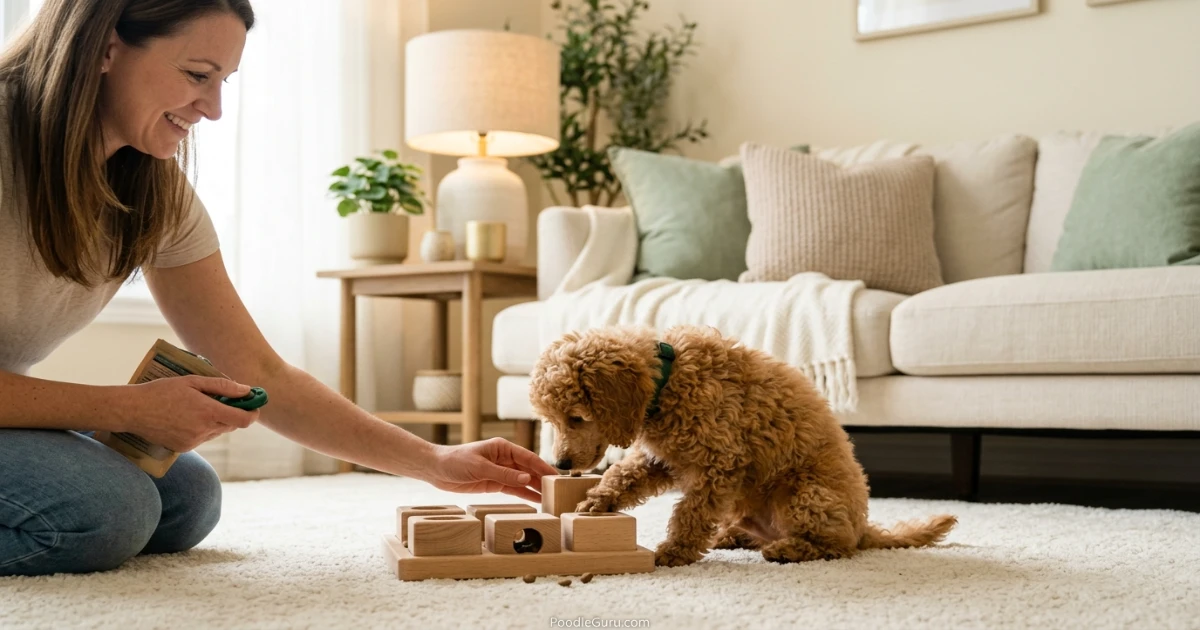
The first session may look busy, but a good trainer keeps it structured. You may begin with puppies on leash, owners spaced apart, and simple exercises such as name response, eye contact, touch targeting, and a lured sit. The goal is not to make your poodle perform perfectly. The goal is to teach your puppy that new places, people, sounds, and puppies predict good things.
By weeks two and three, most classes introduce short recall games, down, leave it, walking beside you for a few steps, calm handling, and controlled puppy play. Play should be interrupted often so puppies learn to disengage, come back to owners, and settle. A class where puppies wrestle nonstop for 45 minutes is not a training class—it is an overstimulation risk.
Watch your poodle’s body language. Curiosity, soft eyes, loose movement, play bows, and taking treats are good signs. Tucked tail, hiding, lip licking, freezing, repeated yawning, refusal of treats, or trying to climb into your lap can mean the class is too intense. In that case, move to the edge of the room and reward calm observation.
Comfort Check: Your Poodle Should Feel Safe
The word “comfortable” matters in puppy class. It does not mean your puppy must be excited every second. It means your puppy can recover after a surprise, take food, observe calmly, and re-engage with you. If your poodle stays frozen, hides, or stops taking treats, ask the trainer for more distance, a visual barrier, or a quieter class option.
Core Skills Your Puppy Will Learn
A strong poodle puppy class teaches life skills, not just cute tricks. These early lessons become the foundation for grooming, vet visits, family manners, and safe outdoor behavior.
| Skill Area | What Your Puppy Practices | Why It Matters for Poodles |
|---|---|---|
| Name Response | Turning toward you when their name is said once | Poodles learn quickly, but they also notice distractions. Name response builds the first layer of focus. |
| Recall Games | Coming happily between people for treats and praise | A reliable recall is a safety skill, especially for energetic Standards and curious Toy/Miniature Poodles. |
| Handling & Grooming Prep | Paw touches, ear checks, gentle brushing, mouth handling | Poodles need lifelong grooming. Early cooperative handling prevents fear of brushes, clippers, nail trims, and vet exams. |
| Impulse Control | Waiting for food, checking in before greeting, leaving dropped items | Smart poodles can become pushy if every demand works. Impulse games teach patience without punishment. |
| Calm Greetings | Four paws on the floor, sitting or standing politely for people | Jumping is easier to prevent in puppyhood than to fix after it becomes a habit. |
| Loose-Leash Foundations | Following your movement, checking in, and walking a few steps without pulling | Early leash skills prevent frustration before your poodle becomes stronger and more confident outdoors. |
Group vs. Private Puppy Training
Most confident poodle puppies benefit from a group class because they learn around other puppies, people, movement, sounds, and smells. That real-world distraction layer is hard to recreate in a private session. A well-managed group class also teaches owners to read puppy body language and interrupt play before it becomes too rough.
Private training is better when your poodle is extremely fearful, medically fragile, reactive, or already overwhelmed by other puppies. A few private sessions can build enough confidence to join a group later. The right choice is the one that keeps learning safe and positive.
| Factor | Group Poodle Puppy Classes | Private Puppy Training |
|---|---|---|
| Best For | Curious, healthy puppies who can recover from mild distractions | Very shy, overwhelmed, medically fragile, or behaviorally complex puppies |
| Social Learning | Built in through supervised exposure to puppies and people | Limited unless the trainer sets up controlled exposure separately |
| Owner Coaching | You learn from your trainer and from watching other teams | More individualized feedback and faster troubleshooting |
| Typical 2026 Cost | $100–$250 for a multi-week course, depending on location | $60–$150+ per session, depending on trainer credentials and market |
The PoodleGuru Class Readiness Checklist
Use this checklist before the first class. It prevents the most common “why was my puppy so stressed?” problems.
Confirm veterinary clearance
Your puppy should have age-appropriate vaccines, deworming/fecal screening as your vet recommends, and no vomiting, diarrhea, coughing, or unexplained lethargy before attending class.
Make collar or harness wear comfortable
Have your puppy wear a properly fitted flat collar or harness during short happy sessions at home. They should be able to move normally without scratching, freezing, or trying to escape.
Bring high-value treats
Use tiny, soft pieces your poodle loves. Pea-sized bits are enough. In a distracting class, dry biscuits often cannot compete with other puppies and new smells.
Protect rest and timing
Do not arrive with an over-tired puppy. Give a potty break before class, bring water, and plan a calm rest period afterward.
Preview the trainer’s methods
Observe a class or watch the trainer’s videos. You should see rewards, patience, body-language awareness, and no intimidation, leash jerks, or dominance talk.
How to Choose a Good Trainer for Your Poodle
The trainer matters more than the room, logo, or brand name. In the United States, dog training is not regulated the way veterinary medicine is, so owners must screen carefully. Look for independent credentials such as CPDT-KA, KPA-CTP, IAABC, or a qualified veterinary behavior referral when fear or aggression is involved.
Ask direct questions before enrolling: “What happens if my puppy is scared?” “How do you interrupt rough play?” “Do you use positive reinforcement?” “May I observe a class first?” A good trainer welcomes those questions. They should describe distance, redirection, treats, breaks, and management—not corrections or “dominating” the puppy.
AVSAB recommends reward-based training methods for dog training, and the ASPCA advises owners to seek humane, qualified trainers. For poodles, that advice is especially important because harsh handling can create avoidance, grooming fear, and long-term distrust.
Poodle Puppy Classes Cost in 2026
Poodle puppy classes usually cost less than private training because several puppy-owner teams share the instructor’s time. In 2026, public pricing guides commonly place puppy group courses and private lessons in these same broad ranges; for planning, many group puppy courses fall around $100–$250 for 4–6 weeks, while private lessons often run $60–$150+ per session. Large metro areas and highly credentialed trainers can cost more. Compare local options against transparent pricing references such as HomeGuide dog training cost data, but judge the trainer’s methods before the price.
| Training Option | Typical 2026 Price | Best Fit |
|---|---|---|
| Group puppy class | $100–$250 for 4–6 weeks | Most healthy, curious poodle puppies who need social learning and owner coaching |
| Private puppy lesson | $60–$150+ per session | Shy, overwhelmed, medically sensitive, or behaviorally complex puppies |
| Hybrid plan | Group class plus 1–2 private sessions | Poodle owners who want social exposure plus help with specific issues like grooming fear or car anxiety |
| Low-cost shelter/community class | Often lower than private training | Budget-conscious owners, as long as the class is clean, reward-based, and puppy-appropriate |
Cost Tip
Do not choose based on price alone. A cheap class that lets puppies bully each other or uses punishment can create behavior problems that cost more later. Pay for calm structure, skilled coaching, and safe socialization.
What to Practice at Home Between Classes
Class gives you the lesson. Home practice builds the habit. Poodle puppies usually learn best through several tiny sessions each day instead of one long drill.
Name Response
Say your puppy’s name once. When they look at you, mark with “yes” and reward. Practice in different rooms before trying outdoors.
Handling Rituals
Touch one paw, mark, reward. Check one ear, mark, reward. Keep handling brief and pleasant so grooming stays comfortable.
Settle Practice
Reward your puppy for lying on a mat while you sit nearby. This teaches calmness, not just obedience.
Recall Games
Two people take turns calling the puppy in happy voices. Reward generously when your poodle arrives.
Loose-Leash Steps
Reward one or two steps beside you inside the house. Build success before adding sidewalks and distractions.
Rest After Class
Give your puppy a quiet nap after class. Tired poodles may look wild, mouthy, or stubborn when they actually need sleep.
Frequently Asked Questions
Can my poodle puppy start class before all vaccinations are complete?
Often, yes, if your veterinarian clears your puppy and the class requires age-appropriate vaccines, deworming/fecal screening, and clean indoor surfaces. Avoid dog parks and uncontrolled dog areas until your vet says they are safe.
What age is best for poodle puppy classes?
The ideal window is usually 8–16 weeks, with many puppies beginning around 8–12 weeks after vet clearance. Starting early helps poodles build confidence before fear responses become stronger.
How much do poodle puppy classes cost?
In 2026, group poodle puppy classes commonly cost about $100–$250 for a 4–6 week course. Private sessions often cost $60–$150+ each depending on trainer credentials and location.
What if my poodle puppy is scared in class?
Move to the edge of the room, increase distance, and reward calm observation. Do not force greetings. A good trainer will help your puppy feel safe instead of pushing them through fear.
How do I know if a puppy class is too rough?
It is too rough if puppies are pinned, chased nonstop, yelping without intervention, hiding, or unable to take treats. Puppy play should be reciprocal, supervised, and interrupted often for breaks.
Are private lessons better than group puppy classes?
Private lessons are better for very shy or overwhelmed puppies, but group classes are usually better for healthy, curious puppies because they provide controlled social exposure and distraction practice.
Should poodle puppy classes use treats?
Yes. Food rewards help young puppies learn quickly in distracting environments. Praise matters too, but treats make the correct behavior clearer and more motivating during early training.
Key Takeaways: Poodle Puppy Classes
Poodle puppy classes are one of the strongest early investments you can make in confidence, grooming comfort, impulse control, and safe social skills—when the class is clean, reward-based, and appropriate for your puppy’s temperament.
- The best age window is usually 8–16 weeks, with vet clearance and a clean, vaccine-verified puppy class.
- Good classes teach name response, recall games, calm greetings, handling, grooming prep, impulse control, and loose-leash basics.
- Poodles do best with positive reinforcement, food rewards, short sessions, and trainers who understand body language.
- A comfortable puppy can recover after mild surprises, take treats, and re-engage. A frozen or hiding puppy needs more distance and support.
- Group classes are ideal for confident puppies; private sessions can help fearful poodles before they join a group.
- Expect many 2026 group puppy classes to cost about $100–$250 for a multi-week course, with private sessions costing more per hour.
Next step: Ask your vet whether your puppy is ready, observe one local class, and choose the calmest reward-based trainer—not the loudest marketing page.