How to Stop a Poodle Digging in the Yard
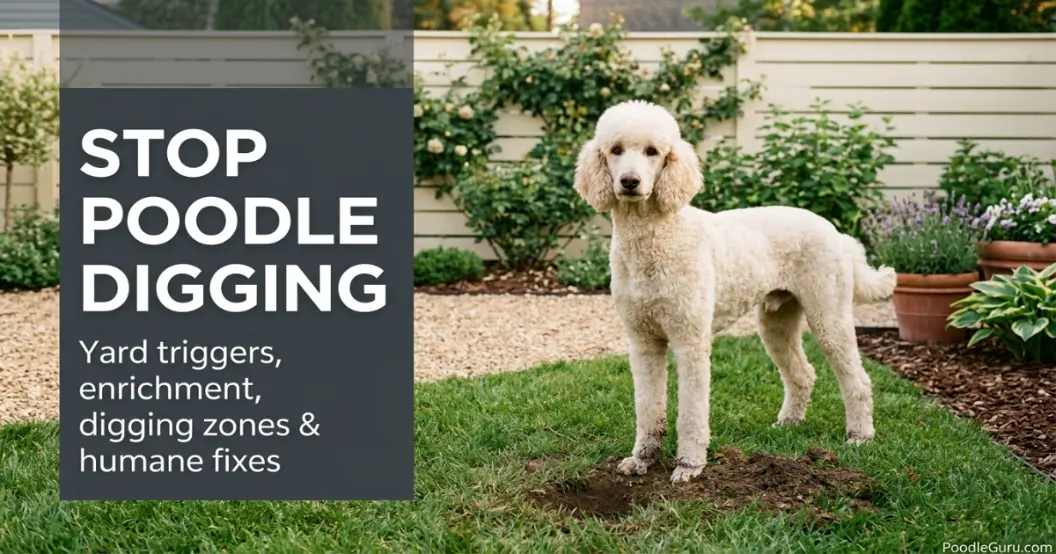
Poodles dig for reasons that surprise most owners. This guide moves beyond quick fixes — it shows you exactly why the behavior started and how to stop poodle digging without damaging your bond.
Quick Answer
To stop poodle digging, first identify the trigger — boredom, prey drive, cooling, escape, or anxiety. Then apply a combination of environmental management (dig-proof barriers, designated digging zones), mental enrichment (puzzle toys, scent work), and exercise tailored to your poodle’s size. Punishment makes it worse. A tired, mentally satisfied poodle rarely destroys the yard. Most owners see improvement within 7–10 days by following the 4-step PoodleGuru Dig-Proof Method below.
🐩 All Sizes Dig
Toy, Miniature, and Standard poodles dig — but the triggers often differ. Small poodles may dig to chase rodents; larger ones may dig to create cool beds.
⏱ It’s Fixable
With consistent redirection and enrichment, most poodles stop destructive digging within two weeks. The key is addressing the why, not just the hole.
🧠 Brain Before Brawn
Mental fatigue works faster than physical exhaustion. A 15-minute scent game can tire a poodle more than an hour of aimless yard time.
🚫 No Punishment
Scolding after the fact, rubbing noses in dirt, or electronic fences often increase anxiety and can make digging worse. Poodles are sensitive; they need guidance, not fear.
🌿 Yard Safety
Check for toxic plants, buried wires, or sharp objects in digging zones. Some poodles dig to access roots that may be poisonous. If in doubt, consult your vet.
🩺 Health Check
Sudden obsessive digging can signal pain, gastrointestinal discomfort, or neurological issues. A vet visit rules out medical causes before behavioral training begins.
Why Poodles Dig: Beyond Boredom
Poodle digging is a natural behavior that becomes a problem when the dog’s environment doesn’t meet its needs. For poodle owners, this means the elegant, intelligent dog you brought home is not being naughty — it’s being normal. The most important thing to understand is that digging isn’t random. It’s a solution to something your dog feels is missing: stimulation, comfort, or safety.
Poodles were originally water retrievers. They didn’t dig dens like terriers, but they did retrieve from water and marshy ground. Their paws were built for swimming, not excavating. So when a poodle digs obsessively, it’s usually a sign of a modern need being unmet — not an ancient instinct resurfacing. The three most common drivers: mental understimulation, temperature regulation, and prey drive triggered by underground critters.
The ASPCA’s guide to dog digging explains that dogs dig to hunt prey, to cool down, to escape, or simply because they’re bored. But poodles add a layer: their high intelligence turns mild boredom into creative destruction. A bored Lab might chew a shoe. A bored poodle may engineer a tunnel system. You’re not dealing with a bad dog — you’re dealing with a brilliant brain in search of a project.
Expert Insight: The Overlooked Temperature Factor
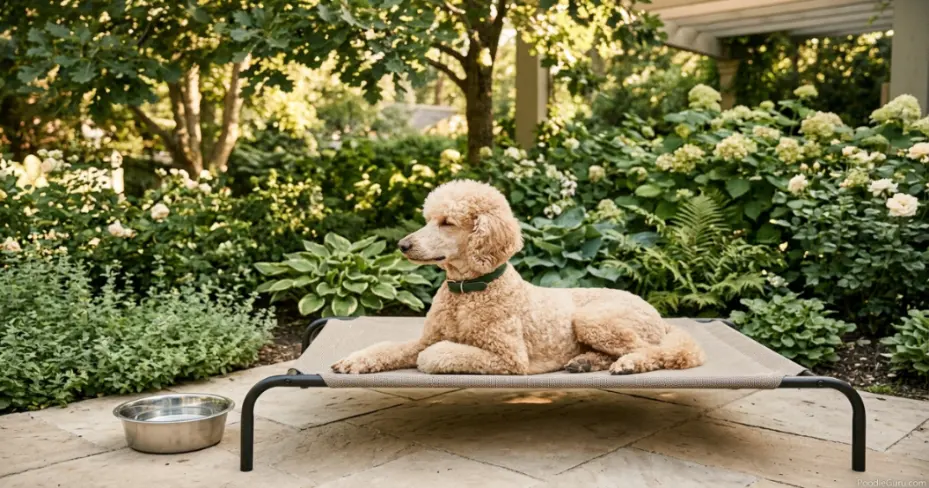
Poodles have a single, dense coat that insulates them. In warm weather, they often dig shallow pits to reach cooler soil. This isn’t misbehavior — it’s self-regulation. Before trying to stop the digging, provide a shaded, cool resting spot. A raised cot bed with a canopy often eliminates this type of digging within days. No training required.
The PoodleGuru Dig-Proof Method
At PoodleGuru, we evaluate digging behavior through a simple four-step process. This isn’t about suppressing a dog’s nature. It’s about redirecting it. The method is designed around poodle psychology: they’re sensitive, clever, and shut down under harsh correction. You’ll get faster, lasting results by working with their brain, not against it.
Identify the Trigger
Watch your poodle for three days. When does digging happen? After you leave? Near the fence line? In freshly watered soil? Under the deck? Write it down. Patterns will emerge. Most poodles have one primary trigger — once you spot it, the solution becomes obvious.
Meet the Need Differently
If your poodle digs to cool off, add shade and water. If it’s digging after squirrels, increase supervised prey-drive games like flirt pole play. If it’s bored, double mental enrichment. Don’t just say “no” — offer a “yes” that satisfies the same urge. This is the step most owners skip.
Create a Digging Zone
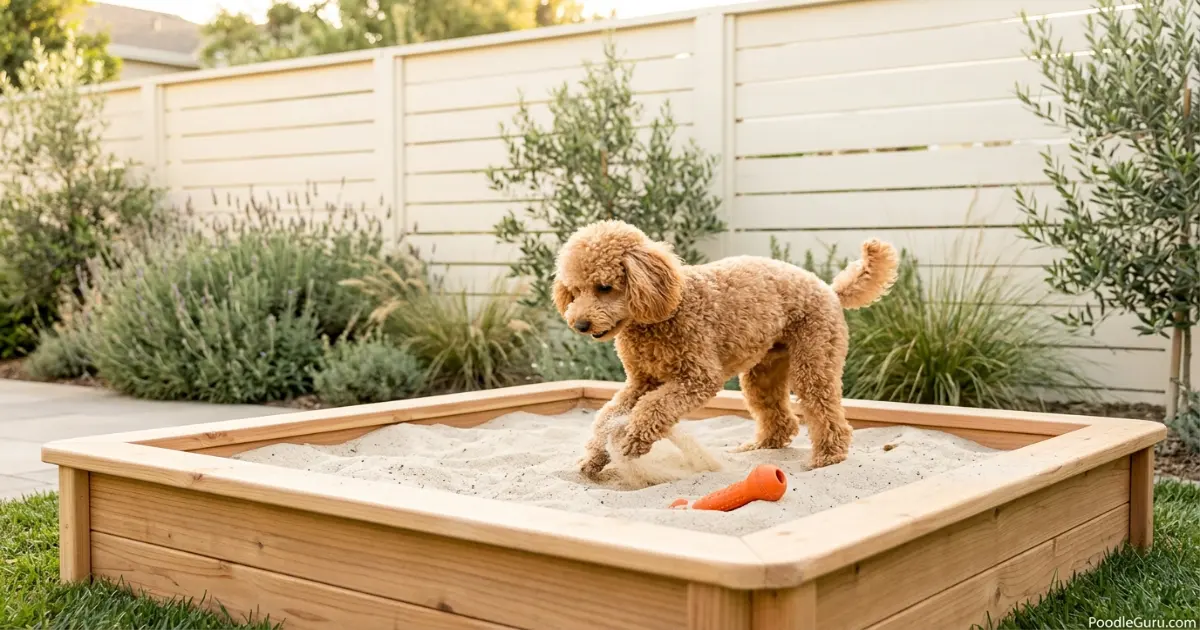
Build a designated sandbox or loose soil pit. Bury toys and treats in it. Teach your poodle that this is where digging pays off. Reward heavily when they use it. Redirect gently when they dig elsewhere. The message isn’t “never dig” — it’s “dig here.” Poodles are rule-followers. Give them a rule they can succeed at.
Supervise & Redirect
For the first two weeks, don’t leave your poodle unsupervised in the yard. When you see digging start, interrupt with a cheerful cue (“let’s go!”) and lead them to the digging zone or to a toy. Reward the new behavior. Each redirection builds a new habit. Within 10–14 days, most poodles choose the allowed digging spot on their own.
Dig-Proof Yard Quick Setup
- Sandbox: A 4×4 ft wooden frame filled with play sand. Bury safe chew toys and treats weekly.
- Barriers: Place chicken wire flat under a thin layer of mulch in garden beds. Poodles hate the feel on their paws.
- Deterrent scent: Citrus peels or pet-safe bitter spray around off-limits digging spots. Reapply after rain.
7 Proven Strategies to Stop Poodle Digging
These strategies align with the PoodleGuru Dig-Proof Method. Use the ones that match your dog’s trigger. Don’t try all seven at once — pick two or three, apply them consistently, and watch for changes.
1. Increase Mental Enrichment (Before Yard Time)
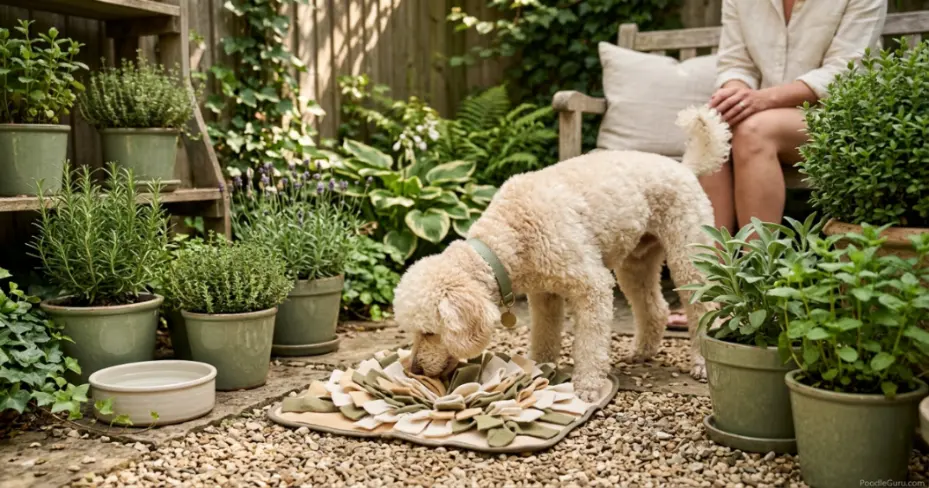
A 10-minute nose work session or food puzzle before outdoor access cuts digging dramatically. Poodles who arrive in the yard already mentally satisfied are far less likely to start excavation projects. Try hiding kibble in a snuffle mat or teaching a new trick. The pre-yard brain workout is the single highest-impact change you can make.
2. Provide a Cool Resting Zone
If your poodle digs shallow pits and lies in them, it’s overheating. Add a raised cot in the shade, a kiddie pool with an inch of water, or a cooling mat. Many owners report that digging stops the day the cooling station arrives. This is especially common in dark-coated poodles who absorb more heat.
3. Build the Allowed Digging Zone
As described in the framework, a sandbox works wonders. Spend a few sessions burying treasure in it while your poodle watches. When your dog digs there, praise heavily. When it starts to dig elsewhere, redirect to the sandbox without anger. Consistency builds the new habit. For more on positive reinforcement, see our complete poodle training guide.
4. Block Access to Favorite Digging Spots
Use temporary fencing, large rocks, or dense shrubbery to physically block the areas your poodle targets. For fence-line diggers, bury L-shaped wire mesh along the base. Poodles are problem-solvers — if the easiest path is blocked, they often give up and find another activity. Don’t rely on barriers alone; pair them with enrichment.
5. Supervised Yard Time With a Long Line
A 15–20 foot training leash lets your poodle explore while giving you the ability to redirect instantly. Say “leave it” calmly when digging starts, then lead your dog to an appropriate activity. After a week of consistent redirection, most poodles understand the yard rules. This also strengthens your recall, which helps with managing exercise and off-leash safety.
6. Address Prey Drive Constructively
If moles, voles, or squirrels are driving the digging, manage the critters humanely. Remove bird feeders that attract rodents. Seal gaps under sheds. Meanwhile, give your poodle a legal outlet: a flirt pole mimics the chase sequence. A few minutes of flirt pole play satisfies the prey drive that otherwise ends up in your flowerbed.
7. Rule Out Separation Anxiety
Digging at exit points — doors, gates, fence lines — often signals anxiety, not boredom. If the behavior happens only when you’re gone, work on gradual departure desensitization. For moderate to severe cases, consult a certified separation anxiety trainer. Punishment escalates panic. Address the fear, and the digging stops.
Digging Cause vs. Solution: A Poodle-Specific Matrix
Not all digging is equal. This table matches the most common poodle digging triggers with targeted solutions. Use it to diagnose your dog’s behavior quickly.
| Trigger Clue | Likely Cause | Poodle Size Most Affected | Immediate Solution | Long-Term Strategy |
|---|---|---|---|---|
| Digs only when you’re away | Separation anxiety | All sizes, but especially Toy and Miniature | Gradual departure training, frozen Kong before leaving | Work with a CSAT-certified trainer |
| Digs in shady, damp soil | Temperature regulation | Standard and dark-colored poodles | Add raised cooling cot, kiddie pool | Provide permanent shaded area with water access |
| Digs along fence lines or near bushes | Prey drive (rodents) | Toy and Miniature | Flirt pole play, humane rodent deterrent | Remove rodent attractants, seal yard gaps |
| Digs random holes, restarts when filled | Boredom / understimulation | All sizes | Double mental enrichment; pre-yard puzzle time | Daily nose work, varied walking routes, interactive toys |
| Digs only in garden beds with fresh soil | Interesting scent/texture | All sizes | Place chicken wire under mulch; provide sandbox | Redirect to digging zone consistently |
| Digs obsessively, seems unable to stop | Medical (pain, GI, neurological) | All sizes | Veterinary exam immediately | Follow vet treatment plan; behavior resolves with health |
This matrix exists only on PoodleGuru. General dog training sites lump all breeds together. Poodles react differently. Their sensitivity to heat, their prey-drive intensity in smaller sizes, and their intelligence level all change which solution works fastest.
Mistakes That Make Digging Worse
Some well-intentioned responses actually increase digging. Poodles are sensitive. They remember negative experiences vividly. Avoid these common errors.
| Mistake | Why It Backfires | Do This Instead |
|---|---|---|
| Filling holes with the dog watching, then scolding | The poodle learns that your arrival near holes means punishment. It may dig faster or hide the behavior. | Fill holes when the dog isn’t present. Redirect the dog to an approved activity before it starts digging. |
| Using cayenne pepper or harsh chemicals | These can burn paws and nasal passages. Some poodles develop fear of the entire yard, leading to house soiling. | Use physical barriers like chicken wire under mulch or a trainer-approved pet-safe deterrent. The goal is gentle management, not pain. |
| Adding another dog to “keep them company” | Two bored dogs dig twice as much. Poodles often learn digging from a new dog, not stop because of it. | Address the underlying enrichment deficit. If you truly want a second dog, ensure both receive individual attention and training first. |
| Yelling or electronic correction | Poodles are highly sensitive to handler emotion. Fear suppresses behavior temporarily but increases anxiety, which often causes more destructive outlets later. | Use calm redirection. A cheerful “let’s go!” to the sandbox works better than any correction — and preserves your bond. |
| Assuming it’s a phase they’ll outgrow | Digging is self-rewarding. The more they practice, the stronger the habit becomes. Ignoring it doesn’t fix it. | Intervene early. The first week of consistent redirection prevents months of frustration. |
When to Consult a Vet or Trainer
Most digging resolves with at-home strategies. But some cases need professional input. Don’t hesitate to reach out if you see these warning signs.
Ask Your Vet If:
- Digging started suddenly and obsessively, especially in an older poodle who never dug before
- Your poodle eats dirt, roots, or rocks while digging (possible pica or nutritional deficiency)
- You notice weight loss, vomiting, diarrhea, or changes in thirst alongside the digging
- The digging is accompanied by pacing, whining, or other signs of discomfort
Medical causes are less common than behavioral ones, but they’re serious when present. A blood panel and physical exam can rule out conditions like gastrointestinal disease, pain, or cognitive decline.
Ask a Certified Trainer If:
- Digging is paired with escape attempts and you’ve already secured the yard
- Your poodle shows panic when confined or left alone (separation anxiety specialist needed)
- You’ve tried the strategies in this guide consistently for three weeks with zero improvement
- The behavior is causing family stress and you need a structured, supervised plan
Frequently Asked Questions
Will getting my poodle a friend stop the digging?
Rarely. A second dog often copies the digging behavior. Address the root cause — boredom, prey drive, or anxiety — first. If you add another dog, ensure both receive individual enrichment and training. Otherwise, you may end up with two excavators instead of one.
My poodle only digs when I’m gardening. Why?
Your poodle is mirroring your behavior. Freshly turned soil smells interesting. The movement of your hands digging triggers a social facilitation response — they join in. Keep your poodle inside with a frozen treat or in a supervised stay during gardening, then allow digging in the sandbox later.
Can I use a shock collar to stop digging?
Not recommended. Poodles are sensitive. Pain-based corrections can create fear, anxiety, and even redirected aggression. Positive redirection and environmental management are safer and more effective for this breed. The American Veterinary Society of Animal Behavior supports humane, reward-based approaches for training and behavior modification, and the AKC poodle profile emphasizes the breed’s intelligence and active nature.
How long does it take to stop poodle digging for good?
With consistent application of the PoodleGuru Dig-Proof Method, most owners see a dramatic reduction within 7–10 days. Complete habit change takes 3–4 weeks. The key is never leaving the poodle unsupervised in the yard until the new routine is solid.
My poodle digs at the carpet inside. Is that the same behavior?
Indoor digging is often nesting or frustration. Provide a digging box with blankets or a snuffle mat. If it happens at night, it may be denning instinct. Rule out anxiety with a vet if the behavior is frantic.
What if my poodle eats dirt while digging?
Dirt eating (pica) can indicate a mineral deficiency or gastrointestinal upset. See your vet. In the meantime, prevent access to soil by using barriers and supervising closely. Never ignore dirt consumption — it’s a health red flag, not just a messy habit.
Are certain poodle colors more likely to dig?
No direct link exists between coat color and digging. However, dark-coated poodles (black, brown) may overheat faster in sun and dig for cooling. Provide ample shade and cooling stations regardless of color.
Key Takeaways & Your Action Plan
You can stop poodle digging without frustration, punishment, or expensive landscaping repairs. The solution lies in understanding your dog’s specific trigger and offering a smarter alternative. Here’s what to remember:
- Poodles dig for five main reasons: boredom, prey drive, temperature regulation, anxiety, or medical issues. Identifying which one applies to your dog is the first and most important step.
- The PoodleGuru Dig-Proof Method uses trigger identification, need redirection, a designated digging zone, and supervised habit-building — all without fear or force.
- Mental enrichment before yard time reduces digging more than extra physical exercise alone. A tired brain doesn’t look for landscaping projects.
- Punishment, harsh chemicals, and electronic collars backfire with sensitive poodles. Positive redirection and environmental management are the only sustainable solutions.
- A sandbox or designated digging pit, combined with consistent redirection, gives your poodle a legal outlet for a natural behavior while protecting your garden.
- If digging is obsessive, sudden, or paired with other symptoms, consult your veterinarian to rule out underlying health conditions before focusing on behavioral training.
Your next step: Spend tomorrow observing. When does your poodle dig? What happens right before? Grab a notebook. That 10-minute observation is the most powerful tool in your yard-repair kit.