This article contains affiliate links. PoodleGuru may earn a small commission if you purchase through our links, at no extra cost to you.
Best Joint Supplements for Poodles: 2026 Guide
Choosing the best joint supplements for poodles can feel confusing because labels often sound similar while formulas vary widely. For poodles — from tiny Toys to athletic Standards — this guide uses a clear, veterinary-informed framework to compare ingredients, safety testing, delivery format, and size-appropriate use before you buy.
Quick Answer
The best joint supplements for poodles usually combine well-labeled joint-support ingredients such as glucosamine, chondroitin, MSM, omega-3 fatty acids, or green-lipped mussel in a formula that matches your dog’s size and is backed by transparent quality testing. No supplement can diagnose, treat, cure, or reverse orthopedic disease. The right product may support comfort and mobility as part of a complete plan that also includes lean body weight, sensible exercise, and veterinary care.

Why Poodles Need Joint Support
Poodles of all sizes can be affected by orthopedic issues, and responsible breeders use health screening to reduce inherited risk. The Poodle Club of America lists hip evaluation as an important health test for Standard and Miniature Poodles, while Toy Poodles include patellar luxation evaluation in recommended screening. These are not only senior-dog concerns; some structural issues can begin early, which is why joint care should include prevention, weight control, and veterinary monitoring.
Even a poodle without diagnosed disease may benefit from proactive joint-friendly habits. Cartilage has limited blood supply and depends heavily on joint fluid and healthy movement. Ingredients such as glucosamine and chondroitin are commonly used in canine joint supplements to support cartilage components and joint comfort. Still, supplements work best as support tools — not as replacements for diagnosis, pain control, physical rehabilitation, or weight management when those are needed.
Weight management plays an equal role. A poodle carrying extra pounds places more daily load on the hips, knees, and elbows. The best joint supplements for poodles work alongside a lean body condition — not as a substitute for it.
Quick Facts: Poodle Joint Health
Hip Dysplasia Screening
Standard and Miniature Poodles should come from lines with appropriate hip screening. Supplements may support comfort, but they do not replace responsible breeding or veterinary exams.
Patellar Luxation in Small Poodles
Toy and Miniature Poodles can be affected by slipping kneecaps. Controlled exercise, lean weight, and veterinary guidance matter more than relying on supplements alone.
When to Start
There is no single start age for every poodle. Discuss supplements earlier for active Standards, dogs with orthopedic history, or any poodle showing stiffness, limping, or reluctance to jump.
Omega-3 Support
EPA and DHA from fish oil are often used to support a normal inflammatory response and joint comfort. Ask your veterinarian for safe dosing, especially if your dog takes medication.
Body Weight Matters
Extra weight increases daily joint load. Keeping your poodle lean is one of the strongest non-supplement choices you can make for long-term mobility.
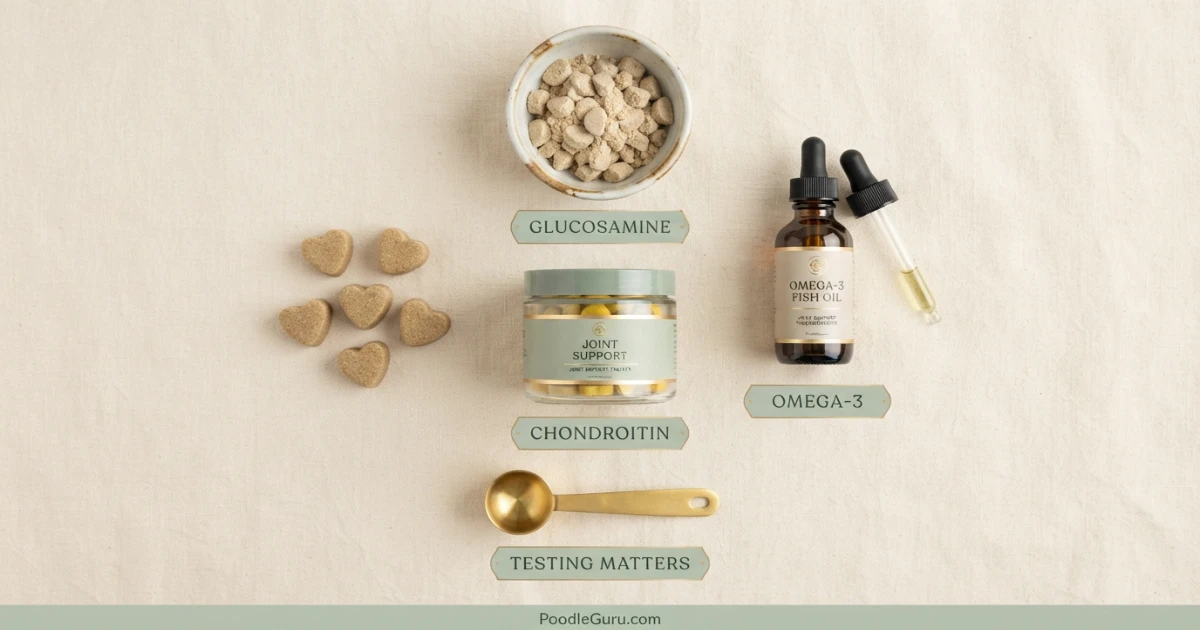
Third-Party Testing Matters
Supplements aren’t FDA-regulated like drugs. Look for NASC (National Animal Supplement Council) seals or brands that share certificates of analysis.
How Joint Supplements Work
Joint supplements do not rebuild a malformed hip or replace arthritis treatment. Instead, they may provide ingredients the body uses to support cartilage components, joint fluid quality, and everyday comfort. For poodles, commonly used ingredients include:
- Glucosamine hydrochloride (HCl): Commonly used in veterinary joint formulas; VCA describes glucosamine as a supplement used by joints to make cartilage components and as having mild anti-inflammatory activity.
- Chondroitin sulfate: Often paired with glucosamine; veterinary guidance describes it as supporting cartilage components and helping inhibit cartilage breakdown.
- MSM (methylsulfonylmethane): Commonly included in joint formulas as a support ingredient. Evidence and response vary by dog, so judge results over time with your vet.
- Green-lipped mussel (GLM): A natural source of several joint-support nutrients, sometimes used in formulas for dogs with stiffness. Introduce carefully if your dog has shellfish sensitivity.
- Omega-3 fatty acids (fish oil): EPA and DHA are often used as part of veterinary joint-care plans, but dose should be individualized because fish oil can interact with some conditions and medications.
- Hyaluronic acid: Included in some premium formulas to support synovial fluid quality and smoother movement.
These ingredients are often combined because joint comfort is multi-factorial. A formula may include cartilage-support ingredients plus omega-3 or green-lipped mussel support, but results vary and should be assessed over 8–12 weeks.
According to VCA Animal Hospitals’ glucosamine and chondroitin guidance, these products are nutritional supplements and your veterinarian is the best source of safety advice for an individual dog.
The PoodleGuru Joint Supplement Audit
At PoodleGuru, we evaluate every joint formula against five clear criteria. This method lets you compare any product — whether at the vet’s office or online — with confidence.
Ingredient Synergy
Does the product include at least glucosamine and chondroitin, plus an anti-inflammatory (MSM, GLM, or omega-3s)? Single-ingredient formulas rarely address all layers of joint health. Look for a combination that works on structure, cushioning, and comfort simultaneously.
Clear, Weight-Based Dosing
Look for a label that gives dog-weight dosing and lists active ingredient amounts clearly. A supplement that hides milligram amounts behind a vague “proprietary blend” is harder to evaluate. For Toy Poodles, dose flexibility matters; for Standard Poodles, potency and cost per serving matter.
Poodle Size Specificity
A Toy Poodle needs a small chew or liquid formula — swallowing a giant tablet is impractical and risky. Standard Poodles often do well with larger chews or powder that mixes into food. Choose a delivery form your poodle will actually consume daily without a battle.
Third-Party Verification
Look for the NASC Quality Seal, or a brand that publicly shares a Certificate of Analysis from an independent lab. Because animal supplements are not reviewed like approved drugs before sale, this verification helps confirm the bottle contains what the label claims and screens for quality concerns.
Brand Transparency & Veterinary Support
Reputable manufacturers employ veterinary nutritionists, publish research, and make ingredient sourcing clear. If a company can’t answer where its glucosamine is sourced or whether it’s tested for heavy metals, move on. Your veterinarian’s recommendation carries weight, but knowing what to look for yourself is equally powerful.
Ingredient Comparison Table
Use this quick-reference table to weigh the pros and cons of common joint supplement ingredients for poodles.
| Ingredient | Primary Role | Dose Check | Best Combined With | Notes for Poodles |
|---|---|---|---|---|
| Glucosamine HCl | Cartilage building block | Follow label and vet guidance by weight | Chondroitin, MSM | Choose dog-specific formulas with clear dosing and safety testing. |
| Chondroitin Sulfate | Inhibits cartilage breakdown | Follow label and vet guidance by weight | Glucosamine, GLM | Often sourced from bovine or porcine cartilage; purity matters. |
| MSM | Anti-inflammatory, sulfur source | Follow label and vet guidance by weight | Glucosamine, Chondroitin | Often included in formulas aimed at stiffness; judge response over 8–12 weeks. |
| Green-Lipped Mussel | Natural anti-inflammatory + joint support | Follow label and vet guidance by weight | Works well alone or with glucosamine | May cause shellfish allergy in sensitive dogs; introduce carefully. |
| Fish Oil (EPA/DHA) | Potent anti-inflammatory | Ask vet for EPA/DHA dose | Any joint supplement | Often discussed for arthritic dogs; also supports skin and coat health. |
| Hyaluronic Acid | Synovial fluid viscosity | Follow label and vet guidance by weight | Glucosamine, Chondroitin | Often included in premium formulas; role is supportive, not primary. |
This combination of attributes — including poodle-specific notes and dose-check guidance — is built to be uniquely helpful, so you can bookmark it for reference.
6 Common Joint Supplement Mistakes (and Fixes)
| Mistake | Why It Fails | The Better Approach |
|---|---|---|
| Buying the cheapest human glucosamine | Human formulas may contain sweeteners, extra ingredients, or dose levels that are not appropriate for dogs. Purity and label controls can also differ. | Choose a veterinary-formulated product with dog-specific dosing and transparent quality testing. |
| Skipping the loading dose | Some supplements require a higher initial dose for 4–6 weeks to saturate joint tissues. | Follow label instructions for the loading phase, then transition to maintenance. |
| Expecting overnight results | Cartilage metabolism is slow. Owners often stop after two weeks if nothing changes. | Commit to 8–12 weeks before assessing effectiveness. Keep a simple weekly mobility diary. |
| Using supplements as a substitute for weight control | No supplement can overcome the joint stress created by excess weight. | Pair supplements with a lean body condition score (4–5/9). Ask your vet for an honest assessment. |
| Overlooking omega-3s | Many joint chews lack meaningful anti-inflammatory support, leaving a gap. | If your joint supplement doesn’t contain EPA/DHA, add a separate fish oil with veterinary guidance. |
| Giving up when one formula doesn’t work | Not all dogs respond identically to the same combination. Poodles can be particular metabolizers. | Ask your veterinarian whether a different ingredient combination — for example, green-lipped mussel or omega-3 support — makes sense after 12 weeks. |

2026 Price Guide & What to Expect
Joint supplement costs depend heavily on ingredient quality, dosage strength, and brand reputation. Here’s what poodle owners can expect in 2026.
Typical Monthly Costs (Standard Poodle, Maintenance Dose)
| Category | Price Range (per month) | What You Get | Best For |
|---|---|---|---|
| Basic (single-ingredient glucosamine) | $12–$20 | Often lower potency, minimal anti-inflammatory support, no third-party seal. | Very young dogs as a minimal baseline, not ideal for long-term solo use. |
| Mid-Range (glucosamine + chondroitin + MSM) | $25–$40 | Veterinary-formulated, NASC certified, small-medium dog options available. | The sweet spot for most poodles — good balance of efficacy and value. |
| Premium (GLM + omega-3s + hyaluronic acid) | $40–$70 | High-potency with anti-inflammatory punch, often backed by clinical studies. | Poodles with early arthritis, post-surgery recovery, or senior dogs. |
What’s worth paying for: third-party testing, transparent ingredient sourcing, and a formula that includes anti-inflammatory components — not just structural ones. What inflates cost without value: celebrity endorsements, trendy “ancestral” marketing, and products that hide their active ingredient amounts behind proprietary blends.
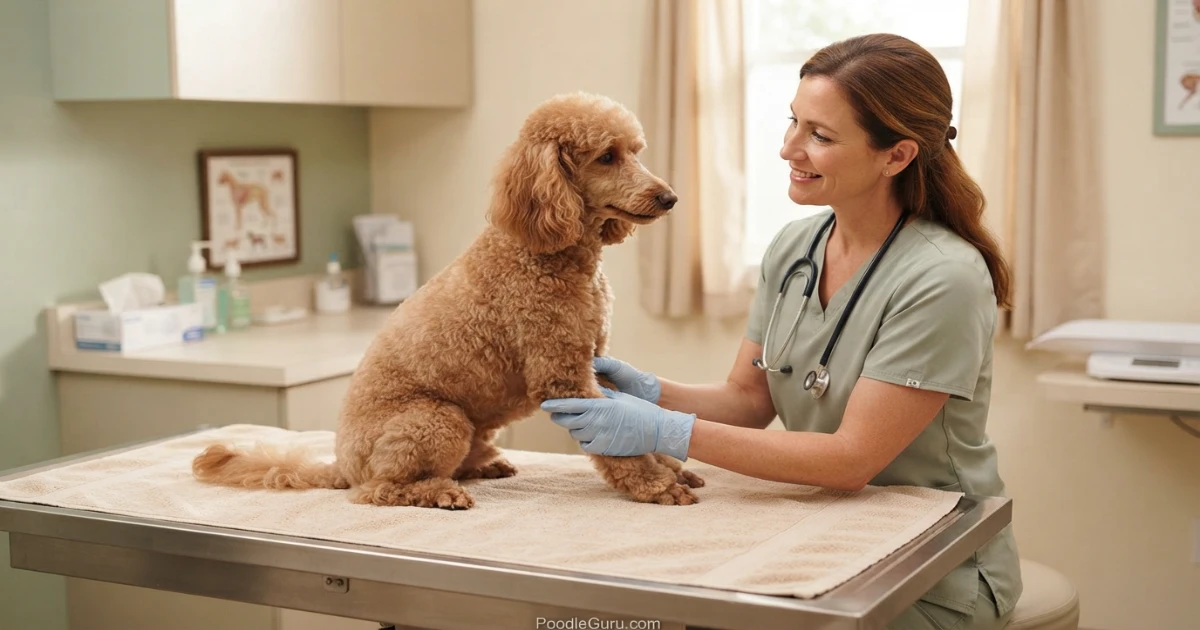
When to Call Your Veterinarian
Supplements support — they don’t diagnose. Schedule a vet visit if your poodle shows any of these signs:
- Limping that lasts more than 24 hours or comes and goes
- Stiffness after rest that takes more than a few minutes to loosen
- Reluctance to jump on furniture or climb stairs they used to handle
- Swelling, heat, or sensitivity around a specific joint
- Sudden yelping or snapping when touched
A proper orthopaedic exam and possibly X-rays can catch conditions like hip dysplasia, luxating patella, or early arthritis before they progress. The best joint supplements for poodles work alongside — never instead of — professional veterinary care.
Owner Action Plan: Start Today
Week 1
Check your poodle’s body condition score. If overweight, discuss a weight-loss diet with your vet. Review your current supplement’s ingredient panel — does it pass the PoodleGuru Joint Supplement Audit?
First Month
If supplement is new, begin with the loading dose if required. Track stiffness or mobility changes in a simple notebook. Ask your vet whether omega-3 support is appropriate if it’s missing from the current formula.
Ongoing
Reassess at 12 weeks. If no improvement, consider switching to a different ingredient combo (e.g., green-lipped mussel base). Schedule an annual joint checkup, especially for Standards over age 2 and any poodle showing early stiffness.
Frequently Asked Questions
At what age should I start giving my poodle joint supplements?
There is no universal age for every poodle. Some owners discuss joint support after growth is complete, especially for active Standard Poodles or dogs with orthopedic family history. Toy and Miniature Poodles may only need supplements if symptoms or vet findings appear. Always align timing with your veterinarian.
Can joint supplements prevent hip dysplasia in poodles?
Supplements cannot prevent hip dysplasia, which is largely genetic. They may support joint comfort in at-risk dogs as part of a broader plan, but responsible breeding, lean body condition, controlled puppy growth, and veterinary monitoring are far more important.
How do I know if a joint supplement is working for my poodle?
Noticeable changes take 8–12 weeks. Keep a simple log: ease of rising, willingness to jump, and play duration. Subtle improvements — like your poodle taking stairs more fluidly — are the earliest signs. If no change after 12 weeks, a different ingredient combination may be worth trying under vet guidance.
Are liquid joint supplements better than chews for poodles?
Liquids can be easier to dose precisely for Toy Poodles and tend to absorb slightly faster. Chewables are more convenient for Standards and often more palatable. The “best” form is the one your poodle consistently takes. Effectiveness comes from the active ingredients, not the delivery method.
Can I give my poodle human glucosamine supplements?
It’s not recommended unless your veterinarian specifically approves the exact product and dose. Human supplements may contain xylitol, other sweeteners, or ingredients that are unsafe for dogs. Stick with veterinary-formulated products with dog-specific dosing and safety testing.
What’s the difference between glucosamine HCl and glucosamine sulfate for dogs?
Glucosamine HCl and glucosamine sulfate are different salt forms of glucosamine. Rather than choosing based on the name alone, focus on whether the product is formulated for dogs, lists clear active amounts, has quality testing, and is appropriate for your poodle’s size.
Can joint supplements cause side effects in poodles?
Side effects are rare but can include mild digestive upset (gas, soft stools). Starting with a half dose for the first week can minimize this. If diarrhoea or vomiting occurs, stop the supplement and consult your vet. Shellfish-derived glucosamine may also trigger allergies in sensitive dogs.
Key Takeaways
The best joint supplements for poodles are not always the most expensive — they are the ones that match your poodle’s size, use clearly listed joint-support ingredients, and come from a transparent manufacturer.
- Standard Poodles benefit from early joint supplementation (around 12–18 months), while Toy and Miniature Poodles may start later unless orthopaedic signs appear.
- The PoodleGuru Joint Supplement Audit prioritises ingredient synergy, clinically relevant doses, poodle-size appropriateness, third-party testing, and brand transparency.
- A combination of glucosamine, chondroitin, and comfort-support ingredients such as MSM, green-lipped mussel, or omega-3s may address multiple layers of joint support.
- Joint supplements take 8–12 weeks to show effect; keeping a simple mobility log prevents stopping too early.
- No supplement replaces weight control, regular veterinary exams, and responsible breeding practices — they work best as part of a complete joint care plan.
Best next step: Pull out your current joint supplement. Run it through the PoodleGuru Joint Supplement Audit. If it fails more than one pillar, book a conversation with your vet and transition to a formula that gives your poodle the support their joints truly deserve.