Why Is My Poodle Panting So Much? Heavy Breathing Causes
Panting is normal for dogs — but poodle owners are often the first to notice when breathing patterns shift. This guide walks you through what’s normal, what’s not, and when heavy panting deserves a closer look.
Quick Answer
Most poodle panting is completely normal — it’s how dogs regulate body temperature after activity or in warm weather. But poodle excessive panting that appears suddenly, continues at rest, or comes with other symptoms like pale gums, coughing, or disorientation may signal heatstroke, respiratory distress, pain, or an underlying condition like laryngeal paralysis or heart disease. If your poodle is panting heavily without an obvious trigger and can’t settle, call your veterinarian promptly. Poodles are observant, sensitive dogs — and panting can also increase with anxiety or stress.
🐩 Normal Rate
A resting poodle typically takes 10–30 breaths per minute. Panting can push this above 200 breaths per minute during cooling.
🌡️ Primary Trigger
Dogs don’t sweat much. Panting is their main cooling system — it’s evaporation in action, and poodles with thicker coats may pant sooner.
⚠️ Red Flags
Panting at rest, pale or blue gums, raspy breathing, collapsing, or panting that won’t stop after 10–15 minutes of cooling down all warrant a vet call.
What Is Excessive Panting in Poodles?
Poodle excessive panting is heavy, rapid, or labored breathing that goes beyond what a situation calls for — or continues long after the trigger has passed. It’s the kind of breathing that makes you stop and watch.
For poodle owners, this means panting that happens when your dog is not hot, hasn’t been running, and isn’t visibly excited or stressed. The most important thing to understand is that panting exists on a spectrum. Mild, situational panting sits at one end. Continuous, distressed, or noisy breathing sits at the other — and that’s the side that deserves immediate attention.
Poodles are alert, sensitive dogs. They notice everything. Sometimes their panting reflects emotional intensity more than physical exertion. But the line between “just a little warm” and “something’s wrong” can blur fast. Knowing where that line sits for your poodle is what this guide helps you figure out.
Normal Poodle Panting vs. Concerning Panting
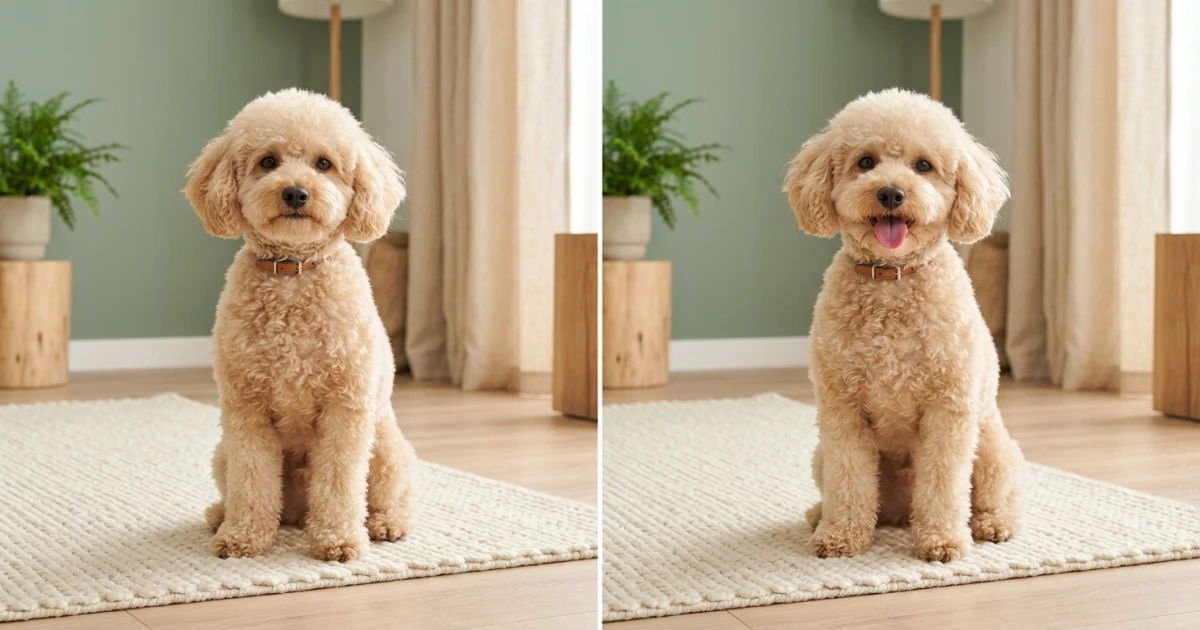
Most poodle panting is unremarkable. Your dog runs, your dog pants. The room warms up, the tongue comes out. That’s the cooling system doing exactly what it evolved to do. But when panting looks different from your dog’s usual pattern, it’s worth comparing the details side by side.
| What to Observe | Normal Panting | Concerning Panting |
|---|---|---|
| Breathing rate | Elevated but rhythmic; slows within 5–10 minutes of rest | Rapid, shallow, or irregular; doesn’t slow with rest |
| Duration | Stops once the dog cools down or calms | Persists for 15+ minutes after the trigger ends |
| Trigger | Exercise, heat, excitement, mild stress | No obvious trigger, or panting at night/at rest |
| Gum color | Pink and moist | Pale, grey, blue, or brick-red |
| Tongue | Pink, relaxed, may hang loosely | Swollen, bluish, or excessively thick |
| Body language | Relaxed posture; dog can still respond to name | Stiff, pacing, unable to settle, or unresponsive |
| Sound | Soft, open-mouthed panting | Raspy, wheezy, or stridor (high-pitched on inhale) |
| What to do | Offer water, shade, rest | Call your vet; if gums are pale/blue, go to emergency |
One pattern poodle owners often notice: panting that spikes at night or during thunderstorms. That can point to anxiety rather than a physical problem — but it’s still worth mentioning to your vet if it’s new or worsening.
Common Causes of Poodle Excessive Panting
Poodle panting has a wide range of possible causes. Some are straightforward and easy to resolve. Others are subtle and need veterinary investigation. Here are the categories that matter most for poodle owners.
Why Is My Poodle Panting So Much at Rest?
If your poodle is panting heavily while resting in a cool room, treat it as more important than panting after play. Resting panting can come from pain, anxiety, fever, airway irritation, heart strain, hormonal disease, or early heat stress. Check gum color, look for coughing or weakness, and call your veterinarian if the panting does not settle after 10–15 minutes of calm cooling.
Heat and Overexertion
This is the most common cause by far. Poodles — especially Standards with their dense, curly coats — can overheat faster than owners expect. A walk that feels mild to you might be strenuous for a poodle in full coat on a humid afternoon. Puppies and senior poodles are even more vulnerable. If your dog pants heavily after a walk and settles within 10 minutes with water and shade, that’s the cooling system working.
Anxiety and Stress
Poodles are emotionally sensitive. Separation anxiety, loud noises, unfamiliar environments, or changes in routine can all trigger panting that looks physical but is rooted in stress. You’ll often see it alongside pacing, whining, or clinginess. This type of panting tends to stop when the stressor goes away — but chronic anxiety can keep a poodle in a low-grade panting state for hours.
Pain or Discomfort
Dogs hide pain instinctively, but panting is one of the few outward signs that slips through. A poodle with joint pain, dental issues, digestive discomfort, or an injury may pant without an obvious external trigger. If your poodle is panting at rest and also seems stiff, reluctant to move, or sensitive to touch, pain is a real possibility.
Respiratory and Airway Conditions
Poodles can develop laryngeal paralysis, tracheal collapse (more common in Toy and Miniature poodles), or chronic bronchitis — all of which affect breathing efficiency. Laryngeal paralysis, in particular, often shows up first as noisy panting or a raspy sound during inhalation. It’s more common in older dogs, and it can worsen in heat or humidity.
Heart and Circulatory Issues
When the heart isn’t pumping efficiently, the body compensates by breathing faster. Poodles are among the breeds that can develop mitral valve disease or dilated cardiomyopathy. Panting that appears alongside coughing, lethargy, or a distended belly may signal a cardiac problem — and it deserves prompt veterinary evaluation.
Hormonal and Metabolic Conditions
Cushing’s disease (hyperadrenocorticism) is a well-known trigger for excessive panting in middle-aged and senior poodles. It often comes with other signs: increased thirst, frequent urination, thinning coat, and a pot-bellied appearance. Thyroid imbalances can also affect breathing patterns, though less directly.
The PoodleGuru 4-Zone Panting Assessment
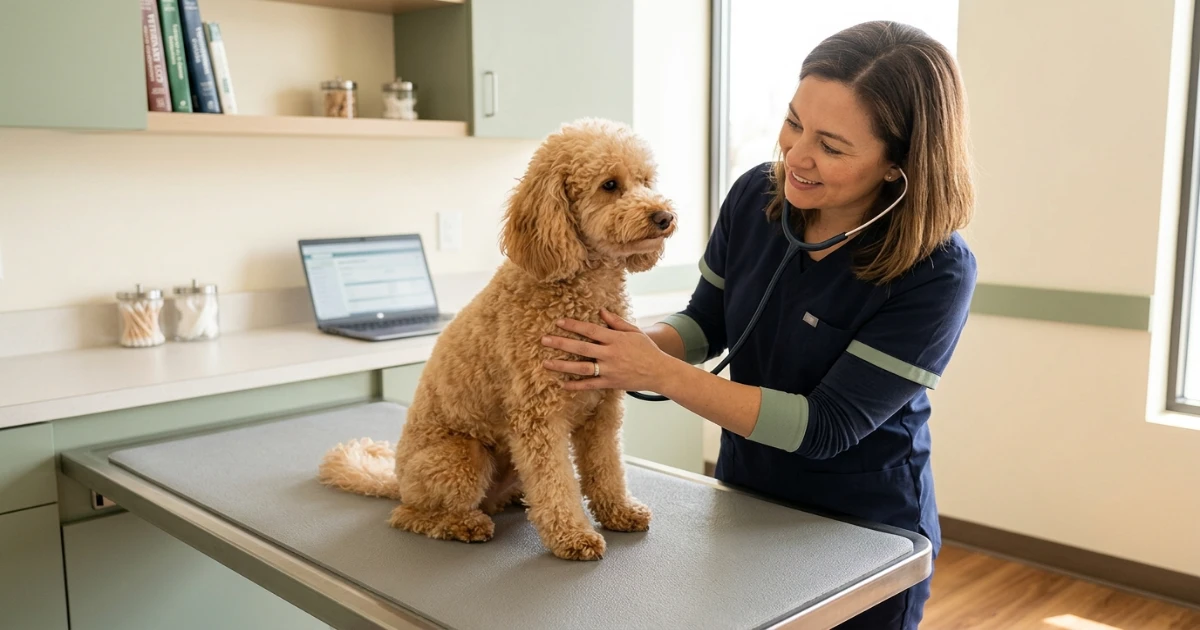
At PoodleGuru, we evaluate panting severity using a simple framework that helps owners decide how urgently to act. This isn’t a diagnostic tool — it’s a decision-support method designed to reduce guesswork when you’re worried.
The PoodleGuru 4-Zone Panting Assessment
Use this framework any time your poodle is panting more than you’d expect. Match your dog’s signs to the zone that fits best — then follow the recommended action.
🟢 Zone Green: Normal Cooling
What you see: Panting after exercise, warmth, or excitement. Mouth open, tongue pink, breathing rhythmic. Slows within 5–10 minutes of rest. Gums stay pink.
What to do: Offer fresh water, move to shade or a cooler room. Let your poodle rest. No vet visit needed.
🟡 Zone Yellow: Monitor Closely
What you see: Panting that takes 15–30 minutes to settle, or panting at unusual times (night, at rest) that comes and goes. Dog is still responsive, gums still pink. Maybe mild pacing.
What to do: Record a short video for your vet. Note when it happens and what preceded it. Schedule a non-emergency vet check if it happens more than twice in a week.
🟠 Zone Orange: Vet Visit Soon
What you see: Persistent panting at rest. Breathing looks labored. Maybe raspy sounds, mild coughing, or increased effort. Poodle seems tired or less engaged than usual.
What to do: Call your vet within 24 hours. Describe what you’re observing — including duration, sounds, and any other changes in behaviour or appetite.
🔴 Zone Red: Emergency
What you see: Pale, grey, or blue gums. Collapse or near-collapse. Panting that won’t stop. Distended abdomen with unproductive retching (possible bloat). Unresponsiveness. Severe stridor or choking sounds.
What to do: Go to the nearest emergency veterinary hospital immediately. Do not wait. Do not try home remedies. This is life-threatening.
The value of this framework is speed. When you’re anxious, it’s easy to overreact or underreact. The zones give you a structured way to check yourself — and a clear answer when someone else in the household asks “should we take him in?”
When Panting Signals a Medical Emergency
Some causes of poodle excessive panting can’t wait. They need immediate veterinary intervention. Knowing which signs separate urgency from watchful waiting is one of the most important skills a poodle owner can develop.
🚨 When to Call a Vet Immediately
Go to an emergency vet right now if your poodle shows any of these signs alongside panting:
- Gums that are pale, white, grey, blue, or brick-red
- Collapse, staggering, or inability to stand
- Swollen, hard abdomen with panting and retching (bloat risk — especially in Standards)
- Panting that won’t stop after 15+ minutes of cooling in a temperature-controlled room
- High-pitched rasping or stridor on inhale
- Unresponsiveness or severe lethargy
- Seizure-like activity combined with heavy breathing
Heatstroke deserves special mention. Poodles with thick, unclipped coats are at higher risk in hot weather — especially in cars, on warm pavement, or during summer afternoon walks. Signs include frantic panting, bright red gums, thick saliva, vomiting, and collapse. Move the dog to shade, offer small sips of water, and get to a vet immediately. Do not use ice-cold water — it can constrict blood vessels and make cooling less effective.
Bloat (GDV) is a particular concern for Standard Poodles, who have deep chests. The stomach twists, trapping gas. The dog pants, drools, retches without producing anything, and the belly may visibly swell. This is a surgical emergency. Minutes matter.
Veterinary guidance generally recommends erring on the side of caution. No owner ever regretted a vet visit that turned out to be nothing — but delaying a real emergency can have devastating consequences.
Breed-Specific Factors That Affect Poodle Breathing
Poodles aren’t brachycephalic (flat-faced) breeds like Bulldogs or Pugs, so they don’t face the same structural airway challenges. But they do have breed-specific traits that influence breathing and panting patterns.
Coat Density and Heat Retention
Poodle coats are famously dense and curly — excellent for insulation, less ideal for heat dissipation. A poodle in full show coat retains significantly more body heat than a clipped poodle. This doesn’t mean you need to shave your dog, but it does mean coat length directly affects how quickly a poodle overheats. Summer clips aren’t just cosmetic; they’re functional.
Size Variations and Respiratory Differences
Toy and Miniature Poodles can be more prone to tracheal collapse — a condition where the windpipe flattens during breathing, causing a honking cough and increased panting. Standard Poodles, with their deeper chests, face higher bloat risk. Understanding which risks apply to your poodle’s size matters.
Sensitivity and Anxiety
This is where poodles truly stand apart from many other breeds. They’re exceptionally attuned to their environment and their people. A poodle who senses household tension, a schedule disruption, or even a visiting stranger may pant from emotional intensity alone. This isn’t weakness — it’s the same sensitivity that makes poodles brilliant companions. But it does mean stress panting shows up more often in poodles than in less emotionally responsive breeds.
The AKC breed standard for poodles describes them as “active, intelligent, and elegant” — and that intelligence means they process the world deeply. Sometimes that processing shows up as panting.
What to Do When Your Poodle Won’t Stop Panting
When your poodle is panting and you’re worried, here’s a practical sequence that covers the most common scenarios. Work through it in order — but skip straight to the vet step if any red-flag signs from Zone Red are present.
Step 1: Cool and Calm the Environment
Move your poodle to a cool, shaded, quiet room. Offer room-temperature water (not ice-cold). Turn on a fan or air conditioning. Remove any obvious stressors — turn off loud TV, close curtains if outdoor activity is overstimulating, speak in calm, low tones.
Step 2: Check the Basics
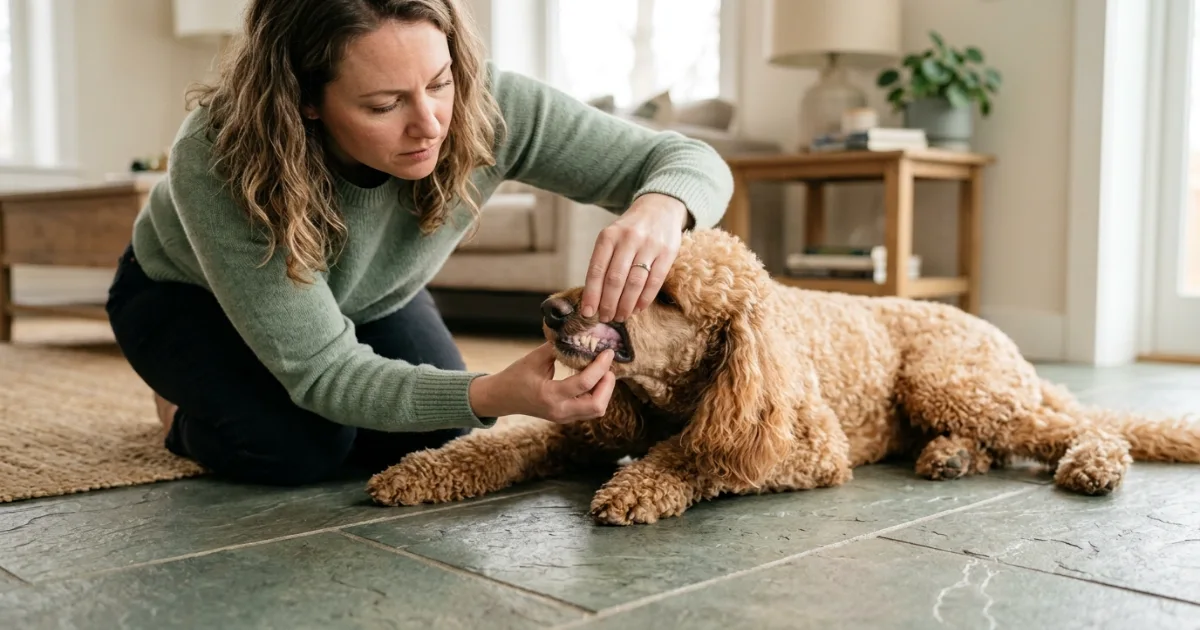
Look at the gums. Pink is good. Anything else is a vet trip. Feel the belly — is it hard or swollen? Check for visible injuries, limping, or sensitivity. Think back: has your poodle eaten anything unusual? Been in the heat? Had a stressful experience?
Step 3: Time It
If panting doesn’t noticeably improve within 10–15 minutes of cooling and calming, that’s a signal. Even if your poodle seems otherwise fine, persistent unexplained panting warrants a vet call. Use your phone to record a short video — it helps the vet see exactly what you’re describing.
Step 4: Make the Call
Describe what you observed, when it started, how long it’s lasted, and any other symptoms — even small ones. Mention if this has happened before. The vet can help you decide whether to come in now, schedule soon, or monitor at home.
Veterinary Sources and Safety References
This guide is educational and designed to help poodle owners recognize patterns, not diagnose a dog at home. For health concerns, always follow guidance from your own veterinarian or an emergency veterinary hospital.
Frequently Asked Questions
Why is my poodle panting at night when it’s cool?
Nighttime panting in poodles often points to anxiety, pain, or an underlying medical condition rather than heat. Cushing’s disease, heart issues, and cognitive changes in senior dogs can all cause panting that worsens at night. If it happens repeatedly, record a video and share it with your vet.
Do poodles pant more than other breeds?
Not inherently — poodles don’t have the flat-faced airway restrictions of brachycephalic breeds. But their dense coats trap heat, and their high emotional sensitivity means stress panting is more common. A poodle in full coat may pant sooner during exercise than a short-coated breed of similar size.
Can anxiety cause excessive panting in poodles?
Yes, and poodles are particularly prone to it. Separation anxiety, noise phobia, or changes in routine can all trigger panting that looks like a physical problem. Anxiety panting often comes with pacing, whining, or clinginess and typically resolves when the stressor is removed.
What does it mean if my poodle is panting and shaking?
Panting combined with shaking or trembling can signal pain, severe anxiety, toxin ingestion, or a metabolic issue. This combination warrants a prompt vet visit — especially if it appears suddenly or your poodle seems disoriented. Don’t wait to see if it passes on its own.
Is heavy panting normal after poodle grooming?
Some panting after grooming is common — it can be stressful, physically tiring, and warm under the dryer. But if panting continues more than 30 minutes after returning home or comes with trembling, hiding, or unusual lethargy, it may indicate extreme stress or an adverse reaction worth discussing with your groomer and vet.
How can I tell if my poodle’s panting is from pain?
Pain-related panting often appears at rest, without heat or exertion. Look for other subtle pain signs: reluctance to move, stiffness, guarding a body area, reduced appetite, or changes in posture. If panting at rest persists and you can’t identify a clear trigger, pain is a realistic possibility — and a vet exam can help pinpoint it.
When should I take my panting poodle to the emergency vet?
Go immediately if gums are pale, blue, or grey; if your poodle collapses or can’t stand; if there’s a swollen abdomen with retching; or if panting is extreme and won’t stop after cooling. Trust your instinct — if something feels seriously wrong, don’t wait for a regular appointment.
Does age affect how much a poodle pants?
Yes. Senior poodles may pant more due to reduced cardiovascular efficiency, joint pain, cognitive changes, or conditions like Cushing’s disease. Puppies pant heavily during play but recover quickly. A panting pattern that shifts noticeably with age is worth discussing with your vet.
Key Takeaways: Poodle Panting at a Glance
Most panting is your poodle’s cooling system doing its job — but persistent, unexplained, or distressed panting is never something to ignore. Here’s what to remember:
- Normal poodle panting stops within 10–15 minutes of rest and cooling; gums stay pink and moist throughout.
- Poodle excessive panting at rest, at night, or without an obvious trigger should be evaluated by a veterinarian.
- The PoodleGuru 4-Zone Assessment (Green/Yellow/Orange/Red) helps owners quickly decide whether to monitor, schedule a visit, or seek emergency care.
- Poodle-specific factors — dense coat, emotional sensitivity, and size-dependent conditions like tracheal collapse or bloat — all influence panting patterns.
- Pale or blue gums, collapse, swollen abdomen, or unrelenting panting are emergencies — go to the vet immediately.
- When in doubt, a short phone video and a call to your vet are always better than waiting and worrying alone.