Poodle UTI Symptoms: Signs Every Owner Must Recognize
Urinary tract infections can escalate quickly in poodles — and the earliest signs are often subtle behavioral shifts, not obvious pain. Here’s how to spot poodle UTI symptoms before they become serious, what to do next, and how to protect your dog long-term.
Quick Answer
The most common poodle UTI symptoms include frequent urination with little output, straining to urinate, blood in the urine, excessive genital licking, and sudden indoor accidents in a previously house-trained dog. Poodles — especially smaller Toy and Miniature varieties — can mask early discomfort, so any change in urination habits warrants a same-day or next-day vet visit. Many confirmed bacterial UTIs improve with the right veterinarian-prescribed treatment when caught early, but untreated or complicated infections can spread upward toward the kidneys.
What Is a UTI in Poodles?
A urinary tract infection (UTI) in poodles is a bacterial infection that affects any part of the urinary system — most commonly the bladder and urethra. For poodle owners, this means recognizing subtle behavioral changes before they escalate into serious discomfort or kidney involvement. The most important thing to understand is that poodles often mask early UTI symptoms, so proactive monitoring based on urination patterns and subtle mood shifts is far more reliable than waiting for obvious signs of pain.
UTIs occur when bacteria — usually E. coli from the digestive tract — travel up the urethra and colonize the bladder. A healthy urinary tract flushes bacteria out during normal urination. When something disrupts that process, the bacteria multiply and trigger inflammation. In poodles, factors like infrequent bathroom breaks, inadequate water intake, or anatomical quirks can tip the balance.
Veterinary guidance generally recommends treating confirmed bacterial UTIs with a course of antibiotics selected based on urine culture results. Left untreated, a lower UTI can ascend to the kidneys — a condition called pyelonephritis — which is far more dangerous and painful.
Quick Facts at a Glance
Who’s Most at Risk
Female poodles of all sizes, senior dogs, and Toy/Miniature poodles with less bladder capacity are at higher risk.
Primary Cause
Bacterial overgrowth, commonly involving E. coli, in the bladder or lower urinary tract — often influenced by anatomy, underlying disease, or incomplete bladder emptying.
Key Early Sign
Frequent squatting or leg-lifting with little to no urine produced. This straining is often mistaken for constipation.
Treatment Duration
Treatment length depends on the diagnosis and culture results. Your vet may prescribe antibiotics for several days to two weeks or longer for complicated cases.
Prevention Works
Consistent hydration, regular bathroom breaks, and sanitary grooming support urinary health and may reduce recurrence risk when paired with vet care.
When It’s Urgent
Fever, vomiting, back pain, collapse, or complete inability to pass urine can signal kidney infection or urinary obstruction — emergency vet care is required.
Poodle UTI Symptoms: The Complete Warning Signs List
Poodle UTI symptoms don’t always announce themselves loudly. Some dogs whimper or pace. Others simply seem “off” — a little quieter on walks, a little less interested in dinner. The breed’s natural sensitivity means behavioral changes are often your earliest and most reliable clue.
Early-Stage Symptoms
These are the signs owners most often notice first. They’re easy to dismiss as a temporary quirk, but patterns lasting more than 24 hours deserve attention.
- Increased urination frequency — your poodle asks to go out more often than usual, or makes multiple attempts during a single walk.
- Straining or posturing with little output — squatting or lifting a leg repeatedly but producing only drops. This is a hallmark of bladder inflammation.
- Excessive genital licking — a poodle that won’t stop licking the vulva or prepuce area is often trying to soothe irritation.
- Sudden indoor accidents — a house-trained dog urinating inside, especially small amounts in multiple spots, is a red flag.
- Restlessness or pacing — inability to settle, especially in the evening, sometimes indicates bladder pressure.
Advanced or Severe Symptoms
If the infection progresses or spreads toward the kidneys, symptoms intensify. These signs demand an urgent vet evaluation — same day if possible.
- Visible blood in the urine — urine may appear pink, red, or brown-tinged. Even faint discoloration counts.
- Cloudy or unusually strong-smelling urine — bacterial byproducts change urine clarity and odor before blood appears.
- Vocalizing during urination — whining, yelping, or growling while trying to pee signals significant pain.
- Fever, lethargy, or loss of appetite — systemic signs suggest the infection may be spreading beyond the bladder.
- Vomiting or back pain — these are potential signs of kidney involvement (pyelonephritis) and require emergency care.
Why Poodles May Be Prone to UTIs
No breed is immune to UTIs, but certain poodle-specific factors can increase susceptibility. Understanding these helps you adjust your care routine proactively.
Anatomical Factors
Female poodles have a shorter urethra than males, which reduces the distance bacteria must travel to reach the bladder. This is true across all dog breeds, but it’s particularly relevant for Toy and Miniature poodles, whose compact anatomy leaves less margin for error. Owners of female poodles should be especially vigilant about post-bathroom hygiene and regular sanitary trims.
Bladder Capacity in Smaller Sizes
Toy poodles have tiny bladders. They physically cannot hold urine as long as a Standard poodle or a larger breed. When owners delay bathroom breaks — even by an hour or two — urine sits in the bladder longer, giving bacteria more time to multiply. This isn’t about training; it’s about biology. A Toy poodle’s bladder fills faster, and holding urine too long creates a breeding ground for bacteria.
Grooming and Hygiene
Poodles have dense, curly coats that trap moisture and debris around the genital area if not kept trimmed. A sanitary clip — shaving the hair short around the vulva or prepuce and under the tail — isn’t just cosmetic. It reduces the warm, moist environment where bacteria thrive. Owners who stretch the time between grooming appointments too far may inadvertently raise UTI risk, especially during hot or humid months.
Underlying Health Conditions
Senior poodles and those with diabetes, Cushing’s disease, or bladder stones face elevated UTI risk. Diabetes, for example, increases glucose in the urine, which feeds bacterial growth. If your poodle has been diagnosed with a chronic condition, UTI prevention should be part of your ongoing care conversation with your vet.
UTI vs. Other Urinary Issues: How to Tell the Difference
Not every urinary problem is a UTI. Poodle owners sometimes mistake bladder stones, diabetes symptoms, or even behavioral marking for an infection. The table below breaks down the distinctions — use it to guide your observations, but always confirm with a vet.
| Condition | Key Symptoms | Pain Level | Urine Appearance | Behavioral Clues | Urgency |
|---|---|---|---|---|---|
| UTI (Bacterial) | Frequent straining, small amounts, licking, accidents | Mild to moderate | Cloudy, strong odor, possibly blood-tinged | Restlessness, asking out constantly | Same-day or next-day vet visit |
| Bladder Stones | Straining, blood in urine, possible complete blockage | Moderate to severe | Bright red blood, gritty sediment | May cry out when urinating; repeated squatting | Urgent if straining produces nothing |
| Diabetes-Related | Excessive thirst, huge urine volumes, weight loss | Low | Diluted, pale, no odor change | Drinks constantly; accidents are large puddles | Schedule vet workup soon |
| Behavioral Marking | Small amounts on vertical surfaces, no straining | None | Normal appearance and odor | Confident posture; often triggered by new stimuli | Non-medical; training issue |
| Kidney Infection | Fever, vomiting, back pain, sometimes reduced urine | Severe | May be dark or bloody | Depressed, won’t eat, may arch back in pain | Emergency — immediate vet |
This table is a comparison guide only. Always consult your veterinarian for an accurate diagnosis — overlapping symptoms are common and lab work is often required.
When to Call the Vet (and When It’s an Emergency)
UTIs are not conditions to treat at home with natural remedies or wait-and-see patience. Do not assume urinary symptoms will resolve on their own. Delaying veterinary diagnosis can allow a bacterial infection to worsen or spread toward the kidneys. That said, not every urinary quirk is an emergency. Here’s how to triage.
Schedule a Vet Visit (Same Day or Next Day) If:
- Your poodle is straining to urinate or producing only drops
- You notice blood in the urine, even faintly
- There are sudden indoor accidents in a house-trained dog
- Genital licking is constant and obsessive
- Urine has a noticeably strong or foul odor
Emergency Vet — Go Immediately If:
- Your poodle cannot pass any urine despite repeated attempts
- There is vomiting, fever, or extreme lethargy
- Your dog cries out in pain or shows abdominal rigidity
- You notice disorientation, collapse, or pale gums
For a deeper understanding of how UTIs develop in dogs and why veterinary diagnosis matters, VCA Animal Hospitals provides a thorough overview of canine urinary tract infections including diagnostic approaches and treatment protocols.
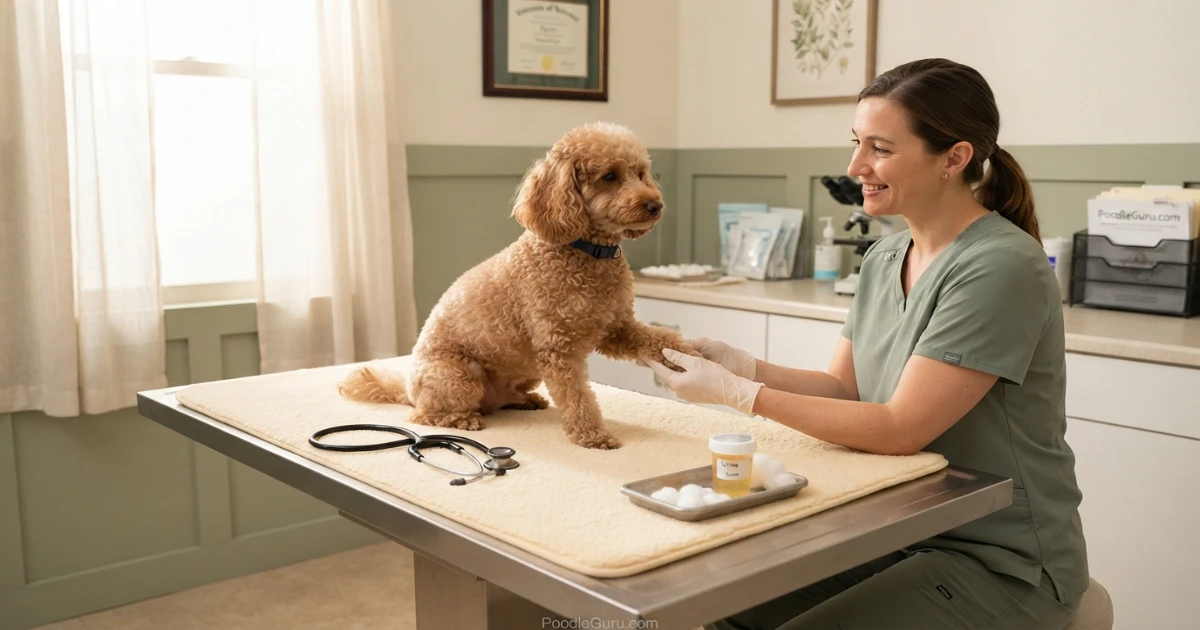
How Your Vet Diagnoses a UTI in Poodles
When you bring your poodle in with suspected UTI symptoms, the diagnostic process typically follows a clear sequence. Understanding what to expect helps you advocate for thorough care.
Step 1: Urinalysis
The vet collects a urine sample — ideally via cystocentesis, a sterile needle draw directly from the bladder, which prevents contamination from the urethra or genital area. The sample is checked for bacteria, white blood cells, red blood cells, crystals, and pH abnormalities. Results are typically available within hours.
Step 2: Urine Culture and Sensitivity (If Needed)
For recurrent UTIs or cases that don’t respond to the first antibiotic, a culture identifies the exact bacteria species and determines which antibiotics will be effective. This step is critical for poodles with a history of multiple infections — guessing the wrong antibiotic prolongs suffering and promotes resistance.
Step 3: Imaging (Ultrasound or X-Ray)
If bladder stones, tumors, or anatomical abnormalities are suspected, your vet may recommend imaging. This is more common in senior poodles or dogs with recurrent infections. Stones can harbor bacteria deep inside their structure, making them a hidden source of repeat UTIs.
Treatment and Recovery: What to Expect
Once a UTI is confirmed, treatment is straightforward for most poodles. The key is completing the full course of medication even if symptoms improve early.
Antibiotic Therapy
Your vet will prescribe treatment based on urinalysis results and, when needed, urine culture. Antibiotic duration varies by case — some uncomplicated infections may need only a short course, while recurrent, resistant, or kidney-involved infections need longer care. Many poodles show noticeable improvement within 48–72 hours once the right treatment starts, but stopping medication early because your dog “seems better” can allow infection to rebound and may contribute to resistance.
Pain Management
Bladder inflammation hurts. Your vet may prescribe anti-inflammatory medication or a urinary analgesic to ease discomfort while the antibiotics take effect. Never give human pain medications to your poodle — many are toxic to dogs, even in tiny doses.
Increased Hydration Support
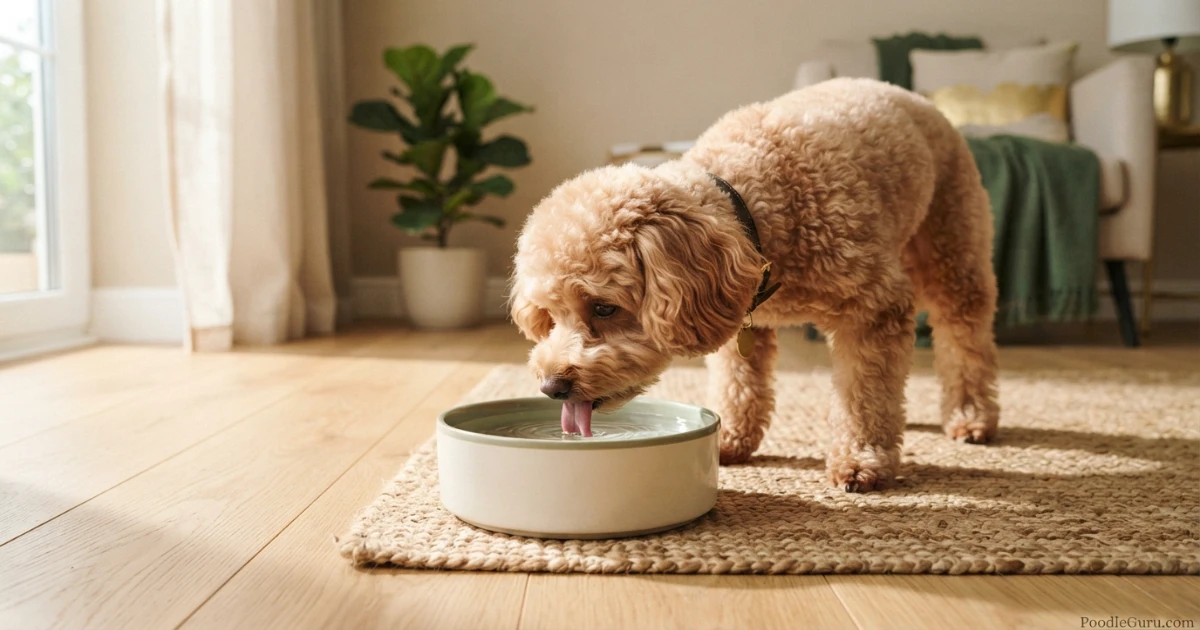
During recovery, encourage drinking. Some strategies that work for poodles: adding a splash of low-sodium chicken broth to water, offering ice cubes as a treat, or switching temporarily to wet food, which has higher moisture content. The goal is to keep urine flowing and dilute bacterial concentration.
Follow-Up Testing
For uncomplicated first-time UTIs, many vets don’t require a follow-up urinalysis if symptoms resolve fully. However, for recurrent infections, senior poodles, resistant cases, or severe illness, your vet may recommend a follow-up urine check after treatment to confirm the infection is truly gone.
The PoodleGuru UTI Prevention & Monitoring Framework
At PoodleGuru, we evaluate UTI prevention as a daily-care system, not a one-time intervention. The framework below is built for poodle owners specifically — accounting for size differences, coat needs, and the breed’s particular sensitivities.
This is the PoodleGuru 5-Step UTI Prevention & Monitoring Framework. Use it as your ongoing care baseline.
Establish a Hydration Baseline
Measure how much water your poodle drinks in a 24-hour period for three consecutive days. A healthy dog typically drinks about 1 ounce per pound of body weight daily. If your Toy Poodle seems to drink much less than expected for their size, discuss hydration support with your vet. Address it with wet food, broth-enhanced water, or a pet fountain — moving water encourages drinking in many poodles.
Outcome: You’ll know your poodle’s normal intake and catch decreases early, before they affect urinary health.
Maintain a Sanitary Grooming Routine
Schedule sanitary trims as needed — often every 3–4 weeks for long-coated poodles — either at the groomer or at home with safe clippers. Keep the hair around the vulva or prepuce and under the tail clipped short and clean. After bathroom walks, a quick wipe with a pet-safe, unscented wipe can help remove debris near the urinary opening.
Outcome: A dry, clean genital area supports hygiene and may reduce the debris and moisture that contribute to irritation.
Monitor Urination Patterns Intentionally
Track your poodle’s bathroom frequency, output volume, and any straining for one week per quarter. Use a simple notes app — note time of day, approximate output (normal, small, just drops), and any unusual behavior. This quarterly check-in creates a personal baseline that makes anomalies obvious.
Outcome: You’ll detect pattern changes weeks before they become obvious symptoms.
Schedule Strategic Vet Checks
For poodles with a history of UTIs, ask your vet about a proactive urinalysis every 6 months — even when your dog seems healthy. Subclinical UTIs (infections without obvious symptoms) are more common than many owners realize, especially in senior poodles. Catching them early prevents escalation.
Outcome: Hidden urinary problems may be caught earlier, before they become painful or complicated.
Adjust Diet for Urinary Health
Work with your vet to evaluate whether your poodle’s diet supports urinary health. For dogs with bladder stones, recurrent UTIs, or abnormal urine pH, your vet may recommend a therapeutic urinary diet. Avoid trying to acidify urine at home or adding supplements without veterinary guidance.
Outcome: A vet-guided diet plan can support urinary health, especially when bladder stones, crystals, diabetes, or recurrent infections are part of the picture.
Common Owner Mistakes That Make UTIs Worse
Even well-intentioned owners sometimes take actions that prolong infection or increase recurrence risk. Here are the most frequent missteps — and what to do instead.
| Mistake | Why It’s Harmful | Better Approach |
|---|---|---|
| Waiting to “see if it clears up” | Urinary symptoms should not be ignored. A suspected bacterial UTI needs veterinary testing, and delays can allow a true infection to worsen or spread upward toward the kidneys. | Schedule a same-day or next-day vet visit when urinary symptoms are consistent or painful. |
| Giving cranberry supplements without vet approval | Cranberry’s effectiveness in dogs is not well-established, and some formulations contain ingredients unsafe for dogs. | Ask your vet before adding any supplement to your poodle’s regimen. |
| Stopping antibiotics early | Surviving bacteria develop resistance, making the next infection harder to treat. | Complete every dose of the prescribed course, even if symptoms disappear. |
| Skipping sanitary grooming between full grooms | Moisture and debris accumulation around the urethral opening increases bacterial colonization risk. | Learn to do a quick sanitary trim at home or book touch-up appointments every 3–4 weeks. |
| Restricting water to reduce accidents | Concentrated urine irritates the bladder lining and encourages bacterial growth. | Never restrict water unless your veterinarian specifically instructs you to; address accidents with more frequent bathroom breaks instead. |
Frequently Asked Questions About Poodle UTI Symptoms
What are the first signs of a UTI in a poodle?
The earliest signs are usually increased urination frequency, straining to produce urine, and sudden indoor accidents in a previously house-trained dog. Many poodles also lick their genital area excessively. These symptoms often appear before blood is visible in the urine or obvious pain sets in, so don’t wait for dramatic signs to call your vet.
Can a poodle UTI go away on its own?
No. Bacterial urinary tract infections in poodles do not resolve without antibiotic treatment. While a very mild irritation might temporarily improve with increased hydration, true bacterial infections require veterinary-prescribed antibiotics. Delaying treatment allows the infection to spread to the kidneys, which is far more dangerous and harder to treat.
How do vets diagnose UTIs in poodles?
Vets typically start with a urinalysis — examining a urine sample for bacteria, white blood cells, blood, and pH imbalances. For recurrent or complex cases, a urine culture identifies the specific bacteria and determines which antibiotic will work best. Some poodles also need ultrasound or X-rays to check for bladder stones or structural issues.
Are female poodles more prone to UTIs than males?
Yes. Female poodles have a shorter urethra, which makes it easier for bacteria to travel from the external environment into the bladder. This anatomical difference applies across all sizes — Toy, Miniature, and Standard. Good sanitary grooming and post-bathroom hygiene are especially important for female poodles.
How can I prevent UTIs in my poodle?
A practical prevention strategy combines consistent hydration, regular bathroom breaks, sanitary grooming as needed, and monitoring of urination patterns. For poodles with a history of recurrent UTIs, your vet may also recommend periodic urinalysis screenings to catch silent infections early.
What should I feed my poodle during a UTI recovery?
During UTI recovery, focus on hydration support — wet food can be helpful because it contains significantly more moisture than kibble. Ask your vet before adding any supplements or switching diets. Avoid diet changes, supplements, or urinary acidifiers unless your vet recommends them. Your vet may suggest a specific therapeutic diet if your poodle has recurrent infections, crystals, bladder stones, diabetes, or another urinary risk factor.
How long does it take for a poodle to recover from a UTI?
Many poodles start to feel better within 48–72 hours after the correct treatment begins, but the full course prescribed by your veterinarian must be completed. Severe, recurrent, resistant, or kidney-involved infections may require longer treatment and closer monitoring.
Can grooming affect UTI risk in poodles?
Absolutely. Poodles’ dense, curly coats trap moisture and debris around the genital area. Without regular sanitary trims — shaving the hair short around the vulva or prepuce and under the tail — bacteria have a warm, moist environment that encourages growth. A consistent sanitary grooming routine can help reduce this hygiene-related risk factor, especially in long-coated poodles.
Key Takeaways: Protecting Your Poodle from UTIs
Urinary tract infections are among the most treatable canine health issues — when caught early. For poodle owners, the advantage lies in knowing your dog’s normal patterns intimately and acting on subtle changes before they escalate.
- Poodle UTI symptoms often start subtly — increased urination frequency, straining, genital licking, and indoor accidents are the most common early warnings.
- Female poodles face higher UTI risk due to shorter urethral anatomy; Toy and Miniature poodles have less bladder capacity, making hydration and frequent bathroom breaks essential.
- Suspected bacterial UTIs require veterinary diagnosis and often antibiotics; delaying care can allow infection to spread toward the kidneys, a far more serious condition.
- The PoodleGuru 5-Step Prevention Framework — hydration baseline, sanitary grooming, pattern monitoring, strategic vet checks, and vet-guided diet review — supports better urinary health monitoring.
- Regular sanitary trims and sensible post-bathroom hygiene are helpful poodle-specific habits because curly coat can trap moisture and debris around the urinary opening.
- Complete every prescribed antibiotic course, follow up with your vet if infections recur, and never give human medications or unapproved supplements to your poodle.
For poodle-specific grooming guidance, see our Complete Poodle Grooming Guide. If your poodle is showing any symptoms described above, contact your veterinarian today — early intervention makes all the difference.