Why Is My Poodle Suddenly Clingy? Behavior Change Explained
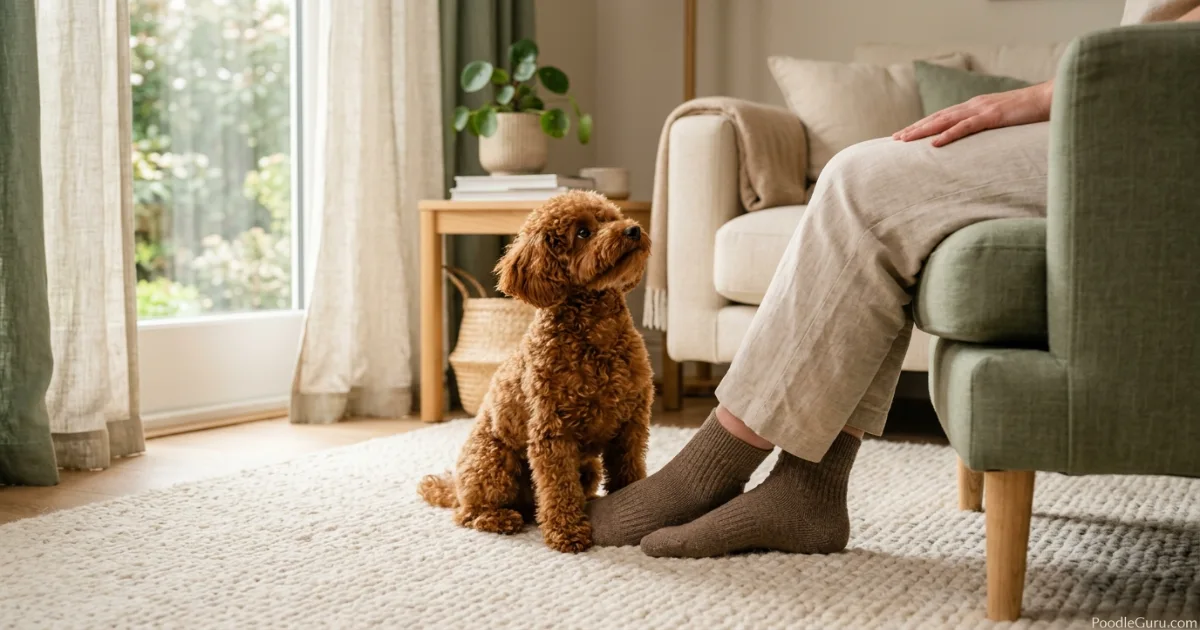
One week your poodle was their usual self — affectionate but capable of settling in another room. The next, they’re pressed against your leg at every step, whining when you close the bathroom door, and staring at you like the world might end if you leave the couch. A poodle suddenly clingy can feel confusing, even flattering at first. But when the behavior sticks, it’s unsettling. Something has shifted. Your job is to figure out what — and whether it needs a vet, a routine adjustment, or simply a steady nerve.
Quick Answer
Sudden clinginess in poodles is a symptom, not a personality flaw. The most common triggers are undiagnosed pain or illness, a recent routine disruption, separation anxiety emerging after a schedule change, or a stress event you may not have registered as significant. Start with a veterinary check to rule out hidden medical causes. If your poodle gets a clean bill of health, work backward through recent changes — however small — to identify the trigger. Then rebuild their sense of security with predictable routines and calm, consistent responses.
What Is Sudden Clinginess? A Clear Definition
Sudden clinginess is a marked increase in proximity-seeking behavior that represents a change from a dog’s established baseline. For poodle owners, this means a dog who previously settled independently now follows you from room to room, vocalizes when separated, demands physical contact more insistently, or shows visible distress when you prepare to leave. The most important thing to understand is that the word “sudden” matters. We’re not talking about a poodle who has always been a velcro dog. We’re talking about a shift — sometimes overnight — that leaves you wondering what happened to your independent companion.
Poodles are naturally people-oriented. That’s a breed feature, not a bug. But a poodle whose attachment tips into desperation is communicating that something feels wrong in their world. Ignoring the shift or dismissing it as “just being needy” can miss an important signal — sometimes a medical one, sometimes an emotional one, and sometimes both.
Quick Facts: Poodle Clinginess
It’s Often Medical First
Many owners assume clinginess is purely behavioral. In poodles, new-onset clinginess can be the first visible sign of pain, vision loss, hearing decline, or hormonal shifts — especially in middle-aged and senior dogs.
Poodles Are Sensitive to Routine
A schedule change that seems minor to you — different work hours, a child leaving for school, even daylight saving time — can unsettle a poodle enough to produce clingy behavior for days or weeks.
Reinforcement Happens Fast
If your poodle becomes clingy and you respond with constant soothing, extra treats, and letting them follow you everywhere, you may accidentally cement the behavior. The dog learns that clinginess earns connection.
The 7 Root Causes of Sudden Clinginess in Poodles
Clinginess is never random. Your poodle’s brain is responding to a trigger, even if you can’t see it yet. These seven categories cover the vast majority of sudden-onset cases.
1. Undiagnosed Pain or Illness
This is the most important cause to rule out first. A poodle with a developing ear infection, dental pain, arthritis flare, digestive upset, or urinary tract discomfort may seek proximity because you represent safety. They don’t understand why they feel off — they just know they feel better near you. Senior poodles with creeping joint pain often become clingy months before owners notice a limp. The behavior change is the early warning.
2. Vision or Hearing Loss
Poodles — especially aging Toys and Miniatures — can develop progressive retinal atrophy or cataracts. Hearing fades more subtly. A dog who can’t see or hear you clearly will compensate by staying closer. They’re not being needy; they’re using you as an anchor because their own senses are becoming less reliable.
3. Separation Anxiety Triggered by Routine Change
This is the classic post-pandemic scenario. A poodle who spent months with their owner home all day, then suddenly faces an empty house, can tip into genuine separation distress. But the trigger doesn’t have to be that dramatic. A partner traveling more, kids going back to school, or even you working longer hours can produce the same pattern. The ASPCA notes that separation anxiety in dogs can develop after schedule changes, particularly in breeds with strong social bonds.
4. A Recent Stressful Event
Your poodle may have been startled by something you barely noticed — a loud truck outside, a tense argument in the home, a frightening encounter with another dog on a walk. Poodles have long memories for fear. A single scary event can produce days or weeks of clingy aftermath. The dog is seeking reassurance that the world is still safe.
5. Hormonal Changes
Intact females approaching or in heat often become more demanding of attention. Spayed females can experience hormone shifts that affect behavior. Thyroid imbalances — hypothyroidism is more common in Standard Poodles than many owners realize — can produce lethargy and clinginess alongside other symptoms like weight gain and coat changes. A blood panel can catch this.
6. Aging and Cognitive Changes
Canine cognitive dysfunction — essentially dog dementia — affects roughly 14% of dogs over age 8, with rates climbing steeply after 11. One of the earliest signs is increased clinginess, especially in the evening (sundowning). The dog seems confused, restless, and glued to the owner’s side. This is not a training issue. It’s a neurological change that requires veterinary guidance.
7. Owner Stress Contagion
Poodles read human emotional states with uncomfortable accuracy. If you’ve been anxious, depressed, grieving, or under unusual stress, your poodle may be responding to your state — not developing their own disorder. They sense something is wrong with their person and stick close to monitor you. It’s a caretaking instinct, not a pathology. But it means solving your own stress becomes part of solving theirs.
Normal Attachment vs. Problem Clinginess: How to Tell
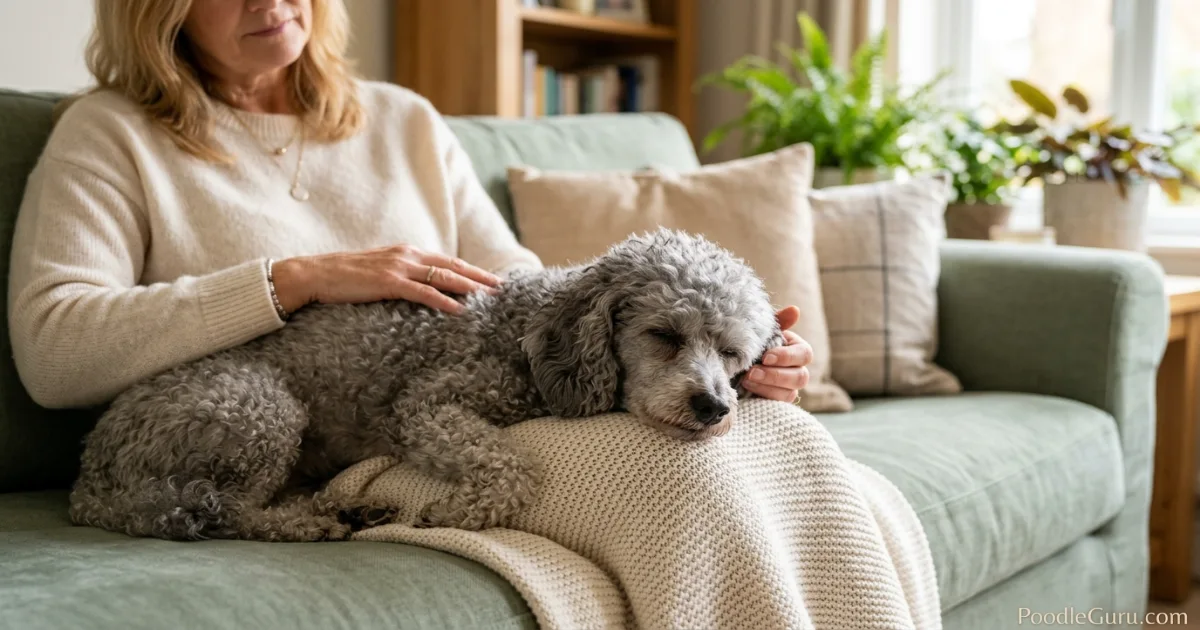
Poodles are supposed to like you. That’s part of why you chose the breed. The line between healthy attachment and problematic clinginess isn’t about whether your dog wants to be near you — it’s about whether the dog can function when they’re not. This comparison table helps you distinguish normal poodle devotion from something that needs attention.
| Behavior | Normal Poodle Attachment | Problem Clinginess |
|---|---|---|
| Following you | Follows sometimes, settles when you’re stationary | Follows constantly, can’t settle even when you’re sitting still |
| Response to closed door | May wait outside briefly, then goes to a dog bed or toy | Whines, scratches, paces, or lies pressed against the door until you return |
| When you leave the house | Watches you go, then rests or engages with a toy | Pants, paces, barks, or has accidents within 30 minutes of departure |
| Greeting intensity | Happy to see you, settles within a few minutes | Frantic greeting that lasts 10+ minutes, can’t calm down |
| Eating and drinking | Normal appetite, eats whether you’re there or not | Reduced appetite when alone, may not eat until you return |
| Sleep | Sleeps soundly, may choose a different room | Restless sleep, startles if you move, must be touching you |
If your poodle’s behavior consistently lands in the right column — and this is a change from how they used to be — you’re dealing with problem clinginess. The next step is figuring out which root cause is driving it.
The PoodleGuru Clinginess Assessment Method
At PoodleGuru, we evaluate sudden clinginess through a four-step framework that moves from medical to environmental to emotional. The order matters. Jumping to behavioral intervention before ruling out pain is the most common mistake owners make.
Rule Out Medical Causes
Schedule a veterinary exam within two weeks of noticing the clinginess. Ask specifically about pain assessment, vision and hearing screening, and — for seniors or Standards — thyroid testing. This is not the time for a quick phone call. A hands-on exam and basic bloodwork are the minimum. If your poodle is over 8, discuss cognitive decline screening too.
Map the Timeline
Sit down and write out the three weeks before the clinginess started. Include: changes in your work schedule, visitors to the home, vet visits, grooming appointments, weather events, arguments in the household, changes in other pets’ behavior, medication changes, and any frightening incidents on walks. The trigger is often in this list. It may seem small to you. It wasn’t small to your poodle.
Test the Pattern
For one week, keep a simple log: when does the clinginess peak? Is it worse in the morning or evening? Does it happen before you leave or only after you return? Is it present with other family members or only with you? Patterns point to causes. Evening worsening suggests sundowning or fatigue-related pain. Pre-departure clinginess suggests separation anxiety. Person-specific clinginess suggests a bond dynamic that may need attention.
Respond, Don’t Reinforce
Once medical causes are addressed and you’ve identified the likely trigger, your response becomes the intervention. The goal is to be present without being reactive. Meet your poodle’s need for security without accidentally teaching them that clinginess is the way to get it. The next section explains exactly how.
When Clinginess Signals a Health Problem
Some medical causes of clinginess are emergencies. Others are slow-burning issues that need management. This is not a diagnostic list — it’s a guide for what to mention to your veterinarian.
Medical Conditions That Can Cause Sudden Clinginess
- Pain: Arthritis, dental disease, ear infections, pancreatitis, or any undiagnosed injury can make a dog seek constant proximity. Pain makes the world feel unsafe. You are the safe thing.
- Endocrine disorders: Hypothyroidism, Cushing’s disease, and Addison’s disease — all seen in poodles — can shift behavior before physical symptoms become obvious.
- Neurological changes: Seizures (even mild focal seizures), brain tumors (rare but possible in seniors), and cognitive decline all affect behavior.
- Sensory loss: Progressive vision or hearing loss creates a world that feels unpredictable. Staying close to you is a coping strategy.
- Gastrointestinal discomfort: Chronic low-grade GI issues can produce clinginess that owners mistake for anxiety. The dog feels vaguely unwell and seeks comfort.
A urinalysis, complete blood count, chemistry panel, and thyroid screen are a reasonable starting workup for unexplained behavior changes. If your poodle is a senior, adding a blood pressure check and cognitive assessment is wise. The VCA guide to behavior changes in older dogs covers the medical differentials in useful detail.
How to Help a Suddenly Clingy Poodle
Once medical causes are addressed or ruled out, your job shifts to rebuilding your poodle’s sense of security — without accidentally wiring clinginess into their permanent behavior pattern. This is the balance that trips up most well-meaning owners.
Build Predictable Routines
Poodles thrive on predictability. If the clinginess started after a schedule disruption, the antidote is a new, reliable routine. Feed at the same times. Walk at the same times. Create a daily rhythm your poodle can internalize. It won’t fix everything overnight, but it gives them a scaffolding of certainty in a world that feels uncertain.
Practice Low-Stakes Separation
If your poodle panics when you leave the room, start with separations so brief they don’t trigger anxiety. Step behind a baby gate for five seconds. Return before the whining starts. Gradually extend. The goal is to teach their nervous system that you leaving doesn’t mean you’re gone forever. This is not “tough love.” It’s careful desensitization that respects where your dog actually is, not where you wish they were.
Reward Independence, Not Just Closeness
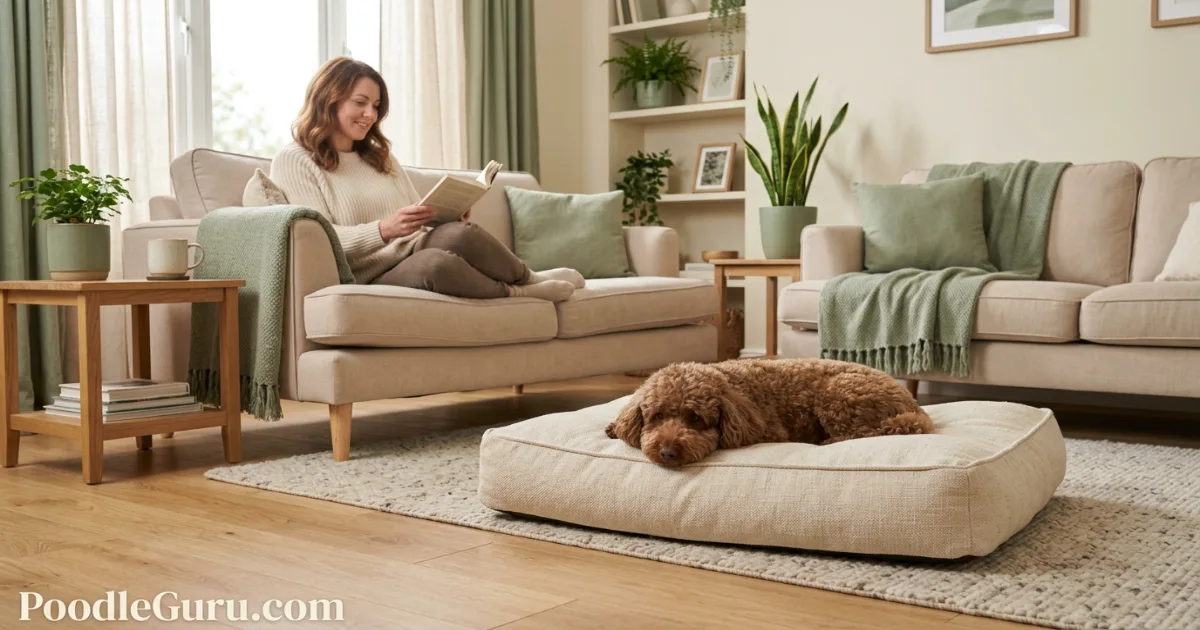
When your poodle chooses to settle on a dog bed across the room — even for thirty seconds — calmly drop a treat near them or offer quiet praise. You are marking the behavior you want to see more of. Most owners accidentally do the opposite: they reward following and ignore independence. For more structured separation work, our poodle anxiety solutions guide walks through the full protocol.
Don’t Make Departures and Returns Emotional
Big, dramatic goodbyes and excited, lavish hellos teach your poodle that your absence was a crisis and your return is a celebration. Keep both low-key. A calm word before you leave. A calm greeting when you return. You’re communicating that coming and going is no big deal — and that’s exactly the message your clingy poodle needs to absorb.
4 Mistakes That Make Clinginess Worse
1. Punishing the Clinginess
Scolding a clingy poodle, pushing them away roughly, or locking them in another room as punishment increases their anxiety. They don’t learn to be independent. They learn that the person they trust is also a source of rejection — and that makes the clinginess worse.
2. Constant Soothing and Babying
Picking up your poodle every time they whine, letting them sleep in your arms all night because they seem distressed, never letting them be out of sight — this feels kind, but it teaches them that they cannot cope without you. Kindness without boundaries deepens dependence.
3. Getting a Second Dog to “Fix” It
Adding another dog to a household with a clingy, anxious poodle often backfires. You now have two dogs who may feed off each other’s anxiety, or a clingy poodle who competes with the new dog for your attention. Address the first dog’s needs before expanding the household.
4. Changing Too Many Things at Once
In a panic to fix the behavior, some owners overhaul the diet, start new supplements, buy a ThunderShirt, try CBD treats, and enroll in a training class all in the same week. The poodle’s system is flooded with variables. You’ll never know what helped — and the overwhelm can make things worse.
Owner Action Plan: Your First Week With a Suddenly Clingy Poodle
- Day 1–2: Schedule the vet appointment. Don’t wait to see if it passes.
- Day 3: Write out the three-week timeline. Identify every possible trigger, no matter how small.
- Day 4–5: Start the pattern log. Note when clinginess peaks and what happened just before.
- Day 6–7: Implement one change: a predictable morning and evening routine. Don’t add anything else yet.
- Ongoing: Practice five-second separations behind a baby gate twice a day. Reward calm settling on a dog bed.
- Reassess at week 3: If there’s zero improvement with consistent effort, ask your vet about a referral to a veterinary behaviorist.
Frequently Asked Questions
Can poodles sense illness in their owners and become clingy?
Poodles are highly attuned to changes in human scent, behavior, and routine. Owners often report increased clinginess before they themselves were diagnosed with an illness. This isn’t supernatural — it’s a dog’s extraordinary olfactory sensitivity picking up metabolic changes. It warrants attention for both of you.
Is sudden clinginess a sign my poodle is in pain?
It can be. Pain-related clinginess often comes with subtle signs: reluctance to jump, slight stiffness after resting, licking at a specific body part, or reduced appetite. The clinginess may be the most visible change. A veterinary pain assessment is a reasonable first step for any sudden behavior shift.
Why is my female poodle suddenly clingy before her heat cycle?
Hormonal fluctuations during proestrus and estrus commonly produce behavioral changes including increased need for proximity and attention. The behavior typically resolves as hormone levels stabilize. If your spayed female is showing these signs, discuss hormonal imbalances with your vet.
How do I know if my poodle has separation anxiety versus just being clingy?
Separation anxiety includes distress specifically around departure and absence — panting, pacing, destruction, vocalization, or elimination when left alone. General clinginess happens whether you’re about to leave or not. The distinction matters because treatment protocols differ.
Can changing my poodle’s diet help with clinginess?
Only if the clinginess stems from an underlying condition affected by diet — like a food sensitivity causing chronic GI discomfort. For anxiety-driven clinginess, diet changes alone rarely help, though some veterinary diets contain calming supplements. Discuss with your vet before making major dietary changes.
Should I let my clingy poodle sleep in my bed?
If this is a new behavior and you’re working on rebuilding independence, consider a compromise: a dog bed next to your bed rather than in it. This maintains proximity while preserving a boundary. Full co-sleeping can deepen dependence in a clingy dog if not balanced with daytime independence training.
My poodle is clingy with only one family member — why?
Person-specific clinginess often reflects a primary attachment bond. That person’s schedule change, stress level, or health status may be driving the behavior. Alternatively, the dog may feel protective of that person if they sense vulnerability. Examine what’s changed specifically for the person the dog is following.
Key Takeaways
- Sudden clinginess is a symptom, not a personality type — it signals an underlying medical issue, environmental trigger, or emotional shift that needs investigation, not dismissal.
- Pain, sensory loss, hormonal imbalances, and cognitive decline are medical causes that must be ruled out by a veterinarian before pursuing behavioral intervention.
- The PoodleGuru Clinginess Assessment Method moves in order: veterinary exam, timeline mapping, pattern logging, and then carefully planned behavioral response.
- Poodles are sensitive to routine disruption and owner stress — your own emotional state or schedule change may be the trigger your dog is reacting to.
- Help a clingy poodle by building predictable routines, rewarding calm independence, keeping departures and returns low-key, and practicing brief, non-triggering separations.
- If three weeks of consistent, medically-informed effort produce no improvement, a veterinary behaviorist referral is the right next step — not more at-home experimentation.
Your poodle isn’t trying to frustrate you. They’re telling you — in the only way they have — that something has shifted in their world. Your job is to listen, investigate, and respond with steadiness. That doesn’t mean indulging every whimper or never leaving the house. It means being the calm, predictable presence your poodle needs while you methodically work through the possible causes. Most clinginess resolves when the trigger is addressed and the dog’s sense of safety is rebuilt. Start with the vet. Trust the process. And remember: a poodle who loves you this much is a poodle worth understanding.