Poodle Cataracts Symptoms: Early Signs & Vision Loss
Poodle cataracts symptoms often begin subtly: a cloudy pupil, hesitation in dim light, or new clumsiness in unfamiliar spaces. This guide walks you through the earliest warning signs, how cataracts differ from normal age-related lens haze, what veterinary treatment involves, and how to protect your poodle’s quality of life whether surgery is an option or not.
Quick Answer
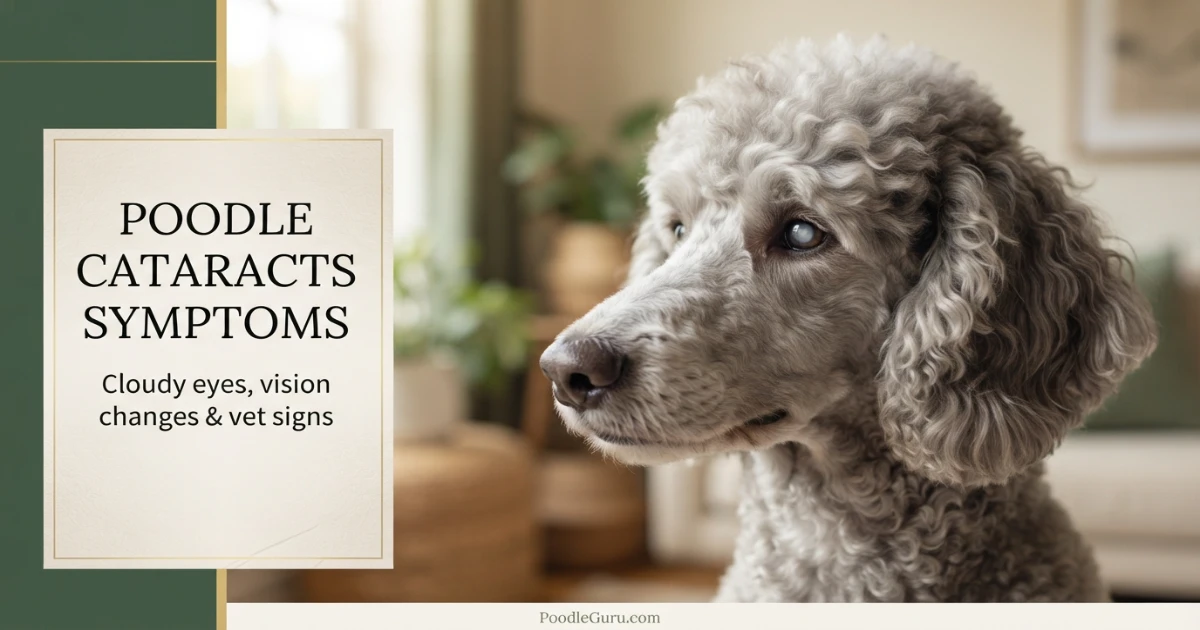
Poodle cataracts symptoms include a bluish-gray or white opacity inside the pupil, new hesitation in dim light, bumping into furniture, reluctance on stairs, and a reduced “eye shine” in photos. A cataract is cloudiness inside the lens that can block light from reaching the retina, but it is not the same as nuclear sclerosis, a common age-related lens haze that usually affects vision much less. Cataract surgery is the only treatment that can restore vision, while non-surgical care focuses on comfort, inflammation control when prescribed, and safe home adaptation. Any new eye cloudiness, redness, squinting, pain, or sudden vision change should be checked by a veterinarian or veterinary ophthalmologist.
If you’ve noticed your poodle squinting more, bumping into furniture at dusk, or developing a cloudy spot in one eye, you’re in the right place. Poodle cataracts symptoms can appear gradually — sometimes so slowly that you and your dog both adapt without realizing how much vision has been lost. But catching them early opens up more treatment options and gives you time to prepare for what’s ahead.
Inherited cataracts are documented in poodles, and responsible breeders screen breeding dogs for eye disease. For owners, the practical takeaway is simple: any cloudy eye, new night-time hesitation, or sudden change in confidence deserves a veterinary eye exam rather than a wait-and-see approach.
🐩 Breed Relevance
Poodles can be affected by inherited cataracts. Some hereditary cataracts appear in young adult dogs, so routine eye checks and breeder eye clearances matter.
🔍 Not Just Aging
Cloudy eyes don’t always mean cataracts. Nuclear sclerosis — a normal age change — mimics the look but rarely affects vision significantly. A vet exam can tell them apart.
⚕️ Surgery Is Effective
Phacoemulsification surgery to remove cataracts has a high success rate in dogs. An evaluation by a veterinary ophthalmologist determines if your poodle is a candidate.
What Are Cataracts in Poodles?
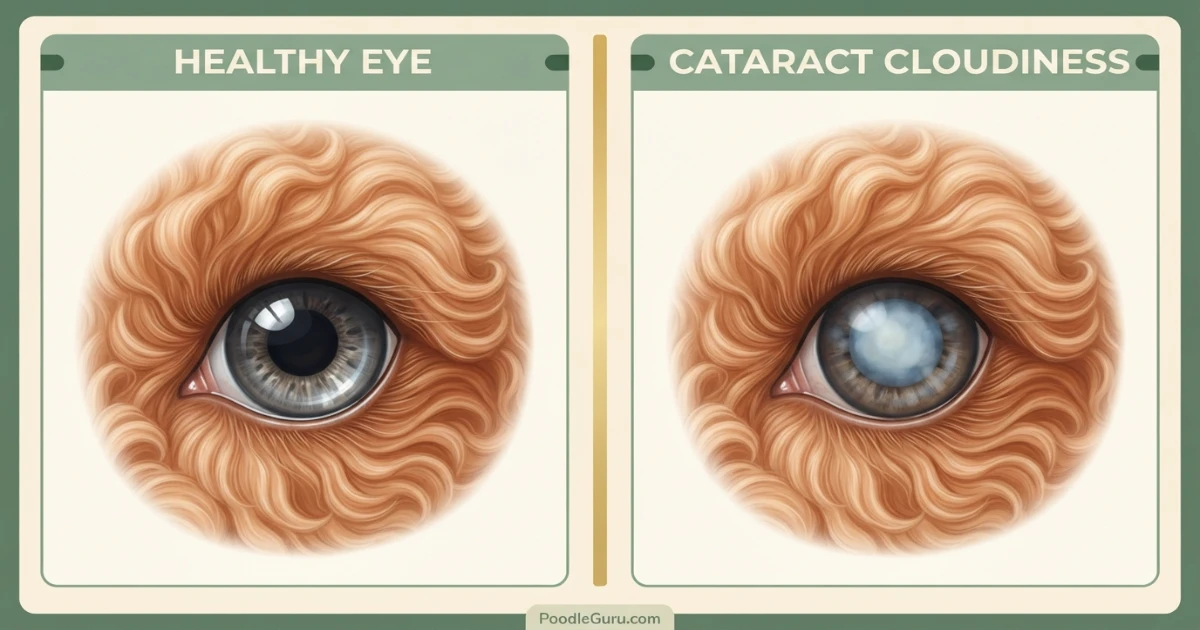
A cataract is an opacity in the lens of the eye that prevents light from passing clearly to the retina. For poodle owners, this means the normally crisp, transparent lens develops a cloudy or milky appearance, and the dog’s world gradually dims and blurs. The most important thing to understand is that cataracts are not a film on the surface of the eye — they are a structural change inside the lens itself, and they do not dissolve with over-the-counter eye drops.
Cataracts can affect one eye or both. They may develop rapidly over weeks or progress slowly over years. The speed and severity vary from dog to dog, even within the same litter. This unpredictability is why regular observation matters so much.
Poodle Cataracts Symptoms: What to Watch For
The physical change in the eye is the most obvious sign, but poodles often show behavioral shifts before owners notice the cloudiness. Here are the key indicators, roughly in the order they tend to appear.
- A bluish, gray, or white haze inside the pupil. This may start as a small speck or a thin film. In bright light, the pupil constricts and the cataract may be more visible.
- Hesitation in dim lighting. Stairs become scary at dusk. Your poodle may freeze at the threshold of a dark room or refuse to go outside at night.
- Bumping into furniture or doorframes — especially in unfamiliar environments or when the layout changes slightly.
- Reduced “eye shine” in photos. The bright reflection of the tapetum lucidum diminishes because less light enters the eye.
- Increased clinginess or anxiety. A dog who can’t see well relies more on you for guidance. Some poodles become reluctant to leave your side.
- Pawing at the eye or squinting — more common if the cataract is causing inflammation (uveitis) or if a secondary condition like glaucoma develops.
🐩 Poodle-Specific Insight
Poodles are highly intelligent and mentally engaged dogs. A subtle loss of confidence — refusing a jump they used to make, lagging behind on walks, startling more easily — is often the very first hint something is wrong with their vision. Because they learn routines so well, they may memorize the layout of a familiar home, masking the extent of vision loss from owners until a furniture rearrangement or a visit to a new place exposes it.
How Cataracts Affect Vision Over Time
Cataracts are categorized by how much of the lens they cover. An incipient cataract involves less than 15% of the lens and rarely causes noticeable vision loss. An immature cataract (15-99% coverage) begins to impact daily life — especially in low light. A mature cataract covers the entire lens, reducing vision to light and shadow perception. A hypermature cataract may start to shrink and wrinkle, sometimes causing lens-induced uveitis, a painful inflammatory condition that can lead to glaucoma.
The progression timeline varies. Some inherited or diabetic cataracts can progress quickly, while age-related cataracts may advance more slowly. Regular veterinary eye checks allow your vet or veterinary ophthalmologist to track changes and time any intervention appropriately.
What Causes Cataracts in Poodles
Most poodle cataracts fall into one of these categories:
Genetic / Hereditary Cataracts
Inherited cataracts are an important poodle eye-health concern and can appear in young adult dogs in affected lines. Reputable breeders screen breeding dogs through eye certification programs performed by board-certified veterinary ophthalmologists. Always ask for current eye clearances when purchasing a puppy.
Age-Related Cataracts
Older poodles of any size can develop cataracts as part of the aging process, typically after age 8 or 9. These are similar to human senile cataracts and progress at varying rates.
Diabetes-Induced Cataracts
Diabetes mellitus is a major risk factor for rapid cataract development in dogs. Excess glucose in the lens converts to sorbitol, which draws water in and clouds the lens. Diabetic cataracts can develop quickly, so a diabetic poodle should have eye monitoring built into the management plan. Managing poodle diabetes symptoms carefully is one of the most important things you can do for long-term eye health.
Trauma or Secondary Causes
A blow to the eye, a penetrating injury, or chronic inflammation from uveitis can all trigger cataract formation. These are less common but worth noting if your poodle has had a previous eye injury.
For a deeper medical overview of canine cataracts, the VCA Animal Hospitals guide to cataracts in dogs explains the anatomy, diagnostic process, and surgical options in detail.
Cataracts vs. Nuclear Sclerosis vs. Other Eye Issues
Not every cloudy eye is a cataract. Misidentification leads to unnecessary worry — or, worse, missed treatment for a condition that needs immediate attention. Use this table to understand the differences.
| Condition | Appearance | Vision Impact | Pain Level | Typical Age | Treatment Urgency |
|---|---|---|---|---|---|
| Cataract | White, blue, or gray opacity inside the pupil; may appear as speck, web, or full cloud | Progressive blurring to near-blindness | None unless lens-induced uveitis develops | Any — inherited forms in young dogs, age-related in seniors | Moderate to high; surgery evaluation needed |
| Nuclear Sclerosis | Hazy, bluish-gray cast to the lens center; pupil remains clear at edges | Minimal; slight reduction in near vision | None | Older dogs (typically 7+) | None; normal aging change |
| Glaucoma | Cloudy cornea, enlarged or bulging eye, redness, dilated unresponsive pupil | Rapid vision loss | Moderate to severe | Any, but more common in predisposed breeds | Emergency — immediate vet care |
| Corneal Edema | Bluish-white clouding on the eye surface, may accompany squinting | Variable | Can be painful | Any | Urgent; often linked to injury or ulcer |
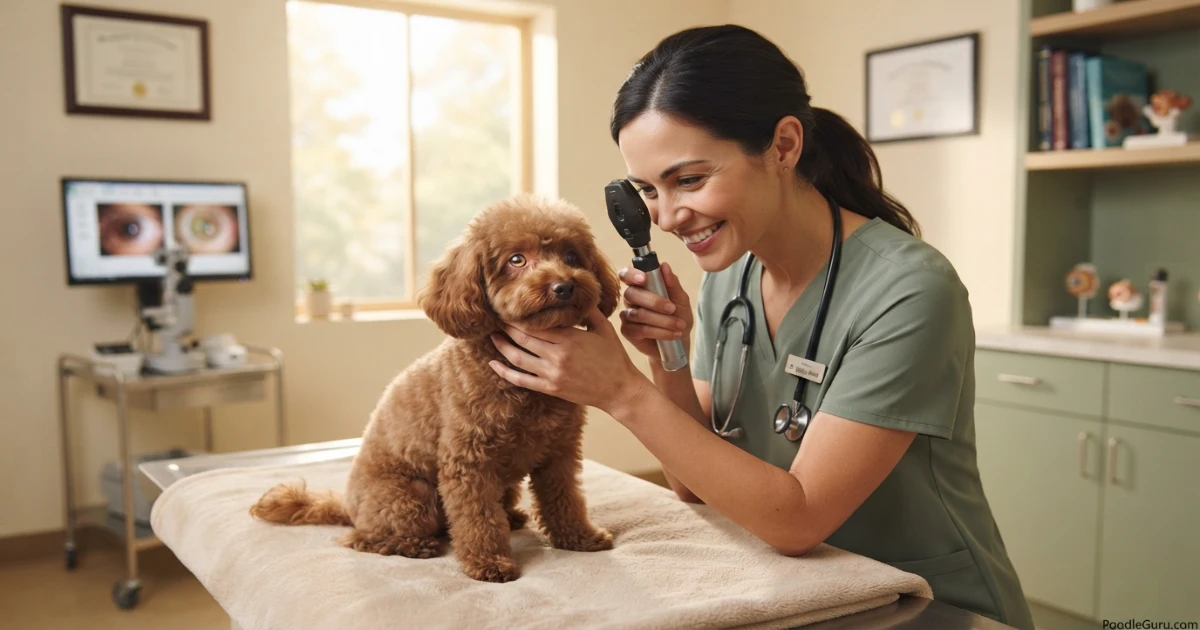
A veterinary ophthalmologist can differentiate these conditions with a simple eye exam using a slit lamp or ophthalmoscope. Do not self-diagnose based on appearance alone.
The PoodleGuru 3-Step Cataract Observation Method
At PoodleGuru, we approach eye health monitoring as a simple monthly habit. This isn’t a diagnostic tool — it’s an early awareness system. Use it to catch changes before they become obvious.
Check the Eye Shine
In a dim room, use a small flashlight briefly from about arm’s length — never hold a bright light close to the eye. You should see a reflective “eye shine” in both eyes. If one eye appears dull or the reflection seems blocked by a cloudy area, make a note and schedule a vet check. This observation can flag change, but it is not a diagnosis.
Test Low-Light Confidence
Observe your poodle navigating the house at dusk with minimal artificial light. Watch for hesitation at doorways, reluctance to go down stairs, or bumping into furniture corners. Compare behavior in bright light versus dim light. A significant difference is a red flag.
Photograph the Eyes Monthly
Take a well-lit, close-up photo of each eye once a month using your phone’s camera without flash directly into the eye. Compare images over time. Look for developing cloudiness, asymmetry between the eyes, or a reduced pupillary reflection. These photos can give your vet a helpful timeline.
When to Call a Veterinary Ophthalmologist
Some eye changes can wait for a regular appointment; others need immediate attention.
🚨 Emergency — See a Vet Within 24 Hours If:
- Your poodle is suddenly blind, disoriented, or walking into walls.
- The eye appears red, swollen, or painful (squinting, tearing, pawing).
- One pupil is a different size than the other, or the pupil doesn’t respond to light.
- You notice a sudden change in eye pressure or the eye appears to bulge.
📅 Schedule an Ophthalmologist Visit Within 2-4 Weeks If:
- You see a new or growing cloudy area inside the eye.
- Your poodle shows mild but consistent hesitation in dim light.
- The “eye shine” has diminished noticeably in one eye compared to photos from a few months ago.
- Your poodle has been diagnosed with diabetes and you haven’t had an eye exam since the diagnosis.
Treatment Options: Surgery and Non-Surgical Management
Cataract Surgery (Phacoemulsification)
Surgery is the only treatment that can restore vision from cataracts. The procedure uses ultrasound to break up and remove the cloudy lens, often replacing it with an artificial intraocular lens. Reported success can be high in ideal candidates, but surgery is not risk-free and not every poodle qualifies. A thorough pre-operative evaluation, including retinal testing when recommended, determines whether surgery is likely to help.
Surgery is often considered before chronic inflammation, glaucoma, or retinal complications make the case more difficult. Cost varies widely by region and specialist, but owners should budget for a significant specialist procedure and follow-up care. Post-operative care is intensive: eye drops multiple times daily, an Elizabethan collar, and restricted activity for several weeks. For owners who can commit to the aftercare, the results can be transformative.
Non-Surgical Management
When surgery isn’t an option — due to advanced age, cost, concurrent health issues, or retinal degeneration — the focus shifts to comfort, safety, and quality of life. Key components include:
- Anti-inflammatory eye drops only when prescribed by a veterinarian or veterinary ophthalmologist to manage inflammation and reduce secondary complication risk.
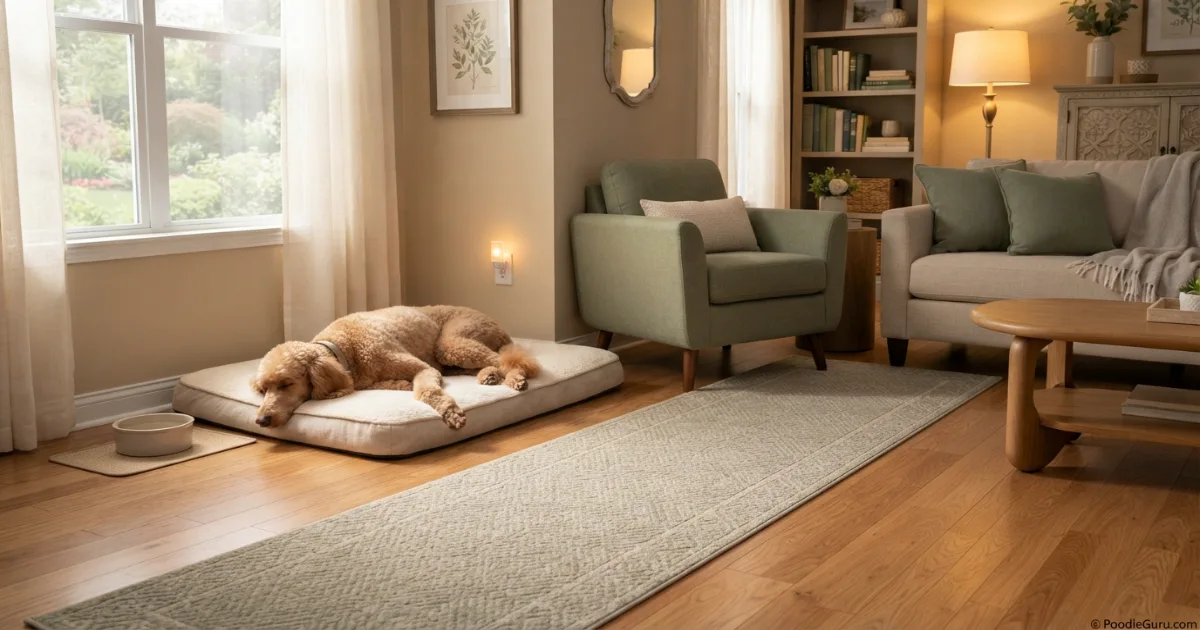
- Environmental consistency — keeping furniture, food bowls, and water stations in the same positions.
- Night lights and textured pathways — runners, mats, or scent markers help a visually impaired dog navigate confidently.
- Verbal cues and touch signals — teaching words like “step up,” “step down,” and “careful” gives your poodle a framework for navigating the world.
Many blind or near-blind poodles live happy, engaged lives. Their senses of smell and hearing, combined with their sharp memory, allow them to adapt in ways that often surprise their owners. Our senior poodle care guide covers home adaptations in greater detail.
Living with a Poodle with Vision Loss
Vision loss is not a crisis in the way acute pain or illness is. It’s a change — and poodles are remarkably resilient. Your emotional response matters. A poodle who senses constant owner anxiety may become unsettled. A calm, matter-of-fact approach helps everyone adjust.
Practical daily adjustments that make a difference:
- Use scent cues. A tiny dab of a vet-approved, pet-safe scent marker near key areas can help a blind dog map the room.
- Announce your presence. Speak before touching, especially if the poodle is sleeping. Being startled by touch when you can’t see is frightening.
- Walk with a short leash and a consistent routine. Familiar routes are easier to navigate. Talk to your dog as you walk, describing upcoming changes like curbs or steps.
- Protect the eyes. If the cataracts are causing inflammation, your vet may recommend goggles or a soft cone for walks in dense brush to prevent injury.
💛 Emotional Note
Dogs often adapt to vision loss better than owners expect because they rely heavily on smell, hearing, memory, and routine. A sunny spot on the rug, a favorite chew, and the sound of your voice can still define a good day. With pain controlled and the home made safer, life can be different without being over.
Prevention & Long-Term Eye Care
You cannot prevent every cataract. Genetics and age are beyond your control. But you can support eye health and catch problems early.
- Regular veterinary eye exams for senior poodles, any poodle with diabetes, and any poodle with a family history or signs of eye disease.
- Nutritional support — a complete, balanced diet supports overall health. Ask your vet before adding any eye supplement; supplements should not be treated as cataract prevention or treatment. Good nutrition is covered in our poodle food guide.
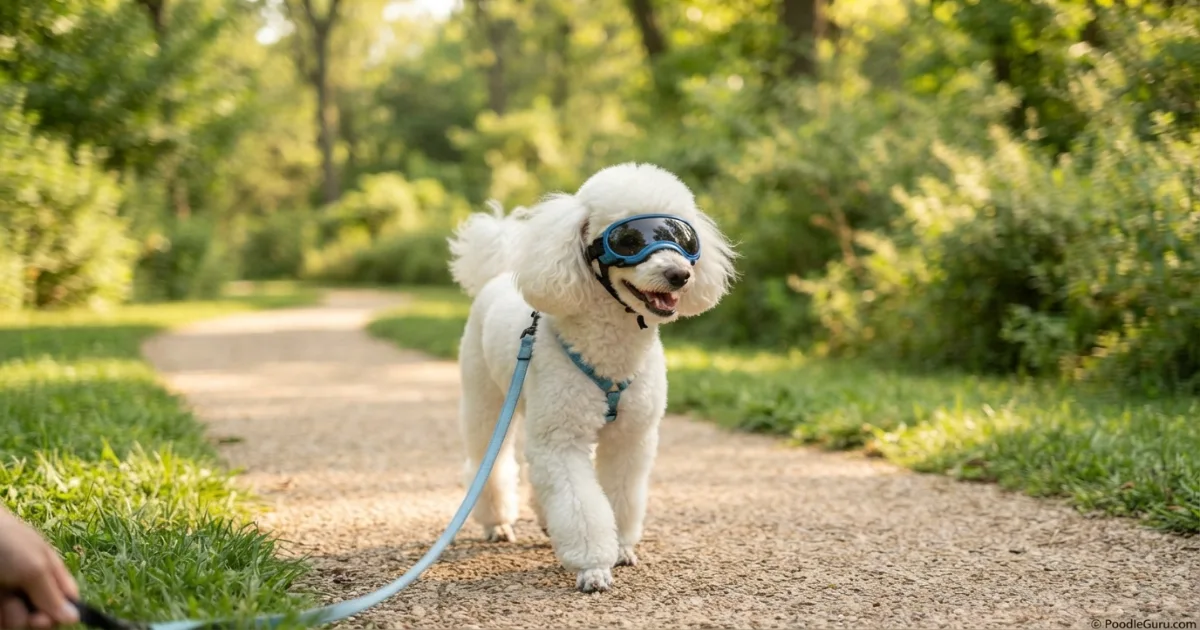
- Eye protection when appropriate — UV protection is not proven to prevent canine cataracts, but dog goggles may help protect eyes from brush, dust, or debris during outdoor activities if your poodle tolerates them.
- Diabetes management — careful glucose management and prompt ophthalmology follow-up are essential because diabetic cataracts can progress quickly in dogs.
- Breeder screening — when acquiring a puppy, ask for documentation of eye clearances on both parents through OFA or CERF. This is standard practice for responsible poodle breeders.
Frequently Asked Questions About Poodle Cataracts
What do early cataracts look like in a poodle?
Early cataracts appear as a small bluish-gray speck or a faint cloudiness inside the pupil. You may not notice vision changes at this stage. The opacity may be more visible in bright light when the pupil constricts. Regular photos and vet exams catch these subtle changes.
Can a poodle live a happy life with cataracts?
Yes, absolutely. Poodles adapt remarkably well to gradual vision loss using smell, hearing, and memory. With home safety adjustments, verbal cues, and a consistent routine, blind or visually impaired poodles continue to enjoy walks, play, and affection. Their quality of life depends far more on pain management and safety than on vision alone.
How much does cataract surgery cost for a poodle in 2026?
Cataract surgery costs vary widely by region, specialist, diagnostic testing, follow-up care, and whether an artificial lens is implanted. Many owners should expect a specialist-level procedure costing several thousand dollars. Pet insurance may help only if the condition is covered and not considered pre-existing.
Is cataract surgery safe for older poodles?
Age alone is not a disqualifier. The decision hinges on overall health, retinal function, and anesthesia risk. A veterinary ophthalmologist will run pre-operative tests including an electroretinogram to confirm the retina is healthy. Many senior poodles in good general health undergo successful cataract surgery.
What’s the difference between cataracts and nuclear sclerosis in poodles?
Nuclear sclerosis is a normal age-related hardening of the lens that causes a bluish-gray haze but leaves vision largely intact. Cataracts are a pathological opacity that progressively blocks vision. Only a veterinary eye exam can reliably distinguish between them, as they can look similar to the untrained eye.
Can eye drops dissolve cataracts in dogs?
No. There are no eye drops that reverse or dissolve cataracts in dogs. Some anti-inflammatory drops can manage secondary complications like uveitis, but they do not improve the cataract itself. Any product claiming to cure cataracts with drops should be treated with skepticism — consult your vet before using any such remedy.
Do diabetic poodles always develop cataracts?
Diabetic dogs have a high risk of cataract development, and cataracts may progress quickly. Good glucose regulation is still important for overall health and surgical candidacy, but it may not fully prevent diabetic cataracts. A diabetic poodle should have regular veterinary and eye-health follow-up.
How do I prepare my home for a poodle going blind?
Use non-slip runners on hard floors, keep furniture layout consistent, place scent markers near key areas (food, water, bed), block off stairs with baby gates, and use night lights. Train verbal cues like “step” and “careful.” These changes are simple but transformative for a visually impaired dog’s confidence.
Key Takeaways
Cataracts can feel scary — but they don’t have to define your poodle’s future. Here’s what matters most:
- Early poodle cataracts symptoms include a bluish haze inside the eye, increased clumsiness in dim light, and a reduced “eye shine” in photos — subtle signs that are easy to overlook without routine checks.
- Cataracts are not the same as nuclear sclerosis; a veterinary ophthalmologist examination is the only reliable way to tell them apart and determine whether vision is at risk.
- Surgery is the only curative treatment, with high success rates when performed on good candidates before secondary complications like uveitis or retinal detachment arise.
- Non-surgical management focuses on anti-inflammatory eye drops and home safety adaptations — many blind poodles live contented, active lives with proper support.
- Annual eye exams are critical for poodles over 6, for diabetic dogs of any age, and for any poodle with a family history of hereditary cataracts.
- Your poodle’s emotional well-being depends more on your calm, consistent presence than on perfect vision — they adapt, and so will you.
If you’ve noticed any of the symptoms described in this guide, the best next step is to schedule an eye examination with your veterinarian or a veterinary ophthalmologist. A clear diagnosis is the foundation for every decision that follows.