This article may contain affiliate links. PoodleGuru may earn a small commission if you purchase through our links, at no extra cost to you. This guide is educational and should not replace veterinary diagnosis or treatment.
How to Calm an Anxious Poodle: Proven Techniques
Learning how to calm an anxious poodle starts with understanding that anxiety is not stubbornness — it is a genuine stress response that can show up as pacing, whining, destruction, clinginess, or complete shutdown. This guide gives you poodle-specific tools to lower baseline stress and build real emotional resilience.
Quick Answer
To calm an anxious poodle, start by lowering household stress: reduce unpredictable noise, create a dedicated safe zone, and keep daily routines predictable. Pair that with gentle mental exercise such as puzzle toys, scent work, and short training games so your poodle’s busy brain has a calm job to do. If anxiety is sudden, severe, linked to self-injury, or includes fear-based aggression, consult your veterinarian to rule out pain or illness and ask whether a board-certified veterinary behaviorist is appropriate. For many poodles, the strongest plan is environment + enrichment + gradual counter-conditioning + veterinary guidance when needed.
What Is Poodle Anxiety?
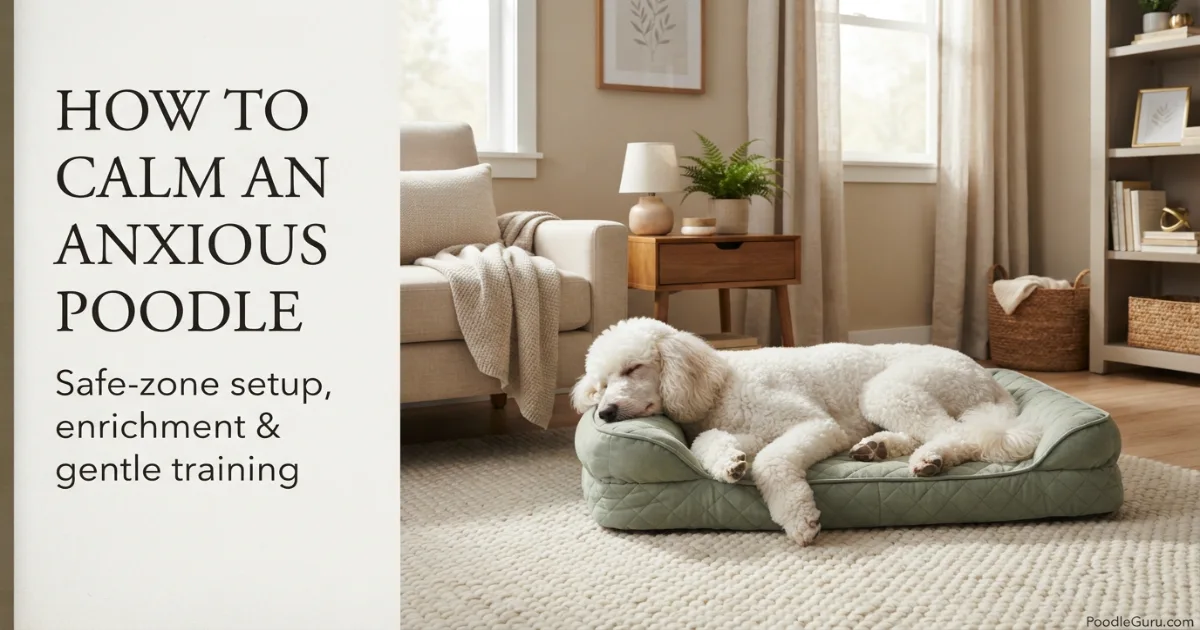
Poodle anxiety is a state of chronic or acute stress in which a poodle’s nervous system stays on high alert, even when no real threat is present. For poodle owners, this means living with a dog that may pant excessively, pace, tremble, or cling to you in ways that feel overwhelming. The most important thing to understand is that an anxious poodle isn’t being dramatic or difficult — its brain is genuinely flooding with stress hormones, and it needs your help to find safety again.
Unlike a dog who briefly startles at a loud noise and recovers, an anxious poodle stays wound up long after the trigger passes. This can show up as separation-related distress, noise phobia, generalized anxiety, or even compulsive behaviors like paw licking and tail chasing. The good news? Poodles are brilliant. Once you show them what calm feels like and teach them how to get there, they learn fast.
Veterinary guidance generally recommends ruling out medical causes first — pain, thyroid imbalance, or neurological issues can mimic or worsen anxiety. The VCA’s overview of canine anxiety explains that anxiety-related behavior problems can be treated with management, behavior modification, and, when appropriate, medication prescribed by a veterinarian.
Signs Your Poodle Is Anxious — Not Just Excited
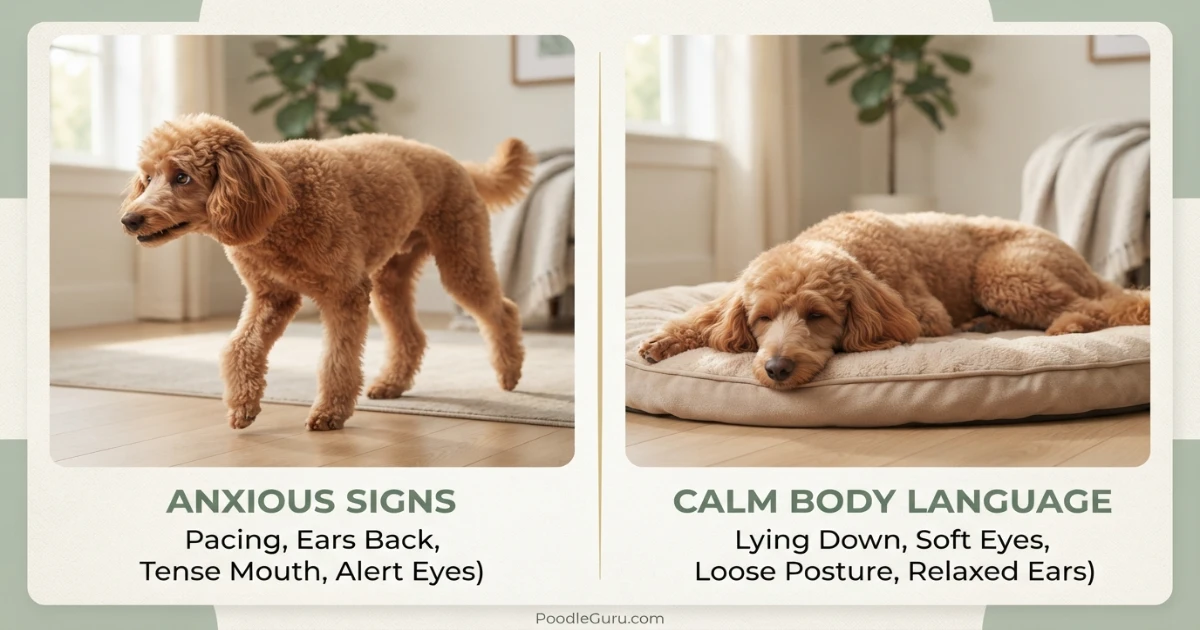
Poodles are expressive dogs, so it’s easy to misread anxiety as excitement or even disobedience. Here are the signs that matter most in this breed.
Excessive Panting & Drooling
When the room isn’t hot and there’s no exercise, heavy panting signals stress. In poodles, you’ll often see a tight mouth and a rapid shallow breath pattern.
Pacing or Freezing
Restlessness that doesn’t settle — walking in circles, then stopping stiffly — is a classic poodle stress loop. It’s their brain cycling through “what do I do?” without finding an answer.
Destruction Focused on Exits
Scratched doors and chewed window frames aren’t rebellion. They’re often separation anxiety, especially if they only happen when you’re gone.
Hypervigilance
Your poodle scans the room constantly, flinches at small sounds, and can’t settle even in a familiar spot. This hyper-awareness burns mental energy fast.
Excessive Licking or Chewing
Targeting paws, legs, or flank — sometimes to the point of raw skin. It’s a self-soothing behavior that can quickly become a compulsive habit.
Vocalisation Changes
High-pitched whining, barking at nothing, or a sudden increase in vocalization when you’re out of sight. The sound often has an urgent, desperate quality.
Why Poodles Are Especially Prone to Anxiety
Three breed traits make poodles more vulnerable to anxiety than the average dog. First, their intelligence means they notice everything — small changes in routine, your stress levels, a new piece of furniture. A less observant dog might sleep through a tense phone call; your poodle registers the tone of your voice and decides something is wrong. Second, poodles were bred to work in close partnership with humans. They are not independent dogs who happily entertain themselves for hours. When that partnership feels threatened — by separation, inconsistent rules, or a chaotic household — anxiety spikes. Third, many poodles have a naturally soft, sensitive temperament. Harsh corrections or even loud arguments in the home can leave lasting emotional marks.
Your poodle’s size adds another layer. Toy and Miniature Poodles are small enough to feel physically vulnerable in a big world. A Standard Poodle’s height gives it a view of everything but also makes it a target for sound sensitivity. Knowing your poodle’s specific triggers lets you build a calm environment that actually addresses the root cause, not just the symptoms.
Common Anxiety Triggers for Poodles
Most poodle anxiety isn’t random. It follows patterns. Identifying your dog’s pattern is the fastest route to relief.
| Trigger | Why It Affects Poodles | Quick Relief Strategy |
|---|---|---|
| Separation from owner | Bred for close human contact; strong attachment | Gradual alone-time training, frozen stuffed Kong, noise machine |
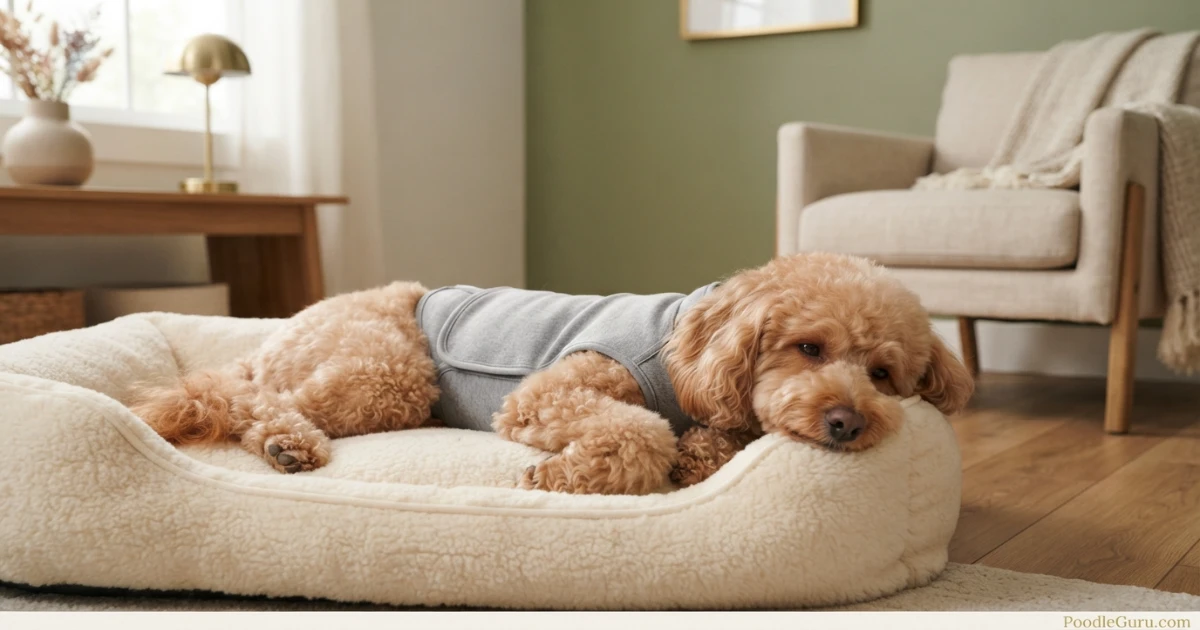
| Loud noises (thunder, fireworks) | Sensitive hearing; startle response easily conditioned | Soundproofed safe zone, white noise, calming wrap like Thundershirt |
| Grooming or handling | Negative past experiences or lack of early desensitization | Counter-conditioning with high-value treats, short positive sessions |
| Changes in routine | High intelligence craves predictability | Keep feeding/walk times consistent; use visual schedules |
| Strangers or new environments | Natural wariness; lack of socialization during critical period | Let poodle approach at own pace; never force interaction |
| Owner stress or conflict | Emotionally attuned; mirror owner’s tension | Practice calm breathing and body language around your dog |
The PoodleGuru CALM Method
At PoodleGuru, we developed a four-step framework to systematically reduce poodle anxiety. We call it the PoodleGuru CALM Method. It prioritizes safety, predictability, and giving your poodle an alternative job to replace the anxious loop.
Calm Environment Setup
Designate a quiet corner or crate with a soft bed, covered top, and familiar-smelling blanket. Use white noise or calming music to mask startling sounds. This isn’t punishment — it’s a retreat. Your poodle should associate it with treats, chews, and rest.
Activity & Mental Exercise
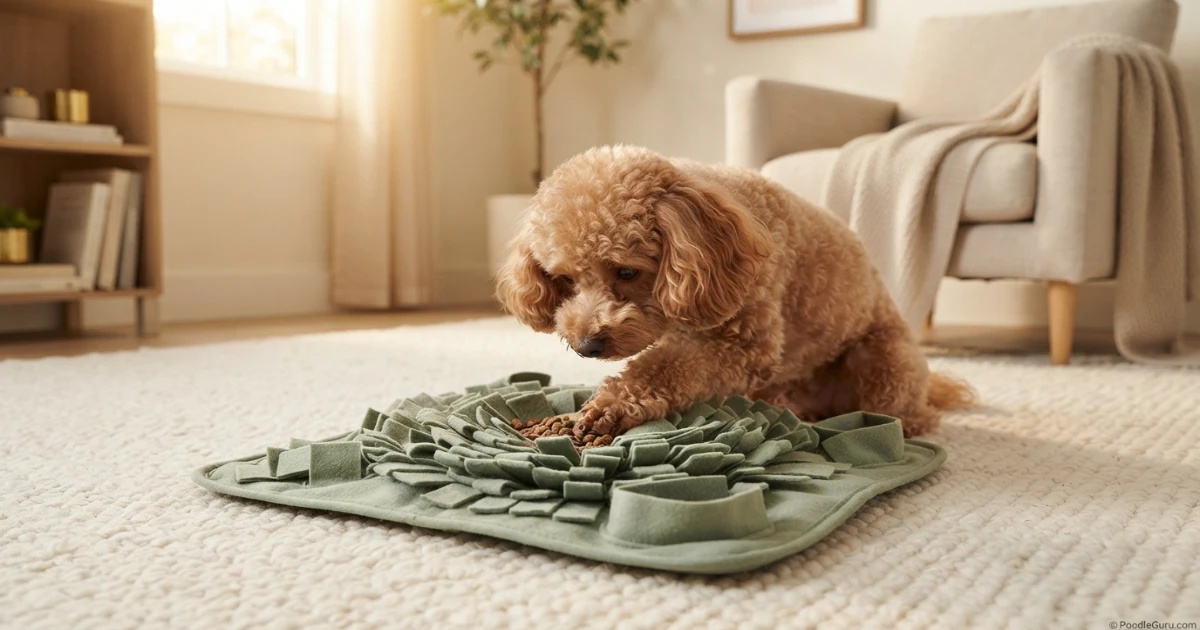
An anxious poodle has a brain full of fuel with nowhere to go. Provide daily puzzle feeders, scent games (hide treats around a room), and 5-minute trick training bursts. The goal is cognitive tiredness, not just physical exhaustion.
Listen to Body Language
Learn your poodle’s early stress signals — lip licking, whale eye, tense jaw. At the first sign, pause what you’re doing and lower the intensity. Respecting these whispers stops them from becoming screams. Never force your poodle to “face its fear” head-on without professional guidance.
Medical Check & Professional Support
Schedule a vet visit to rule out pain, hormonal issues, or neurological problems. If anxiety persists despite consistent environment and enrichment work, ask about a referral to a board-certified veterinary behaviorist. Medication isn’t a failure — for some poodles, it’s the ladder that lets them climb out of the hole.
Training Techniques That Lower Anxiety
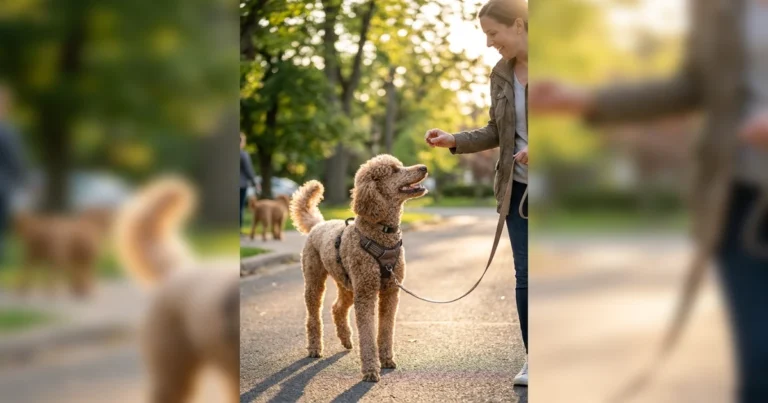
Training an anxious poodle is completely different from training a confident one. You’re not aiming for flashy obedience tricks — you’re teaching your dog that the world is safe and that calm behavior earns good things.
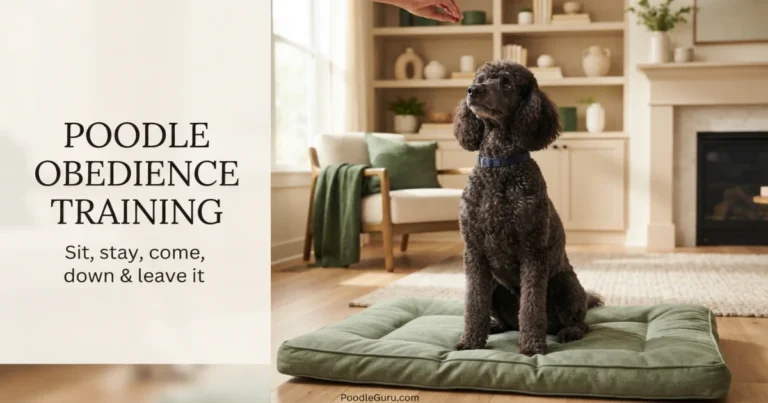
Counter-conditioning changes your poodle’s emotional response to a trigger. If your dog tenses up when the doorbell rings, pair the sound with a steady stream of tiny, high-value treats. Over time, the doorbell predicts cheese, not dread. Mat training gives your poodle a portable calm station — teach a “go to mat” cue and reward relaxation. Impulse control games like “wait” for meals or “leave it” build mental muscles that directly translate to emotional regulation. The ASPCA’s guidance on separation anxiety reinforces that short, positive sessions and gradual exposure are far more effective than flooding.
Never punish anxious behavior. Yelling at a trembling poodle, yanking a leash, or using a shock collar will confirm every fear your dog has — and destroy the trust you’re trying to build. A poodle that feels unsafe with its owner is a poodle that will never truly relax.
Pro Tip: The 3-Second Rule
When introducing anything new — a sound, a person, an object — watch your poodle for three seconds. If you see a stress signal, increase distance immediately. Your poodle learns that you’ll protect it, and that safety builds confidence faster than any forced exposure.
Calming Aids & Tools That Help Anxious Poodles
No single product magically cures anxiety, but the right tools can support your larger plan. Here’s how they compare for poodles specifically.
| Tool | How It Works | Best For Poodles | Important Note |
|---|---|---|---|
| Adaptil (pheromone diffuser) | Releases synthetic dog-appeasing pheromone | Generalised anxiety, new home adjustment | Takes 1–2 weeks to see effect; plug in near safe zone |
| Thundershirt (pressure wrap) | Gentle, constant pressure calms nervous system | Noise phobia, travel, separation | Introduce with treats first; some poodles find it aversive if not conditioned properly |
| Calming music / white noise | Masks startling sounds; classical or “Through a Dog’s Ear” | Separation anxiety, noise sensitivity | Free and simple; pair with safe zone |
| Lick mats / frozen Kongs | Licking releases endorphins | Acute stress, alone-time training | Use high-value, safe fillings (plain yogurt, pumpkin, wet food) |
| Calming supplements (L-theanine, melatonin) | May reduce mild stress when given 30–60 min before trigger | Situational anxiety (storms, vet visits) | Consult your vet before using any supplement; doses are weight-dependent |
Mistakes That Make Poodle Anxiety Worse
- Punishing fear reactions. Scolding a growl or a cower doesn’t fix fear — it buries it. Your poodle may stop showing warnings, but the fear remains and can resurface as a bite.
- Forcing interaction. Pushing an anxious poodle toward a stranger or into a loud environment because “they need to get used to it” floods the system and creates trauma.
- Inconsistent rules. If jumping on the couch is sometimes allowed and sometimes punished, an anxious poodle can’t relax because it never knows what to expect.
- Skipping physical health checks. Chronic pain from dental disease, arthritis, or ear infections can cause anxiety that looks purely behavioral. A thorough vet exam is step one, always.
- Adding frantic attention during a panic episode. Fast, worried fussing can make the whole room feel more urgent. Instead, offer calm presence, access to the safe zone, and quiet support without forcing touch.
When to Seek Professional Help
Some anxiety is beyond what home management alone can fix. Contact your veterinarian or a board-certified veterinary behaviorist if you see any of these:
- Your poodle has injured itself — raw paw pads from licking, broken teeth from crate chewing, or weight loss from refusing food.
- Anxiety-triggered aggression — growling, snapping, or biting when cornered or frightened.
- No improvement after four weeks of consistent environment management and positive training.
- Your poodle cannot be left alone for any duration without extreme panic (urination, defecation, property destruction).
- Medication may be appropriate — a veterinary behaviorist can prescribe anti-anxiety medication that, combined with behavior modification, gives many poodles their lives back.
Ask Your Vet If…
…your poodle’s anxiety started suddenly (possible medical cause), if there’s a change in appetite or water intake, or if you’re considering any calming supplement. This guide is educational and not a substitute for professional veterinary diagnosis or treatment.
Owner Action Plan: The First Two Weeks
Pick three things from this list and start today. Consistency matters more than perfection.
Day 1–3: Environment
Set up the safe zone. Clear visual clutter. Play calming music. Note all triggers in a journal.
Day 4–7: Enrichment
Introduce one new mental exercise daily — snuffle mat, puzzle toy, hide-and-seek. Keep sessions short and positive.
Day 8–14: Training
Start mat training and counter-conditioning to one mild trigger. Schedule a vet check if you haven’t had one recently.
For more on building a strong training foundation that supports emotional health, explore our complete poodle training guide. Understanding your poodle’s size-specific needs can also help you tailor your approach — what works for a Standard often needs adjusting for a Toy.
Frequently Asked Questions
How can I calm my poodle during thunderstorms?
Create a soundproofed safe zone in an interior room or closet. Play white noise or calming music to mask thunder. Use a Thundershirt and offer a long-lasting lick mat or frozen Kong. Stay calm yourself — your poodle reads your anxiety. For severe cases, ask your vet whether situational anti-anxiety medication is appropriate before storms are forecast.
Does my poodle have separation anxiety or just bad manners?
Separation anxiety typically includes distress within minutes of your departure, destruction focused on exit points, and excessive vocalization. Bad manners happen when you’re present, too. If the behavior only occurs when you’re gone and your poodle seems panicked upon your return, anxiety is the more likely cause.
What natural remedies help calm an anxious poodle?
Consistent routine, daily mental exercise, and a predictable safe zone are the most powerful natural interventions. Some owners find that Adaptil diffusers, calming music, and L-theanine supplements help, but always consult your veterinarian before using any supplement, as poodles can be sensitive to active ingredients.
Can anxiety in poodles be cured completely?
Many poodles can reach a point where anxiety no longer impacts their daily quality of life, but “cure” isn’t always the right word. Management, training, and sometimes medication create a new normal. Genetics play a role, so a poodle with a strong anxious predisposition may always need extra support during high-stress periods.
Is my poodle too old to learn new calming techniques?
No. While early socialization is ideal, older poodles can absolutely learn new emotional responses. The brain remains plastic throughout life. Start with very short, positive sessions, and be patient — an older dog may take a little longer to rewire old patterns, but it’s absolutely possible.
Should I get a second dog to help my anxious poodle?
Rarely. An anxious poodle often projects its anxiety onto another dog, creating two stressed animals. A second dog can sometimes provide comfort, but it’s unpredictable. Address your poodle’s anxiety first. If you still want a companion later, choose a calm, confident dog and introduce them carefully.
Does my poodle’s diet affect anxiety?
Yes, indirectly. A hungry dog or one with blood sugar crashes can be more reactive. Ensure your poodle is on a high-quality, balanced diet. Some veterinarians discuss the role of gut health and probiotics in behavior, but dietary changes alone rarely resolve moderate to severe anxiety without a full behavior plan.
Final Summary: Your Path to a Calmer Poodle
An anxious poodle isn’t broken — it’s a sensitive, intelligent dog that needs a clear roadmap to feeling safe. You can provide that map. Start with environment, add mental exercise, watch body language, and never hesitate to call in professional support when you need it.
Key Takeaways
- Poodle anxiety is a genuine stress response, not stubbornness — and it’s treatable with the right combination of management, training, and veterinary care.
- The PoodleGuru CALM Method (Calm environment, Activity & mental exercise, Listen to body language, Medical check) provides a step-by-step framework to reduce anxiety.
- Never punish fear — punishment worsens anxiety and damages trust. Positive reinforcement, counter-conditioning, and giving your poodle a safe retreat are far more effective.
- Common triggers include separation, loud noises, grooming, and changes in routine. Identifying your poodle’s specific pattern is the fastest route to relief.
- Daily mental enrichment (puzzle toys, scent work, short training games) is as important as physical exercise for calming a busy poodle brain.
- If anxiety causes self-harm, aggression, or doesn’t improve after four weeks of consistent home management, consult your veterinarian and ask about a board-certified veterinary behaviorist.