Poodle Diabetes Symptoms: Signs, Diagnosis & Management
Diabetes in poodles isn’t rare — and the early signs are easy to miss. This guide walks you through what poodle diabetes symptoms actually look like, how vets confirm a diagnosis, and what daily management really demands from an owner.

Quick Answer
Poodle diabetes symptoms typically include excessive thirst, frequent urination, sudden weight loss despite a normal or increased appetite, cloudy eyes, and lethargy. These signs develop because the poodle’s body can’t properly use glucose for energy. If you notice two or more of these symptoms together — especially increased drinking and urination — schedule a vet visit promptly. Early diagnosis makes daily management far easier and protects your poodle’s long-term quality of life.
Most Affected
Miniature and Toy Poodles are diagnosed more often than Standards. Middle-aged to senior dogs — typically 7 to 10 years old — face the highest risk.
Primary Cause
Most diabetic dogs, including many affected poodles, have insulin-deficiency diabetes. The pancreas does not produce enough usable insulin, so daily insulin therapy is usually essential under veterinary supervision.
Reversible?
Canine diabetes is not curable, but it is manageable. With consistent insulin therapy, proper diet, and routine monitoring, diabetic poodles often live happy, full lives.
What Is Canine Diabetes?
Canine diabetes mellitus is a chronic metabolic disorder in which a dog’s body either doesn’t produce enough insulin or can’t use insulin effectively. Insulin is the hormone that moves glucose from the bloodstream into cells for energy. Without it, blood sugar rises to dangerous levels while cells essentially starve.
For poodle owners, this means the dog’s body starts breaking down fat and muscle for fuel instead — which explains the unexplained weight loss many owners notice first. The most important thing to understand is that diabetes in dogs is almost never a temporary condition. Once diagnosed, it usually requires lifelong management. With the right veterinary plan, many owners find the routine becomes manageable within weeks.
Veterinary resources like VCA Animal Hospitals’ guide to diabetes mellitus in dogs explain that the condition closely resembles Type 1 diabetes in humans, though the underlying mechanisms aren’t identical. Most diabetic dogs need injected insulin — oral medications rarely work the same way they do for people.

Why Poodles Have a Higher Risk
Poodles — particularly Miniature and Toy varieties — appear more frequently in diabetes diagnoses than many other breeds. This isn’t a random pattern. Several factors converge to make poodles more vulnerable.
Genetic Predisposition
Breed-specific research and veterinary observation both point to a hereditary component. Miniature Poodles, in particular, show a statistically higher incidence of diabetes than the general canine population. This doesn’t mean every Miniature Poodle will develop it — but it does mean owners of smaller poodles should stay more watchful than owners of breeds with lower predisposition.
Body Weight and Pancreatic Stress
Poodles love food, and they’re experts at persuading owners to share. Excess body fat — especially in less active Toy and Miniature Poodles — can make glucose regulation harder and may worsen insulin resistance. For a small poodle, even 1–2 extra pounds can represent a large percentage of body weight, so maintaining a lean body condition matters.
Age and Hormonal Factors
Most poodle diabetes diagnoses happen between ages 7 and 10. Unspayed females face additional risk because hormonal fluctuations during heat cycles can interfere with insulin sensitivity. Spaying may reduce this hormonal complication risk in some dogs, which is why many vets discuss it as part of a broader preventive health conversation, not solely for reproductive control.
The AKC poodle breed page notes that the breed is generally long-lived, which means age-related conditions like diabetes have more time to surface compared to shorter-lived breeds. Longevity is a gift — but it comes with a responsibility to monitor health closely in those later years.
Early Signs of Poodle Diabetes
Poodle diabetes symptoms don’t appear all at once. They creep in — so gradually that many owners dismiss them as normal aging, a hot-weather phase, or a temporary quirk. Here’s what to actually look for.
| Symptom | What Owners Notice | Why It Happens |
|---|---|---|
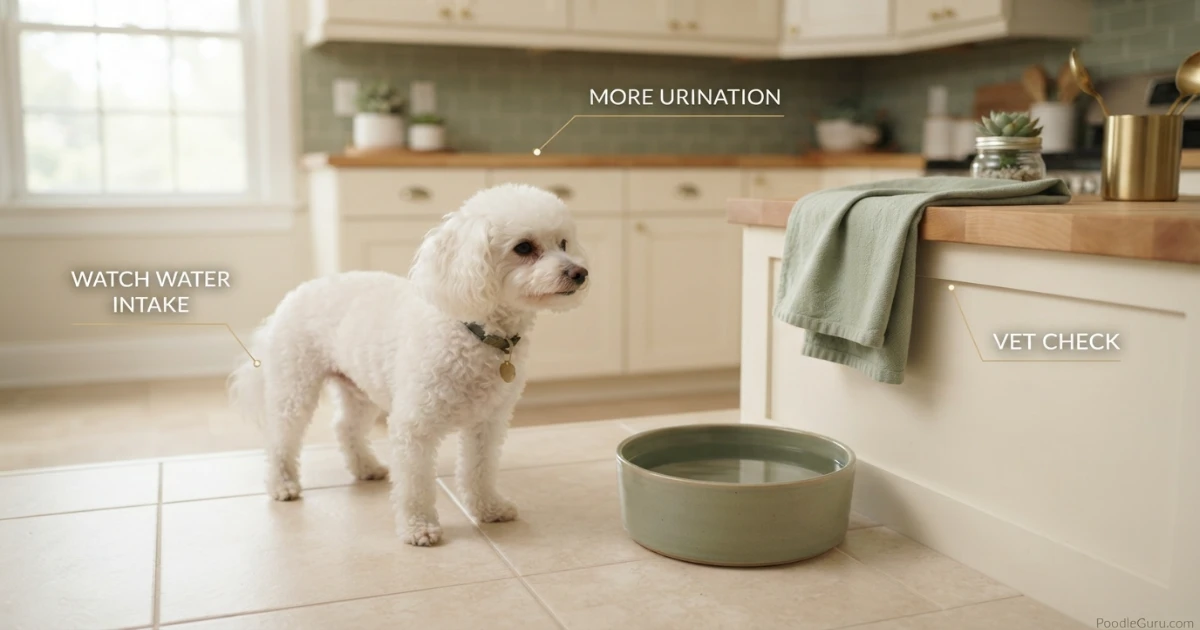
| Excessive thirst (polydipsia) | Water bowl empties faster than usual; poodle seeks out water sources it previously ignored | Kidneys flush excess glucose through urine, pulling water with it |
| Frequent urination (polyuria) | Accidents indoors despite prior house-training; asking to go out more often; larger urine volumes | The body attempts to expel surplus blood sugar through the urinary tract |
| Unexplained weight loss | Ribs or spine become more visible despite normal or even ravenous appetite | Without insulin, cells can’t absorb glucose; the body burns fat and muscle instead |
| Increased appetite | Begging intensifies; poodle acts hungry shortly after meals | Cells signal starvation because glucose isn’t entering them |
| Cloudy eyes | A bluish or milky haze appears in one or both eyes | Diabetic cataracts form rapidly in dogs — sometimes within weeks of onset |
| Lethargy & weakness | Less interest in walks, play, or usual routines; sleeping more | Energy deprivation at the cellular level causes persistent fatigue |
When Subtle Signs Become Warning Signals
Not every thirsty poodle has diabetes. Dogs drink more in hot weather, after exercise, or when eating dry food. The difference between normal variation and a genuine red flag comes down to pattern and persistence.
Book an appointment if you observe two or more of the symptoms above lasting longer than 3–5 days without an obvious explanation. Don’t wait for all six to appear. The combination of excessive thirst and sudden weight loss — in a poodle that’s still eating well — is the classic diabetes presentation. Emergency care is warranted if your poodle becomes disoriented, collapses, vomits repeatedly, or has sweet-smelling breath (a possible sign of diabetic ketoacidosis, a life-threatening complication).
How Vets Diagnose Diabetes in Poodles
A diabetes diagnosis isn’t based on one number. Veterinarians look at a constellation of findings — blood work, urinalysis, and clinical signs — before confirming the condition.
What to Expect at the Vet Visit
Your vet will start with a thorough physical exam and history. They’ll ask about water consumption, urination patterns, appetite changes, and weight trends. Then they’ll run:
- Blood glucose test: A single high reading is not enough on its own because stress can raise glucose, but persistent fasting hyperglycemia strongly supports diabetes when it matches symptoms and urine findings.
- Fructosamine test: This estimates average blood sugar over the previous couple of weeks and can help your vet distinguish persistent diabetes from a short-term stress spike.
- Urinalysis: Glucose in the urine (glucosuria) supports the diagnosis, and ketones raise concern for a more serious metabolic complication that needs prompt care.
- Additional panels: Vets often check for concurrent issues like pancreatitis, Cushing’s disease, or urinary tract infections — all of which can mimic or complicate diabetes.
Costs vary widely by region, clinic, and whether your vet needs a full senior panel, fructosamine test, urinalysis, or follow-up glucose curve. Ask your clinic for an estimate before testing so you can plan the workup clearly.
The PoodleGuru 4-Point Diabetes Monitoring Framework
At PoodleGuru, we evaluate diabetes management through a practical lens: what does an owner actually need to track between vet visits? This framework gives you a repeatable weekly rhythm that catches problems early and keeps your poodle stable.
Track Water Intake Weekly
Measure how much water your poodle drinks in a 24-hour period once a week. Many vets use roughly 1 ounce of water per pound of body weight per day as a starting reference, but activity, weather, food moisture, and medical conditions change this. A clear increase from your poodle’s normal baseline is the warning sign to report.
Weigh Your Poodle Every Saturday
Use the same scale, same time of day. Record the number. Weight stability is one of the clearest signals that insulin dosing and diet are working. A loss of more than 3–4% of body weight in a month means it’s time for a vet recheck — even if your poodle seems fine otherwise.
Log Appetite and Energy Patterns
Keep a simple notebook or phone note. Jot down whether meals were finished, whether your poodle initiated play, and how energetic walks felt. Patterns emerge on paper that memory alone misses. A poodle that suddenly leaves food uneaten may be experiencing a glucose swing that needs attention.
Check Eyes Monthly Under Good Light
Diabetic cataracts can develop quickly in dogs. Once a month, look at your poodle’s eyes in bright, indirect light. A bluish or cloudy cast, especially in the center of the eye, warrants a prompt veterinary or ophthalmology check. Early monitoring preserves options.
This framework doesn’t replace veterinary glucose curves or bloodwork. It complements them. Owners who follow a consistent tracking rhythm often catch changes before they become crises — and their vets have better data to adjust treatment.

Daily Diabetes Management Essentials
Managing a diabetic poodle comes down to consistency. The body craves routine — same insulin timing, same meal schedule, same exercise pattern. Most owners find the first two weeks feel overwhelming, and then it becomes second nature.
Insulin Therapy
Most diabetic poodles require insulin injections, often twice daily, though the exact plan depends on your veterinarian’s protocol. These are given under the skin with a small needle after your veterinary team teaches you the correct technique and location. Your vet will determine the starting dose based on weight and glucose curves, then adjust over several weeks. Never change an insulin dose without veterinary guidance. Even small adjustments can trigger dangerous hypoglycemic episodes.
Glucose Monitoring at Home
Many owners learn to check blood glucose at home using a glucometer calibrated for dogs. A tiny prick on the ear or inner lip yields a drop of blood. Tracking glucose at home, when your vet recommends it, gives useful trend data between formal glucose curves. Some poodles tolerate this beautifully. Others need gradual desensitization with treats and patience.
Exercise Consistency
A diabetic poodle benefits enormously from consistent daily exercise — but the key word is consistent. A sudden burst of intense activity can drop blood sugar sharply. Aim for two moderate walks at roughly the same times each day. This stabilizes glucose utilization and helps maintain a healthy weight.
Nutrition & Feeding Strategies for Diabetic Poodles
Diet doesn’t cure diabetes in dogs, but it’s one of the most powerful tools for keeping glucose levels stable. The wrong food — or the right food at the wrong time — can undo even the best insulin regimen.
What a Diabetic Poodle Diet Should Prioritize
- Consistency first: Feed the same measured amount at the same times each day so insulin and meals line up predictably.
- Complete and balanced nutrition: Use a veterinarian-approved diet that fits your poodle’s weight, age, other health issues, and glucose curve results.
- Appropriate fiber and protein: Many diabetic dogs benefit from diets that support satiety and lean muscle, but the exact fiber and protein level should be chosen with your vet.
- Controlled fat: Avoid rich, fatty foods and table scraps, especially if your poodle has pancreatitis risk or a history of digestive flare-ups.
Feed twice daily, timed with insulin injections. Your vet will tell you whether to feed before, during, or immediately around insulin time based on the insulin type and your poodle’s response. Never free-feed a diabetic poodle. Grazing makes glucose management impossible and increases the risk of insulin overlap complications.
Prescription therapeutic diets formulated for glucose management are worth discussing with your vet. Some poodles do well on them; others need customized plans based on concurrent conditions.

Diabetes Types: What Poodle Owners Should Know
Not all canine diabetes is the same, and understanding the distinction shapes treatment expectations. Here’s how the two main types compare — with poodle-specific context.
| Feature | Type 1 (Insulin-Deficiency) | Type 2 (Insulin-Resistance) |
|---|---|---|
| Frequency in Poodles | Most common pattern in diabetic dogs | Less common as a standalone diagnosis in dogs; insulin resistance can occur with obesity, diestrus, Cushing’s disease, or other illness |
| What’s Happening | Pancreas produces little to no insulin | Body produces insulin but cells don’t respond to it properly |
| Typical Age of Onset | 7–10 years in poodles | Can occur earlier if obesity is severe; also linked to Cushing’s disease |
| Treatment Approach | Insulin injections are usually required | Address weight, diet consistency, and any underlying condition while following the vet’s insulin plan |
| Reversibility | Usually lifelong and management-focused | May improve when the underlying resistance factor is treated, but dogs still need veterinary monitoring and often insulin |
| Poodle-Specific Risk | Strong breed predisposition in Toys and Miniatures | Overweight poodles and intact females can have additional risk or harder glucose regulation |
Common Mistakes Owners Make — And How to Avoid Them
Even devoted owners slip up. These are the patterns we see most often, and each one is avoidable with the right awareness.
| Mistake | Why It Happens | What to Do Instead |
|---|---|---|
| Adjusting insulin dose without the vet | Owners panic after a single high or low reading and tweak the dose themselves | Record the reading, maintain the prescribed dose, and call your vet. Insulin adjustments need trend data, not one number. |
| Skipping glucose curves | Curves are inconvenient — they require a full day at the clinic or dedicated at-home testing | Schedule curves as recommended (usually every 3–6 months once stable). A poodle whose dose hasn’t been reassessed in a year is flying blind. |
| Giving insulin on an empty stomach | The poodle refused breakfast, but the owner injected insulin anyway to stay “on schedule” | Never give full insulin to a poodle that hasn’t eaten. Call your vet for guidance — a skipped dose is safer than hypoglycemia. |
| Feeding high-carb treats | Well-meaning family members slip the poodle biscuits, bread, or table scraps | Use vet-approved low-calorie treats only, such as tiny pieces of lean protein or vegetables your vet says are safe for your dog. Educate everyone in the household. |
| Ignoring dental health | Dental care feels separate from diabetes management | Dental infections raise systemic inflammation and destabilize glucose levels. Diabetic poodles need diligent dental care — brush regularly and schedule professional cleanings. |
Life Expectancy and Quality of Life
A well-managed diabetic poodle can live for years after diagnosis, and many maintain excellent quality of life when insulin, diet, exercise, and monitoring stay consistent. The prognosis depends heavily on two things: how early the diabetes was caught, and how consistently the owner maintains the management routine.
Diabetic cataracts are common in dogs and can develop even when owners are working hard on glucose control. Cataract surgery is available and has a high success rate when performed by a veterinary ophthalmologist, though it’s a significant investment — often a significant investment that varies by region and specialist. Many diabetic poodles can adapt well to reduced vision if surgery is not pursued, especially when owners keep the home layout predictable and safe.
The poodles that thrive longest with diabetes share one thing in common: an owner who treats management as a non-negotiable rhythm, not an occasional effort. Routine is medicine.
Frequently Asked Questions
What are the very first poodle diabetes symptoms I might notice?
Most owners first notice excessive thirst and more frequent urination — sometimes including indoor accidents in a previously house-trained poodle. These two signs, appearing together and persisting beyond a few days, are the most common early indicators. Weight loss despite a good appetite often follows within weeks.
Can diabetes in poodles be reversed with diet?
No. Unlike some cats or humans with Type 2 diabetes, most diabetic dogs have insulin-deficiency diabetes that cannot be reversed through diet alone. Proper nutrition stabilizes glucose levels and reduces insulin requirements, but injected insulin remains essential for nearly all diagnosed poodles.
How long can a poodle live with diabetes?
With consistent management, many diabetic poodles live 3–6 years post-diagnosis, and some maintain excellent quality of life for years. Early diagnosis, diligent insulin therapy, proper diet, and regular veterinary monitoring are the factors that most strongly influence longevity and quality of life.
Are Miniature Poodles more likely to get diabetes than Standard Poodles?
Yes. Veterinary data shows that Miniature and Toy Poodles are diagnosed with diabetes more frequently than Standard Poodles. The genetic predisposition appears stronger in smaller poodle varieties, though Standards are not immune — especially if they become overweight or develop concurrent hormonal conditions.
How often should a diabetic poodle’s blood sugar be checked?
Most vets recommend a full glucose curve every 3–6 months once the poodle is stable. Between curves, many owners check fasting blood glucose at home once or twice weekly. During the initial regulation period after diagnosis, curves may be needed every 1–3 weeks until the right insulin dose is found.
What should I do if my diabetic poodle won’t eat?
Never give a full insulin dose to a poodle that has refused its meal. Contact your vet immediately for guidance — they may advise a reduced dose, a skipped dose, or an appointment. Hypoglycemia from insulin without food is a serious emergency. Ask your vet what glucose source to keep at home for hypoglycemia first aid, such as corn syrup or honey, and call your vet or emergency clinic immediately if signs appear.
Does spaying reduce diabetes risk in female poodles?
Spaying can reduce hormone-related insulin resistance risk in female dogs. Intact females can experience hormonal fluctuations that interfere with insulin sensitivity, so your vet may discuss spaying as part of a broader diabetes-prevention or diabetes-management plan.
Key Takeaways
Poodle diabetes is serious but manageable. Here’s what matters most:
- Excessive thirst, frequent urination, and unexplained weight loss are the hallmark poodle diabetes symptoms — two or more lasting beyond a few days warrant a vet visit.
- Miniature and Toy Poodles face a higher genetic predisposition than Standards; unspayed females and overweight dogs carry additional risk.
- Most diabetic poodles require twice-daily insulin injections for life — this is not a temporary condition, but the routine becomes manageable within weeks.
- The PoodleGuru 4-Point Monitoring Framework (water intake, weekly weight, appetite/energy log, monthly eye checks) catches problems between vet visits.
- Consistent meal timing, portion control, and diabetic-appropriate food are as important as insulin itself — free-feeding makes glucose management impossible.
- With early diagnosis and diligent care, diabetic poodles often achieve a normal lifespan and maintain excellent quality of life.