Poodle Ear Cleaning: Safe Method for Home Owners
Poodle ears are beautiful but demanding. Those floppy, hair-lined ear canals trap moisture, wax, and debris faster than most owners realize. Cleaning them safely at home isn’t complicated — but doing it wrong can cause real harm. Here’s the complete method that protects your poodle’s ears while keeping them clean, comfortable, and infection-free.
Quick Answer: How to Clean Poodle Ears Safely
Use a veterinarian-approved ear cleaning solution (never water or hydrogen peroxide). Fill the ear canal gently, massage the base of the ear for 20–30 seconds, let your poodle shake, then wipe away visible debris with a cotton ball or soft gauze. Never insert anything deeper than your fingertip into the ear canal. Repeat every 1–4 weeks depending on your poodle’s ear health and lifestyle.
Why Poodle Ears Demand Special Attention
Poodle ear cleaning isn’t optional. It’s a core part of ownership — right up there with brushing and professional grooming. The reason is structural. Poodles have pendulous (floppy) ears that fold over the ear canal, creating a warm, dark, low-airflow environment. That’s exactly what yeast and bacteria need to thrive.
On top of that, poodles grow hair inside the ear canal. This is unusual compared to many other breeds. That hair traps wax, moisture, and debris deep inside — a perfect recipe for infections if left unmanaged. Even poodles who hate the process still need it done regularly.
Veterinary guidance consistently identifies poodles as a breed predisposed to otitis externa — inflammation of the outer ear canal. According to VCA Animal Hospitals, dogs with floppy ears and hair-growing ear canals face significantly higher infection risk. That’s poodles to a T. Add in swimming, bathing, or humid weather, and the risk climbs further.
So no, you’re not being overly cautious. Regular ear care is one of the most important things you can do for your poodle’s long-term comfort and health.
🐩 Floppy Ears
Poodle ear flaps block airflow, creating a warm, moist environment where yeast and bacteria multiply.
🌿 Hair in the Canal
Poodles grow hair inside the ear canal — a trait few breeds share. This traps debris and requires regular removal.
💧 Moisture Magnet
After baths, swims, or humid walks, moisture lingers in the ear canal far longer than in erect-eared breeds.
What a Healthy Poodle Ear Should Look Like
Before you clean anything, you need to know what “normal” looks like. Many owners rush to clean ears that are perfectly fine — or worse, they miss early warning signs because they don’t know the baseline.
A healthy poodle ear has these characteristics:
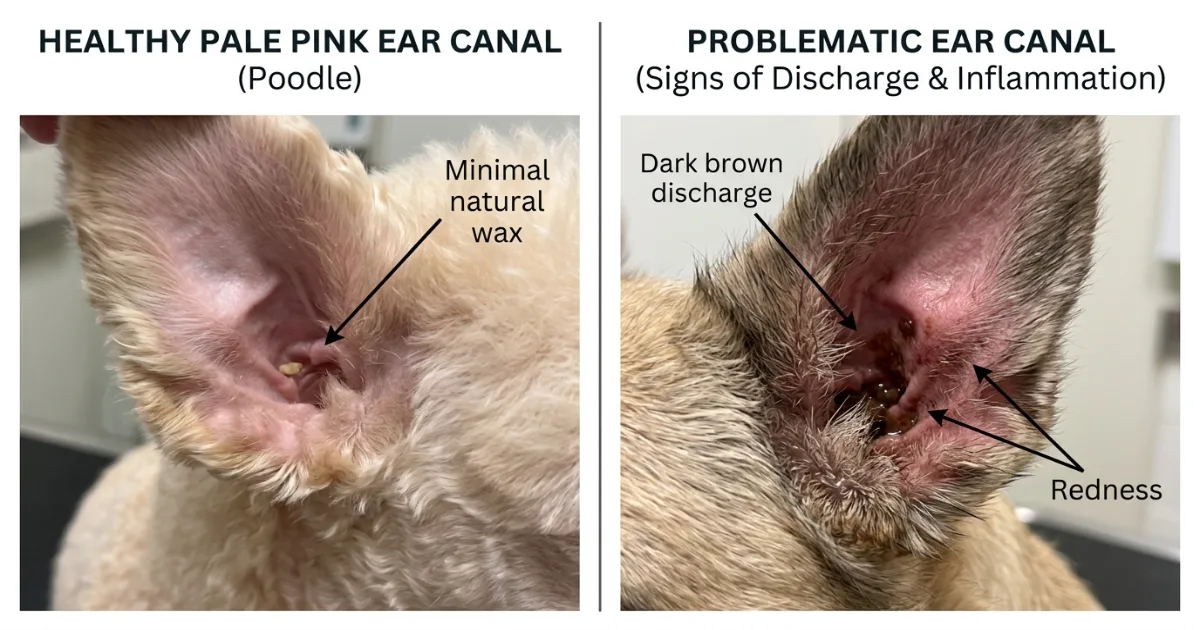
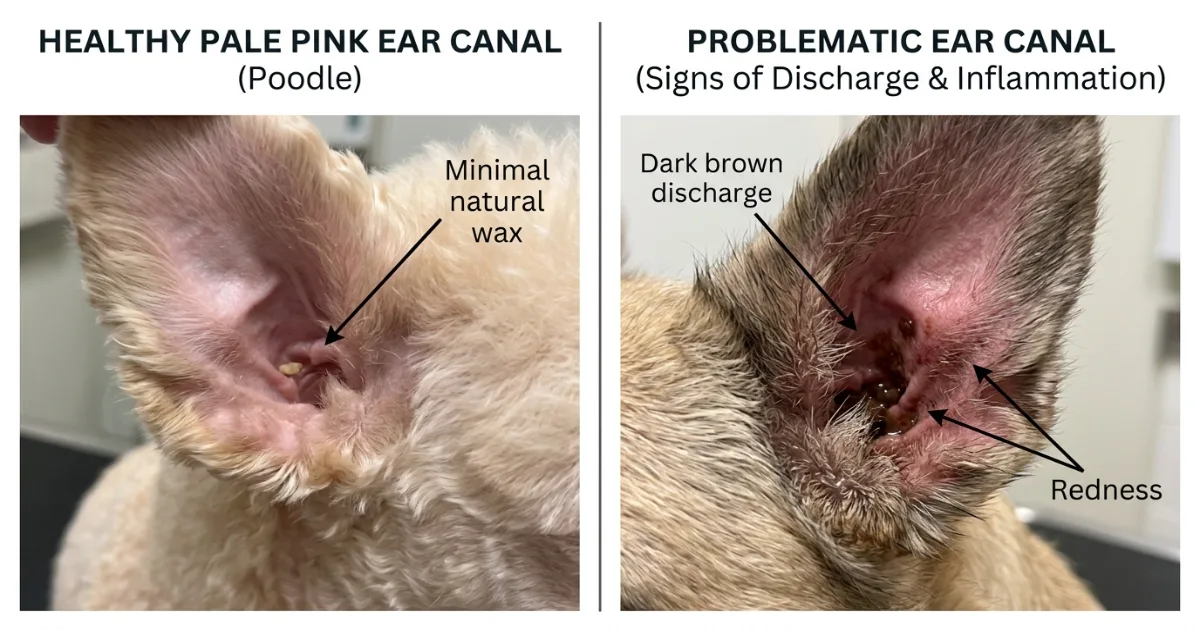
- Color: Pale pink skin inside the ear flap and canal — not red, not brown, not bright pink or angry-looking
- Smell: Nearly odorless. A faint “clean skin” scent is normal. Any yeasty, musty, or sour smell is not
- Discharge: Minimal to none. A tiny amount of light wax is acceptable. Dark brown, yellow, green, or black discharge signals a problem
- Texture: Smooth skin without crusting, scabbing, or thickening
- Comfort: Your poodle shouldn’t flinch, pull away, or yelp when you touch the ear
Check both ears weekly. Make it a habit. Lift the flap, take a quick look and a quick sniff. The sooner you catch changes, the easier they are to address.
Warning Signs: When to Call Your Vet First
This section matters. Do not clean ears that are already infected or inflamed without veterinary guidance. Pouring cleaner into an infected ear can push debris deeper, rupture the eardrum if it’s compromised, or cause significant pain.
⚠️ Stop and Call Your Vet If You Notice:
- Foul, yeasty, or sour odor coming from the ear
- Dark brown, black, yellow, or green discharge
- Redness, swelling, or warmth in the ear flap or canal
- Your poodle shaking its head constantly or holding its head tilted
- Pawing or scratching at one ear repeatedly
- Yelping, flinching, or snapping when the ear is touched
- Loss of balance, walking in circles, or unusual eye movements
- Crusting, scabbing, or hair loss around the ear
These are not cleaning issues — they’re medical issues. A veterinarian needs to examine the ear, possibly with an otoscope, to check the eardrum and determine whether you’re dealing with yeast, bacteria, ear mites, or a foreign body.
The PoodleGuru 4-Step Safe Ear Cleaning Framework
At PoodleGuru, we evaluate every ear cleaning method against four non-negotiable safety criteria. If a technique or product fails any one of these, we don’t recommend it — no matter how popular or convenient it seems.
Poodle ear cleaning is a preventative care routine that removes wax, debris, and trapped moisture from the ear canal using a safe, species-appropriate cleaning solution and gentle technique. For poodle owners, this means accepting that ear care isn’t a one-time fix — it’s a recurring maintenance task tied directly to your dog’s ear structure, hair growth pattern, and lifestyle. The most important thing to understand is that aggressive cleaning causes more harm than infrequent cleaning; gentleness and consistency always win.
1. Assess First
Check both ears visually and by smell before every cleaning session. Never clean an ear that shows signs of infection.
2. Choose Safe Products
Use only veterinarian-formulated ear cleaners. Skip hydrogen peroxide, alcohol, witch hazel, and homemade vinegar mixes unless your vet specifically approves.
3. Use Gentle Technique
Fill, massage, let them shake, wipe. Never dig, probe, or insert anything deeper than a fingertip into the canal.
4. Monitor and Adjust
Track how quickly debris returns. If ears stay clean for weeks, you can space out sessions. If wax builds up fast, talk to your vet about underlying causes.
Step-by-Step: Cleaning Your Poodle’s Ears at Home
This is the method that professional groomers and veterinary technicians use. It works for Toy Poodles, Miniature Poodles, and Standard Poodles — the technique is identical across sizes. What changes is how much solution you use and how you position your dog.
🛁 Before You Start: Gather Your Supplies
- Veterinary ear cleaning solution (room temperature — cold liquid is uncomfortable)
- Cotton balls or soft gauze squares (not Q-tips, not tissue paper)
- An old towel (they will shake)
- High-value treats (small, soft, irresistible)
- Good lighting (you need to see what you’re doing)
- A calm, non-slippery surface (a grooming table with a mat, or a non-slip bathroom floor)
Position Your Poodle Comfortably
For Standards and Miniatures, have them sit or stand beside you. For Toys, place them on a non-slip table or your lap. Use one arm to gently hug their body against yours — this gives you control and makes them feel secure. Speak in a calm, steady voice. If this is your first time, spend a few days just touching and lifting the ears with treats before attempting a full cleaning.
Lift the Ear Flap and Inspect
Gently lift the ear flap straight up. Look inside with your light source. Check for redness, discharge, swelling, or odor. If everything looks healthy, proceed. If anything looks off, stop and consult your veterinarian. Do not skip this step — it’s your safety checkpoint.
Fill the Ear Canal with Cleaning Solution
Place the bottle tip at the ear canal opening — not deep inside. Squeeze gently until you see the solution fill the canal and begin to pool slightly at the opening. For Toy Poodles, this might be just a few drops. For Standards, you may need a full squeeze. The goal is to fill the canal so the solution reaches deep into the horizontal portion where debris hides.
Massage the Base of the Ear
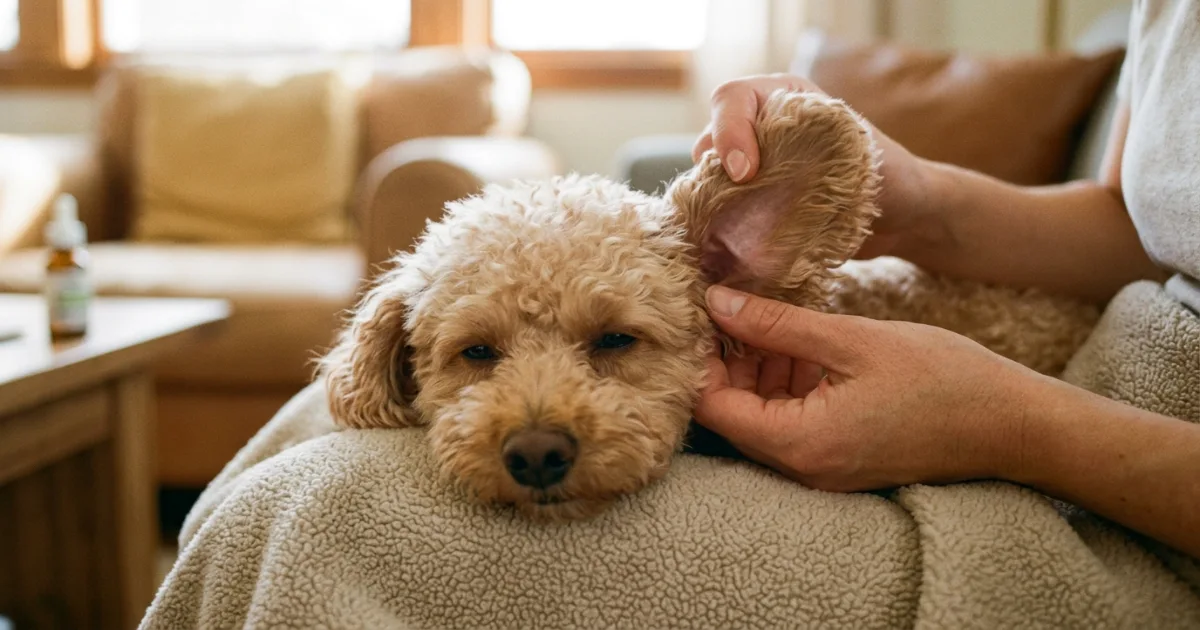
Keep the ear flap lifted with one hand. With the other, place your thumb on the outside base of the ear (where it meets the skull) and your fingers behind it. Massage in a gentle circular motion for 20–30 seconds. You should hear a satisfying squelching sound — that means the solution is breaking up wax and debris inside the canal. Your poodle may lean into this; many dogs find the massage pleasant once they get used to it.
Let Your Poodle Shake
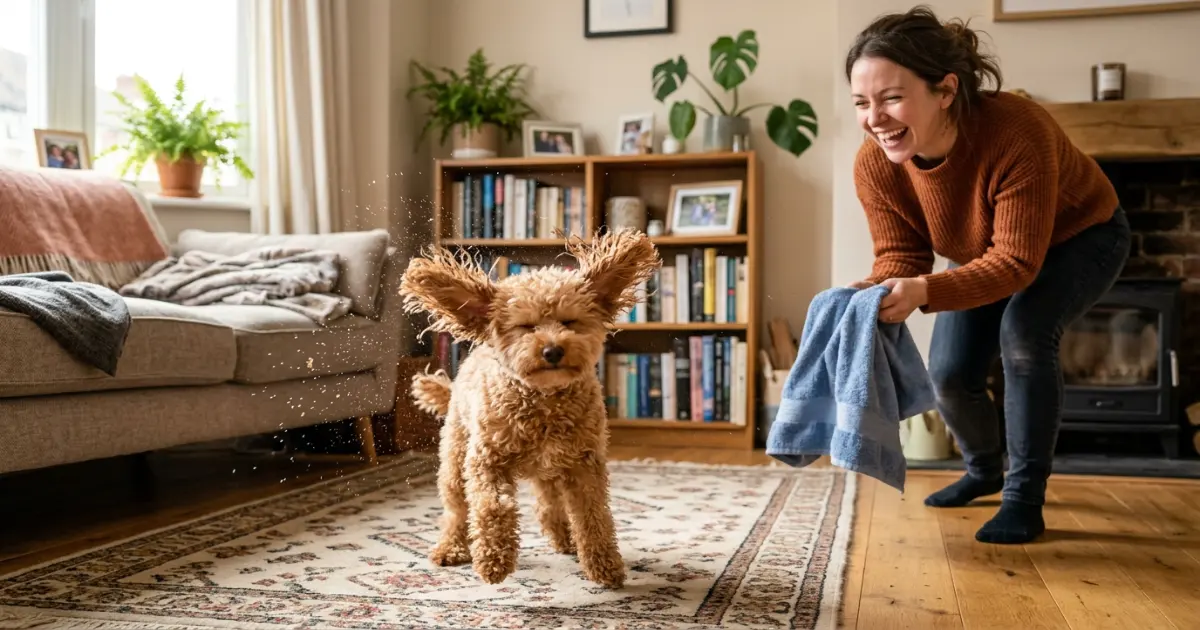
Step back, release the ear, and let them shake their head vigorously. This is good — the shaking helps expel loosened debris from deep in the canal. Keep your face out of the splash zone. That towel you prepared? You’ll be glad you did.
Wipe Away Visible Debris
Wrap a cotton ball or gauze square around your index finger. Gently wipe the outer ear canal and the folds of the ear flap — only as far as your finger naturally reaches. Do not push deeper. Use a fresh cotton ball for each pass. If the first wipe comes back dark or waxy, repeat with fresh cotton until it comes back mostly clean. Never use Q-tips; they push debris deeper and can rupture the eardrum.
Reward Generously and Repeat on the Other Side
Give high-value treats immediately after finishing one ear. Then repeat the entire process on the second ear. End the session with more treats and calm praise. This positive association is what makes future cleanings easier — never skip the reward step.
Ear Cleaning Products: What to Use and What to Skip
The market is crowded with ear cleaning products, and not all of them are safe for poodles. Here’s a clear breakdown of what belongs in your grooming kit — and what doesn’t.
| Product Type | Safety for Poodles | Best Use Case | Key Consideration |
|---|---|---|---|
| Veterinary Ear Cleaner (Ceruminolytic) | ✅ Safest choice | Routine cleaning; breaks down wax | Look for ingredients like squalene or cerumenolytic agents; these dissolve wax without irritation |
| Veterinary Ear Cleaner (Drying) | ✅ Safe for swimmers | Post-swim or post-bath drying | Contains mild drying agents; helps prevent swimmer’s ear but may be too drying for weekly use on non-swimming dogs |
| Ear Cleaning Wipes | ⚠️ Limited use only | Quick wipe of outer ear flap | Cannot clean the canal properly; fine for maintenance between full cleanings but not a replacement for liquid cleaner |
| Hydrogen Peroxide | ❌ Do not use | — | Causes tissue damage and stinging; can delay healing if micro-abrasions are present |
| Rubbing Alcohol | ❌ Do not use | — | Extremely painful on inflamed skin; dries tissues excessively and causes cracking |
| Apple Cider Vinegar (Homemade) | ⚠️ Vet approval required | Not generally recommended | Acidity can irritate already sensitive ear tissue; only use if your vet confirms it’s appropriate and provides a safe dilution ratio |
| Plain Water | ❌ Avoid | — | Adds moisture without cleaning; counterproductive for poodle ears that already trap moisture |
At PoodleGuru, we recommend sticking with veterinary-formulated ear cleaners specifically designed for dogs. These products are pH-balanced for canine ear canals and contain ingredients that effectively break down wax without damaging delicate tissue. Your veterinarian can recommend a specific brand suited to your poodle’s individual needs.
The Most Common Ear Cleaning Mistakes Poodle Owners Make
Most ear problems in poodles aren’t caused by neglect. They’re caused by well-meaning owners doing the wrong thing with confidence. Here are the mistakes that show up most often in veterinary clinics — and how to avoid every one of them.
| Mistake | Why It’s Harmful | What to Do Instead |
|---|---|---|
| Using Q-tips or cotton swabs in the ear canal | Pushes wax and debris deeper; can rupture the eardrum with even light pressure | Use only your finger wrapped in gauze or a cotton ball — never insert anything deeper than your fingertip |
| Cleaning too aggressively or too often | Strips natural protective oils; causes micro-abrasions that invite infection | Clean every 1–4 weeks based on wax buildup; if ears stay clean, don’t clean them |
| Skipping the “assess first” step | Cleaning an infected ear can worsen the infection and cause significant pain | Always look and smell before every cleaning session |
| Not massaging long enough | Solution doesn’t reach the deep horizontal canal where debris accumulates | Massage for a full 20–30 seconds until you hear the squelching sound |
| Using cold solution | Causes discomfort and can make a calm dog anxious about future cleanings | Warm the bottle in your hands or pocket for a few minutes before use |
| Forgetting to dry after swimming or bathing | Trapped moisture creates an ideal environment for yeast and bacteria | Use a drying ear cleaner after any water exposure, or at minimum dry the outer ear thoroughly |
How Often Should You Clean Poodle Ears?
There’s no single right answer — frequency depends on your individual dog. But here’s a practical framework that works for most poodle owners.
🐩 Average Adult Poodle
Every 2–4 weeks. Check weekly; clean when you see visible wax or the ears start to have a faint odor. Most adult poodles fall into this range.
🏊♂️ Swimming Poodles
After every swim, plus routine cleaning every 1–2 weeks. Use a drying ear cleaner post-swim. Moisture is the biggest enemy here.
🐩 Poodle Puppies
Start handling ears daily; clean every 2–4 weeks as needed. The goal with puppies is building positive associations more than actual cleaning. Short, treat-heavy sessions win.
💡 Pro Tip: Track What’s Normal for Your Poodle
Every poodle has a baseline. Some produce more wax than others. Some can go six weeks between cleanings; others need attention every ten days. The key is consistency — clean on a schedule, note what “normal” looks like for your dog, and adjust frequency based on what you actually observe, not a generic calendar recommendation.
✂️ When to Ask a Professional Groomer About Ear Hair
Many poodle owners wonder about ear hair removal (plucking). This is a topic with genuine debate even among professionals. Ear hair can trap debris, but aggressive plucking can cause micro-inflammation that invites infection. The PoodleGuru position: discuss ear hair removal with your groomer and your veterinarian. If your poodle has chronic ear infections, strategic ear hair removal may help. If your poodle’s ears are healthy, maintenance ear hair trimming (not aggressive plucking) is often sufficient. Let a professional do it — don’t attempt ear plucking at home without training. For more on overall coat care, see our Complete Poodle Grooming Guide.
📋 Your Poodle Ear Care Action Plan
If you’re just starting a structured ear care routine, here’s what to do this week:
- Today: Inspect both ears. Lift the flap, look, sniff. Note the baseline.
- This week: Purchase a veterinary ear cleaning solution if you don’t have one. Skip the pet store brands not backed by veterinary formulation.
- Before first cleaning: Practice handling your poodle’s ears with treats for 2–3 days. Lift, touch, treat, release.
- First cleaning: Follow the 7-step method above. Use lots of treats. Stop if your poodle shows signs of pain.
- Ongoing: Check ears weekly. Clean every 2–4 weeks, or as needed. Track changes over time.
Frequently Asked Questions
How do I know if my poodle has an ear infection?
Key signs include a foul or yeasty odor, dark discharge, redness or swelling in the ear, head shaking, pawing at the ear, and sensitivity when the ear is touched. If you notice any of these, skip the home cleaning and see your veterinarian. An otoscopic exam is the only way to confirm the eardrum is intact before putting anything in the ear.
Can I use human ear cleaning products on my poodle?
No. Human ear products are formulated for a different ear canal shape and pH balance. They can be irritating, ineffective, or even harmful for dogs. Always use a veterinary-formulated canine ear cleaner — these are designed specifically for the L-shaped canine ear canal and the types of debris dogs produce.
What is the black gunk in my poodle’s ears?
Black or dark brown debris can be several things: normal oxidized wax, yeast overgrowth, or dried blood from ear mites. Yeast often produces a dark brown discharge with a distinctive musty smell. Ear mite debris looks like coffee grounds. A veterinarian can tell the difference with a quick swab and microscope exam — don’t guess.
Should I pluck my poodle’s ear hair?
There’s no universal yes or no. Ear hair removal can help dogs with recurrent infections by improving airflow, but aggressive plucking can cause micro-inflammation that actually increases infection risk. Discuss it with your veterinarian and groomer. If your poodle has healthy ears, light trimming of visible ear hair is often sufficient. Let professionals handle ear plucking.
My poodle shakes its head after ear cleaning — is this normal?
Yes, completely normal. Head shaking after you massage the ear helps expel loosened debris and excess solution from the deep canal. In fact, you should encourage it — just step back and let it happen. If head shaking persists for hours after cleaning or seems distressed, call your vet.
Can I use apple cider vinegar to clean my poodle’s ears?
Not without explicit veterinary approval. While some online sources recommend diluted apple cider vinegar, the acidity can irritate already sensitive ear tissue and cause stinging if there are micro-abrasions. Commercial veterinary ear cleaners are safer, more effective, and pH-balanced for the task. If you’re considering a homemade solution, discuss it with your vet first.
How do I clean my poodle’s ears if they hate it?
Start smaller. Spend a week just touching the ears and giving treats — no cleaning at all. Then progress to lifting the ear flap, then touching the ear opening, then a single drop of solution, all with high-value rewards at each step. Desensitization takes patience. For severely fearful dogs, a professional groomer or veterinary technician can help, and sedation-free cooperative care training is worth exploring.
What’s the safest ear cleaner for poodles with sensitive ears?
Look for a veterinary-formulated cleaner labeled for sensitive ears, typically free of alcohol, fragrances, and harsh detergents. Ingredients like cerumenolytic agents (to break down wax gently) combined with soothing emollients are ideal. Your veterinarian can recommend a specific product based on your poodle’s ear health history — this personalized recommendation is worth far more than any generic suggestion.
Key Takeaways: Poodle Ear Cleaning
Poodle ear care is about prevention, not reaction. Here’s what to remember:
- Poodle ears are structurally predisposed to infections due to floppy ear flaps and hair growing inside the ear canal — regular cleaning is essential, not optional.
- Always assess ears before cleaning. Redness, odor, discharge, or pain means stop and call your veterinarian — cleaning an infected ear can cause serious harm.
- Use only veterinary-formulated canine ear cleaners. Never use hydrogen peroxide, alcohol, Q-tips, or homemade vinegar solutions without vet approval.
- The safe technique is: fill the canal, massage the base for 20–30 seconds, let your poodle shake, then wipe visible debris with a gauze-wrapped finger — never insert anything deeper than your fingertip.
- Most adult poodles need ear cleaning every 2–4 weeks. Swimming poodles need more frequent attention with a drying cleaner after every water exposure.
- Positive reinforcement transforms ear cleaning from a struggle into a manageable routine. Treats, calm energy, and gradual desensitization work better than force — every single time.
Ready to build a complete grooming routine? Read the full PoodleGuru Grooming Guide →