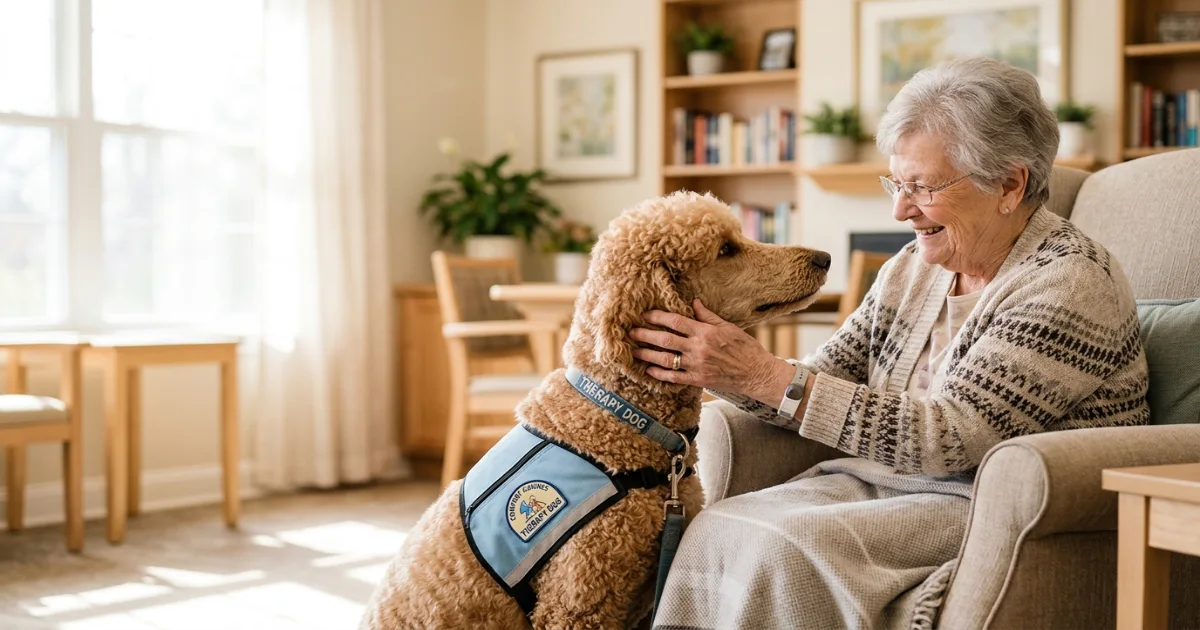
Poodle as Therapy Dog: The Complete Certification Guide
Quick Answer — Yes, a poodle can become an outstanding therapy dog. They combine gentleness, sharp intuition, and a non-shedding coat that facilities love. Certification requires solid obedience, a calm temperament, and passing a therapy dog evaluation — something most well-socialized poodles achieve with the right preparation.
If you’ve ever watched your poodle rest their chin softly on a friend’s knee after a difficult day, you’ve already seen the making of a therapy dog. Poodles possess an emotional intelligence that feels almost human. But moving from that natural sensitivity to a formal therapy dog certification takes deliberate training, a clear understanding of the process, and a realistic look at your poodle’s temperament. This guide walks you through everything you need to know about turning your poodle into a certified therapy dog — from the very first obedience class to the first hospital visit.
Why Poodles Are Uniquely Suited for Therapy Work
The term poodle as therapy dog isn’t just a trendy phrase — it’s rooted in the breed’s history and cognitive wiring. Poodles were originally bred as water retrievers, requiring keen problem-solving, a strong desire to cooperate with humans, and an uncanny ability to read subtle cues. Those same traits now make them naturals in therapeutic settings. Unlike breeds that may become overly boisterous or aloof, a well-bred poodle calibrates its energy to the person in front of them. I’ve seen a miniature poodle sit statue-still while a trembling child reads aloud, then moments later, gently nudge an elderly hand for a stroke.
Add in the hypoallergenic coat — a genuine advantage in hospitals, schools, and nursing homes — and you begin to see why therapy dog organizations consistently rank poodles among their most successful candidates. The breed’s three size varieties also mean there’s a fit for nearly every setting, from a toy poodle curling in a hospice bed to a standard poodle standing calmly beside a wheelchair.
Intuitive & Empathetic
Poodles pick up on emotional shifts faster than many breeds. They adjust their behavior without being asked.
Non-Shedding Coat
Their hair-like coat produces far less dander, making them welcome in allergy-sensitive environments.
Three Sizes, One Heart
Toys, miniatures, and standards each bring unique advantages, but all share the same gentle core.
Trainability
Ranked among the most intelligent breeds, poodles thrive on positive reinforcement and complex commands.
What a Therapy Dog Is — and What It Is Not
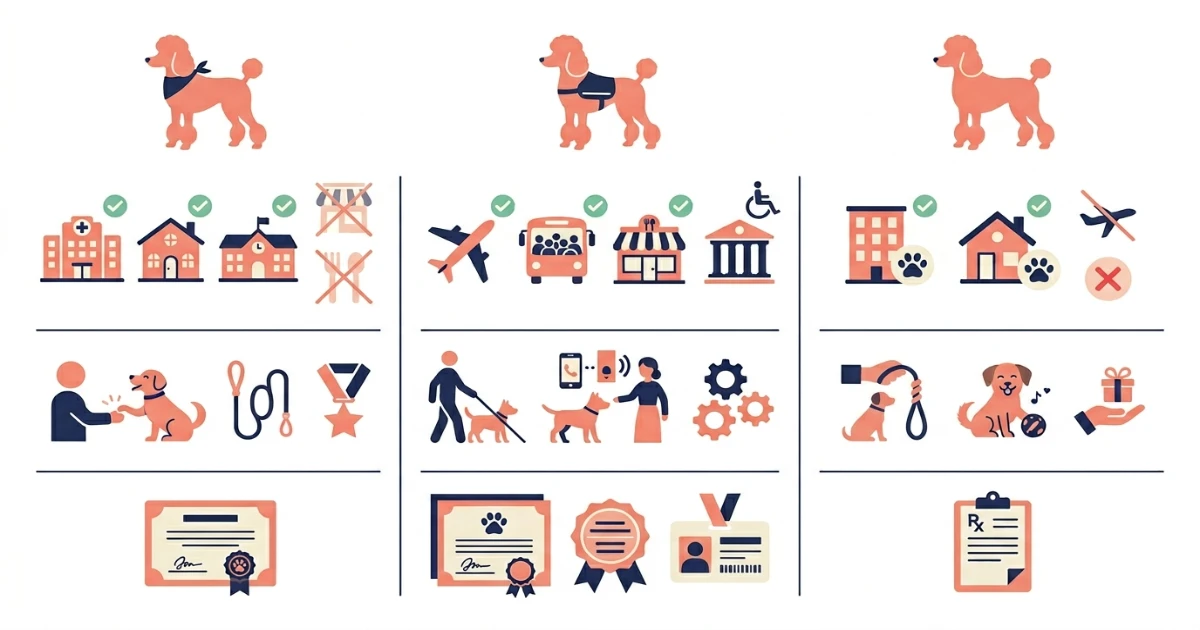
One of the biggest areas of confusion for poodle owners is the difference between therapy dogs, service dogs, and emotional support animals. This misunderstanding can cause legal headaches and training missteps. Let’s clear it up before you spend a dollar on equipment or classes.
A therapy dog is a pet that has been trained and evaluated to provide comfort, affection, and emotional support to people in hospitals, nursing homes, schools, libraries, and disaster areas. They do not have public access rights like service dogs. They cannot enter grocery stores or restaurants unless invited. Their job is visiting, not performing tasks for a single handler.
By contrast, a service dog is individually trained to perform specific tasks for a person with a disability, and an emotional support animal provides passive comfort through its presence (prescribed by a mental health professional) but has no specialized training requirement. Your poodle can be a brilliant therapy dog without ever having service dog privileges.
| Trait | Therapy Dog | Service Dog | Emotional Support Animal |
|---|---|---|---|
| Public Access Rights | No — only invited facilities | Yes — ADA protected | No (housing exception only) |
| Specialized Training | Pass therapy evaluation + CGC | Task-trained for disability | None required legally |
| Certification | Registration with therapy org | No official certification | Letter from therapist |
| Typical Poodle Fit | Excellent — calm, social | Possible for specific tasks | Any temperament |
The Poodle Temperament: What Makes a Therapy Candidate
Not every poodle will enjoy therapy work — and that’s okay. The evaluation process looks for dogs that are not only well-behaved but also genuinely at ease around medical equipment, raised voices, unsteady handling, and unpredictable movements. A poodle that startles easily, resource-guards, or gets overwhelmed in crowds may struggle. However, the vast majority of poodles can be shaped into confident, steady visitors with early socialization and gradual exposure.
Key traits evaluators look for include a soft mouth (no nipping, even by accident), willingness to be touched by strangers, and a recovery speed after a surprise. Poodles often excel here because they’ve been bred for generations to work in partnership with people, not to guard or chase. I’ve watched standard poodles calmly accept clumsy hugs from toddlers, and toys remain relaxed while being passed between nursing home residents — traits that aren’t typical across all breeds.
Step-by-Step: How to Certify Your Poodle as a Therapy Dog
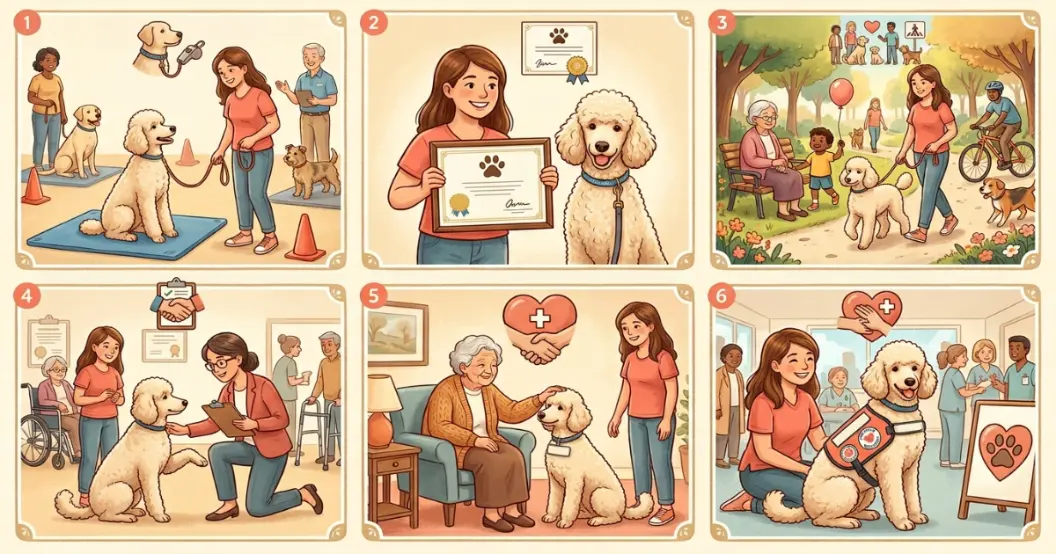
This is the roadmap most poodle owners follow. Each step builds on the last, and skipping ahead almost always leads to frustration. Plan on spending anywhere from 6 months to a year, depending on your poodle’s starting point.
1. Solidify Basic Obedience
Your poodle must respond reliably to sit, down, stay, come, and leave it around distractions. Enrolling in a group class — even if your poodle already knows these at home — provides the real-world proof needed later. Loose-leash walking without pulling is particularly important.
2. Earn the Canine Good Citizen (CGC) Title
Almost every therapy dog organization requires the AKC Canine Good Citizen test or an equivalent. It covers accepting a friendly stranger, sitting politely for petting, appearance and grooming tolerance, walking through a crowd, and supervised separation. Poodles tend to breeze through the grooming section, but distracted recalls often need sharpening.
3. Socialize Beyond the Dog Park
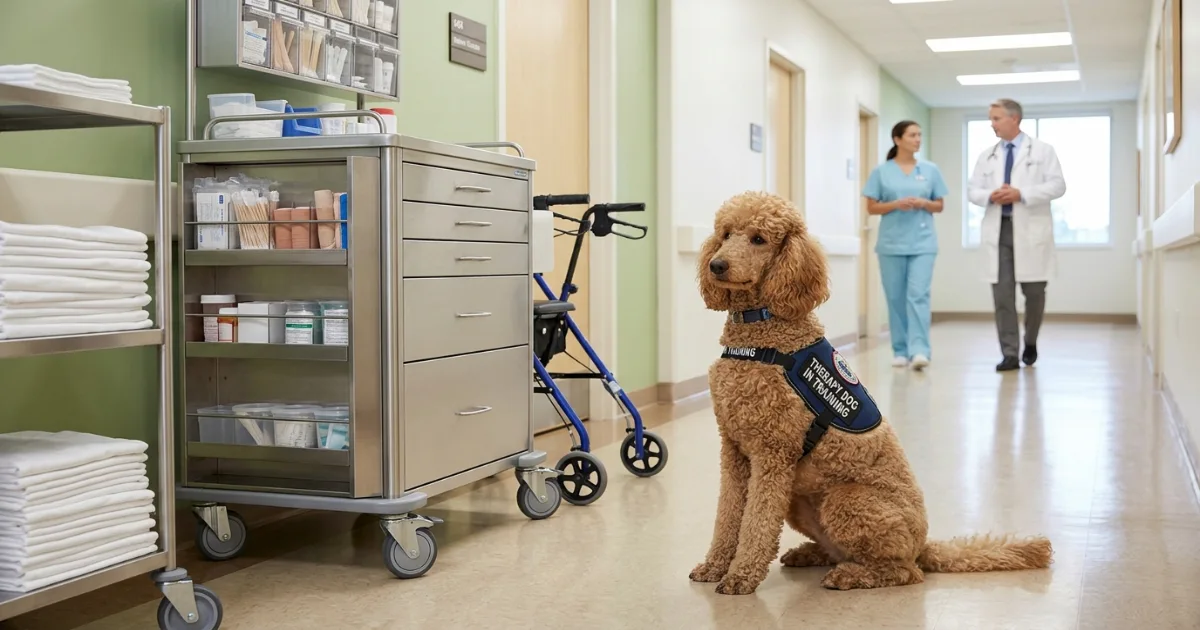
Therapy poodles need to be comfortable near wheelchairs, walkers, crutches, loudspeakers, and medical carts. Purposefully expose your poodle to these stimuli with high-value treats and calm praise. Visit pet-friendly stores, outdoor cafés, and quiet public buildings to broaden their world.
4. Choose a Reputable Therapy Dog Organization
Organizations like Pet Partners, Alliance of Therapy Dogs, and Therapy Dogs International each have slightly different requirements, but all demand a team evaluation. Research their evaluators near you and pick the one that best aligns with where you hope to volunteer — some focus on literacy programs, others on hospital work.
5. Pass the Therapy Dog Evaluation
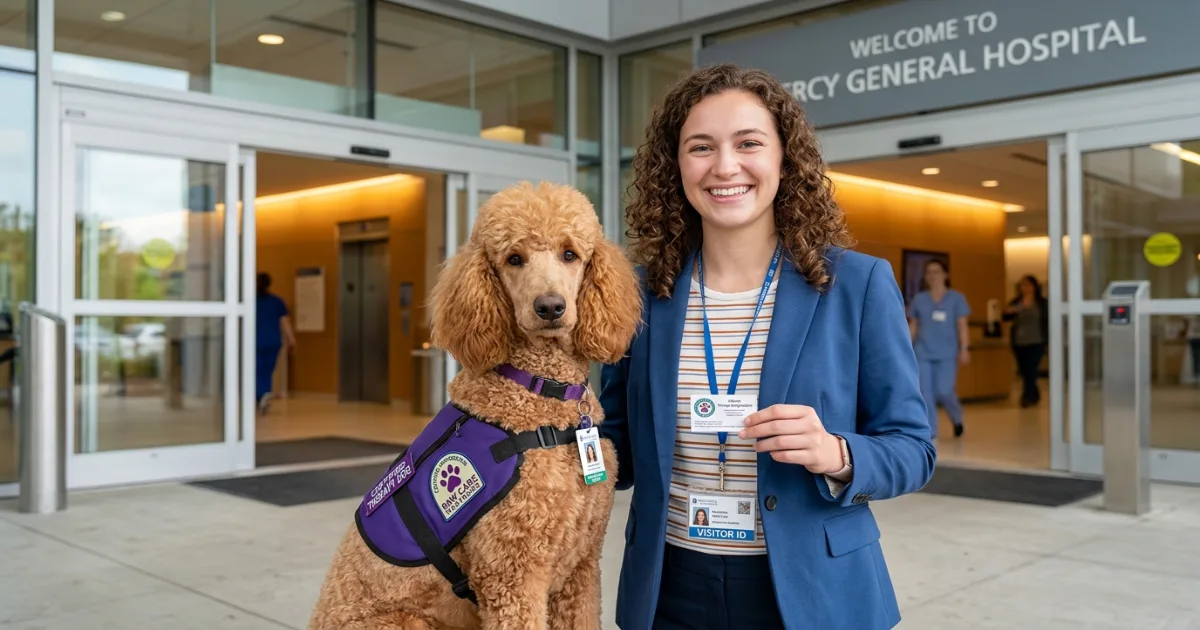
This is the big day. An evaluator will test your poodle’s reaction to medical equipment, loud noises, clumsy petting, and possibly food on the floor. You’ll be judged as a handler too — your ability to read your poodle’s stress and advocate for them matters immensely.
6. Complete Supervised Visits
Most organizations require three to five supervised visits before awarding full certification. This is where you’ll see if your poodle truly enjoys the work. Watch their body language: a loose, wagging body, soft eyes, and voluntary approaches are green lights.

Health, Age, and Grooming Requirements
Therapy organizations take health seriously. Your poodle will need a recent veterinary health screening, up-to-date vaccinations, and a negative fecal test. Many require annual rechecks. As for age, most groups require dogs to be at least one year old — some prefer 18 months — to ensure emotional maturity. I’ve found that standards and miniatures often hit their therapy stride around 2 years, while toys may be ready a bit earlier if they’re naturally easygoing.
Grooming matters more than most owners realize. Your poodle must be clean, brushed, and free of mats before every visit. Nails need to be short enough not to scratch delicate skin, and teeth should be in good shape — a poodle’s breath when offering a gentle kiss matters to clients. A quick spritz of a light, pet-safe coat conditioner right before a visit can reduce dander further and leave a fresh impression.
The Cost of Therapy Dog Certification in 2026
Realistic Budget Overview
While your poodle’s well-being is priceless, here’s what most owners spend to reach certification:
- Basic Obedience Classes (6-8 weeks): $120–$250
- CGC Test Fee: $15–$30
- Therapy Dog Preparation Workshop (optional but helpful): $75–$180
- Therapy Dog Evaluation Fee: $40–$80
- Organization Registration & First-Year Dues: $50–$100
- Liability Insurance (often included): $0–$45
- Gear (vest, bandana, leash, cleanup kit): $35–$90
Total expected range: $335–$775. That’s modest for the years of meaningful service your poodle will provide. Beware of any website offering “instant certification” without an in-person evaluation — it’s not legitimate.
Common Mistakes Owners Make When Pursuing Therapy Certification
Over the years, I’ve watched well-meaning owners unknowingly set their poodles up for failure. These are the missteps that most often derail an otherwise promising therapy dog journey.
- Rushing the timeline. Poodles are clever, but emotional readiness can’t be shortcut. Pushing a dog before they’re confident leads to burnout.
- Assuming a therapy dog is the same as a service dog. This error causes public access conflicts and unrealistic training expectations.
- Neglecting handler training. Your own demeanour affects the evaluation. If you’re nervous or correcting harshly, evaluators notice.
- Ignoring early stress signals. Lip licking, yawning, or turning away aren’t just quirks — they’re often the first signs your poodle is uncomfortable.
- Skipping the CGC prep. Even a poodle that’s perfect at home can fail the polite greeting portion if they haven’t practiced with strangers.
What Buyers Often Get Wrong About Therapy Dog Potential
If you’re considering a poodle puppy with the specific goal of therapy work, know that early signs aren’t always obvious. A bubbly, high-energy puppy doesn’t always mature into a calm visitor. Some of the best therapy poodles I’ve known were reserved as adolescents. Selecting a puppy from parents with proven, stable temperaments — and having an honest conversation with the breeder about your therapy goals — increases your odds far more than picking the boldest pup in the litter. Also, while coat color is personal preference, note that some facilities may have mild preferences for lighter-colored dogs simply because they appear softer to certain clients, but any color poodle can certify.
Life After Certification: Real-World Visits
Certification is just the beginning. Your poodle will likely start with short, 30-minute visits once a week. Watch how they recover afterwards — tired is normal, emotionally drained is not. Many poodles show a distinct “therapy dog mode”: a quieter, almost meditative presence that clicks on the moment the vest goes on. Over time, you’ll learn which types of visits fill your poodle’s cup. Some poodles adore one-on-one hospice work; others thrive in a lively children’s hospital reading circle. There’s room to find your unique team rhythm.
It’s also worth noting that a therapy poodle’s career can span many years. With proper health maintenance — and your poodle’s own enjoyment intact — I’ve known standard poodles who visited well into their early teens, often mellowing beautifully with age.
Frequently Asked Questions
- Can any poodle become a therapy dog?
- No. While poodles as a breed have high potential, individual temperament, socialization, and health play decisive roles. A dog that shows fear, aggression, or extreme excitability around strangers will not pass an evaluation.
- What is the difference between a therapy dog and a service dog poodle?
- A service dog is trained to perform tasks for a person with a disability and has legal public access. A therapy dog is a volunteer that provides comfort in facilities and has no such access rights. The training paths diverge significantly.
- How long does it take to certify a poodle as a therapy dog?
- Expect 6 to 12 months of consistent training. A poodle with solid obedience can prepare in 4–6 months if they mature quickly, but rushing leads to gaps in real-world readiness.
- Are toy poodles good therapy dogs?
- Absolutely. Their small size makes them ideal for bedside visits and lap-based comfort. They need careful handling to feel secure, but many toys thrive in quiet, one-on-one settings.
- What age can a poodle start therapy dog training?
- Basic training can begin as early as 8 weeks, but formal therapy dog evaluations usually require the dog to be at least 12–18 months old. Early socialization sets the stage for success.
- Do poodles need special training to be therapy dogs?
- They need targeted preparation, not “special” training in the sense of unique skill circuits. Core requirements include CGC-level obedience, controlled greetings, and desensitization to medical equipment and unstable surfaces.
- How much does therapy dog certification cost?
- Plan for $335–$775, which includes classes, testing, registration, and basic gear. Ongoing costs like annual dues and grooming are minimal.
Summary — Choosing to train your poodle as a therapy dog is a deeply rewarding path, but it requires clarity, patience, and honest self-assessment. With their innate sensitivity, intelligence, and hypoallergenic coat, poodles are among the strongest therapy dog candidates you’ll find. Start with foundational obedience, earn the CGC, partner with a recognized therapy organization, and always let your poodle’s well-being guide the pace. When you walk into a room and see a face light up at the sight of your poodle’s wagging tail, you’ll know every practice session was worth it.