When Do Poodles Stop Growing? Complete 3-Size Chart
There is not one single age for every Poodle. Toy Poodles usually finish growing before their first birthday. Standard Poodles keep you guessing well into their second year. If you are counting the days until your Poodle reaches full size — or wondering whether that gangly adolescent phase will ever end — the timeline depends entirely on which poodle you have.

Quick Answer: When Do Poodles Stop Growing?
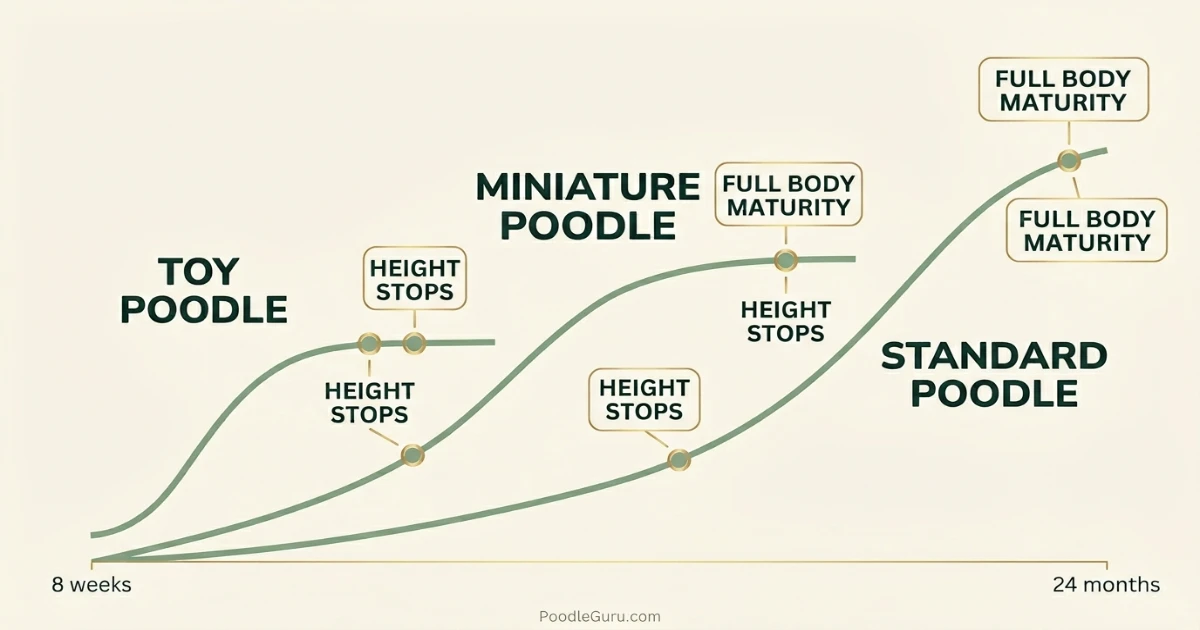
Toy Poodles typically stop growing in height by 6–8 months and fill out completely by around 10–12 months. Miniature Poodles reach full height by 8–12 months with final weight settling in by 12–14 months. Standard Poodles take the longest — height may be reached by 12–18 months, but full muscling and chest depth often continue until 2 years of age. Every Poodle is an individual, but these windows cover the vast majority of healthy dogs.
Quick Facts: When Do Poodles Stop Growing by Size?
📏 Toy Poodle
Height stops: 6–8 months
Weight settles: 10–12 months
Adult weight: 4–6 lbs
Growth plates close around 8–10 months.
🐾 Miniature Poodle
Height stops: 8–12 months
Weight settles: 12–14 months
Adult weight: 10–15 lbs
Growth plates close around 10–14 months.
🐶 Standard Poodle
Height stops: 12–18 months
Full maturity: 18–24 months
Adult weight: 40–70 lbs
Growth plates can stay open until 18–24 months.
Why “When Do Poodles Stop Growing?” Depends on Size
Poodles are a single breed with an extraordinary size range — from 4-pound Toys to 70-pound Standards. That’s not a quirk. It’s the result of centuries of selective breeding that compressed a large working retriever into progressively smaller packages, and then bred those smaller versions to reproduce true to type. But shrinking the body didn’t shrink the developmental clock proportionally.
Small dogs generally mature faster across major developmental markers, including skeletal growth, sexual maturity, and metabolic rate. This is true across all dog breeds, not just poodles. The AKC Poodle standard separates Toy, Miniature, and Standard Poodles by height at the shoulder, and a typical 4–6 pound Toy Poodle has far less total body mass to build than a Standard Poodle that may mature near 60 pounds. The biological construction project is simply smaller and finishes sooner.
What trips owners up is that all Poodle puppies look remarkably similar in proportion at 8 weeks. That fluffy little bundle gives few clues about whether you’ll be done with growth in four months or fourteen. The answer is written in the genes — specifically the size variant genes that determine final frame — but it only reveals itself over time.
Size-by-Size Growth Breakdown
Below is the most detailed single-view comparison you’ll find for poodle growth milestones. It goes beyond height and weight; it also includes behavioral maturity, which often lags behind skeletal completion.
| Growth Attribute | Toy Poodle | Miniature Poodle | Standard Poodle |
|---|---|---|---|
| Height stops increasing | 6–8 months | 8–12 months | 12–18 months |
| Weight stabilizes | 10–12 months | 12–14 months | 18–24 months |
| Growth plates fully close (estimate) | 8–10 months | 10–14 months | 18–24 months |
| Adult height range | Up to 10 inches | 10–15 inches | Over 15 inches (typically 22–27) |
| Adult weight range | 4–6 lbs | 10–15 lbs | 40–70 lbs (males often heavier) |
| Behavioral maturity | 12–18 months | 14–20 months | 18–30 months |
| Muscle filling / chest deepening | Minimal change after 10 months | Noticeable until ~14 months | Significant until 24 months |
Notice something important: “stops growing” means two different things to most owners. The height number on a measuring tape stops changing first. The visual bulk — chest width, muscle thickness, overall substance — continues well after the skeleton is done. This is why a 13-month-old Standard Poodle might be as tall as he’ll ever get but still look lanky and unfinished. He’s not still growing upward. He’s filling in.
Growth Plates: The Real “Stop Growing” Signal
Growth plate closure is the biological process by which the soft cartilage at the ends of long bones hardens into solid bone. For Poodle owners, this means the point at which height and frame size are truly final. The most important thing to understand is that a Poodle may still gain muscle and fill out after height stops, but the skeleton itself is locked once those plates close.
Veterinarians can sometimes see open growth plates on X-rays in young dogs. This is why many breeders and vets recommend waiting until skeletal maturity before spaying or neutering — especially in Standards, where early altering has been associated with altered growth plate timing and joint conformation concerns. The VCA’s guidance on puppy nutrition underscores how growth rate, not just final size, affects lifelong joint health, and that’s particularly relevant for poodles with their long, slender legs.
The PoodleGuru Growth Tracking Framework
At PoodleGuru, we do not just give you a number and move on. We’ve developed a simple four-step tracking method that helps owners know where their Poodle is on the growth curve — without needing a veterinary degree or a complicated spreadsheet.
Weekly Height Check (Until 12–18 Months Depending on Size)
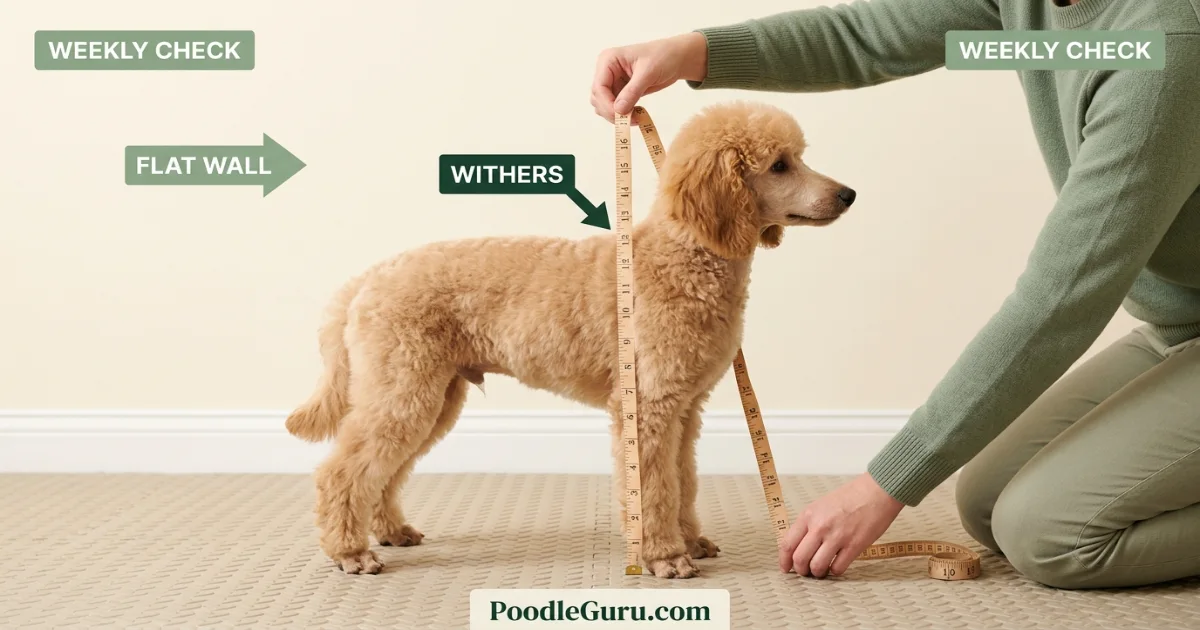
Tool: Soft measuring tape, flat wall, helper.
Measure from floor to withers (shoulder blades) once a week at roughly the same time of day. Record the number. When that number stops changing for 3–4 consecutive weeks, height growth is likely done.
Outcome: A clear plateau number that matches the breed standard range for the size.
Body Condition Scoring, Not Just Weight
Tool: Your hands and eyes.
A puppy gaining weight can mean healthy growth or excess fat. Feel the ribs — they should be easily felt with a thin fat cover. An overweight puppy puts unnecessary stress on still-open growth plates. Prioritize body condition over the scale number.
Outcome: Steady, lean growth — not a sudden jump that might signal overfeeding.
Behavioral Maturity Checkpoints
Tool: Observation of impulse control, focus, and settling ability.
Skeletal growth finishing doesn’t equal mental adulthood. A Toy Poodle may be physically done at 8 months but still an impulsive puppy until 15 months. Track behavioral milestones alongside physical ones.
Outcome: Realistic expectations — your “full-sized” dog may still act like a teenager.
Veterinary Growth Plate Assessment (Optional but Recommended for Standards)
Tool: X-rays if indicated.
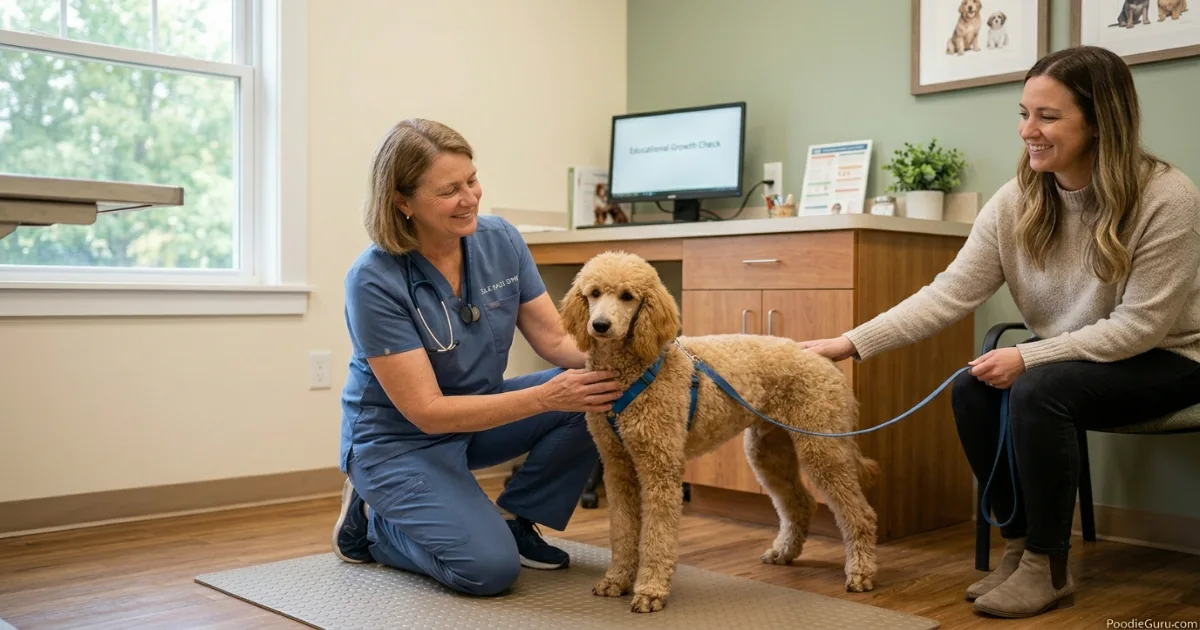
If you’re considering spay/neuter or high-impact sports, ask your vet whether an X-ray to confirm growth plate closure is warranted. This isn’t routine for every dog, but it removes guesswork for large Standards.
Outcome: Confirmed skeletal maturity — the only truly definitive “stop growing” marker.
What Else Affects When Your Poodle Finishes Growing
Genetics sets the blueprint, but several other factors can speed up, slow down, or distort the growth timeline.
Nutrition
Overfeeding a poodle puppy — especially a Standard — doesn’t make them reach final size faster. It makes them grow faster in the short term, which can stress developing joints. Controlled, steady growth is the goal. Puppies fed an appropriate large-breed formula (for Standards) or high-quality small-breed diet (for Toys and Minis) tend to hit their milestones without the joint stress that comes from rapid weight gain.
Genetics Beyond Size
Even within the same size category, lines mature differently. Some Standard Poodle lines are known for reaching full height by 14 months; others are still visibly filling out at 2 years. If you bought from a breeder, they’re your best resource for what to expect — they know their lines.
Spay/Neuter Timing
Early spay/neuter (before growth plate closure) removes hormones that signal the plates to close on schedule. This can result in slightly longer long bones — meaning a marginally taller dog — but also potentially altered joint angles. The effect is most pronounced in Standards. Many veterinarians now recommend waiting until at least 12–18 months for Standards, and 6–8 months for Toys, though this should be an individual decision with your vet.
📝 Expert Insight: The “Lanky Phase” Is Normal
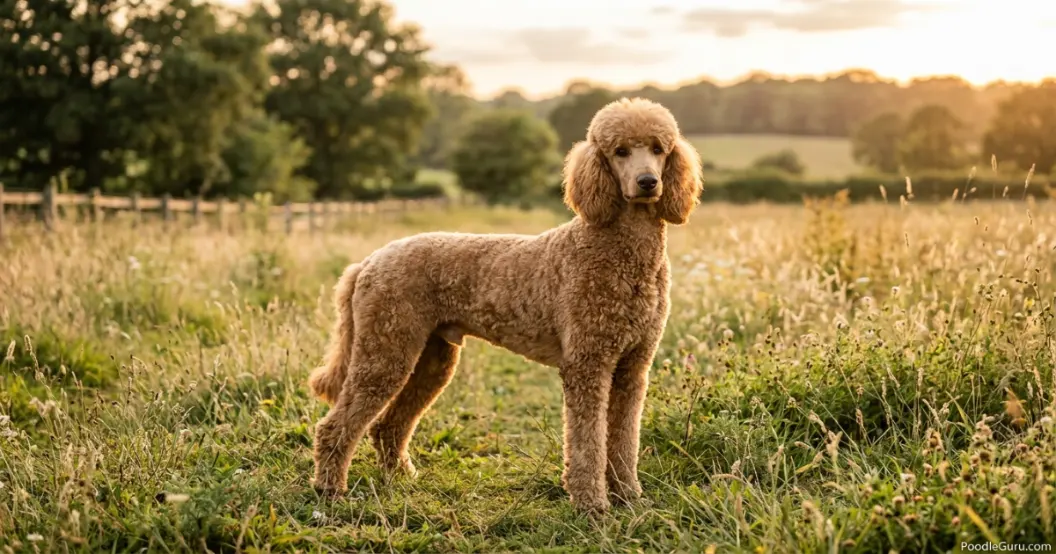
Almost every Standard Poodle goes through a gangly stage between 6 and 14 months where legs seem too long, the chest hasn’t dropped yet, and the dog looks like a collection of angles. This is not a growth problem. It’s a normal adolescent stage that resolves as the chest deepens and muscle fills in. Do not try to “fix” it with extra food — that just adds fat on top of an unfinished frame.

Growth Myths That Lead Owners Astray
Poodle growth generates a surprising number of persistent myths. Believing them can lead to overfeeding, unnecessary worry, or missed health signals.
| Myth | Reality |
|---|---|
| “My 6-month-old Toy Poodle is tiny — he’ll grow more.” | At 6 months, a Toy Poodle is already near final height. If he’s below breed standard size, he’s likely just a smaller individual, not a late bloomer. |
| “Standards grow until they’re 3 years old.” | Height is done by 18 months in almost all cases. Muscle and chest may keep developing until 24 months, but 3 years is an exaggeration. |
| “Feeding more will help my puppy grow bigger.” | It will make him heavier — potentially overweight — but won’t increase his genetically programmed frame size. Overfeeding a large-breed puppy invites joint problems. |
| “Neutering early stops growth.” | The opposite, actually. Early neutering can delay growth plate closure, leading to slightly longer leg bones and altered proportions. |
| “My Standard stopped gaining weight — something’s wrong.” | Weight plateau around 12–14 months is normal while height is already done and the dog burns adolescent energy. Monitor body condition, not just the scale. |
What Changes When Growth Stops
The end of skeletal growth is a significant transition point — and it requires some adjustments from you.
Nutrition Needs Shift
Once growth plates close, your Poodle no longer needs the calorie-dense, calcium-rich diet of puppyhood. Continuing puppy food into adulthood is a common cause of unnecessary weight gain. Transition to a high-quality adult formula when your vet confirms that growth has finished. For Standards, that might mean switching between 18–24 months; for Toys, closer to 10–12 months. Our poodle nutrition guide covers this transition in detail.
Exercise Can Ramp Up
With growth plates closed, high-impact activities like running on hard surfaces, jumping, and long hikes become safer. This is the window where you can finally give a Standard Poodle the full athletic workload they crave. Before that point, impact should be limited — especially repetitive jumping and forced running.
Adult Temperament Starts to Settle
Many poodle owners notice a shift between 18–24 months (sooner for smaller sizes) where the dog becomes more emotionally steady, less compulsively mouthy, and better at self-regulation. This is not growth, exactly, but it’s part of the same developmental arc. The brain matures last.
When to Be Concerned About Growth
Most variation in growth rate is normal. But some patterns warrant a vet visit.
- No weight gain for more than 2 weeks in a young puppy — especially before 4 months, failure to gain may indicate parasites, congenital issues, or malnutrition.
- Sudden halt in growth with other symptoms — if growth stops abruptly alongside lethargy, poor appetite, or limping, it’s not a normal plateau.
- Extreme deviation from breed standard size range — a Toy Poodle weighing 3 lbs at 10 months or a Standard stuck under 35 lbs at 18 months may have an underlying health issue or be the result of poor breeding, but either way, a vet evaluation is wise.
- Angular limb deformities or pain — bowing legs, turning out of feet, or lameness can signal growth-plate injury or developmental orthopedic disease, which requires prompt veterinary attention.
Trust your gut. If your Poodle’s growth pattern feels off — not just slow, but wrong — you are not being anxious. You are being observant, and that’s exactly what a good owner does.
Frequently Asked Questions
When do Toy Poodles stop growing?
Toy Poodles stop growing in height by 6–8 months, and their weight stabilizes by 10–12 months. They are the fastest size to reach full physical maturity, with growth plates closing around 8–10 months of age.
When is a Standard Poodle fully grown?
A Standard Poodle reaches full height by 12–18 months, but full muscling, chest depth, and final weight often take until 24 months. Behavioral maturity may take even longer — up to 2.5 years in some lines.
How big will my Toy Poodle get?
A fully grown Toy Poodle typically stands up to 10 inches at the shoulder and weighs 4–6 pounds. Most reach this by 10 months. If your Toy Poodle is smaller than this range, it’s likely just a small individual, not a sign of delayed growth.
Do poodles grow after being spayed or neutered?
Yes, but the effect is on growth plate timing, not final height potential. Early spay/neuter can delay growth plate closure slightly, which may result in marginally longer leg bones. This is most relevant in Standards; the difference in Toys is negligible. Discuss timing with your vet.
How can I tell if my poodle is still growing?
Measure height at the withers weekly. If the number hasn’t changed for 3–4 consecutive weeks and your dog is past the typical age for that size, height growth is likely finished. X-rays can confirm growth plate closure if certainty is needed.
Why is my Standard Poodle still skinny at 14 months?
This is the normal “lanky phase.” Height is often done by then, but chest depth and muscle filling continue until about 24 months. As long as body condition score is healthy — ribs easily felt but not visible from a distance — there’s no cause for concern.
Can overfeeding make my poodle grow bigger?
No. Overfeeding increases body fat, not frame size. In large-breed puppies like Standards, excessive calories can accelerate growth rate and stress developing joints, potentially contributing to orthopedic problems later in life.
Is it normal for a poodle’s growth to pause and then resume?
Growth typically follows a steady curve, but brief plateaus of a week or two can occur. A prolonged halt — especially with other symptoms — warrants a veterinary check to rule out underlying issues.
Key Takeaways: When Your Poodle Will Stop Growing
Knowing when a Poodle stops growing is not just trivia — it shapes how you feed, exercise, and care for your dog during the most critical developmental window.
- Toy Poodles finish height growth by 6–8 months and reach full weight by 10–12 months. Growth plates close around 8–10 months.
- Miniature Poodles reach full height by 8–12 months and final weight by 12–14 months. Growth plates close around 10–14 months.
- Standard Poodles reach full height by 12–18 months, but muscle and chest development continue until about 24 months. Growth plates may stay open until 18–24 months.
- Growth plate closure — not just height or weight — is the true biological marker of skeletal maturity, and it has direct implications for spay/neuter timing and high-impact exercise.
- The PoodleGuru Growth Tracking Framework (weekly height checks, body condition scoring, behavioral observation, and optional vet X-rays) removes guesswork from the process.
- After growth stops, transition to adult food, ramp up exercise safely, and expect a gradual settling of temperament — especially in Standards.