Introducing Your Poodle to a New Baby: 9 Safe Steps
Bringing a baby home is one of life’s most joyful — and most delicate — transitions. For a poodle who has been the center of your world, the arrival of a new family member with unfamiliar sounds, smells, and routines can be confusing. This step-by-step guide shows you how to make the introduction safe, calm, and positive for everyone.
Introducing Poodle to New Baby: Quick Answer
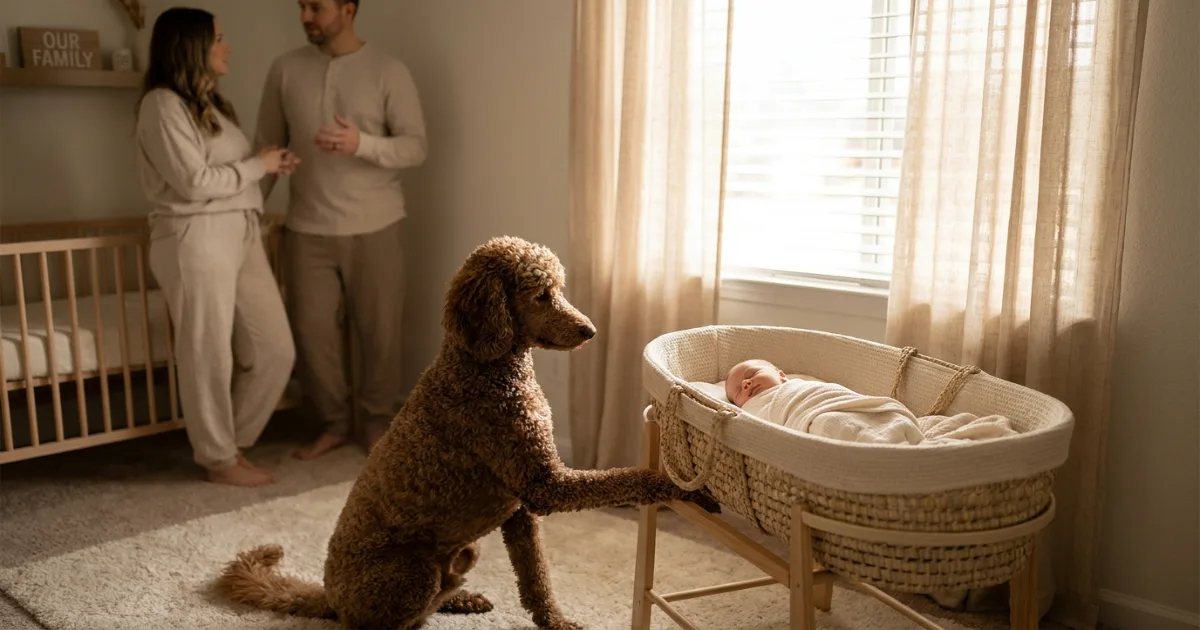
Yes, with the right preparation, introducing poodle to new baby routines can be safe and emotionally smooth when preparation is calm and gradual. The key is to start weeks before the baby arrives — adjusting routines, introducing baby scents, and refreshing basic obedience. The actual first meeting should be calm, on the poodle’s terms, and heavily supervised. Poodles are highly attuned to their owners’ emotions, so your own calm confidence sets the tone. Never leave any dog alone with an infant, no matter how gentle the breed.
Quick Facts: Introducing Poodle to New Baby
⏳ Start Early
Begin preparation 4–6 weeks before the due date. Gradual changes are less stressful than abrupt ones.
👃 Scent First
Poodles navigate the world by smell. Introducing the baby’s scent before they meet builds familiarity.
🦮 Obedience Refresh
Solid “sit,” “stay,” “go to your place,” and “gentle” cues are invaluable safety nets during introductions.
Why Poodles Need a Thoughtful Introduction
Poodles are exceptionally perceptive dogs. They read emotional shifts, notice routine changes, and form deep attachments to their people. A new baby disrupts everything — sounds, smells, attention patterns, and the physical layout of the home. For a poodle, that disruption can trigger anxiety, confusion, or even protective guarding if not managed proactively.
The AKC breed standard for poodles describes them as “very active, intelligent, and elegant” with a “proud carriage.” That intelligence means they notice everything — and they’ll notice when they’re suddenly not the center of attention. A well-planned introduction respects that intelligence by preparing the dog for what’s coming, rather than expecting them to simply adapt overnight.
The goal isn’t just preventing problems. It’s setting the stage for a lifelong, positive relationship between your poodle and your child. Poodles who feel included and secure during the transition are more likely to become gentle, watchful companions to the growing baby.
Size-Specific Considerations: Toy, Miniature, Standard
How you manage the introduction depends partly on your poodle’s size. The emotional needs are similar, but the practical risks differ.
| Size | Key Concern | Safety Focus | Best First Meeting Position |
|---|---|---|---|
| Toy Poodle | Fragility — a grab or kick from a toddler can injure; may feel overwhelmed and snap | Supervise closely; teach gentle touch; give dog escape routes and high perches | Held securely in a seated adult’s lap, at baby’s foot level |
| Miniature Poodle | Balance of small size and bold personality; may jump up in excitement | Prevent jumping on baby gear; reward all four paws on floor | On a loose leash beside a seated adult, baby in arms |
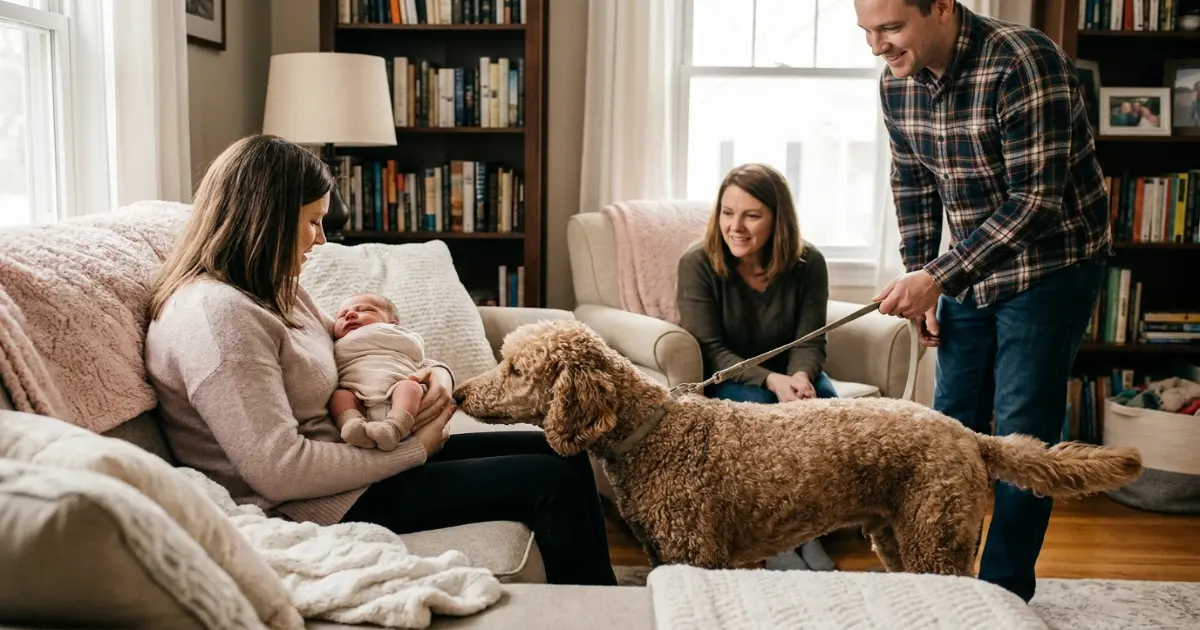
| Standard Poodle | Larger size means excited movement, jumping, or attention-guarding can create bigger safety concerns | Teach careful movement around baby items; reward calm distance and relaxed behavior | On leash, sitting calmly, allowed to sniff baby’s feet while adult holds baby securely |
No matter the size, all poodles need to learn that the baby is a positive, predictable part of their life — not a rival and not a threat.
Phase 1: Preparing Your Poodle Before the Baby Arrives
Start 4–6 weeks before the due date. The goal is to make the post-baby world feel familiar, not shocking.
Gradually Adjust Routines
If your poodle is used to long morning walks and constant attention, don’t let the baby’s arrival be the first time those things disappear. Slowly shift walk times, feeding schedules, and one-on-one attention to what you can realistically maintain with a newborn. Let the dog experience short periods of independent calm with a stuffed Kong or puzzle toy while you’re in another room.
Set Up Baby Gear Early
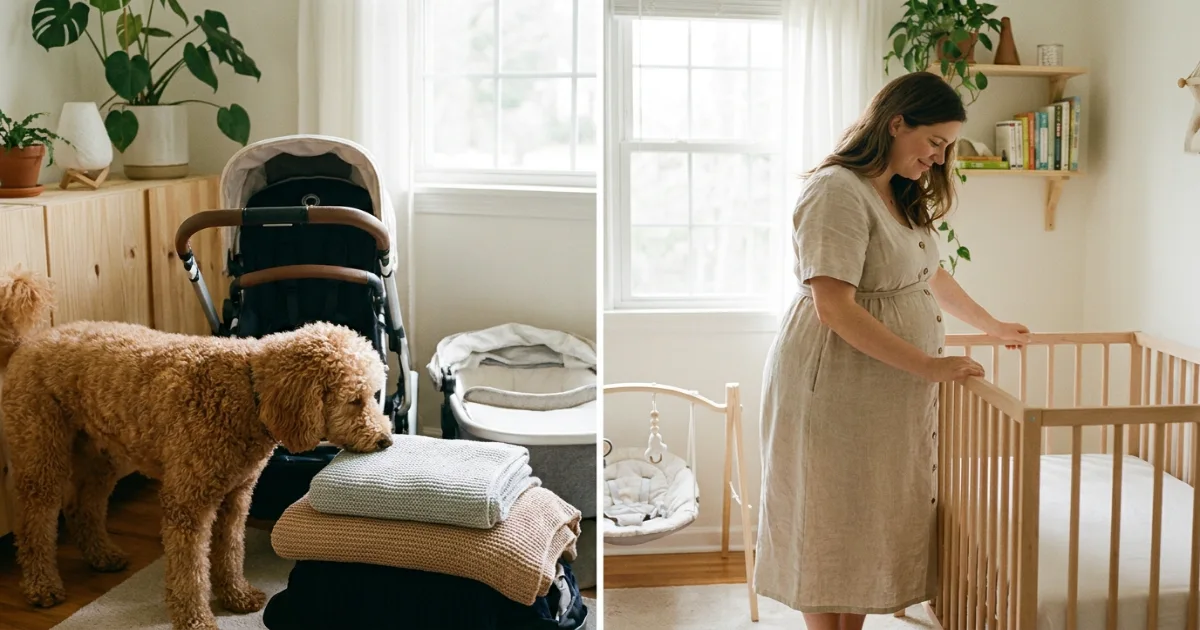
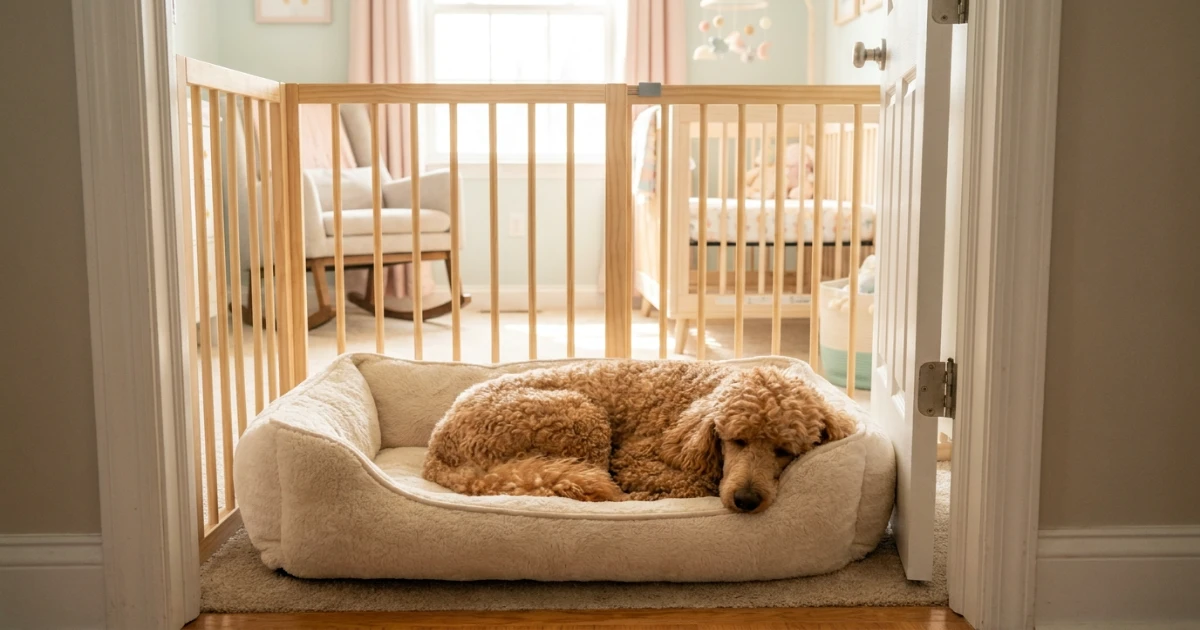
Bring out the bassinet, stroller, baby swing, and play mat well before the baby arrives. Let your poodle sniff everything at their own pace. Turn on the swing so they hear the motor. If something will be off-limits (like the nursery), install a baby gate now so the boundary is established before the baby comes, not because of the baby.
Refresh Key Obedience Skills
Practice “go to your mat,” “stay,” “leave it,” and a solid recall. These cues give you tools to manage your poodle calmly when your hands are full with the baby. Positive reinforcement — treats, praise, and calm affection — works best.
Play recordings of baby sounds — crying, cooing, babbling — at low volume during pleasant activities like meals or gentle play. Gradually increase volume over weeks. This desensitizes your poodle to startling new noises before the real thing arrives.
Phase 2: The Scent Introduction
Scent is your poodle’s primary language. Use it to introduce the baby before any visual meeting.
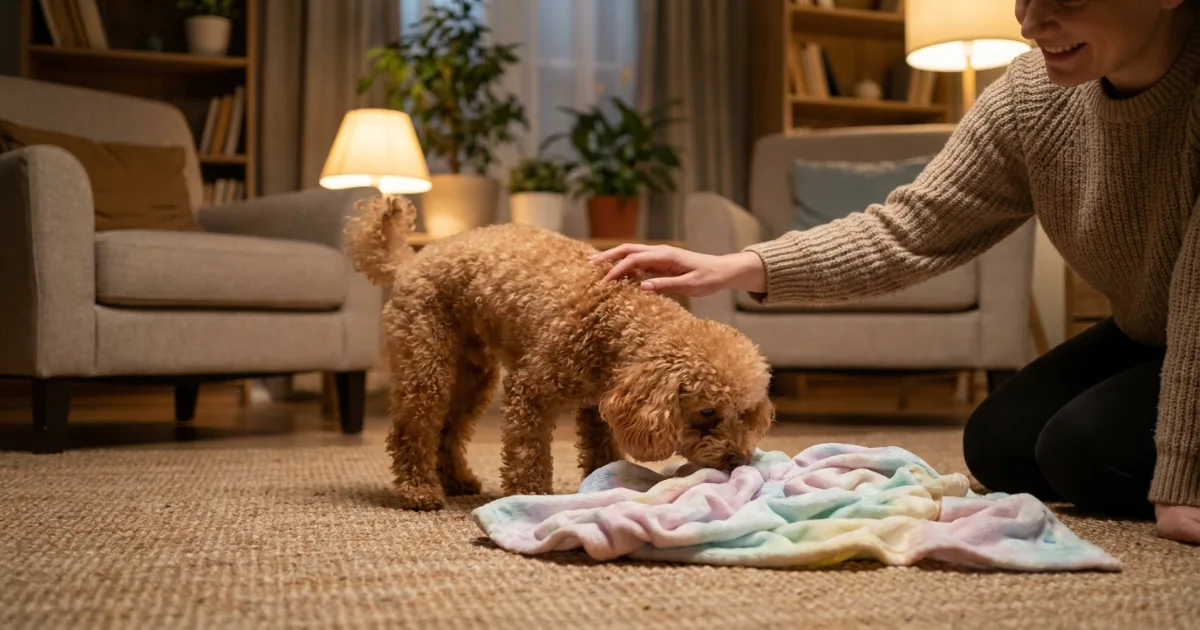
After the baby is born, have someone bring home a blanket or cloth the baby has been wrapped in — unwashed, carrying the baby’s natural scent. Let your poodle sniff it in a calm, supervised setting. Don’t shove it in their face; just place it nearby and let them investigate voluntarily. Pair the scent with gentle praise and a high-value treat. This creates a positive association before the baby even enters the home.
If your poodle shows signs of stress — whining, pacing, excessive licking — give them space and try again later. The goal is calm curiosity, not overwhelm.
Phase 3: The First Face-to-Face Meeting
This moment matters. It should be planned, not improvised.
Choose a calm time. Not when the house is chaotic with visitors. Choose a quiet moment when your poodle has had exercise and isn’t hungry. Have a second adult handle the dog on a loose leash while you hold the baby securely.
Let the dog approach. Don’t carry the baby toward the dog. Instead, sit calmly with the baby in your arms and let the leashed poodle approach at their own pace. Reward calm behavior — sniffing, sitting, looking — with soft praise and a treat.
Keep it short. A few minutes of positive interaction is enough. End the session while your poodle is still calm, not when they’re getting overstimulated.
Watch body language carefully. Relaxed ears, soft eyes, and a loose body are good signs. Stiffening, whale eye (showing the whites), tucked tail, or lip licking signal stress. If you see stress signals, calmly end the session and try again later. Never scold — just create distance.
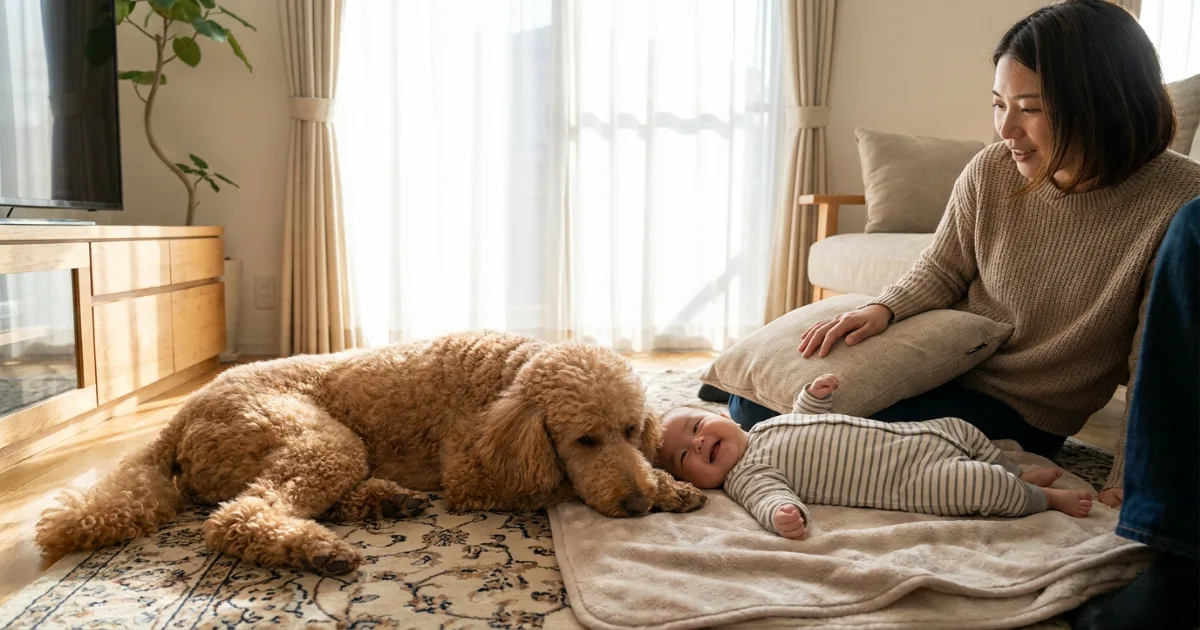
Never place the baby on the floor with the dog during introductions, even if your poodle is normally gentle. A startled dog can react in a split second. Always maintain physical control and a safe buffer.
Phase 4: Building Ongoing Trust and Routine
The introduction is just the beginning. The real work is weaving your poodle and baby into a harmonious daily life.
Maintain positive associations. When the baby is present, good things happen for the poodle — treats, calm petting, a favorite chew. Never use the baby’s presence as a reason to shoo the dog away; instead, teach a “go to your mat” cue and reward it. Your poodle should learn that the baby’s company predicts pleasant outcomes.
Protect the dog’s safe zones. Give your poodle a quiet place — a crate, a bed in another room — where they can retreat when overwhelmed. Teach children (once mobile) that the dog’s bed is off-limits. A poodle who knows they can escape the noise is less likely to feel cornered.
Supervision is non-negotiable. Even the most gentle poodle should never be left alone with an infant or toddler. Accidents happen in seconds, not minutes.
The PoodleGuru 4-Phase Introduction Method
At PoodleGuru, we’ve distilled the introduction process into a clear, memorable framework. This method ensures you don’t skip critical steps.
Pre-Arrival Conditioning (Weeks Before)
Adjust routines, set up baby gear, play baby sounds at low volume, and refresh obedience cues. Your poodle should already feel comfortable with the changed environment before the baby enters.
Scent Familiarization (First Days After Birth)
Bring home an unwashed baby blanket. Let your poodle investigate voluntarily. Pair the scent with calm praise and treats. Never force contact.
Calm First Visual Contact (Homecoming)
Greet the dog without the baby first if possible. Then, in a quiet room, let the leashed poodle approach the baby in your arms. Reward calmness. Keep it under 5 minutes.
Ongoing Integration (Weeks and Months)
Maintain positive associations, protect the dog’s safe zone, supervise all interactions, and gradually build trust. This phase never really ends — it deepens into a lifelong bond.
Common Mistakes That Can Undermine the Introduction
Well-meaning owners sometimes make errors that create lasting tension. Here’s what to avoid.
| Mistake | Why It’s a Problem | What to Do Instead |
|---|---|---|
| Forcing the dog to interact | Creates fear or resentment; can trigger a defensive snap | Let the poodle approach at their own pace; never push |
| Scolding the dog for curiosity | Associates the baby with punishment; builds anxiety | Redirect calmly to a desired behavior; reward calm investigation |
| Ignoring the dog’s stress signals | Escalates to defensive aggression over time | Learn to read whale eye, stiffening, lip licking; end the session if you see them |
| Making abrupt routine changes | Shock and anxiety can manifest as destructive behavior or depression | Gradually adjust schedules weeks before due date |
| Leaving dog and baby unsupervised | Even a gentle dog can react unexpectedly to a grab or cry | Always supervise; use baby gates and crates to manage space |
When to Call a Professional
Most poodles adapt well with preparation. But if you see any of these behaviors, seek help from a certified positive-reinforcement trainer or veterinary behaviorist immediately:
- Growling, snapping, or lunging at the baby — even once
- Resource guarding you from the baby (blocking, aggressive posturing when you hold the infant)
- Extreme anxiety — panting, trembling, refusing to eat, or hiding constantly since the baby arrived
- Any bite — even a “warning” nip
The ASPCA’s guidance on dogs and babies emphasizes that professional intervention is not a failure — it’s a responsible step that can save a relationship and prevent tragedy. A qualified behaviorist can assess the underlying cause and create a structured plan.
Frequently Asked Questions
How do I introduce my poodle to a new baby?
Start preparing weeks before birth by adjusting routines and playing baby sounds. After birth, introduce the baby’s scent via a blanket. For the first meeting, keep your poodle leashed, let them approach calmly, and reward gentle behavior. Keep interactions short, supervised, and positive.
Will my poodle get jealous of the new baby?
Poodles can experience what looks like jealousy — attention-seeking, pushiness, or withdrawal — when their routine changes. This is usually anxiety, not spite. Maintain predictable one-on-one time, use positive reinforcement when the baby is present, and ensure your poodle has a safe retreat space to prevent jealousy from developing.
Can a Standard Poodle be trusted around a newborn?
With proper training and supervised introductions, many Standard Poodles are gentle and watchful around newborns. However, no dog should ever be left unsupervised with an infant. Their size means even an accidental bump could be dangerous. Consistent obedience and calm management are essential.
How long does it take for a poodle to adjust to a new baby?
Most poodles start adjusting within the first 2–4 weeks, but full emotional acceptance can take several months. Gradual, positive exposure speeds the process. If your poodle still seems stressed or withdrawn after 6–8 weeks, consult a professional trainer for targeted support.
What if my poodle barks every time the baby cries?
Barking at crying is often a stress or alert response. Desensitize by playing recordings of crying at low volume while offering treats, gradually increasing volume over days. Teach a “quiet” cue and reward calm behavior when the baby cries. Never punish the barking — it’ll increase anxiety.
Should I let my poodle lick the baby?
It is safest to discourage face licking for hygiene and safety reasons. A dog’s mouth can carry bacteria, and an enthusiastic lick can startle a baby. Redirect to calm sniffing from a safe distance instead. If you allow brief licking on hands or feet, supervise closely and wash afterward.
Is it better to introduce the poodle before or after the baby comes home?
Scent introduction should happen before the baby arrives home — via a blanket. The first visual meeting should happen in a calm moment after you’re home, ideally after the dog has had a chance to greet you without the baby briefly. This prevents overwhelming the dog all at once.
Key Takeaways: Introducing Your Poodle to a New Baby
A calm, prepared poodle can become a loving companion to your new baby. The transition is about preparation, patience, and positive associations.
- Start 4–6 weeks before the due date: adjust routines, set up baby gear, and play baby sounds to desensitize your poodle.
- Use scent introduction — an unwashed baby blanket — to create a positive, calm first impression before any visual meeting.
- For the first face-to-face meeting, keep your poodle leashed, let them approach at their own pace, reward calmness, and keep it brief.
- The PoodleGuru 4-Phase Introduction Method (Pre-Arrival, Scent, First Contact, Ongoing Integration) ensures no step is skipped.
- Never leave any dog unsupervised with an infant, and always provide a safe retreat zone where your poodle can go to decompress.
- If you see growling, snapping, resource guarding, or extreme anxiety, consult a certified professional trainer or behaviorist immediately.
Next step: Solidify your poodle’s obedience with our Poodle Training Essentials guide — a calm, well-trained dog is a safer, happier family member.