This article contains affiliate links. PoodleGuru may earn a small commission if you purchase through our links, at no extra cost to you.
Poodle Pet Insurance Cost Comparison 2026
Poodle pet insurance cost isn’t one-size-fits-all. A Toy Poodle’s monthly premium can be half that of a Standard’s — and the difference isn’t just about size. Understanding what drives the price helps you buy coverage that actually protects your dog, not just your wallet.
Quick Answer
Poodle pet insurance cost typically falls in a broad planning range of about $25 to $90 per month for U.S. accident-and-illness policies, depending on your dog’s size, age, ZIP code, deductible, reimbursement level, annual limit, and provider. For poodle owners, the key insight is that Toy Poodles often quote lower than Standards, while Standard Poodles can cost more because larger dogs usually have higher treatment costs; real quotes must be checked by ZIP code. The most important thing to understand is that poodles have breed-specific health risks — including hip dysplasia in Standards and patellar luxation in Toys — which make comprehensive coverage a smarter long-term investment than a cheap, accident-only plan.
Cost Note for Readers
All price ranges in this guide are planning estimates for U.S. readers in 2026. Pet insurance pricing changes by ZIP code, dog age, deductible, reimbursement level, annual limit, provider underwriting, and state rules. Always compare current quotes and read the sample policy before buying.
In This Guide
- What Is Poodle Pet Insurance?
- Quick Facts
- What Drives Poodle Pet Insurance Cost?
- Monthly Cost by Poodle Size (2026)
- Deductibles, Reimbursement & Payouts
- The PoodleGuru Insurance Evaluation Method
- What Owners Usually Misunderstand
- Accident-Only vs. Comprehensive Coverage
- Red Flags to Watch For
- Action Plan: How to Choose
- Frequently Asked Questions
- Key Takeaways
What Is Poodle Pet Insurance?
Poodle pet insurance is usually a reimbursement-based health coverage plan that helps pay for eligible veterinary expenses when your Toy, Miniature, or Standard Poodle is injured or becomes ill. For poodle owners, this means you pay the vet bill upfront, submit a claim, and receive a percentage back — typically 70% to 90% after your deductible is met. The most important thing to understand is that most pet insurance policies exclude pre-existing conditions, so enrolling while your poodle is still healthy usually gives you the cleanest coverage history.
Poodles, with their breed-specific vulnerabilities, can rack up thousands in unexpected bills. A Standard Poodle GDV/bloat emergency can become a major surgical bill, while chronic allergies, ear disease, or orthopedic issues can create repeated claim events over time. Insurance turns those shocks into predictable monthly costs. The AKC’s guide to pet insurance highlights how breed, age, and location shape premiums — all critical factors for poodle owners to weigh.
Quick Facts
Average Monthly Cost
Across all poodle sizes, expect $30–$70/month for comprehensive accident and illness coverage with a $500 deductible and 80% reimbursement.
First-Year Puppy Savings
Insuring an 8-week-old poodle is significantly cheaper than enrolling a 5-year-old dog. Puppy enrollment usually starts from a lower baseline, although premiums can still rise as the dog ages or local vet costs change.
Pre-Existing Exclusions
Most providers exclude pre-existing conditions. If your poodle has a documented knee problem before enrollment or during the waiting period, related knee claims may be excluded. Insure early and read the policy language.
What Drives Poodle Pet Insurance Cost?
Six main factors determine your poodle’s premium. Understanding them lets you shop intelligently and avoid overpaying.
| Factor | How It Affects Cost | Poodle-Specific Note |
|---|---|---|
| Size (Breed Variation) | Larger dogs cost more to insure because they’re prone to more expensive joint and bloat surgeries. | Standard Poodles fall into the “large breed” category, while Toys and Minis are cheaper. |
| Age | Puppies are cheapest; premiums rise as dogs age, especially after 6–7 years. | Toy Poodles age slowly, so premium hikes may start later; Standards see increases earlier. |
| Location | Veterinary costs vary by region. Urban areas with higher costs of living drive higher premiums. | Same poodle, different ZIP code: quotes can vary meaningfully because local veterinary pricing affects premiums. |
| Deductible | Higher deductible = lower monthly premium. Common choices: $200, $500, $1,000. | If you’d rather pay more monthly than face a big bill, choose a lower deductible. |
| Reimbursement Level | Higher reimbursement (90% vs 70%) raises premiums but lowers your out-of-pocket per claim. | For poodles with known hereditary risks, higher reimbursement often pays off. |
| Coverage Type | Accident-only plans are cheapest; comprehensive illness + accident costs more; wellness add-ons increase premiums further. | Wellness plans may not be cost-effective unless you use every benefit. |
Monthly Cost by Poodle Size (2026 Estimates)
These ranges are U.S. planning estimates for a healthy adult poodle with a midrange deductible and 70%–90% reimbursement. Actual quotes vary by provider, ZIP code, age, annual limit, and waiting-period rules.
Typical Monthly Premium Ranges
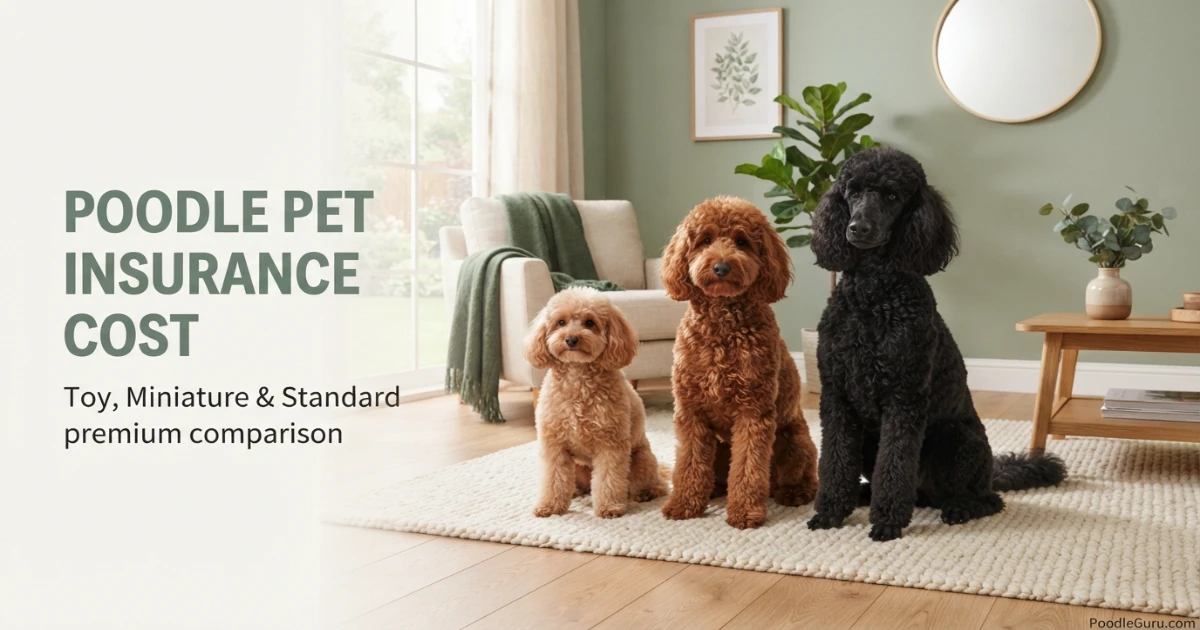
- Toy Poodle (4–6 lbs): $25–$40/month. Lowest risk for joint issues; highest risk for dental and patellar conditions.
- Miniature Poodle (10–15 lbs): $30–$55/month. Moderate risk for allergies, eye issues, and patellar luxation.
- Standard Poodle (45–70 lbs): $45–$80/month. Higher cost due to larger size and associated risks like hip dysplasia, bloat, and sebaceous adenitis.
These prices reflect broad planning ranges only. Adding wellness benefits, lowering the deductible, raising reimbursement, or choosing unlimited annual coverage can increase the monthly cost.

Deductibles, Reimbursement & Annual Payouts: How They Work
Three financial levers control how much you pay each month and how much you get back per claim. Getting them right matters more than the base premium.
| Setting | What It Means | Best For |
|---|---|---|
| Annual Deductible | The amount you pay out-of-pocket each year before insurance starts reimbursing. Resets annually. | Choose $200 if you want minimal upfront cost per incident; $1,000 if you want lowest monthly premiums. |
| Reimbursement Percentage | The portion of covered vet bills the insurer pays after deductible. Usually 70%, 80%, or 90%. | 90% works well for poodles with known hereditary risks; 80% is the balanced choice; 70% lowers premium but leaves you with higher bills. |
| Annual Maximum Payout | The cap on total reimbursement per year. Options range from $5,000 to unlimited. | Standards (higher surgical costs) benefit from unlimited or high cap; Toys can often manage with $10,000–$15,000. |
Expert Insight
For a Standard Poodle, a plan with a high or unlimited annual limit, clear hereditary-condition coverage, strong reimbursement, and an affordable deductible offers the strongest safety net for expensive emergencies such as GDV/bloat surgery. The premium may be higher, but the protection can matter when a major covered claim occurs.
The PoodleGuru Insurance Evaluation Method
At PoodleGuru, we recommend comparing plans using a four-step method tailored to poodle-specific needs.
List Your Poodle’s Hereditary Risks
Identify the conditions your poodle is predisposed to — hip dysplasia for Standards, patellar luxation for Toys and Minis, sebaceous adenitis, bloat, and eye disorders. Ensure any plan you consider covers hereditary conditions explicitly, not just accidents and general illness.
Get Quotes with Identical Settings
Collect 3–5 quotes using the same deductible ($500 is a good benchmark), reimbursement percentage (80%), and annual limit ($15,000 or unlimited). This ensures you’re comparing apples to apples.
Read the Exclusions and Waiting Periods
Some plans have orthopedic or cruciate waiting periods, and policy rules for hereditary conditions can differ by provider and state. Know these traps before you sign up. A lower premium doesn’t help if it excludes what your poodle is most likely to need.
Check for Dental Illness Coverage
Toy and Miniature Poodles can need especially careful dental planning. Some insurers exclude dental illness or require strict preventive dental records, while others offer limited dental illness coverage. If dental coverage matters, confirm it in the sample policy and budget separately for routine cleanings.
What Owners Usually Misunderstand
Myth: “Wellness plans save money.”
Wellness add-ons reimburse for routine care such as exams, vaccines, preventives, and sometimes dental cleanings. They may be helpful as a budgeting tool, but they are not the same as accident-and-illness coverage. Run the numbers before adding them.
Myth: “Cheaper insurance means worse coverage.”
Not always. Some newer providers offer competitive rates with robust coverage. The real differentiator is fine print on hereditary conditions and waiting periods, not the brand name.
Myth: “Older poodles can’t get insured.”
Some providers insure senior dogs, but age limits, premiums, and available coverage vary. Pre-existing conditions generally remain excluded, so compare accident-only and accident-and-illness options carefully.
Accident-Only vs. Comprehensive Coverage: Which Fits Your Poodle?
| Plan Type | What It Covers | Typical Monthly Cost | Best For |
|---|---|---|---|
| Accident-Only | Broken bones, bite wounds, cuts, swallowed foreign objects, and accidental poisoning | $15–$25 (all sizes) | Budget-conscious owners; older poodles where illness coverage is too expensive |
| Accident & Illness (Comprehensive) | Accidents plus cancer, hereditary conditions, infections, chronic illness, diagnostics | $25–$80 depending on size | Most poodle owners who want broad protection against breed-specific risks |
For an owner who can self-fund illness care, accident-only may be a budget compromise. For many poodle owners—especially Standard Poodle owners—comprehensive accident-and-illness coverage is usually the stronger long-term option because it can cover eligible illnesses, diagnostics, and hereditary conditions when the policy includes them.
Red Flags to Watch For
- Extremely low premiums with long waiting periods. Some policies have 12-month waiting periods for hip dysplasia. That could mean a full year before your Standard’s hip issues are covered.
- Vague hereditary condition exclusions. If the policy doesn’t clearly state coverage for hereditary and congenital disorders, assume they’re excluded.
- Bilateral exclusions. If a knee, hip, or ligament issue appears on one side before coverage applies, some policies may limit or exclude the matching side later. Ask about this upfront.
- Reimbursement based on “usual and customary” fees rather than actual vet bill. This can leave you paying a gap. Look for policies that reimburse based on your actual invoice.
Action Plan: How to Choose the Right Poodle Insurance in 2026
- Determine your budget’s pain point. How much could you comfortably pay out-of-pocket in a single emergency? Choose a deductible and reimbursement level that keeps your worst-case scenario affordable.
- Get quotes for your specific poodle’s age, size, and ZIP code. Use online comparison tools or go directly to provider websites. Always enter identical parameters.
- Read the sample policy for hereditary coverage. Before purchasing, pull the full sample policy document and search for terms like “hereditary,” “congenital,” “cruciate,” and “bilateral.”
- Enroll while your dog is healthy. Once a symptom or diagnosis appears in your poodle’s medical records, related claims may be considered pre-existing. Do not wait until a limp, cough, ear issue, or digestive problem appears.
- Re-evaluate annually. Your poodle’s needs change, and so do insurance offerings. What was the best plan two years ago may not be the best today.
Frequently Asked Questions
What is the average cost of pet insurance for a Standard Poodle?
For a healthy young adult Standard Poodle, a broad U.S. planning range is about $45–$90 per month for comprehensive accident-and-illness coverage. Quotes depend on age, ZIP code, deductible, reimbursement level, annual limit, and provider rules.
Is pet insurance worth it for a Toy Poodle?
Yes, if you want protection against unexpected accidents and illnesses. Toy Poodles can develop patellar luxation and dental disease, and some small dogs may have airway or orthopedic concerns. A comprehensive plan can be useful if it covers the conditions you are most worried about and fits your budget.
Does pet insurance cover poodle hip dysplasia?
Many comprehensive plans cover hip dysplasia when it is not pre-existing and the waiting period has passed, but rules differ. Always confirm hereditary-condition coverage, orthopedic waiting periods, bilateral exclusions, and any exam requirements in the sample policy.
Can I get pet insurance for an older poodle?
Yes, some providers insure older poodles, but age limits and plan choices vary. Premiums are usually higher, pre-existing conditions are generally excluded, and accident-only coverage may be easier to find than broad illness coverage.
How can I lower my poodle’s pet insurance premium?
Choose a higher annual deductible, a lower reimbursement percentage, a lower annual limit, or an accident-only plan. Enrolling as a puppy usually starts from a lower baseline, but rates can still change over time.
What doesn’t pet insurance cover?
Pre-existing conditions, elective procedures, grooming, breeding-related costs, and usually routine wellness exams unless you add a wellness rider. Dental illness coverage varies widely, so always read the exclusions and dental-care requirements.
Are there poodle-specific pet insurance plans?
No provider offers a “poodle-specific” plan, but many allow you to customize coverage based on breed risks. Look for policies that explicitly cover hereditary and congenital conditions common to poodles — that’s the closest you’ll get.
When should I buy pet insurance for my poodle puppy?
As soon as you bring your puppy home, once you can provide the required vet records. Enrolling before symptoms appear reduces pre-existing-condition problems and usually starts from the lowest pricing baseline, although premiums can still increase as your dog ages.
Key Takeaways
- Poodle pet insurance cost often falls around $25–$90 per month in U.S. planning ranges, with Standard Poodles usually quoting higher than Toy or Miniature Poodles because treatment costs are often larger.
- Poodle-specific hereditary risks — hip dysplasia, patellar luxation, bloat, sebaceous adenitis — make comprehensive accident and illness coverage the most recommended choice.
- The PoodleGuru Insurance Evaluation Method prioritizes identifying your poodle’s hereditary risks, comparing identical quotes, and scrutinizing exclusions on cruciate and bilateral conditions.
- Higher deductibles lower monthly premiums but increase your immediate out-of-pocket cost in an emergency; choose based on what you can comfortably pay upfront.
- Enrolling a healthy poodle puppy before symptoms appear reduces the risk of pre-existing exclusions and usually starts from the most affordable baseline, but premiums can still rise over time.
- Read the full policy for hereditary and congenital coverage, waiting periods for hip dysplasia, and bilateral exclusions — these fine-print details differentiate one plan from another.
Today’s best step: get three quotes using identical settings for your poodle’s size and age, and read each sample policy’s hereditary coverage section. Twenty minutes now can save thousands later.