Bernedoodle (Bernese Mountain Dog Poodle Mix): Complete Guide
The Bernedoodle combines the gentle, affectionate nature of the Bernese Mountain Dog with the intelligence and often lower-shedding coat influence of the Poodle. But there’s more to this popular cross than charming looks and a friendly reputation.
Quick Answer
A Bernedoodle is a cross between a Bernese Mountain Dog and a Poodle. Most owners seek them for their affectionate temperament, intelligence, and a wavy or curly coat that sheds less than the average dog. They come in three size categories — Standard, Mini, and Tiny — and their traits can vary widely depending on generation, Poodle size, and individual genetics. The most important thing to know before bringing one home is that coat type, size predictability, and health outcomes are never guaranteed in a mixed breed, which makes breeder selection unusually important.
What Is a Bernedoodle?
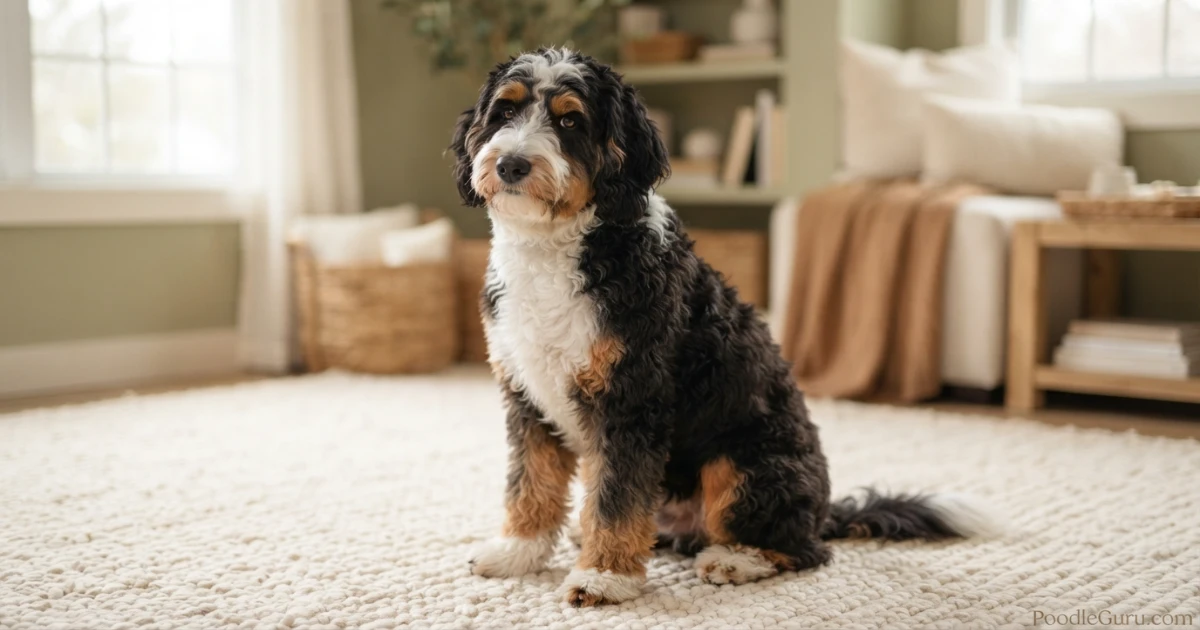
A Bernedoodle is a mixed-breed dog produced by crossing a Bernese Mountain Dog with a Poodle. For poodle owners and prospective buyers, this means you’re looking at a dog that inherits traits from two breeds with very different working histories — the Poodle’s retrieving intelligence and the Bernese Mountain Dog’s draft-and-guardian temperament.
The cross gained momentum in the early 2000s as part of the broader doodle movement. Breeders aimed to produce a dog with the Bernese’s calm, people-oriented nature and the Poodle’s sharper mind and lower-shedding coat. In practice, outcomes vary. Some Bernedoodles lean heavily toward their Poodle parent in build and temperament. Others take after the Bernese side, with a sturdier frame, a more laid-back disposition, and a coat that may shed more than expected.
The most important thing to understand is that Bernedoodle traits can vary widely between litters — even within the same breeding program. Genetics don’t average out neatly. A responsible breeder will be honest about this variability rather than promising a perfect 50/50 blend.
Quick Facts
Size Range
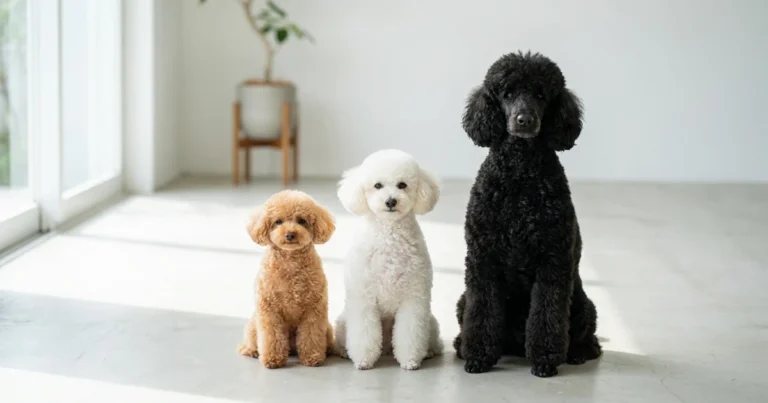
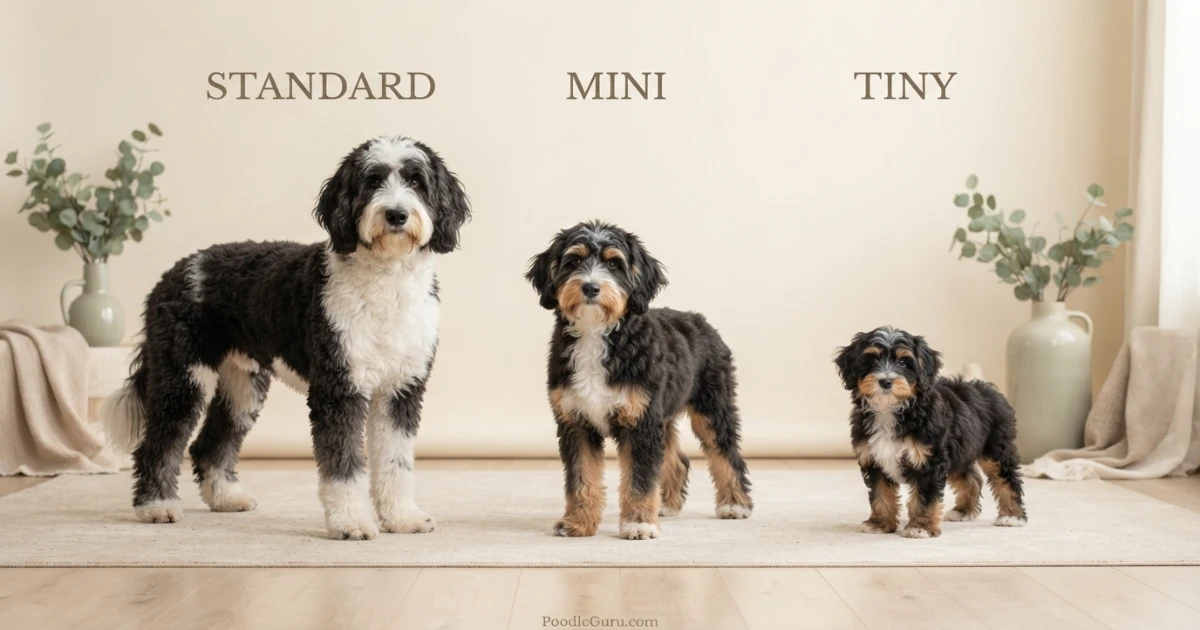
Standard: 50–90+ lbs, 23–29 inches. Mini: 25–49 lbs, 18–22 inches. Tiny: 10–24 lbs, 12–17 inches. Size depends on the Poodle parent used.
Lifespan
Typically 12–15 years for Mini and Tiny Bernedoodles. Standard Bernedoodles average 10–13 years. Individual health and genetics play a large role.
Coat Types
Wavy (most common), curly, or straight. Wavy and curly coats shed less. The straight coat — closer to the Bernese parent — sheds noticeably more.
Color Patterns
Tri-color (black, white, rust) is the classic look. Also seen: black and white, solid black, sable, merle, and phantom. Color often fades or shifts with age.
Temperament
Generally affectionate, social, and playful. Most bond closely with their families. Early socialization matters — some lines can be reserved with strangers.
AKC Recognition
Not an AKC-recognized breed. The Bernedoodle is a crossbreed. The AKC recognizes the Poodle as a purebred in three size varieties.
Bernedoodle Sizes Explained
Size is one of the first things buyers get wrong. The Bernedoodle isn’t one dog — it’s produced in three distinct size categories, each achieved by using a different Poodle variety. Understanding these differences matters for living space, exercise needs, and overall daily life.
| Size | Poodle Parent | Weight Range | Height at Shoulder | Best Suited For |
|---|---|---|---|---|
| Standard Bernedoodle | Standard Poodle | 50–90+ lbs | 23–29 inches | Active families, homes with space, owners wanting a large companion |
| Mini Bernedoodle | Miniature Poodle | 25–49 lbs | 18–22 inches | Suburban homes, moderately active owners, first-time doodle owners |
| Tiny / Toy Bernedoodle | Toy Poodle | 10–24 lbs | 12–17 inches | Apartment living, seniors, owners wanting a small but sturdy companion |
One point of confusion: some breeders advertise “Micro” or “Teacup” Bernedoodles. These labels aren’t standardized and often signal breeding practices that prioritize size over health. At PoodleGuru, we recommend sticking with the three established categories and asking direct questions about the exact weight of both parent dogs.
Coat Types, Colors & the Furnishings Factor
The Bernedoodle coat is the feature most buyers fixate on — and the one most likely to surprise them later. Coat type affects shedding, grooming demands, and even allergen exposure. It’s worth understanding before you commit.
The Three Coat Textures
Wavy coats are the most common and usually the most sought-after. They sit between the Poodle’s tight curl and the Bernese’s straight double coat. Wavy coats shed minimally but mat easily without regular brushing. Curly coats lean heavily toward the Poodle side — tight curls, very low shedding, but high maintenance. These coats need frequent professional grooming. Straight coats take after the Bernese parent. They shed more, may have a dense undercoat, and often trigger more allergies. Some straight-coated Bernedoodles shed as much as a purebred Bernese.
Furnishings: The Gene That Changes Everything
“Furnishings” refers to the longer facial hair — eyebrows, beard, and mustache — that gives doodles their signature teddy-bear look. This trait is controlled by a single dominant gene inherited from the Poodle. Dogs with furnishings typically have lower-shedding coats. Dogs without them often have the straight, higher-shedding coat type. In standard first-generation crosses, coat furnishings depend on what the Poodle parent passes on; in backcross and multigenerational litters, outcomes can vary even more. Reputable breeders can explain their coat-testing results instead of guessing from puppy photos alone.
Coat Colors and What Changes With Age
Tri-color (black with white chest, muzzle, and rust points) is the iconic Bernedoodle look. But it’s not the only one. You’ll see solid black, black and white, sable, merle, phantom, and brindle. One thing many first-time owners don’t realize: coat color often fades. A jet-black puppy may develop silver or gray shading by age two. Rust markings can soften to cream. This is normal and linked to the Poodle’s fading gene. It doesn’t affect health, but it’s worth knowing so the adult coat doesn’t come as a shock.
The PoodleGuru Bernedoodle Coat Assessment Method
At PoodleGuru, we evaluate Bernedoodle coats using a simple three-point framework. This method helps buyers look past marketing language and assess what a puppy’s coat actually suggests about future grooming needs and shedding levels.
Check for Furnishings First
Look at the puppy’s face. Are there visible eyebrows and a defined beard? If yes, the puppy likely carries furnishing influence, which is usually associated with a more doodle-like face and lower-shedding coat pattern. If the face is smooth with short, flat hair, expect more Bernese-like shedding. Ask the breeder whether coat testing was performed; a clear answer is a trust signal.
Assess Wave Pattern at the Roots
Part the puppy’s hair gently at the shoulder or back. Look at the hair closest to the skin — not just the tips. Tight wave or curl at the root may predict a curlier adult coat. Loose wave often predicts a wavy coat. Straight hair from root to tip suggests a straighter adult coat. Puppy coats change, but root texture is more useful than color or marketing labels alone.
Ask About Both Parent Coats
A furnished, curly-coated Poodle parent does not guarantee a low-shed puppy if the Bernese side contributes a stronger straight-coat pattern. Ask to see photos of both parents in natural coat — not only polished portraits. The combination of parent coat history, generation, and testing is more reliable than breeder promises alone.
This three-step check takes less than five minutes when visiting a litter and gives you a clearer picture than color descriptions, “teddy bear” wording, or perfect-outcome promises.
Temperament: What Owners Should Realistically Expect
The Bernedoodle’s reputation is warm: affectionate, goofy, loyal, and great with children. Much of that holds true. But there’s nuance underneath the highlights reel.
Most Bernedoodles inherit a strong desire to be near their people. This isn’t a dog that thrives in isolation. Separation anxiety shows up in the breed cross more often than owners expect, especially in dogs that lean toward the Bernese side — a breed historically bred to work closely alongside humans all day. If your household is empty for eight to ten hours daily, a Bernedoodle may struggle.
On the Poodle side, you get intelligence that cuts both ways. A smart dog learns quickly — including how to outmaneuver an inconsistent owner. Without structured training and mental engagement, Bernedoodles can develop nuisance behaviors: counter-surfing, demand barking, or destructive chewing. This isn’t stubbornness. It’s an under-stimulated brain looking for work.
With strangers, responses vary. Some Bernedoodles greet everyone like an old friend. Others are more reserved, watching new people carefully before warming up. Early and consistent socialization makes a measurable difference. Puppies exposed to varied people, environments, and handled gently by different individuals between 8 and 16 weeks tend to grow into steadier adults.
Health Considerations for Bernedoodle Owners
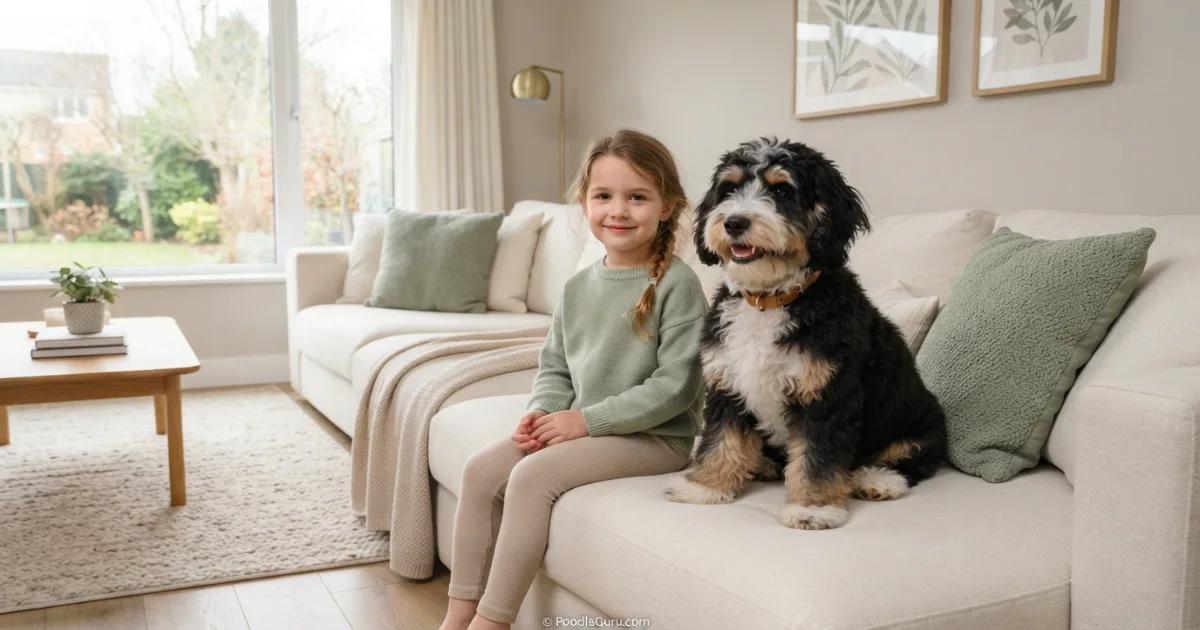
Mixed-breed dogs can benefit from what’s called hybrid vigor — a broader gene pool that may reduce the risk of certain inherited conditions. But hybrid vigor isn’t a shield. Bernedoodles can inherit health issues from either parent breed, and some conditions appear in both the Bernese Mountain Dog and the Poodle.
Conditions to Know About
Hip and elbow dysplasia affect both parent breeds. These orthopedic conditions involve malformed joints that can cause pain, lameness, and arthritis over time. Responsible breeders screen parent dogs through OFA (Orthopedic Foundation for Animals) or PennHIP before breeding. Always ask for proof — not just a verbal assurance. For more detail on how hip dysplasia develops and what to watch for, VCA Animal Hospitals provides a thorough overview of hip dysplasia in dogs.
Progressive retinal atrophy (PRA) and other eye conditions appear in Poodles. Von Willebrand’s disease (a bleeding disorder) and certain cardiac issues are also worth screening for. A breeder who performs genetic health testing on both parents — and shares those results openly — is doing the minimum, not something extraordinary.
Bloat (gastric dilatation-volvulus) is a life-threatening emergency more common in deep-chested dogs. Standard Bernedoodles, like their Standard Poodle and Bernese parents, are at elevated risk. Owners should learn the early warning signs: unproductive retching, a distended abdomen, restlessness, and rapid breathing.
Grooming Requirements
Bernedoodle grooming isn’t optional — it’s a non-negotiable part of ownership. Even a wavy-coated Bernedoodle needs consistent at-home care and regular professional grooming. If you’re coming from a breed with a wash-and-wear coat, the time commitment will feel significant.
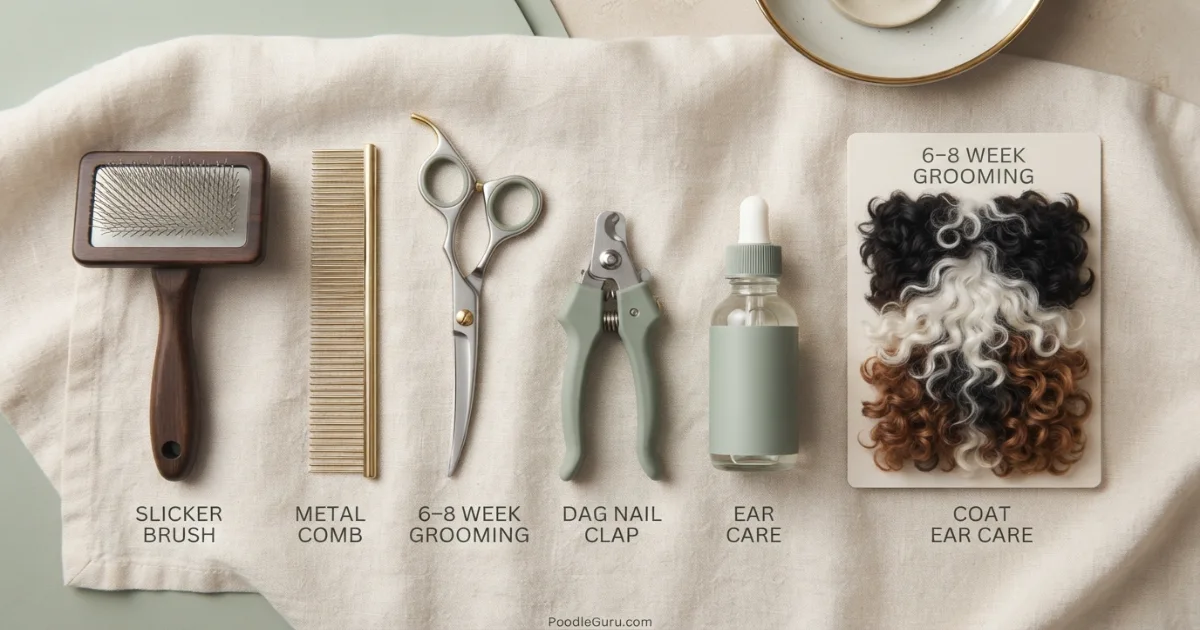
Plan on brushing at least three to four times per week for wavy coats and daily for curly coats. Use a slicker brush followed by a metal comb to reach down to the skin. Surface brushing is a common mistake — it leaves mats forming undetected underneath. Mats aren’t cosmetic. They pull on the skin, trap moisture, and can lead to infections or hot spots.
Professional grooming every 6 to 8 weeks is the standard recommendation. Some owners stretch to 10 weeks, but coats in the curly-to-wavy range tend to mat beyond that. Expect to pay $80 to $150 per session depending on your location, the dog’s size, and coat condition. Bathing between grooms — every 3 to 4 weeks — helps keep the coat clean, but always brush thoroughly before bathing. Water tightens existing mats.
Don’t overlook ear care. Floppy ears combined with Poodle-type hair in the ear canal create a warm, moist environment where bacteria and yeast thrive. Weekly ear checks and cleaning with a vet-approved solution prevent most problems. If you notice odor, redness, or head shaking, your veterinarian should take a look.
Exercise & Mental Stimulation
Bernedoodles need daily exercise, but they aren’t border collies. Most do well with 45 to 60 minutes of physical activity per day — walks, fetch sessions, or off-leash play in a secure area. Standard Bernedoodles often need closer to 60–90 minutes, while Tiny Bernedoodles may be satisfied with 30–40 minutes.
What’s easier to underestimate is the mental side. A Bernedoodle with a strong Poodle influence needs to think, not just run. Puzzle toys, scent games, trick training, and food-dispensing toys all count. A dog that gets physical exercise without mental engagement is like a person who works out but never reads — physically tired but mentally restless. That restlessness shows up as unwanted behavior.
One caution: Standard Bernedoodle puppies, like all large-breed puppies, shouldn’t do high-impact jumping or extended running on hard surfaces until their growth plates close — usually around 12 to 18 months. Too much impact too early can contribute to joint problems later.
Training a Bernedoodle
Bernedoodles are generally eager to please and respond well to positive reinforcement. That doesn’t mean training is effortless. Their intelligence means they pick up commands quickly — and they also figure out exactly when you’re inconsistent.
Start training early. Puppy kindergarten classes offer structured socialization and lay a foundation for loose-leash walking, recall, and impulse control. Bernedoodles can be sensitive. Harsh corrections or punishment-based methods tend to backfire, creating anxiety or avoidance rather than compliance. Food rewards, praise, and short, upbeat sessions work far better.
Crate training is worth the effort. A crate gives your Bernedoodle a safe, predictable space and helps with housebreaking. It also becomes a critical tool if separation anxiety starts to surface — a calm, positive association with the crate prevents panic when you leave. The goal isn’t confinement. It’s a den-like retreat your dog chooses willingly.
Bernedoodle Buyer’s Guide (2026)
Bernedoodle prices in 2026 typically range from $2,500 to $5,500, with most well-bred puppies falling between $3,000 and $4,500. Tiny and Mini Bernedoodles often cost more than Standards — not because they’re better, but because breeding smaller dogs requires more careful size management across generations.
2026 Price Ranges by Size
| Size | Typical Price Range | What Affects Price |
|---|---|---|
| Standard Bernedoodle | $2,500–$3,800 | Coat color, generation (F1 vs. F1b), health testing, breeder reputation |
| Mini Bernedoodle | $3,200–$4,800 | Size predictability, coat type, tri-color demand, geographic location |
| Tiny / Toy Bernedoodle | $3,800–$5,500 | Smaller litter sizes, higher demand, more complex breeding programs |
What’s actually worth paying for: comprehensive health testing on both parents (OFA hips, elbows, eyes, and genetic panels), early neurological stimulation protocols, and a breeder who asks you as many questions as you ask them. What inflates price without adding value: rare-color marketing (merle, phantom), “teacup” labels, and breeders who charge premium prices without providing corresponding health documentation.
Breeder Red Flags
Not every Bernedoodle breeder operates with the same standards. Here are signals that should make you pause — or walk away entirely.
No Health Testing Documentation
If a breeder can’t produce OFA or PennHIP results for both parents — not just a vet check — that’s a dealbreaker. Verbal assurances don’t count.
Multiple Litter Types Always Available
Breeders producing Bernedoodles, Goldendoodles, Sheepadoodles, and three other crosses simultaneously are running a volume operation, not a focused breeding program.
Puppies Ready Before 8 Weeks
Responsible breeders keep puppies until at least 8 weeks. Earlier release cuts into critical socialization and weaning periods. Walk away from anyone offering 6-week-old puppies.
Won’t Let You Meet the Mother
If you can’t meet the dam (mother) on-site, something is off. The dam might not be on the property, or the breeder may be sourcing puppies from elsewhere. Meeting at least the mother is non-negotiable.
How to Evaluate a Bernedoodle Breeder
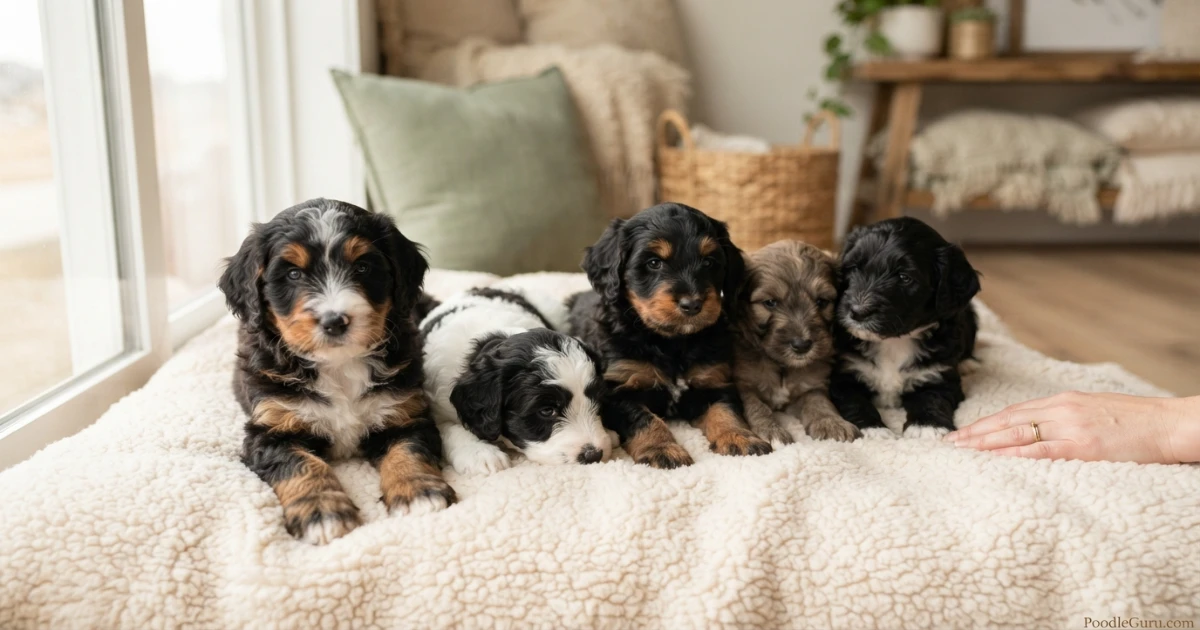
The difference between a great Bernedoodle experience and a difficult one often traces back to breeder selection. Use this step-by-step evaluation to make an informed choice.
Request Health Testing Results Up Front
Ask for OFA or PennHIP scores for both parents — hips, elbows, and eyes at minimum. A responsible breeder will send these without hesitation. If they deflect, that’s your answer. Cross-reference results against the OFA database online; don’t rely on a breeder’s summary alone.
Visit the Breeding Environment
See where the puppies are raised. A clean, home-based environment with enrichment items and space to move is what you’re looking for. Kennel-only setups with limited human interaction produce puppies that may struggle with household socialization. Meet the dam. Observe her temperament — it’s your best preview of adult behavior tendencies.
Ask About Generation and Coat Testing
Is the litter F1 (Bernese × Poodle), F1b (Bernedoodle × Poodle), or multigenerational? Each generation has different coat and trait predictability. For coat specifically, ask whether the puppies were tested for the furnishing gene. A breeder who tests and shares those results is operating transparently. One who’s never heard of furnishings testing may not be managing coat outcomes intentionally.
Review the Contract and Health Guarantee
A strong contract includes a health guarantee (typically 1–2 years for genetic conditions), a return-to-breeder clause if you can’t keep the dog, and clear spay/neuter expectations. Vague contracts protect the breeder, not the puppy or the buyer. Read every clause before signing.
Frequently Asked Questions
Are Bernedoodles hypoallergenic?
No dog is completely hypoallergenic. Curly and wavy-coated Bernedoodles with furnishings tend to shed less, which may reduce loose hair and dander spread in some homes. Straight-coated Bernedoodles shed more and are less suitable for allergy-sensitive homes. Spend time with the specific dog before committing if allergies are a concern.
Do Bernedoodles bark a lot?
Most Bernedoodles are moderate barkers. They may alert-bark at strangers or unusual sounds but aren’t typically nuisance barkers. Excessive barking usually signals boredom, under-stimulation, or separation anxiety rather than a breed trait. Addressing the root cause resolves it in most cases.
How long do Bernedoodles live?
Standard Bernedoodles typically live 10–13 years. Mini and Tiny Bernedoodles often reach 12–15 years, partly because smaller dogs generally live longer. Individual lifespan depends heavily on genetics, diet, exercise, and preventive veterinary care throughout life.
What’s the difference between an F1 and F1b Bernedoodle?
An F1 Bernedoodle is a first-generation cross: Bernese Mountain Dog × Poodle (50/50). An F1b is a backcross: F1 Bernedoodle × Poodle (roughly 75% Poodle, 25% Bernese). F1b dogs typically have curlier, lower-shedding coats and may show more Poodle-like temperament traits. Coat predictability is generally higher in F1b generations.
Can Bernedoodles live in apartments?
Mini and Tiny Bernedoodles adapt well to apartment living with adequate daily exercise. Standard Bernedoodles need more space and may feel cramped in a small apartment without regular outdoor access. Regardless of size, all Bernedoodles need daily walks and mental stimulation — a yard alone isn’t enough.
Do Bernedoodles get along with other dogs?
Generally yes. Most Bernedoodles are social with other dogs when properly introduced and socialized from puppyhood. Early positive experiences with other dogs — in controlled settings — build the foundation. Some individuals may be more selective or reserved, especially if undersocialized during the critical puppy window.
Are Bernedoodles good for first-time dog owners?
They can be, with one caveat: first-time owners must commit to the grooming requirements. The temperament is often forgiving and people-oriented, which helps novice owners. But the coat care is real — brushing several times weekly and professional grooming every 6–8 weeks isn’t optional. Underestimate the grooming, and both dog and owner suffer.
Key Takeaways
The Bernedoodle offers a compelling combination of warmth, intelligence, and coat variety — but it is not a one-size-fits-all breed cross. Here’s what matters most as you move forward:
- Bernedoodles come in three size categories — Standard (50–90+ lbs), Mini (25–49 lbs), and Tiny (10–24 lbs) — determined by the Poodle parent used in breeding.
- Coat type ranges from curly to straight. Curly and wavy coats with furnishings shed less. Straight coats shed more and may not suit allergy-sensitive homes.
- Breeder selection is the single most important decision you’ll make. Health testing documentation, transparency about coat genetics, and a clean home environment are non-negotiable minimums.
- Grooming is a significant, ongoing commitment. Expect brushing several times per week and professional grooming every 6–8 weeks throughout the dog’s life.
- Temperament is generally affectionate and people-oriented, but separation anxiety can develop in dogs left alone for long periods. Mental stimulation matters as much as physical exercise.
- No Bernedoodle trait — coat, size, or temperament — is guaranteed. Genetic variability is real. A responsible breeder will be honest about this rather than making perfect-outcome promises.
Best next step: If you’re actively looking, start with our Complete Poodle Grooming Guide to understand the coat-care commitment in detail. A Bernedoodle’s grooming needs are substantial — and knowing what you’re signing up for before the puppy arrives is the smartest move any buyer can make.