Poodle vs Wheaten Terrier: Low-Shedding Breed Comparison
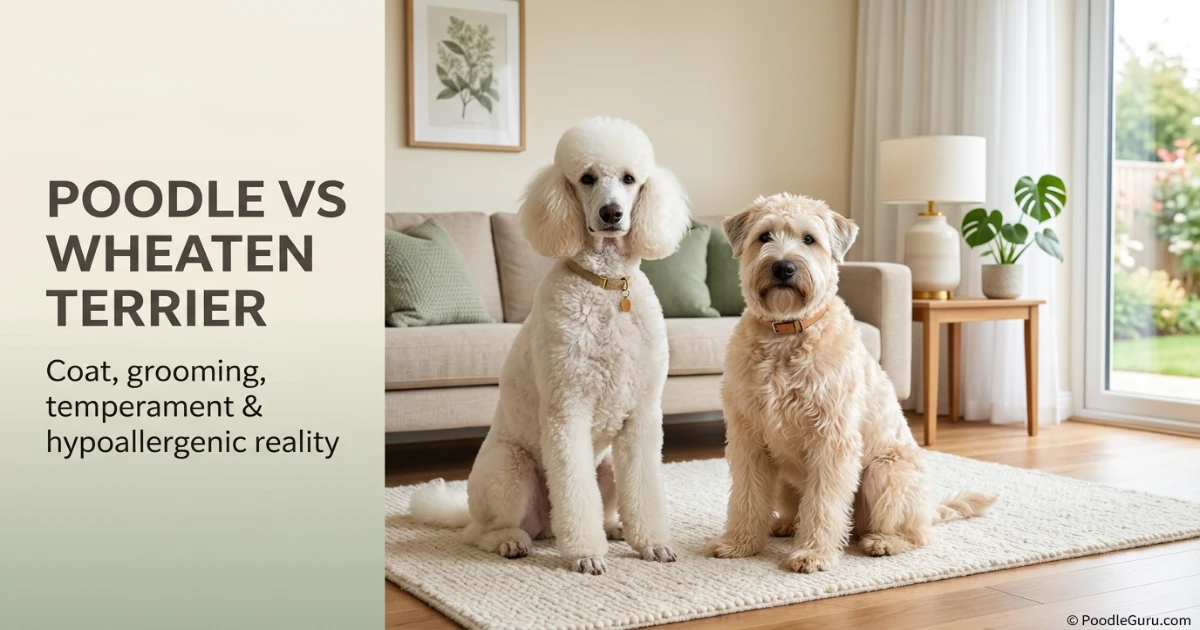
Both the Poodle and the Soft Coated Wheaten Terrier are famous for their low-shedding coats, but they deliver very different ownership experiences. If you’re choosing between these two low-shedding breeds, understanding the daily reality — beyond the allergy-friendly label — is essential. Here’s an expert, side‑by‑side breakdown that puts the Poodle’s versatility and the Wheaten’s terrier spirit into perspective.
Quick Answer
Poodle vs Wheaten Terrier: Both are considered hypoallergenic because they shed minimally, but the Poodle’s curly, single‑layered coat traps dander more effectively and requires professional grooming every 4–6 weeks. Wheatens have a soft, silky single coat that also needs frequent grooming and tends to mat heavily without daily brushing. In temperament, Poodles are highly biddable and eager to please, while Wheatens retain a more independent terrier drive. For first-time hypoallergenic dog owners, the Poodle’s predictability often makes it a smoother fit — but for those seeking a spirited, playful companion with a softer coat feel, the Wheaten holds genuine appeal.
Poodle Sizes
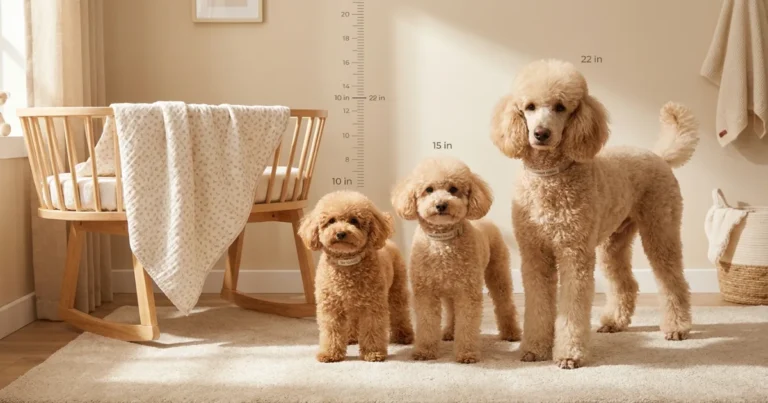
Toy (4–6 lbs), Miniature (10–15 lbs), and Standard (40–70 lbs) are the AKC-recognized Poodle varieties. Moyen/Medium Poodles may be seen in some breeding programs, but they are not a separate AKC variety.
Wheaten Terrier Size
One size: 30–40 lbs, 17–19 inches at the shoulder. Males tend to be slightly larger than females.
Both Low-Shedding
Neither breed has a typical shedding undercoat. Allergens come mostly from dander and saliva, so individual reactions vary.
Why Compare a Poodle and a Wheaten Terrier?
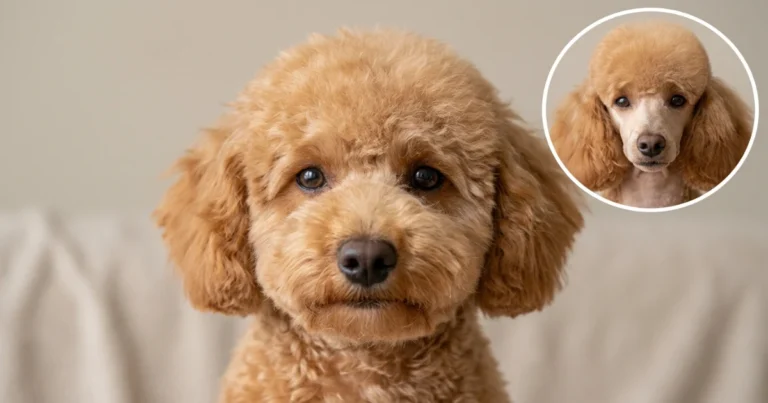
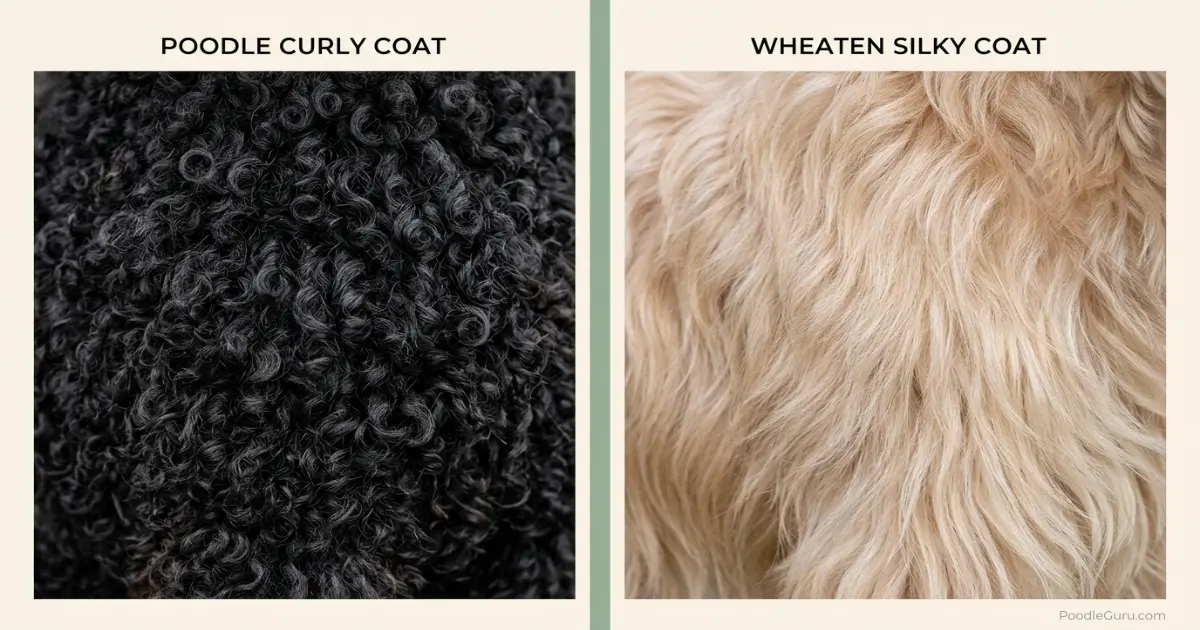
Many allergy-conscious owners arrive at this crossroads: they want a medium-sized, friendly, non‑shedding dog. The poodle vs wheaten terrier question often surfaces when someone has outgrown the doodle trend and wants a purebred. Both breeds appear on lists of hypoallergenic dogs, but they got there by very different genetic routes. A Poodle’s coat is more akin to wool — dense, curly, and actively trapping dander. A Wheaten’s coat is soft, wavy, and more human‑hair‑like in texture. Understanding this difference explains nearly all the grooming, bathing, and coat‑care divergence you’ll face.
The Soft Coated Wheaten Terrier AKC breed page emphasizes the breed’s moderate build and its Irish farm‑dog heritage, while the Poodle’s standard describes a squarely built, elegant dog originally developed as a water retriever. Those backgrounds explain their exercise needs and temperaments far better than any “hypoallergenic” label ever could.
Poodle vs Wheaten Terrier: At‑a‑Glance Comparison
| Attribute | Poodle | Soft Coated Wheaten Terrier |
|---|---|---|
| Size range (lbs) | 4–70 (AKC: Toy, Miniature, Standard; Moyen/Medium may appear outside AKC variety listings) | 30–40 |
| Coat type | Curly, dense, single coat | Silky, soft, single coat |
| Shedding level | Very low | Very low |
| Grooming frequency | Professional groom every 4–6 weeks; daily brushing if kept longer | Daily brushing; professional groom every 4–6 weeks |
| Matting risk | High without consistent care | Very high; mats form close to skin |
| Trainability | Exceptionally high; eager to please | Moderate; intelligent but independent |
| Energy level | Moderate to high (varies by size) | High; needs vigorous play |
| Common health concerns | Hip dysplasia, Addison’s, epilepsy, bloat, eye disorders | Protein‑losing enteropathy (PLE), protein‑losing nephropathy (PLN), hip dysplasia |
| Lifespan (average) | 12–15+ years | 12–14 years |
| Best for | First‑time owners, allergy sufferers, those who want a highly trainable dog and can commit to grooming | Active families with dog experience, those who love a terrier spirit and can handle brushing and independent thinking |
Coat & Grooming: The Hypoallergenic Reality
When you see the word “hypoallergenic,” think “less likely to trigger symptoms,” not “allergen‑free.” Both the Poodle and the Wheaten Terrier produce dander and saliva proteins that can still affect sensitive individuals. The critical difference lies in how the coat manages these particles.
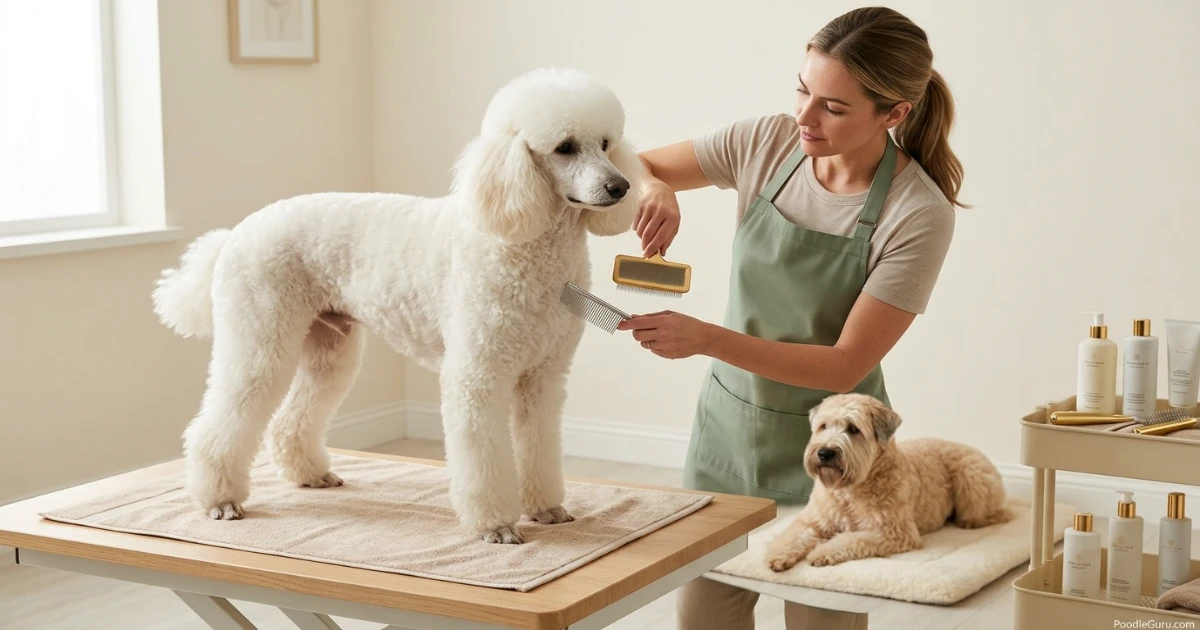
Poodle curls trap shed hair and dander close to the skin. That’s why they are often called “non‑shedding” — the loose hair stays tangled in the coat until it’s brushed out. This means a Poodle can go 4–6 weeks between grooms, but you must be diligent about line brushing to prevent mats from forming at the skin. Without regular grooming, a Poodle will mat severely, leading to skin irritation and even infection.
The Wheaten Terrier’s silky coat also captures loose hair, but its texture makes mats form quickly and tightly against the body. Owners often describe brushing a Wheaten as a daily necessity, not an option. Mats pull the skin and cause pain. Additionally, the Wheaten’s beard and leg feathering collect moisture and debris, so many owners trim the face and feet more frequently.
For both breeds, expect to budget $60–$120 per professional grooming session in 2026, depending on your area and the dog’s size. Poodles can be clipped in various styles, while Wheatens are typically kept in a natural‑looking trim. For a full grooming routine breakdown, see our complete Poodle grooming guide.
Temperament & Training: Two Very Different Minds
The Poodle is often described as one of the most intelligent dog breeds, and it’s not just about tricks. Poodles want to work with you. This biddability makes them a joy in obedience, agility, and daily living — they read your cues and adjust their behavior. For a first‑time owner navigating allergy considerations, that trainability is a major asset.
A Wheaten Terrier is also smart, but it’s a terrier smart — problem‑solving with its own agenda. Wheatens were bred to work independently on Irish farms, and that self‑reliance lingers. They can be exuberant greeters (the “Wheaten greetin’” is a breed hallmark) and tend to jump up. While affectionate, they often lack the off‑switch that a Poodle finds more naturally. Consistent, reward‑based training works for both, but expect to put in extra patience with a Wheaten’s stubborn streaks.
With Children and Other Pets
Poodles, especially the larger varieties, are typically gentle and patient with children when properly socialized. Toy and Miniature Poodles can be more sensitive to rough handling, so families with young kids often do better with a Miniature or Standard. Wheatens are robust and playful, but their terrier prey drive can make them chase small animals. Early socialization is crucial.
Health & Longevity
Both breeds are generally healthy with lifespans that reach well into the teens. However, each carries distinct genetic risks every buyer should know.
Poodle Health Overview
Poodles are susceptible to Addison’s disease, epilepsy, hip dysplasia, progressive retinal atrophy (PRA), and bloat (especially Standards). Responsible breeders screen for these. Because Poodles come in multiple sizes, health risks are not uniform — Toy and Miniature Poodles have a higher predisposition to luxating patella and dental issues, while Standards are more at risk for GDV and certain cardiac conditions. Our poodle health guide covers these in depth.
Wheaten Terrier Health Overview
Wheatens have breed‑specific concerns that can be devastating: protein‑losing enteropathy (PLE) and protein‑losing nephropathy (PLN) are serious conditions that can appear in middle age. These diseases cause the body to lose protein through the gut or kidneys, leading to swelling, weight loss, and eventually organ failure. Genetic testing and pedigree analysis are critical. Hip dysplasia and allergies also occur.
Neither breed is fragile, but a Wheaten’s potential for PLE/PLN means choosing a breeder who does advanced health testing is non‑negotiable.
The PoodleGuru Hypoallergenic Breed Match Method
At PoodleGuru, we evaluate breed fit using four concrete factors — not just coat hype. Run through this framework before committing to either breed.
Allergy Test Reality
Spend time with adult dogs of each breed before bringing a puppy home. Visit a breeder, a show, or a friend’s dog. Reactions to dander are individual; some people react more to Poodle curls, others to Wheaten silk. No breed guarantees zero reaction.
Grooming Capacity Check
Are you prepared for daily line brushing (Wheaten) or can you commit to a 4‑week grooming schedule and occasional brushing (Poodle)? Be honest — coat neglect leads to painful matting in both breeds.
Trainability & Lifestyle Alignment
If you want an off‑leash hiking companion who looks to you for direction, the Poodle is a natural fit. If you prefer a dog with a playful, independent personality who makes you laugh, the Wheaten may win your heart — but be ready for consistent training.
Health Investment Planning
Factor in the cost of genetic health testing and possible long‑term medication. A Wheaten’s risk of PLE/PLN can lead to expensive specialty care; a Standard Poodle’s risk of bloat may require a prophylactic gastropexy. Know the potential future cost.
Price & Breeder Red Flags (2026)
Expect to pay $1,500–$3,500 for a well‑bred Poodle puppy from health‑tested parents, with some Standard and rare‑colored lines fetching $4,000+. A Wheaten Terrier puppy from a reputable breeder generally falls in the $2,000–$3,200 range. Show‑potential puppies can be higher.
- No health clearances (OFA hips, eyes, genetic panels). For Poodles, also ask about von Willebrand’s and Addison’s screening. For Wheatens, verify PLE/PLN history in the lineage.
- Breeding “teacup” or “royal” Poodles — these are marketing terms, not recognized varieties.
- Puppies available year‑round or multiple litters on the ground simultaneously.
- Reluctance to let you meet the dam or see where the dogs live.
- Promises of “100% hypoallergenic” — no such thing exists.
For a full checklist of what to look for in a Poodle breeder, explore our Poodle buyer guide. The same principles apply when searching for a Wheaten breeder — health testing transparency is paramount.
Which Breed Fits Your Real Life?
There’s no universal winner. Choose the Poodle if you value trainability, want size options, and can manage a routine grooming schedule. The Poodle fits into a wide range of lifestyles, from apartment dwellers (Toy/Miniature) to active outdoor families (Standard).
Choose the Wheaten Terrier if you’re drawn to the terrier spirit — that joyful, bouncy personality — and you’re willing to commit to daily brushing. The Wheaten’s coat feels like cashmere and their “smile” is genuine, but they require more patience in training and are not as naturally handler‑focused as a Poodle.
Frequently Asked Questions
Which breed is truly more hypoallergenic, Poodle or Wheaten Terrier?
Neither is 100% allergen‑free. Poodles often provoke fewer reactions because their curly coat traps dander, but individual allergies vary. Some people react more to a Wheaten’s saliva proteins. Always test your own sensitivity before committing.
Do Wheaten Terriers bark a lot compared to Poodles?
Both breeds will alert bark, but Wheatens have a terrier instinct that can make them more vocal if bored. Poodles are generally quieter, especially when mentally stimulated. Excessive barking in either breed usually signals a lack of exercise or training.
Are Poodles more expensive to own than Wheaten Terriers?
Initial puppy prices are similar, but grooming costs are comparable — both need professional grooming. Long‑term, Wheatens may incur higher medical expenses if PLE/PLN develop. Poodles may need more frequent grooming if kept in a show clip.
Which breed is better for a first‑time dog owner with allergies?
Most first‑time owners find a Poodle easier to handle because of its trainability and predictable temperament. The Wheaten’s independent streak can overwhelm novices. Still, a Miniature or Standard Poodle’s energy needs should be matched with the owner’s activity level.
Can a Poodle and a Wheaten Terrier live together happily?
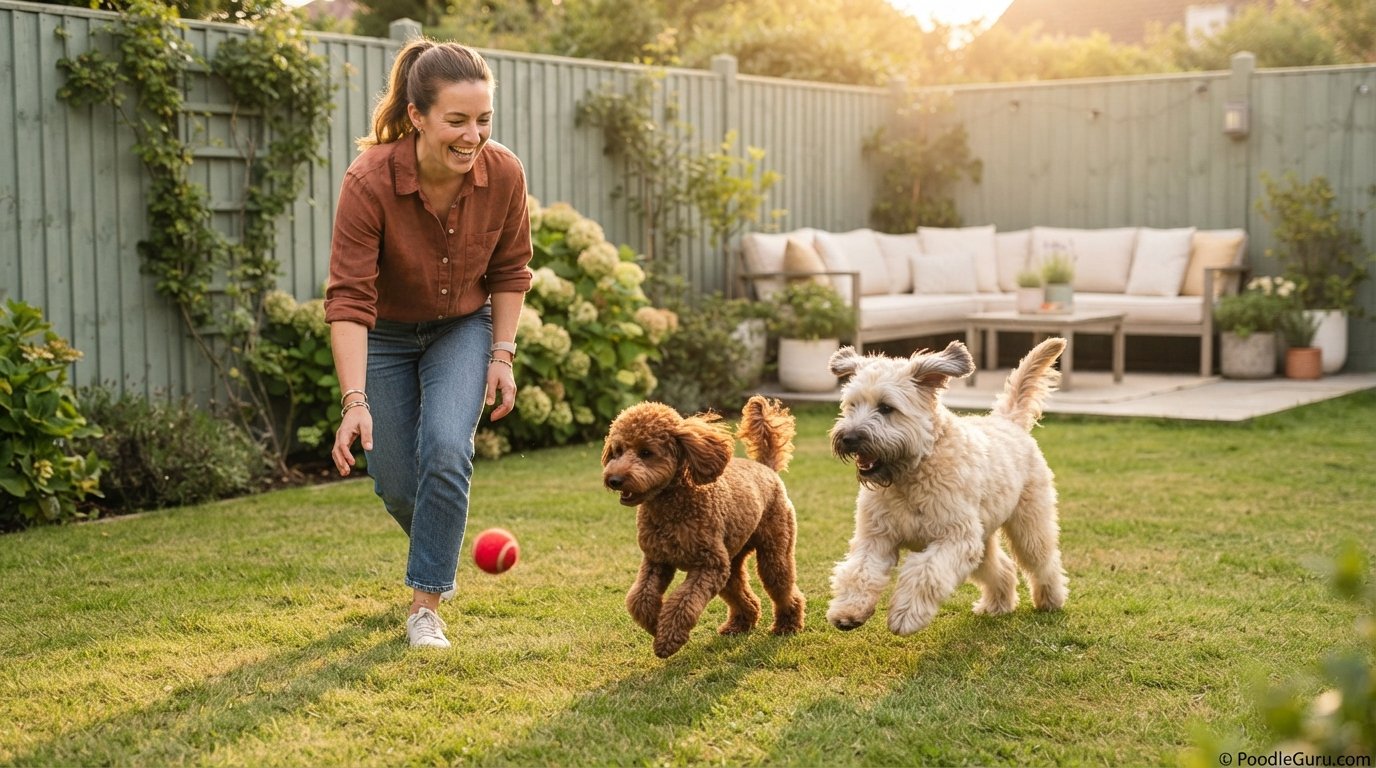
Yes, with proper introductions and compatible energy levels. A playful Standard Poodle and a Wheaten often become fast friends. Monitor toy possession if the Wheaten shows resource‑guarding tendencies.
How much daily exercise does a Wheaten Terrier need compared to a Poodle?
A Wheaten Terrier needs a solid 45–60 minutes of active exercise plus play. A Standard Poodle needs similar duration but often focuses more on structured activity; a Miniature or Toy Poodle can be satisfied with 30–45 minutes. Mental enrichment is critical for both.
Are there different Poodle varieties that compare better to a Wheaten’s size?
The Moyen/Medium Poodle (20–30 lbs) is the closest size match to a Wheaten (30–40 lbs). Standard Poodles can be significantly larger. If you love the Wheaten’s size but want Poodle traits, seek a Moyen from a responsible breeder.
Key Takeaways
Poodle vs Wheaten Terrier: both are popular low-shedding choices with unique demands. Here’s what to remember:
- Poodles have a curly, dense single coat that traps dander and requires professional grooming every 4–6 weeks; Wheatens need daily brushing with a silky coat that mats quickly.
- Temperament separates them sharply: Poodles are eager to please and highly trainable; Wheatens are independent, playful terriers that need patient, consistent training.
- Health risks differ — Poodles face Addison’s, bloat, and eye issues; Wheatens carry a serious risk of protein‑losing diseases (PLE/PLN) that demand breeder transparency.
- The PoodleGuru Hypoallergenic Breed Match Method uses allergy testing, grooming honesty, trainability fit, and health planning to help you choose objectively.
- Both breeds cost $1,500–$3,500 upfront, with comparable grooming expenses; long‑term medical costs vary based on genetic luck and preventive care.
- If you want a responsive, versatile companion and can keep up with grooming, a Poodle is a superb fit. If you love terrier spirit and can handle daily brushing, the Wheaten might steal your heart.