Do Poodles Need a Lot of Attention? The Honest Answer
Short answer: yes. Poodles are a high-attention breed, not because they are fragile, but because they are extremely smart, deeply handler-focused, and bred to work closely with people. If you want a dog that is happy being ignored most of the day, a poodle is usually not the easiest match. But when you understand what attention really means for this breed, their needs become much easier to manage.

Quick Answer: Do Poodles Need a Lot of Attention?
Yes, poodles need a lot of attention. This is not a clingy flaw. It is a feature of a breed built to collaborate with humans. Most poodles thrive with daily interaction that includes training, play, grooming, mental enrichment, and being included in household life.
A poodle left alone for long stretches without structured engagement may create its own activity, often through barking, chewing, pacing, or anxiety-driven habits. Size matters too. A Toy Poodle may need more constant proximity, while a Standard Poodle usually needs more physical and mental work. In every size, quality attention is non-negotiable.
Quick Facts: Do Poodles Need a Lot of Attention Daily?
Toy Poodle
High daily interaction need.
Toy Poodles love being near their people. They thrive on short training bursts, lap time, puzzle toys, and frequent reassurance.
Miniature Poodle
Active companion.
Miniature Poodles need meaningful interaction through training, sniff walks, play, and owner-focused routines throughout the day.
Standard Poodle
Demands partnership.
Standard Poodles often view themselves as teammates. They need physical exercise, mental work, and emotional connection to feel settled.
What Attention Actually Means for a Poodle
Attention-needy behavior in poodles is a breed trait rooted in their history as handler-focused working dogs. For poodle owners, this means the dog will thrive on interaction, training, companionship, and predictable daily routines.
The most important thing to understand is that attention is not just physical presence. A poodle can be beside you all day and still feel under-stimulated if you never make eye contact, train, play, groom, or give the dog a small job.
This breed does not need you to be a full-time dog trainer. It needs you to be intentional. Fifteen minutes of trick training, a calm brushing session, or a sniff walk where your poodle gets to explore can count as high-quality attention.

Why Poodles Are Wired for Attention
Poodles were never simply ornamental dogs. They descend from retrieving water dogs who worked closely with human handlers, interpreted signals, and stayed connected to their people during demanding tasks.
The AKC breed standard describes the poodle as active, intelligent, and ready to learn. That readiness does not switch off when the training session ends. It stays there, waiting for input.
When a poodle is not given structured interaction, that mental energy can turn into self-directed projects. Barking at the window, counter-surfing, chewing, digging, or demanding attention can all be signs that the dog needs more useful engagement.
Attention Needs by Size: Toy vs. Miniature vs. Standard
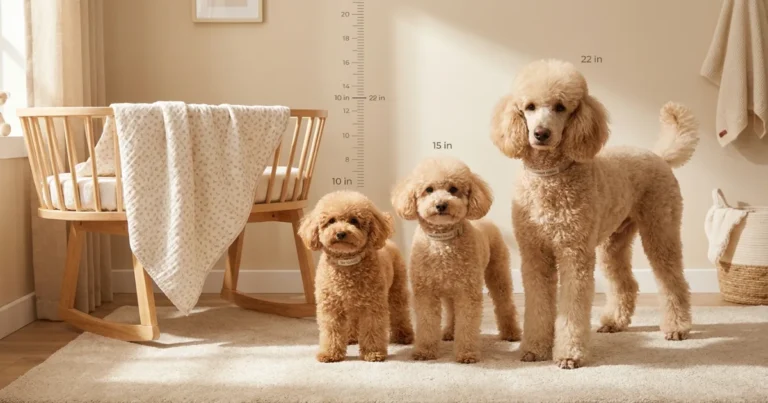
All poodles need attention, but the shape of that need changes with size. A Toy Poodle may want constant closeness. A Standard Poodle may need a bigger physical outlet and more complex mental work.
| Attention Dimension | Toy Poodle | Miniature Poodle | Standard Poodle |
|---|---|---|---|
| Daily interaction | Frequent proximity plus several short engagement bursts | Regular play, training, sniff walks, and owner time | Higher-intensity mental and physical partnership |
| Alone-time comfort | Often lower; may struggle without training | Moderate with routine and enrichment | Moderate if well exercised and mentally satisfied |
| Preferred attention | Lap time, trick games, gentle play, puzzle toys | Training, hiking, play sessions, grooming rituals | Retrieving, running, obedience, agility, complex tasks |
| Common mistake | Treating them like stuffed animals instead of smart dogs | Assuming medium size means medium needs | Expecting one walk to satisfy both body and brain |
The pattern is simple. Smaller poodles often need more constant closeness, while Standard Poodles often need bigger doses of exercise and teamwork. Both need genuine connection.
Signs Your Poodle Needs More Attention
Poodles are expressive dogs. They usually tell you when the attention balance is off, but the message can look like bad behavior if you do not know how to read it.
| Sign | What It Often Means | Immediate Fix |
|---|---|---|
| Following you from room to room | The dog may need connection or reassurance | Give a 10-minute focused training session, then reward calm settling |
| Demand barking at you | The dog wants engagement and has learned barking works | Wait for quiet, ask for a simple cue, then reward calm behavior |
| Chewing, digging, or shredding | Mental energy is looking for an outlet | Use puzzle feeders, scent games, or a sniff walk |
| Pacing in the evening | The dog may not be mentally satisfied | Add a short nose-work game or calm grooming routine |
| Overexcitement with guests | The dog may be socially under-stimulated | Practice structured greetings and reward self-control |
The PoodleGuru Attention Audit Method
Use this simple three-step daily audit to check whether your poodle’s attention needs are being met without overcomplicating your schedule.
Engagement Inventory
At the end of the day, ask whether your poodle had at least one focused activity with you. This can be training, grooming, a sniff walk, a puzzle game, or calm one-on-one time.
Behavior Scan
Watch for pacing, pawing, barking, chewing, or inability to settle. These signs often mean the dog needs more quality engagement rather than more random attention.
Weekly Connection Score
Score the week from 1 to 5. A steady 4 means your poodle is probably getting enough connection. Repeated 1s or 2s mean the routine needs improvement.
Common Mistakes Owners Make with Poodle Attention
Most attention problems come from misunderstanding what a poodle actually needs. More random fussing is not always the answer. Better structure usually is.
| Mistake | Why It Backfires | Better Approach |
|---|---|---|
| Assuming exercise alone is enough | A physically tired poodle can still have an unstimulated brain | Pair walks with training, sniffing, and puzzle games |
| Giving attention on demand | It teaches barking, pawing, and whining as strategies | Reward calm requests and quiet behavior |
| Never leaving the dog alone | The dog may panic when separation finally happens | Build short, positive absences into daily life |
| Thinking lap time is enough for a Toy Poodle | Toy Poodles still have active, clever brains | Add trick training, scent work, and puzzle toys |
Building a Balanced Attention Routine
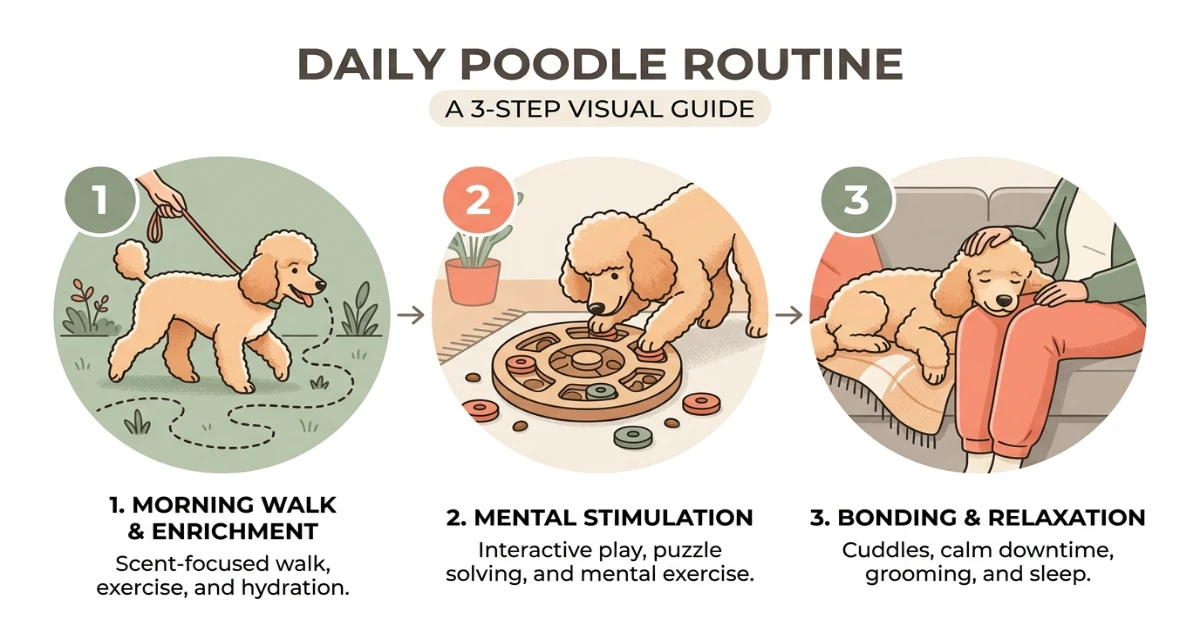
A poodle who receives consistent, quality attention throughout the day is calmer, happier, and less likely to develop behavior issues. The key is spreading engagement across the day instead of saving everything for one long session.
Morning Anchor
Start with a short walk, a quick training refresher, or a calm grooming moment. This tells your poodle the day begins with connection.
Midday Mental Work
Use a puzzle feeder, hide-and-seek game, or a short obedience session. This breaks up long quiet hours and gives your poodle a job.
Evening Connection
Use the evening for the main activity. For Toys, this may be indoor fetch and trick training. For Standards, it may be a longer walk, retrieving, swimming, or structured play followed by a calm settle routine.
If you work full-time, a midday dog walker, enrichment toy, or planned training break can help. These tools should support human connection, not replace it every day.

When Attention-Seeking Becomes a Problem
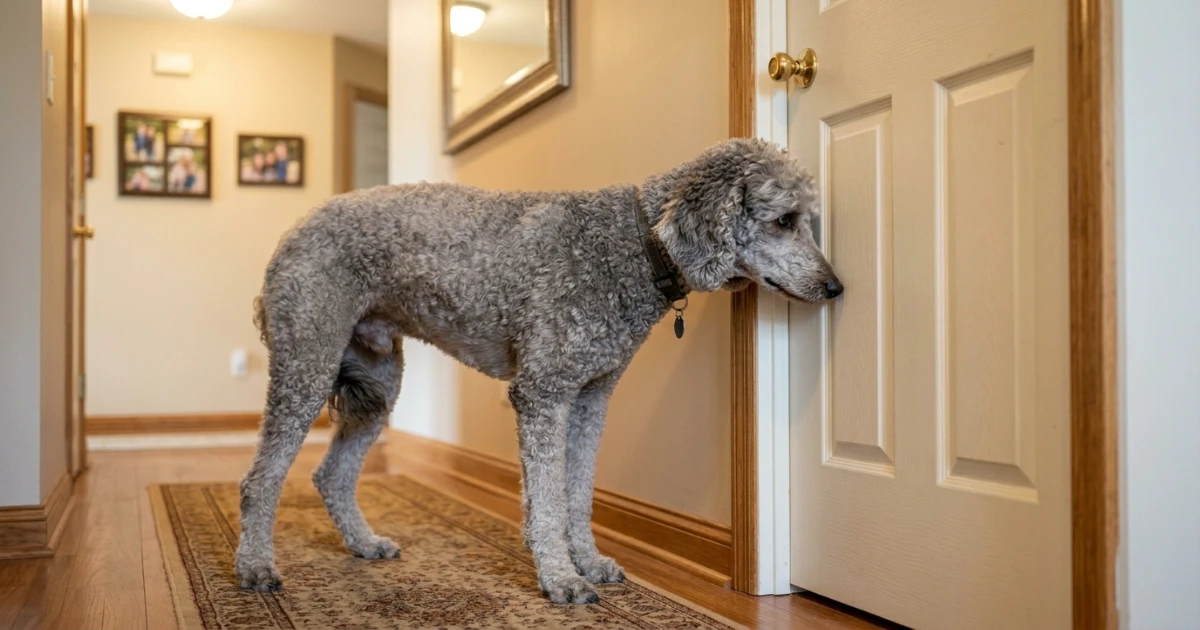
There is a line between healthy poodle engagement and dysfunctional clinginess. If your dog cannot be in another room without panicking, destroys barriers to reach you, or toilets indoors when left alone, you may be dealing with separation anxiety.
True separation anxiety is not fixed simply by giving more attention. It requires teaching the dog that being alone is safe in tiny, structured steps. A positive-reinforcement trainer or veterinary behaviorist can help when symptoms are intense.
Frequently Asked Questions
Do poodles need more attention than other dogs?
Compared to many independent breeds, yes. Poodles were bred for close collaboration with humans, which makes them more socially demanding. They need more mental engagement and active interaction than many lower-drive breeds.
How many hours a day should I spend with my poodle?
Aim for at least 2 to 3 hours of quality interaction spread throughout the day. This includes walks, training, play, grooming, and calm companionship, not just passive presence.
Can a poodle be left alone for 8 hours?
Some adult poodles can manage a full workday with training, enrichment, and a midday break. Without a potty break or mental stimulation, many become anxious, bored, or destructive.
Do Toy Poodles need more attention than Standard Poodles?
Toy Poodles often need more constant proximity, while Standard Poodles need higher-intensity physical and mental engagement. Both need significant attention, but it shows up differently.
What happens if I do not give my poodle enough attention?
Under-stimulated poodles may bark excessively, chew, dig, pace, shadow their owners, or develop separation-related distress. These behaviors usually point to unmet needs.
Is my poodle too clingy?
Following you from room to room is common poodle behavior. Panic, destruction, or toileting when alone is not normal clinginess and may indicate separation anxiety.
How can I give attention without reinforcing bad behavior?
Reward calm behavior, not barking or pawing. Wait for a quiet moment, ask for a simple cue like sit, then give attention. This teaches polite behavior as the path to engagement.
Will another dog help with my poodle’s attention needs?
Sometimes, but another dog does not replace human interaction. Poodles often crave connection with their owner specifically, so a second dog should be a thoughtful choice, not a quick fix.
Key Takeaways: Do Poodles Need a Lot of Attention?
Poodles are not demanding to be difficult. They are demanding because they are smart, bonded, and bred to work with people.
- Poodles need a lot of attention relative to many breeds. Quality engagement is not optional for this dog.
- Attention is more than being nearby. Training, play, grooming, sniffing, and eye contact all matter.
- Toy Poodles often need more constant closeness, while Standard Poodles need bigger mental and physical outlets.
- The PoodleGuru Attention Audit Method helps owners check whether daily needs are being met.
- Demand barking, chewing, pacing, and shadowing often signal unmet engagement needs.
- Separation anxiety requires structured training and sometimes professional help.