Poodle Kennel Cut: A Complete Step-by-Step Guide
The kennel cut is the most practical, low-maintenance trim you can give a poodle — and when done correctly, it looks clean, comfortable, and genuinely good. Here’s everything you need to do it right.
Quick Answer: What Is the Poodle Kennel Cut?
The poodle kennel cut is a practical short trim where the body is clipped to a uniform length — typically ½ to 1 inch using a #4 or #5 blade — with a clean or slightly rounded head, shaved face and feet, and a pompom at the base of the tail. It’s not a show cut. It’s designed for easy maintenance, active lifestyles, and owners who want a clean, tidy dog without daily brushing. For poodle owners, this means fewer mats, less grooming time, and a happy dog in any season. The most important thing to understand is that the kennel cut is only simple to maintain after the initial setup is done correctly.
Most poodle grooming guides spend too long on show cuts that the average owner will never attempt. This one doesn’t. The kennel cut is the workhorse of poodle grooming — practical, repeatable, and forgiving enough that owners can learn to do it themselves. It also happens to look genuinely good when done with a little care.
Whether you’re taking over from a professional groomer, cutting costs, or simply want more control over your poodle’s coat, this guide covers every step of the process — preparation, tools, technique, and the mistakes that turn a manageable trim into a stressful hour for both of you.
What Is the Poodle Kennel Cut?
The kennel cut — sometimes called a “puppy cut” interchangeably, though they’re not quite the same — is a short, uniform trim that keeps the coat at a manageable length across the entire body. The defining features are a clipped body (not scissored), a clean face, trimmed or shaved feet, and a pompom on the tail. The head is usually left with a rounded topknot rather than the elaborate continental pompoms of show grooming.
The name comes from boarding kennels, where groomers needed an efficient cut that would stay clean, dry quickly, and be easy to re-groom on a regular schedule. It stuck because it genuinely works. For pet poodle owners — especially those with active dogs, outdoor lifestyles, or limited grooming time — it remains the most popular choice by a significant margin.
What it’s not is a lazy cut. A poorly executed kennel cut still shows. Uneven blade lines, an awkward topknot, or a choppy transition between the body and legs are all visible. The goal isn’t to make the cut disappear — it’s to make it look intentionally clean.
How the Kennel Cut Differs From Other Poodle Cuts
| Cut Style | Body Length | Face | Feet | Tail | Maintenance Level | Best For |
|---|---|---|---|---|---|---|
| Kennel Cut | ½”–1″ clipped uniform | Clean-shaved or short | Shaved or tightly trimmed | Pompom on tip | Low — every 6–8 weeks | Active owners, easy home grooming |
| Puppy Cut | 1″–2″ scissored all over | Rounded soft face | Rounded, not shaved | Pompom or rounded | Medium — every 4–6 weeks | Softer look, younger appearance |
| Teddy Bear Cut | 1″–1.5″ uniform | Rounded, fluffy face | Rounded and fluffy | Full or pompom | Medium-high — brushing 3–4×/week | Owners who prefer soft, plush look |
| Continental Cut | Mixed: shaved hind, full front | Topknot and clean muzzle | Shaved with bracelets | Large pompom | Very high — weekly brushing + show prep | Show dogs, experienced handlers |
| Lamb Cut | Even scissored all over | Short, soft face | Rounded | Blended or pompom | Medium — every 6 weeks | Soft natural silhouette, easier brushing |
The key distinction is the tool used. A kennel cut relies primarily on clippers and blade guards — that’s what gives it the uniform, close finish. Puppy and teddy bear cuts involve far more scissor work. If you’re grooming at home and want predictable results, the kennel cut’s clipper-forward approach is genuinely more beginner-accessible once you understand which blades to use.
Tools You’ll Actually Need
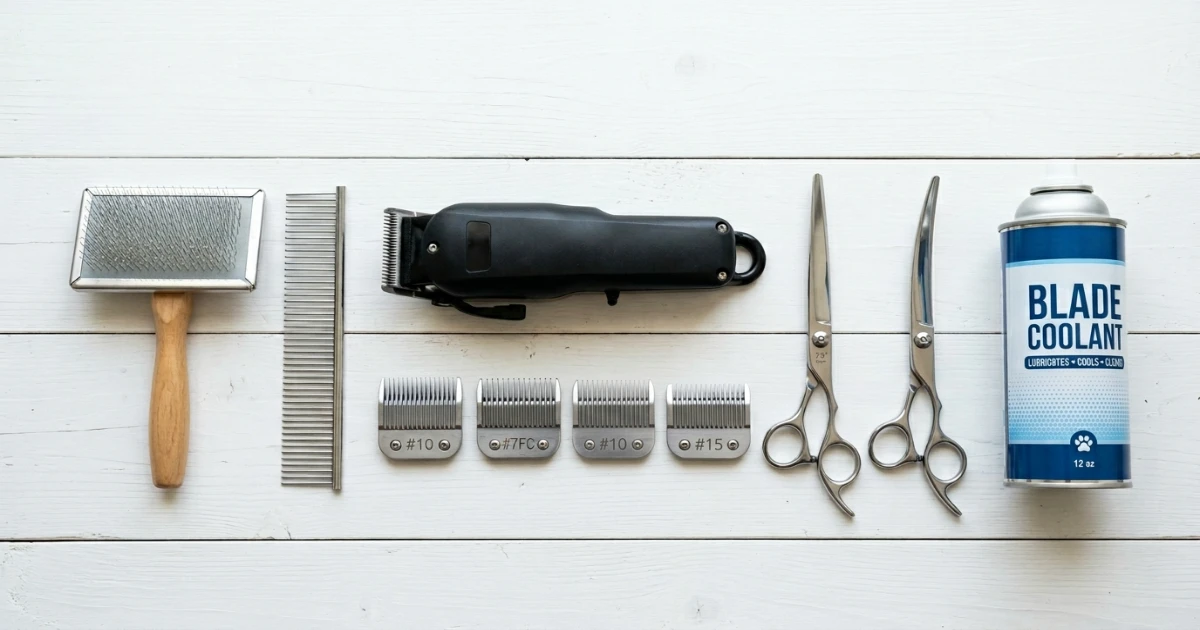
Good results depend far more on prep and proper tools than on technique. Trying to do a kennel cut with dull blades or the wrong guard size is how most home grooming sessions go wrong. Here’s what actually matters:
⚡ Clippers
- Professional-grade rotary motor preferred
- Andis Excel, Wahl KM10, or Oster A5 are commonly used by groomers
- Consumer-grade clippers often overheat on thick poodle coats
- Check blade heat regularly during use
🔪 Blades
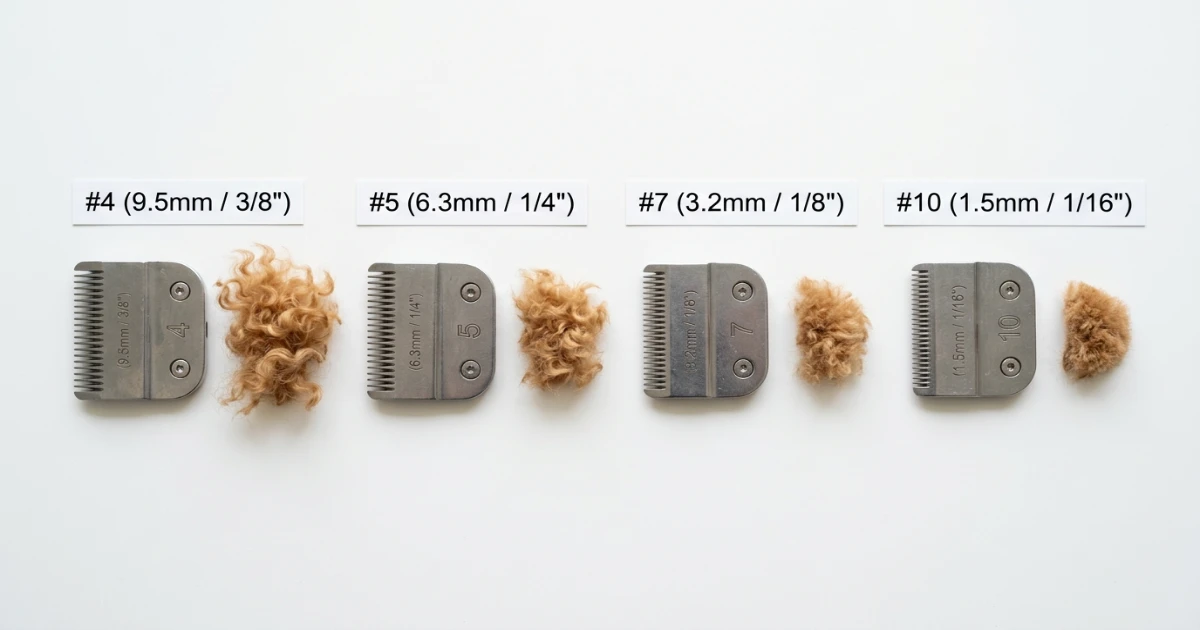
- #4 or #5 for the body (½”–⅝” finish)
- #7 for a shorter, tighter finish
- #10 or #15 for face, feet, and sanitary area
- Always check blade temperature — use blade coolant spray
🪮 Finishing Tools
- Slicker brush (essential for pre-clip prep)
- Steel comb with fine and medium teeth
- Straight scissors and curved scissors for head/tail shaping
- Thinning shears for blending transitions
Step-by-Step: How to Do the Poodle Kennel Cut
Work through these steps in order. Each one sets up the next. Rushing the bath or skipping the brush-out makes every step after it harder.
Bathe and Fully Blow-Dry
Use a poodle-appropriate shampoo and a light conditioner. Rinse thoroughly — residue dulls blades fast. Then blow-dry completely with a high-velocity dryer or a slicker brush and handheld dryer. The coat must be 100% dry and fully straightened before any clipper touches it. This step takes the most time but determines your entire finish quality.
Brush Out All Mats and Tangles
Work through the coat section by section with a slicker brush, then follow with a steel comb. The comb should pass through without catching. Pay close attention to the armpits, behind the ears, and groin — these are where poodle mats form first. If a mat is tight against the skin, don’t force the clipper over it. Work it out with a mat splitter or clip below it carefully.
Clip the Body
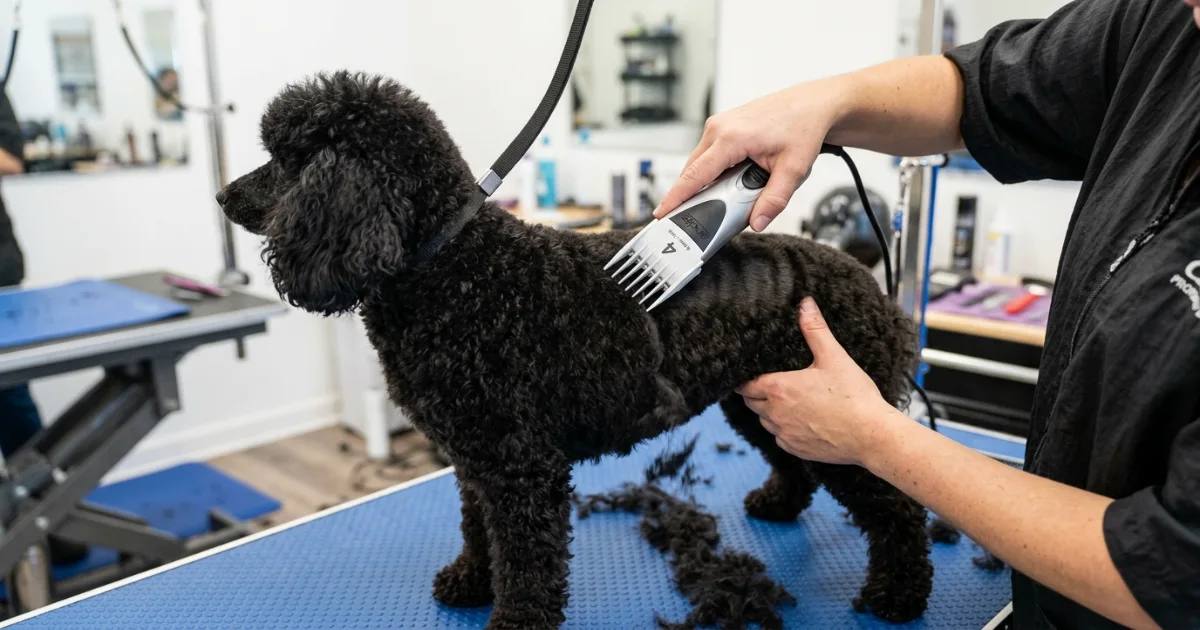
Start with your chosen blade — a #4 or #5 for most poodles. Begin at the neck and move with the direction of coat growth (with the grain) down the back, sides, and chest. Use smooth, steady strokes. Don’t push hard — let the blade do the work. Clip the belly and the underside carefully, lifting the leg for access. Stop short of the legs for now; you’ll blend those separately.
Clip and Shape the Legs
Legs on a kennel cut are usually left slightly longer than the body for a natural silhouette — you can use a guard comb one size longer than your body blade, then scissor-finish the bottom into a cylinder shape. Toy and Miniature poodles typically look best with legs scissored to a neat column. Standard poodles can handle a clipper-only approach on legs if you prefer speed.
Clip the Face
Use a #10 or #15 blade for the muzzle. Clip from the outer corner of the eye down to the lip, and from below the ear across the throat. Go slowly — poodle skin is thin around the face. The classic kennel cut uses a clean muzzle with a rounded cap or topknot left on top. If you prefer a softer look, use scissors to blend the muzzle instead of clipping it completely clean.
Shape the Topknot
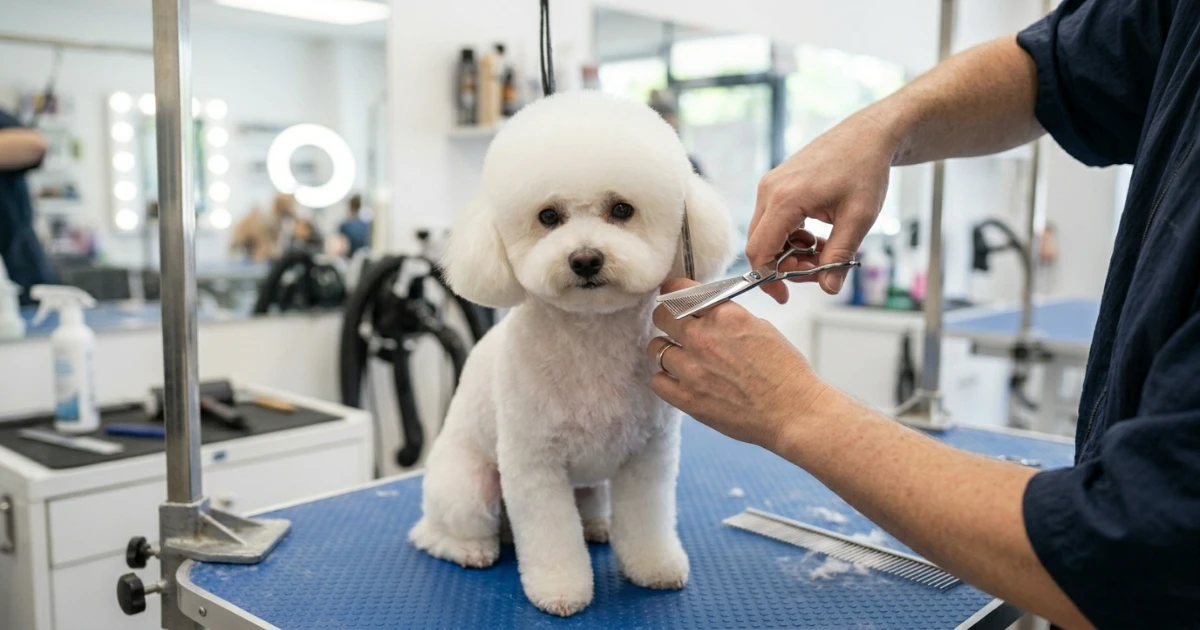
The topknot is what most people notice first. Comb it forward and upward, then scissor into a rounded dome shape — think soft ball rather than flat plateau. The topknot should flow naturally from the skull without a hard line. Blend the sides down into the ear line with thinning shears for a cleaner transition. This is where curved scissors earn their place.
Clip the Feet
Use a #10 or #15 blade to clip between and around the paw pads, then work around the top of the foot up to where the leg fur begins. The foot should look neat and clearly defined. Trim the nails at this stage if needed — it’s easier once the feet are clean. Styptic powder should always be nearby.
Clip the Sanitary Area and Tail Base
Use the #10 blade to clean the area around the genitals and anus — this keeps the dog hygienic and makes coat maintenance significantly easier between grooming sessions. Clip the tail itself short along the base, then scissor a neat pompom at the tip. The pom doesn’t need to be large — a tight, round knob looks clean and intentional.
Final Check and Tidy-Up
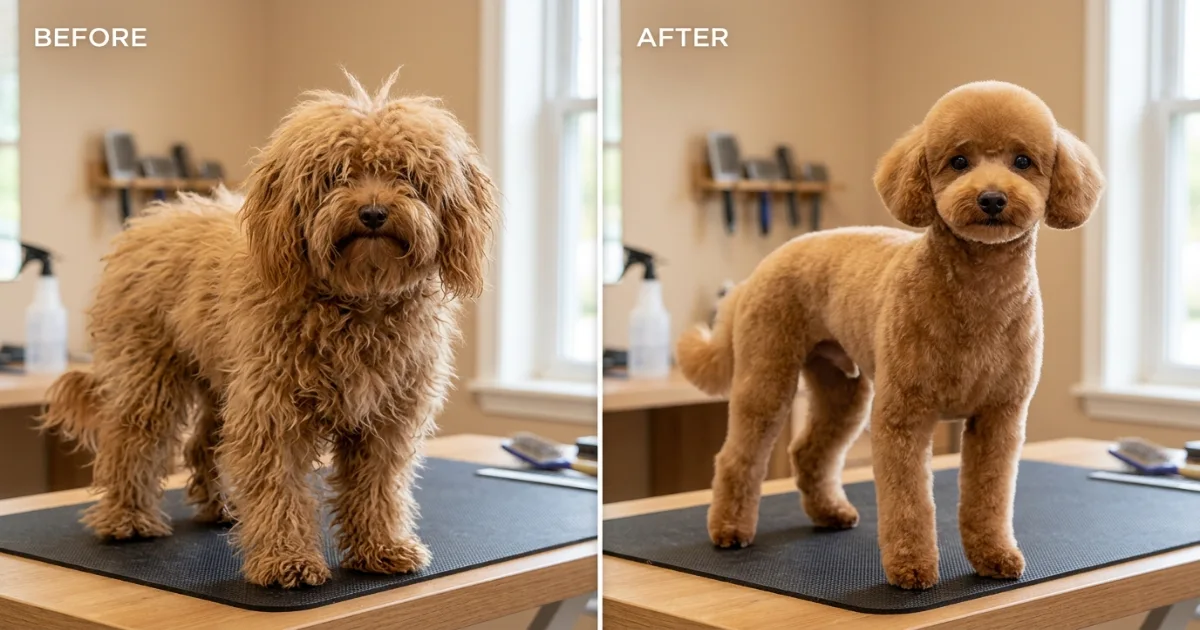
Step back and look at the dog from the side, front, and rear. Check for uneven blade lines where the body met the legs. Check that the topknot is symmetrical. Run the comb through everywhere once more and scissor any stray hairs. Then check ears for debris, clean with an ear solution if needed, and confirm nails are trimmed and smooth.
Kennel Cut by Poodle Size: What Changes
The steps above apply to all poodles, but execution varies by size. Smaller poodles require more careful handling around the face and legs. Larger ones take more time and demand better blade cooling management.
| Size | Recommended Body Blade | Approx. Grooming Time (Home) | Key Considerations | Topknot Shape |
|---|---|---|---|---|
| Toy Poodle (4–6 lbs) | #5 or #7 | 45–75 min | Very small face — use shorter strokes; more patience on feet | Small rounded dome |
| Miniature Poodle (10–15 lbs) | #4 or #5 | 60–90 min | Good beginner size; legs benefit from scissor finishing | Medium rounded dome |
| Moyen Poodle (20–30 lbs) | #4 | 75–105 min | Monitor blade heat carefully; check coat density varies | Medium-full dome |
| Standard Poodle (45–70 lbs) | #4 or guard comb on #10 | 90–150 min | Multiple blade coolant breaks needed; body is large and has more surface variation | Full rounded dome or oval |
Standards in particular benefit from two-session grooming if you’re new to it — bath and dry in one session, then clip the next day. Their dense, heavy coats tire out consumer clipper motors quickly, and a frustrated groomer rushing through the second half of a Standard is where most home grooming injuries happen.
The PoodleGuru Kennel Cut Readiness Check
🐾 The PoodleGuru 5-Point Kennel Cut Readiness Check
At PoodleGuru, we evaluate a poodle’s grooming readiness using five simple checkpoints before any clippers come out. Rushing past any one of these is the reason most home grooms go wrong.
- Coat is completely dry — not damp, not mostly dry. Fully dried and blow-straightened.
- No mats remain — the steel comb passes from root to tip without catching anywhere on the body.
- Blades are clean, sharp, and cool — a hot blade burns skin; a dull blade pulls instead of cutting.
- Dog is calm and stable — standing comfortably on a non-slip surface, not tensed or trembling.
- You have the full session available — stopping partway through and resuming hours later produces uneven results as the coat resets.
Common Kennel Cut Mistakes — and How to Avoid Them
| Mistake | What Happens | How to Avoid It |
|---|---|---|
| Clipping a damp coat | Finish looks uneven; coat expands after drying | Always blow-dry 100% before clipping — use a comb attachment on the dryer |
| Clipping over undetected mats | Blade catches skin; painful for the dog; may cause injury | Full comb-through test before clipping every single time |
| Overheated blade | Skin redness, discomfort, or clipper burn | Use blade coolant spray every 5–10 minutes; switch to a spare blade |
| Wrong blade for body area | Too short on thin-skinned areas (belly, groin) | Use #7 or #5 for belly — never go to #10 on the body unless experienced |
| No blending at transitions | Hard line between body and legs; looks unfinished | Use thinning shears or a blending comb to smooth where body meets leg fur |
| Flat or lopsided topknot | Dominates the entire look negatively | Comb up and forward, scissor in a dome shape; check symmetry from the front |
| Skipping sanitary clip | Coat around genitals mats and becomes unsanitary quickly | Make this part of every grooming session, not an occasional extra |
Professional Grooming vs. DIY: Making the Right Call
✅ Do It Yourself When…
- Your poodle is comfortable being handled and groomed
- The coat is mat-free and manageable
- You have proper clippers and blades
- You have 90+ uninterrupted minutes available
- You’ve watched multiple grooming walkthroughs and feel confident
- The trim doesn’t need to look show-perfect
🏪 Use a Professional Groomer When…
- The coat is severely matted (shaving down may be needed)
- Your poodle is very young or anxious with tools
- You need the trim to look precise for an event
- You lack a high-quality clipper and the right blades
- The dog has a skin condition requiring groomer awareness
- You want to learn — watching a groomer work teaches more than any video
Professional kennel cut pricing in 2026 generally runs $55–$90 for Toy Poodles, $70–$110 for Miniatures, and $90–$160+ for Standards, depending on coat condition, location, and groomer experience. Add-ons like nail grinding, ear cleaning, and blueberry facials add $10–$25 each. Many groomers charge a mat removal surcharge — another strong reason to maintain a brushing routine between appointments.
The AKC breed standard page for poodles provides useful context on the poodle coat’s natural characteristics, which helps explain why professional groomers recommend 6–8 week trim intervals for pet-cut poodles specifically.
Frequently Asked Questions
How often should a poodle get a kennel cut?
Most pet poodles in a kennel cut need trimming every 6–8 weeks. At that interval, the coat stays manageable and the face and feet don’t become overgrown. Owners who brush consistently between appointments can sometimes stretch to 10 weeks, but beyond that the coat tends to mat at the armpits and behind the ears regardless of coat length.
What blade is used for a poodle kennel cut?
A #4 or #5 blade is the most common choice for the body, producing a finish of roughly ½ to ⅝ of an inch. A #7 blade creates a shorter, tighter result. For the face, feet, and sanitary area, a #10 or #15 blade is used. Always check blade temperature during use — blades heat up quickly on dense poodle coats.
Is the kennel cut the same as a puppy cut?
Not exactly. Both are short, practical trims, but a puppy cut is typically longer (1–2 inches) and relies more heavily on scissors to create a soft, uniform look. A kennel cut uses clippers with a specific blade, leaving the coat slightly shorter and more defined. The kennel cut also usually includes a cleaner face and a more distinct pompom on the tail.
Can I do a poodle kennel cut at home?
Yes — many owners do. You’ll need a proper professional-grade clipper (not a consumer pet trimmer), the right blades, a slicker brush, a steel comb, and at least 90 minutes of calm, uninterrupted time. The biggest barriers aren’t skill — they’re equipment quality and a mat-free, fully dried coat. Start with a professional groomer to see the process, then practice in stages at home.
What’s the difference between a kennel cut and a shave-down?
A shave-down clips the coat very short — often #7, #10, or shorter on the body — usually because the coat is severely matted and cannot be saved. A kennel cut is a deliberate style choice that preserves coat length at ½ to 1 inch. Shave-downs are a grooming rescue; kennel cuts are routine maintenance. The two shouldn’t be confused when booking a grooming appointment.
Does the kennel cut work for all three poodle sizes?
Yes — Toy, Miniature, and Standard Poodles all suit the kennel cut well. The blade size and grooming time vary by size, but the technique is the same. Standards take significantly longer due to their coat volume. Toy Poodles require more careful handling around the small face and feet. Miniatures are often considered the most straightforward size for first-time home groomers.
How do I keep my poodle’s kennel cut looking good between grooming sessions?
Brush 2–3 times per week with a slicker brush, then follow with a steel comb to catch anything the brush missed. Pay extra attention to the armpits, groin, and behind the ears — these areas mat first. Keep the face clean by wiping daily around the eyes and muzzle. A quick trim of the foot fur every 3–4 weeks stops the feet from looking overgrown before the full groom is due.
Key Takeaways: Poodle Kennel Cut
Everything you need to remember from this guide — in one clear, scannable block.
- The poodle kennel cut clips the body to ½”–1″ using a #4 or #5 blade, with a clean face, shaved feet, and a pompom on the tail tip.
- The coat must be 100% dry and fully brushed out — no mats — before any clipper touches it; clipping damp or matted coats creates uneven results and can injure the dog.
- Blade choice determines finish: #4 or #5 for the body, #7 for a tighter result, and #10 or #15 for face, feet, and sanitary areas.
- Standard Poodles take 90–150 minutes to groom at home; Toy Poodles take 45–75 minutes; Miniatures fall in between and are the most manageable size for first-time home groomers.
- Professional kennel cut pricing in 2026 ranges from $55 for Toy Poodles to $160+ for Standards, depending on coat condition, location, and add-on services.
- Brushing 2–3 times weekly between sessions and wiping the face daily is the single most effective way to extend how long the kennel cut stays clean and mat-free.