This article contains affiliate links. PoodleGuru may earn a small commission if you purchase through our links, at no extra cost to you.
A poodle’s bed is more than a soft spot. The right setup can make rest more comfortable, give older dogs easier access, and make coat and bedding care simpler. Here’s how to choose the best dog bed for your poodle’s size, age, sleep style, and everyday habits — not just the prettiest option.
Quick Answer
The best dog bed for a poodle depends on body size, sleep style, age, temperature preference, and mobility. Poodles that curl tightly may enjoy bolster or donut beds, while sprawlers need a wider flat surface.
Standard Poodles often need more usable floor space. Seniors or dogs with mobility concerns may benefit from a low-entry bed with supportive, resilient padding and a washable cover.
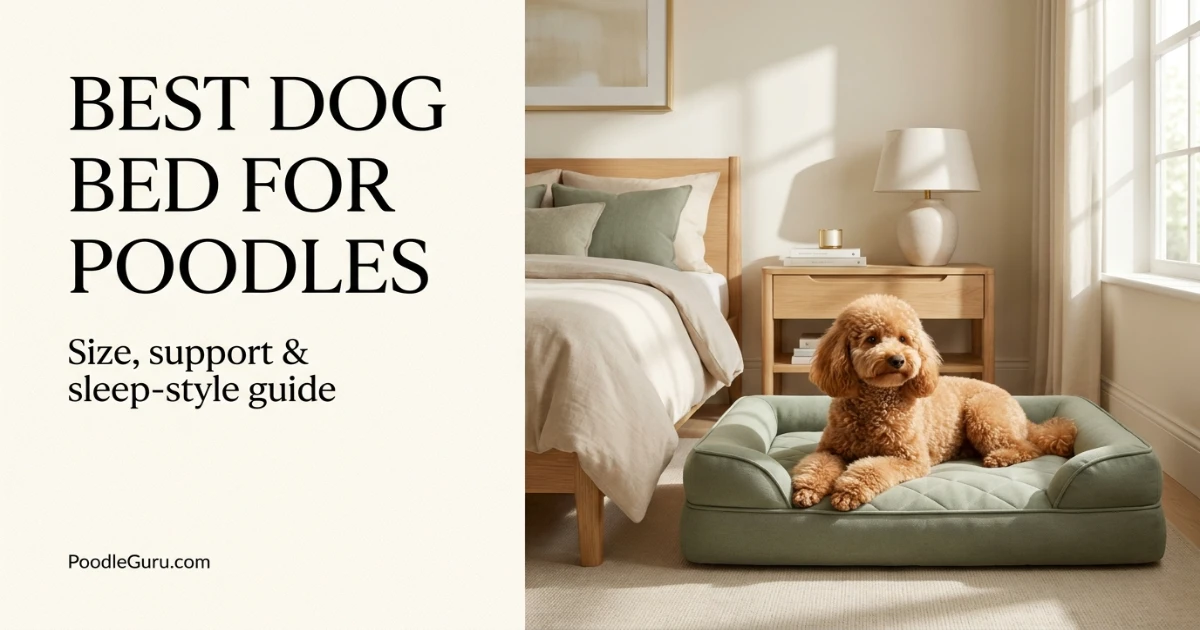
What Is the Best Dog Bed for a Poodle?
A poodle dog bed is a size-appropriate resting surface designed to provide comfortable padding, a clean place to settle, and enough room for the dog’s natural sleeping position. For poodle owners, this means choosing a bed that works with the dog’s actual sleeping position and grooming schedule.
The most important thing to understand is simple: a bed that is too soft, too small, or too difficult to clean may go unused or create more problems than it solves.
Quick Facts
- Curling sleepers may enjoy cozy bolster or donut beds
- Washable covers make routine Poodle coat care easier
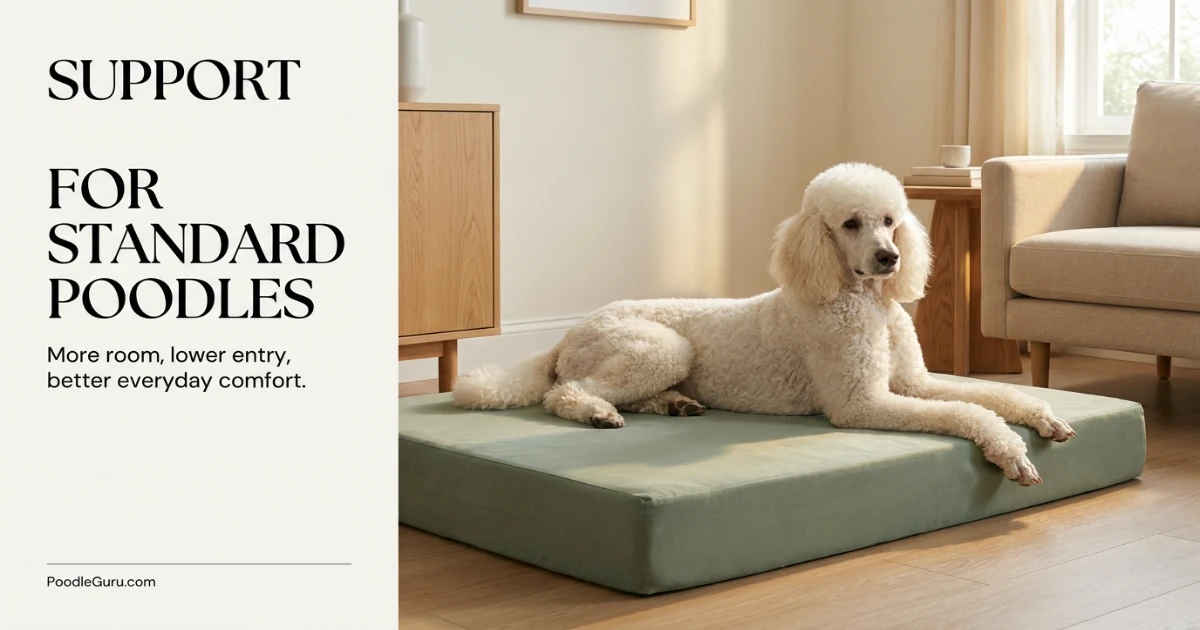
- Standard Poodles usually need a wider, longer sleep surface
- Removable covers matter more than most buyers realize
- Beds should be replaced when support visibly degrades
Top Comfort Priorities
- Comfortable, resilient padding
- Warmth without excessive heat buildup
- Coat-friendly surface texture
- Low entry height for seniors and puppies
Best Use Cases
- Nighttime sleep
- Post-grooming recovery rest
- Quiet time during crate training
- Senior poodle joint support
Why Bed Choice Matters for Poodles
Poodles can sleep in tightly curled positions or stretch surprisingly long, so a bed that looks generous in a product photo may still feel cramped in real use. Hard flooring may also be uncomfortable for older dogs or dogs with mobility problems, making padding depth and easy access more important with age.
Veterinary guidance for dogs with musculoskeletal discomfort emphasizes comfortable padding on a stable surface and easy access. A supportive bed does not prevent or treat arthritis or other joint disease, but it can be part of a more comfortable resting setup while medical concerns are handled with a veterinarian.
Coat care adds another layer. Smooth, washable covers are easier to keep clean and are less likely to snag long ear hair, bracelets, or a longer body coat than rough, loose-pile fabrics. For Poodle owners, removable covers and simple seams are practical features, not just conveniences.
Bed Types Compared by Poodle Size
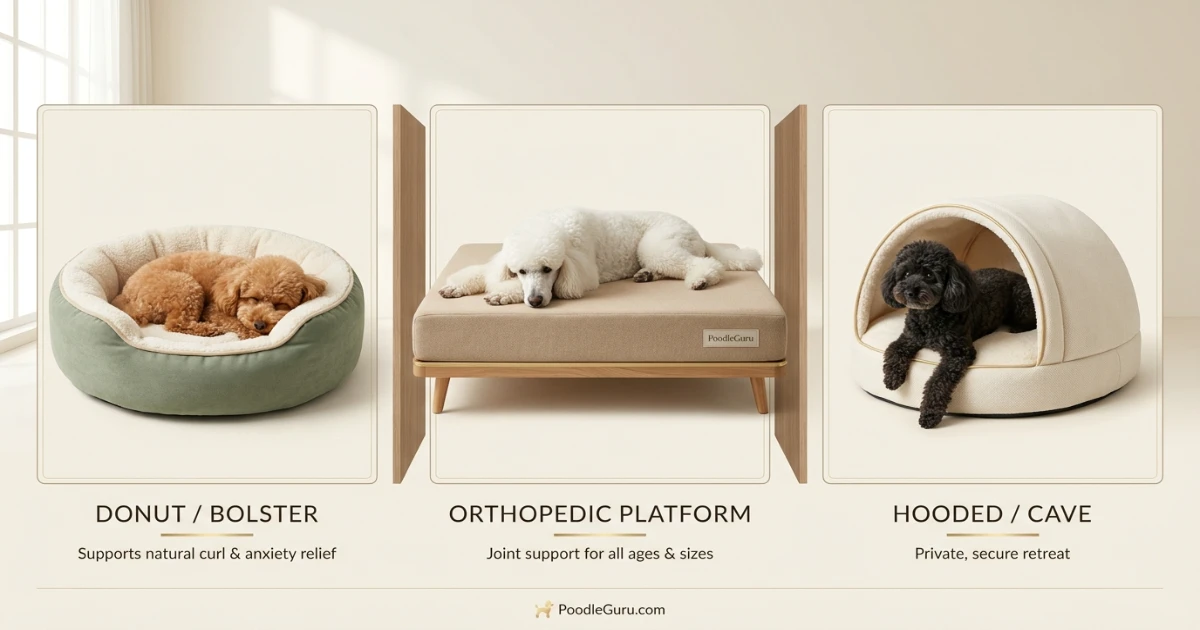
Most dog beds fall into five broad categories. Each behaves differently depending on poodle size and sleeping style.
| Bed Type | Best For | Poodle-Specific Pros | Poodle-Specific Cons |
|---|---|---|---|
| Bolster / Donut | Toy, Miniature | Supports curling, creates security, holds warmth | Can be too warm in summer |
| Flat Orthopedic | Standard, senior Minis | Even pressure relief, easy entry | Less cozy for dogs that like to lean |
| Memory Foam Platform | Standard, active adults | Firm support, holds shape, durable | Heavy; covers must be high quality |
| Cave / Hooded | Toy, anxious Minis | Privacy, warmth, reduces light exposure | Can trap heat; not ideal for dogs that run hot |
| Cooling Gel Bed | All sizes in warm climates | Can offer a cooler-feeling rest surface | Some inserts are not machine washable; care instructions vary |
At PoodleGuru, we evaluate beds by asking one question first: what does the poodle actually do when resting? That answer matters more than brand or price.
7 Top Bed Styles for Poodles
These are not lab-tested rankings or veterinary prescriptions. They are practical bed-style options organized around Poodle size, sleep behavior, coat care, access needs, and owner usability. Always check the manufacturer’s measurements and care instructions before buying.
| Bed Style | Ideal Poodle Size | Key Advantage | Typical 2026 Price Range |
|---|---|---|---|
| Plush Donut Bed | Toy, small Mini | Security and curling support | $25–$55 |
| Low-Profile Orthopedic Bed | Senior Toy, Mini | Easy access, pressure relief | $40–$85 |
| High-Density Foam Platform | Standard | Deep support for long legs | $60–$130 |
| Bolster Couch Bed | Mini, Standard | Head and neck support while leaning | $45–$95 |
| Cave / Hooded Bed | Toy, anxious Mini | Privacy and warmth | $30–$70 |
| Cooling Gel Memory Foam | All sizes, warm climates | Temperature regulation | $50–$110 |
| Waterproof Utility Bed | Puppies, seniors | Accident resistance, easy cleaning | $35–$75 |
How to Choose the Right Bed Size for a Poodle
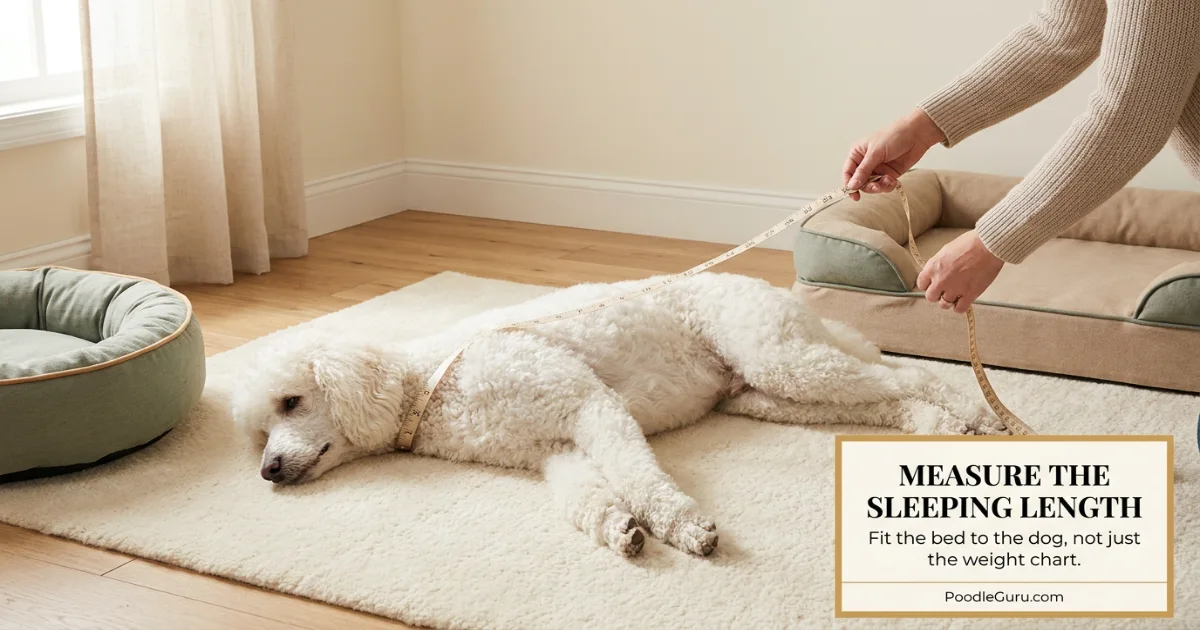
Size charts help, but poodles don’t sleep like breed standard diagrams. Measure your dog in their natural sleeping position.
Measure the Stretch Length
Measure from nose to the base of the tail while your poodle lies on their side with legs extended. Add some extra room — often around 4–6 inches for many dogs — then compare that measurement with the manufacturer’s usable sleep-surface dimensions.
Observe the Usual Curl
If your poodle curls tightly, a round or donut bed can be smaller than their stretch length. If they sprawl, size up generously.
Check the Entry Height
For Toy Poodles and seniors, the bed edge should be low enough to step into without jumping. High bolsters can become obstacles.
Match the Cover to the Coat
Smooth, tightly woven covers are usually easier to brush and vacuum clean. Sherpa-style or deep-pile surfaces can feel cozy but may trap more loose hair and debris.
Reassess with Age
A bed that worked at age two may not work at age ten. Senior poodles often need lower entry and firmer, more even support.
Bed-Buying Mistakes Poodle Owners Make
Most bad bed purchases come from choosing for human aesthetics instead of poodle behavior. These are the patterns owners commonly describe.
| Mistake | Why It Happens | How to Fix It |
|---|---|---|
| Buying too small | Using weight charts instead of measuring stretch length | Measure nose-to-tail in full extension |
| Choosing ultra-soft only | Assuming plush equals comfortable | Match firmness to age and joint needs |
| Ignoring washability | Prioritizing appearance over maintenance | Choose removable, machine-washable covers |
| Placing the bed poorly | Putting it where it looks nice, not where the dog rests | Place beds in quiet, low-draft zones |
| Keeping a worn-out bed | Emotional attachment or budget hesitation | Replace when foam compresses or cover tears |
The PoodleGuru Bed Selection Framework
At PoodleGuru, we use a five-point method when evaluating any dog bed for poodles.
The PoodleGuru Bed Selection Framework is an owner-focused evaluation system that ranks support quality, coat compatibility, washability, thermal comfort, and size appropriateness. For poodle owners, this means fewer impulse buys and more beds that actually get used.
A bed can look beautiful and still fail on the only point that matters: whether your poodle rests well on it.
1. Support Quality
Foam should recover reasonably well after pressure is removed. Persistent compression or a permanent hollow is a practical sign that the bed is losing resilience.
2. Coat Compatibility
Smooth, tightly woven fabric is generally easier to keep clean and may snag long Poodle furnishings less than loose-pile sherpa or faux fur.
3. Washability
A removable cover makes long-term maintenance much easier. Beds used every day should be cleaned regularly according to the care label and whenever they become visibly dirty or odorous.
4. Thermal Comfort
Temperature preference varies by dog. If your poodle seeks cool floors or moves off plush bedding, consider a more breathable, less insulating surface.
5. Size Appropriateness
The bed must match the dog’s stretch length and usual sleep position, not just their standing height.
Bed Care and Longevity for Poodle Owners
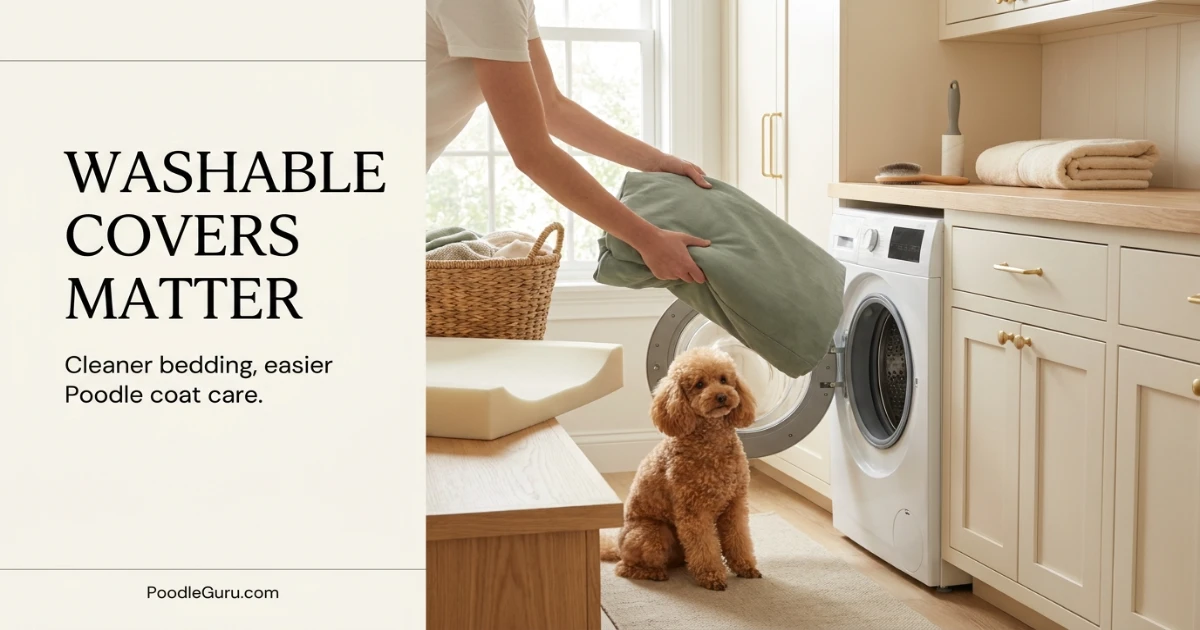
Even the best dog bed for a poodle won’t last if it’s never cleaned. Poodle coats carry oils, and those oils transfer to bedding quickly. Washable covers aren’t a luxury; they’re a necessity.
Follow the manufacturer’s care label and clean the cover based on how heavily the bed is used. In some homes that may be weekly; in others, washing when the cover is visibly soiled, hairy, or odorous is more practical.
Use a pet-safe detergent, rinse thoroughly, and make sure every layer is fully dry before reuse.
If the bed design allows it, rotate the cushion or change its orientation periodically to spread wear. Check seams, zipper pulls, and the underside for damage. Replace or repair exposed hardware that could catch hair, skin, or paws.
For deeper owner context, review the complete poodle grooming guide to understand how coat oils and bedding interact. If you’re also managing joint health, the common poodle health issues guide adds useful background.
2026 Price Guide: What to Expect
Poodle bed prices vary by size, foam density, and cover quality. You don’t need the most expensive option, but very cheap beds usually fail on support and washability within months.
Realistic Price Ranges
- Budget: about $25–$45 — simple donut, pillow, or basic foam beds; often best for travel, secondary rooms, or smaller poodles
- Mid-range: about $45–$90 — better foam, removable covers, stronger stitching, and more size choices
- Premium: about $90–$240+ — larger orthopedic platforms, thicker memory foam, specialty cooling layers, and more durable cover systems
Current U.S. retail listings vary widely by size and construction, so treat these as shopping ranges rather than fixed prices. The real value is how often the bed gets used, how well the support holds up, and whether the cover stays practical to clean.
Is It Worth Paying More for an Orthopedic Bed?
An orthopedic-style bed can be worth considering for senior Poodles, larger dogs, or any dog that appears more comfortable on a low, stable, well-padded surface. The useful features are adequate size, resilient padding, stable footing, and easy entry — not the word “orthopedic” on the label.
A young, healthy Toy Poodle that loves to curl may be perfectly happy in a simpler washable bolster bed.
If your poodle has diagnosed arthritis, persistent stiffness, difficulty rising, or other mobility concerns, ask your veterinarian about the overall comfort plan. Bedding can improve the resting setup, but it is not a treatment by itself.
What Online Listings Often Get Wrong
Listing photos rarely show poodles. They show fluffy generic dogs that look nothing like a Toy Poodle curled tightly or a Standard Poodle sprawled across a platform.
Size charts often use weight instead of measured length. Two Toy Poodles of the same weight can have very different body lengths. Some brands also overstate “orthopedic” support. A thin egg-crate foam layer is not the same as high-density memory foam.
Another common issue: machine-washable claims that refer only to the cover, not the base. Read carefully. The cover matters most because that’s what touches the coat.
For breed-size context, the AKC’s Poodle resources describe the Toy, Miniature, and Standard varieties; the official breed standard classifies the varieties by height, while AKC breed resources also publish typical weight ranges. For mobility and joint-health context, review VCA’s guidance for helping dogs with osteoarthritis.
Frequently Asked Questions
Do poodles prefer soft or firm beds?
There is no single breed-wide preference. Sleep position, age, temperature preference, and mobility matter more than variety alone. Curlers may enjoy softer bolsters, while sprawlers and many older dogs may prefer a flatter, more stable padded surface.
What size bed should a Toy Poodle have?
Measure your Toy Poodle in a natural stretched-out position, then add a little extra room and compare that number with the manufacturer’s usable sleep-surface dimensions. A bed that only fits a tight curl may feel cramped when the dog wants to stretch.
Are orthopedic dog beds worth it for poodles?
They can be worthwhile for Standard Poodles, seniors, or dogs with mobility concerns, but the label alone does not guarantee quality. Look for adequate size, resilient padding, stable footing, easy entry, and a washable cover.
How often should I wash a poodle’s bed?
Clean the cover regularly according to the care label and how quickly it becomes hairy, dirty, or odorous. Make sure the cover and foam are fully dry before reuse, and replace the bed when padding stays compressed or the cover can no longer be used safely.
Why does my poodle avoid their new bed?
The bed may be too warm, too small, too unstable, or placed in a busy area. Observe where your poodle chooses to rest instead. That location and surface are your best guide.
Can a bed cause skin or coat problems in poodles?
Rough surfaces, trapped debris, moisture, or damaged seams can contribute to tangles or rubbing in some dogs. Smooth, washable covers are easier to maintain. Persistent redness, hair loss, sores, or itching should be evaluated by a veterinarian.
Do senior poodles need a special bed?
Senior poodles often appreciate a low-entry bed with stable, comfortable padding, especially if stepping over tall bolsters has become difficult. If mobility changes are new or worsening, discuss them with a veterinarian rather than relying on bedding changes alone.
Key Takeaways
- The best dog bed for a poodle matches the dog’s stretch length, sleeping style, age, and coat care needs.
- Curling sleepers may enjoy donut or bolster beds, while Standard Poodles and sprawlers usually need a wider sleep surface.
- Removable, machine-washable covers are essential for poodle coat hygiene.
- Resilient foam that recovers after pressure generally keeps its shape better than thin, easily compressed pillow-style fill.
- Senior poodles often appreciate lower entry, stable footing, and comfortable padding.
- Worn-out beds should be replaced when foam stays compressed or covers tear.
Next step: Measure your poodle’s full stretch length, observe their favorite sleep position, and choose the simplest bed that meets the PoodleGuru five-point framework.