Doxiepoo (Dachshund Poodle Mix): Complete Owner’s Guide
A Doxiepoo blends the clever Poodle with the spirited, long-bodied Dachshund. The result can be affectionate, funny, lower-shedding than a Dachshund, and wonderfully smart — but this mix also needs owners who understand back safety, coat variability, barking, and stubborn hound-style independence.
Quick Answer
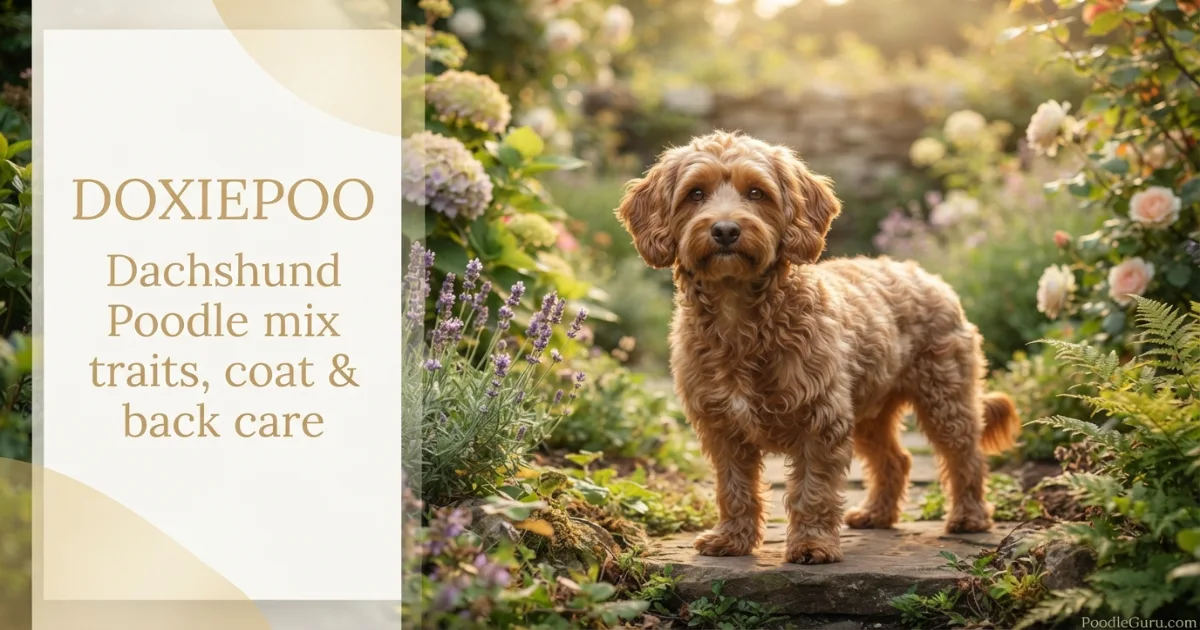
A Doxiepoo is a cross between a Dachshund and a Toy or Miniature Poodle. Most are small-to-medium companion dogs, but size, coat, shedding, and temperament vary widely. A Doxiepoo may inherit the Poodle’s intelligence and curly coat, the Dachshund’s bold scent-hound independence, or a mix of both. The biggest ownership reality is back safety: any Doxiepoo with a long body should be managed carefully to reduce jump and stair strain. This mix suits patient owners who can provide positive training, moderate exercise, regular grooming, and a spine-conscious home.
What Is a Doxiepoo?
A Doxiepoo is a first-generation designer dog created by crossing a purebred Dachshund with a Toy or Miniature Poodle. For poodle owners, this mix promises a smaller companion with the Poodle’s signature intelligence and a potentially lower-shedding coat, blended with the Dachshund’s bold, tenacious personality.
The most important thing to understand is that a Doxiepoo is not a miniature Poodle with a long body. It’s a true hybrid — you may get the Poodle’s eagerness to please, the Dachshund’s independent problem-solving, or a puzzle-box combination of both. Temperament, size, and coat type vary widely even within a single litter.
The cross gained traction in the early 2000s as part of the doodle boom. Today, Doxiepoos are sought by apartment dwellers, allergy-conscious households, and anyone who adores the clownish charm of a short-legged dog with a curly coat. But popularity has also brought impulsive purchases. At PoodleGuru, we believe every potential owner should meet this mix with eyes wide open.
Quick Facts
Size
Typically 8–13 inches tall, 15–30 pounds. Miniature Poodle crosses tend to be larger, Toy crosses smaller.
Coat
Can be wavy, curly, or wiry. Can be wavy, curly, wiry, or smoother. Shedding ranges from low to moderate, and grooming needs depend on coat type.
Lifespan
11–14 years on average, though well-bred individuals can reach 16 with excellent care.
Energy Level
Moderate. They need 30–45 minutes of daily exercise but love a good couch cuddle afterward.
Trainability
Highly intelligent but can be stubborn. Early, positive socialization is non-negotiable.
Good with Kids
Yes, with supervision. Young children must learn to support the dog’s long back properly.
Why the Doxiepoo Attracts Poodle Lovers
Poodle enthusiasts often look at the Doxiepoo and see a chance to enjoy the breed’s hallmark smarts in a more compact, less demanding package. And that’s partly true — a Doxiepoo from a Toy Poodle parent may weigh under 20 pounds, fitting neatly into smaller living spaces. But the real draw is the blend of two iconic personalities.
The Dachshund contributes a fearless, independent streak — these are dogs originally bred to hunt badgers. That tenacity means a Doxiepoo won’t blindly follow commands; you’ll need to earn cooperation. For poodle owners used to biddable, people-pleasing dogs, this can be a surprise. Yet many find the challenge deeply rewarding.
The combination also produces a companion that’s alert without being neurotic. They may bark to announce visitors, motion outside, or unfamiliar noises. Some settle quickly with training; others inherit the Dachshund’s persistent alert voice and need consistent management. The Poodle side tempers the intensity, creating a dog that’s curious, playful, and devoted — just not always obedient on the first ask.
Size and Appearance: What to Expect
Because the Doxiepoo isn’t a standardized breed, appearance can shift dramatically. You’ll see everything from a nearly Poodle-like silhouette with a slightly stretched back, to a Dachshund-shaped dog wearing a curly coat. The legs may be short, moderate, or surprisingly long. The ears usually flop, and the tail often sports a plume.
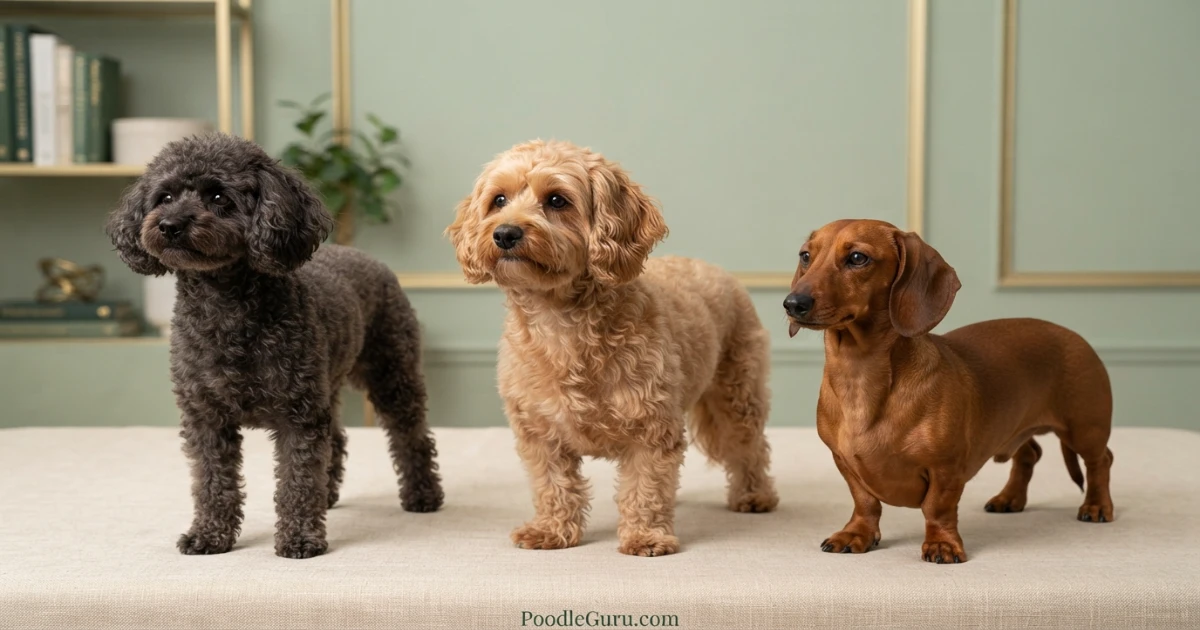
Coat colors span the full Poodle and Dachshund palettes: cream, apricot, red, black, chocolate, blue, and parti combinations. Many have charming markings like a white chest or eyebrows. The texture can range from soft, loose waves to tight corkscrew curls. Wire-haired Dachshund crosses occasionally produce a scruffy, terrier-like coat that sheds more but mats less.
What you should know: a Doxiepoo’s coat as a puppy is not a reliable predictor of the adult coat. Breeders often warn that “puppy curls” can loosen or tighten dramatically after the first year. If you need a reliably low-shedding dog, look for parents with proven, consistent coats — and even then, there are no guarantees.
Temperament and Personality
Doxiepoos are social, affectionate dogs that bond tightly with their family. Most are Velcro companions, following you from room to room. They’re playful but not hyper, equally happy with a puzzle toy session or a nap pressed against your leg.
However, the mix can also deliver a dog that’s surprisingly stubborn. Dachshunds are independent thinkers; when a Doxiepoo decides it doesn’t want to come inside from a sunny spot, you’ll see that trait in full force. Patience and consistency win here — harsh corrections damage trust and often backfire.
Expert Insight: The Stubbornness Reality
Doxiepoos respond best to training that feels like a game. Professional trainers often recommend keeping sessions short (5–10 minutes), using high-value treats, and never repeating a cue more than twice. If you find yourself saying “sit, sit, sit,” your Doxiepoo has trained you to be background noise.
Socialization is critical. Without early exposure to different people, dogs, and environments, the Dachshund’s natural wariness can slide into excessive barking or anxiety. A well-socialized Doxiepoo is friendly without being pushy, alert without being reactive. They typically do well with other dogs but may chase small pets — the Dachshund prey drive is real, and it doesn’t vanish in the mix.
Health and Lifespan: The Crossbreed Reality
Mixed-breed dogs can be wonderfully healthy, but “hybrid vigor” is not a health guarantee. A Doxiepoo can inherit issues from either parent line, especially if breeders skip screening or choose extreme body shapes for cuteness. The most important health topic for this mix is the spine.
Dachshunds are a classic long-backed, short-legged breed, and veterinary sources consistently identify Dachshunds and other chondrodystrophic breeds as high-risk for intervertebral disc disease (IVDD). A Doxiepoo that inherits the Dachshund’s elongated body may share that vulnerability. Owners should use ramps, discourage repeated jumping, keep the dog lean, and support both the chest and rear when lifting. These steps reduce strain, but they do not eliminate genetic risk.
Health Red Flags to Watch
- Back pain or stiffness: reluctance to move, hunched posture, trembling, yelping when touched, or refusal to use stairs.
- Emergency IVDD signs: dragging the rear legs, inability to walk, sudden weakness, or loss of bladder/bowel control. Seek urgent veterinary care.
- Patellar luxation: a “skipping” gait or brief rear-leg hopping, more common in small dogs including Toy and Miniature Poodle lines.
- Progressive retinal atrophy (PRA): a hereditary eye condition that responsible breeders screen for with DNA testing where relevant.
- Dental disease: crowded small mouths can develop tartar, gum inflammation, and tooth loss without regular dental care.
- Obesity: extra weight places additional stress on the back, knees, and hips, so measured meals matter.
Lifespan is often around 11–14 years, with some well-managed Doxiepoos living longer. The strongest owner-controlled factors are body weight, safe movement habits, dental care, regular vet visits, and choosing a breeder or rescue that is honest about parent health and structure.
Grooming and Coat Care
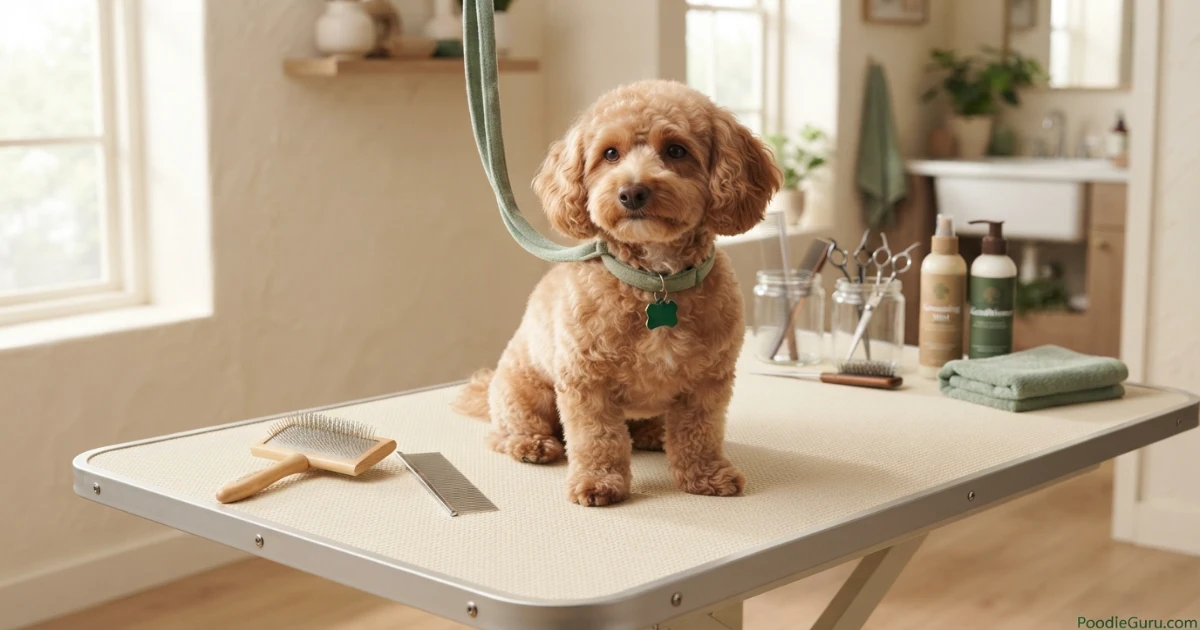
The Doxiepoo’s grooming needs land somewhere between a Poodle and a Dachshund, but closer to the Poodle side if the coat is curly. Expect to brush at least 3–4 times a week with a slicker brush and metal comb to prevent mats from forming close to the skin. PoodleGuru’s Complete Poodle Grooming Guide covers many techniques that apply directly to wavy-coated Doxiepoos.
Professional grooming every 6–8 weeks is the norm. A typical trim includes a sanitary clip, face cleanup, and a body cut that keeps the coat manageable — many owners choose a “puppy cut” or a sporty ½-inch length all over. Don’t let the coat grow unchecked; severe matting can lead to skin infections and pain.
Wire-haired Doxiepoos may need coat-specific care such as hand-stripping or careful trimming, so ask a knowledgeable groomer before choosing a routine. Ears require weekly checks; the floppy shape can trap moisture and debris. Clean only with a veterinarian-approved ear cleaner when needed or as your vet recommends, because over-cleaning can irritate healthy ears. And nail trims every 3–4 weeks are essential — long nails alter gait, adding stress to an already vulnerable spine.
Exercise and Training Needs
A bored Doxiepoo is a destructive Doxiepoo. Despite their small size, these dogs need mental stimulation as much as physical exercise. Two 20-minute walks plus a puzzle feeder or a short training game usually satisfies them. They enjoy scent games — tap into that Dachshund nose — and many love a good fetch session, though repeated high-impact jumping is off-limits.
Training should start early and stay positive. Crate training is recommended for housetraining and safe alone time. Doxiepoos can be vocal, so teaching a “quiet” cue from puppyhood prevents the barking from becoming a habit. Socialization classes pay enormous dividends; the goal is a dog that can calmly encounter delivery trucks, toddlers, and other dogs without overreacting.
Doxiepoo vs. Purebred Poodle: Key Differences
| Trait | Doxiepoo | Miniature Poodle |
|---|---|---|
| Size | 15–30 lbs, variable body shape | 10–15 lbs, square proportions |
| Coat shedding | Low to moderate; some wire or smoother coats shed more | Very low, single coat |
| Trainability | Smart but can be stubborn | Exceptionally biddable, eager to please |
| Exercise needs | Moderate, 30–45 min/day | Moderate to high, 45–60 min/day |
| Barking tendency | Higher, Dachshund alertness | Moderate, can be vocal if bored |
| Back health risk | Elevated (IVDD) | Low |
| Apartment suitability | Good, with training | Excellent |
The PoodleGuru Doxiepoo Buyer’s Checklist
At PoodleGuru, we evaluate every doodle cross through a framework built around health, temperament, and breeder transparency. Use these five steps to separate a quality Doxiepoo puppy from a risky impulse buy.
Meet Both Parent Dogs — in Person
Seeing the mother (and ideally the father) tells you more than any photo. Look for friendly, healthy dogs with clear eyes, clean coats, and no signs of back pain. A breeder who won’t let you meet the parents is a red flag.
Verify Health Testing and Structure History
Ask for relevant parent health records: patella and eye screening where appropriate, PRA testing for the Poodle parent, and veterinary history for both parents. For the Dachshund side, discuss IVDD history honestly; no simple certificate can guarantee a puppy will never develop disc disease. DNA tests are useful, but structure, movement, and family history matter too.
Observe the Puppy’s Structure and Movement
Look for balanced proportions, free movement, and no obvious pain, stiffness, or hopping gait. A very long body on very short legs may require stricter spine management for life. A pre-purchase veterinary check is wise before final payment.
Assess Temperament in a Quiet Setting
Spend at least 30 minutes with the litter. Look for a puppy that’s curious, not fearful, and recovers quickly from a gentle startle. Avoid the extremely shy puppy and the one that bullies littermates — the middle-of-the-road temperament usually fits best.
Review the Breeder’s Contract and Support
A responsible breeder offers a health guarantee, takes back the dog at any age if needed, and stays available for advice. They’ll ask you questions too — a breeder who doesn’t screen buyers isn’t protecting their puppies.
Doxiepoo Price Guide (2026)
Expect to pay $1,200–$3,500 for a well-bred Doxiepoo puppy from health-tested parents. What inflates the price? Rare coat colors like blue or merle, champion parent lines, and breeders who include early neurological stimulation programs. But a higher price doesn’t guarantee quality — always evaluate breeding practices, not just the number.
What Affects the Price
- Parent health clearances: OFA/PennHIP testing adds cost, and it’s worth it.
- Coat predictability: Breeders who consistently produce variable-shedding coats often charge more.
- Location: Urban areas on the coasts typically see prices 20–40% higher.
- Inclusions: First vaccines, microchipping, and a puppy starter kit justify a slightly higher upfront cost.
Adoption is a wonderful alternative. Breed-specific rescues and all-doodle rescues occasionally have Doxiepoos for $200–$500. The dog may be older, but you’ll skip the puppy chaos and often gain a housetrained companion.
Common Buyer Mistakes
Choosing by Color Alone
A gorgeous merle puppy might come from parents who were bred purely for color, ignoring health. Color should be your last filter, not your first.
Underestimating Back Precautions
Many owners treat the Doxiepoo like a sturdy terrier, letting it leap off beds daily. One bad jump can rupture a disc. Ramps and house rules are life-saving.
Skipping Socialization
A Doxiepoo that missed early socialization often becomes a fearful, barky dog that’s hard to walk. The first 16 weeks are precious — use them wisely.
Is a Doxiepoo Right for You?
This mix suits owners who appreciate a dog with a little edge — a companion that’s smart enough to keep you on your toes, affectionate enough to follow you everywhere, and bold enough to announce the mail carrier with conviction. If you want a quiet, low-key lapdog that never challenges you, the Doxiepoo might frustrate you. But if you’re ready to invest in training, manage back safety, and enjoy a dog with a big personality in a small package, you’ll likely fall hard.
Apartment dwellers can thrive with a Doxiepoo provided noise isn’t an issue. Families with gentle children do well; rough handling is dangerous for the spine. Seniors often appreciate the Doxiepoo’s manageable size and moderate exercise needs. The common thread across all successful homes? Structure, patience, and a commitment to positive training.
Frequently Asked Questions
Are Doxiepoos hypoallergenic?
No dog is truly hypoallergenic. Doxiepoos often shed less, but allergies depend on dander and saliva proteins, not just fur. Spend time with the specific dog before committing.
Do Doxiepoos bark a lot?
They can. The Dachshund tendency to alert-bark means early training for a “quiet” command is essential. A well-exercised, socially confident Doxiepoo barks less.
How big do Doxiepoos get?
Most reach 8–13 inches tall and 15–30 pounds. Toy Poodle crosses stay smaller, Miniature crosses produce dogs at the higher end.
Are Doxiepoos good with cats?
With early socialization, many coexist peacefully. However, the Dachshund prey drive may trigger chasing; supervised introductions are a must.
What is the lifespan of a Doxiepoo?
Typical lifespan is 11–14 years. Weight management, back safety, and regular vet care significantly influence longevity.
Do Doxiepoos need a lot of grooming?
Yes. Curly and wavy coats require brushing 3–4 times a week plus professional grooming every 6–8 weeks. Wire coats need hand-stripping.
Are Doxiepoos easy to train?
They’re intelligent but can be stubborn. Short, positive sessions with high-value rewards work best. Housetraining can take patience.
What health problems do Doxiepoos have?
IVDD, patellar luxation, PRA, and dental issues top the list. A health-tested parent pair dramatically reduces risks.
Key Takeaways
A Doxiepoo can be a fantastic companion, but only if you go in with eyes wide open. Here’s what matters most:
- A Doxiepoo is a Dachshund-Poodle cross with a moderate energy level, a variable-shedding coat, and a personality that blends intelligence with stubbornness.
- Size ranges from 15 to 30 pounds, with significant variation even within a litter. Expect a dog that may stand 8–13 inches tall.
- The back is the #1 health vulnerability. Prevent jumping, use ramps, and keep your dog lean. IVDD can strike suddenly.
- Professional grooming every 6–8 weeks and home brushing 3–4 times a week are necessary to keep the coat healthy and mat-free.
- The PoodleGuru Buyer’s Checklist prioritizes meeting parents, verifying health clearances, and evaluating puppy structure before money changes hands.
- Doxiepoos thrive with positive training, early socialization, and owners who appreciate a dog that’s equal parts clever and comedic.