This article contains affiliate links. PoodleGuru may earn a small commission if you purchase through our links, at no extra cost to you.
Best Ear Cleaner for Poodles: Top Picks & Safe Cleaning Guide
The best ear cleaner for poodles is gentle, alcohol-free, veterinarian-approved, and easy to use as part of a steady weekly routine. This guide helps you choose the right formula, understand when wipes make sense, and clean your poodle’s ears without causing irritation or pushing debris deeper.
Quick Answer: What’s the Best Ear Cleaner for Poodles?
The best ear cleaner for poodles is a veterinarian-approved, alcohol-free, pH-balanced solution made for routine canine ear maintenance. For poodle owners, this means choosing a cleaner that lifts wax, helps dry the canal, and stays gentle on sensitive skin. The most important thing to understand is that the right product helps maintain healthy ears, but red, painful, swollen, or foul-smelling ears need veterinary advice before you clean them at home.
Why Poodles Need Special Ear Care
Poodle ear cleaning isn’t a minor add-on. It’s part of normal poodle care, much like brushing, coat maintenance, and regular nail trims.
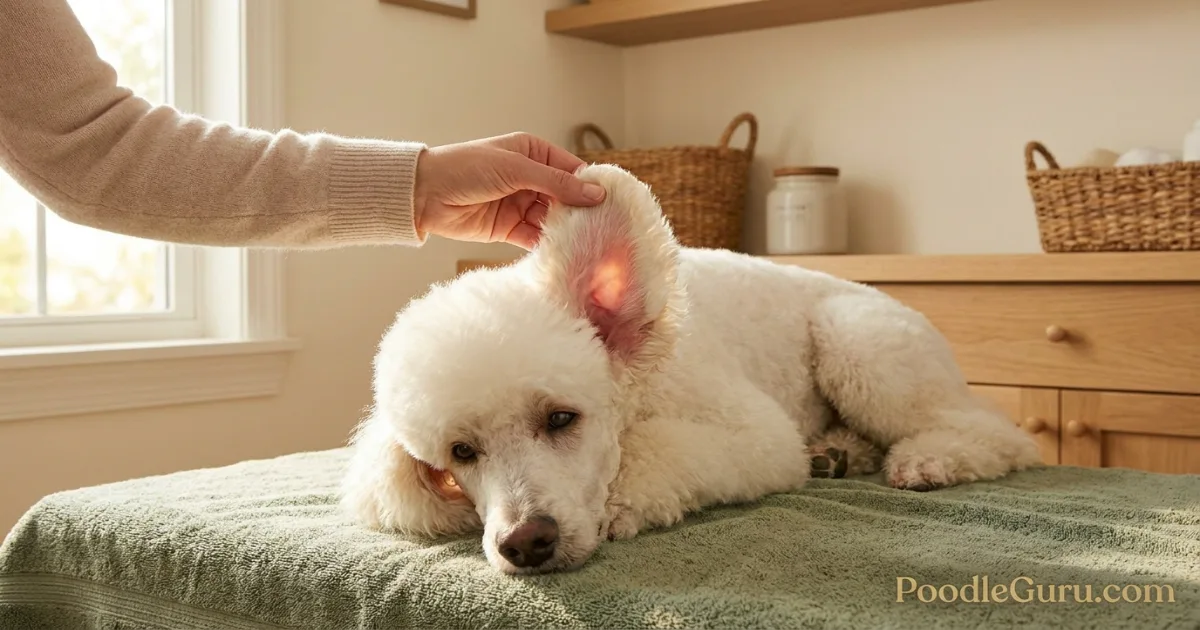
Poodles have floppy ears that limit airflow around the canal. Many also grow hair inside the ear canal, which can trap wax, moisture, and debris. That combination creates a warmer, darker, less ventilated space than many other breeds have.
Veterinary guidance commonly notes that dogs with pendulous ears and hairy canals can be more prone to otitis externa. In real-life poodle ownership, that means prevention matters. A short weekly check often catches early problems before they turn into a painful infection.
Floppy Ears
Poodle ear flaps reduce airflow. That can leave more warmth and moisture around the canal.
Hair in the Canal
Ear hair can trap wax and debris. That’s one reason routine checks matter so much in this breed.
Moisture Risk
Baths, rain, and swimming can leave moisture behind. Wet ears are more likely to become irritated.
What to Look For in a Poodle Ear Cleaner
The best ear cleaner for poodles isn’t just any dog ear cleaner on a shelf. Poodle owners do better when they choose a formula designed for routine maintenance, not a harsh household shortcut.
- Veterinarian-approved formula: Stick to products designed for dogs. Avoid homemade mixtures unless your vet specifically tells you otherwise.
- Alcohol-free: Alcohol can sting and dry delicate tissue, especially if the skin is already irritated.
- pH-balanced: A balanced cleaner supports the natural ear environment rather than disrupting it.
- Drying support: Moisture often drives trouble in floppy-eared dogs. A good cleaner helps lift moisture after cleaning.
- Wax-loosening action: Poodles often collect visible wax, so a cleaner should help loosen buildup instead of just moving it around.
Important
If your poodle’s ears are red, swollen, painful, strongly odorous, or producing discharge, don’t do a full home cleaning first. Call your veterinarian and ask for guidance, because infected ears can worsen with the wrong handling.
Best Ear Cleaners for Poodles: Top Picks for 2026
These picks are based on formulation style, routine use suitability, and real-world practicality for poodle owners. They’re not a substitute for diagnosis, and they don’t replace veterinary treatment when an active infection is present.
Virbac Epi-Otic Advanced Ear Cleanser — Best Overall
Virbac Epi-Otic Advanced is a strong all-around choice for routine cleaning. It’s widely used, gentle enough for regular care, and built to help lift debris while supporting a cleaner ear environment.
Price range: about $14–$24 for 4–8 oz
Veterinary Formula Clinical Care Ear Therapy — Best for Sensitive Ears
This option is often chosen by owners who want a softer-feeling routine cleaner. It’s alcohol-free and positioned as a soothing maintenance product for dogs that don’t do well with harsher formulas.
Price range: about $9–$12 for 4 oz
Zymox Ear Cleanser — Best Enzymatic Cleaner
Zymox Ear Cleanser uses an enzymatic approach and is popular with owners dealing with heavier wax or repeated buildup. It’s a useful option when routine cleaning needs a bit more lifting power.
Price range: about $15–$25 for 4 oz
Pet MD Ear Cleaner Wipes — Best Wipes for Quick Touch-Ups
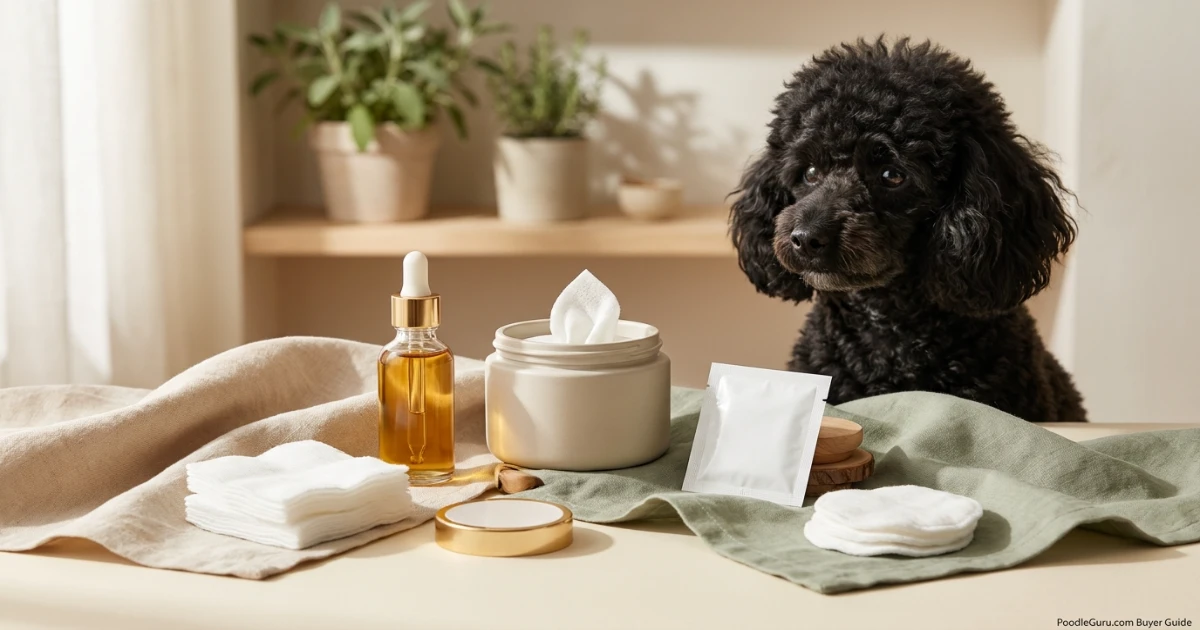
Wipes work well when you want a fast cleanup around the visible ear area or after outdoor activity. They’re convenient, portable, and less messy than a full rinse.
Price range: about $10–$15 for 100 count
RunyePet Ear Cleaning Finger Wipes — Best Finger Wipes
Finger wipes can feel more controlled for owners who want to clean only what they can safely see. They’re useful for surface wax and weekly maintenance between fuller cleaning sessions.
Price range: about $12–$18 for 50 count
Ear Cleaner Comparison Table
| Product | Type | Best For | Key Feature | Price (2026) |
|---|---|---|---|---|
| Virbac Epi-Otic Advanced | Liquid rinse | Overall routine cleaning | pH-balanced, drying support | $14–$24 |
| Veterinary Formula Clinical Care | Liquid rinse | Sensitive ears | Alcohol-free, soothing | $9–$12 |
| Zymox Ear Cleanser | Enzymatic liquid | Stubborn wax, heavier buildup | Enzymatic support | $15–$25 |
| Pet MD Ear Wipes | Pre-moistened wipes | Quick touch-ups | Convenient surface cleaning | $10–$15 |
| RunyePet Finger Wipes | Finger wipes | Precise weekly cleaning | Controlled, close-up wiping | $12–$18 |
How to Clean Your Poodle’s Ears: Step by Step
Using the best ear cleaner for poodles is only half the job. Safe technique matters just as much, especially in a breed with deeper wax buildup and more ear hair than many owners expect.
Inspect First
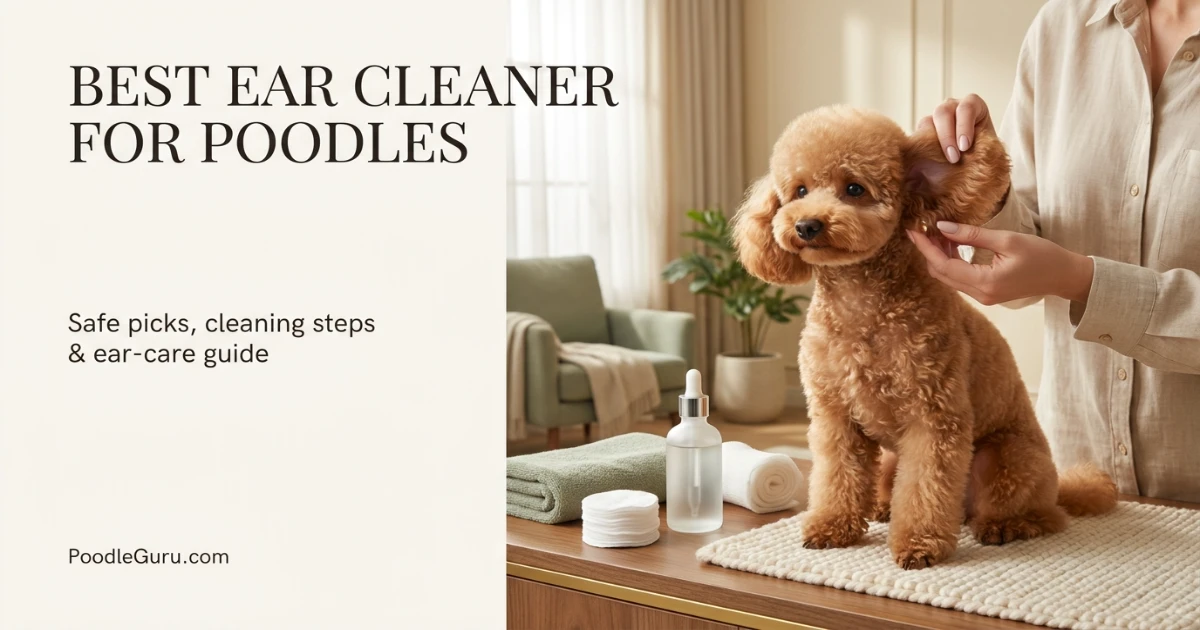
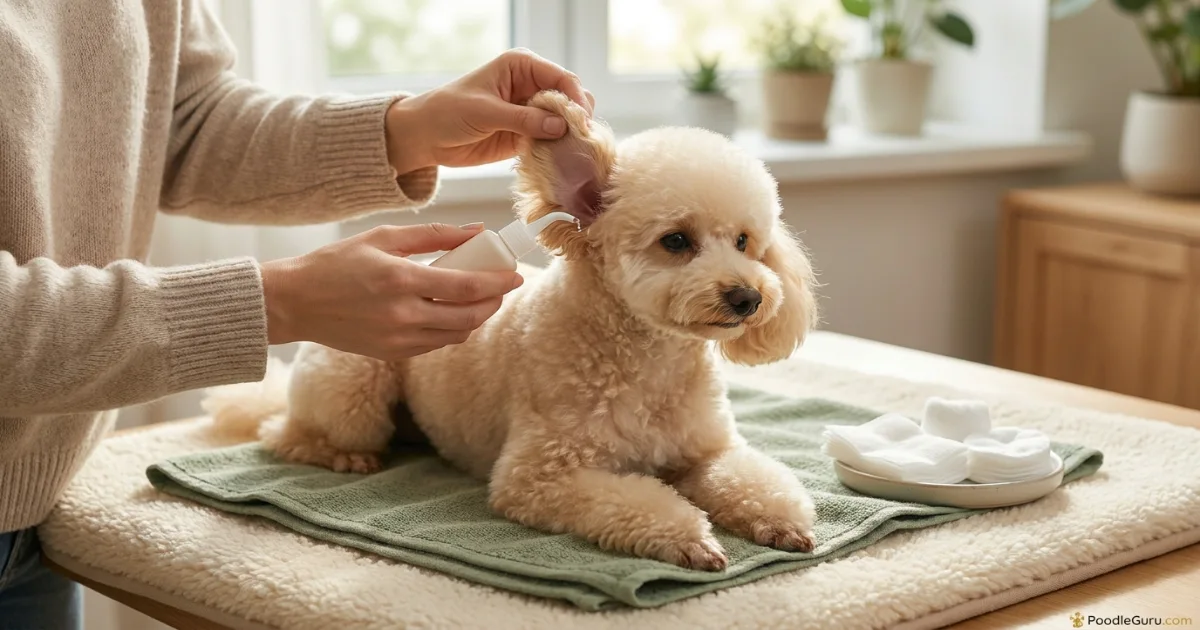
Lift the ear flap and look inside. Healthy ears are usually pale pink with light wax. If you see redness, swelling, dark discharge, or a bad odor, stop and call your vet.
Fill the Ear Canal
Hold the ear flap up and gently squeeze the recommended amount of cleaner into the visible canal opening. Don’t insert the nozzle deep into the ear.
Massage the Base
Massage the base of the ear for 20–30 seconds. A soft squishing sound usually means the cleaner is moving through the wax.
Let Your Poodle Shake
Step back and let your poodle shake their head. That natural motion helps bring loosened debris upward.
Wipe Away Debris
Use soft gauze or a cotton ball to wipe only the outer ear and the area you can see. Never put a cotton swab deep into the canal.
Dry Gently
Finish by drying the visible area with clean gauze or a dry cotton pad. That extra step matters after baths, rain, or swimming.
Owner Tip
For many poodles, weekly cleaning is enough. Dogs with a history of buildup may need more frequent checks, but don’t over-clean just because you’re worried. Too much cleaning can irritate the canal.
The PoodleGuru Ear Care Framework
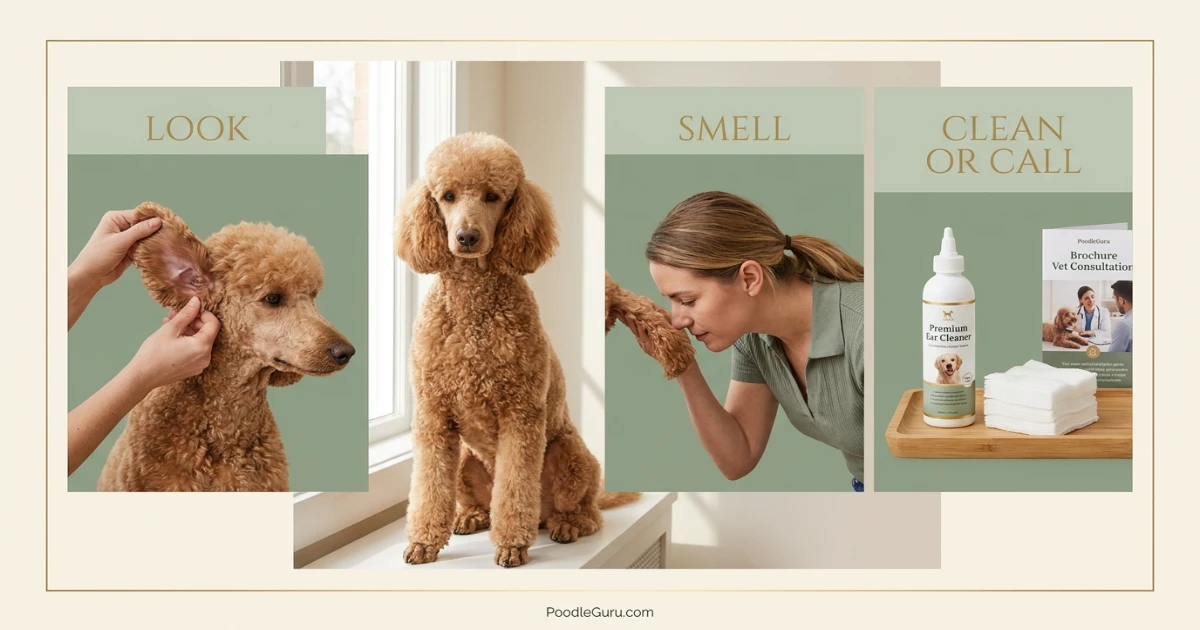
At PoodleGuru, we evaluate routine ear care through one simple system: the PoodleGuru 3-Point Ear Health Check. It’s designed to help owners decide when to clean and when to stop and ask for veterinary help.
Point 1: Look
Check both ears weekly. Healthy ears are typically pale pink and not visibly swollen. Brown crust, redness, or heavy residue deserves more caution.
Point 2: Smell
Healthy ears are usually close to odorless. A sour, musty, or yeasty smell is often one of the first warning signs owners notice.
Point 3: Clean or Call
If the ear looks calm and smells normal, do a routine clean. If anything seems off, call your veterinarian before reaching for the bottle.
This is the PoodleGuru approach in practice: consistent prevention, light-touch maintenance, and early escalation when symptoms cross the line from routine care into a medical issue.
Common Mistakes Poodle Owners Make with Ear Cleaners
Even careful owners can make a routine ear job harder than it needs to be. Most mistakes happen when people use the wrong tool, clean too aggressively, or treat a sick ear like a dirty ear.
| Mistake | Why It’s Harmful | What to Do Instead |
|---|---|---|
| Using Q-tips inside the ear | Pushes debris deeper and may injure the ear | Use gauze or cotton on the visible outer area only |
| Using water or hydrogen peroxide | Can irritate tissue and leave extra moisture behind | Stick with a veterinarian-approved ear cleaner |
| Cleaning a clearly infected ear | Can worsen pain and delay proper treatment | Call your vet if the ear is red, smelly, or discharging |
| Cleaning too often | Can dry or irritate the canal | Use a regular but sensible schedule, often weekly |
| Skipping the drying step | Moisture encourages yeast and bacteria | Dry the visible ear area after cleaning or bathing |
When to Call the Vet
Routine ear care has limits. If your poodle shows discomfort, unusual odor, or visible discharge, it’s time to pause the home routine and ask for professional guidance.
- Redness or swelling inside the ear flap or visible canal
- Dark brown, yellow, green, or black discharge
- A strong yeasty, sour, or musty smell
- Repeated head shaking or scratching
- Pain when the ear is touched
- Head tilt, imbalance, or sudden sensitivity
For ear infection guidance, VCA Animal Hospitals provides a useful overview of ear infections in dogs. For breed context, the AKC’s Poodle breed information is a solid starting point.
Frequently Asked Questions
How often should I clean my poodle’s ears?
Weekly cleaning works well for many poodles. Dogs with heavier wax or a history of ear trouble may need more frequent checks, but routine frequency should stay gentle enough to avoid irritation.
Can I use baby wipes to clean my poodle’s ears?
No. Baby wipes are not designed for the ear canal. A dog-specific ear wipe or a veterinarian-approved ear cleaner is the safer choice.
What’s the best ear cleaner for poodles with sensitive ears?
Many owners prefer gentler, alcohol-free options such as Veterinary Formula Clinical Care Ear Therapy. If your dog reacts easily, ask your veterinarian before changing products.
Should I pluck the hair inside my poodle’s ears?
This is a debated topic. Some groomers and veterinarians recommend it in selected dogs, while others avoid routine plucking unless buildup is clearly being trapped. Ask your groomer or vet what suits your poodle’s ears.
Can I use a homemade ear cleaner for my poodle?
Usually no. Homemade mixtures such as vinegar, hydrogen peroxide, or alcohol-based solutions can irritate the ear canal and upset its normal balance.
Why does my poodle shake their head after ear cleaning?
That’s a normal reflex. It helps move loosened debris and excess liquid upward and out of the ear.
What does a healthy poodle ear look like?
A healthy ear is usually pale pink, fairly clean, low-odor, and not painful when handled. Mild wax can be normal, but heavy discharge and strong odor are not.
Are expensive ear cleaners worth it?
Not automatically. The best value comes from choosing a safe, veterinarian-approved formula that fits your poodle’s needs and that you’ll actually use consistently.
Key Takeaways
A simple weekly routine, the right cleaner, and early attention to warning signs can prevent many avoidable ear problems in poodles.
- Poodles need steady ear care because floppy ears and ear-canal hair can trap wax, debris, and moisture.
- The best ear cleaner for poodles is typically alcohol-free, pH-balanced, dog-specific, and gentle enough for routine use.
- Liquid cleansers are best for fuller weekly maintenance, while wipes are useful for quick surface touch-ups.
- Never use Q-tips deep in the canal, and never treat a painful, red, or foul-smelling ear like a normal cleaning day.
- The PoodleGuru 3-Point Ear Health Check—Look, Smell, Clean or Call—gives owners a simple way to monitor ear health consistently.
- Next step: choose one veterinarian-approved ear cleaner, build a weekly check routine, and dry the ears well after baths or swims.