Akipoo (Akita Poodle Mix): Complete Owner’s Guide
A rare cross that may combine the Akita’s dignified guardian instincts with the Poodle’s sharp intelligence — the Akipoo is not a dog you should choose on looks alone. This guide explains the likely temperament range, care demands, and breeder warning signs every prospective owner should weigh before committing.
Quick Answer: What Is an Akipoo?
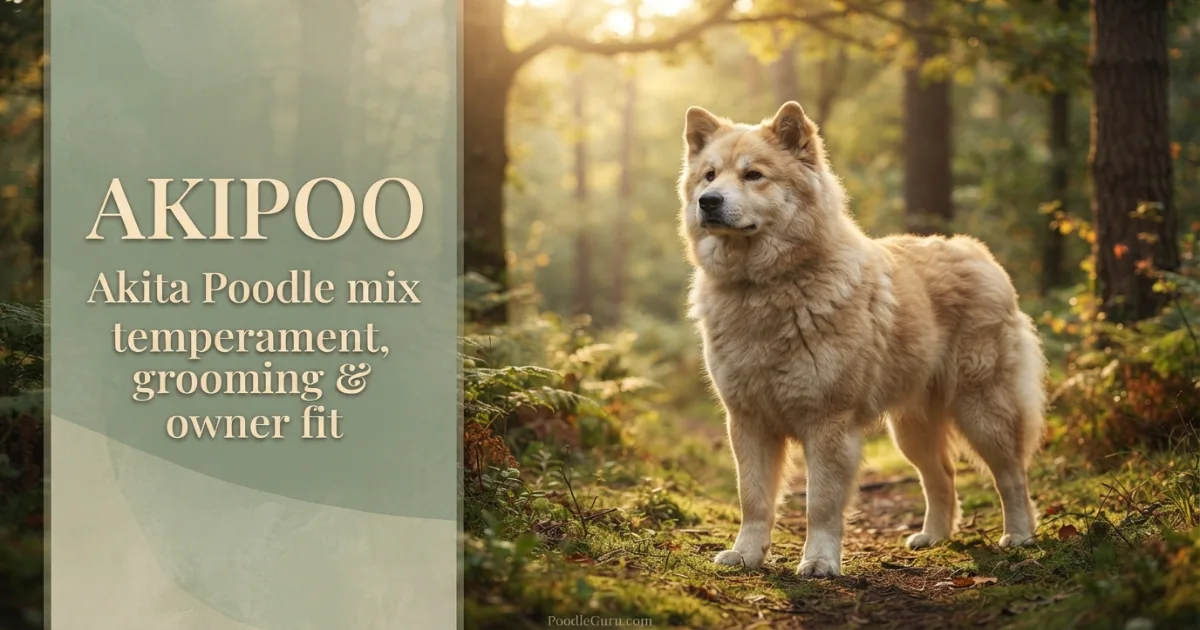
An Akipoo is a designer hybrid produced by crossing an Akita with a Standard Poodle. Because this is not a standardized breed, adult size can vary widely; many Akita–Standard Poodle mixes may fall around 60–100 pounds and roughly 22–28 inches tall, depending on the parents. This mix is usually pursued for a combination of Akita loyalty and guardian tendency with Poodle intelligence and a potentially lower-shedding coat. The most important thing to understand is that an Akipoo may inherit strong guardian instincts and an independent mindset from the Akita side. It is best suited to experienced owners who are committed to early socialization, reward-based training, predictable routines, and careful management around strangers and other dogs.
What Is an Akipoo? The Akita-Poodle Cross Defined
An Akipoo is a first-generation hybrid that blends the Akita, a Japanese breed originally used for guarding royalty and hunting large game, with the Standard Poodle, a versatile water retriever known for its exceptional trainability. For poodle owners, this means you’re adding significant size, an intense protective drive, and a famously independent personality to the Poodle’s already sharp intellect. The most important thing to grasp is that an Akipoo may be independent, thoughtful, and selective about who it trusts. Success depends on consistency, calm handling, and positive reinforcement — not intimidation or force.
The Akipoo is still a rare cross, with limited breeder networks and no breed-standard registry. Its scarcity means that finding a truly responsible breeder is even more critical. The AKC Akita breed standard describes a dog of great dignity, courage, and loyalty, while the AKC Poodle standard highlights intelligence and an eager-to-please nature. Your Akipoo will inhabit the space between these two poles — a dog that’s both deeply attached and fiercely self-possessed.
Size Range
Often estimated around 60–100 lbs and roughly 22–28 inches, depending on parent size. Males may be larger, but every litter can vary.
Coat Type
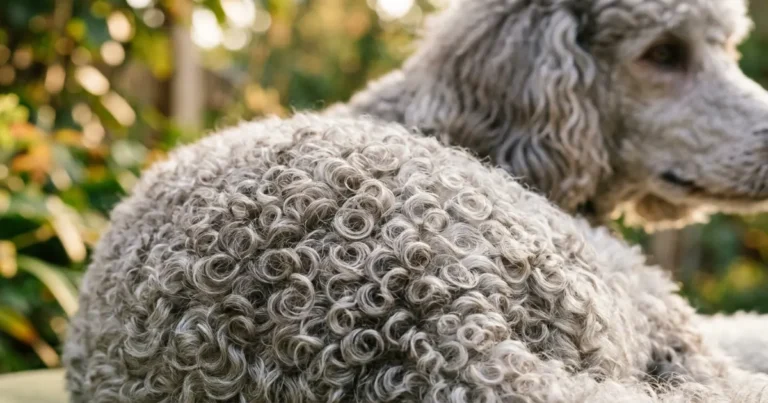
Thick, wavy to curly, often medium-length. Shedding can range from low to moderate, and some dogs may inherit seasonal undercoat shedding from the Akita side.
Lifespan
Often estimated around 10–13 years, though reliable population data for this rare hybrid is limited. Parent health testing and lifelong veterinary care matter greatly.
Best Suited For
Experienced large-breed owners with confident handling skills. Active households with a securely fenced yard and no small pets that could trigger prey drive.
Energy Level
Moderate to high. Needs 60–90 minutes of structured exercise daily, plus mental challenges. Without it, restlessness and guarding behaviors intensify.
Protective Instinct
Potentially high. Many Akita-influenced dogs are naturally watchful, so early, ongoing socialization and training are essential to reduce fear-based over-guarding.
Akipoo Appearance & Size: A Substantial, Imposing Dog
Many Akipoos look more substantial than the average doodle, but appearance is variable. Some are heavy-boned and muscular; others lean more toward the Standard Poodle outline. The Akita contributes a broad head, deep chest, and powerful stance, while the Poodle adds leg length and a less massive silhouette. The coat may fall in loose waves, soft curls, or a thicker mixed texture; some dogs inherit a dense undercoat from the Akita side. Common colors include fawn, red, cream, black, and white, often with the Akita’s characteristic masking (white markings on the face).
The ears can be drop or semi-prick, and the tail may curl over the back like an Akita’s or hang with a slight wave. One of the biggest appearance variables is the muzzle: a broader Akita-type muzzle may be accompanied by a more pronounced stop, while a Poodle influence yields a longer, finer snout. This matters for breathing and drool — a shorter muzzle increases the risk of brachycephalic issues, though the Akita is not a flat-faced breed in the extreme sense.
An Akipoo is usually a poor fit for small apartments unless the owner is highly experienced and can provide enough structure, exercise, enrichment, and noise management. Many housing communities and insurance companies have breed restrictions that include Akitas and Akita mixes. Check your policy and lease before you look at a single puppy photo.
Akipoo Temperament: Loyal, Watchful, and Unlikely to Back Down
The Akipoo’s mind is its most formidable feature. It may watch strangers closely, read your emotional state, and form deep bonds with its inner circle. Towards family, a well-raised Akipoo is calm, affectionate, and surprisingly gentle. Toward anyone it perceives as concerning, it may become cautious, still, or difficult to redirect. That protective instinct is not a flaw — it’s the Akita’s legacy. But it demands a handler who can read the dog’s body language and intervene before wariness hardens into reactivity.
This is a thinking dog. It won’t perform endless repetitions to please you. It will comply if it respects you and understands the reason. Training an Akipoo is less about drilling commands and more about building a relationship of mutual trust. Harsh corrections can damage trust and increase fear or defensive behavior, especially in a large guardian-influenced dog. Positive reinforcement, delivered with consistency and patience, yields a dog that’s intensely loyal and responsive.
With other dogs, the Akipoo can be selective. Same-sex aggression is a well-documented trait in Akitas and can surface in the mix. Early and extensive socialization with a variety of calm dogs is critical, but even then, an Akipoo may never be a dog-park dog. It may also have a strong prey drive, making it a poor fit for homes with cats, rabbits, or other small animals unless raised together from puppyhood with careful management.
Expert Insight: The Adolescent Test
Akipoos often undergo a distinct behavioral shift between 12 and 18 months, when their guarding instincts fully mature. This period can feel like your previously biddable puppy suddenly challenges every rule. Professional trainers strongly recommend doubling down on impulse-control exercises and structured socialization during this window. If you notice your Akipoo becoming possessive of spaces or people or growling at strangers without clear cause, consult a force-free behaviorist immediately. These behaviors usually do not improve without skilled, consistent intervention.
Akipoo vs. Akita vs. Standard Poodle: A Decisive Comparison
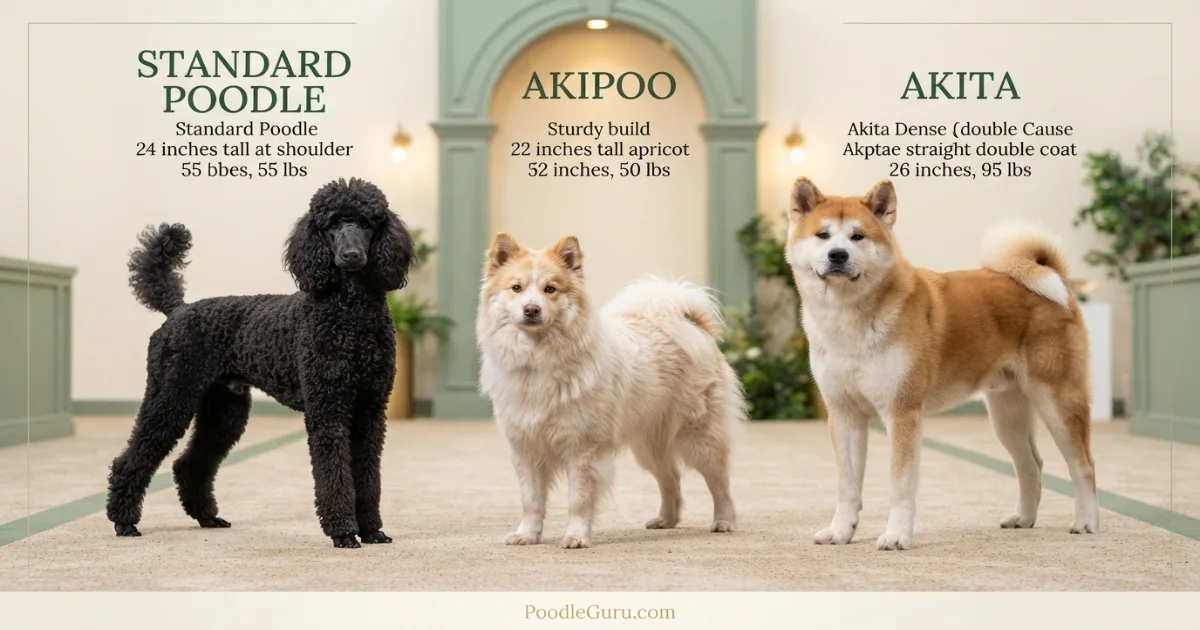
This table makes explicit the trade-offs you accept when choosing an Akipoo over its purebred parents.
| Trait | Akipoo | Akita | Standard Poodle |
|---|---|---|---|
| Weight | Often 60–100 lbs, varies by parents | 70–130 lbs | 40–70 lbs |
| Coat Type | Wavy to curly, dense, may have undercoat | Double coat, thick, medium-length | Dense, curly single coat |
| Shedding | Low to moderate; seasonal shedding possible | Heavy seasonal shedding | Very low |
| Grooming | Professional groom every 6–8 weeks; brush 3–4x/week | Weekly brushing; heavy shedding cycles require daily work | Every 4–6 weeks; daily brushing ideal |
| Trainability | Moderate — intelligent but independent, needs respectful leadership | Challenging — strong-willed, requires experienced owner | Very high — eager to please, quick learner |
| Protective Instinct | Very high — natural guardian | Extremely high — bred for protection | Moderate — alert, may bark |
| Same-Sex Dog Tolerance | Often low — can be aggressive with same sex | Low — same-sex aggression is common | High — generally good with other dogs |
| Exercise Needs | 60–90 min daily, plus mental work | 60+ min daily | 60+ min daily |
| Stranger Response | Aloof, watchful, may be suspicious | Aloof, discriminating, can be aggressive with strangers | Alert, warms up |
| Lifespan | 10–13 years | 10–14 years | 12–15 years |
The Akipoo may moderate some Akita shedding or independence, but it can still retain a strong guardian temperament. It should not be marketed as a “gentler Akita.” It needs an owner who understands large, watchful dogs and can manage protective behavior responsibly.
The PoodleGuru Akipoo Owner Compatibility Check
At PoodleGuru, we assess rare, high-drive mixes with a lens of honest suitability. Use this four-step evaluation before you even begin contacting breeders.
Acknowledge the Guardian Reality
Can you commit to managing a dog that may never be universally social with strangers? This means not forcing interactions, reading body language, and advocating for your dog’s space. If you dream of a social butterfly, the Akipoo is the wrong breed.
Outcome: A clear acceptance of the dog’s inherent temperament, not a wish that training will change it.
Verify Your Household Compatibility
Do you have other pets, especially dogs of the same sex? Do you have young children who might startle a large guarding breed? Some Akipoos can live harmoniously with respectful children and other animals, but supervision, body-language awareness, and safe management are essential. If your household is chaotic, reconsider.
Outcome: A realistic inventory of all family members — two- and four-legged — and a plan to manage interactions safely.
Commit to Lifetime Training
An Akipoo’s training never ends. Are you prepared to attend professional obedience classes, practice daily impulse control exercises, and refresh socialization throughout the dog’s life? The cost of a qualified force-free trainer should be part of your first-year budget. Cutting corners on training with this mix can create serious safety and behavior problems.
Outcome: A financial and time commitment to ongoing professional guidance, not just puppy kindergarten.
Demand Full Health and Temperament Disclosure
An ethical Akipoo breeder tests both parents for hip and elbow dysplasia (OFA), cardiac health, thyroid function, and eye conditions through current eye certification programs such as OFA CAER. Ask the breeder which additional breed-relevant DNA or specialist screenings apply to the specific Akita and Poodle lines, such as sebaceous adenitis evaluation for Standard Poodles and bleeding-disorder testing where indicated. Temperament testing of both parents is not optional — ask to meet the dogs and observe their behavior around strangers.
Outcome: A short list of breeders who can provide documentation — not promises — for every point above.
Akipoo Health & Lifespan: Breed-Specific Vigilance Required
The Akipoo’s expected lifespan of 10–13 years depends heavily on parent health, structure, weight management, and preventive veterinary care. Both Akitas and Standard Poodles carry distinct hereditary risks, and a poorly bred Akipoo can inherit a devastating combination. Veterinary guidance generally recommends screening for these conditions:
- Hip and elbow dysplasia — prevalent in large breeds. OFA or PennHIP certification on both parents is the baseline requirement. Hip dysplasia can lead to chronic pain and mobility loss.
- Bloat (GDV) — deep-chested dogs are at high risk. Learn the early signs (distended abdomen, unproductive retching) and feed multiple small meals daily. Never exercise your Akipoo immediately after eating.
- Sebaceous Adenitis (SA) — an autoimmune skin condition seen in Akitas and Standard Poodles. It causes hair loss and skin lesions. For Standard Poodles, ask whether an OFA sebaceous adenitis evaluation by an approved dermatopathologist has been completed.
- Hypothyroidism — common in both breeds. Ask your veterinarian whether periodic thyroid screening is appropriate, especially if symptoms appear or the parent lines have thyroid history.
- Eye conditions — progressive retinal atrophy (PRA) and cataracts appear in both parent lines. Current eye exams through a veterinary ophthalmologist are important for breeding dogs and for any dog with vision changes.
- bleeding disorders — ask the breeder and veterinarian which DNA tests are relevant for the specific parent lines; do not accept vague “vet checked” claims as proof of genetic screening.
When to Call Your Vet
Contact your veterinarian immediately if your Akipoo displays sudden abdominal swelling, repeated unsuccessful vomiting attempts (possible bloat), severe lameness, unexplained collapse, or a rapid change in behavior. With large, deep-chested breeds, waiting can be fatal.
Grooming & Coat Care: The Dense Coat Needs Regular Attention
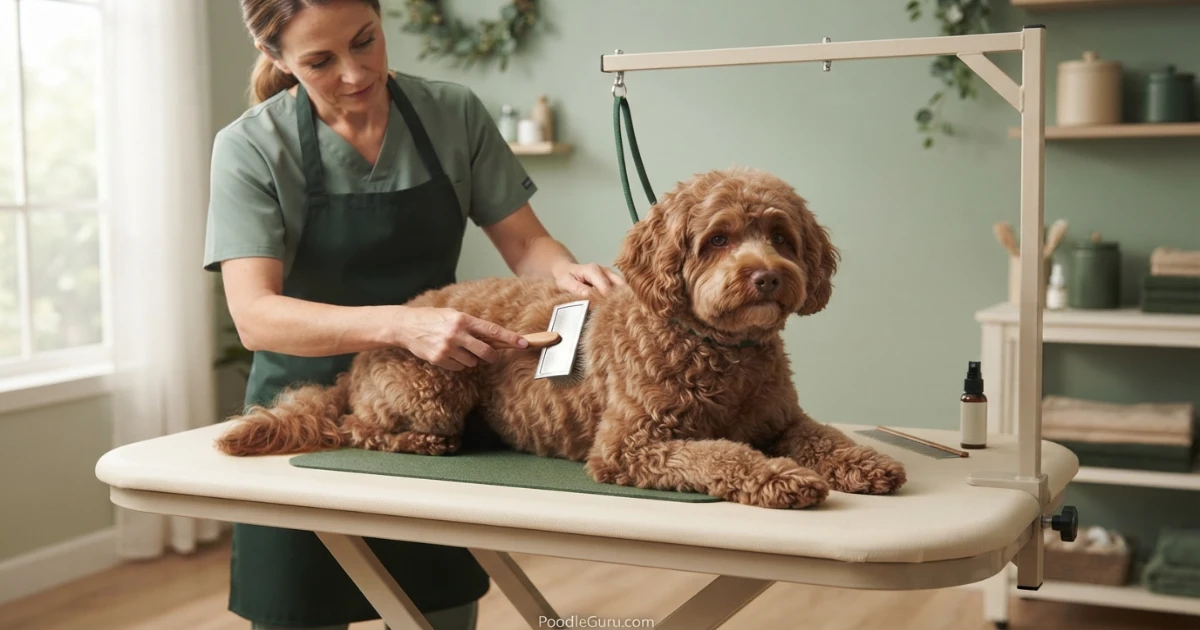
Despite its wild, tousled look, the Akipoo’s coat is high-maintenance. That dense, wavy fur will mat tightly against the skin — especially behind the ears, under the collar, and at the leg joints — if not brushed regularly. Professional groomers recommend a full groom every 6–8 weeks, with a thorough brush-out at home 3–4 times per week using a slicker brush and a steel comb. If you wait until you can see mats, you’ve waited too long; they’re already forming deep down.
The undercoat, if present, will blow out seasonally. During these periods, daily brushing is necessary to manage the shedding. A high-velocity dryer (used carefully) can help remove loose hair, but introduce it gradually to avoid frightening the dog. Ear care is paramount: Akipoos often inherit the drop ears of the Poodle, trapping moisture and wax. Clean ears weekly and watch for any sign of infection. For a complete coat-care routine, see our Complete Poodle Grooming Guide — the principles apply directly.
Training & Socialization: The Non-Negotiable Foundation
Training an Akipoo is not about teaching tricks — it’s about establishing a language of trust and clear boundaries. These dogs are too intelligent and too powerful to be managed by force. Start the day your puppy comes home. Enroll in a puppy socialization class that uses positive methods, and continue with structured obedience through at least the first two years. The goal is to build a dog that looks to you for cues in every situation, not one that makes independent protective decisions.
Socialization must be broad and ongoing. Expose your Akipoo to people of all ages, appearances, and mobility aids. Take it to controlled environments where it can observe without being forced to interact. Let it learn that the world is mostly neutral. A poorly socialized Akipoo can become difficult to manage — a dog that defaults to suspicion and, given its size, may create serious safety risks.
Because same-sex dog aggression is a real possibility, closely supervise all canine interactions. Dog parks are generally not recommended. Instead, arrange playdates with known, stable dogs. Channel your Akipoo’s intellect and drive into positive outlets: nose work, advanced obedience, or even cart-pulling (a nod to the Akita’s working heritage). A tired, mentally satisfied Akipoo is a calm, trustworthy companion. A bored one will start making its own rules.
Finding a Responsible Akipoo Breeder
Because the Akipoo is not a recognized breed, you must be a relentless interviewer. Most people selling Akipoos are backyard breeders capitalizing on the “rare Doodle” trend. Here’s how to find the exceptions:
| Green Flag | Red Flag |
|---|---|
| Both parent dogs live in the breeder’s home or a family environment and can be met in person | Breeder won’t let you meet one or both parents; offers only photos or videos |
| Full OFA/PennHIP, OFA CAER eye, cardiac, thyroid, and line-relevant DNA or specialist results for both parents | “Vet-checked” is the sole health claim; no actual certificates |
| Breeder asks detailed questions about your experience with large guardian breeds and your living situation | Breeder focuses on deposit, color, and pickup logistics |
| Puppies are raised indoors with Puppy Culture or similar early socialization programs | Puppies are kept in kennels or barns with minimal human handling |
| Transparent about the Akita lineage (American vs. Japanese Akita) and Poodle size | Vague or misleading about bloodlines; uses “teacup” or “royal” terms |
| Written contract includes a lifetime return policy, health guarantee, and spay/neuter agreement | No contract, or a contract that waives all responsibility post-sale |
A responsible breeder should interview you carefully, explain the temperament risks honestly, and be willing to say no if the match is not safe. If you feel like you’re being vetted, you’re likely in the right place.
Akipoo Price Guide (2026)
In 2026, a responsibly bred Akipoo from fully health-tested, temperament-evaluated parents may cost roughly $2,000 to $4,500+, depending on region, parent testing, breeder support, and demand. Because the Akipoo is rare, prices are less standardized than purebred pricing.
What Affects Akipoo Pricing
- Health clearances — comprehensive OFA/PennHIP, OFA CAER eye, cardiac, thyroid, and line-relevant testing is expensive but important. This is the difference between a healthy puppy and a lifetime of vet bills.
- Akita lineage — American Akitas (the larger, more common type) versus Japanese Akita Inu (smaller, rarer) influences price. Inu crosses tend to command a premium.
- Coat and color — rare colors (solid white, black, brindle) can increase price by $500–$1,000. Color does not affect temperament or health.
- Breeder support — breeders who offer lifetime take-back guarantees, puppy culture, and initial training resources typically charge more. This support is worth every dollar.
Be cautious with unusually low prices. Instead of using price alone, ask for actual health certificates, parent temperament information, contracts, and proof of early socialization. The upfront savings evaporate the first time you face a bloat emergency or a dog with severe behavioral issues rooted in poor breeding.
Is an Akipoo Right for You? The Hard Questions
This mix is a serious lifestyle choice, not a casual puppy purchase. Answer honestly: are you prepared for a dog that might never be safe off-leash in an unfenced area? That may require careful management around other dogs in your home? That will challenge your leadership in adolescence? If those realities make you hesitate, the Akipoo is not your dog.
An Akipoo may be right for you if: you have strong experience with large, watchful breeds; you’re committed to reward-based training throughout the dog’s life; you own your home with a large, securely fenced yard; you have no other dogs of the same sex or are prepared to manage them separately; and you view canine guardianship as a serious, rewarding responsibility.
An Akipoo is not for you if: you’re a first-time dog owner; you want a dog that happily greets all strangers; you have young children or frequent visiting toddlers; you rent or have breed restrictions on your insurance; you expect affection alone to erase inherited temperament tendencies.
Frequently Asked Questions About Akipoos
Are Akipoos aggressive?
A well-bred, properly socialized Akipoo should not be automatically aggressive, but it may be reserved, watchful, or selective. The breed’s intense protective instinct can manifest as aggression if poorly managed. Early socialization, clear expectations, and ongoing reward-based training are essential to help it become a stable companion.
Do Akipoos shed a lot?
Shedding is low to moderate for most of the year, but many Akipoos inherit an undercoat that blows out heavily during seasonal changes. Expect periods of significant hair drop. The coat is never fully hypoallergenic; allergy sufferers should spend time with the specific dog before committing.
Are Akipoos good with children?
They can be excellent with respectful, older children who understand how to interact with a large guardian breed. However, their protective nature and size make them a poor choice for homes with toddlers or visiting young children who may be perceived as unpredictable. Supervision is always required.
Can Akipoos live with other dogs?
It depends. Same-sex dog intolerance can be a concern inherited from the Akita side. An Akipoo may coexist peacefully with a dog of the opposite sex if raised together, but multi-dog households with same-sex pairs are risky and require experienced management. Early socialization helps but cannot override genetics entirely.
How much exercise does an Akipoo need?
Plan for 60–90 minutes of daily physical exercise, plus dedicated mental stimulation. This is not a breed that can be walked around the block and left alone. Activities like scent work, structured fetch, or hiking are ideal to burn both physical and mental energy.
Are Akipoos easy to train?
They are often intelligent and quick to learn, but they may be more independent than many retriever-type companion dogs. They need consistent, positive, lifelong training and an owner who can set clear boundaries without force.
What is the difference between an Akipoo and a Labradoodle?
A Labradoodle is a cross with a Labrador Retriever, producing a generally outgoing, social dog with lower protective instincts. An Akipoo (Akita cross) is much larger, more protective, and far more demanding in terms of experience and training. They suit entirely different owner profiles.
Final Summary: Key Takeaways for Akipoo Buyers & Owners
The Akipoo is a magnificent, intense guardian cross — but it is only as stable as the breeder, the training, and the handler behind it. Keep these points close:
- An Akipoo is an Akita-Standard Poodle cross weighing 70–100 lbs, with a 10–13 year lifespan, requiring an experienced owner committed to managing strong protective and same-sex aggression tendencies.
- Coat type is thick, wavy to curly, with low-to-moderate shedding and seasonal heavy blows; professional grooming every 6–8 weeks and home brushing 3–4 times weekly are essential to prevent painful mats.
- The PoodleGuru Akipoo Owner Compatibility Check forces an honest reckoning with guardian temperament, household dynamics, lifelong training costs, and breeder health transparency before you buy.
- Responsible breeders should provide full parent health documentation, including OFA/PennHIP hips, OFA CAER eyes, cardiac and thyroid records where appropriate, and line-relevant DNA or specialist testing; expect pricing to vary widely because the Akipoo is not standardized.
- This is not a social butterfly, a first-time dog, or a breed that thrives on casual handling — it demands a confident, respectful leader who will never stop training and socializing.
- Early and ongoing professional training is not optional; it is the single factor that determines whether your Akipoo becomes a trustworthy family protector or a serious management challenge.
Next step: Return to the Owner Compatibility Check. If you can answer every point affirmatively and without hesitation, you’re ready to begin the careful search for an ethical breeder. Your Akipoo’s future stability depends on the work you do before you ever bring a puppy home.