Cavapoochon Guide: Cavalier Bichon Poodle Mix
Three breeds, one impossibly soft companion. The Cavapoochon blends the Cavalier’s gentleness, the Bichon’s cheer, and the Poodle’s intelligence into a small, fluffy family dog.
But behind the teddy-bear look sit real questions about health, grooming, and finding an ethical breeder. This guide gives you the honest truth—no fluff, just the facts you need.
Quick Answer: What Is a Cavapoochon?
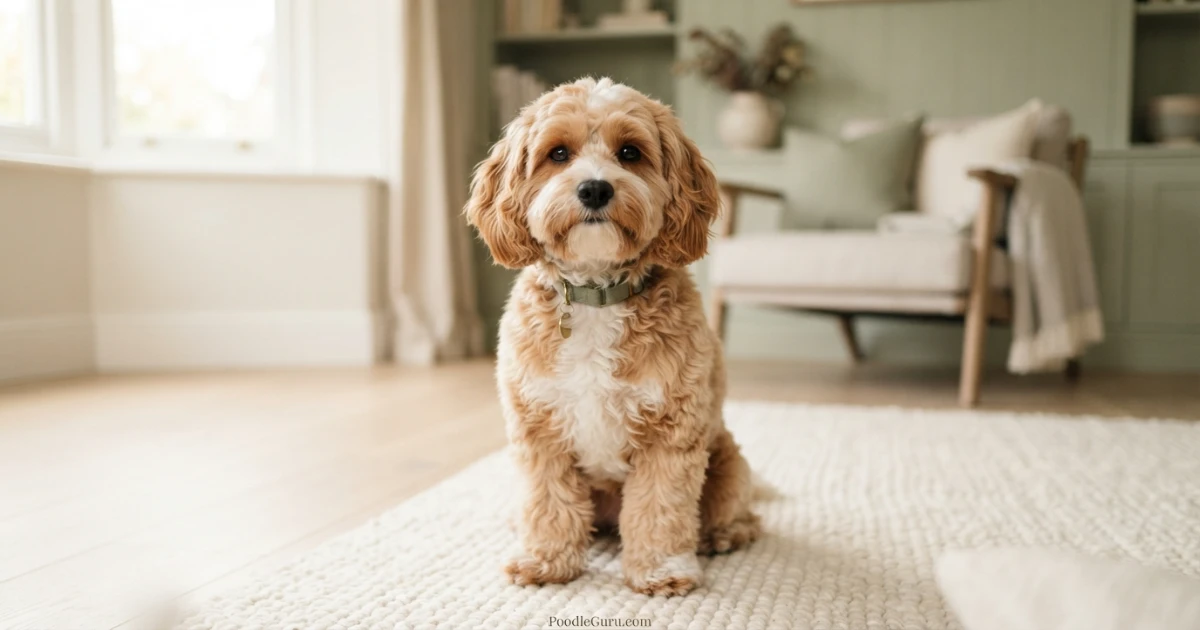
A Cavapoochon is a deliberate triple-cross breed combining the Cavalier King Charles Spaniel, Bichon Frise, and Toy or Miniature Poodle. Most adults weigh 10 to 20 pounds and stand 10 to 14 inches tall.
They’re bred to be small, low-shedding, and exceptionally gentle—often marketed as a “hypoallergenic” family dog. Still, no dog can be guaranteed allergy-safe for every person.
For poodle-savvy owners, the Cavapoochon offers the familiar intelligence and curly coat potential, softened by the Cavalier’s calm affection and the Bichon’s playful resilience.
The most important thing to understand is that the Cavapoochon’s health depends heavily on the Cavalier lineage; mitral valve disease (MVD) is a serious concern that responsible breeders screen for.
What Is a Cavapoochon? The Definition That Matters
A Cavapoochon is a triple-cross companion dog that blends the Cavalier King Charles Spaniel, the Bichon Frise, and the Toy or Miniature Poodle.
For poodle owners, this means a dog that often inherits the Poodle’s intelligence and low-shedding coat, softened by the Cavalier’s gentle nature and the Bichon’s cheerful disposition.
The most important thing to understand is that the Cavapoochon’s health is heavily influenced by the Cavalier side, particularly the risk of mitral valve disease—so health testing is non-negotiable.
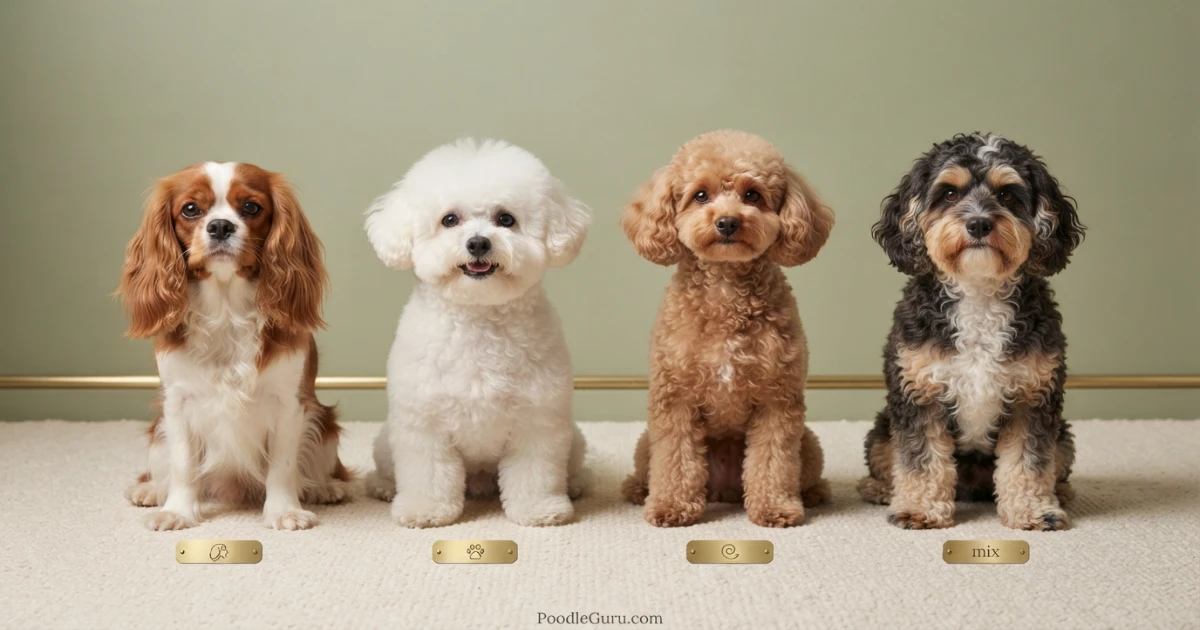
Breed 1: Cavalier
Cavalier King Charles Spaniel
Gentle, affectionate, eager to please. Medium-shedding silky coat. Known for calm, loving temperament but predisposed to heart disease.
Breed 2: Bichon
Bichon Frise
Playful, cheerful, cotton-ball coat. Low-shedding but high-maintenance grooming. Adds resilience and a happy-go-lucky spirit.
Breed 3: Poodle
Toy or Miniature Poodle
Highly intelligent, low-shedding curly coat, eager to please. Contributes trainability and coat consistency.
Why the Cavapoochon Wins Hearts
The Cavapoochon sits at a sweet spot: small enough for apartment living, affectionate enough for families, and often low-shedding enough for some mild allergy sufferers.
Many buyers seek it as a “Cavapoo with a Bichon boost”—hoping for a healthier, more consistent coat. Many breeders market it exactly that way.
But the triple cross doesn’t erase health risks. It may widen genetic variety, but only rigorous testing across every parent breed protects the puppy. The appeal is real, and so is the homework required to find a truly ethical breeder.
Expert Insight: The “Healthier Hybrid” Illusion
Adding a third breed can widen the gene pool, but it doesn’t cancel out breed-specific diseases.
A Cavapoochon can still inherit mitral valve disease from the Cavalier, patellar luxation from the Bichon or Poodle, or eye problems common to all three.
At PoodleGuru, we emphasize that health testing across all three parent breeds is the only real protection—not the fact that it’s a triple cross.
The PoodleGuru Cavapoochon Companion Matrix
At PoodleGuru, we evaluate every Poodle cross against dimensions that predict real-world ownership satisfaction. For the Cavapoochon, this matrix highlights the emotional, practical, and health layers you need to consider.
Temperament & Sociability
What to assess: Cavaliers are famously sweet with familiar people; Bichons are playful and outgoing; Poodles can be slightly reserved with strangers.
A Cavapoochon is often friendly, but some may be more cautious if Poodle influence is strong. Ask to meet the parents and observe the puppy’s reaction to new people.
Coat Predictability & Shedding
What to assess: Most Cavapoochons have a wavy, low-shedding coat. But a puppy from a heavily shedding Cavalier parent may shed more than expected. The Bichon and Poodle influence usually dominate, but it’s not guaranteed. If allergies are severe, spend time with the adult dog before committing.
Health Vigilance & Screening
What to assess: Mitral valve disease (MVD) is the elephant in the room. The Cavalier parent should have a current cardiologist clearance. Bichons and Poodles need patella and eye certifications. A breeder who skips heart testing on the Cavalier side is a hard pass.
Grooming Commitment & Maintenance
What to assess: That teddy-bear look requires daily brushing and professional grooming every 4–6 weeks. The mix of silky, cottony, and curly hair can mat quickly. Are you ready for that 10–15 minute daily routine and a $60–$100+ grooming bill every month or so?
Energy & Mental Engagement
What to assess: Cavapoochons have moderate energy. A couple of short walks plus indoor play and puzzle toys keep them happy. Without mental stimulation, they can become restless or barky. They’re not couch potatoes but won’t demand a marathon, either.
Appearance & Coat: The Soft Triple Blend
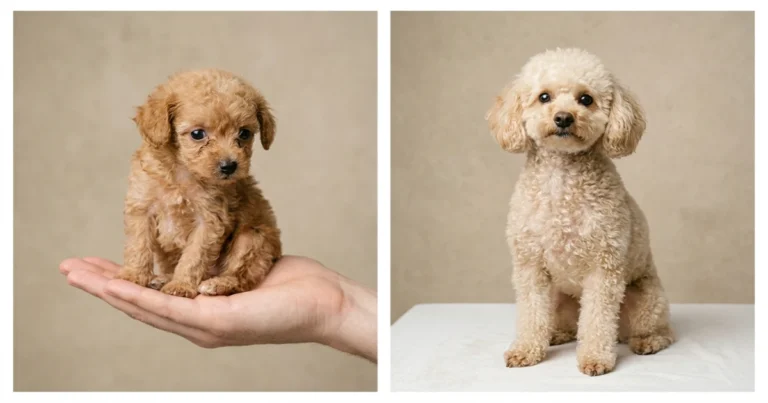
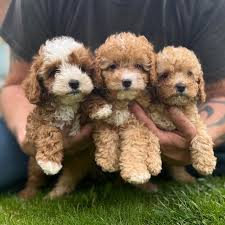
Most Cavapoochons weigh 10–20 pounds and stand 10–14 inches tall. Their bodies are compact and slightly rounded, with floppy ears, a medium muzzle, and large, expressive eyes—a signature blend of all three parent breeds.
Coat Types & Colors
The coat is typically soft, wavy to curly, and can range from 2 to 5 inches long if left natural.
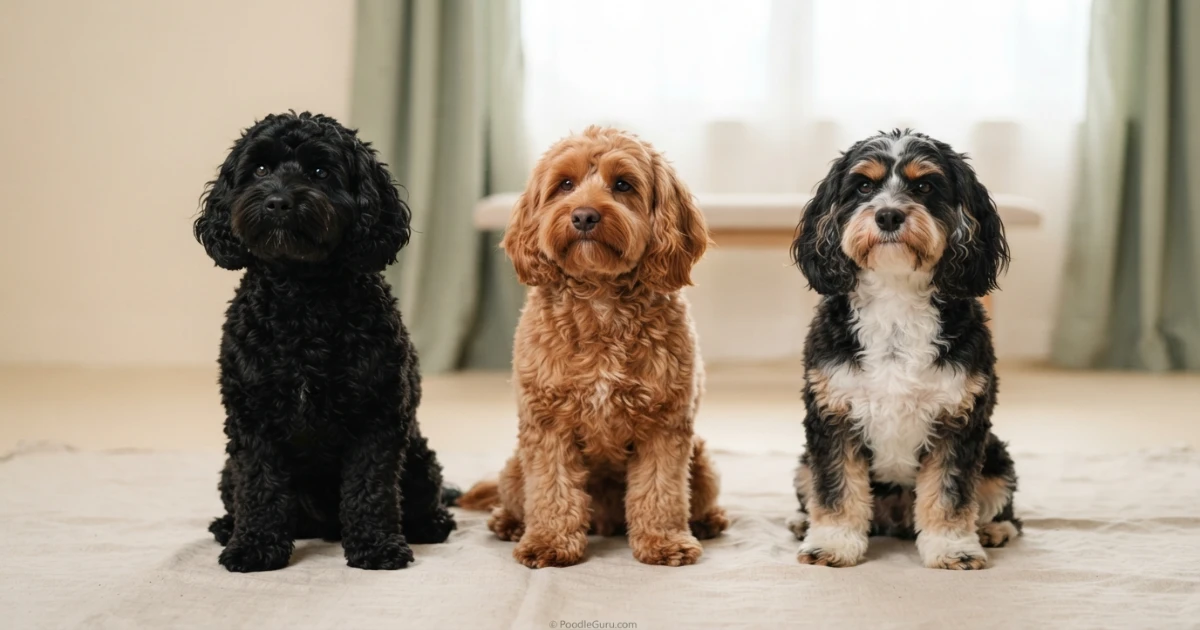
Common colors include solid apricot, cream, red, black, or particolored coats with white patches. Tri-color combinations reminiscent of the Cavalier are highly sought after.
The coat is often described as “teddy-bear” soft, but that softness is a double-edged sword: it mats faster than a coarser coat.
| Coat Type | Texture | Shedding | Matting Risk | Grooming Frequency |
|---|---|---|---|---|
| Wavy (most common) | Soft, loose waves | Very low | High—soft waves tangle easily | Daily brushing; groom every 4–6 weeks |
| Curly (Poodle-dominant) | Tight, springy curls | Very low | Very high—mats at root | Daily brushing; groom every 4–6 weeks |
| Silky (Cavalier influence) | Straight, silky, fine | Low to moderate | Moderate—tangles in feathering | Brushing 3–4x/week; groom every 6–8 weeks |
Cavapoochon vs. Cavalier vs. Bichon vs. Toy Poodle
This unique table compares the Cavapoochon directly against its three parent breeds—helping you see exactly where it lands on key traits.
| Attribute | Cavapoochon | Cavalier King Charles Spaniel | Bichon Frise | Toy Poodle |
|---|---|---|---|---|
| Adult weight | 10–20 lbs | 13–18 lbs | 12–18 lbs | 4–6 lbs |
| Coat & shedding | Low to very low; wavy/curly | Moderate shedding; silky | Very low; cottony double coat | Very low; tight curls |
| Trainability | High; eager to please | Moderate; sensitive | Moderate; can be stubborn | Very high; biddable |
| Key health concern | Mitral valve disease (if Cavalier parent not tested) | Mitral valve disease very common | Allergies, patellar luxation | Patellar luxation, PRA |
| Typical price (2026) | $2,500–$4,500 | $1,800–$3,500 | $1,500–$3,000 | $1,500–$3,500 |
| Best fit | Owners wanting a gentle, low-shedding companion with a teddy-bear look | Owners prioritizing a sweet, calm lapdog and willing to manage heart health | Owners wanting a cheerful, hypoallergenic dog with high grooming needs | Owners wanting the most trainable, lowest-shedding small dog |
PoodleGuru’s Honest Take
If your heart is set on that unmistakable Cavalier sweetness and you’re willing to screen for heart health, the Cavapoochon can be a wonderful choice.
If you’d rather minimize uncertainty and maximize predictability, a purebred Toy Poodle or a Bichon Frise might give you more peace of mind. There’s no wrong answer, only informed ones.
Health & Longevity: The Cavalier Factor
Cavapoochons generally live 12 to 15 years, with well-bred individuals from fully health-tested parents sometimes reaching 16.
The lifespan is heavily influenced by the Cavalier side. Early-onset MVD can shorten life, while dogs free of major inherited disease can thrive well into their teens.
Health Considerations Across the Breeds
| Condition | Inherited From | What Owners Should Watch For |
|---|---|---|
| Mitral Valve Disease (MVD) | Cavalier (very high prevalence) | Heart murmur, coughing, exercise intolerance. VCA notes that MVD is the most common acquired heart disease in dogs, and Cavaliers are overrepresented. Annual cardiac exams recommended. |
| Patellar Luxation | Bichon, Poodle, Cavalier | Skipping gait, holding a back leg up intermittently. OFA patella certification advised. |
| Progressive Retinal Atrophy (PRA) | Poodle, Bichon, Cavalier | Night blindness, dilated pupils, eventual vision loss. Genetic testing available. |
| Syringomyelia (SM) | Cavalier (due to skull shape) | Neck pain, phantom scratching, sensitivity around the head. MRI diagnosis required; less common in crosses but possible. |
| Allergies & Skin Conditions | All three breeds | Itching, recurrent ear infections, hot spots. Soft coats can trap moisture. |
When to Call a Vet
Schedule a veterinary cardiologist visit if you hear any heart murmur, your dog tires easily during walks, or develops a soft cough.
For eyes, any cloudiness, excessive tearing, or bumping into objects warrants an exam. And don’t ignore a skipping gait: early intervention for patella issues can prevent arthritis.
Grooming Reality Check: Silky, Curly, or Both
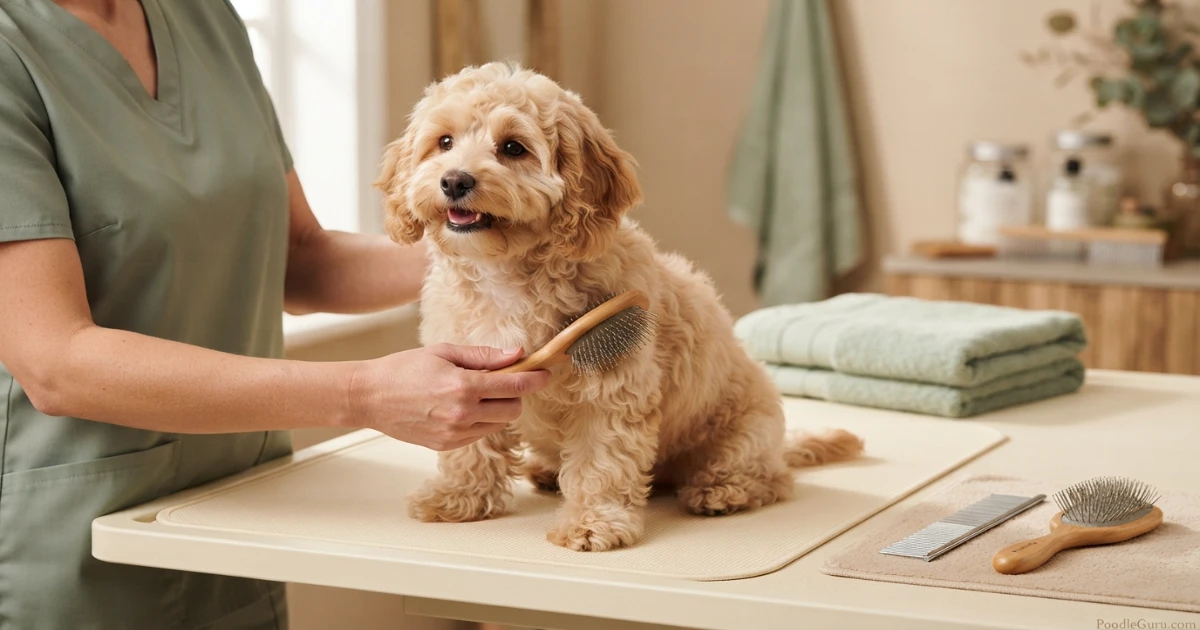
The Cavapoochon’s soft coat is a magnet for mats, especially behind the ears, under the collar, and in the feathering of the legs. Plan for daily brushing and professional grooming every 4–6 weeks.
Daily Brushing (10–15 minutes)
Use a pin brush or slicker brush followed by a metal comb. Work in sections from the skin outward. Pay extra attention to the ears, armpits, and tail area—matting starts there.
Professional Groom Every 4–6 Weeks
A groomer can trim the coat to a manageable length, clean ears, clip nails, and perform a sanitary trim. Regular appointments prevent painful matting and keep the dog comfortable.
Ear Care Weekly
Floppy ears trap moisture. Check and clean ears weekly with a veterinary-approved solution. If you notice redness, odor, or frequent head shaking, see a vet.
Dental Care Daily
Small mouths are prone to dental disease. Brush teeth daily with dog toothpaste, and schedule annual veterinary dental checkups.
When to Ask a Professional Groomer
If you find mats you can’t gently comb out, or the coat feels greasy despite bathing, it’s time for a professional. Groomers can also spot early skin infections or ear issues hidden under all that fluff.
Training the Gentle Cavapoochon
Most Cavapoochons are eager, sensitive, and food-motivated. They often inherit the Poodle’s quick mind and the Cavalier’s desire to be near you.
However, they can be sensitive to harsh tones. Positive reinforcement and short, fun sessions work beautifully.
Socialization from puppyhood builds confidence and helps prevent the shyness that some individuals show if isolated.
They thrive on mental stimulation: puzzle toys, hide-and-seek, and simple trick training keep them happy. A bored Cavapoochon may become vocal or clingy. For more training techniques, see our Complete Poodle Training Guide—the same methods work wonderfully for this cross.
Cavapoochon Buyer’s Guide (2026)
Because the Cavapoochon is a designer cross, prices are high, and not all breeders are ethical. Here’s what to expect and what to demand.
2026 Cavapoochon Price Guide
| Source | Typical Price Range (USD) | What’s Usually Included |
|---|---|---|
| Responsible breeder (all three parents health tested) | $2,500 – $4,500 | Cardiac clearance (Cavalier parent), OFA patella/eye certifications, vaccination records, contract |
| Mid-range breeder (limited testing) | $1,500 – $2,500 | Basic vaccinations, possibly a limited health guarantee |
| Online marketplace / pet store | $1,200 – $2,800 | Often no verifiable health testing; high risk of puppy-mill sourcing |
What inflates price: “rare” color claims (lavender, merle, tri-color), “teacup” labeling, and “champion lines” without paperwork. A breeder who provides echocardiogram results for the Cavalier parent is worth the premium. Without that, you’re gambling on the dog’s most important organ.
Red Flags When Evaluating a Cavapoochon Breeder
🚩 No Cardiac Clearance
If the Cavalier parent hasn’t had a recent echocardiogram by a veterinary cardiologist and been cleared of MVD, walk away.
🚩 Multiple Litters, No Waitlist
Ethical breeders of this rare cross have waitlists. Constant availability signals a commercial breeding mill.
🚩 “Hypoallergenic Guarantee”
No dog is 100% hypoallergenic. A breeder who promises zero allergic reaction is overpromising.
🚩 Won’t Discuss Health Issues
If the breeder downplays or refuses to talk about MVD, patella problems, or SM, they’re not prioritizing the dogs’ welfare.
Smart Questions to Ask Any Cavapoochon Breeder
- “May I see the echocardiogram results for the Cavalier parent, dated within the last year?”
- “What OFA or equivalent clearances do you have for patellas and eyes on all three parents?”
- “Can you share references from previous Cavapoochon puppy buyers?”
- “What is your health guarantee, and how do you handle it if MVD develops later?”
Living With a Cavapoochon: Daily Rhythms & Lifestyle Fit
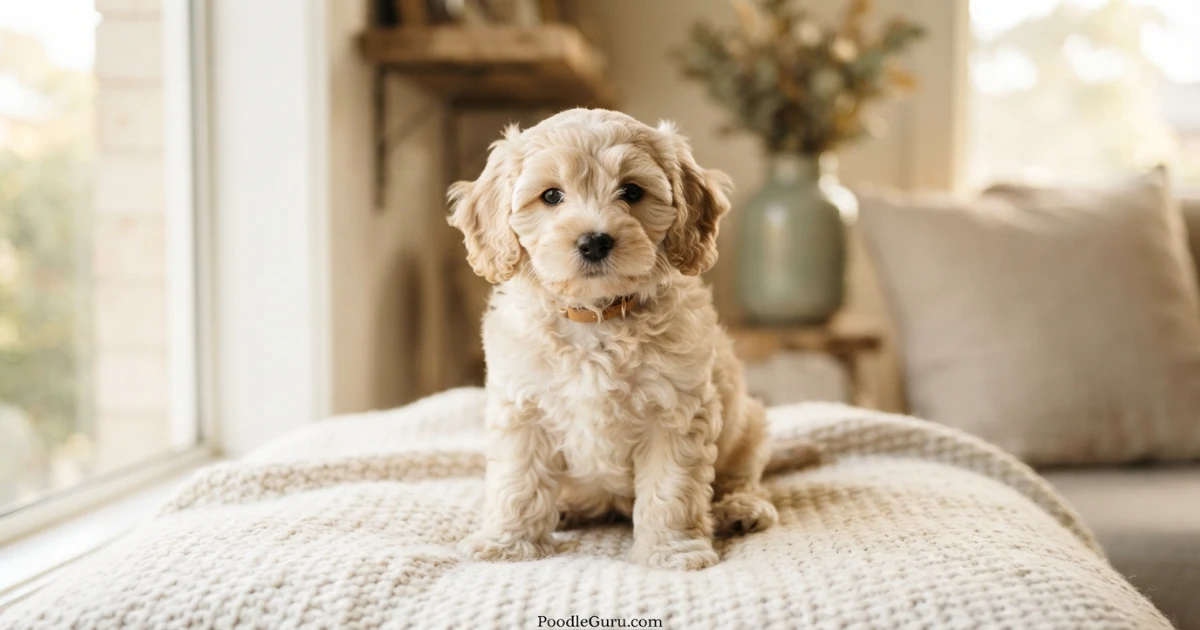
Cavapoochons thrive in homes where someone is around for a good chunk of the day. They’re velcro dogs—they want to be with you, whether on a walk or curled on the couch.
They’re generally excellent with gentle children and other pets, but their small size means interactions with toddlers should be supervised.
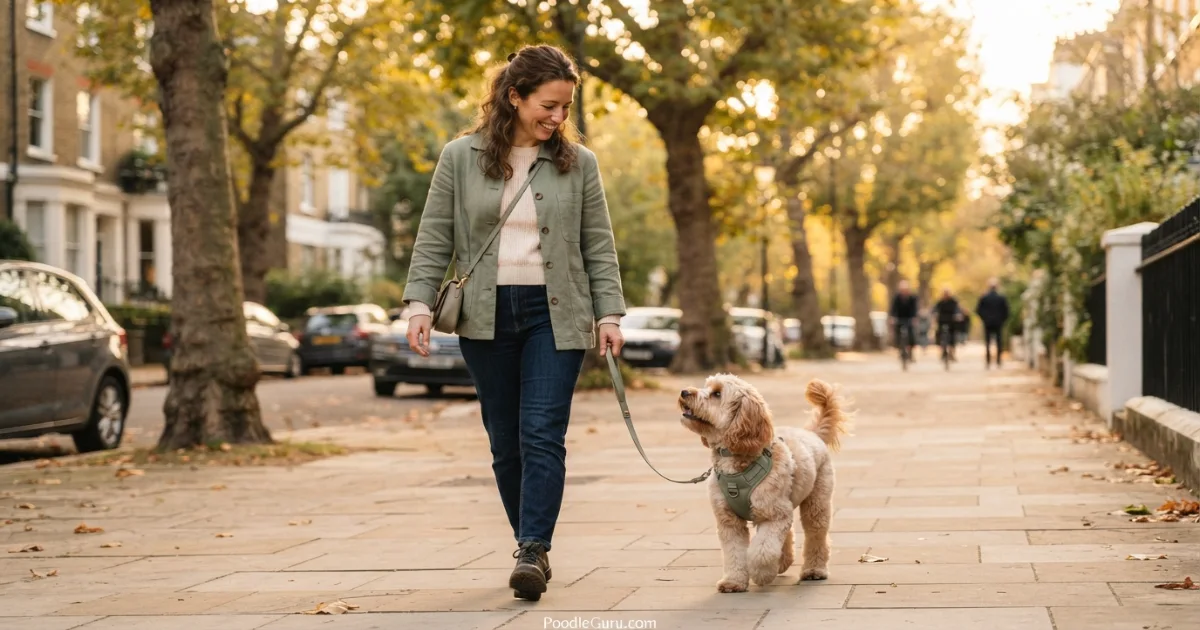
Exercise needs are moderate: 30–45 minutes of daily walks plus indoor play. A fenced yard is a bonus but not essential; they adapt well to apartment life if given enough outdoor time and mental stimulation. Without it, they may express their boredom through chewing or barking.
Common Myths About Cavapoochons—And the Reality
Myth: Cavapoochons are the healthiest Poodle cross because they have three breeds.
Reality: Hybrid vigor can help, but it doesn’t erase breed-specific diseases like MVD in Cavaliers. Health testing of all three parent breeds is what makes the difference—not just the number of breeds in the mix.
Myth: They don’t need grooming because they don’t shed.
Reality: Low shedding doesn’t mean low maintenance. Their soft, wavy coat mats easily and requires daily brushing plus regular professional grooming. Neglecting it leads to painful skin problems.
Myth: Cavapoochons are always quiet lap dogs.
Reality: They can be calm, but they’re also playful and alert. Some bark at the doorbell or when left alone too long. Early training and adequate exercise keep barking in check.
The PoodleGuru Cavapoochon Owner Readiness Checklist
Before you commit, go through this checklist honestly.
Cardiac Clearance Verified
You’ve seen a veterinary cardiologist’s echocardiogram report for the Cavalier parent, dated within the past year, showing no signs of mitral valve disease.
Grooming Routine Established
You’re ready for daily brushing, monthly professional grooming, and a budget of $60–$100+ per grooming session for the dog’s lifetime.
Coat & Shedding Expectations Realistic
You understand that the adult coat might shed slightly more than a purebred Poodle, and you’re fine with that. You’ve spent time with the actual dog if allergies are a concern.
Financial Cushion for Health Monitoring
You’ve budgeted for annual cardiac exams starting at age 4–5 (or earlier if a murmur develops), plus regular dental cleanings and routine vet care.
Lifestyle Compatibility Confirmed
Someone is home for a good part of the day. Your household can provide gentle companionship, moderate exercise, and mental stimulation. No one expects a silent, self-grooming dog.
Breeder Vetting Complete
You’ve chosen a breeder who openly discusses health risks, provides full documentation, and asks you as many questions as you ask them.
Frequently Asked Questions About Cavapoochons
Are Cavapoochons hypoallergenic?
No dog is 100% hypoallergenic, but Cavapoochons are often low-shedding and produce less dander than many breeds. However, a puppy from a Cavalier with a shedding coat may not be as allergy-friendly. Always spend time with the adult dog before committing if allergies are a concern.
Do Cavapoochons bark a lot?
They’re not excessive barkers by nature, but they can bark out of boredom, loneliness, or alertness. Early training and plenty of mental stimulation keep barking in check. Some individuals with more Poodle alertness may bark at doorbells or strangers.
How much exercise does a Cavapoochon need?
About 30–45 minutes of daily physical activity, split between walks and indoor play. Puzzle toys and short training sessions are just as important. A tired Cavapoochon is a happy, quiet companion.
What is the lifespan of a Cavapoochon?
Most live 12–15 years, with some reaching 16 or more when bred from fully health-tested parents. Regular veterinary care, a healthy weight, and annual cardiac monitoring after age 4–5 can help extend their life.
Are Cavapoochons good with children?
Yes, they’re generally very gentle and patient, making them excellent family dogs. However, due to their small size, interactions with young children should be supervised to prevent accidental injury. They thrive in homes with respectful kids.
Do Cavapoochons shed?
Most shed very little, especially if they inherit the Bichon and Poodle coats. However, a Cavapoochon with stronger Cavalier influence may shed slightly more. It’s not a guarantee of zero shedding, but they’re among the lowest-shedding small dogs.
How much does a Cavapoochon cost?
From a responsible breeder who fully health-tests all three parent breeds, expect to pay $2,500 to $4,500 in 2026. Beware of lower prices that skip crucial cardiac testing—saving money now could cost you heartbreak later.
Cavapoochon: The Bottom Line
The Cavapoochon is, in many ways, the ideal small companion: affectionate, intelligent, low-shedding, and beautifully soft.
But that ideal only holds true when the breeder puts health first—specifically cardiac health on the Cavalier side.
For PoodleGuru readers who are prepared for daily grooming, regular vet monitoring, and the detective work of finding an ethical breeder, the Cavapoochon can be a joyful, loving family member for many years.
If the health uncertainties of a triple cross give you pause, a well-bred Toy Poodle or Bichon Frise offers similar charms with more predictable health trajectories. Whatever you choose, go in with your eyes open—and your brush ready.
- A Cavapoochon is a Cavalier-Bichon-Poodle triple cross, weighing 10–20 lbs with a life expectancy of 12–15 years.
- The soft, wavy coat requires daily brushing and professional grooming every 4–6 weeks; low shedding doesn’t mean low maintenance.
- Mitral valve disease from the Cavalier side is the top health concern; a current echocardiogram clearance on the Cavalier parent is non-negotiable.
- Temperament is typically gentle, eager to please, and highly sociable—making them excellent family companions when well-bred.
- Expect to pay $2,500–$4,500 from a responsible breeder who tests all three parent breeds; avoid any breeder who skips cardiac screening.
- A happy Cavapoochon needs moderate daily exercise, mental stimulation, and plenty of human companionship; they are not dogs to leave alone all day.
Next step: Read our Complete Poodle Grooming Guide to build the coat-care routine your Cavapoochon will need from day one.