Frenchie Mix with Poodle: The Complete French Boodle Guide
Also called a French Boodle or Frenchie Doodle, this is a cross between a French Bulldog and a Poodle — a petite, curly or wavy-coated companion with a warm expression, usually weighing 15–30 lb (7–14 kg) and standing 11–15 in (28–38 cm) tall.
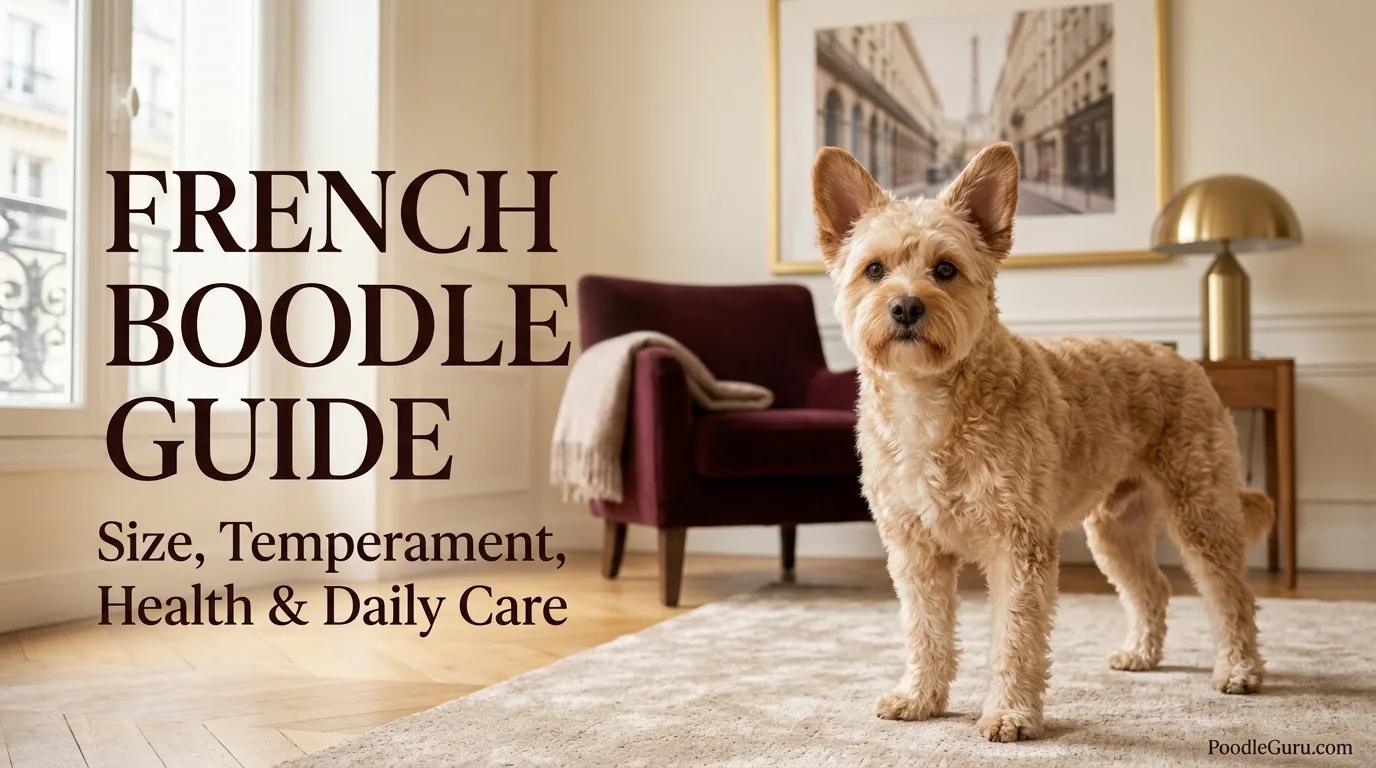
Most Frenchie Boodles get the Poodle’s low-shed coat, though grooming needs shift with curl type. Energy runs moderate — short play bursts and steady walks rather than an all-day athlete. Typical health notes include breathing care for the shorter-muzzled dogs, skin-fold checks, and joint monitoring, while the Poodle side can bring its own eye or thyroid considerations. Training tends to go smoothly with brief, upbeat lessons. The sections below walk through characteristics, size, health, daily care, cost, and the ethical questions worth asking before you bring one home.
Hybrid Profile
The French Bulldog–Poodle mix merges the Frenchie’s charming personality with the Poodle’s intelligence. Owners tend to value their loyalty and affectionate nature, and because each puppy draws from both parent breeds in different proportions, no two turn out quite alike.
Appearance
Most French Boodles carry a compact, Frenchie-like body and bat ears, softened by the longer legs and leaner lines of the Poodle side. Coats range from tight curls to loose waves to nearly straight, and shedding runs light to moderate depending on which way the coat leans — curlier coats generally need daily brushing. Colors span white, gray, black, tan, and brown, with merle patterns appearing in some lines.
Facial structure can lean brachycephalic like the Frenchie, or longer-nosed like the Poodle, and that split affects breathing ease, heat tolerance, and even snoring. Size shifts with the Poodle parent used: Toy and Miniature pairings tend to land smaller and more compact, while Standard-influenced litters run larger with a broader chest and more leg — details below.
Temperament
French Boodles are loving, loyal, and a little bit needy — many bond fast and stay close. Given early socialization, they typically do well with kids and other pets. Their playful streak makes for a lively household, but long stretches alone can bring on real separation stress, so it’s worth building up solo time gradually from puppyhood.
Intelligence
The Poodle genes do a lot of heavy lifting here — most French Boodles pick up cues, tricks, and house rules quickly with consistent, positive training. Short sessions, high-value treats, and a clear marker word work best. Mental work matters too: rotate puzzle feeders, scent games, and hide-and-seek, because a bored smart dog tends to invent its own entertainment — usually counter-surfing or door-dashing.
Affection
Most French Boodles want to be wherever you are and will happily follow you from room to room. They do best when included in daily activities rather than left to their own devices, and they respond well to a calm, people-centered routine — which also makes them a natural fit for companionship or emotional-support roles.
Energy
Energy is moderate, which suits city living well. Aim for 45–60 minutes total, split between brisk walks, a round of fetch or tug, and a couple of short brain games. Toy and Mini-leaning pups tend toward quick, bursty play; Standard-influenced dogs can handle a bit more endurance. Watch for heat sensitivity if the muzzle runs short, and keep portions modest — appetites tend to stay light in this mix.
A simple sample day: a 20-minute morning walk, a midday puzzle feeder, 15 minutes of play, a 25-minute evening walk, and five minutes of trick practice. Keep an eye out for eye or breathing strain during exercise, especially in more brachycephalic-leaning pups.
Size Variations
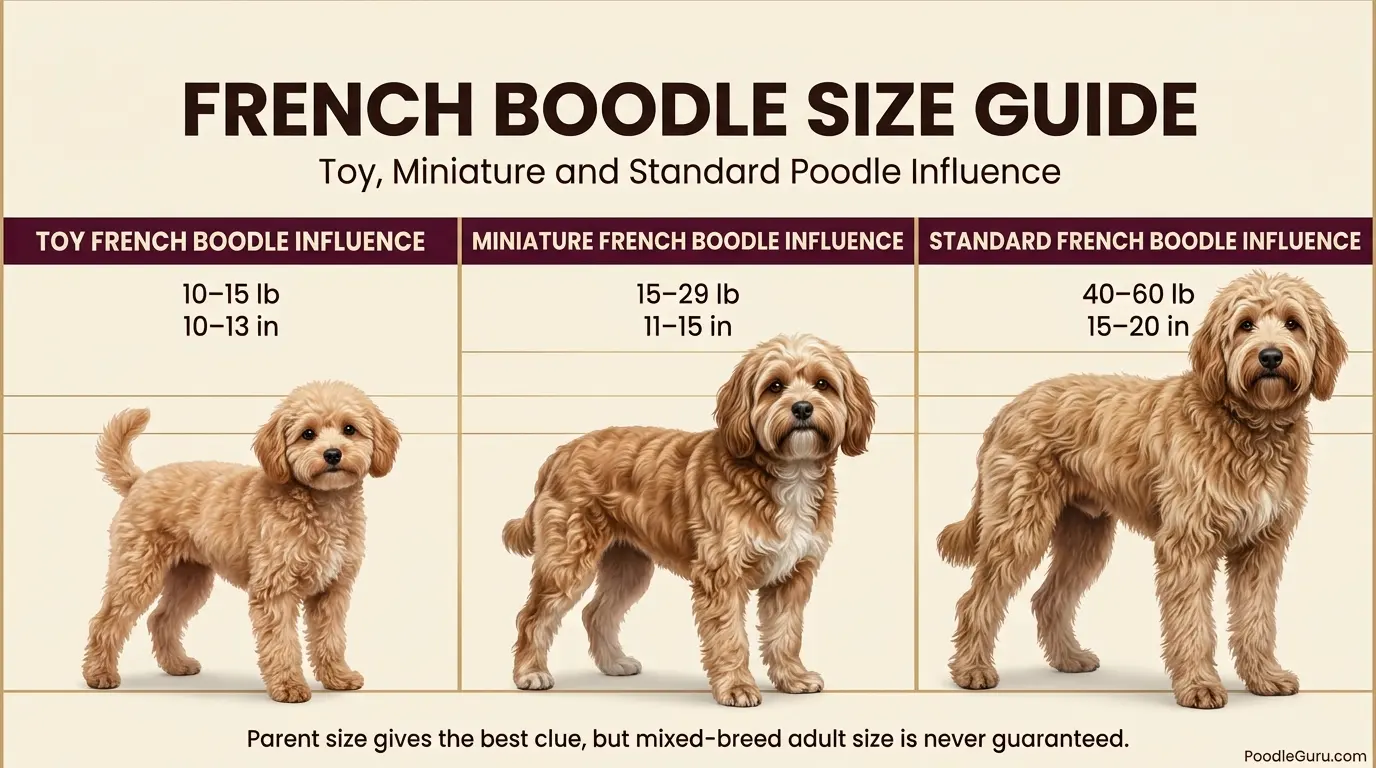
French Boodles come in noticeably different sizes depending on which Poodle variety sits in the pedigree. Most mature adults land around 11–15 inches at the shoulder and 15–30 lb, but the range stretches further at both ends — smaller crosses suit tight apartments well, while larger, Standard-influenced dogs do better with room to move.
| Poodle Parent | Typical Weight | Typical Height | Best Fit |
|---|---|---|---|
| Toy Poodle | 10–15 lb (4.5–7 kg) | 10–13 in (25–33 cm) | Studio flats, urban apartments, frequent travel |
| Miniature Poodle | 15–29 lb (7–13 kg) | 11–15 in (28–38 cm) | Apartments or a house with a small yard |
| Standard Poodle | 40–60 lb (18–27 kg) | 15–20 in (38–51 cm) | Homes with more space; sturdier, higher-energy build |
Toy Poodle influence
Crossing a French Bulldog with a Toy Poodle produces the lightest version of this mix — often under 15 lb, sometimes as low as 10. These small dogs suit studio apartments and travel well, with short lifts and light carriers keeping them safe day to day. Toy influence also tends to bring a lower-shedding, more Poodle-like coat, which can help allergy-prone households, though some pups still favor a shorter Frenchie-style coat instead.
Watch for toy-breed issues like dental crowding, patellar luxation, and hypoglycemia in young puppies. If the Frenchie face wins out, keep a close eye on breathing and heat tolerance too.
Miniature Poodle influence
Miniature Poodle crosses tend to land in a small-to-medium range with a proportionate frame — roughly 15–29 lb and 11–15 inches, offering more sturdiness than a Toy cross without becoming a large dog. They do well in an apartment or a house with a modest yard, and daily walks plus short play sessions usually cover their needs. The Miniature side also tends to add agility and bounce — expect snappier turns and a dog that genuinely loves puzzle feeders and quick training games. For more on how Poodle sizing works across the board, see our Poodle Size Chart.
Full-grown expectations
Most adults settle between 15–30 lb depending on which Poodle size sits behind the cross — French Bulldogs alone run 16–28 lb, while Poodles span roughly 4.5–70 lb across their own three sizes, so the spread in this mix is genuinely wide. Standard-influenced crosses can reach 40–60 lb, while Toy-influenced Froodles may stay as light as 10–15 lb. Coat density and head shape also vary by individual, and head shape in particular affects both look and breathing.
- Growth check at 8, 16, 24, 36, and 52 weeks
- Shift from three meals to two by 6 months
- Refit the harness every 4–6 weeks during growth
- Vet weigh-ins each quarter through year one
- Build up exercise gradually for bigger-bodied pups; keep sessions shorter for brachycephalic-leaning builds
Most reach full physical growth by 12–18 months. Parent size is your best guide, but exact adult size is genuinely hard to predict with mixed genetics.
Health Outlook
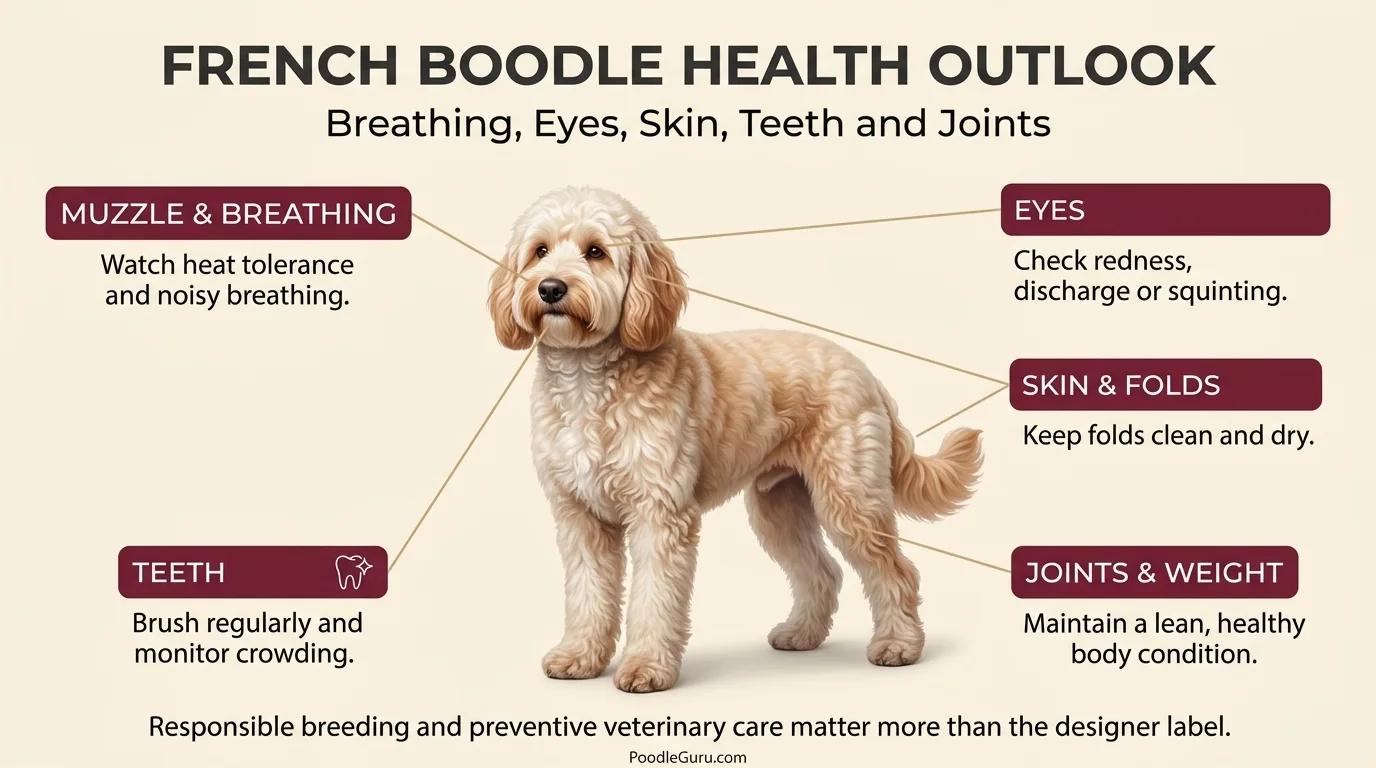
French Boodles sit in the middle of the designer-breed health conversation. Hybrid vigor can help soften some purebred-specific risks, but the real outcome depends on which traits each puppy inherits, and how much of it comes down to responsible breeding and daily care.
French Bulldog ancestry raises the odds of breathing and eye issues. A short snout and narrow nostrils can mean noisy breathing, heat sensitivity, and lower exercise tolerance, especially in warm or humid weather — brachycephalic airway syndrome sometimes needs weight management, a harness instead of a collar, cool rest areas, and occasionally surgical correction.
Prominent eyes are more prone to corneal ulcers and dry eye, so watch for squinting, discharge, or redness. Deep tail-pocket creases can trap moisture and lead to infection, so clean and dry that area at bath time. Lighter or thinner coats also raise sunburn risk — shade, dog-safe sunscreen on exposed skin, and avoiding peak sun all help. These issues show up more often when the Frenchie side dominates the mix.
Poodle lines bring their own considerations. Dental crowding, tartar buildup, and gum disease are common enough that daily brushing, dental chews, and periodic professional cleanings matter. Obesity is another real risk when activity is low and treats run high — portioned meals and healthy exercise habits go a long way. Some Poodle lines also carry genes linked to eye disease and autoimmune conditions, which is why baseline eye exams and periodic screening are worthwhile, and why it’s worth asking breeders for DNA testing results and certifications on both parents. Our Poodle Genetic Testing guide covers exactly which tests to ask for.
Preventive care makes the biggest difference of all. Stay current on core and regional vaccines, use year-round parasite prevention, and schedule vet visits every 6–12 months to check weight, teeth, joints, skin, and breathing. Grooming isn’t just cosmetic either — regular brushing prevents mats, keeps skin clean, and lowers hot-spot risk, so check ears, skin folds, and nails weekly. Keep walks calm, restrict hard exercise in heat, and let your dog rest after play. With good breeding, solid nutrition, and consistent vet care, many Frenchie-Poodle mixes live a healthy 10–15 years.
Daily Care
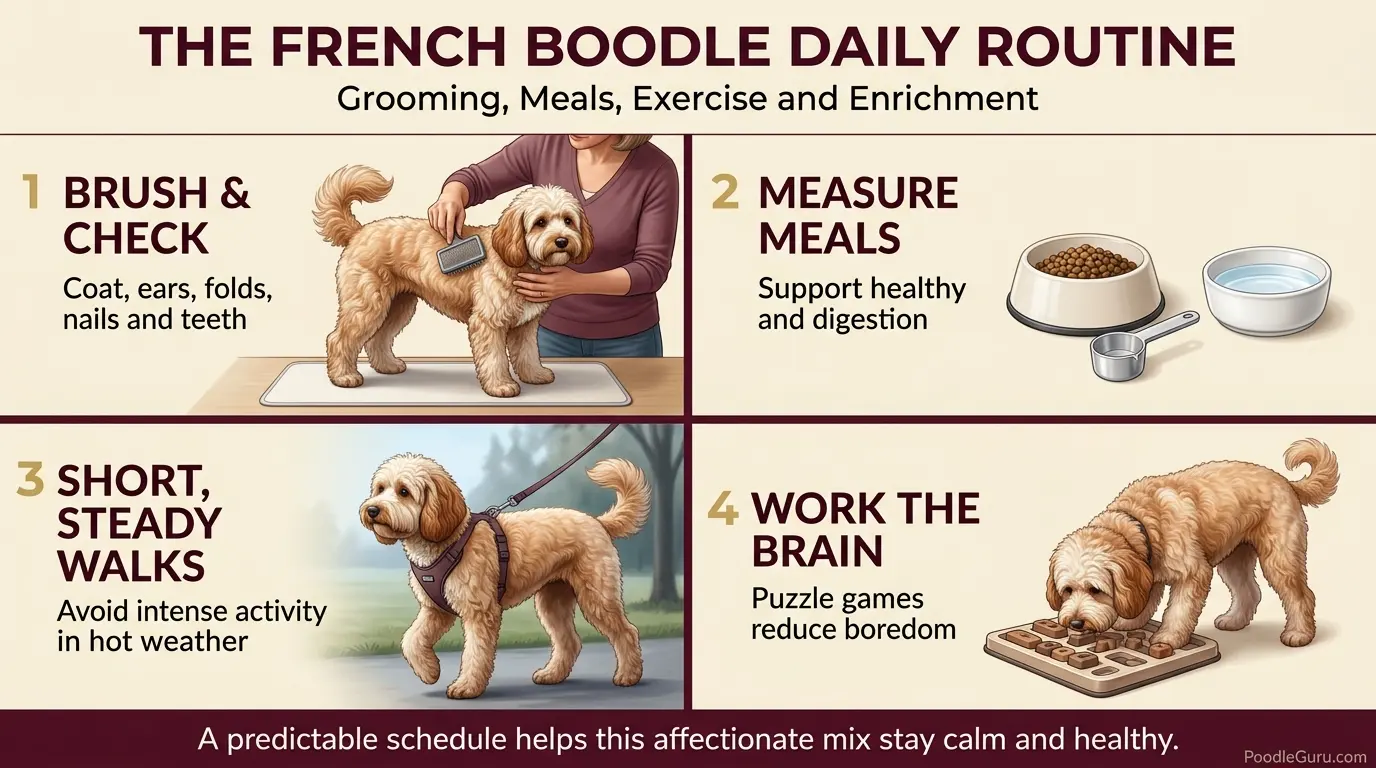
A steady, predictable routine is what actually keeps a French Boodle healthy and settled. Prioritize coat care, nutrition, exercise, and socialization, and check weight, coat texture, and energy weekly so small changes get caught early.
- Grooming: brush, bathe, trim nails, clean ears, and brush teeth on a set schedule.
- Feeding: measure meals, watch stool quality, keep water fresh at all times.
- Exercise: aim for roughly 45 minutes of walks per day, plus play.
- Social: short training sessions, new sights and sounds, safe dog meetups.
- Health: weigh monthly, note any itching, redness, or limping, and book regular checks.
Grooming
Grooming needs come down almost entirely to coat type. Curly, Poodle-leaning coats mat quickly and want daily attention brushed all the way to the skin; flatter coats can usually tolerate brushing every 2–3 days instead.
A workable schedule: a quick daily brush, a bath every 4–6 weeks with a mild shampoo, nail trims every two months, weekly ear checks, and tooth brushing three times a week to daily. Keep a slicker brush, metal comb, nail grinder, ear cleaner, and a soft toothbrush on hand. For matted or curlier coats, book a professional groomer every 6–10 weeks for a clip-down, sanitary trim, and coat shaping — it meaningfully cuts mat risk and skin flare-ups.
Exercise
Provide daily moderate exercise — two or three short walks, some fetch or tug, and puzzle play. Interactive toys help keep the mind busy and ease anxiety when your dog is home alone.
Pace things to avoid heat stress, since the Frenchie side of this mix can struggle with ventilation. Walk during cooler hours, keep water on hand, and skip sprints in hot weather. For more Mini-Poodle-leaning pups, agility games, nose work, or short rally drills a few times a week are a great fit.
Diet
- Choose a balanced, high-quality diet suited to size, age, and activity level.
- Practice portion control to avoid obesity — split food into two or three meals.
- Track weight, waist tuck, and stool quality, and adjust by the gram, not by guesswork.
- Keep fresh water available around the clock.
- Count training treats as part of the daily total, not as extras.
Keep up socialization and training for life — the first year sets the tone, but the habits are worth maintaining well beyond it.
Training Approach
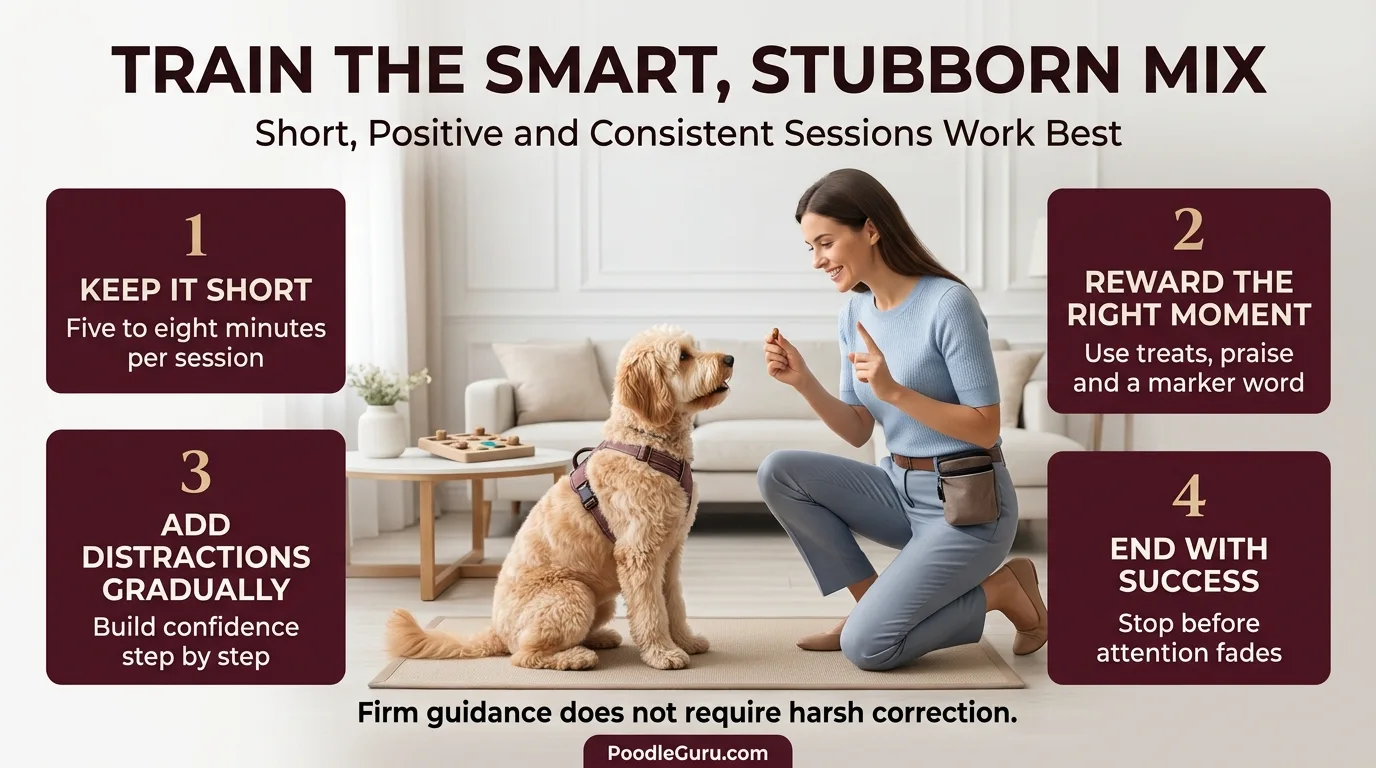
French Boodles combine real intelligence with a stubborn streak. Training goes best when it sets clear rules, stays fun, and rewards effort rather than perfection.
Start early with the basics. Teach name recognition, sit, down, stay, and come in a quiet room first, then add mild distractions once those are solid. Use soft treats, calm praise, and a consistent marker word like “yes” to mark the exact behavior you want. Housebreaking works best on a set schedule — outside after sleep, meals, and play, same door and spot every time, five to ten minutes to try, then back inside under supervision. Crate-train in short, positive steps and leave one safe chew or puzzle toy inside. Expect a few uneven weeks; if an accident happens, clean it with an enzyme cleaner and move on without punishment.
Keep sessions brief and genuinely enjoyable — two to four mini-sessions a day, five to eight minutes each, works well. Introduce one new skill at a time and let an easy win build confidence before raising the bar. Once a behavior is solid, switch to a variable reward schedule so the dog keeps trying. End on a high note and stop before attention wanders; if focus fades, switch to a quick nose game and pick training back up later.
Stay firm but gentle. Harsh corrections can shut a French Boodle down or provoke pushback — they respond far better to routine, encouragement, and small soft treats. If a cue gets missed, lower the difficulty, help them succeed, and reward the attempt rather than the outcome.
Mind the heat while training, since the Frenchie side of this mix can overheat quickly. Exercise during cooler parts of the day, keep water on hand, and watch for early signs of heat stress. Keep high-energy drills short and substitute brain work — shaping, touch targets, scent games — to tire the mind without straining the body.
A puppy class or a simple weekly schedule adds useful structure and helps with both social skills and your own timing as a handler. For socialization, go gradually: new people, calm dogs, varied surfaces, traffic noise, and short car rides, all paired with treats — aim for frequent short, positive exposures rather than long, stressful ones.
Price and Cost
As a designer mix rather than a standardized breed, French Boodle pricing varies more than it would for a purebred — and a higher price alone doesn’t guarantee better health testing.
| Cost Factor | Typical Range / Note |
|---|---|
| Puppy purchase price | $1,500 – $4,000+ |
| What raises the price | Health-tested parents, Toy or Mini Poodle lines, rare coat colors, breeder reputation |
| First-year costs | Vet visits, vaccinations, spay/neuter, and grooming setup add meaningfully beyond the purchase price |
| Ongoing monthly cost | Grooming and vet care usually track closer to a small-to-medium Poodle’s costs |
| Red flag pricing | Very low prices with no health testing or parent records are a warning sign, not a bargain |
For a broader look at what Poodle-side costs typically run by size, see our Average Poodle Price guide.
The Ethical Question

Ethics sit at the center of any decision to bring a French Boodle home. It’s not just about looks or temperament — who breeds the dog, how, and what it means for long-term health all matter just as much. The debate around designer breeds isn’t new: breed-health discussions from the 19th century echo a lot of today’s concerns. Dogs have been purpose-bred for centuries — herding, hunting, guarding — but somewhere around the Victorian era, aesthetics and novelty started winning out over function, a shift that still shapes conversations about French Bulldogs and their mixes today.
When evaluating a breeder, prioritize ones who lead with health and welfare. That means documented health screenings for both parents — for the French Bulldog side, screening for airway function, spine, hips, patellas, and eyes; for a Poodle parent, DNA testing for PRA, hip and elbow scores, and thyroid screening. Ask for veterinary records, not just verbal claims.
Look at where the dogs are raised — clean, open spaces, regular social interaction, and no signs of overcrowding should be standard. Ask how many litters a dam produces per year, how often she’s bred, and how puppies are socialized, from early handling through exposure to different sounds and surfaces. Ethical breeders welcome visits, let you meet the mother, and talk temperament and health rather than just color and coat.
Avoid puppy mills, backyard breeders, and large commercial operations that sell through third-party sites or ship without screening. Red flags include no in-person visits, cash-only payment, no questions asked of you as a buyer, and no lifetime take-back policy. Watch for “rare color” or “teacup” marketing in particular — both often carry higher health risk with no real evidence behind the premium.
Adoption is a genuinely good alternative worth considering. French Bulldog rescues, Poodle-focused networks, and general shelters often have Frenchie mixes available, and adopting both reduces demand for high-risk breeding and gives you more transparency about any existing health issues. Frenchies specifically are prone to ear infections, skin-fold dermatitis, and whelping complications tied to their body shape — concerns that have led some countries to restrict breeding standards for the most exaggerated features.
The same appeal that drives demand for brachycephalic breeds can end up overlooking welfare. The Labradoodle, for what it’s worth, started as a hypoallergenic guide-dog project — plenty of mixes since have prioritized trend over function. The real question worth sitting with: are we choosing looks and novelty over quality of life for the dog?
Final Words on the Frenchie Mix with Poodle
A French Boodle brings charm, intelligence, and a fairly easygoing attitude, and many thrive in small homes. Short walks suit most of them well, play keeps the mind sharp, and simple, consistent rules go a long way. Age- and size-appropriate food supports healthy weight and joints, and regular vet visits catch ear, skin, or joint issues early.
Before deciding, meet the puppy and, ideally, both parents. Ask for health screening records. Find a groomer who understands curls and skin folds. Budget realistically for vet care, food, and gear. Set aside a few minutes for training every day. Think in terms of ten years, not ten weeks.
Next step: talk to a vet or trainer, reach out to a rescue or a reputable breeder, and jot down a short wish list before you start looking.
Frequently Asked Questions
What is a Frenchie Poodle mix called, and what’s its typical profile?
It’s most often called a French Boodle or Frenchie Doodle — a small, muscular dog with a curly or wavy, lower-shedding coat and a loving, outgoing temperament. Their compact size and moderate exercise needs make them a solid fit for apartments.
How big does a Frenchie Poodle mix get?
Most weigh 15–30 lb and stand 11–15 inches at the shoulder, depending on whether the Poodle parent was a Toy, Miniature, or Standard. Miniature-influenced dogs are the most common size, with a compact, sturdy build that often weighs more than it looks.
Are French Boodles generally healthy?
They can be, with responsible breeding and health testing. Potential risks include brachycephalic airway syndrome, skin and eye issues, and joint concerns. Routine vet visits and weight management go a long way toward keeping them healthy long-term.
How much grooming does this mix need?
It depends on coat type. Wavy or curly, Poodle-leaning coats need brushing 3–4 times a week and a professional trim every 6–10 weeks; flatter, Frenchie-leaning coats need less frequent attention.
How much does a Frenchie Poodle mix cost?
Most puppies from a health-tested breeder run $1,500 to $4,000 or more, depending on parent health testing, Poodle size used, coat color, and breeder reputation. Very low prices with no health records are a warning sign, not a deal.
What daily care keeps them thriving?
Two short walks (20–30 minutes each), some active playtime or puzzle feeders, a balanced diet suited to age and activity, and routine dental and vet care. Keep an eye on heat tolerance and cool them off proactively in warm weather.
Are they easy to train?
Yes, with consistency. They’re people-oriented and food-motivated, though the Frenchie side can bring a stubborn streak. Keep sessions short and upbeat, start socialization early, and build calm leash manners from day one.
Is it ethical to breed this mix?
Ethical breeding here means prioritizing health over appearance — choosing breeders who screen both parent breeds for airway and orthopedic issues, avoid exaggerated features, and welcome questions. Adoption is also a genuinely good alternative worth considering.
Thinking About a French Boodle?
Compare this mix against other Poodle hybrids and pure Poodle sizes before you decide — the right fit depends more on your daily routine than on how the puppy photographs.
Compare Poodle Sizes