Poodle Boarding vs Pet Sitting: 2026 Care Guide
Poodle boarding vs pet sitting is not a simple price comparison. A confident, social Poodle may enjoy a well-run boarding facility, while a sensitive, senior, anxious, or medically managed Poodle usually does better with a professional in-home sitter. This guide compares stress level, cost, safety, vaccines, grooming needs, and caregiver red flags so you can choose the care style your dog will actually handle well.
Quick Answer
Poodle boarding vs pet sitting depends on your dog’s temperament, age, medical needs, coat-care routine, and tolerance for noise. Boarding can work well for confident Poodles with a proven positive daycare or group-play history, especially when the facility uses temperament screening, small compatible groups, rest periods, vaccination checks, and clear emergency protocols. Pet sitting is usually the better fit for senior Poodles, anxious Poodles, dog-selective Poodles, puppies, and dogs with medication, special diets, or grooming needs. In 2026, plan roughly $40–$110+ per night for boarding and about $65–$125+ per night for professional overnight sitting, with local rates varying widely.
The Real Difference for Poodles
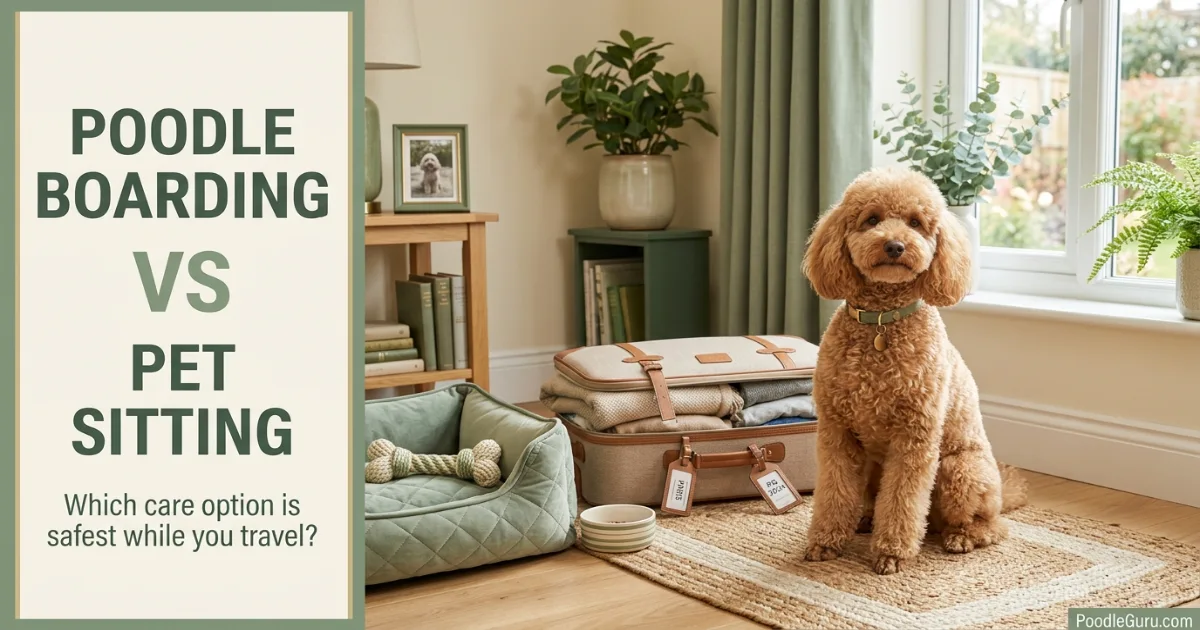
Poodle boarding vs pet sitting is a care decision, not just a travel chore. Boarding usually means your dog stays at a commercial kennel, veterinary boarding service, daycare-style facility, or private home-boarder. Pet sitting usually means a caregiver visits your home several times per day or stays overnight so your poodle can keep familiar sleeping spots, feeding times, grooming supplies, and neighborhood walks. Because Poodles are highly bonded, observant, and often sensitive to environmental change, the “best” option depends on the individual dog.
The biggest mistake is assuming the social option is automatically kinder. Some well-socialized Standard Poodles love a structured boarding environment with compatible dogs and human attention. Many Toy, Miniature, senior, shy, dog-selective, or separation-sensitive Poodles do better with quiet in-home care. The right answer comes from evaluating stress signals, routine needs, medical care, coat maintenance, and caregiver reliability.
Head-to-Head Comparison at a Glance
| Factor | Boarding Facility | In-Home Pet Sitting |
|---|---|---|
| Environment | New, with other dogs and staff; may be noisy | Familiar home, quiet, minimal change |
| Human Interaction | Multiple staff, shift changes; varies by facility | Consistent one-on-one attention |
| Dog Interaction | Controlled playgroups (must be small and temperament-matched) | None unless specified; safer for dog-selective poodles |
| Routine | Facility schedule, less flexible | Follows your exact feeding, walk, and medication routine |
| Stress Level (Typical) | Moderate to high for sensitive dogs | Low to moderate; minimal disruption |
| Health Monitoring | Staffed, but signs of subtle distress can be missed | Single caregiver may notice small appetite or behavior changes faster |
| Emergency Prep | Usually have vet relationships and protocols | Relies on sitter’s preparedness; must have clear instructions |
| Cost (2026, per night) | $45–$90+ depending on amenities | $60–$100+ (includes home security benefits) |
Boarding: Pros, Cons, and Poodle-Specific Risks
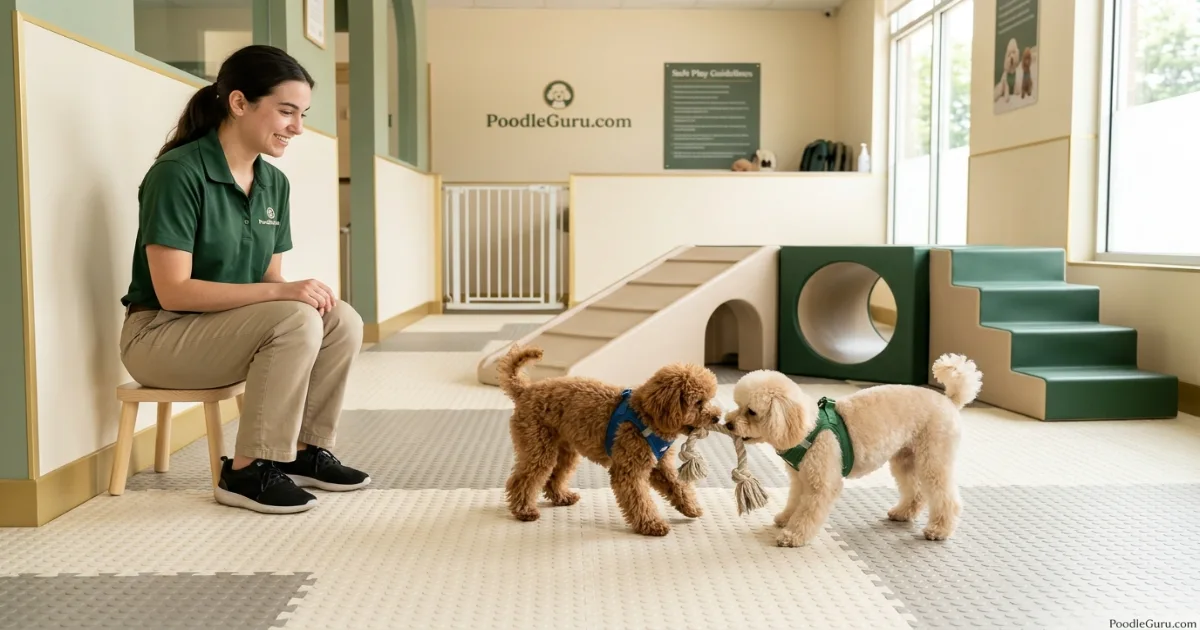
A high-quality boarding facility can be a safe, enriching option — especially for social Standards and Miniatures who are accustomed to daycare-style play. The best facilities separate dogs by size and play style, offer private suites with webcams, and have trained staff who understand poodle body language.
Boarding Red Flags for Poodle Owners
- Large or poorly matched playgroups: Poodles can become overwhelmed by rough dogs, high arousal, or size-mismatched groups. Ask how dogs are grouped by size, age, temperament, and energy level.
- No temperament screening or trial stay: Reputable operations usually want vaccination records, a trial visit, and a plan for dogs who prefer being alone. A facility that accepts every dog without evaluation is risky.
- No quiet rest plan: Poodles can look “fine” while actually becoming overstimulated. Ask where your dog sleeps, how often staff check them, and whether rest is protected from constant barking.
- Inadequate coat care: A poodle coat can start tangling after several days of collar wear, damp play, or no brushing. Pack a comb and written instructions, or choose a sitter if brushing will not happen.
- Unclear emergency and vaccine protocols: Ask which vaccines are required and whether noncore vaccines such as Bordetella or canine influenza are recommended for your area and lifestyle. AAHA notes that boarding and commingling can affect vaccine-risk decisions: AAHA vaccine guidance.
Pet Sitting: Pros, Cons, and What to Look For
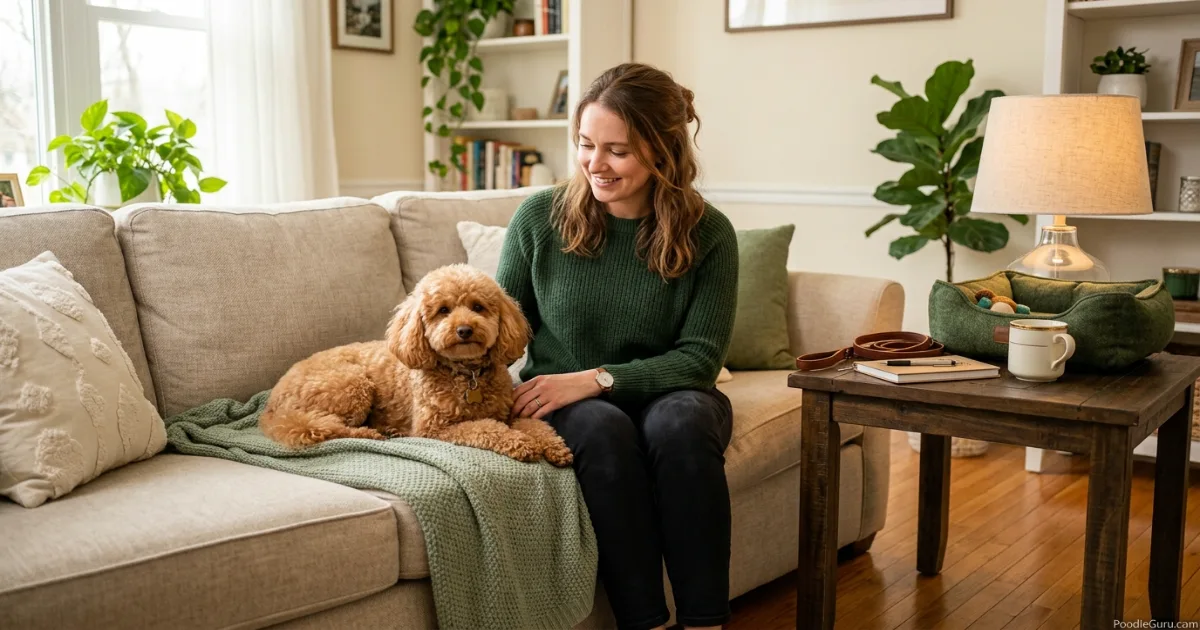
In-home pet sitting is often the best match for Poodles with separation anxiety, medical needs, senior routines, strict feeding schedules, or low tolerance for environmental change. The dog stays with familiar beds, bowls, smells, and walking routes. For anxiety-prone dogs, the ASPCA notes that treatment may require preventing panic-producing alone time and arranging for a sitter or trusted person while training progresses: ASPCA separation-anxiety guidance.
The quality of the sitter matters as much as the format. “Pet sitting” can mean a neighbor dropping in once, a gig-app sitter with limited experience, a bonded and insured professional, or a true overnight caregiver. For most Poodles, a single evening visit is not enough for multi-day travel. Choose the level of care based on potty needs, anxiety history, age, medication timing, and whether the dog settles when left alone.
Essential Questions to Ask a Potential Pet Sitter
- Are you bonded, insured, and Pet First Aid/CPR certified?
- How many other clients do you have during my travel dates?
- Will you send daily updates with photos?
- What’s your plan if my poodle refuses to eat or shows signs of distress?
- Can you administer oral medication? (Show them your poodle’s specific needs ahead of time.)
The PoodleGuru 4-Factor Fit Checklist
Use this four-factor checklist before comparing prices. Score honestly. If your Poodle is sensitive, medically managed, senior, dog-selective, or highly routine-dependent in two or more categories, professional pet sitting usually becomes the safer starting point. If your Poodle is social, adaptable, and already has positive daycare history, a carefully vetted boarding facility can be a good fit.
Social Temperament
Does your poodle genuinely enjoy playing with unfamiliar dogs, or does she prefer human company? A dog who ignores other dogs on walks or cringes at the dog park will not magically enjoy a boarding playgroup. Yes to boarding only if your poodle has a proven, positive daycare history.
Routine Dependence
Does your poodle follow a strict medication or feeding schedule? Dogs with timed thyroid medication, insulin, or special diets need the precision of a dedicated sitter. Pet sitting wins for medically fragile or senior poodles. See our health issues guide for conditions that complicate boarding.
Noise and Chaos Tolerance
Even upscale boarding facilities hum with barking and activity. Poodles with noise sensitivity or a history of stress colitis will likely decompensate. Choose sitting if your dog startles easily or needs a calm environment.
Home Environment
Does your home have a secure yard or a trusted neighbor who can act as a backup sitter? The value of in-home care rises significantly if your poodle can maintain potty access and you have a safety net. If you live in an apartment with unreliable maintenance or no backup, a well-vetted boarding facility may be more predictable.
2026 Cost Breakdown for Poodle Owners
Price influences decisions, but it should not be the primary driver. Current market data shows pet-care rates vary sharply by city, service type, sitter experience, number of pets, and whether care is drop-in, overnight, or boarding. Use these 2026 ranges as planning estimates, then compare local quotes from professional providers and marketplace data such as Rover’s dog sitting rate guide and TrustedHousesitters’ U.S. pet-care cost data.
| Service Type | Typical Nightly Rate | What’s Usually Included |
|---|---|---|
| Standard boarding kennel or basic facility | $40–$75 per night | Private run or room, feeding, potty breaks, basic staff monitoring; playtime may cost extra |
| Premium boarding suite with daycare-style enrichment | $65–$110+ per night | Private suite, add-on play, webcam or reports, rest periods, staff-managed activity |
| Drop-in pet sitting, 2–3 visits per day | $25–$40 per visit | Feeding, potty break, short walk, medication check, photos; no overnight presence |
| Professional overnight in-home sitting | $65–$125+ per night | Evening and morning routine, one-on-one attention, home security, medication timing, daily updates |
| Small-scale home boarding in sitter’s home | $50–$95 per night | Home-style care, usually fewer dogs; still requires screening, insurance, references, and trial stay |
Don’t assume the most expensive option is the best. A $100/night boarding suite in a facility with 50 barking dogs may still overwhelm a sensitive poodle, while a $75/night professional sitter provides serene one-on-one care. Match the care style first, then evaluate cost among options that meet your poodle’s needs.
Mistakes to Avoid When Choosing Care
Even well-intentioned owners slip up. Here are the most common missteps — and how to sidestep them.
| Mistake | Why It’s a Problem | The Fix |
|---|---|---|
| Choosing based on price alone | Low-cost boarding often means high volume, less supervision | Use the 4-Factor Fit Checklist first; then filter by budget |
| Not doing a trial run | First-time boarding can cause extreme stress or refusal to eat | Book a single overnight trial at least two weeks before a long trip |
| Assuming a friend/family sitter knows poodle needs | Casual sitters may not recognize bloat signs, matting risk, or anxiety panting | Provide a detailed written care sheet; consider a professional sitter instead |
| Overlooking vaccination requirements | Boarding without current core vaccines and facility-required noncore vaccines can increase disease risk | Confirm vaccine requirements 4 weeks ahead; most facilities need proof |
| Not packing grooming supplies | A poodle coat can start tangling after several days of collar friction, damp play, or no brushing | Schedule a grooming session before travel; pack a comb and detangler with clear instructions |
How to Vet Any Caregiver (Boarding or Sitter)
Whether you choose boarding or sitting, a thorough vetting process is non-negotiable. Do the same level of checking for a sitter that you would for a boarding facility.
- Check recent reviews on multiple platforms — Google, Yelp, neighborhood groups, and booking platforms. Look for details about communication, emergencies, senior dogs, grooming needs, or small breeds rather than only star ratings.
- Ask for references from clients with poodles or similar intelligent, sensitive breeds.
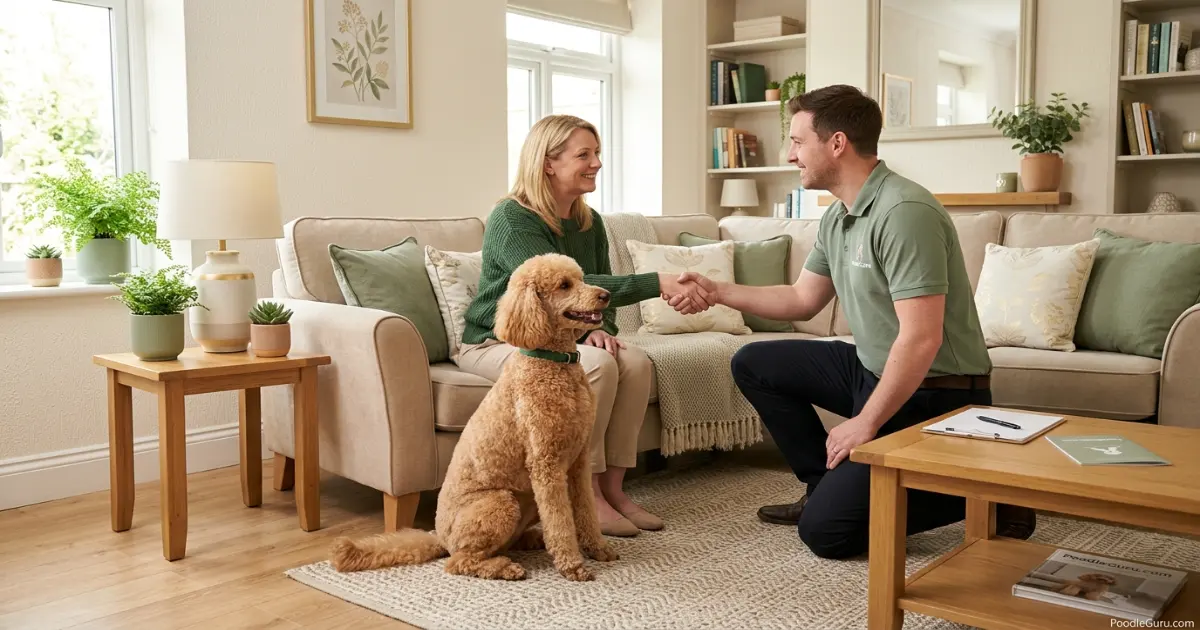
- Tour the facility or meet the sitter at your home before booking. Watch how they interact with your dog. Do they crouch down gently, or do they loom and grab? Poodles read body language acutely.
- Confirm emergency protocols: What’s the nearest 24-hour vet? Will they call you immediately if something seems off? Get this in writing.
- Provide a written care sheet with feeding amounts, medication timing, your vet’s number, and your poodle’s stress signals (panting, hiding, lip licking).
- Leave your own items: A worn t-shirt with your scent, the dog’s bed, and a favorite chew can reduce anxiety.
Owner Action Plan: Book Smart, Travel Calm
Take these steps at least three weeks before your trip to ensure a smooth experience.
Score Your Poodle
Complete the 4-Factor Fit Checklist and determine whether boarding or sitting ranks higher.
Research and Vet Candidates
Contact 2–3 facilities or sitters. Check insurance, reviews, and references. Request a trial visit.
Prepare a Care Packet
Include food, meds, vet records, emergency contacts, and detailed written instructions. Add a comfort item.
If your poodle has separation anxiety, begin practicing short absences with the sitter a week in advance. Our poodle separation anxiety guide walks you through desensitization exercises that can make the transition smoother.

Frequently Asked Questions
Is boarding stressful for poodles?
Boarding can be stressful for some Poodles, especially sensitive, senior, noise-sensitive, or dog-selective dogs. A trial stay helps you see whether your dog eats, sleeps, eliminates normally, and returns home relaxed rather than exhausted or shut down.
Which is cheaper: boarding or pet sitting?
Basic boarding is often cheaper than true overnight sitting, while drop-in pet sitting can be similar or less expensive depending on visit count. Premium boarding suites and high-demand overnight sitters can overlap in price, so compare care quality and fit before comparing cost.
Can a poodle with separation anxiety stay at a boarding facility?
Sometimes, but many separation-anxious Poodles do better with carefully planned in-home care or a familiar caregiver. Boarding does not treat separation anxiety. A vet, certified trainer, or veterinary behavior professional can help you plan safe absences.
What vaccines does my poodle need for boarding?
Most facilities require proof of core vaccines such as rabies and distemper/parvo combination vaccines. Many also require Bordetella, and some recommend or require canine influenza based on local risk. Confirm requirements with the facility and your veterinarian several weeks before travel.
Should I board my poodle if they’ve never been away from me?
Do not make a long trip the first test. Schedule a short trial stay or trial sitter visit before your travel dates. Watch appetite, sleep, stool quality, willingness to re-enter the facility or greet the sitter, and behavior after returning home.
How do I make sure my poodle’s coat doesn’t mat during boarding?
Schedule grooming before travel, choose a practical trim if your trip is long, remove collars during safe rest periods when allowed, and pack a labeled slicker brush, comb, and written brushing instructions. Ask who will actually perform coat checks.
Is it safe to use a pet sitter from a gig app?
It can be safe only when the individual sitter is thoroughly vetted. Do a meet-and-greet, ask about insurance, references, emergency plans, medication comfort, and how many pets they care for at the same time. Do not rely on app reviews alone.
Is pet sitting better for senior poodles?
Often, yes. Senior Poodles usually benefit from familiar flooring, known sleeping spots, predictable potty breaks, medication timing, and lower noise. Boarding can still work if the facility has quiet lodging, medical experience, and a successful trial stay.
Key Takeaways: Poodle Boarding vs Pet Sitting
Poodle boarding vs pet sitting comes down to your dog’s temperament, routine needs, health status, coat-care needs, and the quality of the specific caregiver. Start with fit, verify safety, then compare price.
- Boarding can suit confident, social Poodles with a proven positive daycare or group-play history.
- Pet sitting is often better for senior, anxious, medically managed, dog-selective, or routine-dependent Poodles.
- A trial stay or trial sitter visit before a long trip is one of the best ways to prevent travel-week surprises.
- 2026 care costs vary widely: basic boarding may start around $40–$75 per night, while professional overnight sitting often ranges about $65–$125+.
- Confirm vaccines, emergency contacts, medication instructions, feeding amounts, and grooming tools before you leave.
- Vet every caregiver personally. Reviews help, but insurance, references, emergency protocols, and your poodle’s comfort matter more.