Poodle Puppy vs Adult Poodle: 7 Powerful Truths Before You Choose
Quick Answer: Poodle puppy vs adult Poodle is not a simple “young vs old” choice. A Poodle puppy and an adult Poodle live in different universes of need. Puppies demand near-constant supervision, potty training, socialization windows, and teething management, but you shape them from a blank slate.
Adult Poodles — whether raised from puppyhood or adopted later — arrive with bladder control, a known temperament, and often some training already in place. The right choice hinges less on age and more on your lifestyle, patience, and what you genuinely have the bandwidth to handle.
Toy, Miniature, and Standard varieties all pass through the same arc, but at different speeds. An 18-month-old Standard is still very much a puppy inside, while a Toy of the same age has long since settled into adulthood.
Searching “Poodle puppy vs adult poodle” almost always signals a fork in the road. Maybe you’re staring at a breeder’s waitlist and a rescue listing simultaneously. Maybe your heart says puppy but your calendar says otherwise. Maybe you’ve never owned a Poodle and you’re trying to decode whether the legendary puppy intensity is something you can actually survive. This guide exists to give you the honest, unsentimental comparison that glossy breeder websites and urgent adoption posts often leave out.
Use this Poodle puppy vs adult Poodle guide as a practical decision tool: compare daily routines, costs, training demands, bonding, and size-specific differences before you choose.
Teething, potty training, socialization windows open
Energy: high, unfocused bursts
Sleep: 18–20 hours/day as young pups
Testing boundaries, energy peaks, brain momentarily offline
May forget known commands
Still filling out physically
Settled temperament, reliable bladder control
Known personality, established habits
Still playful, but with an off switch
Poodle Puppy vs Adult Poodle: Quick Comparison Snapshot
| Decision Factor | Poodle Puppy | Adult Poodle |
|---|---|---|
| Best for | Owners with flexible time and training patience | Owners wanting a calmer, more predictable companion |
| Hardest part | Potty training, teething, supervision, socialization | Unlearning old habits or helping with transition anxiety |
| Training style | Start from zero and build every habit | Refresh, redirect, and reinforce existing manners |
| Daily disruption | High for the first several months | Usually lower once decompressed and settled |
| Predictability | Lower because temperament is still developing | Higher because personality and size are already visible |
For most busy homes, the Poodle puppy vs adult Poodle decision comes down to one honest question: do you want to build every habit from the beginning, or do you want a dog whose adult temperament is already visible?
The Daily Reality: What Living With a Poodle Puppy Actually Feels Like
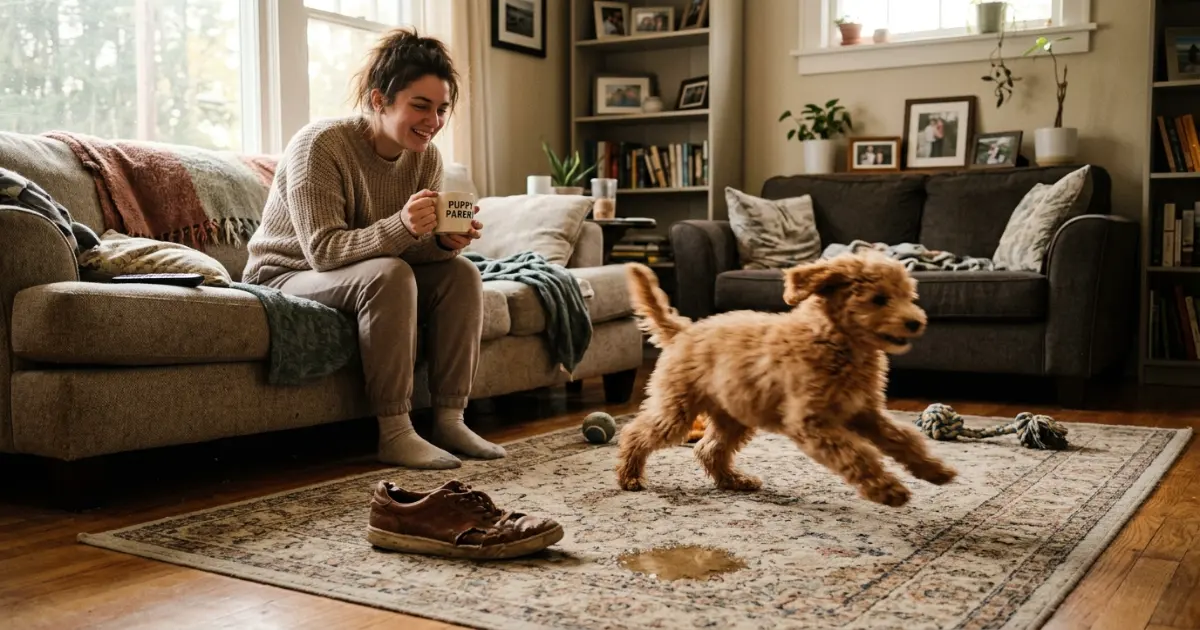
Nobody warns you about the sheer frequency. A young Poodle puppy — regardless of size variety — operates on a 60-to-90-minute cycle. Wake, potty, play, eat, potty, sleep, repeat. Through the night. Through your work calls. Through the moment you finally sit down with coffee. Toy and Miniature puppies have smaller bladders and even shorter intervals; a 10-week-old Toy may need to go out every hour when active. Standards hold slightly longer but make up for it with larger-volume accidents.
Then comes the mouth. Poodle puppies explore the world with their teeth, and they are shockingly creative about what qualifies as chewable — baseboards, electrical cords, the hem of your favorite jeans, air. This is not aggression; it is a developmental phase driven by teething and curiosity.
It ends, but not before teaching you to never leave anything precious at puppy height. Adult Poodles, by contrast, have long since retired their puppy teeth and learned what belongs in their mouth and what does not. They can still be mouthy during play, but the destructive edge is gone.
Socialization is another invisible weight. The critical window closes around 16 weeks. In that narrow stretch, a puppy needs positive exposure to dozens of surfaces, sounds, people, and other dogs — all while not yet being fully vaccinated.
This requires careful orchestration: stroller walks, car rides, supervised playdates with known healthy dogs. Missing this window does not ruin a dog, but it means more work later. An adult Poodle arrives with that window already closed, for better or worse. You inherit whatever socialization they received, and you work from there.
Source note: The American Veterinary Society of Animal Behavior emphasizes that the first three months are the most important period for puppy socialization and that safe exposure can begin before puppies are fully vaccinated. This makes the Poodle puppy vs adult Poodle comparison especially important for owners with limited time during the first months.
🐩 PoodleGuru Editorial Note: Adult Poodles can bond deeply with new families. The idea that a real connection only happens when a dog is raised from puppyhood is one of the most persistent myths in dog ownership. Many rehomed adult Poodles become intensely attached once they receive steady routines, patient handling, and consistent affection.
What Adult Poodles Offer That No Puppy Can Match
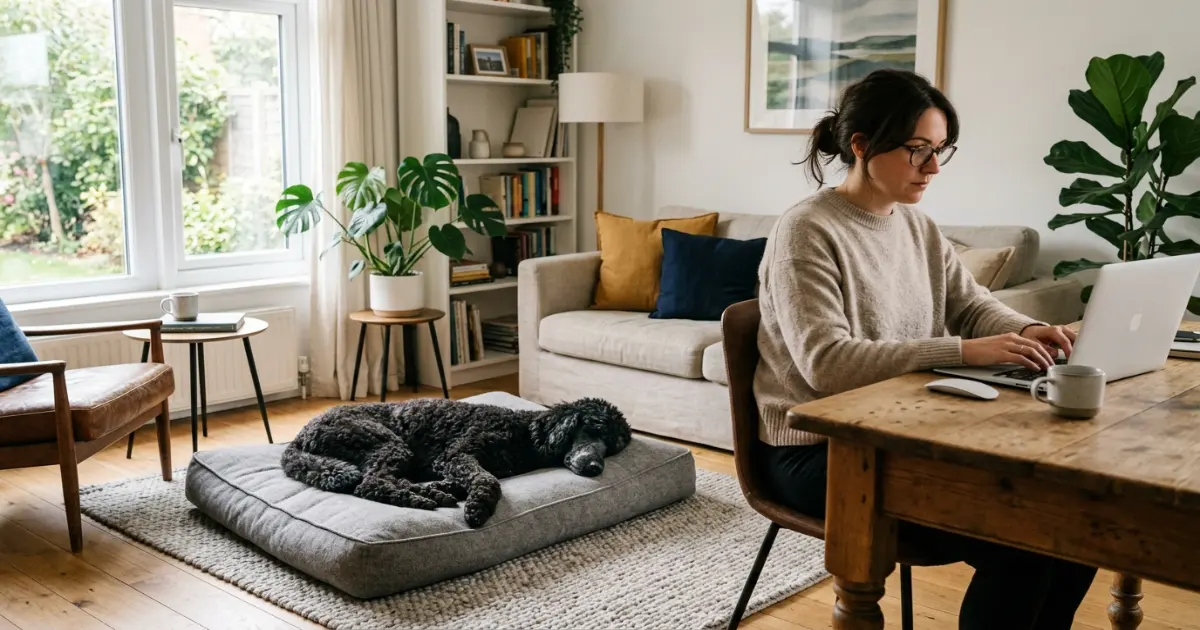
Bladder control sits at the top of that list. An adult Poodle can comfortably hold it for 6–8 hours overnight and 4–6 hours during the day. That alone transforms the owner experience. You can sleep through the night. You can leave the house for a reasonable workday without arranging a midday potty break. The psychological relief of not starting every morning with a puddle on the floor is hard to overstate.
An adult Poodle also comes with a known personality. Puppies are mysteries. That confident, outgoing 8-week-old can grow into a reserved, noise-sensitive adult; that shy puppy can blossom into a social butterfly. With an adult dog, what you see is largely what you get.
You can assess their reaction to children, cats, traffic noise, and other dogs before committing. For families with specific constraints — a resident cat, an infant, an apartment with thin walls — this predictability is worth its weight in gold.
Many adult Poodles already possess foundational training. House manners, leash walking, “sit,” and “stay” may be installed. Even if the dog needs a refresher, you are not starting from absolute zero. This saves months of daily training repetition and can be a lifeline for first-time dog owners who underestimate how much teaching a puppy truly requires.
The Transition Phase Nobody Talks About: Adolescence
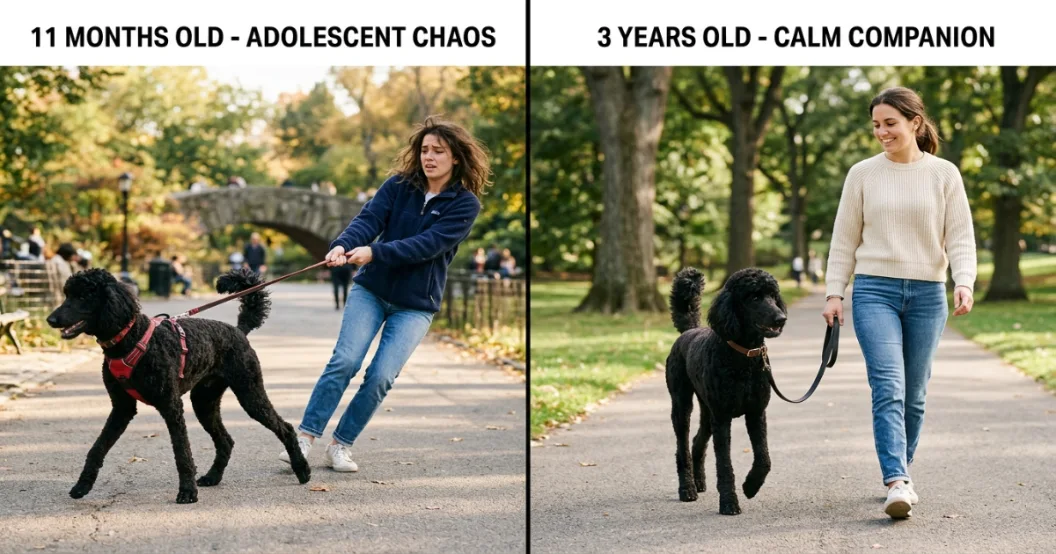
If you start with a puppy, you do not glide gently into having an adult dog. You pass through adolescence — and Poodle adolescence can be jarring. Somewhere between 7 and 18 months (later for Standards), your formerly attentive puppy suddenly “forgets” recall, develops selective hearing, and tests every boundary you thought was settled. This is not a training failure. It is a normal developmental stage akin to human teenagers pushing limits while their brains reorganize.
Standards are particularly notorious for a prolonged adolescent phase. An 11-month-old Standard can look physically imposing but behave like a goofy, impulsive puppy who cannot remember what “down” means. Toys and Minis pass through this stage faster, but the intensity can still catch owners off guard. The dogs are not being stubborn or dominant — they are neurologically under construction. Patience, consistency, and not taking it personally carry you through.
Adopting an adult Poodle means skipping this stage entirely. That is a genuine advantage for owners who know they lack the tolerance for adolescent chaos. It is also worth acknowledging that some adult Poodles in rescue arrived there precisely because their first family could not navigate adolescence. The dog they surrendered at 11 months is often the same dog that, with a few months of structure, settles into a wonderful companion.
Poodle Puppy vs Adult Poodle Cost Comparison (2026)
💰 What You’ll Actually Pay: Puppy vs Adult Poodle
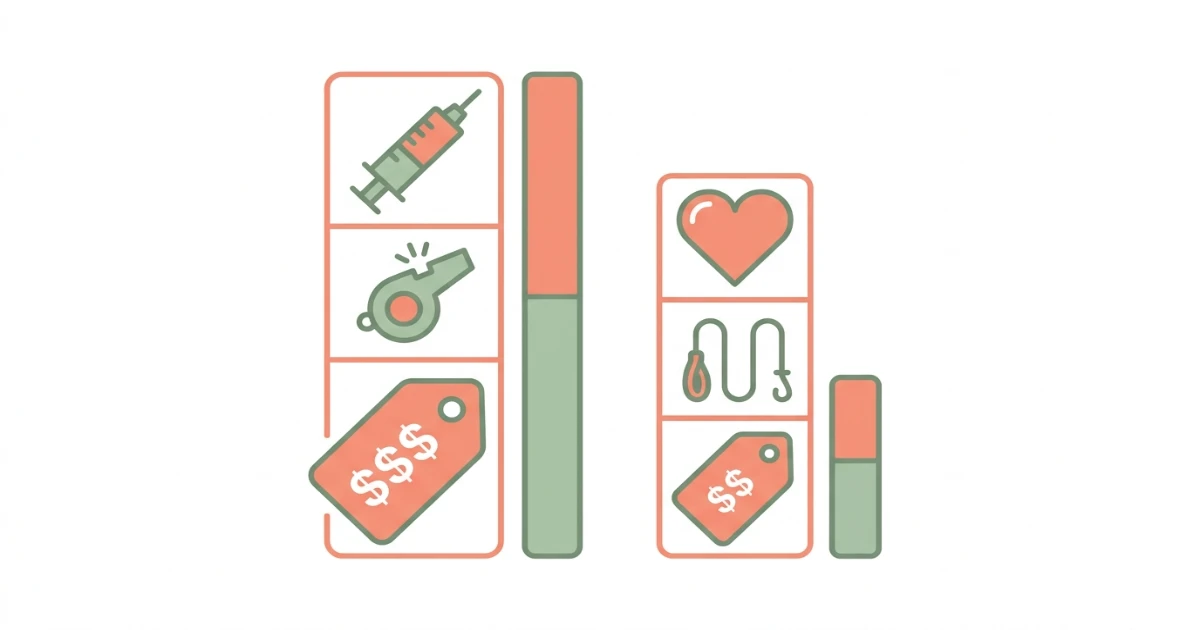
Poodle puppy from a reputable breeder (2026): $1,800–$4,500+ depending on size, color, and lineage. This covers the purchase price only. First-year expenses — vaccines, spay/neuter, supplies, training classes, and extra vet visits — routinely add $2,000–$3,500 more. A Toy Poodle puppy can easily cost $6,000+ in the first 12 months once everything is tallied.
Adult Poodle through rescue or private rehoming: Adoption fees typically range from $200–$600, often including spay/neuter, microchip, and current vaccinations. Private rehoming fees vary widely, but $300–$800 is common. You bypass the puppy-specific expenses and inherit a dog whose medical baseline is largely known.
What inflates puppy price: AKC registration, OFA/PennHIP health clearances on parents, ENS/ESI early neurological stimulation, rare colors (red, silver, phantom), and geographic demand. None of these factors apply to an adult adoption, where the fee reflects the rescue’s costs, not the dog’s breeding.
Is a puppy worth the premium? For owners who need a predictable health history, want to shape the dog from scratch, or plan to compete in dog sports, yes — a well-bred puppy is an investment in decades of companionship. For owners who simply want a loving, intelligent Poodle in their life without the puppy marathon, an adult dog delivers extraordinary value.
What Buyers and Adopters Usually Get Wrong
Certain assumptions show up so frequently they deserve to be named and corrected directly:
“An adult rescue Poodle must have behavioral problems — that’s why they were given up.” Many Poodles land in rescue for reasons that have nothing to do with the dog: divorce, relocation, a new baby, owner illness, financial hardship, or simply a mismatch between energy level and household. Yes, some have behavioral challenges. But many do not. A thorough rescue that fosters dogs in homes can tell you exactly what you are signing up for.
“If I get a puppy, I can make sure it grows up perfectly.” You can influence a puppy profoundly — but you cannot control everything. Genetics load the gun. A puppy from a line with sound temperaments, raised with Puppy Culture or similar protocols, has a massive head start. But even the best-raised puppy can develop fears, reactivities, or health issues. The idea of a “blank slate” is comforting; it is also incomplete.
“Adult Poodles won’t bond with a new owner the way a puppy would.” False in almost every case. Poodles are intensely human-oriented. They attach to the person who feeds them, walks them, and offers affection — regardless of whether that relationship started at 10 weeks or 5 years. The bonding process may take slightly longer with a dog who has been rehomed multiple times, but it happens. Ask any Poodle rescue adopter.
🧬 What’s Hardwired and What’s Not: Poodle temperament is a blend of genetics and environment. A puppy’s early experiences — maternal care, handling, exposure to household sounds — shape its adult resilience. An adult Poodle’s personality is the finished product of that interaction. When you adopt an adult, you see the result. When you raise a puppy, you are part of the experiment. Both paths are valid; neither is a shortcut to a guaranteed outcome.
Poodle Puppy vs Adult Poodle by Size: Toy, Miniature, and Standard
The puppy-to-adult chasm is not uniform across Toy, Miniature, and Standard Poodles. Size dictates the timeline, the intensity, and the practical implications of choosing one over the other. In the United States, the AKC recognizes Poodles by height variety: Toy, Miniature, and Standard. That size split matters because a Standard puppy can look adult long before the brain and impulse control catch up.
Breed-size note: AKC size guidance separates Toy, Miniature, and Standard Poodles by shoulder height. In a real Poodle puppy vs adult Poodle decision, that means a Standard’s adolescent period can feel much longer and more physical than a Toy or Miniature’s.
Toy Poodles compress puppyhood into roughly 10–12 months. By their first birthday, they are fully adult in size and largely adult in demeanor. The puppy phase is intense but mercifully short.
An adult Toy is portable, adaptable to apartment living, and physically undemanding — though their small bladders still mean slightly more frequent potty breaks than a Standard. Adopting an adult Toy can be wonderful for seniors or less active households, but availability is lower; small dogs in rescue get adopted quickly.
Miniature Poodles straddle the middle, hitting adulthood around 12–14 months. Their puppy energy is substantial but manageable in a moderately active home. Adult Minis retain playfulness well into middle age but settle into a nice rhythm. They are the “Goldilocks” size for many families comparing puppy vs adult — not as fragile as a Toy puppy, not as overwhelming as a Standard adolescent.
Standard Poodles take the longest road. They remain puppy-like in energy and emotional needs until 18–24 months, sometimes longer. An adult Standard is a magnificent dog — athletic, deeply bonded, and surprisingly calm indoors once mature.
But the road to that adult dog is long and physically demanding. A Standard puppy who will eventually be 60 lbs goes through a 40-lb adolescent phase where they jump, counter-surf, and pull on leash with significant strength.
Adopting an adult Standard from a breed-specific rescue often means skipping the most physically taxing phase while still getting a dog with decades of companionship ahead.
| Aspect | Toy Poodle | Miniature Poodle | Standard Poodle |
|---|---|---|---|
| Puppyhood duration | ~10–12 months | ~12–14 months | ~18–24 months |
| Adolescent chaos peak | 6–9 months | 7–12 months | 8–18 months |
| Adult energy level | Moderate, bursts of play | Moderate-high, loves walks | High, needs real exercise |
| Adult off-switch reliability | Strong, naps often | Good with routine | Excellent once mature, but needs daily outlet |
| Adoption availability | Low (adopted fast) | Moderate | Higher (more in breed rescue) |
Poodle Puppy vs Adult Poodle: Which Path Fits Your Actual Life?
Strip away the emotion and look at your calendar. If your household has someone home most of the day for the first 4–6 months, a Poodle puppy is feasible. If you work long hours outside the home and cannot arrange midday care, an adult dog — already housetrained, already able to hold it — is the responsible choice. This is not about desire; it is about logistics.
Consider your tolerance for mess and destruction. Puppies chew things. They have accidents. They wake up at 3 a.m. needing to go out. If the thought of shampooing your rug weekly for three months makes you tense, do not talk yourself into a puppy because they are cute.
The cuteness wears off at 2 a.m. Adult Poodles still require care, but the baseline is so much lower that it makes dog ownership accessible to people who simply could not manage the puppy phase.
Also consider your training ambitions. If you dream of competing in agility, obedience, or scent work and want to shape every behavior from the ground up, a well-bred puppy from proven lines is your canvas. If your goal is a loving companion who walks nicely on leash and greets guests politely, an adult Poodle with some foundational training gets you there faster and with fewer tears.
🐩 Six Questions to Ask Yourself Before Choosing
- How many uninterrupted hours can I realistically dedicate to a young puppy daily? Not ideally — realistically.
- Do I have the emotional bandwidth for sleep disruption and constant supervision for 2–4 months?
- Am I prepared to manage a large adolescent Standard who might pull hard on leash or jump on counters?
- Would I be comfortable with a dog whose full history I do not know, if I choose rescue?
- Do I need predictability in temperament and behavior right now, or can I ride out the unknowns?
- What will my life look like in 12 months — and which dog fits that picture better?
Final Decision: When a Puppy Wins vs When an Adult Wins
Choose a Poodle puppy if you have time for house training, want to shape early habits, and can handle months of supervision without resentment. Choose an adult Poodle if your schedule is tighter, your household needs predictability, or you want to skip the most chaotic teething and adolescent months.
The best Poodle puppy vs adult Poodle choice is not the cutest choice. It is the dog whose needs match your actual day, your real patience level, and the amount of structure your home can provide.
Poodle Puppy vs Adult Poodle FAQs
What is the biggest Poodle puppy vs adult Poodle difference?
The biggest difference is predictability. A Poodle puppy gives you the chance to shape early behavior, but their adult temperament, energy rhythm, and confidence are still developing. An adult Poodle already shows their mature personality, size, bladder control, and social habits, which makes the choice easier for owners who need a clearer fit from day one.
Is it better to get a Poodle puppy or an adult Poodle?
Neither is universally better — it depends on your bandwidth, lifestyle, and what you want from the relationship. A puppy lets you shape every aspect of their development but demands months of intensive work. An adult Poodle arrives with a known personality, bladder control, and often some training, making them a fantastic fit for busy households or first-time owners who want to skip the puppy gauntlet. For many people, an adult is the smarter, kinder choice.
Are adult Poodles harder to train than puppies?
Not inherently. Adult Poodles are highly intelligent and can learn new commands at any age. The difference is that they may need to unlearn existing habits before building new ones — but puppies have no habits at all, so you are building from zero. In practice, many trainers find adult Poodles easier to work with because they have longer attention spans and more impulse control than a distracted, teething puppy.
How much does a Poodle puppy cost compared to adopting an adult?
A well-bred Poodle puppy in 2026 runs $1,800–$4,500+ depending on size and color, with first-year care adding thousands more. Adoption fees for an adult Poodle through rescue typically range from $200–$600 and often include spay/neuter, vaccines, and microchip. Private rehoming fees usually fall between $300–$800. The financial gap is substantial, making adoption an excellent value for budget-conscious owners who do not require a puppy’s specific lineage.
Do adult Poodles bond with new owners?
Absolutely. Poodles are one of the most human-oriented breeds, and they form deep attachments to the person who provides care, affection, and consistency — regardless of whether that relationship started at 8 weeks or 5 years. Some adult rehomes may need a few weeks to decompress and build trust, but once bonded, they are every bit as devoted as a dog raised from puppyhood.
What is the hardest age with a Poodle?
The adolescent phase — roughly 7 to 18 months for Miniatures and Toys, extending to 24 months for Standards — is widely considered the most challenging. Dogs at this age have adult bodies but still-immature brains, test boundaries, and often “forget” previously solid training. It passes, but it requires patience and consistency. Many Poodles surrendered to rescue are in this exact developmental window.
Can an adult Poodle be left alone longer than a puppy?
Yes. An adult Poodle with no separation anxiety can comfortably handle 4–6 hours alone during the day and sleep through the night without a potty break. A young puppy cannot hold it for more than 2–3 hours during the day and often needs overnight outings. This alone makes adult dogs far more compatible with working households.
At what age do Poodles calm down?
Most Toy and Miniature Poodles settle into a noticeably calmer adult demeanor by 12–18 months. Standard Poodles take longer — full emotional maturity often arrives between 2 and 3 years. Even then, a well-bred Poodle retains a playful, engaged personality throughout life; “calm” does not mean sedentary. It means they develop an off-switch and no longer vibrate with restless energy.
Are Poodle puppies more hyper than adult Poodles?
Yes, in terms of unfocused, chaotic energy. Puppies experience zoomies multiple times a day, bite everything, and lack the ability to self-regulate. Adult Poodles still need daily exercise and mental stimulation, but they direct their energy more purposefully and settle more readily. The difference is the presence — or absence — of an internal pause button.
📋 Summary: The choice between a Poodle puppy and an adult Poodle comes down to time, temperament, and tolerance. Puppies offer a blank canvas and the deep satisfaction of shaping a dog from the beginning — but they exact a steep price in sleep, patience, and clean rugs.
Adult Poodles deliver a known quantity: a dog who can hold their bladder, reveal their true personality upfront, and slide into your life with far less disruption. Both paths lead to the same destination — a devoted, whip-smart companion — but the journey looks radically different.
Choose the journey you can actually walk, not the one that looks best in your imagination.