Getting a Second Poodle? 8 Hidden Truths Owners Don’t Expect
Quick Answer: Getting a second poodle rarely looks like the serene, doubled-up snuggle-fest you may envision. While many owners ultimately find profound joy in a two-poodle household, the hidden realities—jealousy dynamics, doubled grooming demands, young-pair dependency risks, personality clashes, and a surprisingly heavy emotional toll on the first dog—often catch even experienced poodle lovers off guard. This guide lays out what the glossy social media posts don’t show, so you can decide with clarity and avoid the painful surprises.
The moment you first entertain the idea of getting a second poodle, a particular kind of daydream begins. You picture two curly silhouettes trotting side by side, a red toy and an apricot miniature curled into a single perfect yin-yang on the sofa, and the thought that your existing poodle might finally stop staring at you with that quiet intensity because now he’ll have a friend. These visions are not wrong—they just omit most of the first eight months. Before you reach for a breeder’s number, it’s worth sitting with the unpolished version of life with two poodles, the version that unfolds in real living rooms, not in carefully edited Instagram reels.
A second poodle changes the emotional architecture of your home, not just your grocery bill. Poodles are not pack animals in the relaxed sense; they bond fiercely to humans and often view other dogs as competitors for that bond. Adding another intensifies every personality quirk already present. The dog you thought was “chill” may suddenly resource-guard your lap. The one who slept through the night might start alert-barking at 3 a.m. because the new puppy rustled. None of this means don’t do it. It means walk in with your eyes wide open.
🐩 The Jealousy Factor
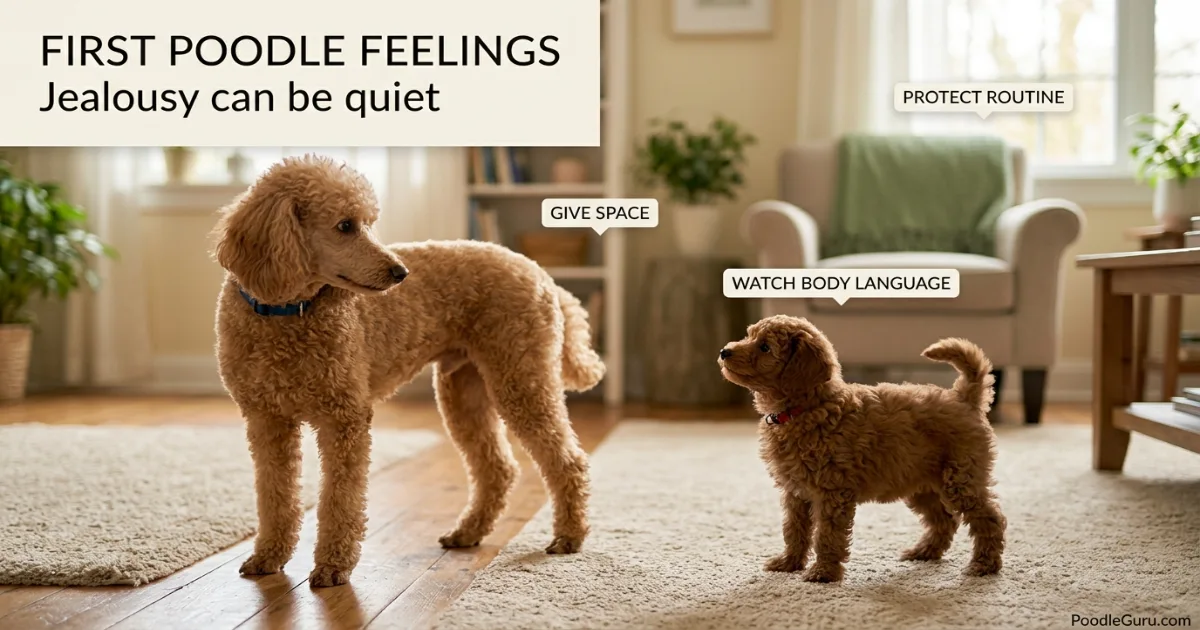
Poodles can exhibit deep jealousy. Even well-socialized adults may act out when attention shifts.
💸 Double the Outlay
Grooming, vet, food, boarding, and toys effectively double. Budget for $3,000–$6,000+ extra annually.
⏳ Grooming is Now a Part-Time Job
Two poodles means 8–12 hours of brushing and maintenance monthly, plus double the professional grooming cost.
🤝 Young-Pair Dependency Risk
Two young poodles raised too closely together may become overly dependent on each other without separate training.
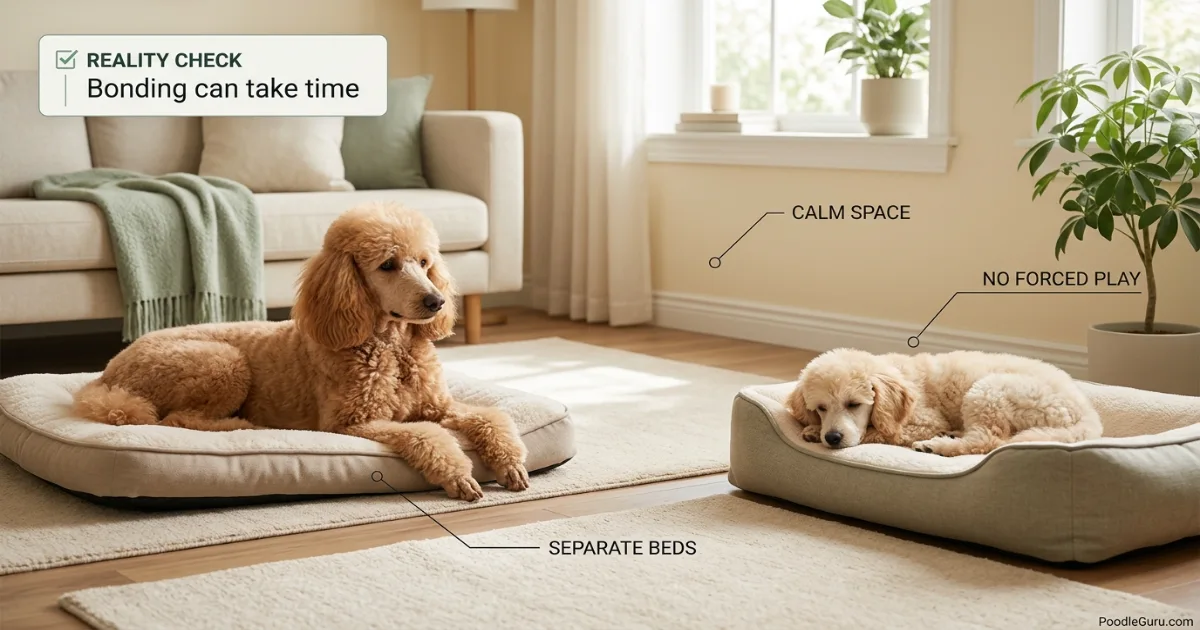
The Romanticized Vision vs. the First Six Months of Two-Poodle Life
There is a culturally embedded belief that dogs are happier in pairs. For some breeds, that holds true. Poodles are not that breed—at least, not unconditionally. Poodles are highly people-focused dogs, and many form intense bonds with their household. Because of that, adding a second poodle can feel less like “adding a friend” and more like changing the emotional structure of the home. For the first poodle, the question can become: Am I still your favorite? Is my role secure? The response can be subtle (a new reluctance to make eye contact, a drop in appetite) or dramatic (sudden potty accidents, growling over previously shared spaces).
New owners consistently report a “regression phase” where the resident poodle seems to forget years of training. This is normal, not a failure. The established dog’s routine has been upended by a furry intruder who chews toys wrong and gets cooed over regardless. Anticipating this emotional turbulence—and preparing for it with deliberate one-on-one time, separate sleeping areas, and patience—makes the difference between a household that stabilizes after a few months and one that festers with jealousy long-term.
The Financial Load Nobody Mentions Before You Bring Home Poodle Number Two
Most owners can recite the cost of one poodle’s upkeep. Double it—and then add a cushion of 15–20%. Why the extra? Because with two dogs, you’re no longer buying single items but often replacing things faster, paying for dual pet sitters, and managing unforeseen dynamics that cost money, like hiring a trainer when the two dogs’ energies clash. The table below gives broad 2026-style estimates for conscientious poodle care across three sizes. Actual costs vary by city, groomer, coat length, insurance plan, health status, and whether you groom at home.
| Annual Expense | Single Toy Poodle | Two Toy Poodles | Single Standard Poodle | Two Standard Poodles |
|---|---|---|---|---|
| Professional Grooming (every 4–6 wks) | $700–$1,200 | $1,400–$2,400 | $1,500–$2,200 | $3,000–$4,400 |
| High-Quality Food & Supplements | $400–$700 | $800–$1,400 | $800–$1,200 | $1,600–$2,400 |
| Routine Vet & Preventives | $500–$800 | $1,000–$1,600 | $700–$1,100 | $1,400–$2,200 |
| Pet Insurance (two dogs) | $300–$600 | $600–$1,200 | $500–$900 | $1,000–$1,800 |
| Boarding/Pet Sitting (2 wks/year) | $400–$700 | $800–$1,400 | $600–$1,000 | $1,200–$2,000 |
| Total Estimated Range | $2,300–$4,000 | $4,600–$8,000 | $4,100–$6,400 | $8,200–$12,800 |
Hidden cost: behavioral training
When two poodles trigger each other’s barking or develop separation anxiety as a pair, a qualified positive-reinforcement trainer becomes necessary. That’s an additional $500–$2,500 easily, depending on severity. Factor it into your mental budget before bringing a second dog home.
Grooming Two Poodles: A Weekend Ritual That Tests Your Resolve
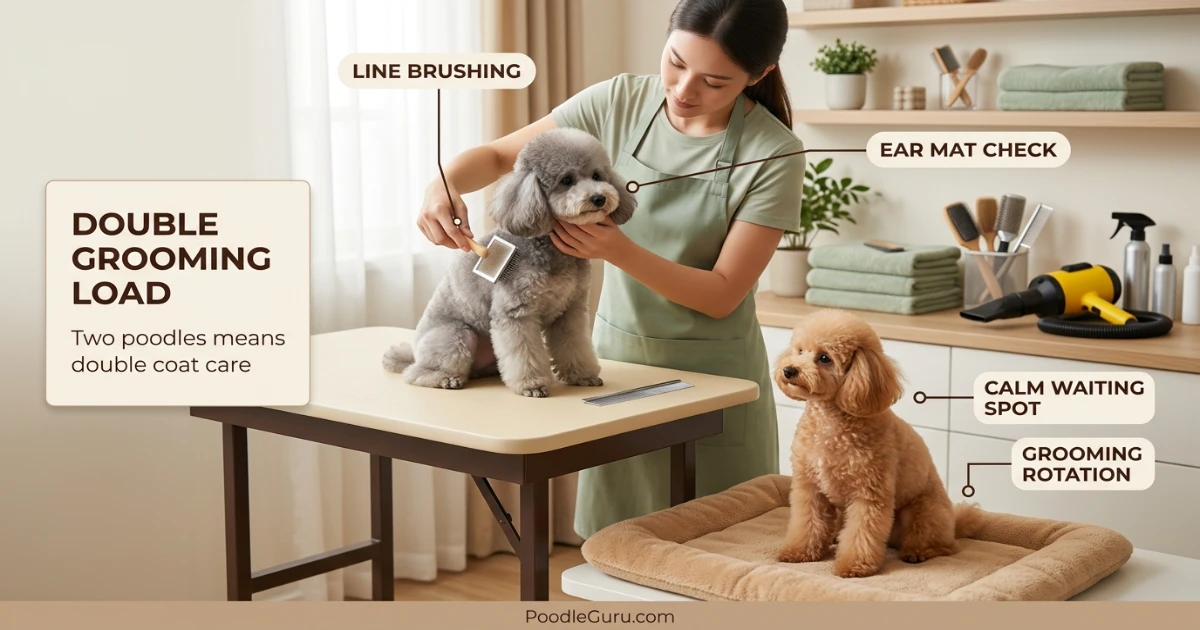
If you groom at home, the line-brushing, bathing, drying, and clipping that took a leisurely Sunday morning now consumes the better part of a weekend. Poodle coats don’t self-maintain; they mat faster in pairs because dogs lick each other’s ears and wrestle with wet coats after rain. Those damp, tangled curls behind the ears become felted overnight. Many experienced owners eventually schedule the two dogs on alternating professional appointments so they’re never simultaneously a disaster. But even with that system, daily combing doubles.
The upside is that two poodles often acclimate to each other’s grooming ritual. You’ll find one lying patiently nearby while the other is on the table, provided you build that trust intentionally. But do not underestimate the sheer physical toll of wrestling two wiggly poodles through a blowout when both decide today is not the day.
Littermate Syndrome Risk: Why Two Young Poodles Need Separate Training
One of the most misunderstood risks of getting a second poodle is the development of hyper-attachment between two young dogs. Many trainers call this pattern “littermate syndrome,” although it is better understood as a practical dependency risk rather than a formal diagnosis. It can happen when two young poodles grow up together without enough individual socialization, separate training, and independent confidence-building. The result can be dogs that panic when separated, refuse to engage fully with humans, or copy each other’s fear responses. Poodle intelligence can amplify the problem because they learn from each other quickly—both the good habits and the anxious ones.
Prevention protocol
Veteran poodle breeders strongly advise: separate walks, separate training classes, separate crates in different rooms, and individual bonding moments daily for at least the first year. Yes, it doubles your workload. But a poodle pair that relies solely on each other for security is a recipe for behavioral chaos later.
Your First Poodle’s Reaction: Signs You Might Be Breaking Their Heart
Jean, a Toy Poodle breeder I deeply respect, once told me, “Poodles forgive many things, but they don’t easily forgive being replaced.” You aren’t replacing them, of course, but your poodle doesn’t know that. Look for appetite suppression, increased clinginess, withdrawn sleeping positions, sudden barking regression, and resource guarding of you as the most prized possession. These can start within hours of the new dog arriving. The antidote is not forced togetherness but preserving sacred one-on-one rituals: a solo morning walk where the second dog stays home, lap time without competition, and feeding stations kept far apart.
The “They’ll Entertain Each Other” Fallacy
If your primary motivation is to reduce your poodle’s reliance on you for entertainment, pause. A second poodle rarely takes the pressure off; it frequently creates a more complex social web that still revolves around you. Yes, some well-matched duos do play beautifully—but expecting it leads to profound disappointment when they don’t. The two may simply coexist, each still vying for your affection separately. In worst cases, they’ll engage in competitive antics: racing to the door, barking over each other, escalating excitement, and ignoring you entirely when focused on each other. You become the referee, not the relieved bystander.
Personality Clashes Are Real: Not Every Poodle Wants a Canine Roommate
Poodle temperament spans from aloof and aristocratic to goofy and indiscriminately friendly. Pairing a reserved, low-energy apricot with a boisterous, high-drive silver pup can create constant friction. The mellow one retreats; the exuberant one gets frustrated. Some poodles simply prefer being an only dog and will live a diminished, stressed life with a new interloper. Before proceeding, consider an honest temperament assessment—a qualified behaviorist can help—and a foster-to-adopt scenario if possible. Surrendering a second poodle back to a rescue is a heartbreak you want to avoid at all costs.
What Reputable Breeders Wish You Knew Before You Ask for Puppy #2
Good breeders will interrogate you about the age gap, your existing poodle’s personality, and your tolerance for chaos before they’ll even consider placing a second dog. They’re not being difficult; they’ve seen too many second-poodle placements fail because the buyer idealized the transition. Many breeders recommend an age gap of at least 2–3 years so the first poodle is fully mature, trained, and secure. They also advise against same-sex pairs if the owner is inexperienced—two males or two females can intensify dominance disputes and jealous guarding. Opposite-sex pairs typically have the smoothest integration, but even that’s no guarantee.
Breeder-style insight
The most responsible second-poodle placements are built around temperament, age gap, household routine, and the owner’s ability to give both dogs individual time. A beautiful color match matters far less than a compatible energy match.
A Decision Framework: Is Getting a Second Poodle Right for You Right Now?
Answer these questions honestly. No poodle will judge you if the answer is “not yet.”
- Can you realistically afford $4,000–$12,000 more per year without financial strain?
- Do you have at least two hours a day to devote to separate exercise and training sessions?
- Is your current poodle confident, well-socialized, and free of serious anxiety or reactivity?
- Do you have space to separate dogs easily when needed (crates, rooms, gates)?
- Are all human household members fully on board with the mess, noise, and emotional labor?
- Are you prepared for the reality that the two poodles might never be best friends?
If multiple “no” answers surface, honoring them now prevents a painful rehoming later. The second poodle you don’t get is a sorrow avoided; the one you get without readiness becomes a guilt you carry.
Pro Tips From Owners Who Have Thrived With Two Poodles
Across long-term two-poodle households, the advice that consistently matters most comes down to a few golden rules:
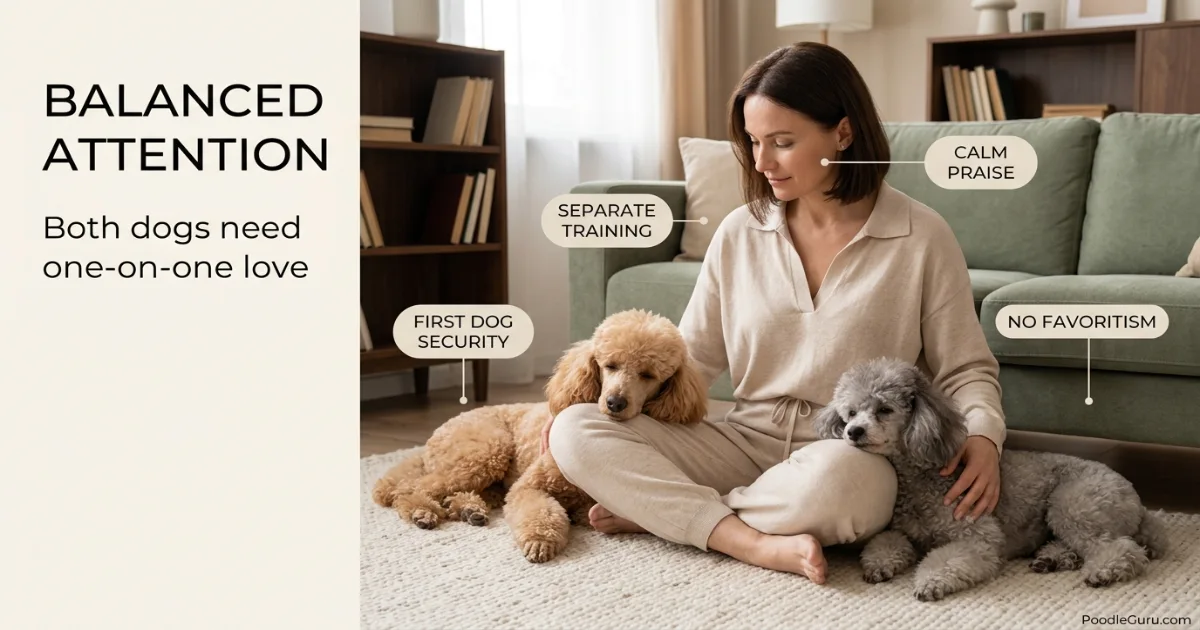
Never neglect the first dog’s privileges. The original poodle should always be fed first, leashed first for walks, and greeted first upon arrival. This small ritual reinforces their security and minimizes jealousy triggers.
Create “only dog” vacations. Some owners board the second poodle overnight occasionally to give the first one undivided attention. It sounds extreme, but it resets the bond.
Accept different play styles. One poodle may want to chase, the other to wrestle. Let them negotiate safely but supervise; don’t force compatibility.
Invest in a good canine relationship consultant. Even a single session early on can prevent deep-rooted animosity.
How to Introduce a Second Poodle Safely
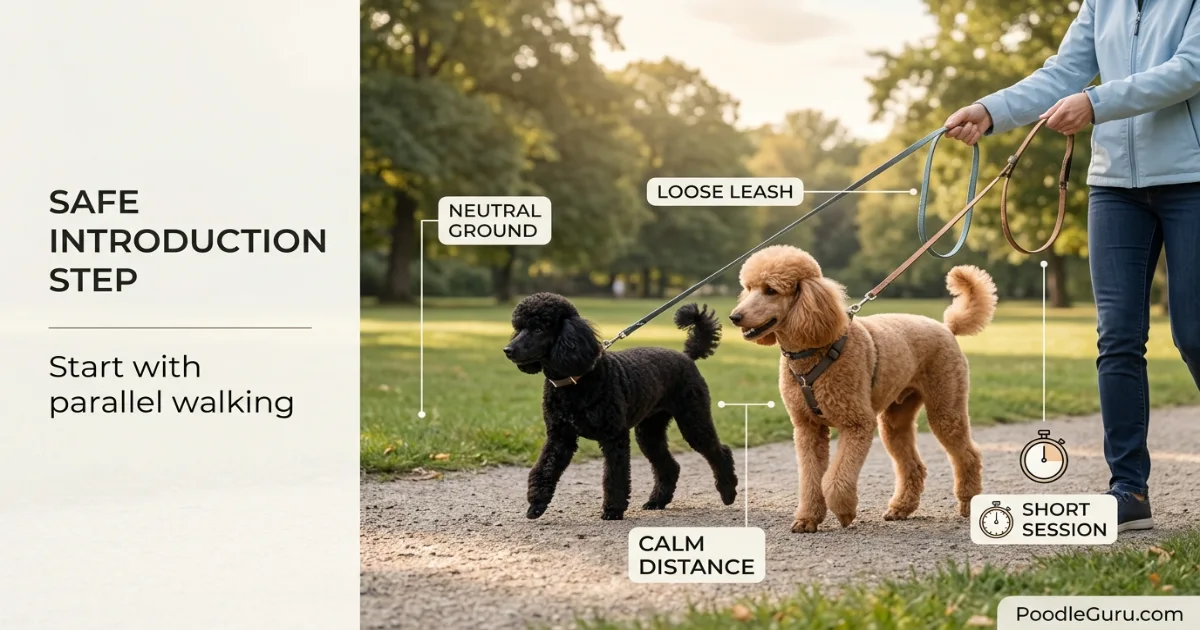
A smooth introduction is less about one perfect first meeting and more about slow, controlled structure. Use these steps before expecting the two dogs to share toys, food areas, lap space, or unsupervised freedom.
- Prepare separate spaces before arrival. Set up individual crates, feeding stations, beds, and quiet zones so neither poodle has to compete immediately.
- Meet on neutral ground first. Use a quiet outdoor area and parallel walking before any nose-to-nose greeting. Calm movement is safer than face-to-face pressure.
- Let the resident poodle enter the home first. This protects their sense of security and prevents the new dog from feeling like an instant invader.
- Separate and rotate attention. For the first weeks, keep meals, high-value chews, lap time, and training sessions separate. Both dogs should feel chosen.
- Increase together time only after relaxed body language. Watch for soft eyes, loose tails, voluntary breaks, and calm disengagement before allowing longer shared sessions.
Frequently Asked Questions About Getting a Second Poodle
- Is getting a second poodle a good idea for a busy single owner?
- Only if you can commit to separate daily enrichment for both dogs. Time-pressed singles often struggle because poodles demand significant one-on-one mental stimulation. With two, you risk two unhappy, under-exercised dogs instead of one.
- What is the best age gap between poodles to avoid jealousy?
- Most experienced owners and breeders suggest 2–4 years. This gives the first poodle time to mature fully and bond solidly with you before the newcomer arrives. Larger gaps can work if the older dog remains tolerant and healthy.
- Can two male poodles live together peacefully?
- Yes, many do, but it requires careful personality matching and steady leadership. Neutered males with compatible energy levels often succeed. Intact males or two strong-willed individuals can clash, sometimes dangerously. Same-sex aggression is real and demands vigilance.
- How do I introduce a new poodle puppy to my adult poodle without fights?
- Start on neutral territory, keep both on leashes, and allow parallel walking. Bring them home only after calm interaction. Separate spaces immediately, allow scent swapping through baby gates, and never leave them unsupervised for the first few weeks.
- Will my first poodle stop loving me if I bring home another?
- Not permanently, but the relationship can temporarily strain. Your poodle may withdraw, pout, or test boundaries. Consistent solo time, gentle reassurance, and avoiding favoritism will restore trust. The bond often deepens once the household settles.
- Do poodles do better in pairs if I work long hours?
- Not necessarily. Two poodles left alone together may develop co-dependent anxiety or destructive habits. A well-trained solo poodle with a dog walker often fares better than two bored, lonely poodles rehearsing bad behaviors together all day.
- How can I tell if my current poodle truly needs a canine companion?
- Look for genuine dog-to-dog social interest, not human-directed clinginess. If your poodle consistently enjoys positive playdates, relaxes around other dogs, and shows no guarding tendencies, the transition may be smoother. If they merely tolerate other dogs, reconsider.
- What’s the biggest mistake people make when getting a second poodle?
- Assuming the two will immediately “figure it out” and leaving them unsupervised too soon. Another common error: choosing the second poodle based on color or cuteness rather than complementary temperament. That aesthetic choice often leads to lifelong friction.
Bottom line: Getting a second poodle can expand your heart and your household in miraculous ways—but only if you embrace the messy middle. Strip away the fantasy of instant best friendship and prepare instead for a slow, deliberate merger of two complex canine personalities. Budget realistically, guard your first poodle’s emotional security, and never compromise on separate attention. When the work is done well, two poodles become something rare: not just a collection of dogs, but a true, harmonious micro-pack where every curly head knows its place. If that sounds like the kind of devotion you’re ready to give, your second poodle is waiting.