Do Poodles Make Good Emotional Support Dogs? 7 Powerful Benefits, Limits & Legal Rules
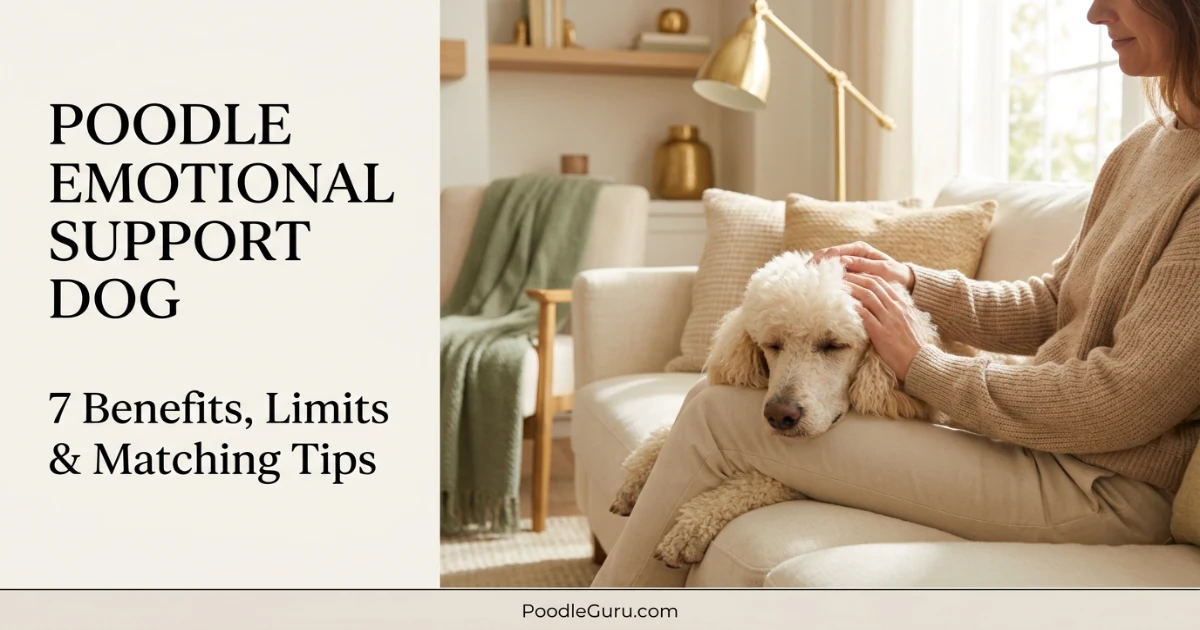
Poodles are more than elegant companion dogs. Their emotional sensitivity, trainability, and adaptability can make them excellent emotional support dog candidates — but the right match depends on temperament, size, lifestyle, and a clear understanding of ESA legal limits.
Quick Answer
Yes — many poodles can make excellent emotional support dogs when their temperament matches the handler’s needs. Their trainability, strong bonding style, and people-focused nature can support calm routines, comfort, and companionship. Their low-shedding coat may also help some allergy-sensitive homes, although no dog is truly allergy-free. The real question is not only whether poodles make good ESAs — it is which size, energy level, and temperament profile matches your daily life.
Emotional support animals occupy a unique space. They are not service dogs trained for specific disability-related tasks under ADA public-access rules, but they also are not simply chosen for cuteness. An ESA provides therapeutic presence — stability through companionship, routine, and nonverbal connection. That sounds simple, but not every dog temperament suits the role.
Poodles keep surfacing in ESA conversations for good reason. Their reputation for intelligence is well-earned, but intelligence alone does not make a good support dog. What often makes poodles stand out is how they use that intelligence: learning routines, noticing emotional shifts, and responding to consistent owner cues. This guide breaks down what makes poodles strong ESA candidates, where they shine, what pitfalls to avoid, and how to determine if a poodle fits your emotional support needs.
Top ESA Trait
Emotional attunement — poodles read and respond to human emotional states with unusual precision.
Best Size for ESA Work
Depends on lifestyle. Standards offer deep physical grounding; Toys provide portable, lap-based comfort.
Low-Shedding Advantage
Poodles shed minimally compared with many breeds, which may help some allergy-sensitive homes — though no dog is completely hypoallergenic.
What Makes a Dog a Strong Emotional Support Animal?
An emotional support dog is a dog whose presence may help a person manage symptoms of an emotional or psychological condition. Unlike ADA service dogs, ESAs are not required to be trained for specific disability-related tasks. Their value usually comes from companionship, routine, tactile comfort, and the stabilizing effect of caring for another living being.
But not every dog is suited to this role — even within breeds known for good temperaments. A strong ESA candidate typically demonstrates several overlapping traits: emotional sensitivity to human states, a calm baseline temperament, adaptability to different environments, and the ability to provide physical comfort without becoming anxious themselves.
For poodle owners and prospective handlers, the key insight is this: emotional support work often works through routine, companionship, and calm co-regulation. The dog’s calm presence helps regulate the handler’s stress response. A dog that absorbs and reflects anxiety back — rather than grounding it — can unintentionally worsen the handler’s state. This is where poodle temperament gets interesting.
Why Poodles Excel as Emotional Support Dogs
Poodles bring a rare overlap of traits to emotional support work. Many are sensitive without being fragile, alert without being reactive, and bonded without becoming unhealthy clingy when properly raised. That balance is valuable in a support companion.
The AKC describes poodles as active, proud, and very smart, with strong trainability. In real homes, that often means a poodle quickly learns daily patterns: when you settle, when you move, when you become tense, and when quiet contact is welcome. Many owners describe their poodles approaching during stressful moments and offering calm physical contact without demanding constant attention in return.
That last distinction matters. Some dogs seek proximity because they need reassurance. A steady poodle can learn to seek proximity when you benefit from it. That distinction matters in ESA dynamics because the dog should add calm, not amplify stress.
Expert Insight: The Attunement Difference
A strong ESA candidate should be socially aware, emotionally steady, and able to recover from surprises. Poodles often do well here because they are trainable and people-focused, but individual temperament matters more than breed reputation. This is not just about obedience. It is about reading the room, staying calm, and responding appropriately.
How Poodle Intelligence Shapes Emotional Support Work
When people say poodles are intelligent, they usually mean trainability. Poodles learn commands quickly and retain them well. But for ESA work, a different kind of intelligence matters more: emotional and social cognition.
Poodles do not just learn cues — they learn patterns. They notice when your routine shifts, when your energy changes, and when certain comfort routines repeat. This pattern-recognition capacity means a well-bonded poodle may become more responsive over time as the relationship deepens.
There’s a flip side, though. That same intelligence means poodles need mental engagement. A bored poodle can become restless or anxious — and an anxious dog is less able to provide steady support. For ESA handlers, this means part of the support dynamic runs both ways: you provide structure and enrichment, and the poodle provides emotional stability in return. It’s a reciprocal relationship, not a one-way comfort dispenser.
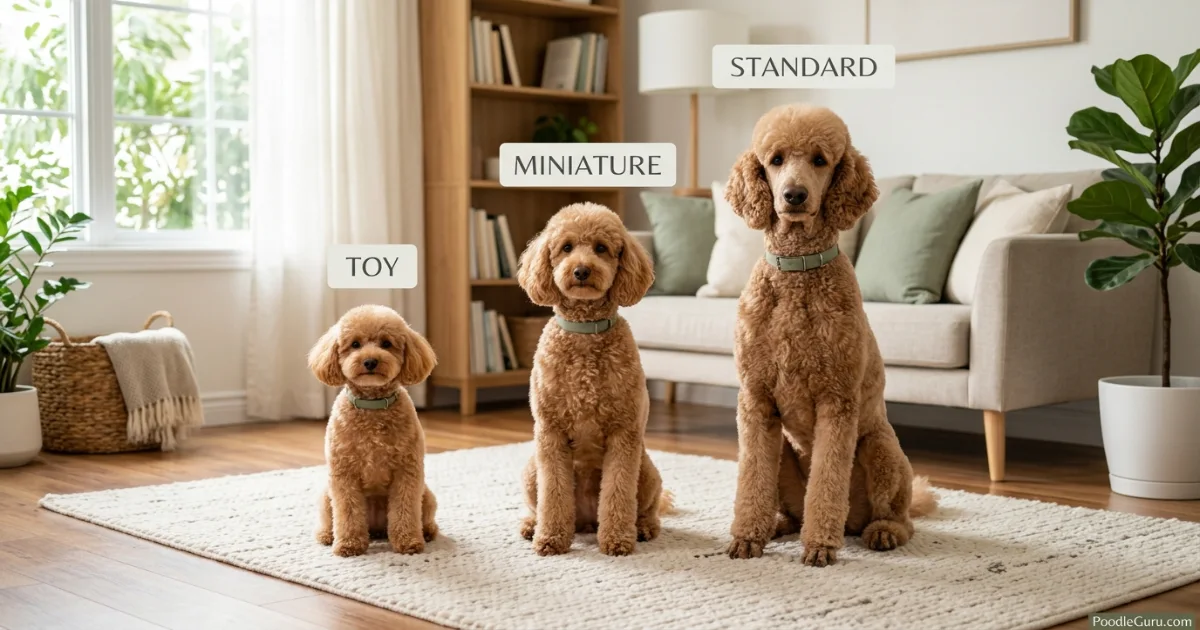
Toy vs. Miniature vs. Standard: Size Matters for ESA Work
All three poodle sizes can succeed as emotional support dogs — but they succeed in different ways. The right size depends on your living situation, the type of comfort you need, and how much physical presence matters to your emotional regulation.
| ESA Factor | Toy Poodle (4–6 lbs) | Miniature Poodle (10–15 lbs) | Standard Poodle (40–70 lbs) |
|---|---|---|---|
| Best For | Lap-based comfort, travel, small apartments | Balanced presence, active handlers, flexible housing | Deep pressure comfort, grounding physical presence, larger homes |
| Comfort Style | Light touch, lap warmth, portability | Close proximity, moderate tactile grounding | Full-body pressure, leaning, floor-level grounding |
| Housing Flexibility | Excellent — fits nearly any living situation | Very good — adaptable to apartments and houses | Moderate — needs space; some rentals have size restrictions |
| Exercise Needs | Low-moderate — short walks and indoor play | Moderate — daily walks plus mental stimulation | Moderate-high — needs substantial daily exercise and engagement |
| Bonding Pattern | Often bonds intensely with one person | Balanced bonding — warm with the household | Deep, devoted bond; may shadow their primary person |
| Lifespan Expectancy | 12–15+ years | 12–15 years | 10–13 years |
| Potential ESA Drawback | Can become overly dependent; fragility requires careful handling | Few drawbacks — middle ground works for most handlers | Exercise demands may overwhelm handlers with limited energy |
There’s no universally superior choice here. A Toy Poodle that curls into your lap during anxious moments provides a different kind of comfort than a Standard Poodle that leans against your legs for grounding pressure. Both can be valid support styles. What matters is which sensory input helps your routine and emotional regulation.
The PoodleGuru ESA Match Assessment
At PoodleGuru, we evaluate poodle ESA suitability using a four-part framework that looks beyond breed generalizations. This method helps handlers and prospective owners make decisions based on individual fit rather than broad assumptions.
Emotional support suitability is a matching process, not a breed certification. The right poodle for one handler may be entirely wrong for another — even within the same size category. Use this assessment to think through your specific needs before committing.
Identify Your Primary Support Need
What does emotional support look like for you? Physical grounding (weight, pressure, touch)? Routine anchoring (feeding, walking, structured days)? Distraction interruption (play, redirection during spiraling thoughts)? Or quiet companionship (silent presence, no demand)? Poodles can serve all four — but individual dogs lean toward specific comfort styles. Be honest about which one matters most.
Match Energy Levels Honestly
A mismatch here is the most common reason ESA placements struggle. If your condition makes daily long walks difficult, a high-drive Standard Poodle may create more stress than relief — regardless of how loving the dog is. Conversely, if movement and outdoor time are part of your coping strategy, a Toy Poodle may not keep pace. Match the dog’s baseline energy to your functional baseline, not your aspirational one.
Evaluate the Dog’s Emotional Stability
Not every poodle temperament suits ESA work. Look for a dog that recovers quickly from startle, shows curiosity rather than avoidance in new situations, and demonstrates calm interest in people without frantic greeting behavior. Breeders who prioritize temperament can guide you toward puppies from lines known for emotional steadiness. An ESA poodle should absorb calm, not radiate anxiety.
Plan the Reciprocal Care Structure
Poodles thrive on engagement. Your ESA poodle needs you to provide structure — grooming routines, mental enrichment, and consistent expectations. This reciprocity isn’t a burden; for many handlers, it’s part of the therapeutic value. Caring for the dog creates purpose. But it must be sustainable. If grooming every 4–6 weeks and providing daily mental stimulation feels overwhelming, consider whether a lower-maintenance support animal might serve you better.
Handler Tip: Ask About Adult Temperament, Not Just Puppy Behavior
Puppy temperament can shift significantly through adolescence (6–18 months). When evaluating a poodle for ESA potential, ask the breeder or rescue about adult relatives’ temperaments. A calm, emotionally steady adult lineage is a stronger predictor than a puppy’s behavior during a single visit. This is especially important for Standards, who go through a pronounced adolescent phase.
What Real ESA Poodle Ownership Looks Like
Discussion about emotional support animals often stays theoretical. Let’s get practical. Here’s what daily life with an ESA poodle actually involves — the rhythm, the responsibilities, and the moments that don’t make it into breed descriptions.
Your poodle will follow you. Not anxiously, but attentively. They’ll move from room to room with you, settle near your feet while you work, and check in with eye contact throughout the day. For handlers who need grounding presence, this is profoundly stabilizing. For handlers who feel overwhelmed by constant proximity, it may take adjustment.
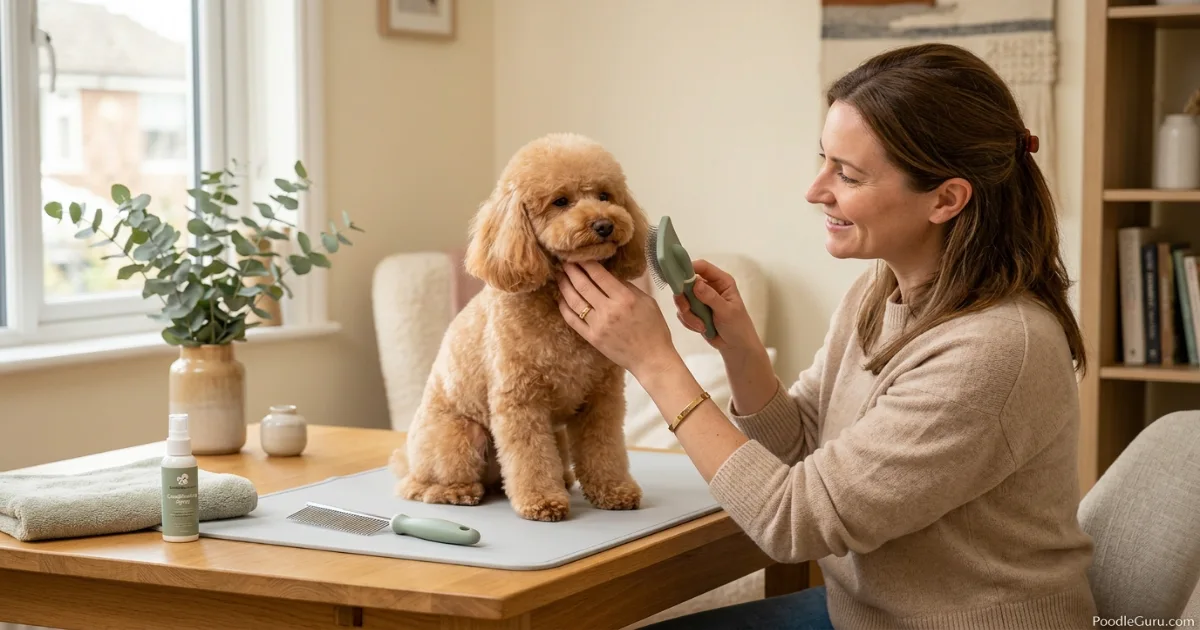
Grooming becomes a ritual. Poodles need brushing every 2–3 days and professional grooming every 4–6 weeks. For many ESA handlers, this routine becomes therapeutic — a tactile, repetitive care activity that anchors the day. But it’s a real time and financial commitment. Budget roughly $60–$120 per grooming session depending on your location and poodle size.
Exercise needs vary by size, but all poodles need daily movement and mental engagement. A Toy Poodle may be satisfied with indoor play and short walks. A Standard Poodle typically needs 45–60 minutes of substantial exercise plus puzzle toys, training games, or scent work. If your condition includes depressive episodes that make leaving the house difficult, factor this in honestly when choosing size.
The emotional payoff is significant — but it’s earned through consistent care. Poodles give back what they receive. A well-cared-for poodle becomes more emotionally responsive, not less, as the bond deepens over months and years.
Common Mistakes When Choosing a Poodle as an ESA
Even well-intentioned handlers make predictable errors when selecting an ESA poodle. These mistakes don’t mean the placement fails — but they create friction that could have been avoided with better upfront thinking.
Mistake 1: Prioritizing Appearance Over Temperament
A stunning red Standard with a nervous disposition will not serve you as well as a calm, steady black Miniature from temperament-focused lines. Coat color and size aesthetics matter far less than emotional stability for ESA work.
Mistake 2: Assuming Intelligence Means Low Maintenance
Smart dogs need more engagement, not less. A poodle without mental stimulation will create its own activities — often in ways that increase handler stress rather than reducing it.
Mistake 3: Skipping the Energy-Level Reality Check
Choosing a Standard Poodle because they’re “more substantial” for grounding work, then discovering you can’t meet the exercise demand during low-functioning periods, sets both dog and handler up for frustration.
Training Considerations for ESA Poodles
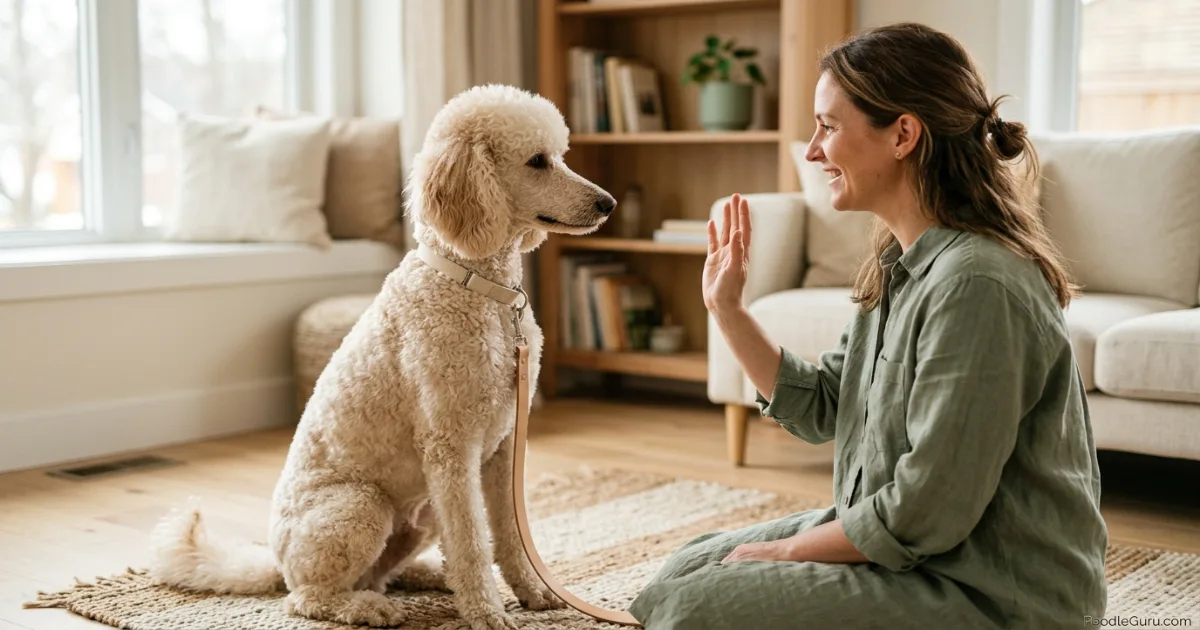
ESAs do not require task-specific training in the same way ADA service dogs do, but that does not mean training is irrelevant. A well-trained poodle is a more reliable support companion — and a poorly trained one can create problems that undermine the support relationship.
Focus on foundational skills that serve emotional support functions: a reliable settle cue (go to a mat or bed and relax), loose-leash walking for stress-reducing outdoor time, and a solid recall for safety. These aren’t just obedience exercises — they’re tools that make the ESA relationship smoother and more reliable.
Poodles respond best to positive reinforcement. Their sensitivity means harsh corrections can damage trust, and trust is the foundation of ESA work. Short, engaging training sessions (5–10 minutes) work better than long drills. Poodles learn quickly, but they also bore quickly — keep sessions varied and end on success.
When to Involve a Professional Trainer
If your poodle shows signs of anxiety (excessive barking, destructive behavior when alone, hypervigilance), consult a qualified positive-reinforcement trainer before the behavior pattern solidifies. Anxiety in an ESA dog is a serious problem — the dog needs to be a source of calm, not a recipient of it. Early intervention with a professional who understands both poodles and emotional support dynamics is worth the investment.
Legal and Housing Considerations for ESA Poodles
In the United States, emotional support animals may qualify as assistance animals for housing accommodation under the Fair Housing Act. A person with a disability may request a reasonable accommodation to keep an assistance animal, including an ESA, even where a property has pet restrictions. Housing providers may evaluate the request and may ask for reliable disability-related documentation when the need is not obvious.
ESAs do not have public access rights under the ADA service animal rules. Dogs whose sole function is comfort or emotional support do not qualify as ADA service animals. Your poodle cannot accompany you into restaurants, grocery stores, or other public accommodations unless those spaces are pet-friendly or the dog is separately trained as a qualifying service animal.
For U.S. air travel, rules changed after the Department of Transportation revised its service animal policy. DOT no longer treats emotional support animals as service animals for airline access. Service dogs that are individually trained to do disability-related work or tasks remain protected. If air travel with your poodle matters, plan around the airline’s pet policy unless your dog is a qualifying service dog.

Frequently Asked Questions
Are poodles naturally suited to emotional support work?
Yes. Poodles possess high emotional intelligence and a natural tendency to attune to their handler’s emotional state. They notice shifts in mood, energy, and routine — often before the handler consciously registers them. This sensitivity, combined with their strong bonding instinct, makes them naturally inclined toward the core functions of emotional support work without requiring specialized training to be emotionally present.
Which poodle size is best for an emotional support dog?
There’s no single best size — it depends entirely on your support needs. Toy Poodles excel at portable, lap-based comfort. Standard Poodles provide deep-pressure grounding and a substantial physical presence. Miniature Poodles offer a middle ground. Match the size to the type of sensory comfort that helps your nervous system regulate most effectively.
Do poodles bond too strongly with one person for ESA work?
Poodles often form a primary bond with one person, which can actually enhance ESA effectiveness — the dog becomes deeply invested in that person’s emotional state. However, this intensity requires management. A poodle that becomes anxious when separated from their handler isn’t providing stable support. Early socialization and gradual alone-time training help prevent unhealthy over-attachment.
Can a Toy Poodle really be an effective emotional support dog?
Absolutely. Toy Poodles may be small, but their emotional perception is full-sized. Their portability is a genuine ESA advantage — they can accompany handlers through daily routines, travel easily, and provide constant tactile comfort. The key is matching expectations: a Toy Poodle offers light-touch grounding and constant proximity, not weight-based pressure. For many handlers, that’s exactly what works.
Do emotional support poodles need professional training?
ESAs do not legally require task-specific training in the same way service dogs do, but foundational training significantly improves the support relationship. A solid settle cue, loose-leash walking, and reliable recall make daily life smoother. For poodles showing anxiety or reactivity, professional positive-reinforcement training is strongly recommended — a highly anxious dog is less able to provide steady support.
How do I get my poodle recognized as an emotional support animal?
For housing accommodation, ESA documentation generally comes from a licensed healthcare or mental health professional who has enough knowledge of your disability-related need to provide reliable documentation. There is no official federal ESA registry or certification. Be cautious with websites claiming instant registration. Work directly with a qualified professional who is involved in your care.
Are poodles too high-energy to be calming emotional support dogs?
Poodles have energy, but they also have an off-switch when their needs are met. A well-exercised, mentally stimulated poodle settles into calm companionship readily. The key is meeting their baseline needs consistently. If that’s sustainable for you, the energy becomes a feature — it gets you moving on days when movement helps — rather than a drawback.
Key Takeaways: Do Poodles Make Good Emotional Support Dogs?
Poodles can be among the strongest emotional support dog candidates for the right person. Their combination of trainability, people-focused temperament, and strong bonding capacity can create a support relationship that improves over time. The decision comes down to honest self-assessment and careful matching — not whether the breed is capable, but whether a specific poodle fits your specific needs.
- Poodles are highly trainable and people-focused, which can make them responsive to human routines and emotional cues.
- Toy, Miniature, and Standard Poodles all succeed as ESAs but offer different comfort styles: lap-based, balanced presence, and deep-pressure grounding respectively.
- The PoodleGuru ESA Match Assessment evaluates four factors: primary support need, energy-level compatibility, the dog’s emotional stability, and sustainable reciprocal care structure.
- Poodle intelligence means they need mental engagement — a bored poodle becomes anxious, and an anxious dog can’t ground anyone.
- ESAs may qualify for reasonable housing accommodation under the Fair Housing Act, but they do not have ADA public-access rights unless they are separately trained as service animals.
- The best ESA poodle match prioritizes temperament stability over appearance, honest energy-level alignment, and a handler who can sustain the care rhythm the dog needs.