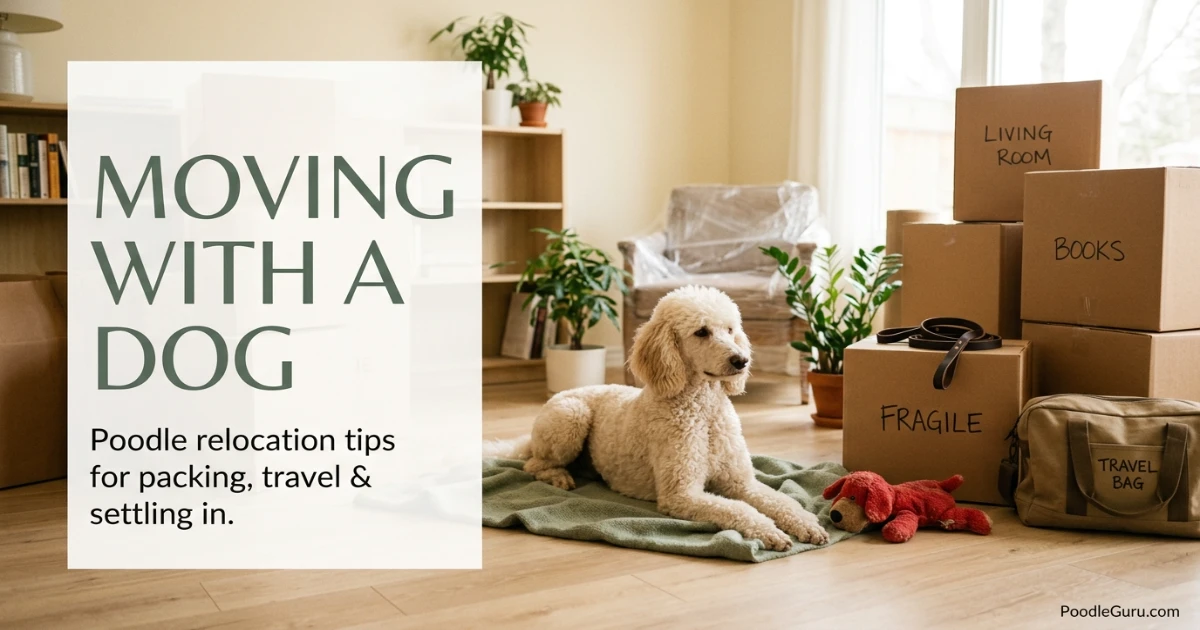
Moving With a Dog: The Poodle Owner’s Stress-Free Relocation Guide
Poodles feel the chaos of a move deeply. This step-by-step plan keeps your sensitive companion calm, secure, and happy from the first packed box to the final settled-in sniff.
Quick Answer
Moving with a dog—especially a poodle—requires preparation, not just patience. Poodles thrive on routine, and a relocation upends everything they know. For poodle owners, this means creating a “safe bubble” of consistency, using calming enrichment, and never treating the move as an afterthought. The most important thing to understand is that your poodle’s emotional safety during the transition directly affects how quickly they adapt to the new home.
In This Guide
Why Poodles Need a Different Moving Plan
Moving with a dog that is as intuitive as a poodle means understanding that they don’t just observe the upheaval—they feel it. Poodles are a sensitive, people-oriented breed. They notice when the furniture shifts, when your stress levels spike, and when the daily walk happens at the wrong time. Without a deliberate plan, a brilliant poodle can easily become an anxious one, manifesting in pacing, whining, barking, or even house soiling.
The AKC recommends maintaining your dog’s routine as much as possible during a move. For poodles, that advice is doubly true. Their mental well-being depends on predictability, so your job is to build continuity into the chaos. Little things—keeping their bed in the same room as you pack, feeding at normal times, and never packing their toys into an inaccessible box—make a huge difference.
Emotional Sensitivity
Poodles absorb household stress. If you’re frantic, they’ll be jumpy. Keep your voice calm and movements deliberate.
Routine Reliance
Mealtimes, walks, and play sessions must stay intact. Even on moving day, feed at the usual hour.
Clinginess Phase
During a move, poodles often shadow owners more. This is normal—offer gentle reassurance without encouraging panic.
The PoodleGuru Relocation Readiness Framework
At PoodleGuru, we evaluate a move’s success through three pillars: Sanctuary, Consistency, and Gradual Introduction. Together, they form our Relocation Readiness Framework—a simple system to keep your poodle emotionally grounded.
Sanctuary: A Safe Room That Never Moves
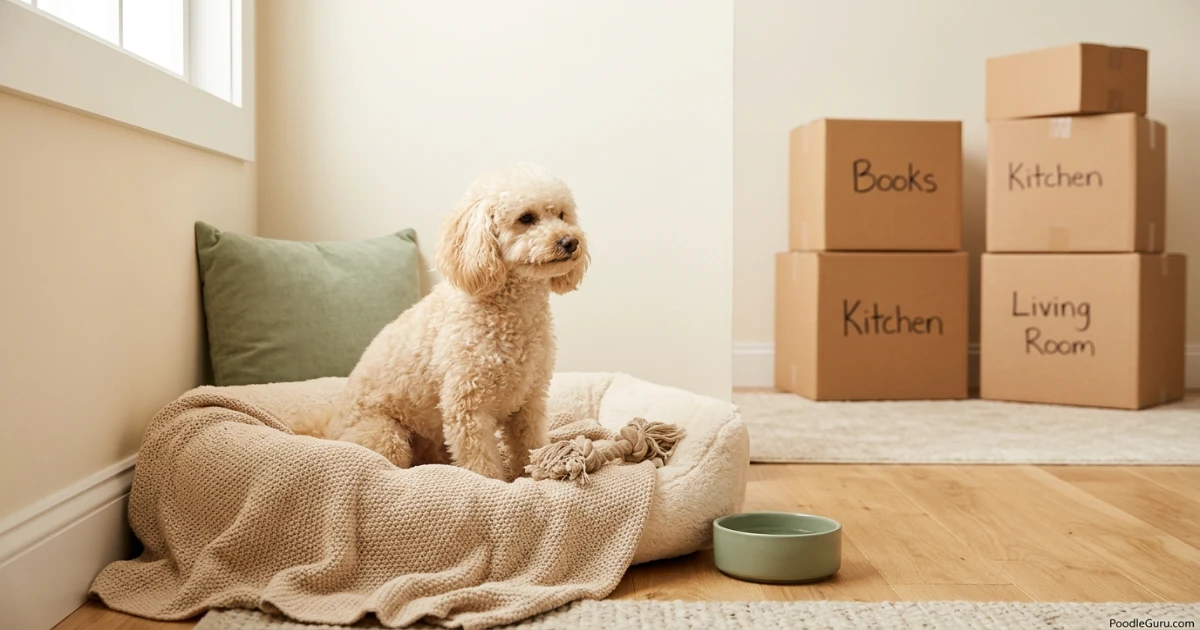
Designate one room or quiet corner that stays completely untouched until moving day. This is where your poodle’s bed, water, and a frozen stuffed Kong live. It becomes their retreat when the rest of the house turns upside down.
Consistency: A Skeleton Routine
Even if everything else changes, protect three anchors: morning pee time, meal times, and a short evening walk. These fixed points reassure your poodle that life hasn’t dissolved into chaos.
Gradual Introduction: The New Home, One Room at a Time
Don’t just open the door and let your poodle race through the new place. Introduce rooms slowly, with treats and encouragement, letting them explore on their own terms. This prevents sensory overload.
Pre-Move Preparation: Weeks Before
Don’t wait until the last minute to prepare your poodle. Start three to four weeks ahead, especially if you’re moving long-distance or to a very different environment. Here’s your timeline:
- 3–4 weeks out: Update your poodle’s microchip and ID tags with your new address and phone number. This is a non-negotiable safety step.
- 2–3 weeks out: If your poodle isn’t already crate-trained, begin positive crate conditioning. A crate can be a portable sanctuary in a new home. Also, schedule a vet visit for a health check and refill any medications.
- 1 week out: Pack your poodle’s “go-bag”: food for three days, bowls, leashes, waste bags, a favorite toy, a blanket that smells like home, grooming wipes, and any calming aids your vet approves (like a pheromone diffuser). Keep this bag with you, not the movers.
Expert Insight: Vet Check Before You Go
Moving is stressful, and stress can unmask hidden health issues. A pre-move vet visit ensures your poodle is fit for travel. Ask about motion sickness medication if driving, and get a copy of vaccination records if you’ll need to register with a new vet. If your poodle has anxiety, discuss vet-approved short-term anti-anxiety options for the actual moving day.
Moving Day: A Step-by-Step Survival Plan
This is the most intense day for your poodle. With strangers entering, doors opening, and heavy furniture shifting, their stress can spike. Follow this plan to keep them safe and as calm as possible.
Secure your poodle before movers arrive.
Place them in their Sanctuary room with a sign on the door: “Dog inside – do not open.” Leave a frozen puzzle toy and the radio on low. This prevents escapes and reduces exposure to the chaos.
Manage bathroom breaks carefully.
Use a leash every time you take them out, even in a fenced yard. Scared dogs can bolt. Keep breaks short and matter-of-fact, with a high-value treat reward for calm behavior.
Travel with comfort, not confinement.
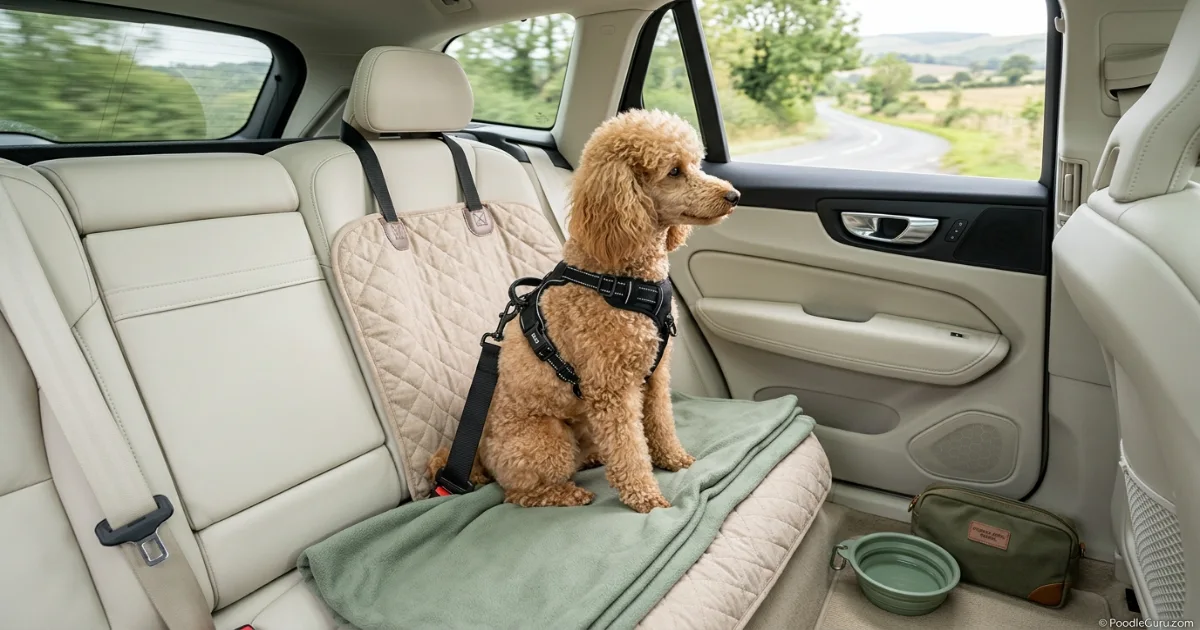
If driving, secure your poodle in a crash-tested carrier or a crash-tested harness attached to the vehicle seatbelt system. Keep the temperature steady, offer safe rest stops every 2–3 hours, and never leave them alone in a parked car.
Arrive at the new home with a plan.
Set up the Sanctuary room first—bed, water, a familiar toy—before letting your poodle in. Keep them in this safe space while you unload essentials. They’ll emerge when the noise settles.
Settling Into the New Home
The first 48 hours set the tone. Don’t expect your poodle to immediately love the new place. Let them explore at their own pace, one room at a time, with you present. Scatter some treats around the floor to encourage sniffing—it lowers anxiety.
Reintroduce familiar smells: use the same blanket, same bed, and even the same laundry detergent on their bedding. Don’t wash their toys right before the move; the familiar scent is comforting. Keep walks short and on-leash until you’re confident they can’t slip out of a gate. And try not to leave them alone for long stretches the first week. If you must go out, use a camera to check in and consider a pet sitter.
If your poodle seems restless, try a short, positive training session to re-establish your bond and build confidence. The familiar rhythm of “sit” and “touch” grounds them more than you’d expect.
Common Mistakes to Avoid When Moving With a Poodle
Even well-meaning owners slip into these traps. Spot them early to save your poodle unnecessary stress.
| Mistake | Why It Backfires | Poodle-Smart Alternative |
|---|---|---|
| Letting poodle roam free while movers work | Open doors, strangers, heavy equipment—a recipe for a lost or injured dog | Secure in a locked room with a “do not open” sign |
| Changing food or schedule abruptly | Digestive upset and anxiety can trigger diarrhea or refusal to eat | Keep same food brand, same bowl, same times for at least a week post-move |
| Forcing exploration of new home | A poodle that’s dragged from room to room can become fearful of the new space | Let them approach rooms on their own, with you sitting calmly inside |
| Washing all bedding and toys before the move | Removes the scent that signals “home” and safety | Keep one blanket unwashed; pack it in the go-bag |
| Ignoring the post-move vet registration delay | If an emergency happens, you’ll waste precious minutes finding a new clinic | Research a vet near your new home and transfer records before moving day |
Signs of Stress That Need Attention
Some anxiety is normal. But if your poodle refuses to eat for more than 24 hours, hides constantly, has diarrhea for over 48 hours, or shows signs of depression (extreme lethargy, lack of interest in you), call a vet. Poodles can develop stress-related digestive upset, and older dogs can struggle more deeply with relocation changes. Don’t “wait it out” if symptoms persist.
Your 7-Day Moving Countdown: The PoodleGuru Action Plan
Print this and tape it to your fridge. It keeps you and your poodle on track.
| Days Until Move | Action |
|---|---|
| 7 | Update microchip and tags; confirm new vet and transfer records. |
| 6 | Wash one blanket and set it aside—do not wash again until after move. |
| 5 | Practice crate time if using one; introduce calming pheromone diffuser. |
| 4 | Pack go-bag with food, bowls, leash, toys, meds, and vet records. |
| 3 | Deep clean your current home without poodle present; keep them in Sanctuary. |
| 2 | Confirm that movers/friends know about the “dog room”; prep frozen Kongs. |
| 1 (Moving Day) | Secure poodle in Sanctuary early; leash for all potty breaks; travel safely. |
Frequently Asked Questions
How do I move my poodle long distance without stressing them out?
Break the trip into manageable segments. Use a comfortable, secure carrier or crash-tested harness, maintain a familiar routine as much as possible, and play calming music if your dog already responds well to it. A vet-approved pheromone product may help some dogs. If flying, consult your vet and the airline well in advance about health, carrier, and cabin-versus-cargo safety requirements.
Should I sedate my poodle for the move?
Only if your veterinarian prescribes it after an exam. Sedation can affect breathing and temperature regulation, so it’s not a casual decision. Many poodles do well with vet-approved anti-anxiety medication instead of heavy sedation.
My poodle won’t eat after moving. Is that normal?
Stress can suppress appetite for 24–48 hours. Offer their usual food in small portions, or use a vet-approved bland meal if your veterinarian has recommended one. Warming food slightly can increase aroma. If your poodle still will not eat after two full days, contact your vet.
How long does it take for a poodle to adjust to a new home?
Most poodles begin to settle within 3–7 days, though full comfort can take 2–4 weeks. Maintaining routines and giving gentle encouragement speeds up the process. Older poodles may take a bit longer.
Can I leave my poodle with a sitter on moving day?
It’s often an excellent idea. If you have a trusted sitter or a doggy daycare your poodle loves, a day away from the chaos can be far less stressful than being locked in a room while hearing strange noises.
What if my poodle has an accident in the new house?
Clean it calmly with an enzymatic cleaner and don’t scold. The stress of moving can cause temporary regression. Revisit potty-training basics for a few days, and reward outdoor elimination heavily.
Should I change my poodle’s routine after moving?
No. Keep feeding, walking, and play times as close to the old schedule as possible. Routine is the fastest way to tell your poodle, “Everything is still okay.”
Key Takeaways: Moving With a Poodle
Relocating with a sensitive, intelligent breed like a poodle requires planning around their emotional needs. The PoodleGuru Relocation Readiness Framework—Sanctuary, Consistency, and Gradual Introduction—turns a high-stress event into a manageable transition.
- Poodles need a safe, unchanging Sanctuary room during packing and moving day to retreat from chaos.
- Keep three routine anchors (morning walk, meals, evening walk) consistent to reduce anxiety.
- Never let your poodle roam freely when doors are open; leash for every potty break on moving day.
- Pack a dedicated go-bag with food, medication, a familiar unwashed blanket, and calming aids.
- Introduce the new home one room at a time; don’t force exploration, and let your poodle acclimate at their own speed.
- Monitor for stress signs like appetite loss or hiding beyond 48 hours, and consult a vet if they appear.
Next step: Use the 7-Day Moving Countdown above and start today. Then, once you’re settled, revisit obedience training to rebuild your poodle’s confidence in the new environment.