Poodle AKC Registration: Step‑by‑Step Guide for Owners and Buyers
Quick Answer: Poodle AKC registration is the process of recording your purebred Poodle with the American Kennel Club, establishing its lineage, eligibility for competition, and often its breeding rights. For most owners, it requires submitting a signed AKC Dog Registration Application from the breeder, paying a fee between $40 and $80, and waiting a few weeks for the certificate. But the path isn’t always straightforward — limited vs. full registration, lost paperwork, and online breeder scams create confusion that this guide untangles completely.
You’ve just brought home a beautiful Poodle puppy. Tucked inside the folder of health records, vaccination certificates, and feeding instructions, you find a crisp AKC registration form — or perhaps you don’t, and now you’re wondering what that means. Either way, the term “Poodle AKC registration” lands differently depending on who you are: a proud pet owner wanting that official recognition, a future competitor dreaming of the conformation ring, or someone who just discovered their rescue Poodle might actually be purebred.
There’s a quiet gravity to AKC papers. They’re more than a pedigree — they’re a key that unlocks certain doors and a shield against certain false claims. But the registration landscape brims with fine print, breeder-specific choices, and a handful of mistakes that even experienced owners make. We built this guide to walk you through every step, anticipate every snag, and leave you with a registration result you can trust.
Paper application: $40. Online: $45. Lost certificate replacement: $30.
3–6 weeks by mail; up to 10 business days online.
Full permits breeding and showing; limited is for pet homes only.
AKC registration does not guarantee health, quality, or ethical breeding.
What Poodle AKC Registration Really Means (And What It Doesn’t)
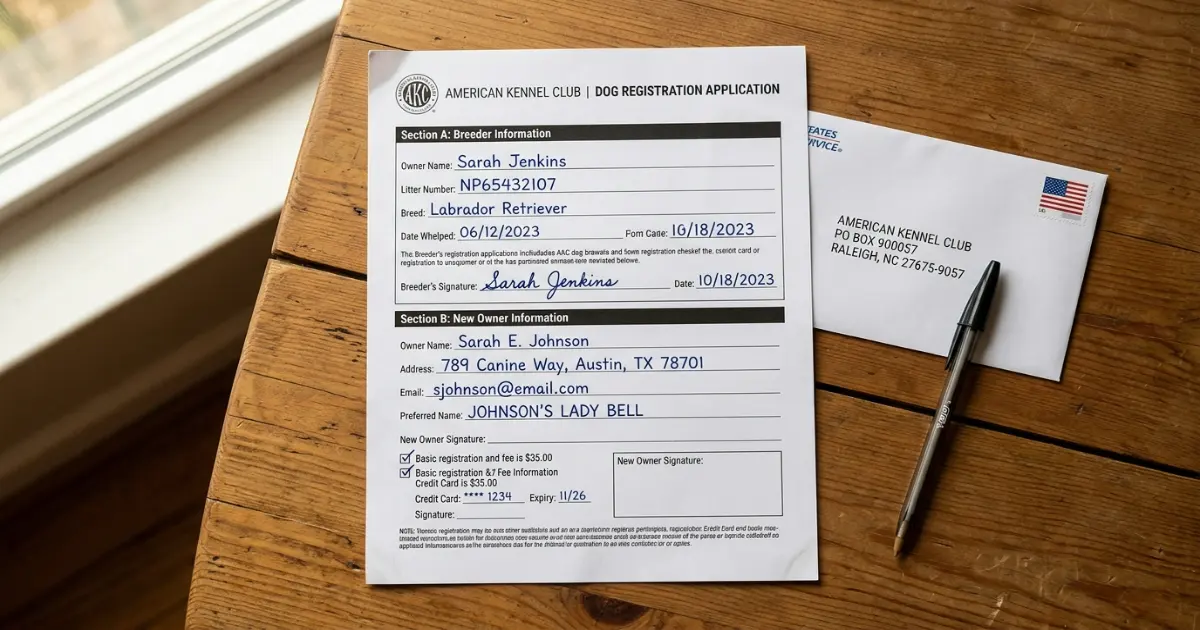
Poodle AKC registration is, at its core, a lineage record. The American Kennel Club maintains the world’s largest purebred dog registry, and when you register your Poodle, you’re adding your dog’s name, date of birth, sex, color, and three-generation pedigree into that database. It’s a powerful tool for tracking bloodlines and verifying breed purity — but it’s not a seal of health, temperament, or ethical breeding. This is the first and most persistent myth new owners need to understand.
Too many buyers equate AKC papers with quality assurance. They’re not. A puppy mill Poodle can be AKC-registered as long as both parents are registered. The document confirms breed, not the conditions of birth. So while registration matters — especially if you plan to compete in AKC events like conformation, agility, or obedience — it shouldn’t be the only credential you look for when evaluating a Poodle.
Why Poodle AKC Registration Matters for Different Owner Paths
Your reason for pursuing Poodle AKC registration shapes everything. Not every owner needs it, but many benefit from it in ways they hadn’t anticipated.
The competitor: If you have even a faint desire to show your Poodle in AKC conformation or performance events, registration is non‑negotiable. A full registration is required for the breed ring, and many performance events require at least an AKC Canine Partners listing if not full pedigree. Without it, you’re watching from the sidelines.
The breeder: Responsible breeders only breed fully registered Poodles who have passed health clearances. The registration allows them to record litters and maintain accurate pedigree records that span decades. If your Poodle came with limited registration, breeding is contractually off the table, and the AKC won’t register offspring from that dog.
The pet owner: For those who simply want a beloved companion, registration might seem unnecessary. But it can be invaluable if you ever need to prove ownership, participate in optional programs like AKC Canine Good Citizen, or access the AKC Pet Insurance program. It also makes it significantly easier to enter your dog in non-competitive events that require breed verification.
Expert Insight: “I always tell new Poodle families that AKC registration is like a birth certificate with a family tree. It won’t make your dog healthier or better behaved, but it opens doors you may want to walk through later. And if you ever need to report a questionable breeder, having your dog’s registration in the system gives you a legitimate voice.” — Margaret Fernley, 22‑year Poodle breeder and AKC Breeder of Merit.
The Step‑by‑Step Poodle AKC Registration Process
If your breeder has given you the signed AKC Dog Registration Application, you’re in the smooth lane. Here’s exactly how to complete it, whether you use paper or the online system.
What You Need Before You Start
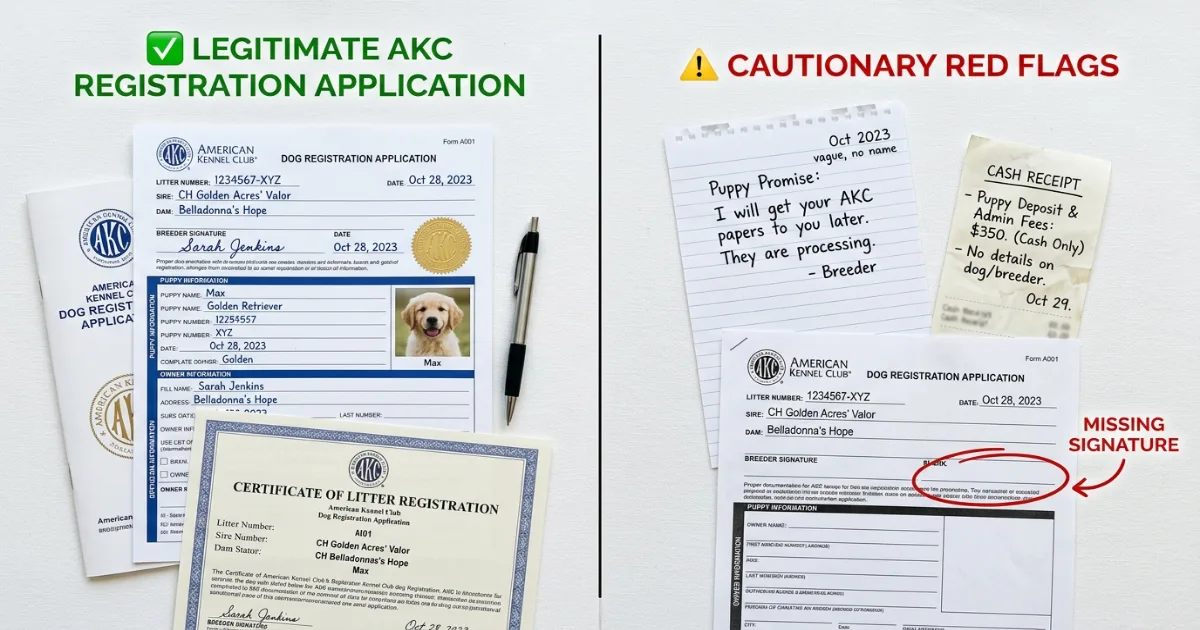
Your breeder will hand you a blue and white form that contains: the litter number, individual puppy number, date of birth, sex, color and markings of your Poodle, the registered names and numbers of the sire and dam, and the breeder’s signature. The back of the form is your section — the new owner’s portion. You’ll need to decide:
- The dog’s registered name (follow AKC naming rules).
- Whether the breeder has marked “Limited” or “Full” registration.
- Your mailing address, phone number, and payment details.
Paper Registration: The Classic Route
Fill out the owner section completely. If the breeder didn’t sign the transfer block on the back, the application is invalid. Mail the form along with a check or money order for $40 (plus optional pedigree and supplemental transfer fees if applicable) to the address on the form. Processing takes three to six weeks, and you’ll receive a white certificate with your Poodle’s registered name and AKC number.
Online Registration: Faster and Digital-Friendly
Go to the AKC website’s online registration portal and create an account or log in. Enter the PIN from your paper application to prepopulate the litter data. The online fee is $45, and you can pay by credit card. The advantage: processing drops to about ten business days, and you can track status. The certificate still arrives by mail, but you’ll have a digital reference immediately.
Common Poodle AKC Registration Roadblocks (And Their Workarounds)
Not every registration journey is seamless. Some owners hit walls that feel like dead ends. They rarely are.
Breeder never provided the application. This is the most frequent frustration. A reputable breeder will always provide the AKC registration application at the time of sale, or shortly after. If six weeks have passed and you have nothing, contact the breeder in writing. If they’re unresponsive, you can call the AKC directly with the sire and dam’s registered names (if known) and your litter’s approximate date of birth. The AKC may be able to look up the litter and supply a duplicate application for a fee — but only if the litter was registered.
Breeder claims registration is “in process.” Sometimes it’s true; registering a litter can take a few weeks. But if months drag on, you may be dealing with a breeder who never intended to register the litter. Ask for the litter registration number. If they can’t produce it, you’re likely out of luck. This is why due diligence before purchase matters tremendously.
You adopted an older Poodle without papers. Purebred does not automatically mean registrable. If there’s no way to trace parentage back to a registered AKC litter, you cannot obtain full AKC registration. However, the AKC Purebred Alternative Listing (PAL) program allows spayed or neutered Poodles of discernible breed to participate in performance events. It’s not full registration, but it gives your dog a legitimate AKC record.
Pro Tip: Never accept a seller’s verbal promise that “the papers will come later” without a specific written timeline and the litter registration number. Reputable Poodle breeders register the litter before the puppies go home.
Limited vs. Full Poodle AKC Registration: The Crucial Difference Most Buyers Miss
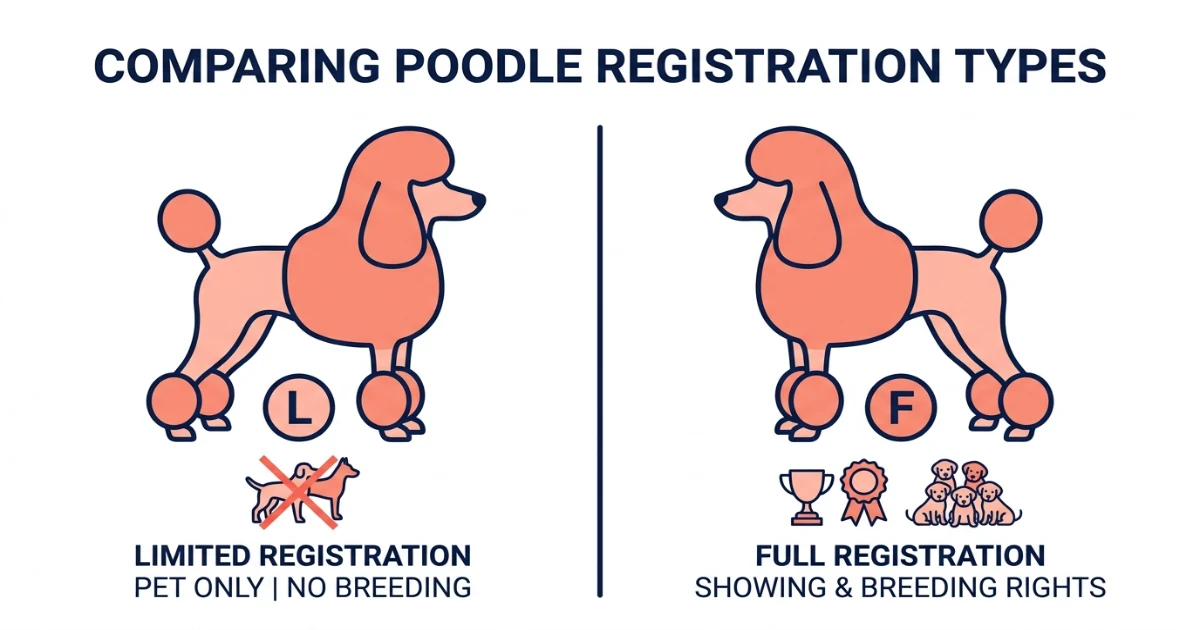
This distinction causes more confusion than any other part of Poodle AKC registration. When a breeder checks “Limited” on the application, you receive the same AKC certificate — but with a critical restriction: the dog is registered only for companionship. Its offspring cannot be registered. If you breed a limited registration Poodle, the puppies are ineligible for AKC papers. Full registration removes that restriction and allows participation in conformation breed judging.
Many pet buyers don’t realize they’ve signed a contract agreeing to limited registration, and later, when they consider breeding, they feel cheated. But limited registration is often a sign of an ethical breeder who wants to protect their lines and ensure that only health-tested, structurally sound Poodles contribute to the gene pool. Changing from limited to full requires the breeder’s written consent and an AKC supplemental form — it’s not something you can override unilaterally.
| Feature | Limited Registration | Full Registration |
|---|---|---|
| AKC Certificate Issued | Yes | Yes |
| Offspring Registrable | No | Yes |
| Conformation Competitions | Not eligible | Eligible |
| Performance Events (Agility, Obedience) | Usually eligible | Eligible |
| Typical Buyer | Pet home | Future breeder / exhibitor |
| Breeder Sign‑Off to Increase | Required | — |
What Breeders Get Wrong About Poodle AKC Registration — And How It Affects You
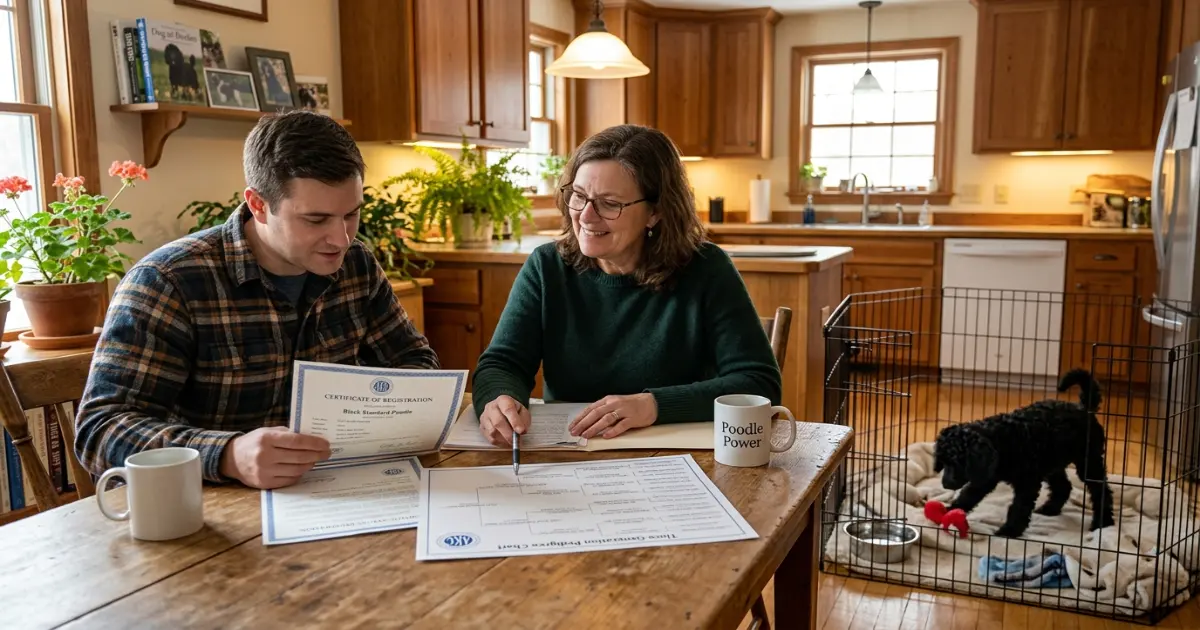
Even well-intentioned breeders occasionally mishandle registration. Understanding their side of the table helps you protect yourself.
Failing to register the litter on time. If a breeder waits too long to register a litter, late fees kick in (up to $100). Some breeders pass that cost to you. Others simply never get around to it. A breeder who delays without explanation may be hiding something — perhaps one parent wasn’t fully registered, or the litter fell outside an allowable time window.
Misunderstanding color registration options. Poodles come in a kaleidoscope of official AKC colors — black, white, apricot, silver, blue, cream, brown, café au lait, red — and the color must be recorded accurately. Some breeders incorrectly list a color because the pup’s coat will change (silvers are born black, for instance), leading to registration corrections later. It’s fixable, but it’s a headache.
Withholding papers until proof of spay/neuter. Many ethical breeders use a contract clause that requires proof of altering before releasing full registration papers. This is legal and common, but the breeder must communicate it clearly before sale. If they spring it on you afterward, it can create tension.
Common Pitfall: Never buy a Poodle whose breeder offers to send the AKC registration “later for a small extra fee.” Registration should be included in the purchase price. Any demand for additional payment is a red flag.
2026 Registration Costs and What’s Included
The basic Poodle AKC registration fee remains $40 for paper and $45 online. But that’s just the entry point. Here’s what else you might pay, and what’s worth it.
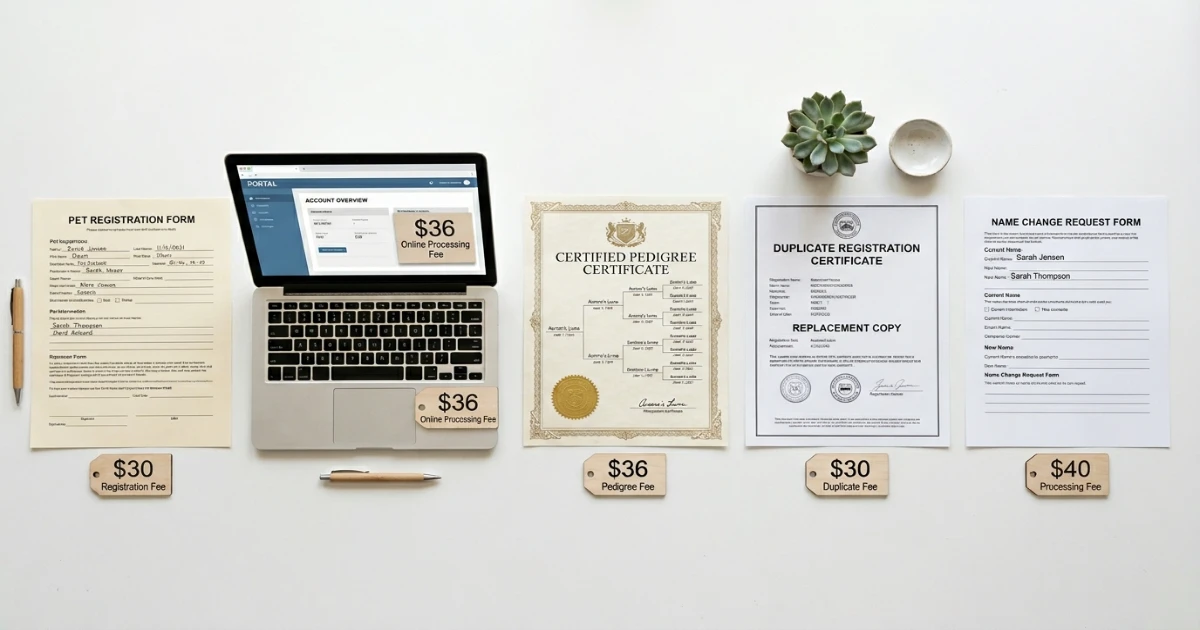
AKC Registration & Optional Fees at a Glance
Standard paper registration — $40
Online registration — $45
Three‑generation certified pedigree — $36
Duplicate registration certificate — $30
Late litter registration (breeder) — up to $100
Name change on certificate — $30
Supplemental transfer (limited to full) — $33
All fees are current as of early 2026. Rush processing options add $30‑$40 and cut wait time to a few business days.
The certified pedigree is a beautiful, framed document showing your Poodle’s ancestors — it’s optional but popular for those who appreciate lineage. The name change fee becomes relevant if you first registered a generic name and later want to use the kennel prefix your breeder allows.
How to Verify a Poodle’s AKC Registration Before You Buy
Smart buyers verify, they don’t just trust. If someone claims their Poodle puppies are AKC‑registrable, ask for the following before money changes hands:
- The sire’s and dam’s full AKC registered names and numbers.
- The litter registration number or a photo of the litter application.
- The breeder’s signature on a promise to provide the individual puppy application.
You can call the AKC directly to confirm that the sire and dam are indeed registered and that a litter has been produced. A legitimate breeder will never hesitate to give you these details. Any defensiveness, evasion, or claim that it’s “confidential” is your cue to walk away.
What Defines a “Properly Registered” Poodle and the Misunderstandings Around It
Many people assume that a “registered” Poodle is automatically a well‑bred one. The AKC makes no such claim. A properly registered Poodle simply has three documented generations of purebred lineage in the AKC stud book. The registry does not screen for health, size conformity, or even basic breed type outside of the show ring. That’s why puppy mill Poodles can still sport AKC papers. This confuses first‑time buyers who believe papers equal ethics — they don’t, and that gap fuels a lot of heartbreak.
Another point of confusion: coat color. AKC recognizes many poodle colors, but not all. Merle Poodles, for instance, are not an accepted AKC color, yet some sellers register them under a permitted color to slip through. If your Poodle’s registration lists “black” but the dog is clearly merle, something is off. The registration is only as accurate as the information the breeder submits.
Poodle AKC Registration FAQs
- Can I register my Poodle with the AKC if I lost the paperwork?
- Yes, if the litter was registered. Contact the breeder first; if unavailable, the AKC can search by sire and dam information to locate the litter and issue a duplicate application for a fee.
- What’s the difference between AKC registration and AKC Canine Partners?
- AKC registration requires a three‑generation pedigree and purebred status. Canine Partners is for mixed‑breed dogs or purebreds without papers, allowing participation in performance events but not conformation.
- How long does Poodle AKC registration take?
- Paper applications: 3–6 weeks. Online applications: about 10 business days. Expedited processing shortens that to a few business days for an additional fee.
- Is an AKC‑registered Poodle automatically healthy?
- No. AKC registration verifies breed lineage only. Health is determined by genetic testing, puppy rearing, and veterinary care — separate from the registration process.
- Can I change my Poodle’s AKC registered name later?
- Yes, for a $30 fee, provided the dog hasn’t been bred or earned an AKC title with the original name. The new name must still follow AKC naming rules.
- Do I need AKC registration to compete in dog shows?
- For AKC conformation shows, full AKC registration is mandatory. For many performance events, limited registration or PAL listing may suffice, but check specific event rules.
- Why won’t my breeder give me full registration?
- Responsible breeders typically place pet puppies on limited registration to protect their breeding program. Full registration is generally reserved for show or breeding prospects and often costs more.
- What if my Poodle came from a rescue and I want AKC papers?
- Unless you can trace the dog’s microchip or tattoo back to a registered AKC litter, full registration isn’t possible. The PAL program is your best alternative for AKC event participation.
The bottom line: Poodle AKC registration is a meaningful, methodical process that cements your dog’s place in a continuum of purebred history. It’s not a guarantee of perfection, but when approached with clear eyes — knowing the difference between limited and full registration, verifying breeder credentials early, and understanding that papers alone don’t equal quality — it becomes a valuable asset. Complete the steps carefully, keep that certificate in a safe place, and you’ll have a document that serves you and your Poodle for a lifetime.